REVIEW · E-BIKES
eBiking along the Appian Way
Book on Viator →Operated by Rome in tours · Bookable on Viator
Rome has more than museums. It has roads.
This e-bike tour tackles the Appian Way the way it was meant to be experienced: on a bike, moving through space, not just staring at stones. You’ll cover up to 19 miles (30 km) with an easy-to-pedal assist, and you’ll learn Roman engineering and daily life from an archaeologist guide. I especially like that the route includes the Park of the Aqueducts and other stops that most quick Rome itineraries skip.
Two big strengths: the small-group feel (max 10 people) and the chance to see key sites like Circus Maximus and the Baths of Caracalla area without the usual crowd shuffle. One thing to consider: you are riding mainly on uneven paths, and you’ll need a short e-bike training session first to get comfortable and safe.
In This Review
- Key Highlights You’ll Feel Immediately
- Why the Appian Way Is the Best Rome Bike Route
- Where the Tour Kicks Off Near Circus Maximus
- Caracalla’s Baths Area and Aqueduct Clues You Can Actually See
- Porta San Sebastiano: A Roman City Wall Still Doing Its Job
- Domine Quo Vadis Church and the Story Behind the Place
- The Major Catacombs Stop and the Vatican Exra-Territorial Detail
- Cycling the Via Appia Antica Itself: Basalt Blocks and Big Events
- Circus of Maxentius and Villa di Massenzio: Imperial Power Nearby
- Cecilia Metella, Capo di Bove Baths Mosaics, and the Aqueduct Park
- How Long You Ride, and What It Feels Like in Real Life
- Meet Ferdinando: The Guide Factor That Changes the Whole Trip
- Price and Value: What $324.63 Buys You in Rome
- Should You Book This eBiking Appian Way Tour?
- FAQ
- How long is the e-bike tour of the Appian Way?
- How far do you cycle on the tour?
- Do we get e-bike training before starting?
- Is the tour flat and easy, or are there uneven paths?
- How big is the group, and is it private?
- Are admission tickets included for the stops?
- Where does the tour start, and do I use a mobile ticket?
Key Highlights You’ll Feel Immediately
- E-bikes let you go farther (up to 19 miles / 30 km) while saving energy for photo stops and walking bits
- Park of the Aqueducts time: a long stretch many tours miss, with aqueducts going under and over the ground
- A real engineering route: from Roman gates and baths to the carved basalt blocks of the Via Appia Antica
- Small-group pacing (max 10) keeps the tour calm enough to ask questions
- Ferdinando leads with strong English and makes it easy to understand what you’re seeing
Why the Appian Way Is the Best Rome Bike Route
The Appian Way isn’t just another landmark. It’s an idea made physical: a major Roman road built to move people, armies, and supplies across a huge empire. On e-bike, that story makes more sense, because you’re not stuck in one spot. You’re traveling through the same kind of corridor that once carried world-changing events.
I like how the pace matches the setting. You get those long Rome views as the city gives way to Roman countryside, then you return to the denser ancient layers near major monuments. It feels like you’re moving from Rome’s present to Rome’s foundation, with fewer bottlenecks than most bus schedules.
It also helps that the trip is designed for easy-to-pedal e-bikes. You can keep the ride smooth and still enjoy short walks at each stop. In other words, you’re sightseeing first, not just “surviving” your transportation.
You can also read our reviews of more tours and experiences in Rome
Where the Tour Kicks Off Near Circus Maximus
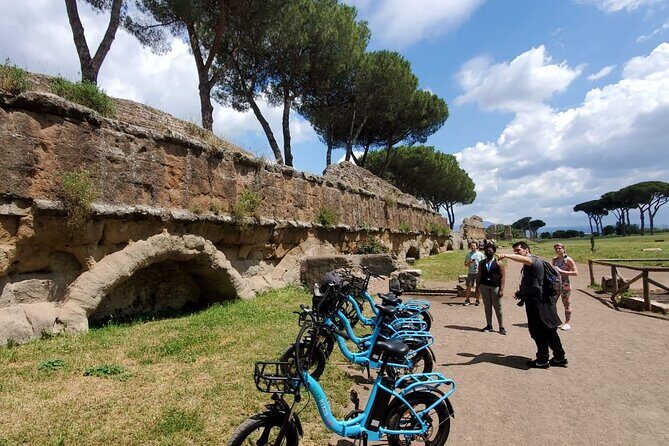
The ride starts at Via dei Cerchi, 59 (00186 Rome). Your first major stop is Circus Maximus, the giant chariot-racing arena that also ties into the Appian Way’s origin story. This track could hold up to 250,000 people at its peak, and it was about 600 meters long.
What I’d look for here is the scale. Circus Maximus was one of the biggest mass-entertainment machines the ancient world ever built. Standing near it, then rolling onward, you get the sense that this route wasn’t just for pilgrims or traders. It was part of the traffic of everyday Roman life.
This is also a smart early stop for a biking tour. You get history fast, then you’re not wasting time later trying to orient yourself on where everything fits.
Caracalla’s Baths Area and Aqueduct Clues You Can Actually See
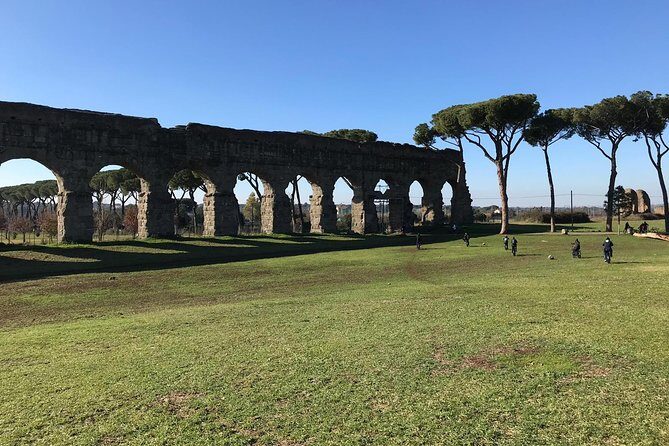
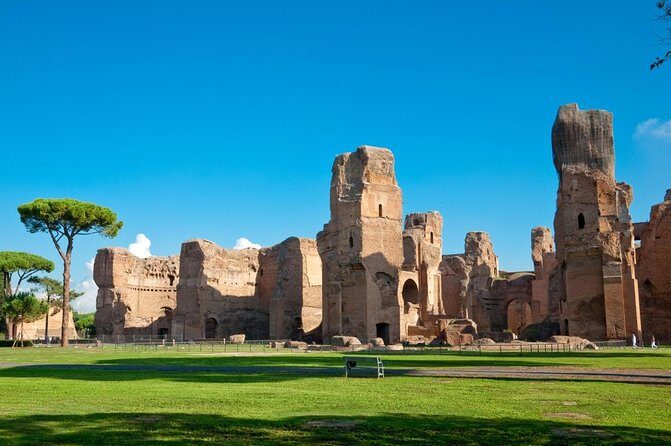
Terme di Caracalla is next, one of the biggest Roman bath complexes and still among the best preserved. The numbers matter: the site could handle around 15,000 bathers at the same time. Even if you only spend a short stretch here, the feeling is big—massive stone forms, long sightlines, and that unmistakable bath-house logic of heat and water.
Between the baths and the aqueduct elements, you’ll also stop at an arch structure connected to aqueduct design. Arco Di Druso is often miscalled a triumphal arch, but it’s really part of the aqueduct arcades built to feed Caracalla’s thermal baths. That distinction is the kind of detail that turns “a photo stop” into real understanding.
If you like architecture that works, not just architecture that looks impressive, this section is for you. It’s the difference between seeing ruins and figuring out how they functioned.
Porta San Sebastiano: A Roman City Wall Still Doing Its Job
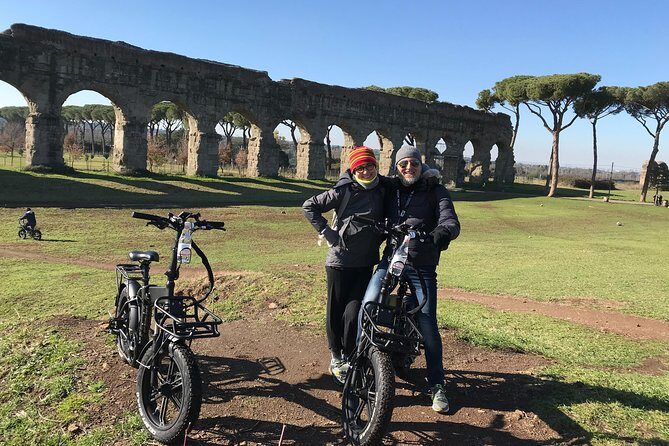
Porta San Sebastiano is a strong contrast to the bath complex. This gate was built into Rome’s defensive walls under Emperor Aurelian, and it’s among the largest and best preserved. That preservation makes a difference on a bike route, because you can read the gate as a piece of infrastructure, not just an ornament.
In practice, this stop is short, but it sets your mental map. You start to feel how the Appian Way connected the city edge to the road leading south. Gates like this helped control movement, protect Rome, and funnel travelers into the routes that mattered.
If you’re the type who likes a quick “here’s what the city boundary looked like” moment, don’t skip the minutes here. It pays off later when you’re riding alongside remnants and ruins that feel like they’re living in the landscape.
Domine Quo Vadis Church and the Story Behind the Place
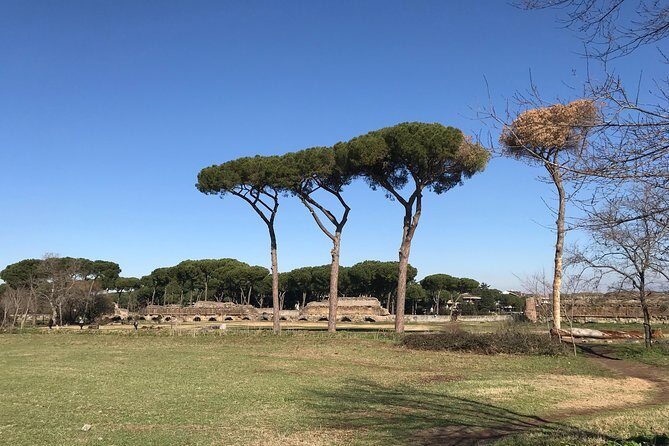
Next is Chiesa del Domine Quo Vadis, tied to the famous meeting of Saint Peter and Jesus during Nero’s persecution. The story goes that Peter was fleeing Rome to avoid martyrdom, then met Jesus where the church stands today. When Jesus answers the question Lord, where are you going?, the message is understood as a call to return.
Even if you know the story already, I like this stop because it’s placed like a pause button in the day. You’re moving along ancient routes, and then you stop at a small, meaningful site that connects Roman history to early Christian tradition.
This isn’t the kind of stop where you need to be an expert. You just need a moment to connect the narrative to the road you’re riding. And once you do, the rest of the Appian Way feels even more layered.






The Major Catacombs Stop and the Vatican Exra-Territorial Detail
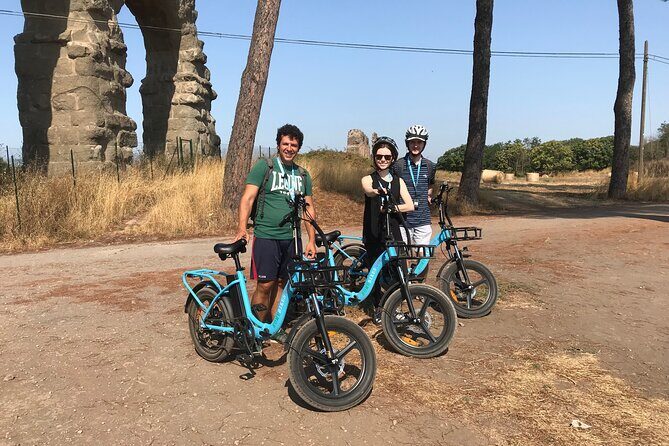
One of the tour’s standout segments is the stop at a major catacombs complex, one of the biggest in the area. The information you’re given includes that 50 martyrs and 16 popes were buried here. That’s a heavy claim, and it changes the mood fast.
You’ll also spend time riding inside Vatican City state territory, because this part of Rome has extraterritorial ties to the Vatican. It’s one of those facts that sounds technical until you’re actually there and see how the lines of power and religious authority overlap.
Then you’ll move to the place where the relics of the apostles Peter and Paul were moved during invasions by the barbarians. That detail is practical history: why things were relocated, and how preservation mattered when instability threatened sacred sites.
If you want Rome that feels a step more human than a postcard, this portion delivers. It’s not just old stone. It’s a place where people were trying to protect what they believed mattered.
Cycling the Via Appia Antica Itself: Basalt Blocks and Big Events
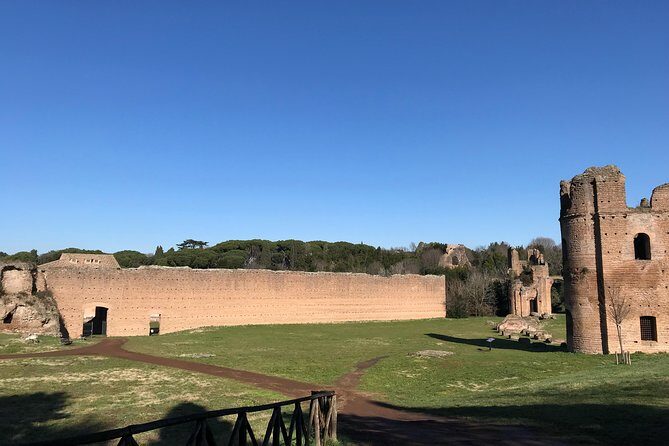
Now you’re on Appian Way proper: Via Appia Antica. This is where the tour earns its reputation. Built in 312 BC under Appius Claudius Caecus, it connected Rome to the empire’s south-eastern reach. And unlike many archaeological sites, you can still feel the road’s shape and material.
The route is described as 360 Roman miles long, and much of the paving survives as original basalt blocks. That means you’re not just looking at a road in concept. You’re riding over the kind of surface that carried travelers for centuries.
This section also ties into major events tied to the road’s long memory, including the crucifixion of Spartacus’ soldiers, the capture of Rome during World War II, and the road’s use in the 1960 men’s marathon course.
The biking part matters here. On foot, the Appian Way can feel like a long endurance test. On an e-bike, you keep momentum, cover distance efficiently, and still have time for short stops and questions. You leave with a sense of scale that’s hard to get from any slower mode.
Circus of Maxentius and Villa di Massenzio: Imperial Power Nearby
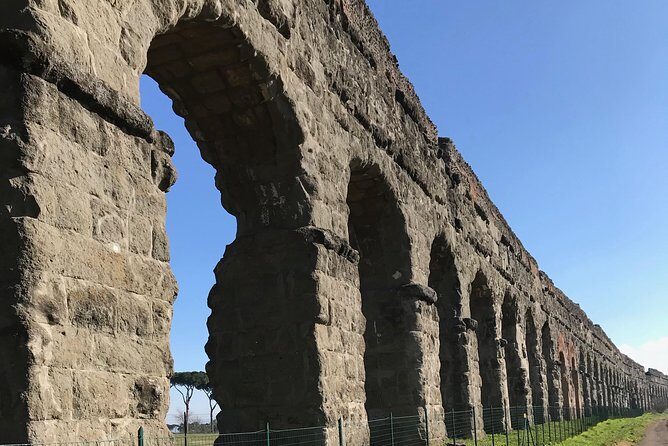
After riding the ancient road, you hit Circus of Maxentius. It’s one of the best preserved Roman chariot race tracks, with capacity around 10,000 people. The tour frames it as a site that even showed up in pop culture through the movie Ben-Hur (1959), which helps you picture what spectacles looked like in real Roman terms.
Then comes Villa di Massenzio, an imperial villa built by Emperor Maxentius. The complex is described between the second and third mile of the Appian Way and includes main buildings like the palace, the circus of Maxentius, and a dynastic mausoleum.
This pair works well because they show two sides of elite life: entertainment on a massive scale and the emperor’s living and legacy spaces. You’re moving through the ruins like you’re tracing a single neighborhood of power.
If you’re sensitive to heat or fatigue, this is a good part to pace yourself during the short photo moments. You’re not stuck walking far, but you will want your eyes open for stone details and the way the buildings relate to the road.
Cecilia Metella, Capo di Bove Baths Mosaics, and the Aqueduct Park
One of the most memorable stops is Mausoleo di Cecilia Metella and the surrounding area at Parco Archeologico dell’Appia Antica. This monumental tomb was built to celebrate an illustrious family member from the 1st century BC. The details given connect it to the Triumvirate of Julius Caesar and to the person credited with ending Spartacus’ revolt, which adds a lot of political weight to a structure that could otherwise feel like a generic tower on a hill.
Next you’ll see Complesso di Capo di Bove, described as baths on a large land property from the 2nd century AD, with mosaics still preserved. In Rome, mosaics are often treated like a luxury. Here, they’re part of daily-life infrastructure: bathing, cooling, walking through decorated surfaces while the whole system moves you through a ritual.
Then the tour highlights the Park of the Aqueducts (Parco degli Acquedotti). The name is direct: aqueducts pass both underground and aboveground, and the park is tied to seven Roman and papal aqueducts supplying ancient Rome. This is the section most other routes tend to skip, and it’s one I really like because it changes the viewpoint. Instead of only seeing monuments, you start seeing the systems that made a city of millions possible.
How Long You Ride, and What It Feels Like in Real Life
The tour runs about 3 hours 30 minutes. During that time, you’re not just coasting. You’re biking between major stops and then pausing for brief site visits.
The overview promises up to 19 miles (30 km) thanks to e-bike assist, and that matters because it affects what kind of day you can plan around it. You can treat this as a morning or early afternoon anchor, then build a second block of Rome time without feeling wrecked.
The key practical note is terrain. The info explicitly says you’ll ride mainly on uneven paths. That’s normal for this part of Rome, where ancient paving and countryside paths mix. You get a short training session before the tour starts, which I strongly recommend treating seriously. Even with e-bikes, you’re still on a bike with brakes, turns, and surfaces that can be bumpy.
Age range is listed as 18 to 70. The tour also notes that most travelers can participate, as long as you’re comfortable riding on uneven ground.
Meet Ferdinando: The Guide Factor That Changes the Whole Trip
The name that comes up again and again is Ferdinando. He leads the tour with strong English and a friendly, responsive style, and he’s the kind of guide who keeps the day from turning into a lecture. If you like asking questions in plain language, he’s set up for that.
The tour also promises learning from an archaeologist guide, which is the other half of the equation. You’re not just collecting facts. You’re getting explanations that help you connect structures to function—like why an aqueduct arcade feeds a thermal-bath system, or what the road’s survival says about Roman engineering choices.
That mix makes the route more satisfying. It’s one thing to see Circus Maximus. It’s better when you understand why it’s tied to the Appian Way story and how that road network structured Roman life.
Price and Value: What $324.63 Buys You in Rome
At $324.63 per person for about 3.5 hours, you’re paying for more than a guide. You’re paying for transportation that lets you cover distance without a grueling day, plus access to a route that doesn’t fit neatly into a standard bus itinerary.
The tour is small-group with a maximum of 10 people, which usually means you spend less time waiting and more time moving at a pace you can enjoy. You also get features like a mobile ticket, and group discounts are listed as available.
The biggest value lever here is the combination: e-bike range and a route built around specific Roman engineering sites. If you only want the most famous attractions, Rome has plenty of cheaper options. But if you want the Appian Way experience—aqueducts, baths, catacombs, and the road itself—the price starts to look like it’s buying you the right kind of day.
Should You Book This eBiking Appian Way Tour?
I’d book it if you want Rome that feels like movement: riding real routes, not just hopping between quick stops. It’s especially worth it if you care about infrastructure—roads, aqueducts, baths—and you want a guide who can connect those dots clearly.
I’d think twice if you’re uncomfortable on uneven paths or if you’re looking for an easy, flat ride with minimal training. The tour is manageable for many people, but it does ask you to be confident on a bike, after a mandatory practice session.
One more decision tip: if your Rome plans are packed with indoor sights, this tour is a smart counterbalance. You’ll get ancient stone, yes, but you’ll also get open-air space and countryside views as you follow the Appian Way corridor.
If that sounds like your kind of Rome day, this is a strong bet.
FAQ
How long is the e-bike tour of the Appian Way?
It runs about 3 hours 30 minutes.
How far do you cycle on the tour?
The experience is designed for up to 19 miles (30 km) of riding, depending on pace.
Do we get e-bike training before starting?
Yes. A short training session to get confident on the e-bike is mandatory before the tour starts.
Is the tour flat and easy, or are there uneven paths?
The tour notes that you’ll ride mainly on uneven paths. You should make sure you feel comfortable about riding on those surfaces.
How big is the group, and is it private?
This is a private tour/activity, and the group size is limited to a maximum of 10 people (only your group participates).
Are admission tickets included for the stops?
The tour information lists some stops as free and one stop as not included: Terme di Caracalla admission is not included, while other listed stops have free admission tickets.
Where does the tour start, and do I use a mobile ticket?
The tour starts at Via dei Cerchi, 59, 00186 Rome (and ends back at the meeting point). A mobile ticket is included. The meeting point is near public transportation.