REVIEW · ROME
E-Tuk Tour: Highlights of Rome
Book on Viator →Operated by Luxurbe · Bookable on Viator
Rome’s best hits, with less foot fatigue.
This is a 3-hour electric E-Tuk ride that strings together many of central Rome’s headline sights with commentary as you go. You’ll get photo stops at big landmarks, plus the practical benefit of using a vehicle in areas where walking can turn into a long, tiring slog.
What I like most is the small group setup (up to 15), which keeps things friendly and manageable. I also really appreciated the way the driver-guide explains what you’re seeing—guides like Ernesto, Jimmy, Fabrizio, Matteo, and Nina were praised in the feedback I read for being friendly and clear.
One thing to plan for: pedestrian-only zones limit where the cart can stop, so you may view some places from nearby vantage points rather than right at the front door.
In This Review
- Key Highlights to Know Before You Go
- Electric E-Tuk vs. Walking: The Real Value in 3 Hours
- Price and What You’re Actually Getting for $84.09
- Meeting at Piazza del Popolo and Hotel Pickup in Plain English
- Condotti to Piazza Venezia: Where Style Meets the First Big Anchors
- The Pantheon Stop: Quick Time, Icon Status, Ticket Reality
- Teatro di Marcello and the Foro Piscario: Smaller Ancient Sites with Strong Payoff
- Jewish Ghetto Walk: History You Can See in the Streets
- Vatican City, Trevi, and Piazza Navona: Loved Stops with Pedestrian Constraints
- Colosseum and the Imperial Area: When You’ll Want Extra Planning
- Circo Massimo and Trinità dei Monti: Big-Scale Rome, Then a Sweet Landing Spot
- How to Make the Most of the Guide (Even When It’s Loud)
- The Main Downsides to Consider Before You Book
- Who This E-Tuk Tour Fits Best
- Should You Book This E-Tuk Highlights of Rome Tour?
- FAQ
- How long is the E-Tuk Highlights of Rome tour?
- Where does the tour start, and does it end in the same place?
- Does the tour offer hotel pickup and drop-off?
- Is the tour in English?
- Are entrance tickets included for all the stops?
- Is there a group size limit?
- Can I cancel for free?
Key Highlights to Know Before You Go
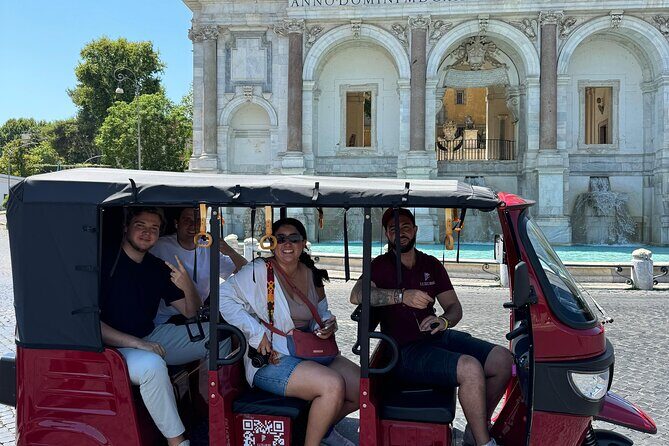
- A small-group E-Tuk loop that helps you get oriented fast
- English-speaking driver-guide with on-the-road explanations (and photo stops)
- Quick hits on Roman icons like the Pantheon, Trevi Fountain, Navona, and the Colosseum area
- Short time at each stop, so it works best for photos, snapshots, and context
- Some sights require extra time and tickets (the tour notes entrance tickets aren’t included across the board)
- Sound can vary: sit closer to the guide if you’re hard of hearing
Electric E-Tuk vs. Walking: The Real Value in 3 Hours
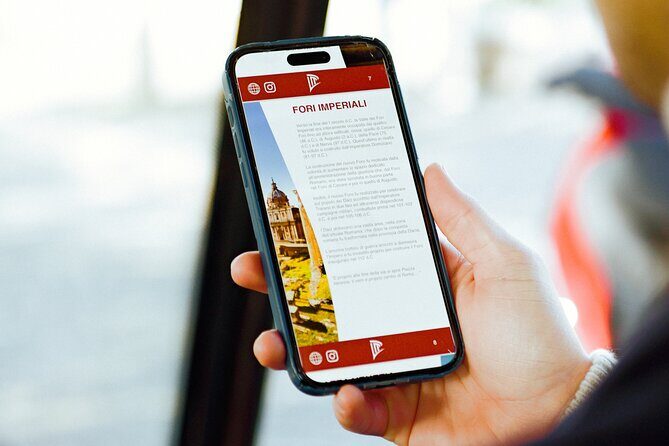
If your Rome plan includes the Colosseum and the Pantheon but you still want energy for dinner and a late-night gelato run, this kind of tour makes sense. You trade some deep, slow wandering for smart momentum—moving between neighborhoods quickly while the guide connects the dots.
The E-Tuk format also helps in Rome’s tight streets and busy intersections. Instead of constantly stopping and starting your legs, you stay in “sightseeing mode” while the driver-guide handles the navigation and timing.
And because it’s a small group (max 15), the experience tends to feel more like a curated city walk with wheels than a big bus cattle lineup. That usually means fewer bottlenecks when photos happen.
You can also read our reviews of more tours and experiences in Rome.



Price and What You’re Actually Getting for $84.09
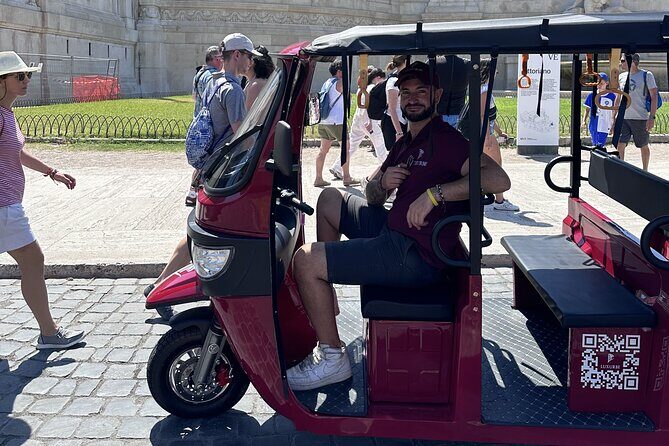
At about $84.09 per person, the value is less about saving money on tickets (entrance costs aren’t generally included) and more about saving time and hassle. You’re paying for transportation, a guided route, and the convenience of photo stops at many major locations in one session.
Here’s the practical way to think about it: if you’d otherwise spend half a day hopping between neighborhoods by taxi or figuring out logistics, this folds that effort into one coordinated ride. It also gives you a “first draft” of Rome—so later, when you decide what to revisit, you already know where it all sits.
If you plan to go inside multiple museums or pay for lots of separate entries during this same day, you may end up paying extra anyway. But for a compact intro packed with landmarks, the price is fairly aligned with what you’re buying: access, guidance, and comfort.
Meeting at Piazza del Popolo and Hotel Pickup in Plain English
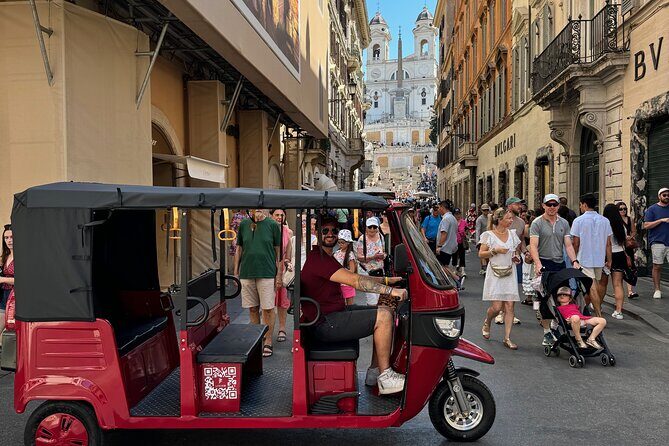
The standard meeting point is Piazza del Popolo, 11, 00187 Roma, and the tour ends back at the meeting point. If you choose hotel pickup, you’ll wait outside your hotel or accommodation at street level.
The driver should arrive at the scheduled time—or within a 10-minute waiting window—and they’ll be easy to recognize. For a smooth start, I’d recommend being ready a few minutes early rather than counting on the full grace period.
This tour being close to public transportation is helpful too. Even if your hotel is a bit tricky to reach by vehicle, you have a solid fallback option: you can coordinate your day around the Piazza del Popolo meeting point.
Condotti to Piazza Venezia: Where Style Meets the First Big Anchors
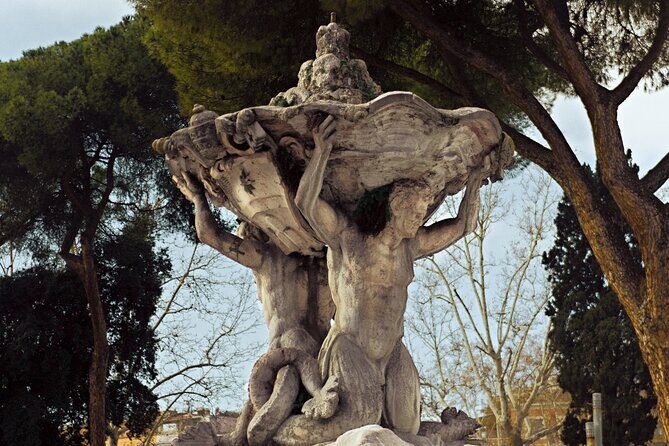
Your route starts in the area of Via dei Condotti, Rome’s iconic shopping street. This is high-end Italy: designer boutiques, cobblestones, and classic architecture with that mix of Renaissance and Baroque flavor. The vibe is part street theater and part history lesson, especially with the Spanish Steps landmark connection at the lower end.
This early stop works well because it gets you oriented before the heavier ancient stuff. You’ll also get a taste of how Rome looks when it’s dressed up for fashion and foot traffic—different from the quieter ruin-and-arches scenes.
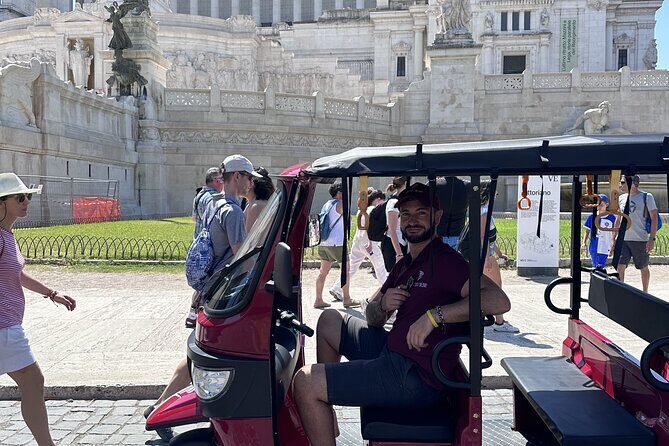
Next comes Piazza Venezia, dominated by the Altare della Patria (the Vittoriano). It’s a dramatic “center of gravity” square where ancient and modern Rome feel like they overlap in one glance. Around you are historic structures, and the square is a natural springboard for understanding Rome’s layout.
The Pantheon Stop: Quick Time, Icon Status, Ticket Reality
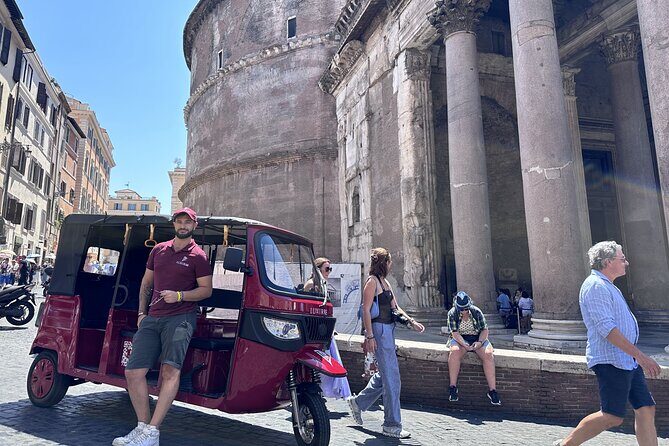
The Pantheon is the kind of place where even a brief stop feels like a big deal. You’re looking at ancient engineering at its best: the dome, the famous oculus opening, and a carefully preserved interior with marble and decorative details.
The key detail for planning: the tour lists Pantheon as not included for entrance tickets, and the allotted time is short (about 15 minutes). That means you’ll likely want to decide ahead of time whether you’re doing an exterior-and-snap session only, or whether you want to prioritize entry and spend most of your window inside.
If crowds slow you down, don’t panic—this is one of the most visited sites in Rome. The E-Tuk format helps you reach it, but time inside still depends on how the line and entry flow behave that day.



Teatro di Marcello and the Foro Piscario: Smaller Ancient Sites with Strong Payoff
After the big-ticket star attractions, you get two stops that are easier to enjoy without fighting for space.
Teatro di Marcello is an ancient open-air theater linked to Emperor Augustus and his family. One reason I like this stop: the structure you see today has layers. You’re looking at something that once held large crowds (the estimate is around 20,000), and over time the surviving portions were repurposed—Renaissance-era conversions turned parts of it into private apartments. It’s a reminder that Rome doesn’t just preserve; it reuses.
Then there’s Via del Foro Piscario, the fish-market forum area near the Forum Romanum. It’s not a place most first-time visitors expect. But that’s why it’s good: it adds everyday life to the “big emperor monument” picture. You get a sense that markets and commerce were part of how the ancient city functioned, not just ceremonies and speeches.
These two stops are short, but they’re the kind of context you’ll remember when you later walk through the larger Forum areas on your own.
Jewish Ghetto Walk: History You Can See in the Streets
The Jewish Ghetto of Rome is a serious historical neighborhood near the Tiber. It was established in the mid-1500s (1555 is the year mentioned here), and for centuries it functioned as a confined area for Roman Jews. Today, you’ll find narrow cobblestone streets, historic synagogue sites, and a mix of older textures plus modern shops and food.
This stop is only about 15 minutes, so treat it as a guided orientation and a chance to read the neighborhood with your eyes: stone streets, street geometry, and the feeling of time layered on top of time.
Also, the tour highlights the Great Synagogue and the Jewish Museum as key points in the area. Even if you don’t enter during this ride, knowing they’re here helps you plan a return visit if a deeper dive matters to you.
If you like city tours that respect context—not just photos—this is one of the stops that delivers.
Vatican City, Trevi, and Piazza Navona: Loved Stops with Pedestrian Constraints
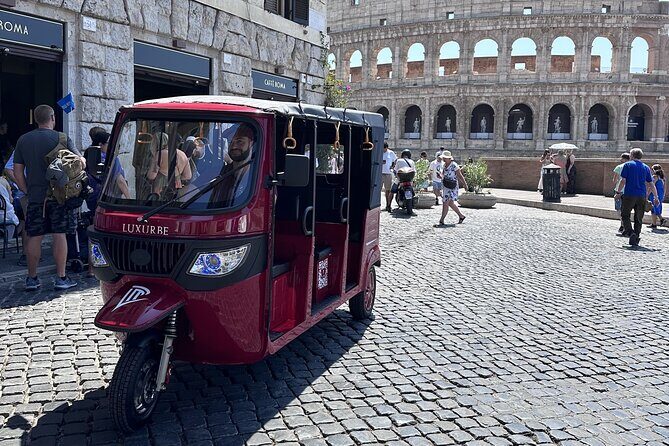
This is where you need the right expectation. Rome’s busiest sights often have pedestrian-only zones, and vehicles can’t always stop right at the exact spot you see from postcards. The tour still calls out Vatican City, Trevi Fountain, and Piazza Navona, but you’ll likely be seeing them from nearby photo vantage points rather than a front-row curbside arrival.
The Vatican stop frames the Vatican as the spiritual and administrative center of the Roman Catholic Church, with St. Peter’s Basilica and major museum highlights noted. In a short time window, it’s mostly about getting oriented—seeing the area and leaving with an understanding of why it matters.
Then comes Trevi Fountain, a Baroque landmark with myth sculptures, Neptune imagery, and the famous coin-toss tradition. Expect crowds. The benefit of doing it via E-Tuk is not avoiding the crowds entirely, but arriving without burning hours on transit and long uphill walking.
Finally, Piazza Navona delivers a classic Roman square look: Fontana dei Quattro Fiumi, outdoor cafes, and Baroque-style architecture. Even if you only have a few minutes, it’s the kind of place where your brain switches from “ruins” to “Rome as a living city” fast.
Colosseum and the Imperial Area: When You’ll Want Extra Planning
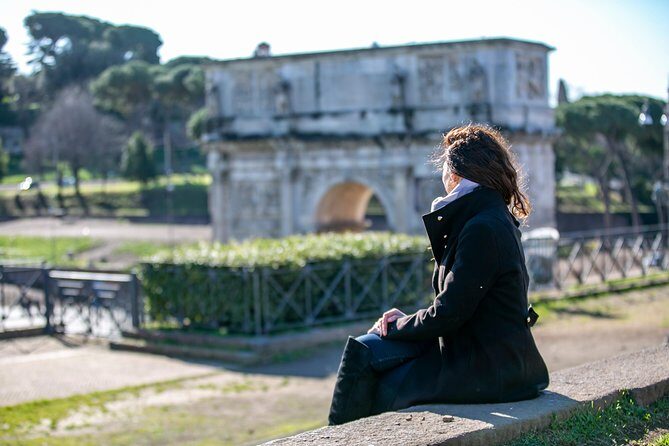
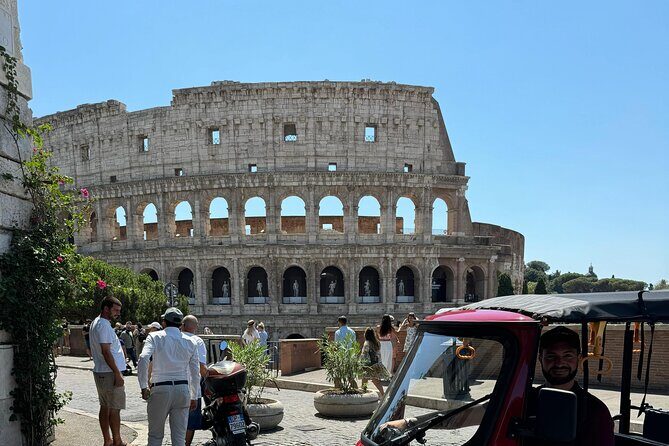
The Colosseum is the big one. It’s described as the Flavian Amphitheatre, built between 70 and 80 AD, and it’s the ultimate symbol of Roman engineering. The tour allocates about 15 minutes here, and entrance tickets are not included.
So for the Colosseum, you’ve got two realistic modes:
- Priority on photos and exterior views with time for commentary.
- Priority on entering, knowing you’ll spend most of the window inside and tickets cost extra.
If you care about seeing the arena and exhibit areas, plan your day so you don’t feel rushed. This tour helps you reach it efficiently, but it can’t replace a full Colosseum visit with ticketed time.
Right after, the route moves along Via dei Fori Imperiali (Imperial Fora area). The time here is about 15 minutes, and the tour lists the admission ticket as included. This stretch matters because the Imperial Fora were monumental public squares built by different emperors, and they sit right by the Roman Forum zone. You’ll get a better sense of how power and public life were staged across the city.
Circo Massimo and Trinità dei Monti: Big-Scale Rome, Then a Sweet Landing Spot
Next is Circo Massimo, the ancient chariot-racing stadium. The numbers mentioned here are huge: it could hold up to about 250,000 spectators. Only traces of the original structure survive, but the scale of the place still makes sense when you stand there.
This stop is about 15 minutes, and the tour lists the admission ticket as included. Even if you’re not a “stadium person,” it’s an excellent counterweight to the Colosseum. It shows you that Roman entertainment was not just one building—it was a whole system of mass gatherings.
Then you hit Trinità dei Monti, about 10 minutes, free. It’s a quick connector stop back toward the Spanish Steps zone, giving you a visual thread from earlier in the day.
Finally, you return to Via dei Condotti again, looping back through that upscale street atmosphere. Finishing near a place like Condotti is a smart move if you want to walk off toward shops, cafes, or simply continue exploring with fewer transit decisions.
How to Make the Most of the Guide (Even When It’s Loud)
The guide experience is one of the top reasons people like this tour. You’ll hear explanations as you ride, and the carts are set up for open-air touring.
The catch: city noise can be loud, especially if you’re sitting farther from the guide. One review described sound being hard to catch behind the cart. My practical advice is simple: sit toward the front or ask for better volume/audio if that option is available.
Audio guides are noted as provided upon request if available. If that’s offered on your day, it can help you keep up even when the street is noisy.
Also, because this route hits major places with heavy foot traffic, the guide’s timing and navigation matters. Multiple praised guides were described as excellent at handling busy streets and keeping the tour moving.
The Main Downsides to Consider Before You Book
This tour is built for coverage and comfort, not slow museum-style pacing. Stops are short, and the route balances “see it from a vehicle plus quick stops” with the fact that some sites are hard to reach by car.
Two common friction points:
- Pedestrian-only zones can limit how close you can get to certain sights, so you’ll often view them from nearby vantage points.
- Short time windows mean you may not get the full inside experience at every stop—especially for the Pantheon and Colosseum, where entrance tickets are not included.
There’s also the reality of small-vehicle operations. One review mentioned a cart breakdown that cut into time. Most days will be fine, but it’s worth knowing that you’re relying on one vehicle for the whole flow.
And in rare cases, there can be delays or timing problems. One review cited being late for pickup and ending up with less time than expected. If your schedule is tight, treat this as your “orientation and highlights” day, not the only day you can see the biggest sites.
Who This E-Tuk Tour Fits Best
I’d say this tour is a strong fit if:
- You want a fast introduction to Rome’s center with minimal walking strain.
- You like learning on the move, rather than reading guidebooks in museums.
- You’d rather spend your saved energy exploring on your own later.
It may be less ideal if:
- You want long time inside major attractions like the Pantheon or Colosseum.
- You need quiet, guaranteed audio the whole way.
- You’re the type who likes to linger at one site for an hour or more.
Should You Book This E-Tuk Highlights of Rome Tour?
Yes—if you want a time-efficient, comfortable way to get your bearings fast and see many headline sights in one compact session. The combination of a small group, an English-speaking driver-guide, and photo stops at major landmarks is a solid value for first-timers or anyone who wants an easy “Rome reboot” before deeper independent exploring.
I’d book with a smart expectation: you’re buying a guided highlights route, not a full inside-and-stay Rome day. If you plan your own follow-up visits to the sites that matter most to you, this tour becomes an excellent start.
FAQ
How long is the E-Tuk Highlights of Rome tour?
It lasts about 3 hours.
Where does the tour start, and does it end in the same place?
It starts at Piazza del Popolo, 11, 00187 Roma RM, Italy, and it ends back at the meeting point.
Does the tour offer hotel pickup and drop-off?
Yes, hotel pickup and drop-off are offered if you select that option. If not, you meet at the Piazza del Popolo location.
Is the tour in English?
Yes, the tour is offered in English.
Are entrance tickets included for all the stops?
No. Entrance tickets are not included across the board. The tour notes that Pantheon and Colosseum entrances are not included, while tickets are listed as included for Via dei Fori Imperiali and Circo Massimo.
Is there a group size limit?
Yes. The maximum group size is 15 travelers.
Can I cancel for free?
Yes, you can cancel for free up to 24 hours before the experience start time for a full refund.