REVIEW · ROME
Discover the famous seven hills of Rome with the calessino bee
Book on Viator →Operated by Roma To Get · Bookable on Viator
Rome turns into a map fast.
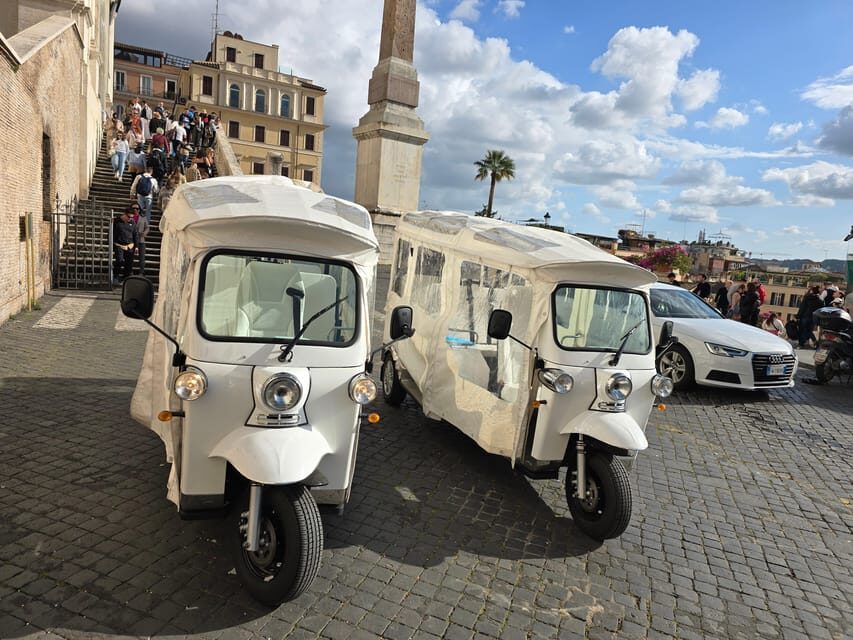
This 3-hour calessino bee tour strings together the famous seven hills of Rome with quick, well-chosen stops and viewpoints you’d work hard to reach on foot. You’ll start at Piazza della Repubblica, then hop hill to hill with an authorized tourist guide in English, finishing right back where you began.
I like two things most. First, the ride itself gives you access: instead of grinding up steep streets, you can see the hills and their landmarks in time for photos and context. Second, the tour is guided in a way that feels responsive—guides like Andre and Marco are described as funny, attentive, and genuinely focused on what you want to see.
One thing to think about: this is a short loop with brief time at each stop. Some major sights have entry fees that are not included, so plan to spend a bit extra if you want to go beyond what’s covered at the viewpoint level.
In This Review
- Key highlights you’ll care about
- A calessino bee route that makes the seven hills click
- Quirinale to Aventine: where the hills show power and views
- Giardino degli Aranci: a free orange-garden pause with real payoff
- Piazza dei Cavalieri di Malta and Circo Massimo: the Aventine’s contrast
- Campidoglio’s municipal hill and the civic face of Rome
- Baths of Diocletian: the big ancient-spa scale you can feel
- Basilica di Santa Maria Maggiore: early-Christian structure and papal importance
- Coffee and tiramisu tasting: a small included break
- Who will love this tour most
- Price and value: is $216.53 worth it for 3 hours?
- Should you book the seven hills calessino bee tour?
- FAQ
- How long is the calessino bee seven hills tour?
- Where does the tour start and end?
- Is the tour private?
- What’s included in the price?
- Is the tour offered in English?
- Are there admission fees for the stops?
Key highlights you’ll care about
- Calessino bee transport that saves your legs on steep hills
- Orange-tree views at Giardino degli Aranci with a quick photo stop
- Aventine-area contrasts at Piazza dei Cavalieri di Malta and Circo Massimo
- Campidoglio and civic Rome with the municipality building on the hill
- Two big Roman landmark zones: the Baths of Diocletian and Santa Maria Maggiore
A calessino bee route that makes the seven hills click
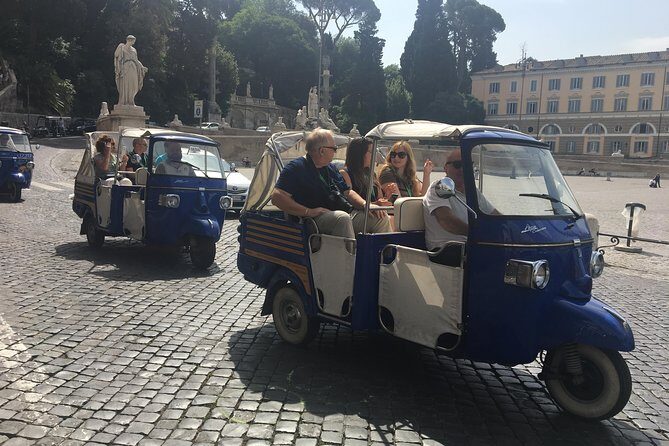
Rome’s seven hills can feel like trivia until you see how they relate. This tour helps you understand the city as a set of elevated neighborhoods and power centers—religious, civic, and imperial—without turning it into an all-day walking test.
The key is the format. You get a guided path across multiple hills, with stops that are designed for orientation: brief segments where you can look around, get the story, and then move on. That makes the experience especially good for first-time Rome visits, when you’re still trying to build a mental map.
It’s also a private tour/activity, so it’s just your group. That matters because a good guide can adjust how fast you move, how long you linger at a viewpoint, and which sights feel most relevant to your interests.
You can also read our reviews of more tours and experiences in Rome.



Quirinale to Aventine: where the hills show power and views
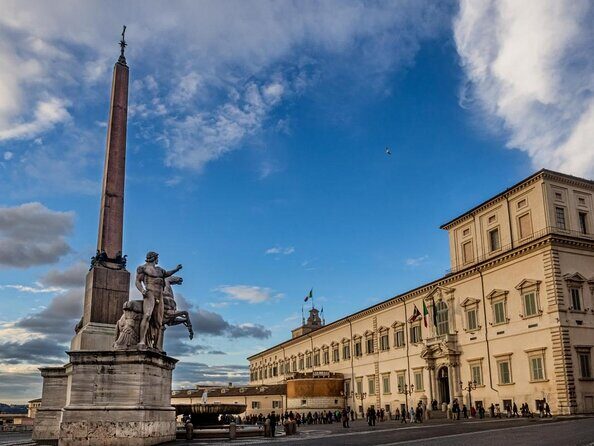
Your hill-hopping starts at the Quirinale Hill, connected with the Palazzo del Quirinale. Even if you don’t spend time inside, the setting helps you connect Rome’s layers: government and prestige on one hill, then the city’s older sacred and public spaces as you move.
From there, the tour heads toward the Aventine area. The Aventine is known for its quiet mood compared to Rome’s busier streets, and it’s also where you can get a strong sense of how different neighborhoods feel even when they’re close together on a map.
You’ll keep catching sightlines that help the story land. The guide’s explanations turn scattered landmarks into a sequence—hill after hill—so you understand not just what you’re seeing, but why it sits where it does.
Giardino degli Aranci: a free orange-garden pause with real payoff
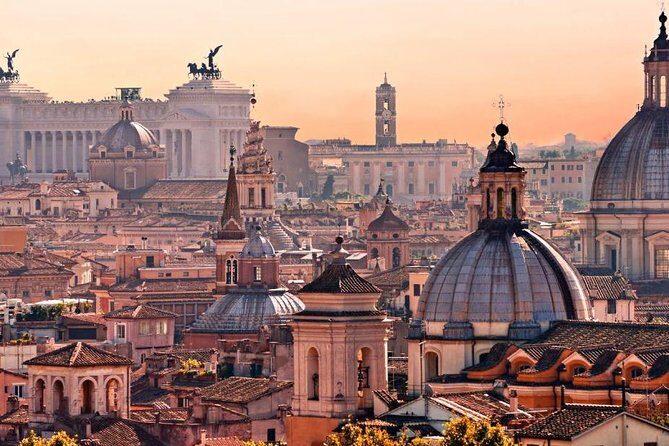
The first real stop is Giardino degli Aranci, a small garden full of orange trees with a viewpoint over Rome. The admission is listed as free, and it’s the kind of stop that’s short, easy, and very rewarding for the time you spend.
This is the moment I’d call your visual reset. You’ll get a break from the streets and a clear, elevated view that makes the rest of the day make sense. If you like taking photos or just want a breath of calm, this is a good place to do it without committing to a long museum visit.
It’s also a smart “start” stop. Instead of rushing into heavy sites right away, the garden gives you a scenic anchor that helps you later connect things like the Aventine and surrounding districts to what you saw.
Piazza dei Cavalieri di Malta and Circo Massimo: the Aventine’s contrast
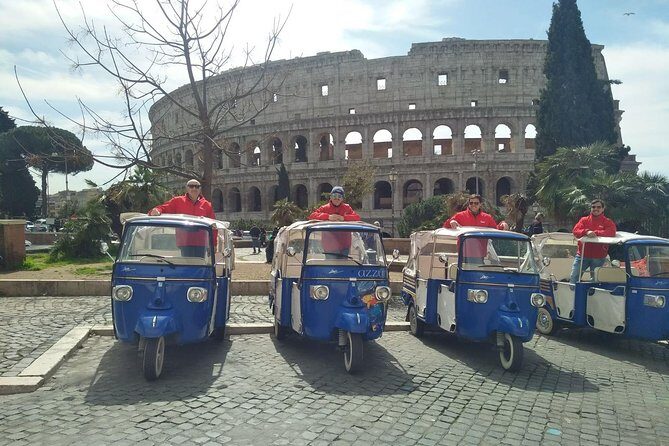
Next up is Piazza dei Cavalieri di Malta on the Aventine hill. The stop is listed as about 10 minutes, with free admission. This is described as a magical place where geographical boundaries disappear—and there’s even a magic lock with a surprise visible for free to curious visitors.
Even without going inside anything, you get the value of a “small wow” moment. It’s quick entertainment, but it also breaks up the tour so it doesn’t feel like a checklist. If you enjoy playful stops that still connect you to the place, this is the kind of pause that keeps the day from feeling too stiff.
After that, the tour moves to Circo Massimo, the ancient Roman circus between the Aventine and the Palatine. You’ll spend about 10 minutes here, and admission isn’t included.
Circo Massimo is one of those sites where you benefit from context. Standing there, you can picture what the space was for, but the guide’s explanation is what turns “big open area” into a real sense of Rome’s public spectacle. The best part of a short stop like this is that it fits into the overall rhythm of seeing multiple hills in one go.
Campidoglio’s municipal hill and the civic face of Rome
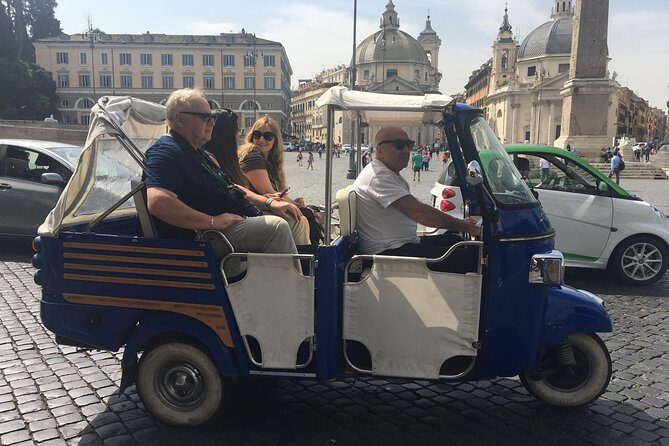
There’s another quick segment on the hill of Campidoglio. This is where the building where the municipality of Rome is located sits, giving you a different angle on Rome: not temples and tombs, but administration and present-day city identity.
This stop works well after you’ve already seen the Aventine and Circo Massimo area. It reinforces a theme you’ll keep noticing during the tour: Rome repeatedly uses height and position to claim authority. You’re seeing that idea shift from ancient public space to modern civic power, still grounded in the same hill logic.
If you’re the type who likes architecture and how cities organize themselves over time, you’ll appreciate that the tour doesn’t only focus on “pretty church stops.” It also includes the civic side, which helps you understand Rome as a living city, not only an outdoor museum.



Baths of Diocletian: the big ancient-spa scale you can feel
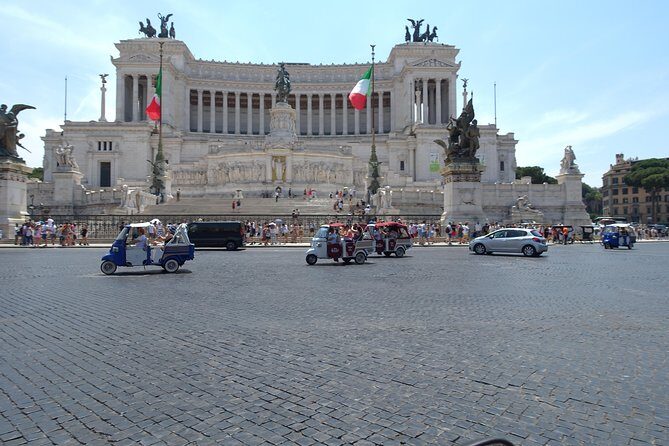
From Campidoglio, the tour heads to the Baths of Diocletian, described as the largest spas of Ancient Rome. This is a stop that’s all about scale and perspective—Roman engineering at maximum volume.
Even when you don’t spend ages inside (the tour timing keeps things moving), the site is still impressive because it’s a major footprint from a period when Rome built massive public complexes. You’ll get the sense that these weren’t just baths. They were social hubs and an expression of imperial capability.
If you’re trying to balance “iconic sights” with “places that explain Roman life,” this is a strong inclusion. It adds variety beyond the usual focus on coliseums and forums, and it gives you a bigger picture of how Romans used public space.
Basilica di Santa Maria Maggiore: early-Christian structure and papal importance
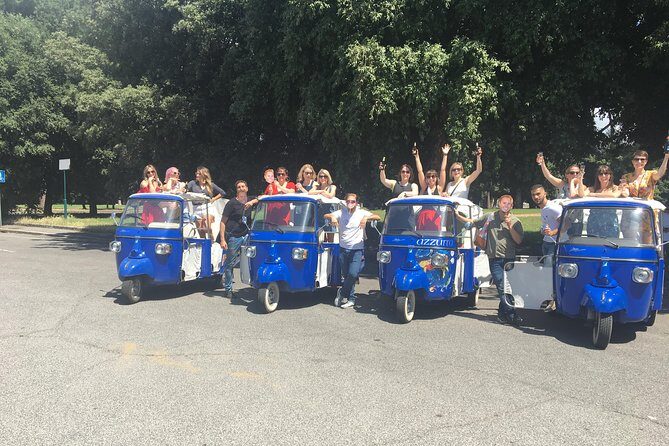
The last named highlight is Basilica di Santa Maria Maggiore on the Esquiline hill. It’s one of the four papal basilicas, and it’s described as the only basilica in Rome that preserved the early Christian structure.
Your stop time here is listed as about 5 minutes, and admission isn’t included. That short duration means you should treat it like a guided hit: you’ll likely get the essentials and the key reason this church matters, rather than a long, unhurried visit.
Still, even a brief visit can be worth it when you have the right explanation in front of you. A church like this is not just a building; it’s a timeline. You’re walking through centuries by way of architectural clues and the church’s place in Rome’s religious story.
Coffee and tiramisu tasting: a small included break
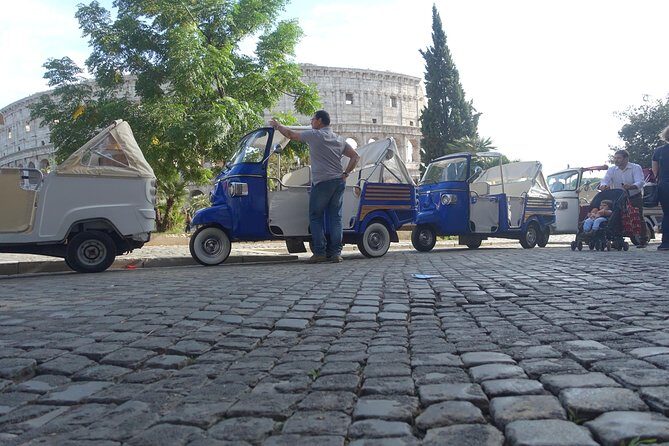
This tour includes coffee and/or tea, plus a tiramisu tasting. It might sound like a side detail, but in practice, it helps keep energy steady during a 3-hour route with multiple stops.
It’s especially useful if you’re traveling in warm weather or if you’ve already walked earlier that day. You’re not forced to hunt for a snack between hills. Instead, you get a planned pause that fits the pace of the day.
Who will love this tour most
This one fits best if you want a structured overview without turning it into an all-day climb.
You’ll probably enjoy it if:
- You’re seeing Rome for the first time and want the hills to feel connected, not random
- You prefer guided context over self-guided guesswork
- You want a lighter walking day, thanks to the calessino bee transport
- You like getting a guide who can respond to your interests, like Andre’s approach of asking what you want to see and Marco’s described availability and engagement
There are also clear limits. Children under 6 are not allowed, and pregnant women are not allowed. If either applies, you’ll want to choose a different tour format.
Price and value: is $216.53 worth it for 3 hours?
At $216.53 per person for about 3 hours, the value depends on what you want from the experience.
Here’s what supports the price:
- Authorized guide in English
- Private tour format for your group
- Vehicle transport that reduces steep walking
- Included refreshment plus tiramisu tasting
- Stops that combine viewpoints and landmark areas tied to the seven hills
What can add cost later:
- Some sites listed for stops do not include admission, like Circo Massimo and Santa Maria Maggiore. So your total day cost may rise if you plan to enter those spaces fully rather than only view from the tour stop.
To decide, I’d compare your alternatives. If you tried to stitch these places together on your own, you’d likely spend more time navigating, waiting, and transferring than you want on a first trip. This tour packages the planning for you in one tight loop.
Should you book the seven hills calessino bee tour?
If you want your first Rome day to feel organized, this is a solid choice. The route covers multiple hills and landmark zones in a short window, and the vehicle helps you focus on seeing instead of climbing.
I’d book it if you’re excited by viewpoints, hill context, and getting explanations that make the city’s layout click. Guides like Andre and Marco are described as attentive, funny, and engaging, which is exactly what you want when the stops are short.
I’d hesitate if you want long time inside big sights. With stops that can be as brief as 5–10 minutes, you’ll want to follow up later with repeat visits if any one place becomes a favorite.
FAQ
How long is the calessino bee seven hills tour?
It’s approximately 3 hours.
Where does the tour start and end?
The tour starts at Piazza della Repubblica and ends back at the meeting point.
Is the tour private?
Yes. It’s a private tour/activity, so only your group participates.
What’s included in the price?
A 3-hour calessino bee tour with an authorized tourist guide, plus coffee and/or tea and a tiramisu tasting.
Is the tour offered in English?
Yes, the tour is offered in English.
Are there admission fees for the stops?
Some stops include free admission (like Giardino degli Aranci and Piazza dei Cavalieri di Malta), while others are not included (such as Circo Massimo and Basilica di Santa Maria Maggiore).