REVIEW · CONCERTS
Concert Ticket – The Most Beautiful Opera Arias by Opera da Camera di Roma
Book on Viator →Operated by Opera da Camera di Roma · Bookable on Viator
Opera in a candlelit church feels personal. I like how this concert turns famous Italian music into a close-up, low-pressure night you can do even on a short Rome stay. Two things I really appreciate: the warm, historic venues with strong acoustics and the clean, focused performance format with soprano, tenor, and grand piano. One possible drawback: the lineup is small, so if you’re expecting a big cast or an orchestra, you may feel a bit underwhelmed.
You’ll be hearing a smart mix of Italian classics and crowd-pleasers, from opera highlights to Neapolitan songs and Vivaldi’s Four Seasons. It’s a short show, about 50 minutes, starting at 7:30 pm, so it works well on an evening when your feet are tired but your ears want something special.
In This Review
- Key things I’d circle before you book
- A 50-minute opera-arias night in Rome’s historic churches
- Choosing the venue: Waldesian Church on weekdays vs Methodist Church on Sundays
- What you’ll hear: La Traviata, Turandot, Rigoletto, Neapolitan songs, and Four Seasons
- A helpful reality check about familiarity
- Tenor, soprano, and grand piano: the small-cast format that drives the vibe
- What to consider: small cast vs big expectations
- Getting there at 7:30 pm: central Rome with an easy walk or transit
- Price and value: why $38.62 can feel like a bargain in Rome
- Timing, length, and the question of intermissions
- How to get the most out of it (even if you don’t know the arias)
- Who this concert suits best
- Should you book this Opera da Camera di Roma concert?
- FAQ
- Is the ticket a mobile ticket?
- Where is the concert held?
- What time does the concert start?
- How long is the concert?
- How much does it cost?
- Can I cancel for a full refund?
Key things I’d circle before you book
- Valdese Church or Methodist Church: two different venues, each with a distinct vibe and room size
- Grand piano + classical voices: a format that keeps the sound clear and close
- Opera stars in your lap, not on a stage: you’re near enough to feel the emotion in the phrasing
- A program mix you’ll recognize: La Traviata, Turandot, Rigoletto, plus Neapolitan favorites and Four Seasons
- Central, walk-friendly locations: easy to reach from Piazza Venezia and the Pantheon area
A 50-minute opera-arias night in Rome’s historic churches
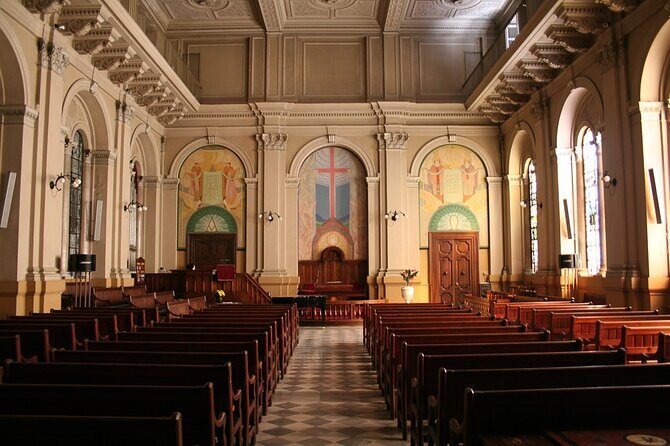
If you want the opera feeling without the full-day commitment, this is a great fit. The setting is the kind of place that makes you slow down: a historic church in the center of Rome, with acoustics designed for singing. Instead of a distant stage experience, you get a more personal sound—closer to what chamber music lovers crave.
The whole show is timed to be an evening you can actually use. Expect about 50 minutes, starting at 7:30 pm. That short length matters in Rome. After a day of walking ruins, long waits for intermissions can feel like a tax. Here, you get a focused set and you can still do gelato or a last stroll afterward.
For most people, this is also a low-stress way to sample Italian classical music. You do not need to know opera plots. You’re there for the voices, the phrasing, and the melodies that have traveled around the world.
You can also read our reviews of more tours and experiences in Rome

Choosing the venue: Waldesian Church on weekdays vs Methodist Church on Sundays
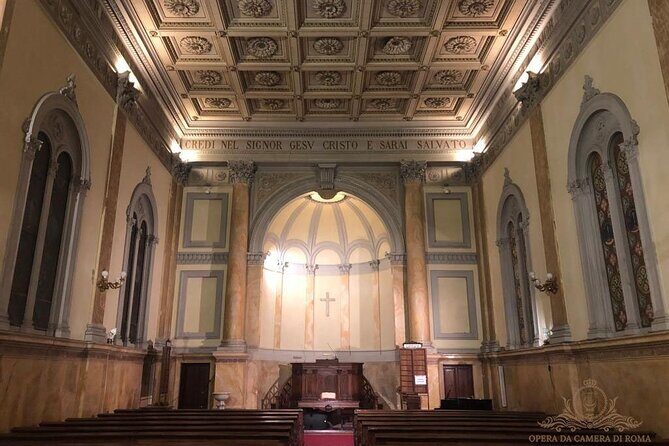
This concert uses two locations depending on the day, and that changes the experience.
Monday to Saturday: the show happens in Chiesa Evangelica Valdese on Via IV Novembre 107. The standout for many people is the acoustics in this historic space. It also has a practical advantage: the church is only about 100 meters from Piazza Venezia and roughly 300 meters from the Pantheon. Translation: you can plan dinner, then stroll to the concert without fighting logistics.
Sundays: it moves to the Methodist Church on Via Firenze 38. One reason this works well is that it’s a warmer, more intimate room, with a unique acoustic character. The size also brings you closer to the musicians, which can make the performance feel more like a private concert than a public event.
If you’re the type who likes to plan with confidence, check what day you’re booking for. The music program stays in the opera-arias spirit, but the room will affect what you hear and how you feel it.
What you’ll hear: La Traviata, Turandot, Rigoletto, Neapolitan songs, and Four Seasons
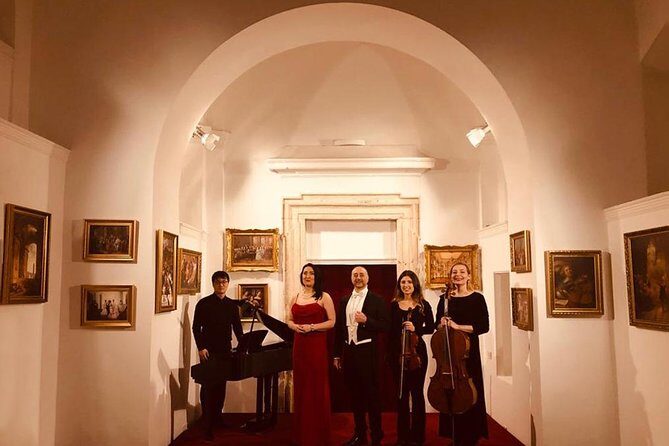
This isn’t a single-composer concert. It’s a mix built around recognizability and variety, which is a smart way to keep people engaged—especially if you don’t read music or speak Italian fluently.
From what the program is designed to feature, you can expect operatic arias connected to major titles like:
- La Traviata
- Turandot
- Rigoletto
It also includes Neapolitan songs, which are often the songs people remember because they feel dramatic and singable. And then there’s Vivaldi’s Four Seasons, which adds a classical anchor outside typical opera stories.
A couple of extra details from the kinds of nights people report: you may also hear familiar Italian songs such as O sole mio and Finiculi Funicula. That matters because those melodies help you connect fast, even if you’re new to opera.
A helpful reality check about familiarity
This kind of program can swing in two directions: either you get more familiar arias and songs, or you get selections that feel more obscure. In at least some performances, the exact aria choices may include pieces you don’t immediately recognize. That’s not automatically bad. But if you only want songs you already know, you should consider that your experience may depend on the specific night’s set list.
Tenor, soprano, and grand piano: the small-cast format that drives the vibe
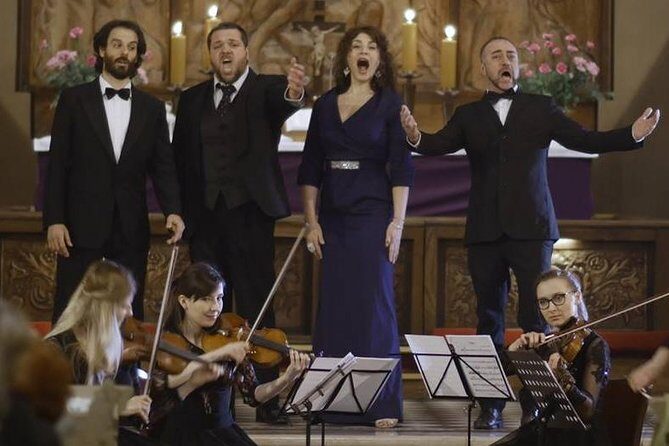
The core format is simple: tenor and soprano soloists accompanied by a grand piano. That small setup is one of the main reasons people rave about the closeness and the sound.
With only a few performers, the focus stays on what matters for an aria experience:
- Vocal technique and control
- Phrasing and emotion
- How the pianist supports dynamics and timing
And because it’s a piano rather than a full orchestra, you may notice how clearly the lines connect. Some people like that. Others may miss the layered wall of sound you get with strings and brass. Still, in a small church, piano can be surprisingly powerful.
There’s also one more practical angle. Smaller casts can mean a smoother flow—fewer scene changes, fewer moving parts, and a straightforward evening. The show is often described as light on “production,” which can be ideal if you want music first and costumes second.
You can also read our reviews of more tours and experiences in Rome
What to consider: small cast vs big expectations
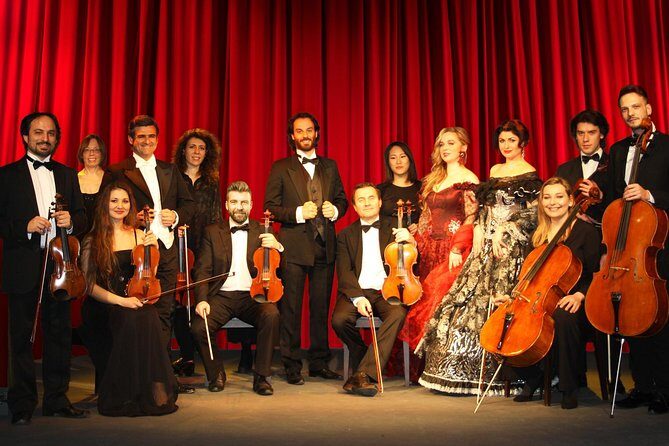
A few people have flagged that the marketing imagery can make it look like there are more performers than what they received. If you want an ensemble on the level of a full opera production, this may not match your expectations.
Also, some nights may run without an interval. If you’re hoping for a full break to refill a drink or take longer photos, plan your evening assuming it might be continuous.
Getting there at 7:30 pm: central Rome with an easy walk or transit
The concert is in the center of Rome, so you’re not hunting for it in a far-flung neighborhood. That’s a big part of the value.
On weekdays, the Valdese Church location is close to:
- Piazza Venezia (about 100 meters away)
- The Pantheon area (about 300 meters away)
That means you can build the night like a local: do an early dinner near the historic core, then walk over. For the Sunday venue, you’re also in central Rome, but the address is different, so don’t assume you can use the weekday directions.
Start time is 7:30 pm, so I’d aim to arrive a few minutes early. In small venues, that extra buffer helps you find your seat without stress.
You’ll also have a mobile ticket, which is convenient. In a place like this, anything that reduces paperwork friction is a plus.
Price and value: why $38.62 can feel like a bargain in Rome
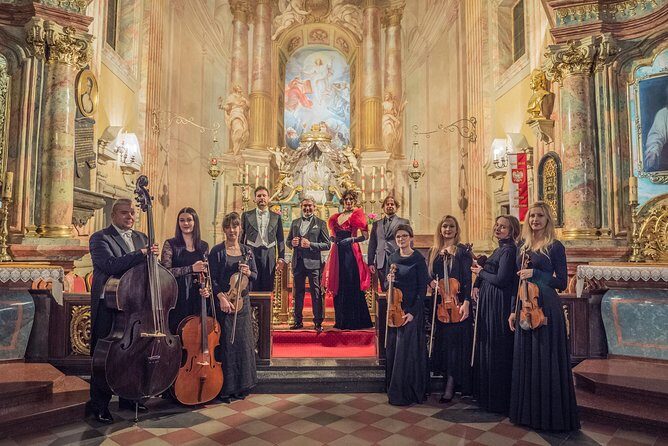
At $38.62 per person, you’re not paying for a full-scale opera house production. You’re paying for a high-quality performance in a beautiful acoustic space, with professional soloists and a grand piano.
This is where the value logic clicks:
- Many opera performances in bigger theaters can cost far more.
- You’re in an intimate room, so you hear more detail in a single evening.
- You get a “taste” of opera classics plus Italian favorites, not just background classical music.
Even when people nitpick (like wishing for an interval, or feeling the piano was too loud on a particular night), the biggest praise is consistent: for the money, the experience feels like a real hit of Italian music culture, not a tourist-only performance.
If you’re budgeting your Rome evenings, this is a smart pick because it doesn’t require a big time investment. You can slot it between other must-dos.
Timing, length, and the question of intermissions
Most performances clock in at about an hour, sometimes slightly under or over. The information you’re working with says around 50 minutes, and actual experiences often land close to that.
What you should plan for:
- A short concert window
- Music in sequence rather than a long, multi-act structure
Some people mention no intermission at all, while others describe a brief break with something to drink. Since that may vary by night and venue setup, treat it as a bonus, not a guarantee.
A short show is especially helpful if you travel with kids, or if you’re not sure how your group will handle a longer seated event. Several people mention it as family-friendly or good for first-timers to opera.
How to get the most out of it (even if you don’t know the arias)
You’ll enjoy this more if you go in with the right expectation: you’re not watching a plot play with a big theatrical machine. You’re listening to voices and piano inside a church that amplifies every detail.
Here are practical ways to make it land:
- Pick a night when you’re well-rested. The emotional payoff is bigger when you’re not exhausted.
- Arrive ready to listen for vocal phrasing, not just melody.
- If language is a barrier for you, focus on the tone and rhythm. Even without understanding every word, opera singing communicates emotion through breath control and dynamics.
- If you want very recognizable songs, keep in mind the set list can include favorites like O sole mio and Finiculi Funicula on some evenings.
Also, take advantage of the fact that you’re close to the musicians. In small venues, you often get a more human feel to the performance, and that can turn the concert into a memory instead of a blur.
Who this concert suits best
This is a strong match if you want:
- A classic Rome evening that stays central and walkable
- An opera sampler with recognizable Italian music
- A close-up format with professional voices and a grand piano
- Something that works for families or first-timers
It may be less ideal if you:
- Want a large cast with costumes and big staged spectacle
- Expect an orchestra
- Need a predictable intermission every time
- Are very picky about specific aria titles and want, for example, particular pieces every night
One more caution: a small-cast event means you’re hearing the singers and pianist more directly. If any one performer’s sound or interpretation doesn’t click for you, it can affect the whole impression, since there’s no orchestra to smooth out the edges.
Should you book this Opera da Camera di Roma concert?
I’d book it if you want a short, genuinely musical night in Rome with strong acoustics and a close-up sound you don’t get in big venues. The mix of opera highlights, Neapolitan songs, and even Vivaldi’s Four Seasons gives you multiple entry points, even if you’re new to Italian classical music.
I wouldn’t book it if you’re hunting for a full-scale production with a big ensemble. Also, if you have a long list of specific arias you absolutely want, remember the exact choices can vary.
FAQ
Is the ticket a mobile ticket?
Yes. You’ll receive a mobile ticket for the concert.
Where is the concert held?
It’s held at Chiesa Evangelica Valdese on Via IV Novembre 107 in Rome from Monday to Saturday. On Sundays, it takes place at the Methodist Church on Via Firenze 38, Rome.
What time does the concert start?
The start time is 7:30 pm.
How long is the concert?
The duration is about 50 minutes (approx.).
How much does it cost?
It costs $38.62 per person.
Can I cancel for a full refund?
You can cancel up to 24 hours in advance of the experience for a full refund. If you cancel less than 24 hours before the start time, the amount paid won’t be refunded.