REVIEW · ROME
COMBO: Rome’s Capuchin Crypts Tour & Rome’s Dark Side Ghost Tour
Book on Viator →Operated by Dark Side City Tours · Bookable on Viator
The bones in Rome have stories. This combo mixes the Capuchin Crypts with a street-by-street dark side tour through Rome’s most famous squares, from the Trevi Fountain area to Castel Sant’Angelo. You’ll hear legends and real-ish dark history woven into places you already know.
I especially love two things about this experience. First, the small group size (max 15) keeps it interactive, not like a big headset parade. Second, the guides—like Ben, Ivana, and Alethea—are praised for turning grim details into sharp, funny, easy-to-follow storytelling that even keeps teenagers engaged.
One thing to consider: this is a spooky, violence-heavy tour. Between skeletons, prisons, poisoners, and executions, it can feel like a nonstop horror film for sensitive minds, especially at dusk when the mood is already set.
In This Review
- Key points before you go
- Why this Rome evening combo feels like more than two tours
- The 4-hour flow: where you’ll spend your time
- Stop 1: Capuchin Crypts—3,500 skeletons up close
- Via Rasella: a WWII tragedy in Rome’s modern dark layer
- Trevi Fountain: beauty, longing, murder, and maybe hauntings
- Piazza della Rotonda: Pantheon magic with a gruesome counterpoint
- Piazza Navona: haunted window and the marble head watching
- Campo de’ Fiori: Giordano Bruno and the statue’s mood
- Vicolo delle Grotte and Ponte Sisto: one street ghost story at a time
- Santa Maria dell’Orazione e Morte: unusual decoration and monks in public life
- Via di Monserrato and Via dei Banchi Vecchi: prison echoes and poison history
- Via del Banco di Santo Spirito and Castel Sant’Angelo: executions and the Cenci family tragedy
- What you’ll like most (based on how the tour works)
- Who this is best for, and who should skip it
- Should you book this Rome Capuchin Crypts + Dark Side Ghost Tour?
- FAQ
- What’s included in this combo?
- How long is the tour, and when does it start?
- Is it offered in English, and what’s the group size?
- Where do I meet, and where does it end?
- What tickets do I need?
- Can I cancel for a full refund?
Key points before you go
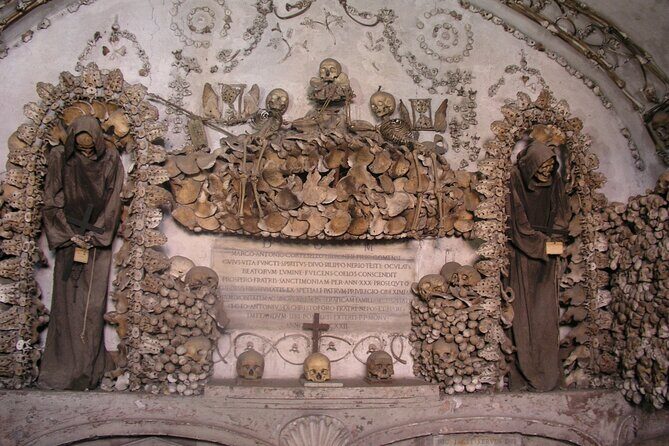
- Capuchin Crypts entrance included so you don’t have to figure out timing or tickets on your own
- 3,500 skeletons and a macabre setting that explains how the crypt became what it is
- A small group (up to 15) for more attention from your guide as you walk
- Trevi Fountain + Pantheon-area legends with a darker angle on iconic sights
- Lots of “outside” stops means you cover meaningful locations in about 4 hours
Why this Rome evening combo feels like more than two tours
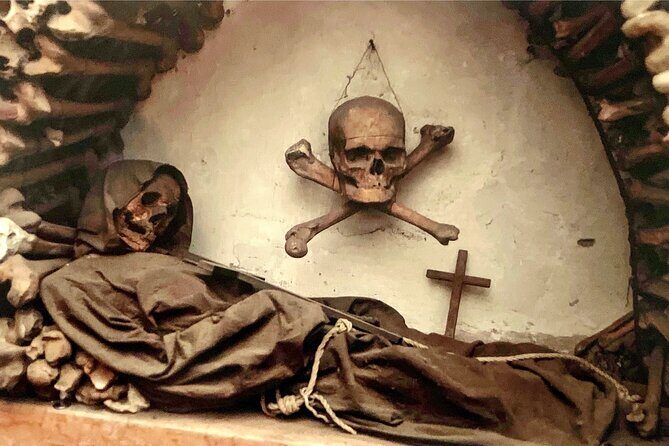
Rome is full of history, but this combo picks a specific lane: bones, ghosts, and the stories people told afterward. The result is an easy way to see more of the center of Rome in one go, without turning it into a checklist.
At $66.01 per person for about 4 hours, the value is strongest because the Capuchin Crypts entrance fee is included. The rest of the itinerary is mostly free to view from the street, which keeps your money focused on the paid part that actually has an entry requirement.
I also like that it’s built for atmosphere. You start at 5:00 pm, and by the time you reach the later stops, the light has shifted. That doesn’t automatically make the stories scarier, but it does make the setting fit the subject.
You can also read our reviews of more tours and experiences in Rome.



The 4-hour flow: where you’ll spend your time
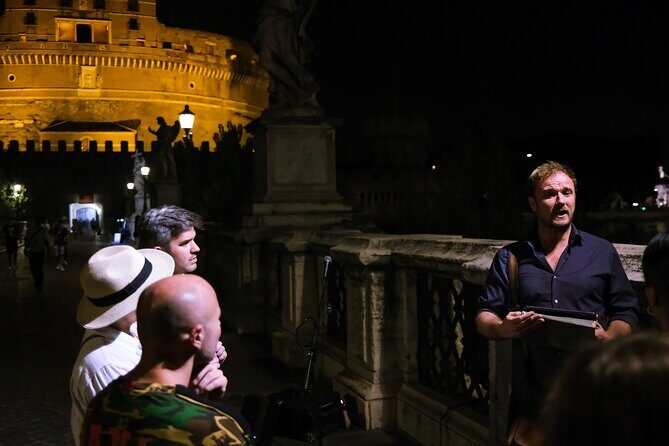
This is a walking-heavy experience with travel time included between stops. You’re looking at a steady pace rather than long sit-down breaks, with a 40-minute block in the crypts and shorter segments at the rest.
You’ll also have a built-in moment for food and drinks: there’s a stop for optional snacks. That’s a nice pressure release, because you don’t want to be hungry when you’re trying to follow a detailed story.
The tour ends at Castel Sant’Angelo (Lungotevere Castello, 50). That’s a smart finish if you’d like to keep wandering afterward, since it drops you right in an area people naturally keep exploring.
Stop 1: Capuchin Crypts—3,500 skeletons up close
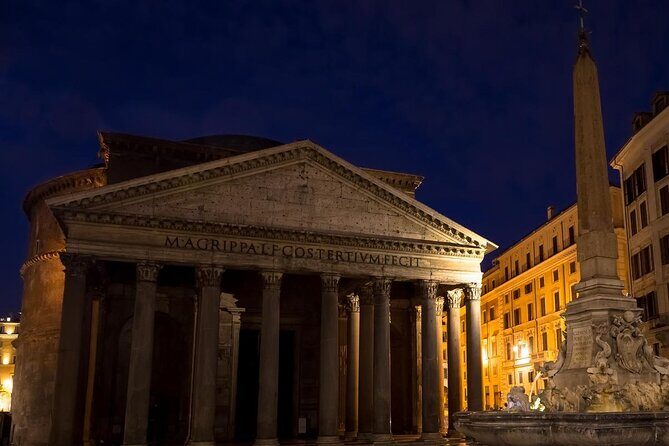
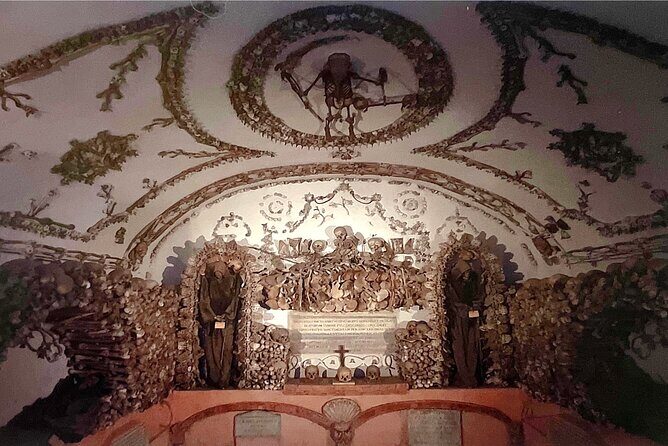
Your first stop is the Museum and Crypt of the Capuchin Friars, with the crypt entrance ticket included and about 40 minutes on the site. This is the anchor of the whole combo, because it gives you the physical reality behind the name: macabre decoration and a crypt environment that features 3,500 skeletons.
What makes this part worth doing with a guide is context. A display like this can look shocking, or just strange, until you understand how and why it became a place people visit. Your guide’s job here is to connect the imagery to the backstory, so the crypt doesn’t feel like random gore.
One practical upside: starting here sets the tone early. If you’re going to be mentally prepared for the rest of the evening’s themes, you’ll want the crypt as your first “reset.”
Via Rasella: a WWII tragedy in Rome’s modern dark layer
After the crypt, you move to Via Rasella for a quick 5-minute stop. This is where the tour shifts from bone-and-legend shock into darker, more modern history tied to the Second World War.
Even though it’s short, the value is that it widens your mental map of “Rome’s dark side.” Not all darkness is centuries old. Some of it is recent enough to feel like history that brushed shoulders with everyday life.
If you prefer slow immersion, you might find this stop brief. But it works as a tempo change: you don’t want the entire tour to be one long heavy scene.
Trevi Fountain: beauty, longing, murder, and maybe hauntings
The tour then heads to Trevi Fountain for about 10 minutes. You get a different angle on a sight most people already recognize instantly, with a story that sits behind the postcard image: longing and murder, and the idea that the location could still feel haunted.
This is a smart kind of storytelling stop. It lets you look at a mainstream attraction and treat it like a stage for human stories rather than just architecture. You’re not just seeing the fountain; you’re getting a reason the story sticks.
The downside is also baked in: this is a short visit. The benefit is you’ll likely move on feeling like you learned something, not like you spent your evening waiting for one place to clear.



Piazza della Rotonda: Pantheon magic with a gruesome counterpoint
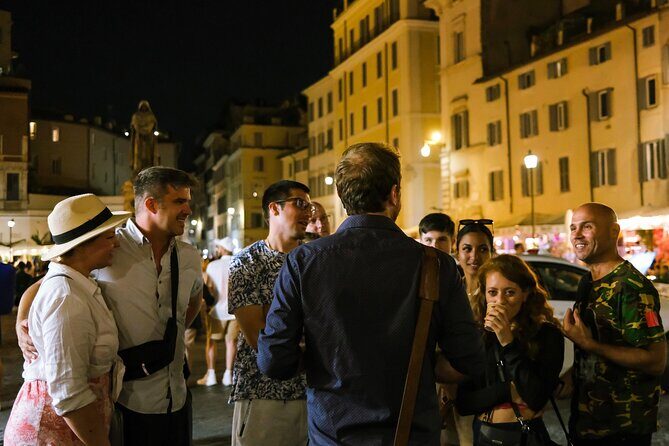
Next up is Piazza Della Rotonda, about 10 minutes, with the Pantheon as the big landmark reference point. But the tour focuses on what sits opposite it: a building tied to a gruesome past, along with the claim that it may have influenced similar legends around the world.
This stop is effective if you like “the street-level contrast” approach—how one corner can hold both beauty and the darker ideas people later built around it. It’s also a reminder that Rome’s famous monuments aren’t living in isolation; they sit in a web of older tales.
Because the time is short, don’t expect a full architectural breakdown. Think of this as story first, then a quick visual scan of the area.
Piazza Navona: haunted window and the marble head watching
In Piazza Navona you’ll spend about 20 minutes, and it’s one of the stronger storytelling blocks. Here you’ll hear two darker tales, including a haunted window and mention of a mysterious marble head that still watches over the square.
This is the kind of stop where you can take in the vibe while your guide gives you the narrative thread. Navona is already dramatic in daylight, and at evening it can feel even more theatrical—perfect for ghost lore and eerie details.
If you like longer stops that let you look around between stories, this one is a good match. If you’re trying to squeeze a lot of other plans after, keep in mind you’ll still be finishing around the end of the combo’s pacing.
Campo de’ Fiori: Giordano Bruno and the statue’s mood
At Campo de’ Fiori (about 15 minutes), the tour turns to the story of Giordano Bruno. His scientific and philosophical ideas weren’t received well by the Church, and the guide connects that conflict to the present-day feel of his statue, described as not looking so happy.
This stop works well because it’s grounded in a named person and a known conflict. You get a clearer story arc than generic “spooky here” lore, and the statue becomes a symbol rather than just a landmark.
It’s also a good “pause” moment in the pacing. You’re still moving with the group, but the narrative is more personal and historical than purely ghostly.
Vicolo delle Grotte and Ponte Sisto: one street ghost story at a time
Two shorter stops follow: Vicolo delle Grotte (about 10 minutes) and Ponte Sisto (about 10 minutes).
In Vicolo delle Grotte, you’ll hear about a self-proclaimed magician said to still haunt the street. This gives the tour a classic Rome flavor: the idea that cleverness, showmanship, and fraud can outlive the person who started it.
Then at Ponte Sisto, the mood shifts again. You’ll hear about a woman who rose from poverty to rule Rome, and she’s reputedly tied to hauntings on the bridge. Whether you take the haunting literally or as legend, it helps you notice the bridge as a place where stories cluster.
Together, these two stops keep the pace lively and prevent the tour from feeling repetitive. They’re also good if you want quick hits rather than one long deep scene.
Santa Maria dell’Orazione e Morte: unusual decoration and monks in public life
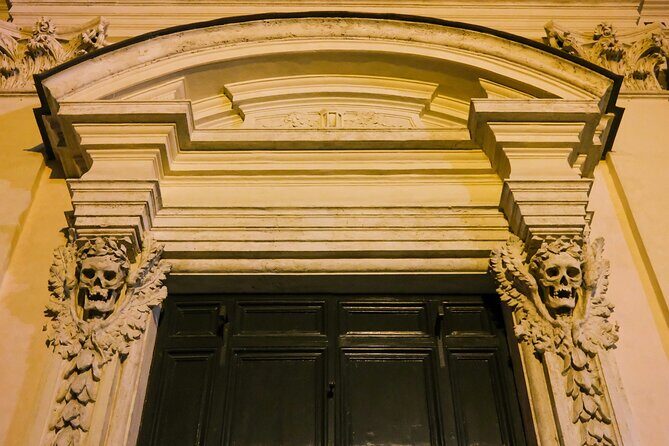
The tour then heads to Chiesa di Santa Maria dell’Orazione e Morte for about 10 minutes. This church is described as having unusual decoration, plus monks with a rather unusual role in public life.
This stop is a nice middle point between pure horror imagery and the more human side of Rome’s dark reputation. You get religion here, but it’s not presented as just peaceful tradition; it’s tied to roles and actions people connected to real civic life.
It’s not a long visit, so you won’t be studying artwork for hours. You’ll be listening, looking briefly, and then moving on.
Via di Monserrato and Via dei Banchi Vecchi: prison echoes and poison history
Two more 10-minute stops make up a rough double feature: Via di Monserrato and Via dei Banchi Vecchi.
Via di Monserrato is tied to a notorious prison, with the idea that tortured souls can still be heard. That’s a heavy concept, and it’s clearly designed to keep the “dark side” theme consistent after the earlier church stop.
Then Via dei Banchi Vecchi shifts to a prolific poisoner in history. The guide’s explanation includes why some people may think she was doing the best job for the women of Rome. It’s a disturbing angle, but it also pushes beyond simple villain talk into a discussion of power, fear, and gender in historical narratives.
Short stops like these are great when you want a fast, memorable story. If you prefer to sit with one topic longer, you may wish you had more time here.
Via del Banco di Santo Spirito and Castel Sant’Angelo: executions and the Cenci family tragedy
The final stretch brings you to the role of Rome’s official executioner, described as serving for over 60 years, at Via del Banco di Santo Spirito. Expect a shocking life story—again, it’s quick, but it’s clearly meant to land.
Then you end with Castel Sant’Angelo, about 10 minutes on the site, where the guide connects the place to executions and to a tragedy involving the Cenci family. The story frames Castel Sant’Angelo as a bridge to judgment and a place that’s still associated with haunting.
Ending here is fitting. Even if you’re done with the most intense details, Castel Sant’Angelo is the kind of landmark that makes people want to keep looking. You’ve just heard why the area mattered in the harshest ways, and then you finish in a place built for power and consequence.
What you’ll like most (based on how the tour works)
This combo earns praise for a reason: it doesn’t scatter your attention. The entire walk is built around storytelling, with the crypt as your first big scene and the rest of the night as a run of short, specific “dark history” moments.
I also like the way the small group format supports timing. With a max of 15 travelers, the guide can keep the flow tight, and you’re less likely to get lost while waiting.
And if you’re going with younger folks, the guides’ tone matters. Ivana, for example, was highlighted for making it engaging for teenagers, which usually means the pacing and explanations are clear, not just theatrical.
Who this is best for, and who should skip it
This tour fits best if you want story-driven Rome. If you’re the type who already loves ghost lore but also likes it when the guide ties legends to real locations and real conflicts, you’ll get more out of it than if you’re hunting for standard museum facts.
It also suits couples and small groups who like meeting a guide and staying together rather than hopping between apps and audio guides.
If you’re sensitive to violence, bones, prisons, or execution stories, you might want to choose a lighter evening option. The theme here is consistent from start to finish, and the Capuchin Crypts are not subtle.
Should you book this Rome Capuchin Crypts + Dark Side Ghost Tour?
I’d book it if you want a high-energy way to see Rome’s center with a guide who keeps the stories moving. The Capuchin Crypts entry included part makes the price feel fair, and the rest of the evening is packed into short, watchable segments at major landmarks like Trevi Fountain, Piazza Navona, and the Pantheon area.
I’d think twice if the idea of skeletons plus execution and murder stories will stress you out. For the right mindset, though, this is a strong value combo: one paid highlight, many meaningful stops, and a small-group feel that keeps the night from turning into chaos.
FAQ
What’s included in this combo?
Capuchin Crypt entrance is included, along with the tour’s chills and entertainment. Snacks are not included, though there’s a stop for optional snacks and drinks.
How long is the tour, and when does it start?
It’s about 4 hours and it starts at 5:00 pm. The end point is Castel Sant’Angelo.
Is it offered in English, and what’s the group size?
It’s offered in English. The tour has a maximum size of 15 travelers.
Where do I meet, and where does it end?
You start at Via Vittorio Veneto, 19, 00187 Roma RM, Italy and end at Castel Sant’Angelo, Lungotevere Castello, 50, 00193 Roma RM, Italy.
What tickets do I need?
You’ll get a mobile ticket. The Capuchin Crypt entrance fee is included for the crypt stop.
Can I cancel for a full refund?
Yes. You can cancel up to 24 hours before the experience start time for a full refund. If you cancel less than 24 hours before, the amount paid won’t be refunded.