REVIEW · COLOSSEUM TOURS
Colosseum Virtual Reality Outdoor Experience with Audioguide
Book on Viator →Operated by ANCIENT AND RECENT · Bookable on Viator
The Colosseum is already impressive in real life, but the VR angle adds a new kind of wow. This experience puts you outdoors near the monument and uses Oculus 3D glasses to show several certified reconstructions, with an integrated audio guide to walk you through what you’re seeing. It’s designed to help you grasp scale and layout, including the arena area and even the underground spaces, all without needing to step inside.
Two things I really like: first, the historical setup is tied to reconstructions that were checked by the Archaeological 3D Laboratory of Sapienza University of Rome, so you’re not just watching generic sci-fi. Second, you get an English-speaking assistant to keep things clear in the moment, and one guide named Cristina was specifically praised for being calm and prepared with a mixed group that included young kids.
One possible drawback to consider: VR visuals can vary by headset and conditions, and one person noted flickering and graphics that weren’t as crisp as they expected from another VR experience in Italy. If you’re sensitive to that kind of screen issue, plan for it and don’t be shy about telling the staff if something feels off.
In This Review
- Key points before you go
- VR in front of the Colosseum: what you’re really buying
- Where you meet: starting at the Arch of Constantine
- Stop 1: the Arch of Constantine as your orientation anchor
- Stop 2: the Colosseum square and the reconstructed world
- What the Sapienza-checked reconstructions actually mean for you
- The assistant and the audio guide: clarity beats shouting
- How long it takes, and how to fit it into a Rome day
- Weather, screens, and headset comfort: the real-world stuff
- Price and value: is it worth $35.89?
- Who should book this Colosseum VR experience
- Should you book this VR Colosseum experience?
- FAQ
- Does this experience include an entry ticket to the Colosseum?
- Where do we meet for the tour?
- How long does the Colosseum VR outdoor experience take?
- Is it offered in English?
- What’s included in the price?
- How many people are in the group?
- What name and ID requirements apply for entry to the Colosseum/Roman Forum?
- Can I cancel for a full refund?
Key points before you go
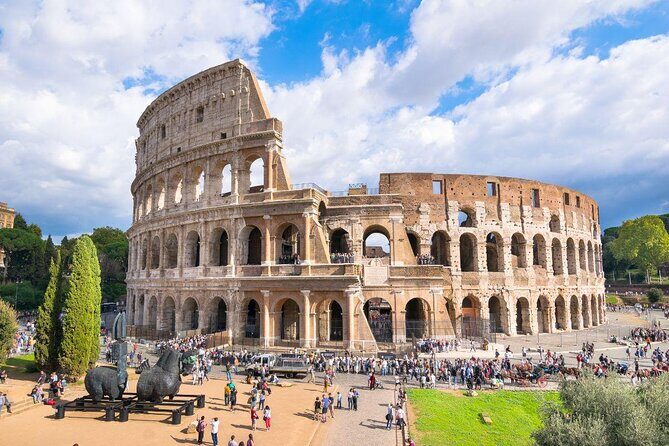
- Outside-the-monument VR: for security, you can’t bring 3D devices into the Colosseum, so the virtual scenes happen in the square area.
- Sapienza-checked reconstructions: the reconstructions are verified by the Archaeological 3D Laboratory of Sapienza University of Rome.
- English guide support: an English-speaking assistant helps you understand and stay on track.
- Good for families: the tone is educational without being overly stiff, and it can work for kids if they can sit through the headset time.
- A clean one-hour slot: plan on about an hour, which fits well between other Rome must-dos.
- Max group size of 24: small enough to feel organized, big enough you’re not waiting forever.
VR in front of the Colosseum: what you’re really buying
This is not a ticket into the Colosseum. The point is to give you a guided “see it in context” experience using Oculus 3D glasses while you’re standing outside the monument. That matters, because the Colosseum site is tightly managed, and the operator follows the rule that 3D devices can’t go inside.
Think of it as a smart warm-up. You’re using reconstructions to understand where stands, entrances, and spaces would have been, so when you later see the real stone, your brain has a model to attach to. If you come in cold, the Colosseum can feel like “big walls and arches.” With this setup, you’re more likely to notice shapes and alignments that match how the site functioned.
Also, the headset experience includes audio that’s integrated into the tour, so you’re not only watching visuals. You’re getting story and explanation tied to what you see.
You can also read our reviews of more tours and experiences in Rome.



Where you meet: starting at the Arch of Constantine

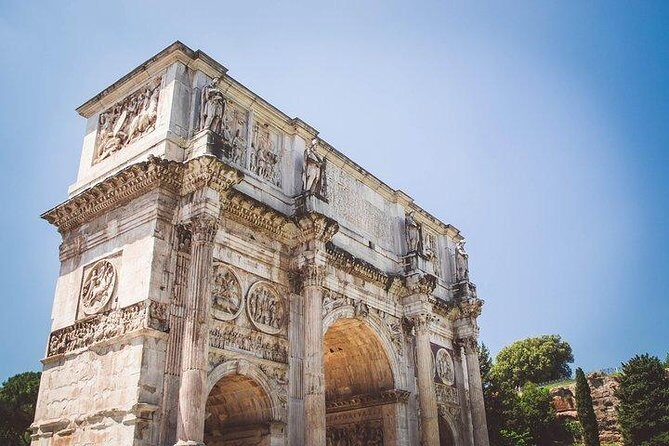
You start at the Arch of Constantine, in Piazza del Colosseo, 00184 Roma RM, Italy. That location is handy because it’s right in the Colosseum zone, close to where you’re already thinking of spending time.
The practical win here is timing. You’re not sent off across Rome to begin, and you’re not stuck figuring out how to get to a separate building. You show up near the monument, and the VR work happens where your eyes already expect it to happen.
And yes, you’ll need your mobile ticket. Bring your phone with the ticket ready, and make sure the names on the booking match what’s required for anything related to entry.
Stop 1: the Arch of Constantine as your orientation anchor
The tour’s first stop is the Arch of Constantine. On paper it’s just a listed location, but in practice it works as orientation.
Standing by the arch gives you an easy reference point for scale. Once you have a landmark like that in real life, the VR visuals feel less like you’ve been dropped into an alternate world and more like you’re gradually translating the monument back into what it used to be.
It also helps with one common Rome problem: everything is close, but nothing is organized for you unless someone points it out. Starting with a major arch means you’re less likely to feel lost before the headset even goes on.
Stop 2: the Colosseum square and the reconstructed world
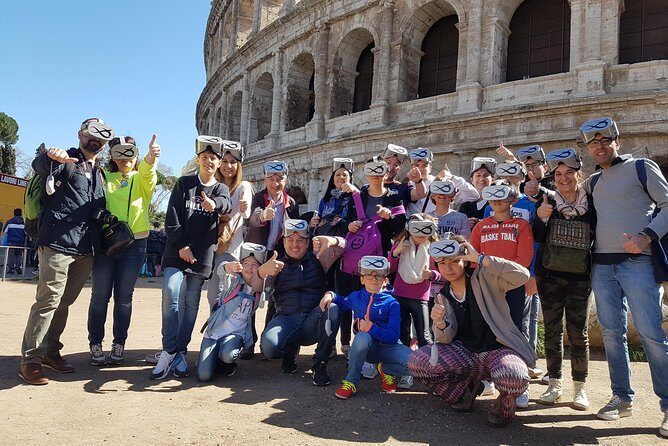
Your main action happens at the Colosseum. With the glasses on, you’re shown three certified reconstructions. You’re not only looking at the exterior as a single static scene; you’re shown different views that help you understand how the arena and surrounding spaces relate.
The description sets expectations clearly: you’ll walk through the Colosseum square with reconstructions that include the arena concept—where gladiators and even lions are part of the story—and you’ll also be guided toward the hidden and mysterious underground areas of the monument.
Now, here’s the practical takeaway for your visit planning: VR can’t replace scale in the way real stone does. But it can explain scale in the way stone often doesn’t. When you see how the arena might have looked and where underground access fits into the larger system, you’re more likely to look up at the right level and understand what you’re seeing later.
What the Sapienza-checked reconstructions actually mean for you
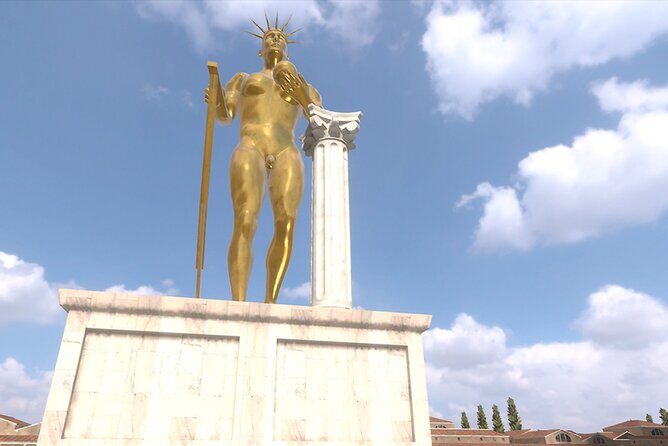
A lot of VR is basically guesswork wrapped in fancy visuals. This one makes a specific claim: the historical information is checked by the Archaeological 3D Laboratory of Sapienza University of Rome.
For you, that should translate into better confidence. You’re less likely to walk away thinking you saw a pretty version of history that doesn’t match the real one. Even so, a quick dose of realism is wise: reconstructions are reconstructions. They’re built from evidence and scholarly interpretation, but they still have to fill gaps.
So I like this approach best as a tool for understanding. Use it to get your bearings fast, then verify details when you’re on-site with the real structure.



The assistant and the audio guide: clarity beats shouting
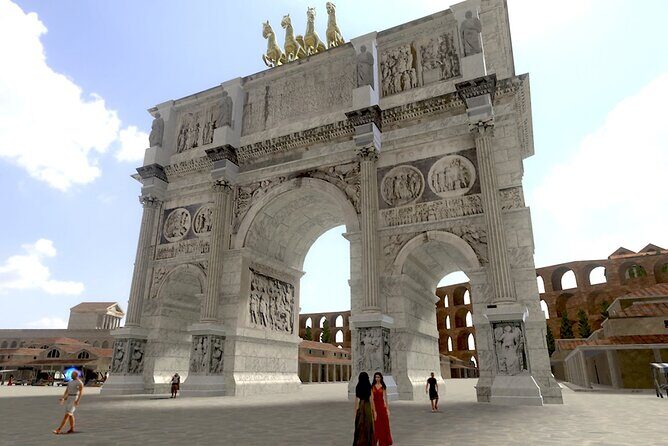
The tour includes an English-speaking assistant to guide your experience. If you’ve ever tried to do self-guided audio in Rome, you know how easy it is to miss the point. Here, the assistant is there, and the audio guide is integrated with what you’re seeing.
One review detail that sticks with me is the mention of Cristina, praised for being especially kind and prepared with a family group that included a 5-year-old and a 13-year-old. That gives you an idea of the tone you can expect: organized, patient, and more “explain it in human terms” than “deliver a lecture.”
If you’re traveling with kids, this matters more than you might think. The VR headset time is a fixed chunk of time, so having an adult who can keep things calm helps the whole family enjoy it rather than just tolerate it.
How long it takes, and how to fit it into a Rome day
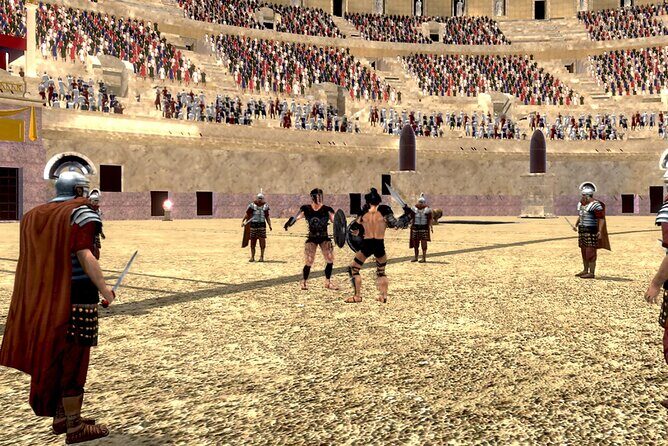
Expect about 1 hour for the experience. That’s a sweet spot. It’s long enough to feel like you got something meaningful, but short enough that you won’t feel like you lost the day to a timed ticket.
It’s also helpful that there are several daily tour times. So if you’re trying to dodge the strongest midday crowds or you prefer a morning start, you have options.
My practical suggestion: if you plan to do the Colosseum in the same general window, consider using this VR experience as the first step. It helps you turn the real stone into something you can interpret, not just something you can photograph.
Weather, screens, and headset comfort: the real-world stuff
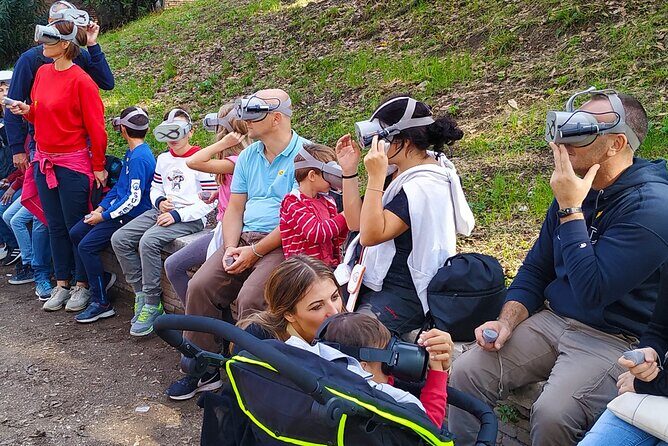
Because this is an outdoor experience, weather can play a role. One person noted that rain worries led to a different feel than what they expected, which is a reminder that Rome weather can be unpredictable and tour flow can shift.
Also, VR is a tech product, not museum marble. If the headset or display isn’t comfortable, or if there’s flickering, your enjoyment can drop quickly. One visitor specifically reported flickering and said the graphics weren’t as crisp as they were used to seeing from another VR stop in Italy.
So here’s what I’d do: arrive a little ahead of time, let the staff know if you struggle with the headset, and pay attention to how your eyes feel once it starts. If there’s a technical issue, the fastest fix usually comes from telling the assistant on the spot rather than powering through.
Price and value: is it worth $35.89?
At $35.89 per person, this sits in a reasonable middle range for a timed, guided, technology-based experience near a top Roman monument. The value isn’t that it replaces the Colosseum entry ticket. It doesn’t.
The value is what it adds: a structured way to see the Colosseum’s layout and story in reconstructed form, with an audio guide and English-speaking help. You’re paying for context and clarity. If you love history, it makes the real visit click. If you’re traveling with kids, it can make the site feel like more than a big ruin.
Where it’s not as strong is if you want only real-world access. If what you really want is the full interior experience, then you’ll need to plan the Colosseum/Palatine Hill/Roman Forum entry separately. This VR experience can be the setup, not the substitute.
Who should book this Colosseum VR experience
This works best for you if:
- You want a first-time Colosseum orientation before spending time on your own.
- You like learning in a way that feels visual, not just read-on-a-sign.
- You’re traveling with kids and want a guided, educational format. The tone seems family-friendly, including a guide named Cristina who was praised for managing kids without rushing anyone.
You might want to rethink it if:
- You’re very sensitive to screen flicker or VR discomfort.
- You expect the experience to function like an entry ticket into the Colosseum. It does not include admission.
Should you book this VR Colosseum experience?
If you want your Colosseum visit to make more sense fast, I think it’s a good choice. The strongest reason to book is that you’re not only seeing the monument—you’re learning how it likely looked and operated, using three certified reconstructions plus audio guidance, with an English-speaking assistant.
If you’re on the fence, use this decision rule:
- If you plan to visit the Colosseum area and want to understand it, book it.
- If you only want an entry ticket to walk inside, skip this and put your money toward admission.
In short, treat it like a high-impact primer for one of Rome’s biggest names. You’ll walk away with a mental map, and that makes the rest of the day easier on your feet and your brain.
FAQ
Does this experience include an entry ticket to the Colosseum?
No. This is a VR experience outside the monument. The description also notes it does not include the entry ticket for Colosseum/Palatine Hill/Roman Forum.
Where do we meet for the tour?
The start point is the Arch of Constantine, Piazza del Colosseo, 00184 Roma RM, Italy. The activity ends back at the meeting point.
How long does the Colosseum VR outdoor experience take?
It’s listed as about 1 hour.
Is it offered in English?
Yes. It’s offered in English, and there is an English-speaking assistant for the virtual experience.
What’s included in the price?
The experience includes Oculus 3D glasses for the virtual experience and an English-speaking assistant. The audio guide is integrated into the experience.
How many people are in the group?
The tour/activity has a maximum of 24 travelers.
What name and ID requirements apply for entry to the Colosseum/Roman Forum?
You should provide the full names of all travelers when booking. The info also states that for successful entry to the Colosseum and Roman Forum, each traveler must present a valid passport or ID document that matches the name provided. It also warns that denied entry may happen if the voucher with all travelers’ full names is not presented at the ticket office prior to entry.
Can I cancel for a full refund?
Yes, free cancellation is available up to 24 hours in advance of the experience start time for a full refund. Cancel less than 24 hours before the start time and the amount paid will not be refunded.