REVIEW · COLOSSEUM TOURS
Colosseum Arena Floor, Roman Forum & Palatine Hill Tour
Book on Viator →Operated by Crown Tours · Bookable on Viator
Arena floor access changes the whole vibe.
This tour strings together three heavy hitters from Ancient Rome: the Colosseum, the Roman Forum, and Palatine Hill. What makes it special is the restricted arena floor time plus a guide who helps you decode what you’re looking at, even when the site is crowded.
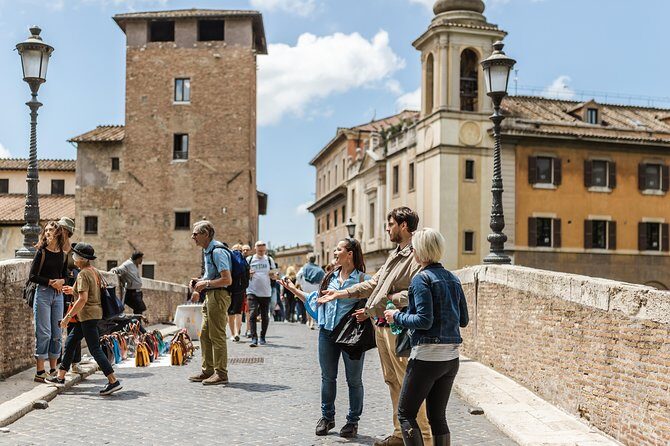
Two things I especially like: the timed, organized entry that helps you avoid the worst lines, and the way the guide’s stories turn stone ruins into a clear walk through how Rome actually worked. When guides like Laura, Valerio, JC, Mary, Nadiya, Mario, Lara, Marco, and Daniele V show up, the difference is obvious—expect clear pacing, sharp explanations, and frequent moments where you can picture daily life or gladiator showmanship without guessing.
One consideration: the day moves fast. You’ll cover a lot of ground in a short window, and if you’re the type who wants long, quiet wandering, the Forum portion can feel like it takes more time than expected depending on pacing and the group.
In This Review
- Key things that make this tour worth your time
- Entering The Colosseum Without Losing Half Your Day
- Colosseum Arena Floor: What You See Is the Point
- Roman Forum: The City’s Power Center, Not Just Pretty Stones
- Palatine Hill: Legends, Origins, and Imperial Reality
- The Guide + Headsets Combo: How You Actually Get Value
- Price and Value: What $95.53 Buys (and What It Doesn’t)
- What Your Walk Will Feel Like (Timing, Group Size, and Heat)
- Should You Book This Tour or DIY It?
- FAQ
- How long is the Colosseum Arena Floor, Roman Forum & Palatine Hill tour?
- What’s included in the tour price?
- Do I need a passport or ID?
- Where do I meet the tour, and where do I check in?
- Is the tour in English?
- How big is the group?
- Are food and drinks included?
- Are there rules about what I can bring into the Colosseum?
Key things that make this tour worth your time
- Gladiators’ arena floor access so you’re not just staring up at the Colosseum from the seats
- Audio headsets to hear the guide clearly inside a loud, packed attraction
- Timed entry with reservation value that reduces waiting (especially important in peak crowds)
- Three-site routing that prevents the usual Rome logistics headache
- Small-group feel (max 24) that makes questions and photo stops more manageable
Entering The Colosseum Without Losing Half Your Day
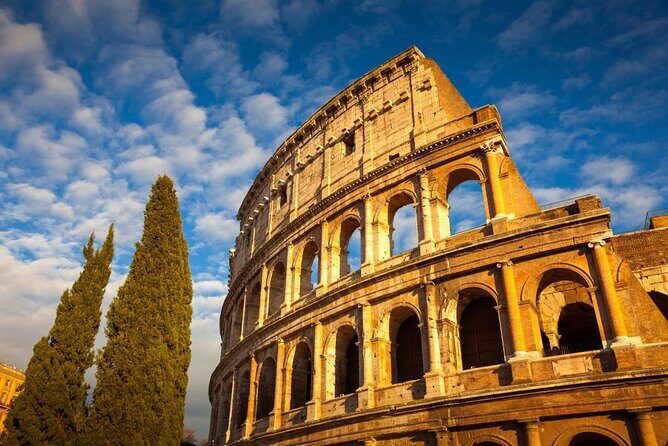
Start at Via della Polveriera. Your official tour start point is listed as Via della Polveriera, 13, but you also need to show up at the office at Via della Polveriera, 8 to join the tour. I’d treat that like your hard rule: get there early enough to handle check-in, because the Colosseum area runs on tight timing.
This is a timed-entry style experience. That matters because the Colosseum is one of the busiest places in Rome. Having a reservation and a plan for how you flow through checkpoints keeps your visit from turning into line-watching. You should also plan for security checks and the usual site rules—no glass, no sharp objects, no alcohol, no spray.
One more small but real detail: the order can shift based on internal Colosseum arrangements. That’s normal for a place with real crowd control and entry management, so don’t panic if your day doesn’t exactly match a textbook sequence.
You can also read our reviews of more tours and experiences in Rome.



Colosseum Arena Floor: What You See Is the Point
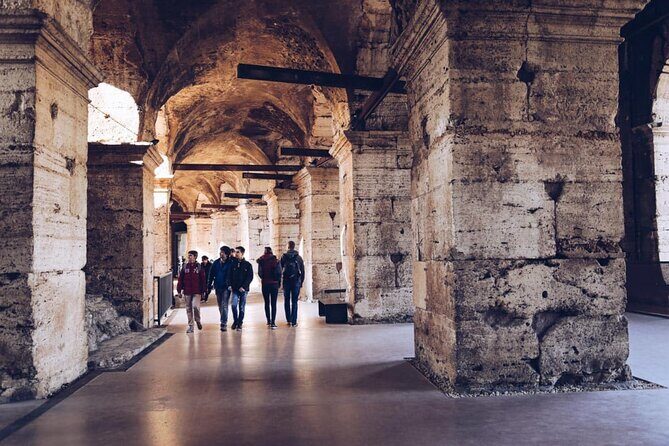
The heart of the experience is the Colosseum itself, starting with entry that feels like stepping into a role. You move through the monument with your guide, and you’ll get context for what you’re seeing as you approach the arena experience.
The standout benefit is exclusive access to the Gladiators’ arena floor. Standing there changes your perspective fast. The Colosseum is impressive from anywhere, but from the arena level you get a better sense of scale—why certain lines of sight mattered, where crowds pressed, and how the show likely felt from the ground.
The tour description mentions following the gladiators on the restricted arena floor, and that tracks with why so many guides focus on storytelling at this moment. If you’ve read about Roman spectacle, you’ll recognize the themes immediately. If you haven’t, don’t worry. A good guide will point out the elements your eyes would otherwise skip: how the space is laid out, what the surrounding structures suggest, and why this venue mattered politically as much as culturally.
Inside the Colosseum, you’ll have headsets so you can hear the commentary even as the crowd noise ramps up. That’s one of those “small tech” things that makes a big difference in ruins and monuments, where everyone talks over everyone.
Roman Forum: The City’s Power Center, Not Just Pretty Stones
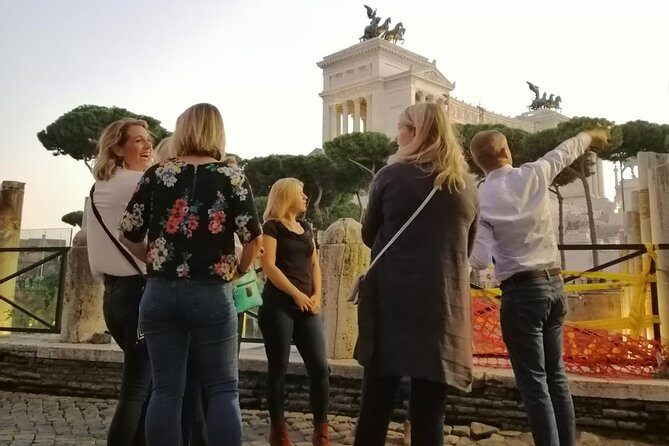
After the Colosseum, you head to the Roman Forum. Think of this stop as Rome’s public stage—business, law, debate, and politics in the same footprint.
You’ll get a guided walk that focuses on what the Forum represented. The Forum started as a place for commerce and civic life. Over time, it became tightly tied to power struggles, especially during the Republican era, where politics could turn into a full-on contest of influence.
This is also where you’ll benefit most from a guide. Ruins spread out like a puzzle, and without someone narrating the “why,” you can end up admiring fragments instead of understanding relationships. With interpretation in real time, you start to connect the dots between buildings, monuments, and what they likely meant to people moving through the space.
One practical point: this stop can feel long if you’re expecting mostly Colosseum time. The tour is designed to cover all three sites, and the Forum is a major chunk of the story. If you’re especially fascinated by politics, speeches, temples, or how Roman public life worked, you’ll probably love that emphasis. If not, you can still get value—just go in knowing the Forum is the “explainer” stop that builds the context for everything else.
Palatine Hill: Legends, Origins, and Imperial Reality
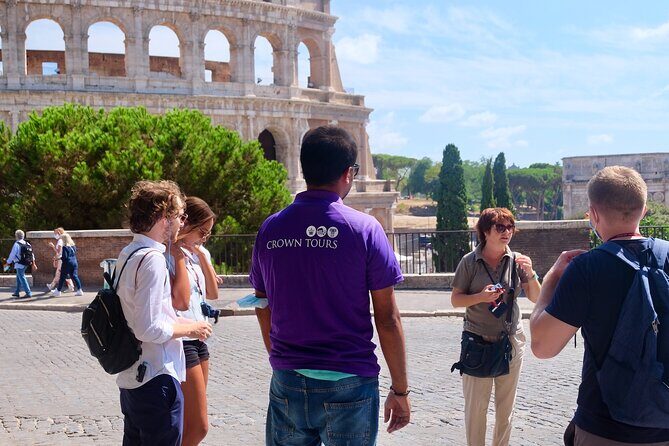
Next comes Palatine Hill. This is the part of the tour where the vibe shifts from public institutions to origins and status.
Palatine Hill is described as the site of Rome’s beginnings by legend, along with ruins tied to the imperial era. Translation: you’re walking through ground that people have layered with meaning for centuries. Even if you only catch the highlights, the guided format helps you avoid the common problem—standing in front of ruins and thinking, so what?
The Palatine stop is shorter than the Forum, so it’s likely paced for meaning over meandering. You’ll still get enough explanation to understand why Palatine mattered, not just what’s there. Expect the guide to connect the hill’s role to the larger story of Rome’s growth and how power transformed over time.
If you like “story-driven ruins,” Palatine Hill is where that style tends to click. The hill isn’t only about brick-and-stone remains. It’s about how Romans—and later generations—imagined Rome’s origins.
The Guide + Headsets Combo: How You Actually Get Value
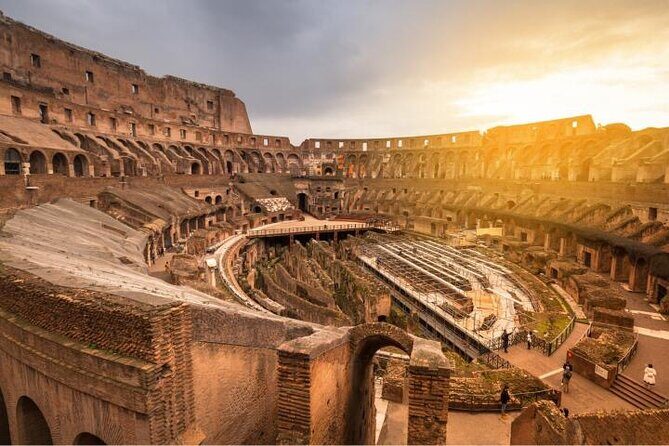
This tour leans hard on interpretation. You’re not paying just to enter three places. You’re paying to understand what you’re walking past, in the right order, without gaps.
The headsets are the unsung hero. When you’re close to the action inside the Colosseum and near crowds on the Forum, hearing the guide clearly is what keeps your attention on the site. I like tours that reduce the mental load. Here, the audio equipment helps you follow along without constantly asking people to repeat themselves.
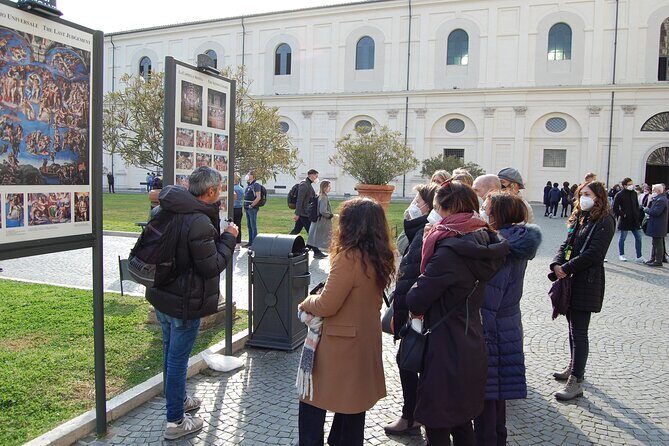
The guides themselves matter a lot, based on what I’ve seen from guide-specific outcomes in the tour’s feedback. Names that come up often include Laura, Valerio, JC, Mary, Nadiya, Mario, Lara, Marco, and Daniele V. The recurring pattern is clear: strong guides give you context, keep the group moving at a reasonable pace, and answer questions. Some guides also use visuals, like drawings or reconstructed views, which helps you understand what ruins looked like before time stripped them down.
One balanced reality check: if a tour’s pacing or audio setup goes sideways, it can make you feel like you’re stuck in a slow line with extra talking. You can’t control everything about crowds or equipment, but you can control how prepared you are—comfortable shoes, a patient attitude, and a willingness to let the guide do the connecting work.



Price and Value: What $95.53 Buys (and What It Doesn’t)
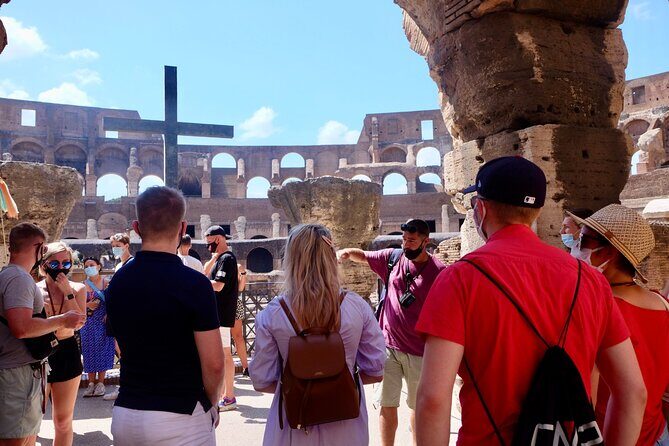
The price is listed as $95.53 per person for about 2 to 3 hours. That’s not just “admission.” It includes a Colosseum reservation fee and you also get the ticket bundle for the Colosseum, Roman Forum, and Palatine Hill archaeological area.
Here’s the value logic in plain terms:
- You get the arena floor access as part of the experience, not just regular entry. That’s a rare upgrade in Rome.
- You get guided time plus headsets, which can be the difference between sightseeing and actually understanding the place.
- You get timed entry assistance, which can save you hours of stress in one of the most crowded sights on earth.
What’s not included is food and drinks, and there’s no pick-up/drop-off service. So budget for a snack break on your own if you need one. Also, bring a realistic mindset: you’ll be moving through sites with real entry controls, so you’ll want to arrive ready to start.
If you’re coming to Rome with limited time and only one chance to do the Colosseum-Forum-Palatine circuit, a guided package tends to be money well spent. If you have several days and love independent wandering, you might choose a self-guided approach. But you’d still likely need to plan timing and interpretation.
What Your Walk Will Feel Like (Timing, Group Size, and Heat)
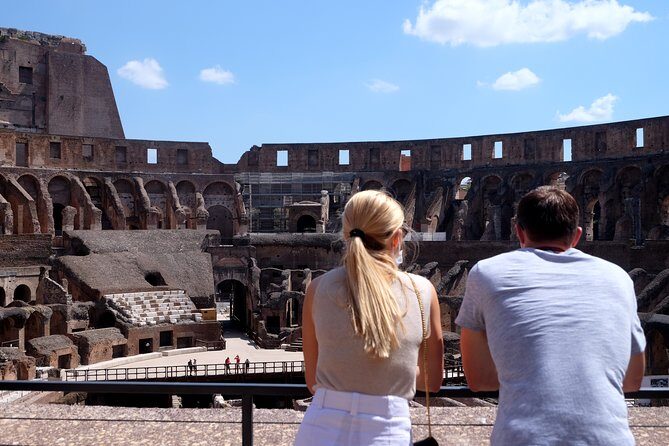
This tour runs about 2 to 3 hours, and in July and August it’s noted as around 2.5 hours due to heat. That’s actually useful information. Rome summers can feel like walking inside an oven, and shorter guided time helps.
Group size is capped at 24 travelers. Many groups come off as small-group in feel, especially when guides manage the flow at the Colosseum entrances and around the more congested Forum lanes. Still, you should expect some waiting at security checkpoints and during controlled entry movements. It’s a big site with rules. The tour can make it smoother, but it can’t erase crowd management.
Moderate physical fitness is recommended. This means: you’ll be on your feet, walking between the three zones, and moving through uneven historic terrain. Comfortable shoes are not optional. Also, the site forbids items like glass and sharp objects, so travel light.
Finally, you’ll need a valid passport or ID that matches the name used at booking. Provide full names for every traveler when booking, and make sure the day-of name matches what’s on the document. No ID means no entry.
Should You Book This Tour or DIY It?
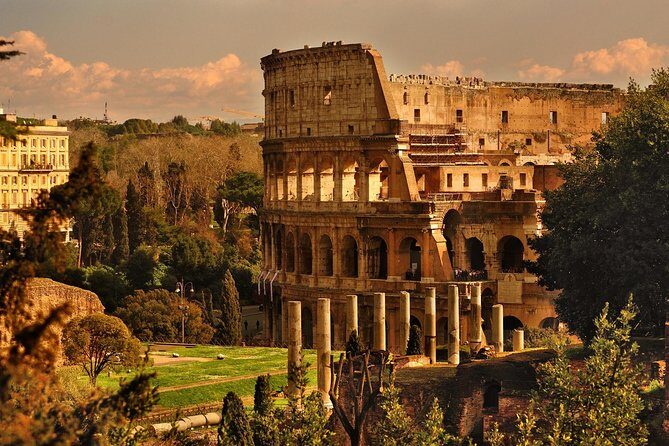
Book it if you want the fast lane to meaning, not just photo ops. Arena floor access plus a guided explanation system is a strong combo, especially if your Rome trip is tight or you dislike guessing what you’re looking at.
Skip it (or consider a different format) if you prefer slow, open-ended wandering and hate structured timing. This one is designed as a packed, guided route across three sites. Some people love the intensity. Others want more freedom and less narration.
If you do book, go prepared. Bring your ID, wear comfortable shoes, and mentally expect that the Forum gets real attention as part of the storyline. The best part of this tour is the way it helps you see how the Colosseum, the Forum, and Palatine Hill fit together as one big, political life in stone.
FAQ
How long is the Colosseum Arena Floor, Roman Forum & Palatine Hill tour?
It’s listed as approximately 2 to 3 hours. In July and August, the duration is around 2 hours and a half due to the heat.
What’s included in the tour price?
You get entrance to the Colosseum, Roman Forum, and Palatine Hill archaeological area, exclusive arena floor access, audio equipment (headsets), and a Colosseum entrance ticket with arena access plus the Colosseum reservation fee.
Do I need a passport or ID?
Yes. Each traveler must present a valid passport or ID document that matches the name provided at booking for entry to the Colosseum and Roman Forum.
Where do I meet the tour, and where do I check in?
The start point is Via della Polveriera, 13. You also need to show up at the office at Via della Polveriera, 8 in order to join the tour.
Is the tour in English?
Yes. The tour is offered in English.
How big is the group?
The maximum group size is 24 travelers.
Are food and drinks included?
No. Food and drinks are not included.
Are there rules about what I can bring into the Colosseum?
Yes. The Colosseum bans items including glass, sharp objects, alcohol, and spray.