REVIEW · ROME
Circo Maximo entrance ticket + virtual experience
Book on Viator →Operated by Elisabetta Barbaro · Bookable on Viator
A headset makes ancient Rome walkable. This Circo Maximo experience uses a Zeiss VR headset and on-site stop-and-go guidance to show what the Circus looked like at different moments in time, right where you’re standing in the remains of Rome’s famed grandstand.
You get admission to the site plus a multimedia guide, and the VR/AR moments are built into a tight route with eight stops. Two things I’d call out fast: you get a clear sense of how the stadium changed over centuries, and the full tour is quick enough that you can still plan a second round of sightseeing nearby. One consideration: the VR can feel less sharp than modern devices, and one part of the experience requires you to use VR only while seated.
In This Review
- Key points before you go
- Circo Massimo from Aventino: finding the start, staying oriented
- Your 40-minute route: how the VR and multimedia guide are timed
- Stop-by-stop at Circus Maximus: from valley floor to the Arch of Titus
- 1) The archaic valley floor
- 2) Circus from the 1st century BC to the 1st century AD
- 3) The imperial period
- 4) Seating tiers (cavea)
- 5) The Arch of Titus
- 6) Shops (tabernae)
- 7) The Middle Ages and modern times
- 8) A Day at the Circus (VR moment while seated)
- What you’re really learning: context you can reuse later
- VR tech reality check: where it shines and where it may disappoint
- Price and logistics: does $46.07 feel fair for what you get?
- Who this Circus Maximus VR tour suits best
- Should you book it? My take on the call
- FAQ
- How long is the Circo Massimo entrance ticket plus virtual experience?
- What’s included in the ticket price?
- Where do we meet for the tour?
- What happens if the weather is bad?
- Do I need to bring an ID for the VR headset?
- Can children participate?
- Is the tour private?
- Do I need to sit during the VR part?
Key points before you go
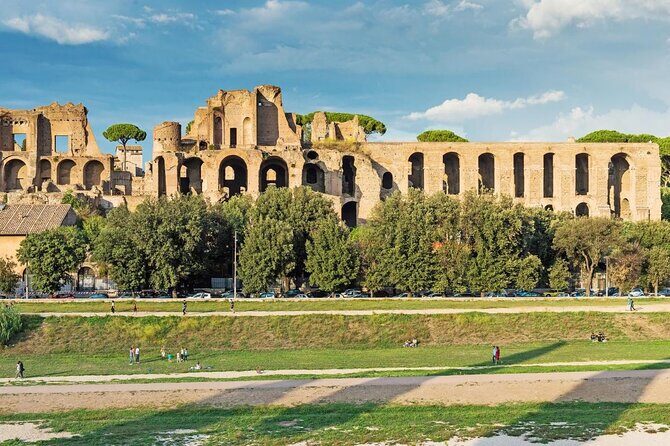
- Zeiss VR headset + admission included: ticket price covers both access and the guided tech experience
- Eight stops in about 40 minutes: you see the main architectural story without eating your whole day
- AR/VR is time-locked to key moments: one VR segment must be used while seated
- Weather can shut it down: rain or extreme heat means the experience won’t run
- Check VR viewing limitations: some scenes may feel restricted to certain viewpoints
- Double-check your ticket details: pricing mismatches can happen, so verify what’s on your admission before you start
Circo Massimo from Aventino: finding the start, staying oriented
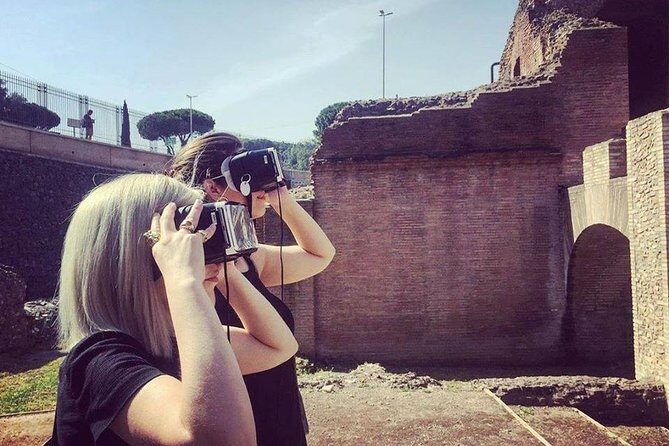
You’ll meet at Aventino-Circo Massimo (Mb) in central Rome. Practically, this is one of those meeting points where you should build in a few minutes of buffer. The site area around Circus Maximus can look like a construction zone from the outside, and you don’t want to be the person sprinting while everyone else is already getting organized.
I like that the meeting point is near public transportation. Once you’re there, you’re in an easy part of the city to pair with other classic Rome sights. The tour ends back at the meeting point too, so you don’t have to figure out a new transit plan at the end of your ancient-Rome sprint.
You can also read our reviews of more tours and experiences in Rome



Your 40-minute route: how the VR and multimedia guide are timed
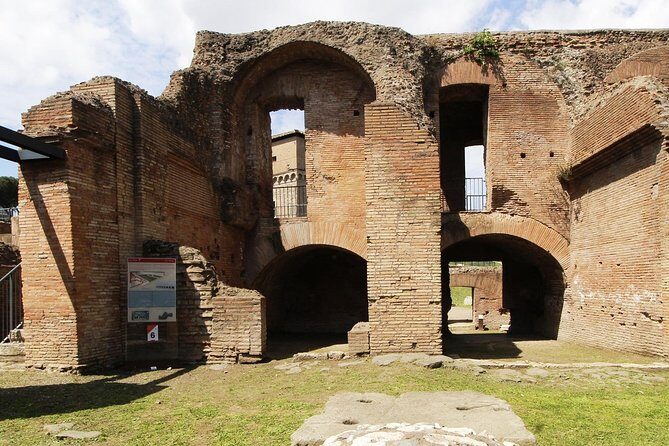
The whole experience is designed to fit into about 40 minutes, including site admission. That short timeline matters. Rome has a way of stealing time. Here, the schedule is tight, so you can keep your day moving and still get a more “alive” view of what you’re seeing.
Here’s what you can expect from the structure:
- You’ll walk between key locations tied to the Circus’s evolution.
- The multimedia guide explains what you’re looking at.
- The VR/AR moments layer history onto the current ruins.
One rule to note: the Virtual Reality portion tied to the later numbered point (point N. 8) must only be used while you’re seated. If you want to avoid any awkward delays, plan for that mentally. Also, the experience is a private activity for your group, which generally makes it easier to stay together through the route.
Stop-by-stop at Circus Maximus: from valley floor to the Arch of Titus
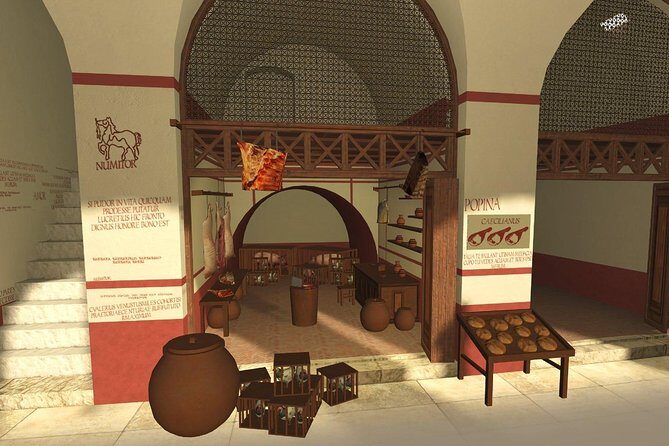
The route is built as an eight-stop story. You’re not just looking at scattered ruins—you’re watching the stadium’s layout change over time. That’s the real “value” of the design: history becomes a sequence.
1) The archaic valley floor
The tour starts with the valley floor in the archaic period. This is one of the best ways to understand a place like Circus Maximus, because the ancient stadium wasn’t invented fully formed. Seeing the earliest context first helps you later “recognize” the transitions when the VR shows how the Circus developed.
Watch for payoff here: even if the ruins feel subtle at first, the early stop is setting up the big-picture transformation.
2) Circus from the 1st century BC to the 1st century AD
Next comes the Circus’s phase from the 1st century BC to the 1st century AD. This is where you start getting a sense of how a Roman entertainment venue becomes a major public statement, not just a sports venue.
If you’ve ever wondered how Rome could turn ordinary space into a mass-audience machine, this period helps explain the “how,” not just the “what.”






3) The imperial period
The imperial period stop continues the story, showing how the Circus looks and functions when Rome is at full confidence. This is also where the tech helps, because it’s easier to follow the arc when the changes are staged step-by-step instead of trying to infer them from the ground.
4) Seating tiers (cavea)
Then you shift to the seating tiers, the cavea. This stop is practical. It anchors your mental model of where spectators were positioned and how the space “reads” from an ancient perspective.
Even with modern remains, the idea of layered seating is the kind of detail that makes everything else click.
5) The Arch of Titus
The Arch of Titus stop brings in a more specific landmark, which helps break up the stadium geography. It’s the kind of stop that gives you an actual reference point, so the rest of the route isn’t just “walk and guess.”
6) Shops (tabernae)
After the architecture, you get the tabernae, the shops. This is a subtle but important shift in focus: a Roman circus wasn’t only about racing. It was also about street-level commerce around the event.
For me, this stop is where the Circus stops feeling like a background monument and starts behaving like a place with daily life wrapped around spectacle.
7) The Middle Ages and modern times
This stop moves the timeline forward and shows how the area’s story doesn’t freeze in antiquity. You see how the Circus is treated after the classical era—how a once-grand public space can change role as centuries pass.
It’s a useful reminder that Rome is layered, and you’re standing in one of the city’s biggest “layer-cake” zones.
8) A Day at the Circus (VR moment while seated)
The finale is A Day at the Circus, with the key VR segment. This is where you’re meant to take the architectural pieces you’ve learned and imagine an event day. Because VR at point N. 8 must be used while seated, this ending is also where you’ll want to settle in and focus.
If you’re sensitive to motion sickness or visual discomfort, take the safety notes seriously. The experience includes guidance to consult a doctor if you experience symptoms like dizziness, nausea, perceptual after-effects, impaired vision, disorientation, neck pain, or involuntary movement.
What you’re really learning: context you can reuse later
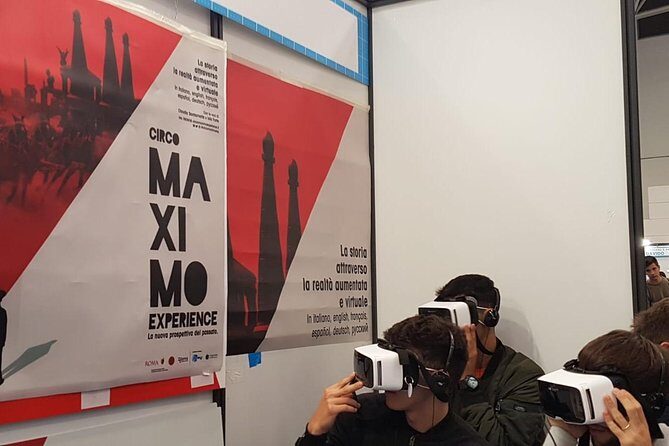
The best part of this type of experience is that it teaches you how to look. After the tour, you shouldn’t just “remember the ruins.” You’ll have a mental map of how the Circus’s design and surrounding life changed from one era to the next.
The eight-stop structure is doing more than filling time. It’s giving you:
- A timeline you can point to
- Architectural anchors like seating tiers (cavea)
- Urban texture through shops (tabernae)
- A clear arc that reaches beyond classical Rome into later periods
That means when you walk away, you’re not starting from zero if you come back later or pair the area with other Roman landmarks.
VR tech reality check: where it shines and where it may disappoint
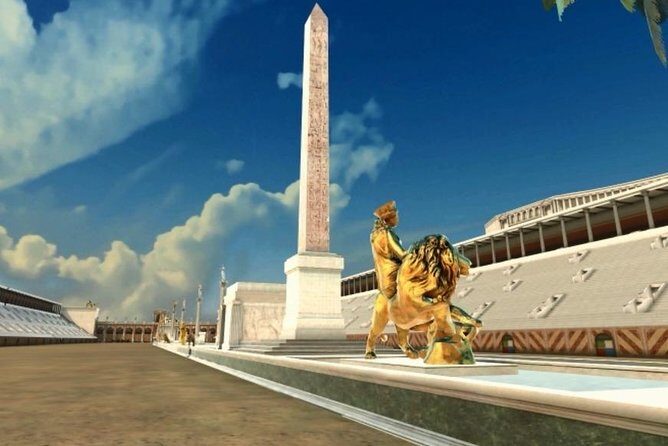
Let’s talk about the elephant in the headset: the VR quality isn’t guaranteed to feel state-of-the-art. Some visitors report the image quality is below modern expectations, and that certain scenes can limit your view depending on where you’re positioned.
Here’s how to make it work for you:
- Follow the instructions about where you can look and move. If a scene is meant to be viewed from a specific position, trying to force your own viewpoint can reduce the effect.
- Don’t judge the whole experience by the first VR moment. The tour is also a walking history route. Even if a VR scene feels limited, the site stops still give you information.
- Plan for comfort. If you’ve had motion-sickness issues with VR before, take extra care with the seating requirement and the health guidance.
Also, headset rental requires leaving a deposit of an ID (card or passport, in the original). So bring your ID. This is one of those practical details that can turn a smooth start into a stressful scramble.
Price and logistics: does $46.07 feel fair for what you get?
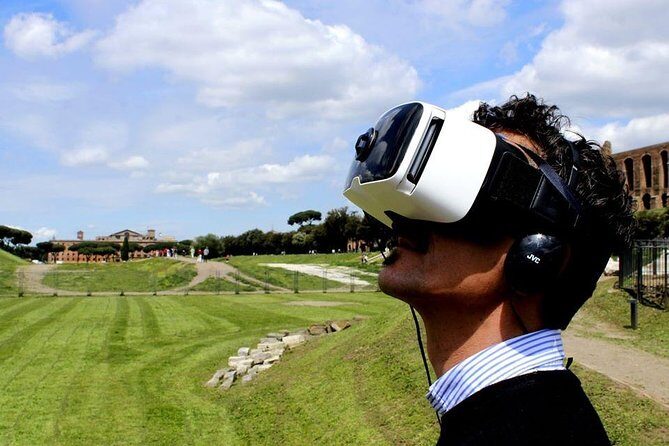
At $46.07 per person for a package that includes site admission plus VR headset time and a multimedia guide, you’re paying for convenience and guided storytelling—not just for looking at ruins.
Is it a bargain? It depends on how you value:
- Saved time (the route is designed to fit into 40 minutes)
- A technology layer that helps you visualize changes across eras
- A structured walk with eight topic stops
If you already feel confident reading ruins on your own, you might find the tech is a “nice add” rather than essential. If you prefer a guided experience that hands you a timeline and spatial context, the price can feel more reasonable because it’s bundled with the site ticket and the VR equipment.
Who this Circus Maximus VR tour suits best
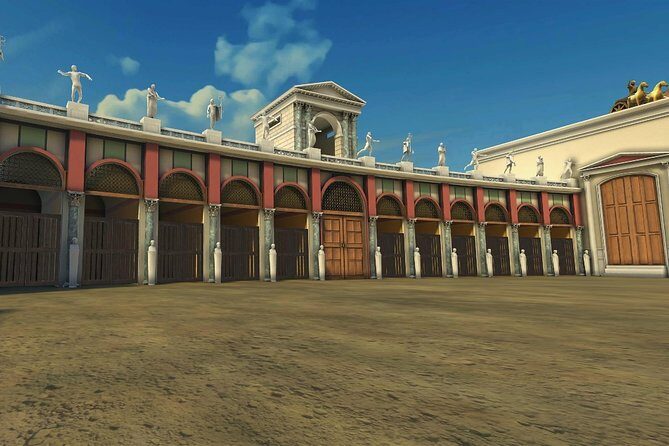
This experience is a strong fit if you:
- Want a fast, structured introduction to Circus Maximus without spending hours piecing it together yourself
- Like the idea of seeing Roman architecture through a staged timeline
- Are traveling with kids who can wear the headsets
On the kid point: children under 14 can wear the headsets only if they’re accompanied by an adult who must sign a disclaimer at the ticket office. If you’re bringing a family, the “quick and guided” format can be a win, as long as you’re ready for that extra step at the start.
Should you book it? My take on the call
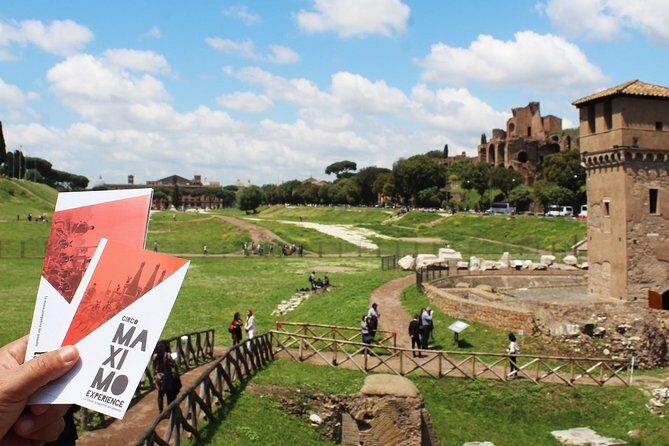
Book this if your top priority is understanding Circus Maximus as a changing space—an entertainment machine that evolved from ancient foundations into later eras. The eight-stop route plus multimedia guidance is built to give you a usable mental map, and the quick 40-minute format is ideal when you want Rome highlights without losing your whole afternoon.
Skip or think twice if:
- You’re very picky about VR image sharpness and full freedom of viewpoint
- You need a fully guaranteed run, since rain and extreme heat can cancel the experience
- You’d be upset if the VR portion feels limited or less modern than you expected
If you go ahead, do two things to stack the odds in your favor: verify your ticket details before you start (especially if you bought a reduced-price admission) and arrive with enough buffer time to locate the correct meeting area and get headset procedures squared away.
FAQ
How long is the Circo Massimo entrance ticket plus virtual experience?
The experience lasts about 40 minutes.
What’s included in the ticket price?
You get the site admission ticket plus a VR headset and a multimedia guide.
Where do we meet for the tour?
The start point is Aventino-Circo Massimo (Mb), 00186 Rome.
What happens if the weather is bad?
The experience requires good weather. If it’s canceled due to rain or extreme weather conditions such as excessive heat, it will not be possible to experience Circo Massimo. If canceled due to poor weather, you’ll be offered a different date or a full refund.
Do I need to bring an ID for the VR headset?
Yes. To rent the headset, you must leave in deposit an ID (card or passport, in the original).
Can children participate?
Children under 14 can wear the headsets if accompanied by an adult who must sign a disclaimer available at the ticket office.
Is the tour private?
Yes. It’s a private tour/activity, so only your group participates.
Do I need to sit during the VR part?
Yes. The Virtual Reality function at point N. 8 must only be used while seated.