REVIEW · ROME
Best neighborhoods of Rome by Mini Cooper Classic Cabriolet
Book on Viator →Operated by MINI TOUR ROMA · Bookable on Viator
A Mini Cooper tour makes Rome feel personal. This private ride stitches together quieter neighborhoods and big-name viewpoints in one easy circuit, without the constant stop-and-start you get on foot. You get unobstructed views from an open-top vintage car, plus a guide who can keep the pace relaxed and flexible.
What I like most is the mix of places: old districts like Trastevere and Monti alongside modern and 20th-century areas like EUR. I also like that the plan is light on ticket hassle, with stops marked as admission-free for the short visits. One drawback to consider: the stops are brief (about 10 minutes each), so this is best for orientation and street-level atmosphere rather than deep, museum-style exploring.
If you want to get your bearings fast and still taste Rome beyond the main postcard corridors, this one is built for you. Between neighborhood photo ops, local nightlife vibes at Ponte Milvio, and shopping-square energy at Piazza di Spagna and Piazza Cavour, it’s a smart way to sample variety in only 2 to 3 hours.
In This Review
- Quick hits: what makes this Mini Cooper Rome tour work
- Why this Classic Cabriolet Mini is a smart way to see Rome
- Price and value: what $210.51 per person buys you
- The route mindset: a Rome sampler built for different moods
- EUR: Fascism-era design you can still feel, plus a working trade center
- Colle del Gianicolo and Monteverde: the view stop that changes your whole perspective
- Quartiere Coppede: a short stop near the historic center with standout character
- Another Fascism-age neighborhood stop: why the theme matters
- Ponte Milvio at night: local nightlife vibes with an easy handoff to the next stop
- Piazza di Spagna and Piazza Cavour: shopping districts that also tell you where Rome goes
- Trastevere and Monti: old Rome streets with a lively edge
- What’s included: the comforts that make the ride feel easy
- Getting the most out of 2 to 3 hours
- Who this Mini Cooper Rome neighborhood tour fits best
- Should you book this Rome Mini Cooper neighborhood tour?
- FAQ
- How long is the Mini Cooper Classic Cabriolet Rome neighborhood tour?
- How much does it cost?
- Is it a private tour?
- Do they offer pickup and drop-off?
- What language is the tour offered in?
- What’s included in the tour price?
- Is lunch included?
- Are admission tickets required for the stops?
- Are children allowed?
- What is the cancellation policy?
- When does the tour operate?
Quick hits: what makes this Mini Cooper Rome tour work
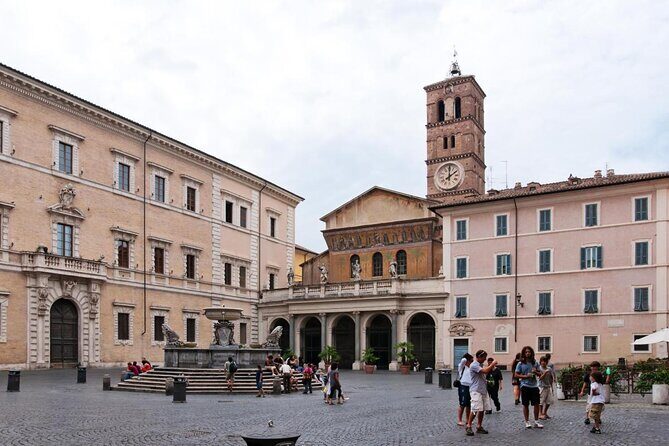
- Open-top Classic Mini Cabriolet for photos and wide sightlines through Rome streets
- Private, relaxed pacing so your driver/guide can adjust the flow for your group
- Neighborhood variety in one loop: EUR, Gianicolo/Monteverde views, Quartiere Coppede, Trastevere, Monti
- Short stop format (about 10 minutes each) that’s great for highlights and not great for long stays
- Food-and-drink friendly: coffee or tea plus bottled water, and alcoholic beverages included
- Pick-up and drop-off everywhere plus a mobile ticket to keep logistics simple
Why this Classic Cabriolet Mini is a smart way to see Rome
Rome is big. Even when you love walking, you can waste a lot of energy crossing between far-apart areas. This tour solves that problem with a private vehicle ride in a Classic Mini Cabriolet, which turns travel time into sightseeing time.
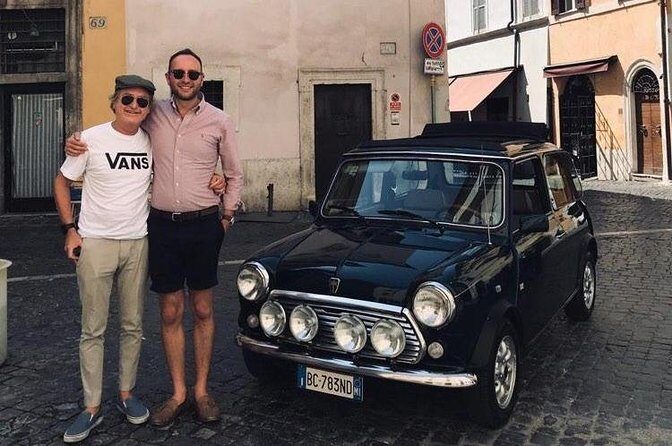
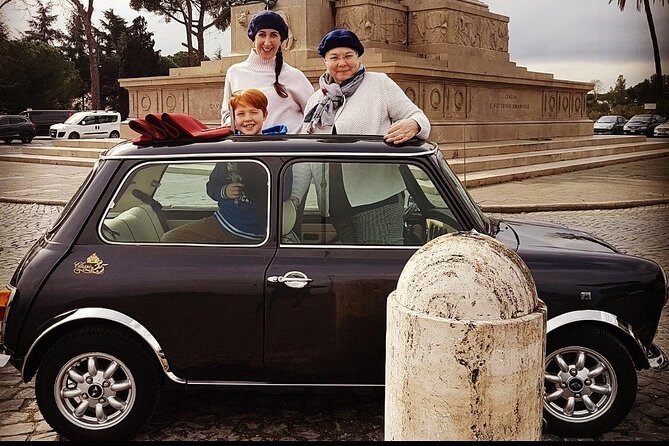
The open-top setup matters more than you’d think. You get better angles for photos, and you’re less stuck behind shoulders and umbrellas than you are on busy sidewalks. It also gives you a different rhythm: streets feel like “your route through the city” instead of “a place you’re sprinting through.”
And because it’s private, you don’t have to match your pace to strangers. You’re with a driver/guide, and the experience is built for a calmer tempo with flexibility.
You can also read our reviews of more tours and experiences in Rome.



Price and value: what $210.51 per person buys you
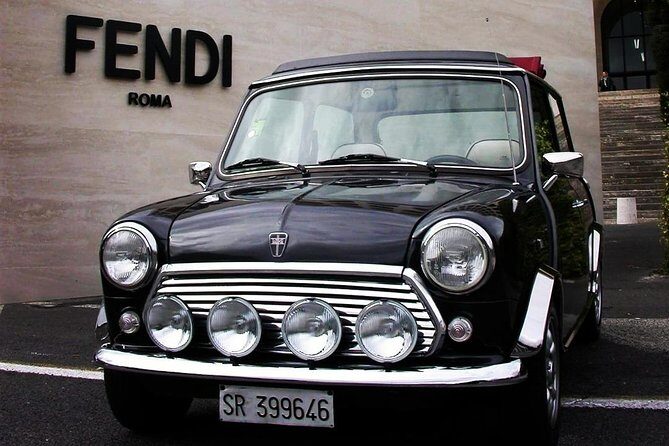
At $210.51 per person for about 2 to 3 hours, you’re paying for comfort, time savings, and a vehicle that’s part of the fun—not just transportation. This isn’t a budget bus loop. It’s a private car tour with guided context, plus extras like bottled water, coffee and/or tea, and alcoholic beverages included.
If you compare it to paying for transport while also trying to hire a guide for multiple neighborhoods, the “bundle” starts to make sense. You get:
- a guided route across diverse Roman areas
- a classic open-top car experience
- short stop windows for photos and quick neighborhood impressions
The main value trade-off is time. Since each stop is around 10 minutes, you won’t have time for long walks, and you’re not replacing a full day of roaming. Think of it as a high-impact sampler that helps you decide where you want to spend your next day on foot.
The route mindset: a Rome sampler built for different moods
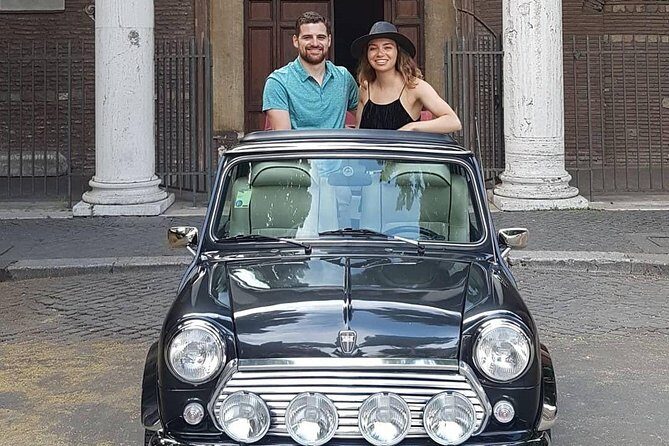
This tour is designed to change the vibe regularly, so the drive itself keeps you engaged. The stops move from different layers of the city:
- EUR, tied to a Fascism-era design plan and still functioning as a business/trade center
- Gianicolo/Monteverde views, for a higher, calmer look at the city
- Quartiere Coppede, a neighborhood with a distinct look near the historic center
- a second Fascism-age historic neighborhood stop (the name isn’t specified, but it’s intentionally part of the theme)
- Ponte Milvio, known here as a local nightlife area
- shopping districts at Piazza di Spagna and Piazza Cavour
- old Rome atmosphere in Trastevere and Monti, with Monti also tied here to handmade clothes and night life
If your Rome goal is to see multiple sides—architecture eras, view points, nightlife districts, and classic neighborhood streets—this structure fits well.
EUR: Fascism-era design you can still feel, plus a working trade center
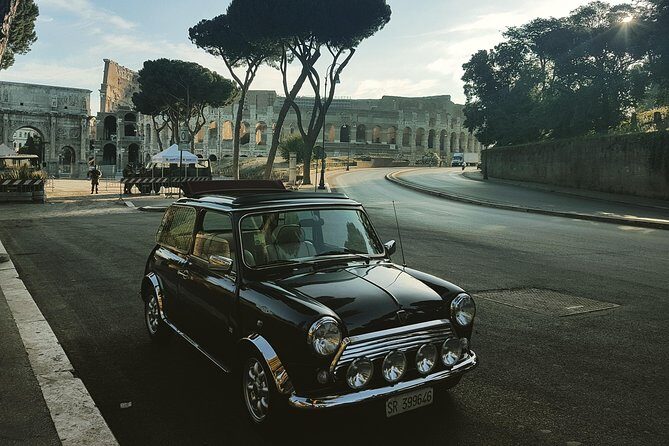
Your first major stop is EUR (Esposizione Universale Roma). You’ll spend about 10 minutes here, and it’s described as a neighborhood designed during the Fascism age that still functions like a trade center today.
Here’s why that’s useful. EUR isn’t just “another viewpoint.” It’s a reminder that Rome isn’t only ancient ruins and Renaissance domes. It also has 20th-century city planning that affects how streets feel, how buildings line up, and how modern work life fits into the urban fabric.
What to watch for: don’t treat EUR like a monument that requires museum time. Treat it like a neighborhood you can visually read in a few minutes. Use your stop window to get a sense of the grid, the scale, and the mix of official architecture with everyday activity.
A consideration: if you’re hoping for purely classical sights, EUR may feel like a contrast. But that contrast is exactly the point of building a route that includes more than just the obvious historic center hits.
Colle del Gianicolo and Monteverde: the view stop that changes your whole perspective

Next you head to Colle del Gianicolo (Monteverde neighborhood) for about 10 minutes, with beautiful views of Rome.
This is one of those stops that helps you re-map the city in your head. When you’re down at street level, Rome can feel like a maze of corners and landmarks. A view point does the opposite: it makes distances and neighborhoods click into place.
How to make the most of it: keep moving slowly but don’t overthink it. The goal is to get one good sweep view that helps you orient for the rest of the afternoon or evening. Since the stop is short, you’ll want to choose a spot quickly and then spend your time looking—not walking circles.
If you’re sensitive to wind or cold, plan for it. An elevated viewpoint plus an open-top car ride can mean breezes. A light layer can save your comfort.



Quartiere Coppede: a short stop near the historic center with standout character
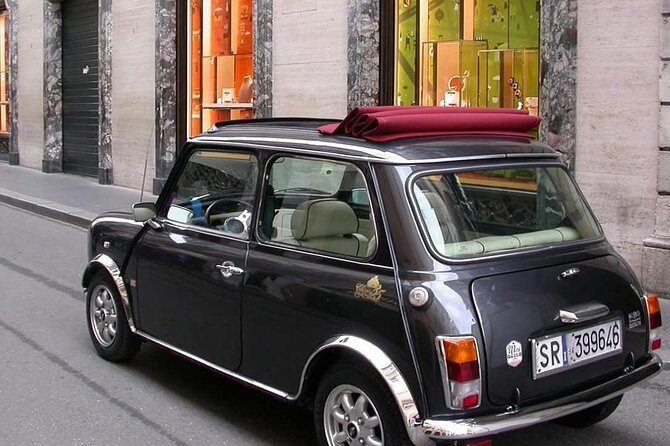
You’ll then visit Quartiere Coppede for around 10 minutes, described as a beautiful neighborhood not far from the historic center.
This stop is perfect when you want something that feels more “wanderable neighborhood” and less “main attraction crowd.” Even with limited time, these kinds of areas usually reward you for slowing down at street corners and looking up.
The practical move: as soon as you step out, scan for architectural details and street perspective lines. With only 10 minutes, your best use is quick observation and a few strong photos rather than trying to cover every street.
Because it’s near the historic core, this stop also works as a bridge: you can enjoy a distinctive neighborhood without committing to a full guided walk through the densest tourist zones.
Another Fascism-age neighborhood stop: why the theme matters
Your itinerary includes another historic neighborhood from the Fascism age before moving toward evening energy later in the route. The exact neighborhood name isn’t provided, but the intent is clear: the tour isn’t random. It’s themed around how different eras of planning show up in real neighborhoods.
This can be a big help if you like understanding what you’re seeing. Rome often gets packaged as one long story—ancient to modern—but in reality, the city has multiple chapters side by side. A second stop in this theme keeps you from forgetting what makes EUR and related areas different.
If you only have one evening or a half-day and want to understand Rome as a living city with political and design layers, this kind of programming can make the tour feel more meaningful than a “drive-by photo loop.”
Ponte Milvio at night: local nightlife vibes with an easy handoff to the next stop
After your viewpoint and neighborhood stops, you arrive at Ponte Milvio for about 10 minutes. Here, the tour frames it as a locals cool night life neighborhood.
Even if you’re not the biggest nightlife person, this is a useful district for learning how Rome changes after the day crowds. Bridges and riverside areas often act like social funnels—lots of movement, lots of atmosphere, and a different type of energy than central squares.
Consideration: because the stop is brief, you’ll be skimming the surface rather than settling in. Plan to use this stop for atmosphere and a few photos, then let the guide’s recommendations help you decide if it’s worth returning later.
Piazza di Spagna and Piazza Cavour: shopping districts that also tell you where Rome goes
Two of the stops are explicitly tied to shopping:
- Piazza di Spagna for about 10 minutes, described as the biggest shopping district
- Piazza Cavour for about 10 minutes, described as a locals shopping district from 1900 age
That pairing is interesting. Piazza di Spagna is widely known for being a center of retail energy, while Piazza Cavour is framed here more like a lived-in neighborhood shopping area with roots back around 1900.
Why this matters for your plan: if you want Rome that feels current and local, shopping areas often do that better than monuments. Even if you don’t buy anything, you get a pulse check on the day-to-night rhythm, street life, and how people actually move through their neighborhoods.
One drawback: if shopping isn’t your thing, you might wish for more time in purely residential or scenic areas. Still, even non-shoppers can enjoy the social choreography—people watching is part of the experience.
Trastevere and Monti: old Rome streets with a lively edge
The final stretch leans hardest into classic neighborhood character:
- Trastevere, about 10 minutes, described as one of the oldest neighborhoods in Rome
- Monti, about 10 minutes, also described as one of the oldest neighborhoods, plus tied here to handmade clothes shops and night life
These two stops are smart bookends. Trastevere often feels like atmosphere on top of cobblestones. Monti can feel more creative, with shops and evening energy that makes it feel like Rome is still making things—not just preserving them.
How to enjoy this ending without rushing: give yourself permission to slow down for a few photos and then let your guide point you toward the next logical walkable area. Since your stop windows are short, you’ll get the best return by using them to find where you’d want to return after the tour ends.
If you’re the kind of visitor who loves wandering streets at night, this is a good match. If you prefer very structured sightseeing, you might find these last stops less “checklist” and more “choose your vibe.”
What’s included: the comforts that make the ride feel easy
This is not just a driving tour. It’s set up to keep you comfortable while you move through the city.
Included items:
- Pickup offered (with pick up and drop off everywhere)
- Driver/guide
- Private tour
- Transport by private vehicle
- Coffee and/or tea
- Alcoholic beverages
- Bottled water
- Local taxes
- Mobile ticket
- Offered in English
Practical tip: because alcoholic beverages are included, you’ll want to plan for how you’ll pace yourself. It’s included, so it’s part of the experience, but keep your own tolerance in mind, especially if you’re going to continue walking afterward.
Also, the coffee/tea and bottled water are a small thing that actually helps. You’re out for 2 to 3 hours. Being hydrated and having a warm drink if the weather turns can keep the experience from feeling like a rushed snack stop.
Getting the most out of 2 to 3 hours
With a route made of short stops, your success depends on how you approach it.
I suggest you:
- come with a simple goal: photos, street-level orientation, and neighborhood contrast
- ask the guide for two or three quick recommendations per stop, then choose one to follow after the tour ends
- wear shoes you’re comfortable with even if the stops are brief (you’ll likely walk a bit for viewpoints and corners)
Since pickup and drop-off are available everywhere, you don’t have to wrestle with matching exact transit points. That’s a real quality-of-life upgrade.
Who this Mini Cooper Rome neighborhood tour fits best
This tour is a strong choice if:
- you want Rome neighborhoods across different eras, not just a single historic cluster
- you like photos and don’t want your day to revolve around navigating crowds on foot
- you’d rather spend 2 to 3 hours learning a route and saving deeper exploration for later
- you want a private experience with flexible pace (your guide can steer the tone)
It may feel less ideal if:
- you want long time in a few places (this is short-stop formatted)
- you dislike shopping-oriented stops like Piazza di Spagna and Piazza Cavour
- you’re not comfortable with open-air components of a cabriolet ride (wind and sun can affect comfort)
Should you book this Rome Mini Cooper neighborhood tour?
I’d book it if you want a fast, fun way to understand Rome’s layout and neighborhood character, and you like the idea of seeing both old and 20th-century districts in one loop. The open-top Classic Mini Cabriolet adds real value, and the inclusion of coffee/tea plus bottled water makes the ride feel complete. Also, with a 5/5 rating and 100% recommended signal, this is the kind of experience that tends to land well when you’re doing it for the right reasons: perspective, photos, and neighborhood atmosphere.
I wouldn’t book it if your dream Rome day is slow, museum-heavy, and long-walk focused. This is a highlight sampler. Treat it like that, and you’ll get the most.
FAQ
How long is the Mini Cooper Classic Cabriolet Rome neighborhood tour?
It runs about 2 to 3 hours.
How much does it cost?
The price is $210.51 per person.
Is it a private tour?
Yes. It’s a private tour/activity, and only your group participates.
Do they offer pickup and drop-off?
Yes. Pickup and drop-off are offered, and the tour notes pick up and droop off everywhere.
What language is the tour offered in?
The tour is offered in English.
What’s included in the tour price?
Included are local taxes, bottled water, the driver/guide, a private tour with transport by private vehicle, coffee and/or tea, and alcoholic beverages.
Is lunch included?
No. Lunch is not included.
Are admission tickets required for the stops?
The stops in the plan are listed with admission ticket free.
Are children allowed?
Children must be accompanied by an adult.
What is the cancellation policy?
The experience is non-refundable and cannot be changed for any reason. If you cancel or request an amendment, the amount paid will not be refunded.
When does the tour operate?
It lists operating hours Monday through Sunday: 9:00 AM to 12:00 PM, and 3:00 PM to 6:00 PM.