REVIEW · 5-DAY EXPERIENCES
5-Day Best of Italy: Assisi, Siena, Florence, Venice and more
Book on Viator →Operated by Gray Line I Love Rome by Carrani Tours · Bookable on Viator
Assisi to Venice in five days is a great way to start Italy. This route strings together UNESCO Assisi, Renaissance Florence, and major Venice sights with a comfort-first coach ride, timed entries, and local guides plus headsets. The big upside is you see a lot without having to plan every ticket and bus connection. One possible drawback: it’s scheduled tightly and includes plenty of walking, so comfortable shoes matter.
I especially like that you get the big “I can’t believe this is real” moments—Assisi’s Franciscan complex, Florence’s Duomo area and Piazza della Signoria, and Venice’s San Marco zone—paired with guided context so it’s not just sightseeing. I also appreciate the practical setup: 4-star hotels in central areas, most meals handled, and a deluxe coach with onboard Wi‑Fi. If you want a slow Italy with long, unscheduled wandering, this may feel a bit too structured.
Guides can make or break a whirlwind trip, and names like Carlos, Clara, Sabrina, and Rossella show up often with consistent praise for keeping groups moving and explaining what you’re looking at. You’ll also want to note the tour’s “follow the rhythm” style: it’s not a pick-your-own-adventure pace, and some optional add-ons (like Academy Gallery, Pisa, or gondola time) can cost extra.
In This Review
- Key highlights worth planning around
- The fast pitch: what this Rome-to-Venice loop gets right
- Day 1: Assisi’s Basilica complex and getting your bearings fast
- Siena’s Piazza del Campo to Florence check-in: where the tour loosens slightly
- Day 2 in Florence: Duomo area, Piazza della Signoria, and Santa Croce
- Day 3: Bologna’s Piazza Maggiore and the scale of San Petronio
- Venice on Day 4: San Marco and the Bridge of Sighs without getting lost
- The Venice food and drink moment: spritz and cicchetti
- Day 5: Montepulciano’s hill views and the ride back to Rome
- Coach comfort, headsets, and the group-keeping reality
- Where the value really shows up: hotels, meals, and timed entries
- Meals, dress code, and small practical tips that save time
- Who should book this tour (and who should skip it)
- Should you book this 5-Day Best of Italy from Rome?
- FAQ
- What’s included in the tour price?
- Are city taxes included?
- How early does the tour start on Day 1?
- What language is the tour conducted in?
- How much walking should I expect?
- Does the tour include Venice experiences beyond sightseeing?
- What if I need to cancel before departure?
Key highlights worth planning around
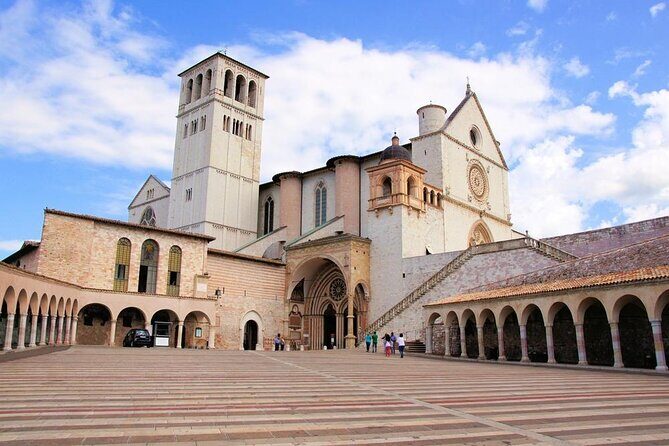
- Assisi’s Basilica complex and Franciscan atmosphere, with guided time built in
- Piazza del Campo (Siena) plus a smooth transfer toward Florence
- Florence essentials with timed entry and classic stops like Piazza della Signoria and Santa Croce
- Comfort-focused travel: air-conditioned deluxe coach, onboard Wi‑Fi, and headsets on guided tours
- Venice big hits: San Marco area and the Bridge of Sighs moment
- A Venice taste stop: spritz and cicchetti experience with a light lunch
The fast pitch: what this Rome-to-Venice loop gets right
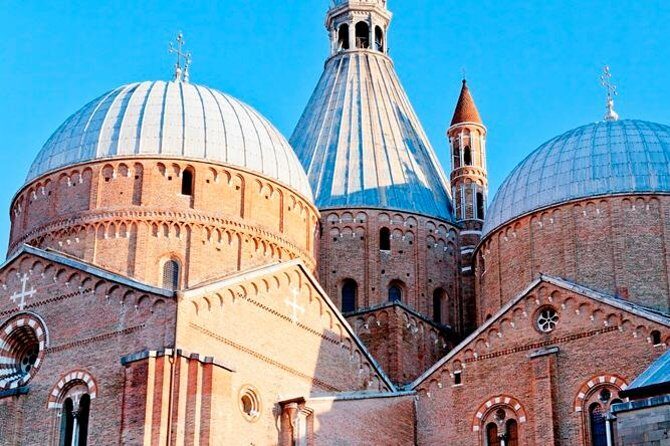
This 5-day itinerary is built for first-time Italy visitors who want fast access to headline sights, but still want real local guidance. You’re not just riding between cities; you’re usually stepping out with a guide, getting timed access for key attractions, then walking through the older cores where the stories live.
Value-wise, the price sits in a middle zone for this kind of coverage because it’s not only hotels. You’re also getting 4 overnights in 4-star properties, most breakfasts and lunches, one included dinner, and entrance fees/timed entries for key places, plus guided tours with headsets. That combination tends to save you both time and decision fatigue.
The tradeoff is the pace. The tour is described as having a very strict schedule, and even the positive feedback repeatedly points out lots of walking and “keep up with the group” energy. If you’re the type who likes to linger in one neighborhood for hours, plan on doing some of that on your own after the tour.
You can also read our reviews of more tours and experiences in Rome
Day 1: Assisi’s Basilica complex and getting your bearings fast
You start with an early departure from Rome (7:15 AM), then head into Umbria for Assisi, a hillside town wrapped in medieval stone. The main event is the Basilica Papale e Sacro Convento di San Francesco d’Assisi, the Franciscan sacred site where St. Francis’s remains are preserved.
What makes this stop especially good on a short trip is how it ties together place and meaning. You’re not just looking at one building; you’re seeing a complex of spaces with major artworks and frescoes, plus the feel of a pilgrimage site that’s been central for centuries. Even if you’re not a religious-history deep diver, it lands because the scale and artistry are hard to fake.
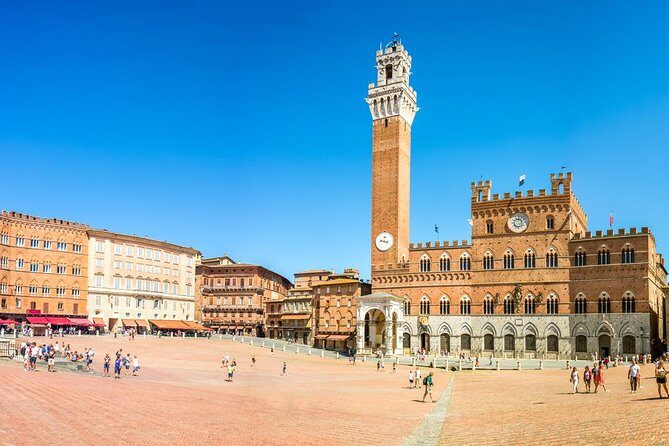
Afterward, the rhythm shifts toward Tuscany. You continue to Siena for a guided look at Piazza del Campo, one of Italy’s most recognizable public squares. This is a smart move early in the trip because it helps you get the “shape” of Italian city life: civic space first, churches and palaces around it, and daily life spilling outward.
Drawback to expect on Day 1: long travel plus walking. You’re doing a full itinerary before you’ve really settled into your rhythm, so if you’re prone to motion fatigue, start hydrating early and keep an umbrella and layers handy for shoulder-season weather.
Siena’s Piazza del Campo to Florence check-in: where the tour loosens slightly
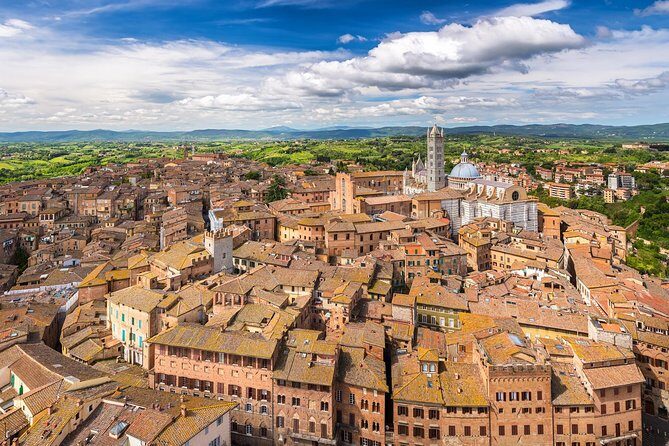
Siena’s Piazza del Campo is a strong contrast to Assisi. Assisi is up on hills and feels devotional; Siena’s main square is public, theatrical, and visually dramatic. Spending time here gives you a pattern you’ll keep recognizing later in the trip: Italy’s best cities are built around communal spaces, not disconnected landmarks.
Then you arrive in Florence and check into your 4-star hotel, followed by a welcome dinner. That hotel setup matters for value. Being centrally located means you’re not paying time (or money) commuting to basic things like dinner, viewpoints, and evening strolls.
A practical note: one reviewer mentioned Venice lodging choices that weren’t always “right in” Venice. Florence can be similar sometimes depending on availability. Still, the tour’s stated approach is central hotels with easy access to attractions, and that’s a key part of why this itinerary works as a first-timer plan.
Day 2 in Florence: Duomo area, Piazza della Signoria, and Santa Croce
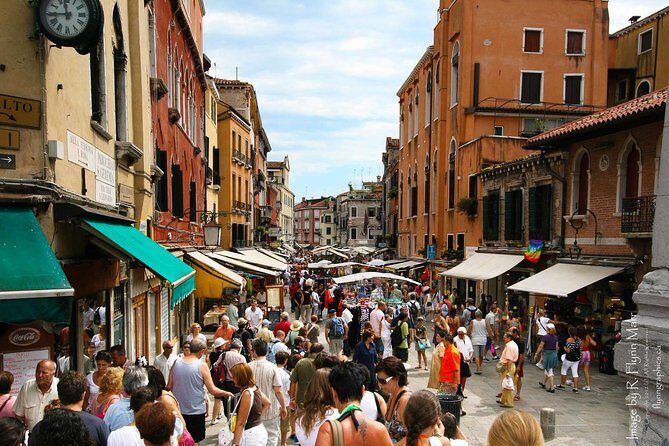
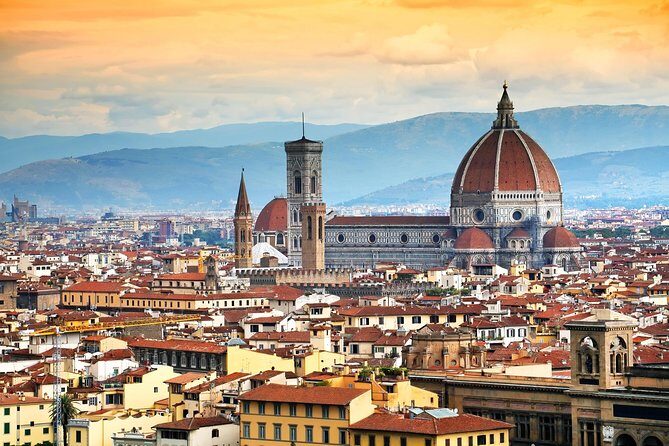
Florence is where this tour earns its keep, because it hits several of the city’s most influential spots in one focused day. The big anchor is the Cathedral of Santa Maria del Fiore area—the Duomo zone with its tiled dome tradition and the well-known bell tower.
A good thing about having guided time here is you learn how the building fits into Florence’s story. You’re looking at Gothic beginnings, then later additions, and the famous marble facade pattern. Without someone explaining it, you can still enjoy it. With guidance, it becomes easier to understand what you’re seeing and why Florence became Florence.
Next up is Piazza della Signoria, a square that functions like an outdoor history book. This stop helps you connect politics and art—especially with famous sculpture placements referencing Medici-era power and Florence’s earlier republican symbolism. You’ll see how the square served as a stage for major events since the 14th century.
Finally, you finish with Basilica of Santa Croce, a major Franciscan site and the kind of church stop that feels more than symbolic. Santa Croce is tied to big names buried or honored there, including Michelangelo, Galileo, and others. One detail that’s worth appreciating: Dante’s memorial exists even though his sarcophagus is empty in Florence, which gives you a moment to reflect on how history moves even when monuments stay.
Watch-outs for Florence: the pace and the footwear. Multiple reviews stress walking, and churches also have a practical dress expectation. Bring clothes that cover knees and shoulders when you plan to enter church spaces, even if you’re just thinking of it as sightseeing.
Day 3: Bologna’s Piazza Maggiore and the scale of San Petronio
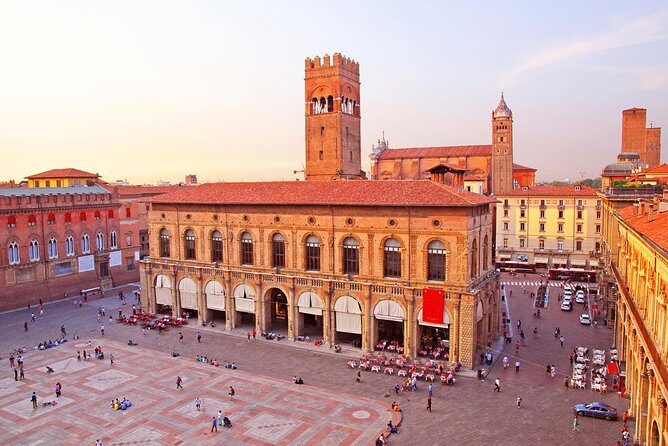
After Florence, the itinerary shifts north toward Bologna, with a heavy emphasis on one of the city’s most cinematic civic-spiritual intersections: Piazza Maggiore and the Basilica di San Petronio.
Piazza Maggiore is the kind of square you can feel right away. It’s built around the grand civic buildings and creates a sense that the city is structured around public life. The mention of Piazza del Nettuno beside it also signals what you’ll notice in the area: fountains, civic energy, and the blend of everyday movement with serious architecture.
Then comes Basilica di San Petronio, and this is where scale surprises you. The basilica is described as largely unfinished but still one of the largest churches in Europe, and it dominates the square. That “unfinished” fact can help you appreciate it rather than it feeling incomplete. You’re seeing a building stopped mid-dream yet still massive enough to reset your sense of what monumental architecture looks like.
If your legs are getting tired by Day 3, this stop is still a good one because it’s concentrated. You’re not trying to cover five scattered museums in one day; you’re centering on a landmark and a square.
Logistics consideration: you’re still moving toward Venice after Bologna. That means you should treat Day 3 as a transfer day as much as a sightseeing day, even if the main walking is concentrated.






Venice on Day 4: San Marco and the Bridge of Sighs without getting lost
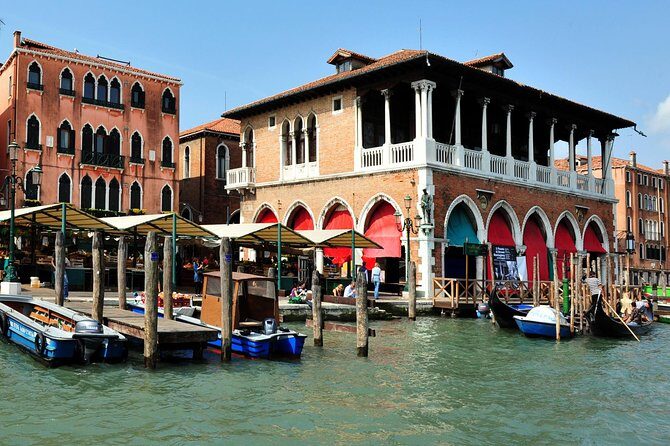
Venice is where most people want their “main character” day. This tour gives you Piazza San Marco as the core highlight. It’s easy to understand why: bell tower, the Basilica with its portals and marble/mosaic decoration, plus the sense of Venice as a stage for power and art.
What I like about this approach is that the tour anchors you at the center of the action. Instead of trying to sprint across canals randomly, you get guided time where the city’s symbolism stacks up: the civic-religious mix, the architecture details, and the way the square functions as the city’s public living room.
Next, you reach Ponte dei Sospiri (Bridge of Sighs). The legend attached to the name is part of why this stop works. It helps you see the bridge not as a photo prop, but as a portal to a whole era of Venice justice and imprisonment stories.
One practical reality: Venice can be crowded and walking can feel endless even when you think the distances are short. This tour helps by giving you a plan, plus guided time that keeps you from wasting hours figuring out routes when your brain is already tired.
Also keep in mind that one reviewer noted their Venice lodging wasn’t actually in Venice itself and required additional commuting. That can affect evening flexibility. Still, the itinerary includes an organized day that keeps you busy, so you’re unlikely to feel stranded.
The Venice food and drink moment: spritz and cicchetti
A small inclusion that actually helps the vibe: you get a spritz and cicchetti experience as a light lunch in Venice. This is the kind of add-on that’s worth more on a schedule like this because you don’t have to hunt for a proper place while managing tired feet and a tight timetable.
Cicchetti are also a good “Venice starter language.” You taste the city’s casual approach to food—snack-sized, communal, and not trying to be fine dining. Even if your preferences are picky, this format tends to be easy to work with.
Day 5: Montepulciano’s hill views and the ride back to Rome
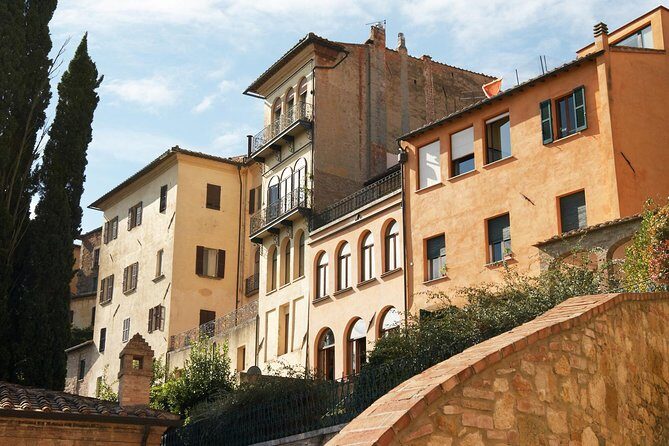
Before you return to Rome, you stop at Montepulciano, a hill town tied to the wine that shares its name. The big draw here is the viewpoint aspect: the town sits around 600 meters above sea level, and the scenery over Tuscan hills, olive groves, vineyards, and cypress lines gives you that classic Tuscany “oh right, this is why people come back” feeling.
The tour also mentions that from the Renaissance palace tower area, you can look out toward the Sibillini Mountains and the Cimone. Even if you don’t linger for hours, the viewpoint time helps you “reset” after the more intense city walking of Florence and Venice.
Then it’s back to Rome in the evening, finishing back at the meeting point. The way this final day is set up works well: you end with scenery and a simpler atmosphere rather than another packed museum marathon.
Coach comfort, headsets, and the group-keeping reality
This tour travels by air-conditioned deluxe coach with onboard Wi‑Fi. In practice, that matters because it reduces the friction that ruins short trips. You’re not stressing about transfers between cities, and you’re not losing your whole day to squeezing in logistics.
Headsets during guided tours are also a quiet quality-of-life win. Venice and Florence can be loud and crowded, and hearing your guide clearly makes the information feel useful, not like background noise.
The group size is capped at 45 travelers, which is large but manageable for a day-based schedule. Your guide’s job is to keep everyone synchronized, especially when the pace includes timed entry. That’s why you’ll see so many guide praises in feedback for this route—people remember the feeling of being guided rather than herded.
One caution: you should expect the “one group, one pace” system. The trip is not built for wandering far from the meeting point. If you go off on your own, you need to do it within the time windows your guide provides.
Where the value really shows up: hotels, meals, and timed entries
At around $1,031 per person for 5 days, you’re paying for coverage: hotels, a lot of meals, and access fees. For many independent travelers, the hard part isn’t seeing sights—it’s syncing schedules, reserving timed tickets, and paying for transport between them. This tour packs those moving parts into one package.
What’s included (and why it matters):
- 4 nights in 4-star hotels
- Most breakfasts and lunches, plus one dinner
- Entrance fees and timed entry for key attractions
- Guided tours with licensed local guides and headsets
- Onboard Wi‑Fi and air-conditioned coach comfort
- Spritz and cicchetti light lunch in Venice
What you must plan for separately:
- City taxes: not included, paid at hotels
- Some optional add-ons you might be invited to during free time (like Academy Gallery guided visits, Pisa, Venice by night, or gondola options) can carry extra costs
- Meals not explicitly included are on you
A smart way to think about it: if you would otherwise spend money on entrance fees, guided walking time, and “how do we get there” stress, the package can make the trip feel smoother than doing it all solo.
Meals, dress code, and small practical tips that save time
The meal plan is mostly built to keep you moving: breakfasts and lunches are included in the bundle, but not every meal is a culinary event. One reviewer put it plainly: included meals can feel like quick and filling rather than fancy.
So here’s the trick I recommend: treat included meals as fuel, not a reason to skip going off-plan for one great local dinner. Use your free time to pick one meal you truly care about—Florence and Venice reward that.
For churches, bring clothing that covers knees and shoulders. Even on busy sightseeing tours, dress rules still matter for entry.
And because walking is a constant theme here, bring comfortable shoes. This isn’t a sit-and-smile itinerary. You’ll be on your feet across multiple city centers.
Who should book this tour (and who should skip it)
This is a strong match if you:
- Are visiting Italy for the first time and want a fast, guided overview
- Want to see major landmarks like Assisi, Florence’s Duomo zone, and Venice’s San Marco
- Prefer a set plan with licensed local guides and headsets
- Like value bundling: hotels plus entrances plus most meals
You might skip it if you:
- Want a slow travel style with long free-ranging afternoons
- Have mobility limits, because the schedule is described as strict and not well-suited for mobility issues
- Hate group pacing and timed entry pressure
If you want more freedom, consider building a longer independent stay in one or two cities after the tour. The good news is this itinerary gives you a clear shortlist of what you’ll want to return to.
Should you book this 5-Day Best of Italy from Rome?
I’d book it if your goal is to get oriented fast: Assisi’s spiritual weight, Siena’s famous piazza geometry, Florence’s Renaissance anchors, Bologna’s monumental basilica feel, and Venice’s San Marco core and Bridge of Sighs moment. The inclusion of timed entries, headsets, and hotel coverage makes the trip feel organized in a way that’s hard to replicate solo on such a short schedule.
I’d think twice if you’re chasing solitude, long wandering, or minimal walking. This tour rewards people who like structure and can keep up with a group plan.
If you can handle the walking and you want a smart first pass at Italy, this one earns its place on the shortlist.
FAQ
What’s included in the tour price?
The tour includes 4 overnights in 4-star hotels, most breakfasts and lunches (5 lunches and 4 breakfasts are listed), one included dinner, guided tours with licensed local guides and headsets, timed entry tickets for key attractions, air-conditioned coach travel with onboard Wi‑Fi, and the Venice spritz and cicchetti light lunch.
Are city taxes included?
No. City taxes are not included and you pay them directly at the hotels upon arrival or check-out based on local procedures.
How early does the tour start on Day 1?
Day 1 departs at 7:15 AM from the meeting point in Rome.
What language is the tour conducted in?
The tour is offered in English. It also runs in other languages depending on season, with English monolingual in high season, and bilingual options for Spanish, Portuguese, and French.
How much walking should I expect?
You should plan for plenty of walking. The tour is described as not suitable for mobility issues and requires moderate physical fitness, so bring comfortable shoes.
Does the tour include Venice experiences beyond sightseeing?
Yes. There is a spritz and “cicchetti” experience in Venice, included as a light lunch.
What if I need to cancel before departure?
You can cancel for a full refund if you do it at least 6 full days before the experience’s start time. Refund drops to partial at shorter windows and becomes 100% non-refundable within 24 hours or for no-shows, based on the tour’s provided policy.