REVIEW · 2-DAY EXPERIENCES
2-Day Rome: Colosseum & Vatican Tour
Book on Viator →Operated by Gray Line I Love Rome by Carrani Tours · Bookable on Viator
Rome gets crowded fast, so plan matters. This 6-hour, small-group tour (max 10) strings together the Colosseum plus Roman Forum and Palatine Hill, then finishes at the Vatican with Vatican Museums and the Sistine Chapel. I like that you get wireless audio headsets, so you’re not guessing what the guide is saying while everyone jostles for photos.
Two things I really like: you also get the key entrance pieces sorted in advance (tickets and reservation fees are included where listed), and the pacing is built for real talking, not just marching. One drawback to keep in mind: the Vatican experience can be affected by closures, and the Sistine Chapel time is tight (listed as about 10 minutes), so you’ll want to have your questions ready.
In This Review
- How the Two Half-Days Feel in Real Life
- Key Things That Make This Tour Worth Your Time
- Two Half-Days: Ancient Rome Meets the Vatican
- Meeting Up Correctly (So You Don’t Waste Your Morning)
- Entering the Colosseum Without the Headache
- Roman Forum and Palatine Hill: Short Stops, Big Payoff
- Sistine Chapel in Short Form: Timing and Expectations
- Vatican Museums: How You Get Value From a 2-Hour Block
- The Small-Group Advantage (and Why Guide Fit Matters)
- Tickets, Headsets, and the Real Meaning of $410.07
- Practical Notes: Dress Code, Bags, and Security
- Who This Tour Fits Best (and Who Might Reconsider)
- Should You Book This 2-Day Rome Tour?
- FAQ
- What sites are included in this Rome tour?
- Is it a small-group tour?
- What language is the tour offered in?
- How long is the tour?
- What time does the tour start?
- Can I cancel for a full refund?
How the Two Half-Days Feel in Real Life
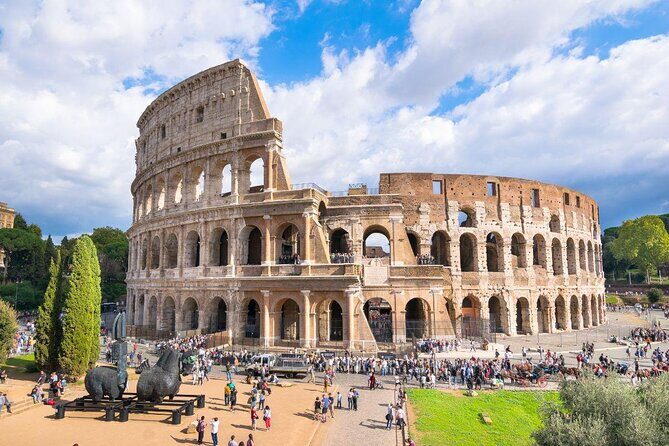
The best part of this setup is that it’s split into two half-days, which helps you avoid feeling trapped in a long tour bubble. You’ll start early (8:15 am) and then have time afterward for wandering, shopping, or simply slowing down with gelato and people-watching. Just know you’ll need a moderate fitness level, comfortable shoes, and correct religious-site attire.
Key Things That Make This Tour Worth Your Time
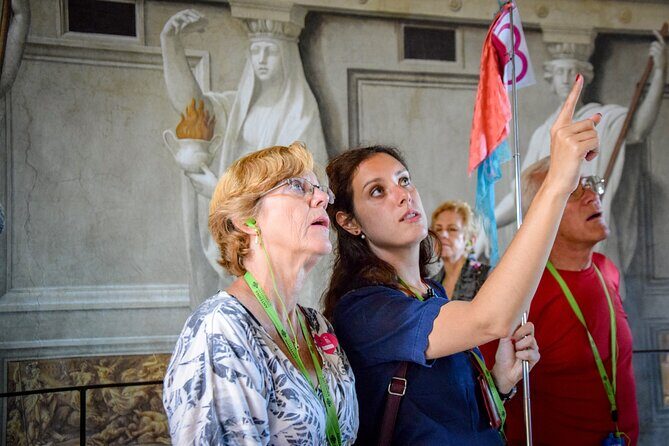
- Max 10 travelers for a tour that stays interactive instead of turning into a human conveyor belt
- Wireless audio headsets so you can actually hear the guide during the busy parts
- Colosseum entrance and reservation fees included (arena access is separate, based on the ticket option)
- Vatican Museums + Sistine Chapel access with guaranteed guide escort for entry
- Two half-days that leave space for Rome time after the big sights
- Very clear site rules for bags and clothing, which keeps you from getting stuck at security
You can also read our reviews of more tours and experiences in Rome

Two Half-Days: Ancient Rome Meets the Vatican
This is the kind of “two greatest hits” plan that works well in Rome. You’re not trying to squeeze the entire city into one day. Instead, you get a focused ancient block first—Colosseum, Roman Forum, Palatine Hill—then you shift to the Vatican and tackle Vatican Museums plus the Sistine Chapel.
Why that matters: these sites are big, and the lines and logistics can eat hours. A guided structure helps you spend your energy on the places you actually care about, not on decoding directions, entrances, and timing on the fly. Also, because the group is capped at 10, the guide can slow down when you need a bit more explanation.
Meeting Up Correctly (So You Don’t Waste Your Morning)
You meet at Via delle Terme di Tito, 75, 00184 Roma RM, Italy for the main start, with tours beginning at 8:15 am. The tour ends at Piazza del Risorgimento, Roma RM. On Tuesday or Wednesday for the Vatican portion, the meeting point is in Piazza Risorgimento at Bar – Caffetteria L’Ottagono, about 400 metres from Metro A (Ottaviano), and you should arrive around 15 minutes early while looking for the I Love Rome logo carried by staff.
Important detail: if you’re traveling after April 1, 2025, the start meeting point changes to Parco Colle Oppio – Via delle Terme di Tito, corner of Via Nicola Salvi, inside the park. This is the kind of small detail that can cause a big headache, so double-check your confirmation.
Entering the Colosseum Without the Headache
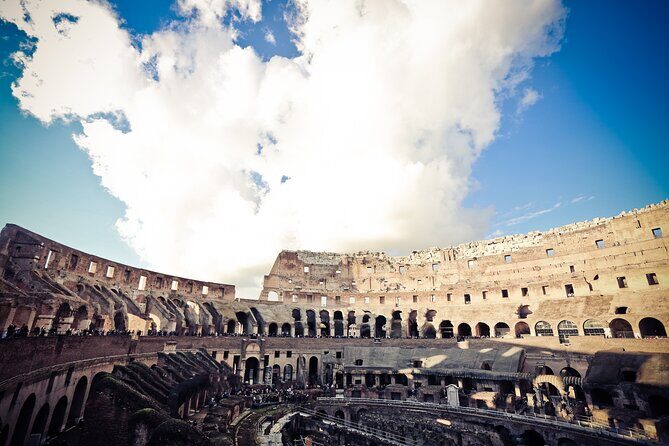
The Colosseum stop is listed as about 1 hour, with admission ticket included. You’re also paying for a reservation piece tied to timed entry (that reservation fee is included in the overall package price). That combination is what turns the Colosseum from a chaotic line situation into a structured visit.
Here’s the real value: you don’t just get access—you get guidance on what to notice. When you’re inside an arena that big, your brain will otherwise lock on to one thing (photos) and miss the rest. A strong guide can help you connect what you see to how Romans actually lived and performed, which is where the visit becomes memorable rather than just impressive.
Also note the ticket nuance: the Colosseum ticket portion is valued at €18 per person, or €24 per person if arena access is included. That means the exact ticket level matters, so when you book, confirm whether your package includes the more expansive option or the standard one.
Roman Forum and Palatine Hill: Short Stops, Big Payoff
After the Colosseum, the tour moves to the Roman Forum (about 30 minutes) and then Palatine Hill (about 30 minutes). These are quick blocks, but they’re exactly where the magic happens if you know what to look for.
The Forum is less about single monuments and more about the layout—how spaces connect and how power clustered in the center of Rome. Palatine Hill is different. It feels more like the “why” behind the city’s prestige, because it’s tied to Rome’s earliest elite associations and the sense of command that comes from being on high ground.
A practical tip: with only about an hour total across Forum and Palatine, you’ll get the most out of it if you decide in advance what you want—stories and context, or views and photo angles. The guide can cover a lot, but your personal focus helps you absorb more in less time.






Sistine Chapel in Short Form: Timing and Expectations
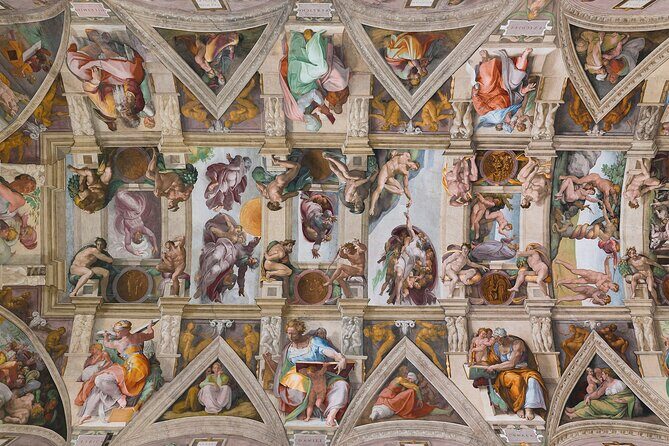
The Sistine Chapel is listed in the plan as a 10-minute stop with admission included. That’s not a lot of time on paper, but it’s also realistic. The Sistine Chapel is an active worship space, security can be strict, and the flow of visitors is controlled.
So what should you do with 10 minutes? Think like this: you’re there for the main visual moment, not a slow museum stroll. If you’re the type who wants to see everything, you might feel rushed. But if you’re okay with a focused visit—save your deeper Sistine study for another day at a slower pace—the guide time can help you interpret what you’re seeing quickly and well.
One more complication: Vatican access can change without notice for religious reasons, and if the Sistine Chapel isn’t accessible for reasons beyond control, the tour notes that there’s no partial refund. That’s rare, but it’s part of the real Vatican equation.
Vatican Museums: How You Get Value From a 2-Hour Block
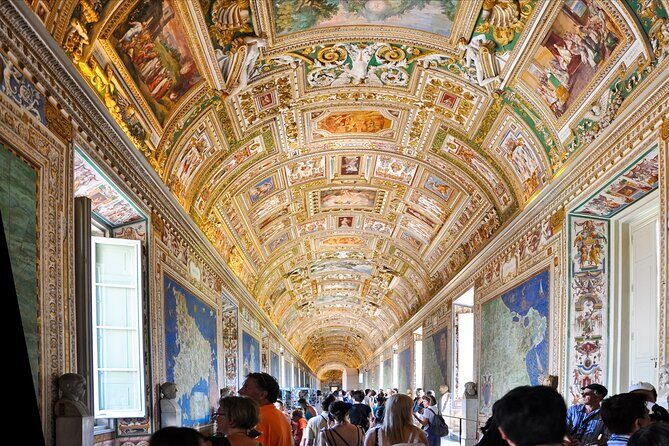
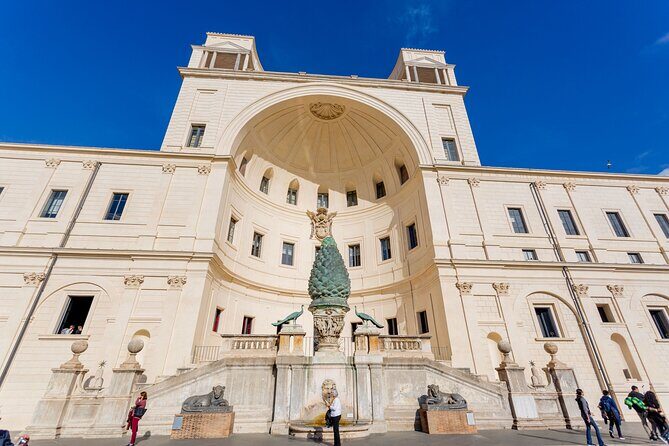
The Vatican Museums portion is listed as about 2 hours, including entrance to the Vatican Museums and the Sistine Chapel (with guide escort required for entry to the Sistine Chapel). Two hours sounds short until you remember how long this museum complex can be when you’re wandering freely. Your time gets protected by someone who knows how to steer you toward the key rooms.
Here’s how this kind of guided block usually becomes satisfying: you get the big artistic and cultural anchors, then you’re not stuck looking at random sections while time disappears. It’s also easier to ask questions because your group stays together and your guide can explain themes without your attention splintering.
Also, there’s a clear rule to understand: opting out of the Vatican escort forfeits tour rights and tickets without refunds. In other words, don’t plan to wander off “for a minute.” Follow the assigned guide.
The Small-Group Advantage (and Why Guide Fit Matters)
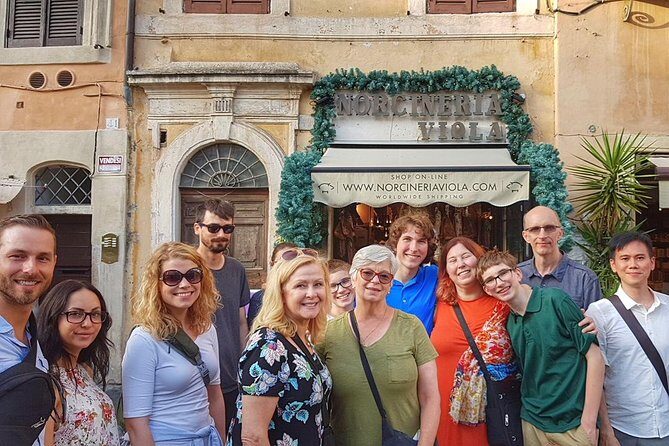
This tour caps at 10 travelers, and that changes how the day feels. In a small group, your guide can answer questions without shouting over the crowd, and you can actually keep up. That matters most on the Vatican side, where timing and navigation can feel like a test.
Guide quality seems to be a big part of what people love. You might be with guides such as Paola (praised for keeping attention and making ancient Rome feel vivid), Rita (praised for humor and knowledge), Tahini (praised for informativeness and personality), Mun (praised for being both informative and personable), Carolina (praised for clear explanations), and Davide (praised for strong Vatican Museums storytelling). There’s also the real-world reminder that guide style can influence what you feel you got out of the Vatican portion—if your personal taste is very broad, try to ask for the rooms and themes you care about so your time matches your interests.
If you’re picky about pacing or you get restless when the group stops often, keep that in mind. A good tour should match your attention style, and small groups make it more likely.
Tickets, Headsets, and the Real Meaning of $410.07
At $410.07 per person, this is not a budget add-on. But it can be good value for Rome if you compare it to doing the trip alone—because you’d still pay for timed entry, then spend your time figuring out routes, meeting points, and how to see what matters before your energy taps out.
What you’re paying for includes:
- Colosseum entrance ticket (valued at €18, or €24 with arena access)
- Colosseum reservation fee (valued at €2 per person)
- Entrance to Vatican Museums and Sistine Chapel (included)
- Professional English-speaking guide
- Wireless audio headsets
- Timed flow and escort through key areas
The tour also notes that after the specific entrance ticket and reservation pieces are accounted for, the rest covers other services. In plain terms: you’re buying the guide brains and the time-saving structure, not just the right to stand in line.
If you’re traveling with limited time, or you want a guided explanation for both ancient Rome and Vatican art, this price starts to make sense. If you prefer self-guided wandering with minimal interpretation, you may decide you’d rather spend your money on flexible tickets and a slower itinerary.
Practical Notes: Dress Code, Bags, and Security
Rome rewards planning, especially at religious and high-security sites.
For Vatican attire, you’ll want to avoid sleeveless blouses, miniskirts, shorts, and hats. It’s one of those rules that can sound overly strict until it affects your entry. Wear something you can sit and stand in comfortably for a few hours.
Bags and cloakroom rules are detailed, so read them before you leave the hotel:
- Vatican Cloakroom: items larger than 40 x 35 x 15 cm must be stored. Suitcases, large bags, umbrellas, tripods, and signage are prohibited.
- Shoulder bags up to 15 cm wide are permitted.
- Colosseum bag policy: bulky bags, trolleys, and glass bottles are not allowed.
- At the Colosseum, there’s no cloakroom, so you’ll need to travel light.
Security and lines can also create delays. The tour specifically warns that heightened security may slow things down, so build a buffer into your day and don’t stack tight reservations right after.
Who This Tour Fits Best (and Who Might Reconsider)
This tour is listed for moderate physical fitness. That’s a heads-up that you’ll be walking, navigating uneven ground, and moving between ancient sites that weren’t designed for modern comfort.
It may be trickier for anyone with mobility issues because you’re dealing with Rome streets and steep areas, plus the practical reality that everything is old and stairs happen. That said, one practical note that shows up in firsthand descriptions is that there is reportedly a lift inside the Colosseum to reach some upper areas. Still, the safer choice if you have significant mobility needs is to confirm your comfort level with the company before booking and avoid expecting every route to be fully step-free.
This tour is especially good for:
- First-time visitors who want the major “wow” sites without wasting hours
- People who like guided explanations and quick context
- Anyone traveling with enough stamina for morning starts and museum-level walking
It may be less ideal for:
- Travelers who want long, unhurried time in the Sistine Chapel
- People who hate group pacing or get frustrated with controlled flows
- Anyone who can’t meet the clothing and bag requirements at the Vatican
Should You Book This 2-Day Rome Tour?
I think you should book it if your priority is simple: see the Colosseum and Vatican Museums in a guided, organized way with a small group and audio headsets, while still having time afterward to explore Rome on your own terms. The inclusion of key entrances, plus the reservation logic at the Colosseum, helps reduce the biggest stress points.
Skip it (or pair it with a second plan) if you want lots of time in specific rooms—especially at the Sistine Chapel. This tour is built for coverage and interpretation, not a slow, personal museum pace.
FAQ
What sites are included in this Rome tour?
You’ll visit the Colosseum, Roman Forum, Palatine Hill, Vatican Museums, and the Sistine Chapel. Admission is included for the listed stops.
Is it a small-group tour?
Yes. The group size is capped at 10 travelers.
What language is the tour offered in?
The tour is offered in English.
How long is the tour?
It runs about 6 hours total (listed as approximately 6 hours), spread over two half-days.
What time does the tour start?
The listed start time is 8:15 am.
Can I cancel for a full refund?
Yes. You can cancel up to 24 hours in advance for a full refund. If you cancel less than 24 hours before the experience start time, the amount you paid will not be refunded.