REVIEW · PRIVATE
Wheelchair Accessible Sistine Chapel & Vatican Private Tour for Disable Visitors
Book on Viator →Operated by Sistine Chapel Tours · Bookable on Viator
Sistine Chapel without the stress? Yes, and it helps a lot. This private tour is designed to bring wheelchair users through the Vatican Museums and into the Sistine Chapel with real time-savers and one-on-one support. It also includes a pre-Chapel rundown so you can actually look at what you came for.
What I like most is the focus on practical movement and pacing. You start in the Pigna Courtyard (that famous Pinecone spot), moving past the long queue right away. Then you get deep context in the museums before you reach the Sistine Chapel—my favorite feeling is that you are not just staring at walls, you understand what you’re seeing.
One thing to plan for: the dress code is strict, and there are museum rules like no food beyond bottled water. Also, St. Peter’s Basilica isn’t part of this tour, so if that’s a must-do for your day, you’ll need a separate plan.
In This Review
- Key takeaways before you go
- Wheelchair access and the private pace that matters
- Meeting point at Caffè Vaticano: getting it right fast
- Stop 1: Cortile della Pigna and the Pinecone reset
- Stop 2: Vatican Museums—Pio Cristiano, maps, and Raphael rooms
- Stop 3: Sistine Chapel—what the no-talking rule means
- Skip-the-line value you can feel in your body
- Price and what you’re really paying for ($355.21)
- Dress code and rules: the stuff that can ruin a perfect day
- The guide makes the experience—Max, Francesco, Tommaso
- Who this tour is best for
- Should you book this wheelchair-accessible Sistine Chapel tour?
- FAQ
- Where does the tour meet?
- How long is the tour?
- Is the tour wheelchair accessible?
- Is this a private tour?
- Do you get skip-the-line access?
- What language is the guide?
- What’s included in the ticketing?
- Is St. Peter’s Basilica included?
- What should I wear?
- Are food and drinks allowed?
Key takeaways before you go
- Skip-the-line access that helps you dodge long queues right at the start
- Private, disability-friendly pacing with a guide who stays focused on you
- Real context in the Raphael rooms so the Sistine Chapel hits harder
- Sistine Chapel rules handled upfront, including the no-talking moment inside
- Accessibility support around the Chapel area, including wheelchair help for the route in
Wheelchair access and the private pace that matters

The Vatican is famous for art. It’s also famous for crowd pressure. This tour tries to fix the crowd problem in a very direct way: skip-the-line entry plus a private guide who can slow down, pause, and help you keep your day comfortable. For wheelchair users, that difference is not subtle. It changes how much of the experience you can actually enjoy instead of just survive.
Because it’s private, you are not stuck matching someone else’s walking speed or stopping style. Your guide can time the move through the museums and adjust as needed. In real terms, that means you spend less energy handling logistics and more energy looking at art.
Also, there’s a human touch here. I love that the tour includes an art historian-style approach with a guide who explains what you’re seeing, not just where to stand. One guide like Max is described as making the visit relaxing and safety-first, especially for mobility scooter users who still needed help reaching the Sistine Chapel area.
You can also read our reviews of more private tours in Rome

Meeting point at Caffè Vaticano: getting it right fast
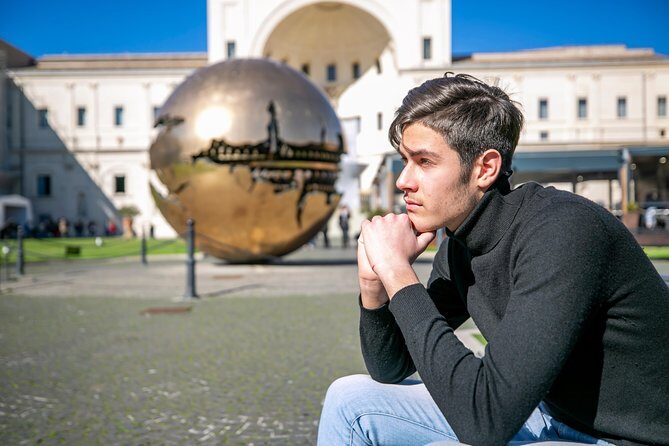
Your tour meets at Caffè Vaticano, Viale Vaticano 100, 00192 Roma. The location is easy to understand on paper, but the Vatican area can feel confusing once you’re in it. You can save yourself stress by doing one simple thing: confirm you have the right meeting spot before you head over, and give yourself extra buffer time.
A couple of practical notes from real-world experience with this kind of meetup: if you arrive and don’t see your guide immediately, text or call the company (you can do this quickly), and you should be able to sort it out fast. I like that the tour operator handled initial confusion smoothly when it happened.
This is also listed as near public transportation, which matters because you may not want to depend on taxis for a tight museum schedule.
Stop 1: Cortile della Pigna and the Pinecone reset
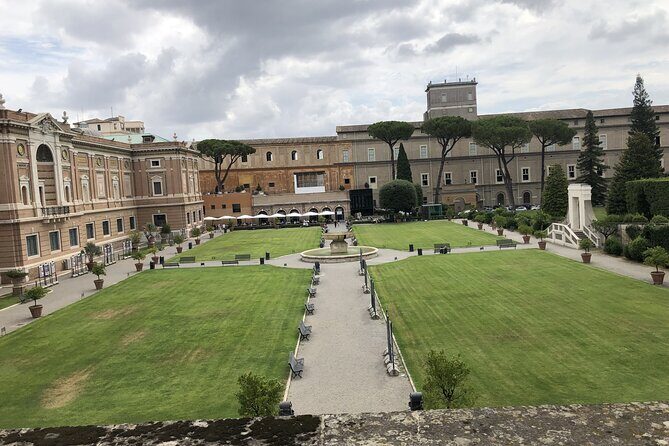
You begin at the entrance to the museums, where you effectively bypass the long queue and get started. Your first real stop is Cortile della Pigna, where you can see the famous “Pineapple” (that big, iconic pinecone sculpture in the courtyard).
Why start here? It’s a good warm-up moment. The courtyard gives you a sense of scale before you enter the thicker museum flow. And because you’re starting with a guide, you’re not just waiting and wondering where to go next.
Time-wise, this first part is about an hour, and it’s built to get you moving early without dragging your group through a sprint. If you manage mobility carefully, that “first win” matters.
Potential drawback: this is still the Vatican. Even with an efficient route, there can be surfaces and turns that require attention. Your guide should help with that, but it’s smart to come with a plan for how you’ll handle tight corners and any crowds.
Stop 2: Vatican Museums—Pio Cristiano, maps, and Raphael rooms
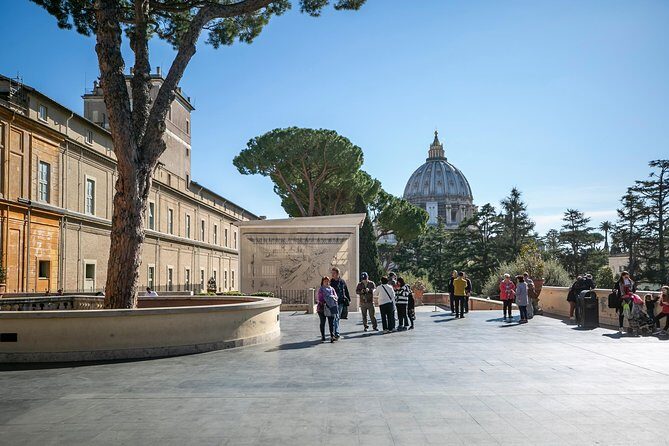
Next you move into the Vatican Museums area with access to the Pio Cristiano Museum. This is where the visit turns from logistics into storytelling.
You’ll see the Gallery of Tapestries and the Gallery of Maps, including one of the largest displays of Renaissance maps anywhere in the world. Maps sound less romantic than frescoes, but that’s exactly why I like them. They show you the Renaissance mind at work—how people pictured the world, then turned that knowledge into art.
Then comes a big highlight: the rooms painted in the 1500s by Raphael for Pope Julius II. In these spaces, you’ll get to see two of what are considered Raphael’s greatest masterpieces from his younger years: Parnassus and School of Athens.
Why this stop is valuable: these rooms train your eyes. If you reach the Sistine Chapel without context, you can end up doing the classic thing—looking at masterpieces like a checklist. With this tour, your guide’s explanations help you notice symbolism, composition choices, and how Renaissance artists built meaning into every scene.
One other practical plus: ticket admission is included for this portion, so you’re not juggling payment or entry forms while you’re trying to stay comfortable and on schedule. That simple “no extra stops” feeling can be huge if you use a wheelchair or scooter and need every moment to go smoothly.
Stop 3: Sistine Chapel—what the no-talking rule means
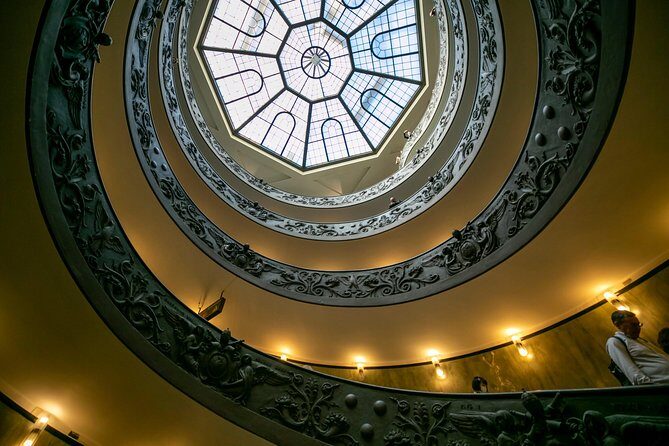
Finally, you reach the place everyone talks about: the Sistine Chapel.
Before you enter, your guide gives you a briefing. And here’s the key detail: inside the Chapel, no talking is allowed. That rule can be tough if you’re the type who likes to ask questions while you look. But the workaround is exactly what makes this tour so useful—the guide sets you up before you step in.
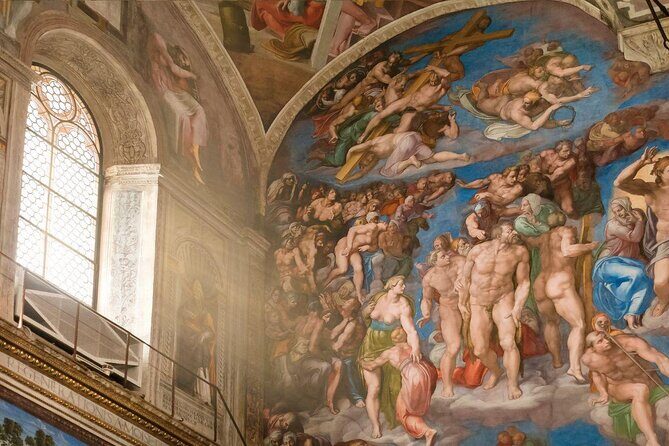
Once inside, you’ll focus on major fresco work, including Michelangelo’s The Last Judgment and wall frescoes by Bollicelli and other Renaissance artists. This is not just a “see it and rush out” setup. The goal is to help you slow down mentally, so you’re actually absorbing what you’re seeing rather than reacting only to the scale.
Accessibility note: at least one guide experience includes extra help around getting to the Sistine area. For example, a mobility scooter user was able to use their scooter throughout much of the tour, and then a wheelchair was provided for the route/lift down to the Sistine Chapel. That’s the kind of detail that can make or break a day. If you use a scooter, wheelchair, or need transfer help, it’s worth trusting that your guide will coordinate the last stretch.
Potential consideration: the Sistine Chapel is still a crowded, rule-driven space. Even with access, you should expect that the environment is serious and quiet. Come ready to look more than talk.






Skip-the-line value you can feel in your body

Skip-the-line access is listed as guaranteed, and I can’t overstate how much value that has in the Vatican. It’s not just about saving time; it’s about saving stress. When you’re using a wheelchair or managing mobility needs, long lines are exhausting in a special way. You can’t stretch. You can’t change plans easily. You just wait.
This tour also keeps the day focused. It’s about three hours total (approx.), with each major part lasting about an hour. That structure helps you plan energy. You are not stuck doing a six-hour museum marathon where you’re drained before you even reach the Chapel.
Also, the private format means you’re not stuck waiting for other people’s slow moments, bathroom breaks, or transfer chaos. Your guide can keep you moving at a pace that makes sense for you.
Price and what you’re really paying for ($355.21)
At $355.21 per person for a 3-hour private tour, it’s not a budget pick. So you should ask: what do you get that you don’t get elsewhere?
Here’s the honest value equation based on what’s included:
- Private guide attention (not a shared group shuffling around)
- Professional art historian guide style interpretation
- Guaranteed skip-the-line entry
- Admission tickets included for each major part
- Wheelchair access support through the core museum highlights
- English-speaking guide
If you’re traveling with someone who needs assistance (or you are the one needing it), this is often where private tours pay off. You’re paying to remove uncertainty. You’re paying to reduce wasted time. You’re paying for smoother transitions—especially around the Sistine Chapel access.
If you’d rather do everything on your own and you don’t need mobility support, a lower-cost group tour may make sense. But if you do need the accessibility support and the quiet pre-briefing mindset inside the Chapel, this price can start to feel fair.
Dress code and rules: the stuff that can ruin a perfect day
Let’s talk about the Vatican’s dress code because it’s not optional. There’s a required standard: no shorts or sleeveless tops. You need knees and shoulders covered for both men and women. If you don’t meet it, you can risk refused entry.
I recommend you treat this like an essential museum ticket, not a suggestion. Plan clothes that cover correctly but still breathe. Rome heat can be real, and museums can be cool or stuffy depending on the day.
Food and drink rules matter too: food and drinks aren’t allowed in the museums except bottled water. Pack a small bottle of water and plan to eat outside the Vatican if you need a meal. (And yes, that rule can feel annoying when you have mobility needs and just want to take a break. Still, it’s better to plan ahead.)
One more practical note: the tour is listed as near public transportation, which is useful if your plan is to hop in and out without relying on car access for the entire day.
The guide makes the experience—Max, Francesco, Tommaso
In a private tour, the guide is not a minor detail. It’s the whole tone.
I liked seeing named guides like Max, Francesco, and Tommaso appear in real experiences. The common thread is how they help you focus on art without turning the day into a logistics problem. Guides also handled small hiccups, like meeting confusion, with quick communication and a smooth fix.
If you can request a guide, it may be worth it. But even without that, the key is the tour’s structure: your guide knows how to explain before you enter the Sistine Chapel, and they manage movement around the accessible route.
Who this tour is best for
This tour is built for wheelchair users and also supports visitors with mobility needs who might use a mobility scooter. It’s private, so it suits families, couples, and anyone who wants a calm pace with full guide attention.
You’ll likely get the most from this if:
- You want Sistine Chapel access but need the day managed around accessibility
- You care about understanding the art, not just photographing it
- You prefer fewer decision points (where to go, when to enter, how to handle the rules)
- You want to maximize time with skip-the-line entry
If you can walk comfortably for long museum stretches and you don’t need extra accommodations, you might find the price less attractive. But for many visitors with disabilities, the reduced stress is the real “value.”
Should you book this wheelchair-accessible Sistine Chapel tour?
Book it if you want a smoother Vatican day with wheelchair-friendly access, private attention, and the kind of pre-Sistine Chapel briefing that helps you actually see instead of hurry.
Skip it (or compare options) if you:
- Only want to do St. Peter’s Basilica on the same day (it’s not included)
- Are okay with long waits and don’t need accessibility support
- Don’t care much about structured art explanations
My bottom line: if you want the Sistine Chapel experience without turning your day into a series of hurdles, this tour does the work for you.
FAQ
Where does the tour meet?
It meets at Caffè Vaticano, Viale Vaticano 100, 00192 Roma RM, Italy.
How long is the tour?
It’s about 3 hours (approx.).
Is the tour wheelchair accessible?
Yes. The tour is designed to make the Vatican Museums accessible for wheelchair users.
Is this a private tour?
Yes. It’s private, so only your group participates.
Do you get skip-the-line access?
Yes. It includes guaranteed skip-the-line access.
What language is the guide?
The tour is offered in English.
What’s included in the ticketing?
Admission tickets are included for the main stops listed, including the Vatican Museums and Sistine Chapel visit segments.
Is St. Peter’s Basilica included?
No, St. Peter’s Basilica is not included.
What should I wear?
You must follow the dress code for places of worship and selected museums: no shorts or sleeveless tops, and knees and shoulders must be covered.
Are food and drinks allowed?
Food and drinks are not allowed in the museums, except for bottled water.