REVIEW · ROME
Via Roma: A Journey Through Time
Book on GetYourGuide →Operated by REAL BARCELONA TOURS, S.L · Bookable on GetYourGuide
Rome changes when the lights come on.
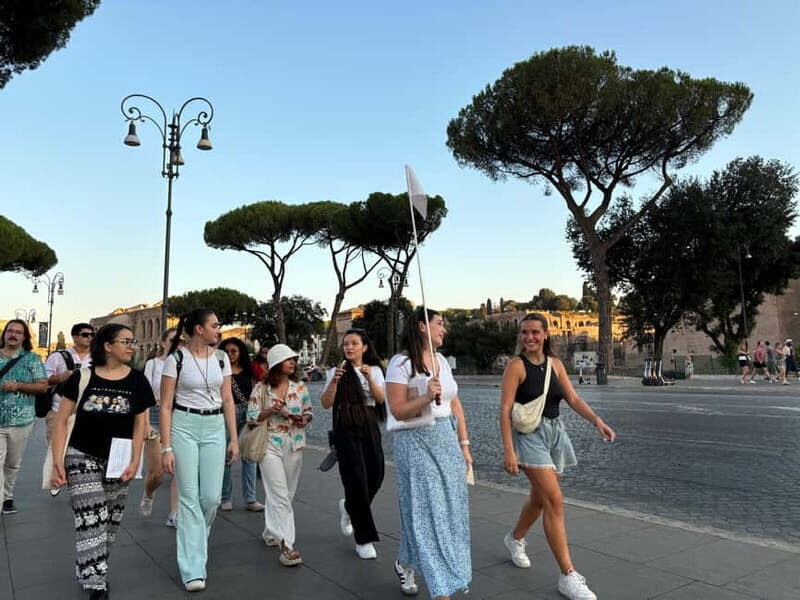
This evening walk strings together Rome’s biggest sights and several quieter stops, all bathed in night glow. I love the contrast at Piazza Navona with its Baroque fountains, and I love how the Pantheon looks when the dome fills the sky. One thing to factor in: it’s a proper walking tour, so comfortable shoes matter, and it’s not a good match if you have mobility limitations.
The start is peaceful at Piazza di S. Agostino, then the group moves through the historic core with a live guide in Spanish or English. The tour also leans into photo-worthy interiors, like St. Ignazio di Loyola, but you’ll need to follow the rule about no flash in certain areas. If you want a night plan that feels organized and efficient without buses or lines, this one fits.
In This Review
- Key highlights you’ll care about
- Piazza di S. Agostino start: the calm before the night sights
- Piazza Navona’s Baroque fountains in evening light
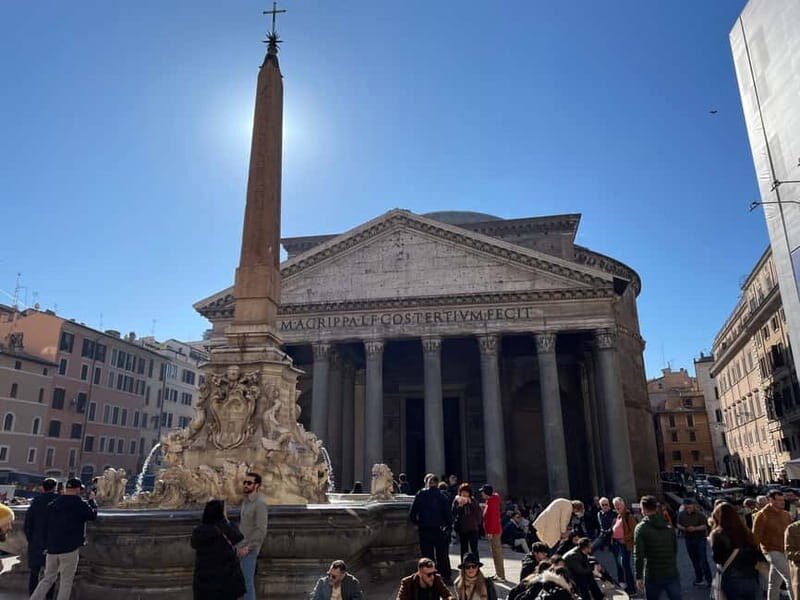
- Pantheon: seeing the dome and oculus at night
- St. Ignazio di Loyola and its trompe-l’œil ceiling
- Galleria Sciarra: an Art Nouveau moment you might miss solo
- Trevi Fountain: tossing a coin with the right timing
- Moving through the imperial center toward the Colosseum
- Palazzo Bonaparte and Via dei Fori Imperiali under moonlight
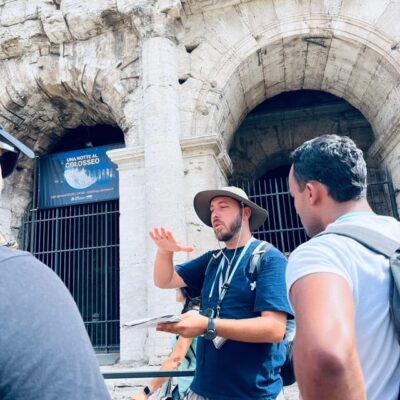
- Colosseum at night: the big end point
- Price and pacing: is $32 worth your night?
- Should you book Via Roma: A Journey Through Time?
- FAQ
- How long is the Via Roma tour?
- Where does the tour start and end?
- What landmarks are included on the tour?
- Are entrance fees included, and is food provided?
- What should I bring, and can I use flash photography?
- What languages is the live guide?
- Is the tour wheelchair accessible or suitable for mobility impairments?
Key highlights you’ll care about
- A tight 2-hour loop of icons with major landmarks in a single night walk
- Piazza Navona fountains looking especially dramatic after dark
- Pantheon at dusk or night for that huge dome-and-oculus effect
- St. Ignazio di Loyola with the trompe-l’œil ceiling glow
- Colosseum as the finish line when it’s lit up and framed by evening streets
Piazza di S. Agostino start: the calm before the night sights
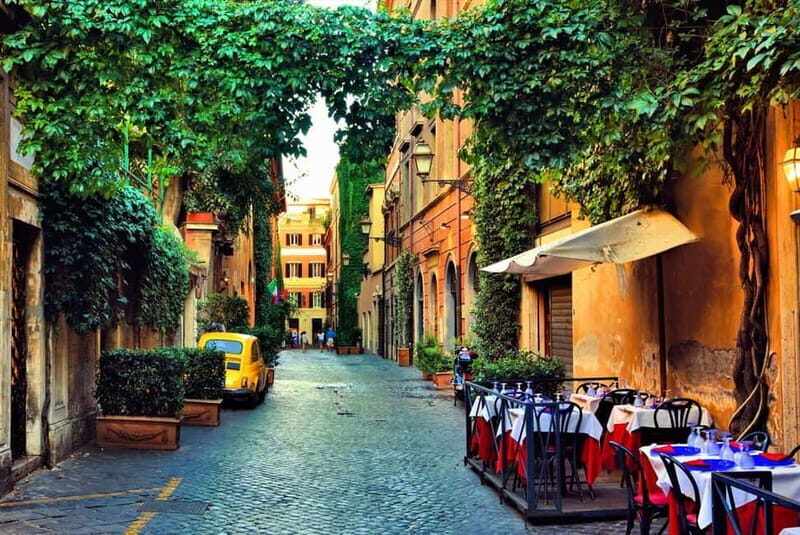
You begin at Piazza di S. Agostino, and that matters more than you’d think. Instead of launching straight into crowds, you get a slower start in a Renaissance-feeling square, which makes the rest of the walk easier to enjoy. It sets the tone: this is Rome at an unhurried pace, lit up, with stories connecting the places.
From the start, the guide keeps the group moving through the historic heart on foot. That’s part of the value here: you’re not just stopping at postcards; you’re actually traveling between sights, which is where Rome’s atmosphere really happens. Expect a steady evening walk rather than long museum-style time inside buildings.
One practical note: the tour timing is listed as 2 hours, but you should plan for it to run a bit longer depending on the group and how people take photos. Bring water, wear shoes you can walk in for a while, and have your camera ready—night photos are great, but follow the no-flash rules where required.
You can also read our reviews of more tours and experiences in Rome.



Piazza Navona’s Baroque fountains in evening light
Piazza Navona is the kind of place where daylight is pretty, but night makes it feel theatrical. You’ll see the Baroque fountains in the evening glow, and the lighting emphasizes the sculptural details in a way that feels different from typical sightseeing. It’s a top stop for photos because the square’s perspective and the fountain basins create instant “Rome postcard” framing.
What I like about this stop is that it’s not just scenery. The fountains sit in the center of a square that has hosted public life for a long time, so you get that sense of Rome functioning as a city, not just a collection of monuments. The guide helps connect what you’re seeing with what the buildings and art were meant to communicate.
This is also a good moment to slow down. If you’re traveling in warmer months, an evening schedule lets you enjoy the sights after the heat fades. You’ll still be walking, but the air and lighting are usually more comfortable than mid-afternoon.
Pantheon: seeing the dome and oculus at night
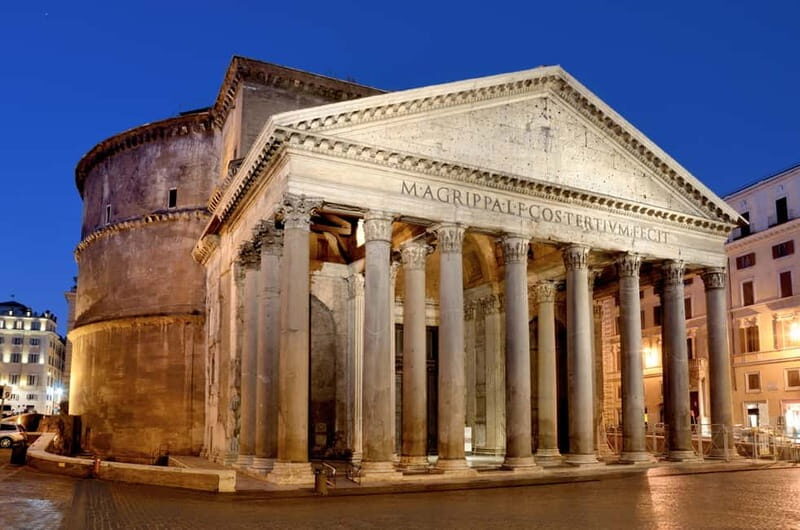
The Pantheon is the star that refuses to be ordinary. Even if you’ve seen it in photos, in person you notice scale first, then light. At night, the massive dome and the central oculus feel even more dramatic, because you’re not competing with daylight glare—your eyes focus on structure and atmosphere.
This stop is worth it because it shows you how the Pantheon works visually. You can’t really “walk through” it like a typical attraction; you’re there to look, absorb, and understand what makes it so famous. The guide’s job is to help you see the big idea quickly, so you don’t spend the whole time guessing what you’re looking at.
One practical consideration: it’s a popular site. The tour keeps things organized so you’re not wandering. And since the evening light is part of the point, it’s smart to stay attentive when the group gathers for the main viewing moment.
St. Ignazio di Loyola and its trompe-l’œil ceiling
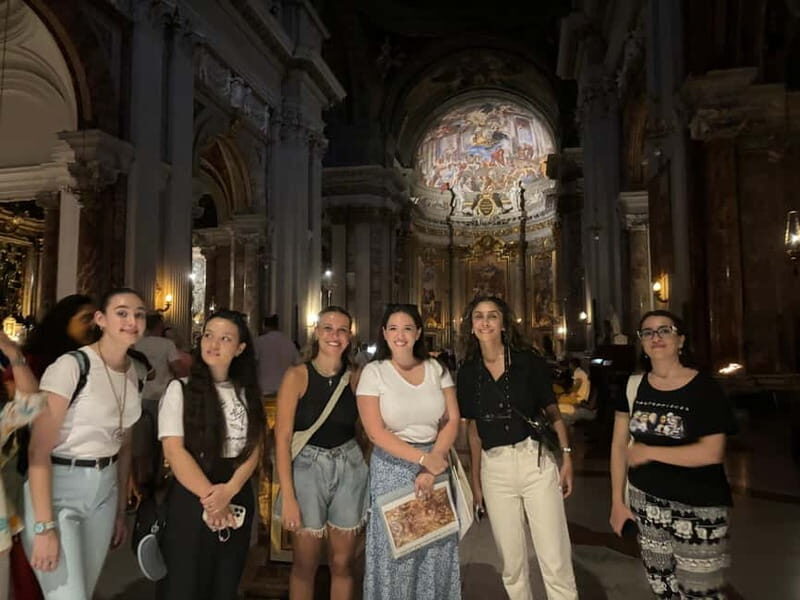
This is the stop that turns Rome sightseeing into something you can’t fully capture in a single photo. St. Ignazio di Loyola is often called the Instagram Roman Church, and the reason is very specific: the trompe-l’œil ceiling creates an optical illusion that feels like the architecture is opening up above you.
What makes this stop special is the glow and the way the interior reads after dark. You get soft light on artwork and painted effects, and your brain keeps trying to interpret depth that isn’t really there. It’s a strong reminder that Rome isn’t only about ancient stone—it’s also about how artists and architects played with perception.
Two practical tips: bring your camera because the ceiling is photo-friendly, and pay attention to the flash restriction in certain areas. If you follow the rules, you’ll have a better experience without being slowed down by staff reminders or group disruption.
Galleria Sciarra: an Art Nouveau moment you might miss solo
After the big landmarks, the tour adds a quieter, more surprising stop at Galleria Sciarra. This is an Art Nouveau passage where intricate frescoes come alive under evening light. It’s the kind of place that can slip under your radar if you’re only chasing the obvious names.
I like Galleria Sciarra for exactly that reason. It breaks the pattern of “big square, big church, big monument” and gives you a different texture of Rome—more intimate, more detailed, and more about design. It also helps reset your pace mentally, so the remaining walk doesn’t feel like nonstop intensity.
Since this is inside a passageway, keep your camera handy but also expect a slower look. The guide’s role here is to direct your attention to what matters, so you’re not just snapping pictures of ceilings and hoping one turns out.



Trevi Fountain: tossing a coin with the right timing
Trevi Fountain is famous for a reason, and in the evening it feels like the fountain is part of a living set. You’ll be there to toss a coin, and even if you’ve heard the tradition a thousand times, doing it here at night still feels fun. The water sparkles more in the darker conditions, and the surrounding streets help frame it like a show.
This is also a place where crowd management matters. The tour keeps you moving with a group, so you’re not spending your whole time stuck waiting for your chance to see the water and the sculpture clearly. It’s one of the stops that makes the “organized evening walk” part of the value feel real.
If you want good photos, stand where the light hits the fountain best and give yourself a second to steady your shot. No flash helps keep things respectful and also keeps the atmosphere more natural-looking.
Moving through the imperial center toward the Colosseum
Once Trevi and the surrounding major sights are done, the tour shifts from landmark sightseeing to a more connected walk through the layers of central Rome. You pass by areas linked to education and civic life, including the Pontifical Gregorian University, then head toward Piazza Venezia and the Vittoriano Monument area. From there, the illuminated skyline view can be a real payoff because it gives you orientation—you can see where everything sits relative to each other.
You also visit key buildings near the center of power and planning, including Palazzo Venezia and Palazzo delle Assicurazioni Generali. These stops may not be the first names you memorize from a guidebook, but they help explain how Rome’s political and cultural story takes shape in stone and facades.
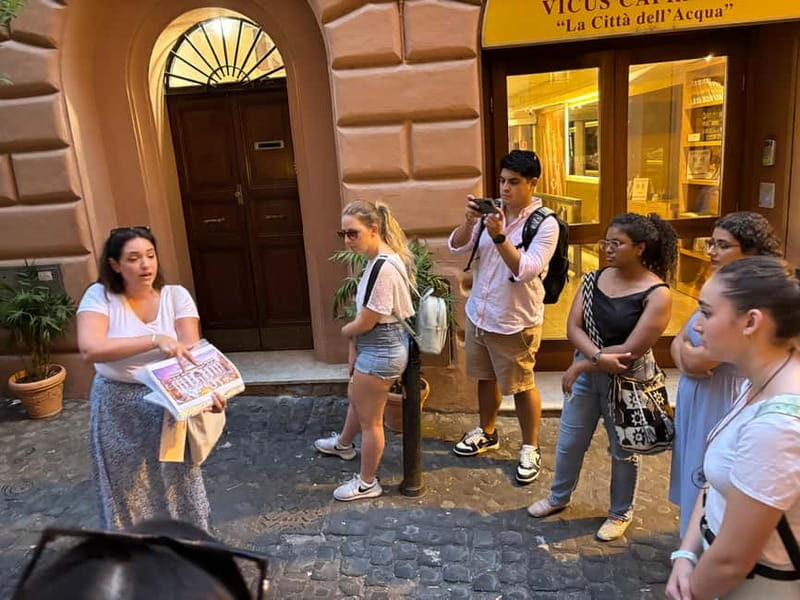
Then comes another “Rome layers” moment: Trajan’s Column and Market, plus ancient ruins at Vicus Caprarius, often associated with the City of Water. This stretch matters because it changes your viewpoint from sightseeing to understanding. You start to notice how the city repeats itself—new streets and buildings built over older footprints.
Palazzo Bonaparte and Via dei Fori Imperiali under moonlight
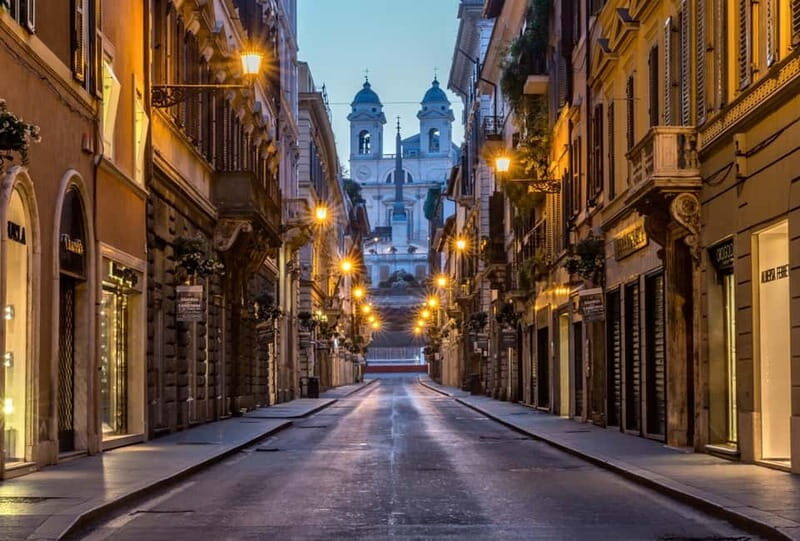
Before the final big finish, the tour passes Palazzo Bonaparte, a Baroque residence with plenty of story behind it. If you like architecture that looks elegant but also has weight, this is a nice mid-course stop. It’s not just a glance either—you get time to appreciate the building’s presence in the evening.
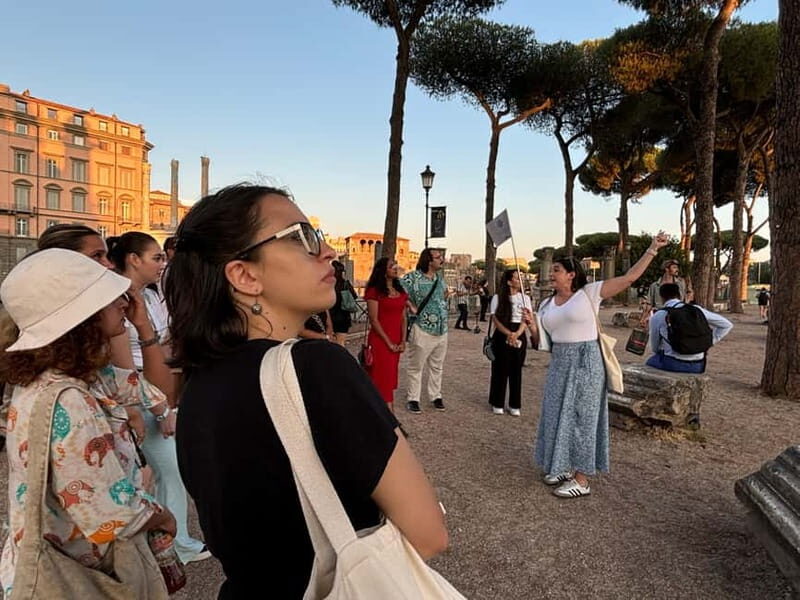
From there, the tour heads along Via dei Fori Imperiali, where remnants of ancient Rome appear majestic under night lighting. This is one of those stretches that makes you slow down, because the street feels like a corridor to the past. The guide helps connect what you’re seeing without turning it into a lecture.
This part also sets up the Colosseum perfectly. By the time you reach the end, you’ve already walked through the “why this place matters” logic. That means the finale doesn’t feel like a surprise photo stop—it feels like a planned arrival.
Colosseum at night: the big end point
Finishing at the Colosseum is a smart choice for an evening tour. At night, the monument looks bigger and more sculptural, and the surrounding streets help frame it rather than flatten it into a generic background. The effect is simple: you get the thrill of the iconic site with the mood shift that only evening lighting can create.
This last stop also closes the loop of the night’s story. You’ve been moving from fountains to domes to illusion ceilings, then down through imperial streets, and now you end at Rome’s most instantly recognizable symbol of power and spectacle. It’s a satisfying payoff when the lighting and atmosphere are working in your favor.
One logistics detail you’ll appreciate: the tour ends back at the meeting point. That means you don’t have to solve the puzzle of getting yourself out of a late-night area after a long walk.
Price and pacing: is $32 worth your night?
At $32 per person for a roughly 2-hour guided walk, you’re paying for three main things: a professional guide, a structured route through major stops, and time-saving organization. What you’re not paying for are entrance fees and any food or drinks, so plan on bringing water and keeping your meals separate.
This price starts to make sense if you want an efficient Rome plan that doesn’t force you to research every connection between sites. Night tours can also be a comfort win in summer, since temperatures usually feel better after daytime crowds thin out. One review noted the guide made the time fly and kept the pace fun, which is exactly what you want on a walking route.
Is it worth it if you love to wander on your own? Maybe not. If you’re the type who likes to set your own route and stop whenever you want, you could build a similar night loop independently. But if you want the smooth “see a lot, understand enough, take good photos” experience, $32 is a fair bargain for what you get.
Should you book Via Roma: A Journey Through Time?
Book it if you want a well-planned night walk that hits major icons and adds a couple of “pay attention” stops you might skip. The Pantheon, St. Ignazio di Loyola, Trevi Fountain, and Piazza Navona are strong anchors, and the added stops like Galleria Sciarra and Vicus Caprarius give the tour a bit more texture than a straight highlight list.
Skip it if you have trouble with long walking distances, because it’s not suitable for wheelchair users or people with mobility impairments. Also skip it if you expect lots of indoor time with minimal walking; this is a moving tour, and it’s designed around evening pacing.
FAQ
How long is the Via Roma tour?
The tour duration is listed as 2 hours. Some runs may take a bit longer depending on the group and the pace on the street.
Where does the tour start and end?
The start meeting point can vary depending on the option you book, and the tour ends back at the meeting point.
What landmarks are included on the tour?
Major stops include Piazza Navona, the Pantheon, St. Ignazio di Loyola Church, Trevi Fountain, Piazza Venezia, Trajan’s Column and Market, and other central landmarks such as Palazzo Venezia and nearby imperial-area streets.
Are entrance fees included, and is food provided?
Entrance fees are not included, and food and drinks are not included either.
What should I bring, and can I use flash photography?
Wear comfortable walking shoes. Bring a camera and water. Flash photography is not allowed in certain areas.
What languages is the live guide?
The tour offers live guidance in Spanish and English.
Is the tour wheelchair accessible or suitable for mobility impairments?
No. The tour is not suitable for wheelchair users or people with mobility impairments.
If you tell me your travel month and whether you’re more into photography or stories, I can help you decide where this fits best in your Rome schedule.