REVIEW · EVENING EXPERIENCES
Vespa Scooter Night Tour in Rome with Professional Photographer
Book on Viator →Operated by RomeIsmylove Vespa tour in Rome with professional photographer 🛵📸🇮🇹 · Bookable on Viator
Rome looks different after dark. This Vespa night tour strings together the Colosseum, Circus Maximus, Pantheon, Piazza Navona, and Trastevere, while you cruise between them on a real Vespa with a driver and pause for a photo session with a professional photographer using a Sony Alpha 7 IV. I love the nighttime photo stops and the fast way to cover big ground without turning your evening into a long walk.
The group stays small (max 10), and the timing is built for dramatic lighting and fewer crowds. One consideration: this is mostly an outdoor, stop-and-shoot experience—entrances and guided interior visits aren’t the focus—so you’ll want daytime monument tickets if you’re set on going inside.
In This Review
- Quick highlights (what makes this tour feel worth it)
- Vespa Night Tour Rome: why the timing matters
- Meeting at Via del Colosseo and getting ready to ride
- The Colosseum at night: first stop, first photos
- Circus Maximus: the long, quiet scale of ancient Rome
- Knights of Malta Keyhole: a photo alignment you can spot fast
- Bocca della Verità: the playful Roman folklore stop
- Piazza Venezia and the street-energy around it
- Pantheon after dark: columns in warm light
- Piazza Navona: fountains, performers, and a classic night vibe
- Trastevere on a Vespa: cobblestones and stories
- Fontana dell’Acqua Paola (Fontanone): monumental water and city views
- Terrazza del Gianicolo: the hilltop finale
- Professional photographer + Sony Alpha 7 IV: what you’re really paying for
- Guides make a difference: Karim, Fabio, and the human touch
- Value and practical planning: is $90.11 a good deal?
- Who should book this Vespa night tour?
- Should you book it?
- FAQ
- How long is the Vespa Scooter Night Tour in Rome?
- Is the tour in English?
- How many photos are included with the professional photographer?
- What landmarks are part of the route?
- Are monument entrance tickets included?
- Where do we meet, and where does the tour end?
- Is a helmet provided?
- Can I cancel for a full refund?
Quick highlights (what makes this tour feel worth it)
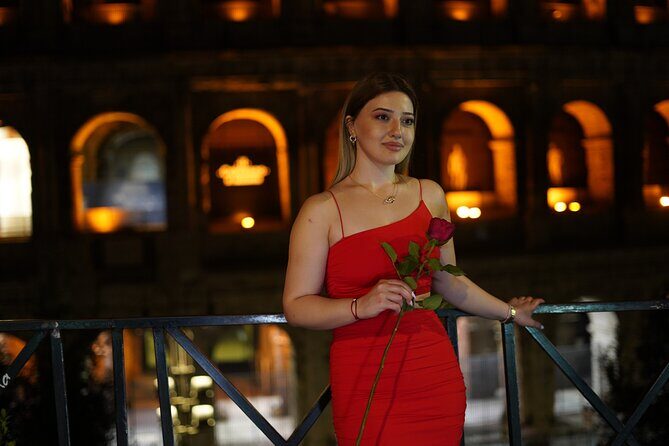
- Professional photo sessions at multiple landmarks with 25–50 high-quality images included
- A Vespa ride that saves your legs while you connect Rome’s must-sees in about 1.5–2 hours
- Iconic night viewpoints like the Keyhole Gate alignment and Janiculum Hill panorama
- Well-paced stops that include free exterior access at major spots (like the Colosseum stop)
- Safety basics handled with helmets and driver-led navigation
- Small-group feel for easier photo direction and less chaos on corners
Vespa Night Tour Rome: why the timing matters
Rome at night isn’t just prettier. It’s a different experience—sound carries differently, streets feel calmer, and the landmarks look more architectural than postcard-y. This tour uses that logic well: you’re out after dark, moving efficiently between stops, and photographing facades when lighting is doing the heavy lifting.
The Vespa element is also more than fun. A driver handles the route, you get a higher “sightline” than pedestrians (especially on hills and broader piazzas), and you’re not constantly checking which street goes where. If you like seeing a lot but hate rushing, this hits a sweet spot.
You can also read our reviews of more evening experiences in Rome
Meeting at Via del Colosseo and getting ready to ride
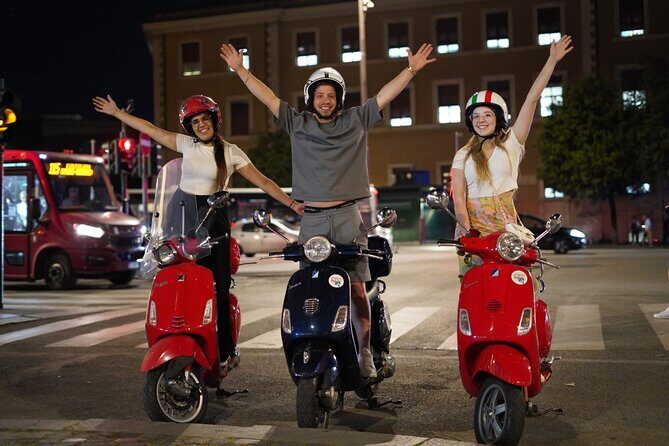
You start at Via del Colosseo, 31, and you’ll meet by the Colosseum area for the first photo session. From there, the flow is simple: arrive, gear up, take photos, and then move to the next historical route.
Safety and comfort are handled in the basics. You get a helmet, and the tour also provides hygienic caps. That small touch matters more than you’d think when you’re wearing a helmet for a short ride, then standing still for photos in cool evening air.
The tour runs about 1 hour 30 minutes to 2 hours, so it’s compact. That’s good for most people—less time exposed to rain or cold—and it keeps the pace from turning into a slow bus ride.
The Colosseum at night: first stop, first photos
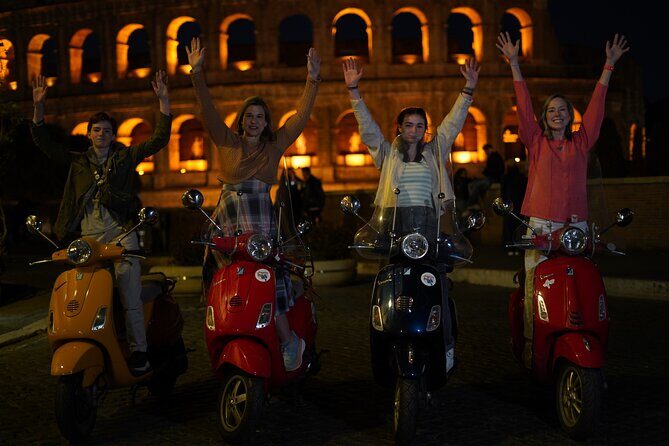
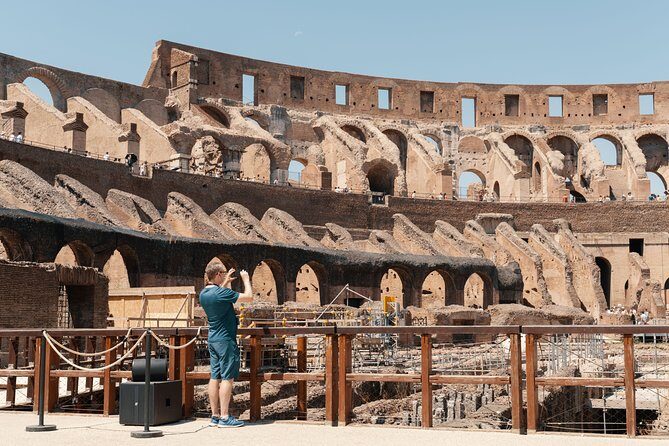
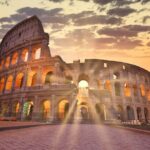
The Colosseum is the emotional opener. After sunset, the arches and remaining structure catch the light in a way daytime visits often don’t. It can feel less like a daytime sightseeing checklist and more like you’re seeing the monument as a dramatic backdrop.
This tour also begins with a photo session right at the meet area in front of the Colosseum. That’s smart. You start with the most recognizable site while everyone is fresh, and the photographer can get everyone comfortable with posing before the route gets busy.
A quick practical note: the Colosseum stop is marked as admission ticket free in the tour info, so expect this to be an exterior viewing and photos moment rather than a full guided interior visit.
Circus Maximus: the long, quiet scale of ancient Rome
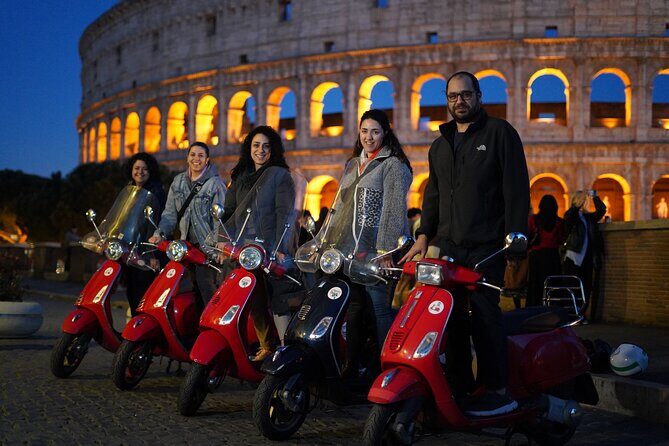
Next up is Circus Maximus, the massive ancient chariot racing stadium in the valley between the Palatine and Aventine Hills. In daylight, it’s easy to see “ruins.” At night, you get a better sense of scale without visual clutter.
This is one of those stops that helps you “connect” Rome. The Colosseum draws attention first, but Circus Maximus reminds you that Romans loved big public entertainment—on an enormous stage—even long before sports arenas were a modern thing.
The downside is time. Because this is a fast, short tour, you won’t have hours to wander the site like you might on a separate archaeological outing. Think of Circus Maximus here as a scenic history checkpoint.
Knights of Malta Keyhole: a photo alignment you can spot fast
Piazza dei Cavalieri di Malta leads you to the Keyhole of Rome—an alignment view through the Knights of Malta Gate that frames St. Peter’s Basilica in the distance. Even if you’ve seen it on social media, it lands differently in person because you’re standing in the exact framing setup.
What I like about this stop is that it’s interactive in a way most landmark viewing isn’t. You’re not just looking at a monument; you’re locating a specific “line” through Rome’s space.
It’s also a good change of pace. You move from big ancient architecture to a neat little framing trick—then you’re off again on the Vespa.
You can also read our reviews of more photography tours in Rome
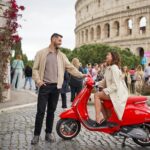
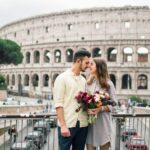
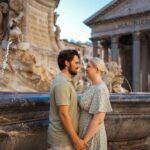
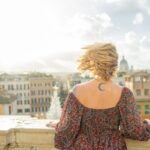
Bocca della Verità: the playful Roman folklore stop
The tour includes a stop at La Bocca della Verità (Mouth of Truth), located in the portico of Santa Maria in Cosmedin Church. It’s famous for the marble mask said to bite the hand of those who lied—whether you treat that story as myth or fun theater, it’s an easy way to make the evening feel light.
This is the kind of stop that works especially well if you’re traveling with kids or anyone who doesn’t want every moment to be strictly “serious history.” You get a memorable moment that’s easy to explain and photograph.
Because the tour is designed to move, you’ll likely get a brief moment here rather than a long “hang out” window. If you’re obsessed with folklore and want deep context, pair it with a separate daytime visit to the church area.
Piazza Venezia and the street-energy around it
Piazza Venezia is where you get that big Roman square feeling—iconic buildings, the prominent monument in the piazza, and the sense that Rome’s city center is still very much alive. It’s also a gateway into shopping streets, with Via del Corso mentioned as the famous street opposite.
At night, squares like this become visual “breathing rooms” between heavier landmarks. You can pause, look around, and reset your brain before the next photo-heavy stop.
One consideration: if your priority is interior museum time, Piazza Venezia in this format is mainly about the square itself and the surrounding streets—not a full guided stop inside any institutions.
Pantheon after dark: columns in warm light
The Pantheon changes at night. The façade and entrance glow with warm lighting, and the exterior looks more sculptural than it does in harsh midday sun. Even standing outside, you get the sense of how carefully the building is designed.
There’s also a “peek” factor. The tour description notes that you can see the interior through the open doorway, which is a nice middle ground if you’re not doing a full inside visit on this outing.
This stop is a great example of why evening timing matters. The Pantheon is impressive any time, but at night it feels calmer and more focused—like you’re approaching a monument rather than passing it.
Piazza Navona: fountains, performers, and a classic night vibe
Piazza Navona is one of those places where Rome’s evening energy feels most obvious. At night, the square’s Baroque architecture and three fountains are dramatically lit, including Bernini’s Fountain of the Four Rivers.
The best part here is the mix of architecture and street life. You’re likely to see musicians, artists, and the kind of sidewalk motion that makes a place feel lived-in rather than staged.
Because this is still a short tour, you won’t linger for long like you might if you planned a full “sit down and people-watch” evening. But you should get enough time to take photos, enjoy the ambiance, and feel the scale of the piazza.
Trastevere on a Vespa: cobblestones and stories
Trastevere is where the trip gets more neighborhood-feel. Expect cobblestone streets, medieval-style architecture, lively evening scenes, and a strong sense that this is where Romans actually spend time. It’s also home to historic churches such as Basilica of Santa Maria in Trastevere, which dates to the 4th century (at least in the tour’s background info).
From a photo perspective, Trastevere can be great because streets offer angles you don’t get from the major tourist corridors. You also get a contrast: after seeing imperial monuments, you’re now in the moodier, human-scale side of Rome.
If you’re prone to motion sickness, scooter rides can still be a challenge even when the route is smooth. In that case, keep your eyes on the road ahead and tell the driver early if you’re feeling off—this is the kind of comfort detail that helps a tour feel easy instead of stressful.
Fontana dell’Acqua Paola (Fontanone): monumental water and city views
After Trastevere, the tour heads toward the Janiculum area with Fontana dell’Acqua Paola, also known as the Fontanone. This is a major fountain commissioned by Pope Paul V in the early 17th century, and it’s designed with a central arch and cascading water, plus two smaller arches on the sides.
The big payoff is the viewpoint element. The fountain sits on Janiculum Hill, and the location is a natural pause where you can look over Rome rather than only at Rome.
Photo tip: plan for slightly lower light than you’d get at midday. The photographer’s job is to capture it well, but you’ll get better results if you follow their directions quickly and stay ready when they say they’re about to shoot.
Terrazza del Gianicolo: the hilltop finale
The ride ends with a stop at Terrazza del Gianicolo on Janiculum Hill—described as the highest hill in Roma by the tour information. This is the part where your evening clicks into place.
You get tree-lined pathways, gardens, and monuments such as statues of Garibaldi and Anita tied to Italian unification. But the main reason people love this stop is the panoramic view. The tour info is not subtle about it: the view from Gianicolo is the big moment.
If you want one “I can’t believe I’m seeing Rome like this” memory, this is it. And because it’s near the end of the tour, your body is ready to pause instead of power through.
Professional photographer + Sony Alpha 7 IV: what you’re really paying for
You’re not just paying for stops. You’re paying for direction and timing. A good photographer keeps the group moving while still making sure everyone gets at least a few strong angles. The included info says they take 25–50 high-quality pictures, and it also specifies a Sony Alpha 7 IV.
What stood out from the reviews is how the photographer and guide helped people pose naturally. Guests described the guides as funny, patient, and direct, and a few mentioned the photographer working with children for portraits without turning the session into a rushed ordeal.
You also get practical details that make the experience smoother—helmets, hygienic caps, and the photo session structure. That reduces the common hassle of trying to photograph yourself at night on crowded corners.
One small trade-off: the tour is about capturing Rome from key points, not about long guided time at indoor attractions. If your dream is detailed museum explanations, you’ll get more from separate daytime visits.
Guides make a difference: Karim, Fabio, and the human touch
The experience depends on how the guide handles the evening flow. Reviews consistently praise the guides’ storytelling and humor. Names that come up include Karim and Fabio, and one guest specifically mentioned Karim’s knowledge and his communication when the city had schedule disruptions due to a protest.
That kind of flexibility matters in Rome. Streets can change quickly, and a guide who stays calm and keeps you informed can turn a possible headache into a smooth evening.
Even in birthday-style moments, the tour described extra care—one celebration included a rose and a song at the highest viewpoint in Rome. That’s not guaranteed for every booking, but it’s a sign of the team’s attention to making the experience feel personal.
Value and practical planning: is $90.11 a good deal?
At $90.11 per person, you’re paying for three things at once: the Vespa ride with a driver, the coordinated night route, and the professional photography package (25–50 images). In most cases, that bundle is the value play.
If you were to recreate this on your own, you’d need a scooter rental, route planning for multiple photo spots, and then someone willing to shoot consistently while you hop between landmarks. This tour handles those friction points for you, in a tight 1.5–2 hour block.
The “value” question really comes down to your style:
- If you like photos but hate arranging them, this is a strong buy.
- If you’re mainly chasing museum interiors and guided walkthroughs, the included stops won’t replace a daytime monument plan.
- If you want an efficient overview of Rome’s highlights with a unique evening lens, it’s a great fit.
Who should book this Vespa night tour?
I think this tour suits you if you’re:
- Visiting Rome for the first time and want a fast orientation of major landmarks
- Photo-focused and want a professional to handle nighttime posing and timing
- Traveling with family (including teens and kids), especially since the guides were described as fun and good at making everyone feel safe
- Short on time and tired of walking
It may not be the best choice if:
- You expect long, inside-the-monument experiences
- You’re hoping to spend extended time at each site like a self-guided archaeology day
- You have strong discomfort with scooters, helmets, and short stops where you stand still for photos
Should you book it?
Yes, I’d book this if your goal is a memorable night in Rome with a professional photo set and minimal planning stress. The combination of Vespa transportation, curated night stops, and the included photographer is a smart way to see a lot without exhausting yourself.
Just go in with the right mindset: this is a stop-and-shoot evening tour, not a ticketed deep-dive into museum interiors. If you pair it with a daytime monument strategy, you’ll end up with both the big historical sites and the best-looking night memories.
FAQ
How long is the Vespa Scooter Night Tour in Rome?
It runs about 1 hour 30 minutes to 2 hours.
Is the tour in English?
Yes. The tour is offered in English.
How many photos are included with the professional photographer?
During the experience, they take 25–50 high-quality pictures.
What landmarks are part of the route?
Stops include the Colosseum area, Circus Maximus, Piazza dei Cavalieri di Malta (the Keyhole of Rome), Bocca della Verità, Piazza Venezia, the Pantheon, Piazza Navona, Trastevere, Fontana dell’Acqua Paola (Fontanone), and the Terrazza del Gianicolo.
Are monument entrance tickets included?
Entrance tickets to monuments and guided tours inside monuments are not included. The Colosseum stop is marked as admission ticket free in the tour details.
Where do we meet, and where does the tour end?
You meet at Via del Colosseo, 31, 00184 Roma RM, Italy. The activity ends back at the meeting point.
Is a helmet provided?
Yes. Helmets are included.
Can I cancel for a full refund?
Yes. You can cancel up to 24 hours in advance for a full refund. Within 24 hours, there is no refund.