REVIEW · VATICAN CITY
Vatican Wheelchair Accessible Museums and Sistine Chapel Tour
Book on Viator →Operated by Accessible Italy Tours · Bookable on Viator
A line-free Vatican can feel almost illegal. This wheelchair-accessible tour pairs reserved tickets with a private guide so you can focus on art instead of bottlenecks. You’ll also get real guidance on what to look for before you step into the Sistine Chapel.
I especially like two things: first, the routing is built for mobility needs, including avoiding queues and planning easier movement through the museums. Second, your guide’s explanations make the stops click, including big-name rooms like the Raphael Rooms and the map galleries—so you’re not just walking through rooms.
One drawback to plan around: the Vatican sometimes closes areas last minute, and if the Sistine Chapel is affected, there’s no refund or reschedule—you’ll get an alternative inside the Vatican Museums instead.
In This Review
- Quick hits you’ll care about
- How a reserved-entry Vatican tour changes everything
- Into the Vatican Museums: what “skip the line” really buys you
- Belvedere to Pio-Clementino: ancient sculpture, explained
- The Renaissance map obsession: Gallery of Maps in plain English
- Sobiesky Room and the Immaculate Conception frescoes
- Raphael Rooms: when the Vatican feels personal
- Sistine Chapel prep: reducing surprises and saving energy
- No talk inside: what to do with that rule
- When the Sistine Chapel isn’t available last-minute
- Wheelchair-friendly pacing without pretending it’s effortless
- Dress code and entrance rules: the part that can ruin your day
- Price and value: what you’re paying for
- Who should book this tour
- Should you book the Vatican Wheelchair Museums and Sistine Chapel Tour?
- FAQ
- How long is the Vatican Museums and Sistine Chapel wheelchair tour?
- What’s the price per person?
- Does the tour include admission tickets?
- Is St. Peter’s Basilica included?
- Is this tour wheelchair accessible?
- What languages is the tour offered in?
- What is required dress-wise for the Vatican?
- Are there any limits inside the Sistine Chapel?
- What if the Sistine Chapel closes last minute?
- If I’m not disabled, will I still be charged?
Quick hits you’ll care about

- Skip the long entry lines with reserved tickets, so you start faster
- Private guide time means you’re not lost in a crowd
- Wheelchair-accessible routing with practical help in the right places
- Raphael Rooms + iconic fresco context so you know what you’re seeing
- Gallery of Maps for one of the world’s standout Renaissance map collections
- Sistine Chapel rules explained first, including the no-talking reality
How a reserved-entry Vatican tour changes everything
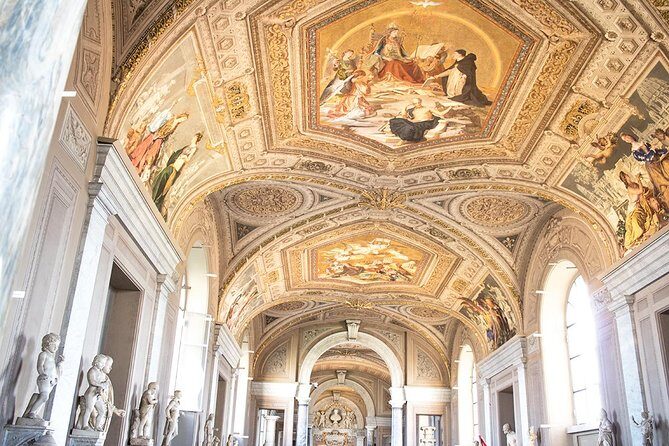
The Vatican is famous for crowds, and not in the fun way. This tour is designed around a simple idea: get you through the worst of the waiting fast, then use your time for the sights that actually reward attention.
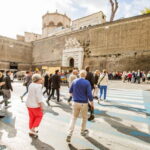
You meet your guide outside the Vatican Museums entrance, and the day starts right away because you’re using skip-the-line reserved tickets. That matters for anyone using a wheelchair or walker, because it’s not just the time in line—it’s the strain. Less waiting also means you’re more likely to enjoy the museums in a calm, steady rhythm.
The private-guide format is another big reason it feels different. You’re not listening from the back while a group gets shepherded along. You get one-on-one attention, and you can ask questions or move at a pace that works for your body.
In the reviews, guides like Tommaso and Thomas stand out for doing exactly this: setting you up with context so the art doesn’t feel like a checklist. One guest specifically noted archaeological expertise that helped connect art and history in a way that felt meaningful, not just instructional.
You can also read our reviews of more museum experiences in Vatican City

Into the Vatican Museums: what “skip the line” really buys you
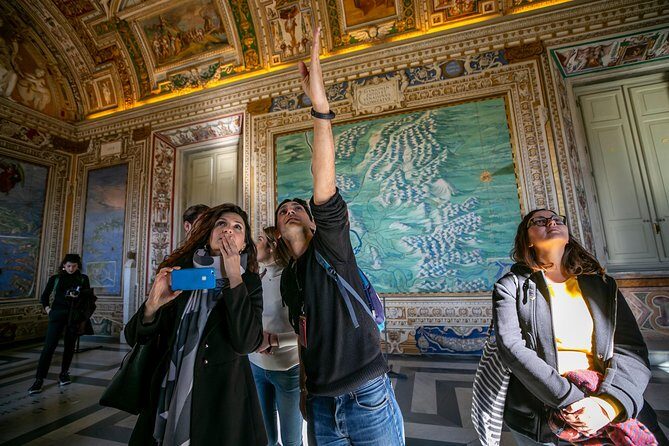
Once you’re inside, the tour shifts from logistics to art. You’ll cover major highlights across multiple museum areas, with breaks in the flow that make sense for accessibility and attention.
You’ll spend time at the Belvedere Courtyard and the Pio-Clementino Museum—areas known for the Vatican’s strong concentration of ancient sculpture. This tour leans into that with a guided focus on Ancient Roman and Greek statues, so you’re not only looking at famous forms, you’re learning how they fit into a larger story of collecting and power.
A practical detail: the reserved entry also means less “stand still and wait” time. That can be a game-changer when you’re navigating museum corridors and elevator access. If you use a wheelchair, look for routes that minimize rough transitions and keep you moving with fewer awkward stop-and-start moments. In the reviews, people praised the guide for planning the best routes and elevators, which is exactly what you hope a good accessibility-focused guide will handle.
One possible consideration: museum pacing. Even with a private tour, the Vatican Museums are still huge. So plan to treat this as an highlights tour with careful emphasis—not an everything-in-one-day marathon.
Belvedere to Pio-Clementino: ancient sculpture, explained
The Vatican’s ancient sculpture isn’t background. It’s the backbone of why the Museums became a magnet for centuries of artists and collectors.
In this stop, you’ll move through the Belvedere Courtyard and into the Pio-Clementino Museum, where the guide’s explanations help you appreciate how the pieces were presented and why certain works became standouts. You’ll also get guidance that helps you notice proportions, poses, and carving style—details you can miss when you’re just glancing quickly through a gallery.
This is where a good guide pays off most. Statues look timeless, but the “why” behind them—where they came from, how the Vatican displayed them, and what that meant for Renaissance and later audiences—turns a room into a learning experience.
If you love art but you also want your time to feel efficient, this is a smart way to start.
The Renaissance map obsession: Gallery of Maps in plain English
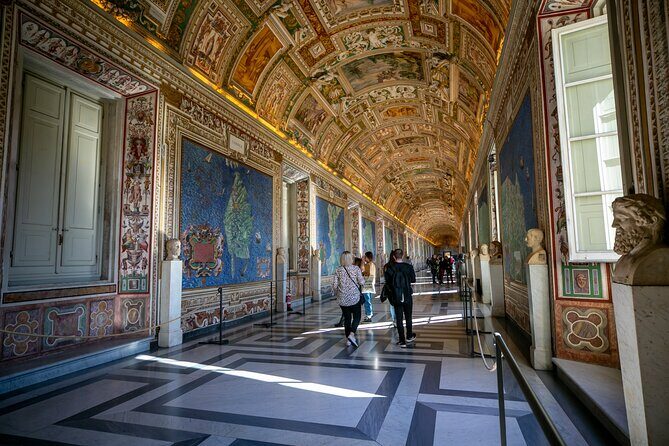
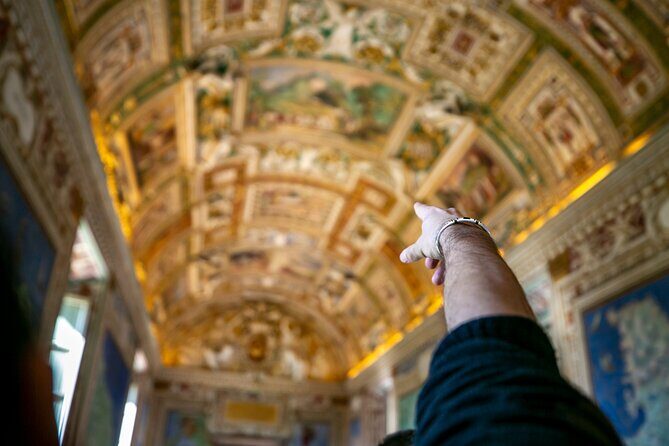
Then you hit two of the tour’s most memorable connective rooms: the Gallery of Tapestries and the Gallery of Maps.
Here’s why that map gallery deserves attention: the Vatican’s collection of Renaissance maps is presented as one of the most important in the world. Even if maps aren’t your usual interest, this is one of those stops where the guide’s framing helps you read the display as a snapshot of how people understood power, geography, and the world they lived in.
For me, the value is in the way maps change your thinking. You stop seeing them as flat visuals and start seeing them as tools—political, educational, and symbolic. With a private guide, you can ask questions about what you’re seeing without feeling rushed.
The tapestries bring another layer. Tapestries are art that behave differently from paintings or statues: they’re designed to cover space and to set tone. The guided context helps you understand what you’re looking at beyond the surface beauty.
And yes, this museum section can be a lot of information. The good news is your guide can pace it based on your needs.
Sobiesky Room and the Immaculate Conception frescoes
Next comes the Sobiesky Room, where you’ll view one of the Vatican’s biggest paintings and see frescoes connected to the Immaculate Conception. This stop is a good example of why guided explanations matter.
Paintings and fresco cycles can feel overwhelming because they’re visually dense. With a guide, you’re better prepared to spot themes and relationships between elements—so the room becomes a guided story instead of a visual wall.
Drawback to consider here: if you’re sensitive to long periods of standing or leaning forward, plan micro-pauses. Your guide’s one-on-one style should make it easier to take breaks without derailing the flow.
Raphael Rooms: when the Vatican feels personal
If you want one guaranteed crowd-pleaser, it’s the Raphael Rooms. These were formerly the private apartments of Pope Julius II, and they display some of Raphael’s best-known works.
This tour specifically includes works like Parnassus and The School of Athens. Even if you’ve seen images online, seeing them in the rooms where they were created changes how you understand them. The compositions are built for architecture; the paintings interact with the space around them.
The big value here is that your guide can point out connections so you’re not just admiring famous scenes. One review highlighted how a guide with archaeology knowledge made the art and history feel meaningful—this is the kind of stop where that approach really shows.
Sistine Chapel prep: reducing surprises and saving energy
The Sistine Chapel is where you go from “wow, I’m in the Vatican” to “wait, I need time to look.”
Before you enter, your guide gives you expectations up front, since no talking is allowed inside. You’ll get briefings about the frescoes by Michelangelo, Botticelli, and others covering the walls and ceilings. You’ll also hear anecdotes about this chapel’s ongoing role, including that it’s the venue for the papal election—Conclave.
This prep step is more important than it sounds. The chapel is visually intense, and it’s easy to miss details when your first reaction is just pure awe. With an explanation beforehand (and in at least one review, pictures to help set expectations), you’re more likely to leave feeling you actually understood what you saw.
One more practical note: this tour allocates a full Sistine Chapel segment after the museums. That pacing helps you absorb the chapel as its own moment rather than rushing it as an afterthought.
No talk inside: what to do with that rule
The no-talking rule inside the Sistine Chapel can feel strict, but it’s also part of what protects the experience. Here’s the best way to handle it: treat your guide’s spoken intro as the main information, then use your eyes once you’re inside.
If you’re using a wheelchair, the guide’s job is crucial here—helping you position for viewing and keeping the experience smooth. In reviews, guests praised how guides planned routes and made the experience feel inclusive, which is exactly what you want when the environment limits movement and conversation.
Also, since this is a private tour, you’re not stuck listening to a different group’s guide while you wait for the speaking to end.
When the Sistine Chapel isn’t available last-minute
You should know this upfront: the Vatican can close areas last minute, and this tour specifically warns that the Sistine Chapel might be closed. If that happens, you won’t receive a refund or a reschedule. Your guide will provide an alternative focused on other museum areas inside the Vatican Museums.
That policy is not ideal, but it’s realistic for a site that operates on constant scheduling changes. The best strategy is mental flexibility: think of this as a Vatican Museums and chapel-focused experience, not a guarantee of one exact room.
Wheelchair-friendly pacing without pretending it’s effortless
This tour is openly wheelchair accessible, and it’s built to skip barriers that usually cause problems at the Vatican. That includes avoiding the most brutal waiting areas with reserved tickets and planning movement through the museums with helpful use of elevators where needed (as described in reviews).
Still, I’d keep expectations grounded. The Vatican is old, and even with the best planning, you’ll still be inside a complex museum system with lots of walking between spaces. Your comfort will depend on your own energy level and how long you can comfortably stay seated or in one viewing position.
The upside is that a private guide can adjust timing in a way large group tours can’t. In one review, a guest praised customization based on what the group wanted to see, which is exactly how you make a big site feel manageable.
Dress code and entrance rules: the part that can ruin your day
Plan on the Vatican rules, because they are strict. You need knees and shoulders covered for both men and women. That means no shorts or sleeveless tops. If you don’t comply, you risk being refused entry.
This matters even more on a day that already depends on timing. If you’re scrambling at the last minute, you can lose the benefit of the reserved entry. Bring a light layer if you’re traveling in warmer weather, and check your outfit before leaving your hotel.
Another rule you should know: if you book this tour and you are not disabled, you’ll be charged 60 euro at the entrance. That’s not a “maybe.” It’s a stated requirement.
Price and value: what you’re paying for
At $343.05 per person for about 3 hours, this isn’t a budget add-on. But the value isn’t just the guide—it’s how the guide saves you from the two biggest Vatican costs: time and energy.
You’re getting:
- Admission tickets included
- Reserved skip-the-line entry
- A private guide
- Wheelchair-accessible tour design
For many people, that combination works out to less stress per hour. If you’ve ever tried to do the Vatican solo with mobility needs, you know the true cost is fatigue and decision fatigue—where to go, how to move, and how to avoid dead ends.
One more thing: the tour is offered in English, and you’ll start and end back at Viale Vaticano. That keeps the plan simple and reduces the kind of transport uncertainty that can drain the day.
Who should book this tour
This tour fits best if you:
- Use a wheelchair or walker and want a guided plan that reduces stair and queue trouble
- Want the Vatican highlights without getting lost in the scale of the Vatican Museums
- Like your art with context—especially the Raphael Rooms and Sistine Chapel frescoes
- Value a guide who can adjust the pace and routes for your group
It may not be ideal if you want a full Vatican “everything” day. It’s highlights with guidance, not a slow museum crawl of every gallery.
Should you book the Vatican Wheelchair Museums and Sistine Chapel Tour?
If your priority is an easier, more focused Vatican visit, I’d say yes. The reserved entry is the big win, and the private guide format makes the time feel purposeful, especially for the Raphael Rooms and the Sistine Chapel’s fresco program.
I’d hesitate only if you can’t handle last-minute site changes. Since the Sistine Chapel closure risk is real and there’s no refund or reschedule, be ready for a museum-focused alternative.
If you match the tour’s strengths—mobility needs, art context, and a desire to avoid long lines—this is the kind of Vatican plan that leaves you with memories that actually make sense.
FAQ
How long is the Vatican Museums and Sistine Chapel wheelchair tour?
It’s about 3 hours.
What’s the price per person?
The price is $343.05 per person.
Does the tour include admission tickets?
Yes. Admission tickets are included for both the Vatican Museums and the Sistine Chapel stops.
Is St. Peter’s Basilica included?
No. St. Peter’s Basilica is not included.
Is this tour wheelchair accessible?
Yes. The tour is offered as a wheelchair accessible experience.
What languages is the tour offered in?
The tour is offered in English.
What is required dress-wise for the Vatican?
You must cover knees and shoulders. No shorts or sleeveless tops are allowed, and failing to comply can risk refused entry.
Are there any limits inside the Sistine Chapel?
Yes. No talking is allowed inside the Sistine Chapel.
What if the Sistine Chapel closes last minute?
The tour warns that some areas might close last minute. If that happens, there is no refund and no reschedule, and your guide will provide an alternative focusing on the Vatican Museums.
If I’m not disabled, will I still be charged?
If you book this tour and you are not disabled, you’ll be charged 60 euro at the entrance.