REVIEW · VATICAN CITY
Vatican and Sistine Chapel Afternoon tour
Book on Viator →Operated by Real Barcelona Tours · Bookable on Viator
Rome’s art hits hard, fast. This afternoon tour is built for people who want maximum payoff without losing half a day to lines. You get skip-the-line priority entry into the Vatican Museums and a guided flow through the places that matter most—then you top it off with the Sistine Chapel.
Two things I really like: the small group size (max 10) and the fact that you’ll have headsets so you can actually follow the commentary in crowded rooms. One watch-out: even with priority entry, Vatican security and crowding can still slow things down, and on very noisy moments the headsets may not feel perfect.
In This Review
- Quick hits before you go
- Why an afternoon Vatican tour can feel smarter
- Priority entry: what it actually means for your day
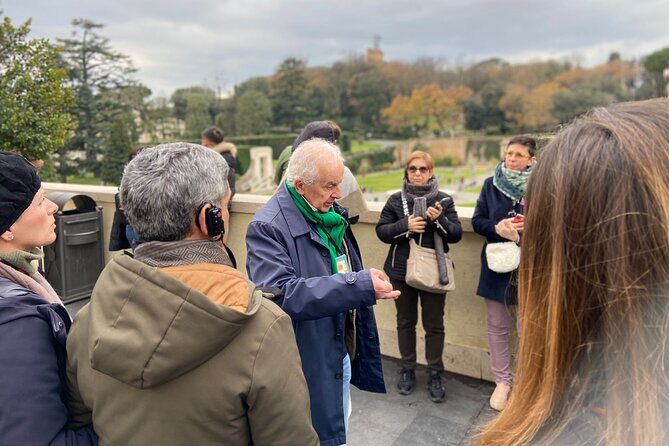
- Small group + headsets: your secret weapon in crowded rooms
- Meeting point and what to wear (so you don’t lose time)
- The Vatican Museums route: what you’ll actually see and why it’s worth it
- Belvedere Courtyard: Apollo and Laocoön energy
- Room of the Muses: Torso of the Belvedere
- Round Room with Nero’s Bathtub: surprising and human
- Gallery of the Candelabra: depth and drama
- Gallery of the Maps: geography as political messaging
- Gallery of the Tapestries: art that’s meant to be looked at close
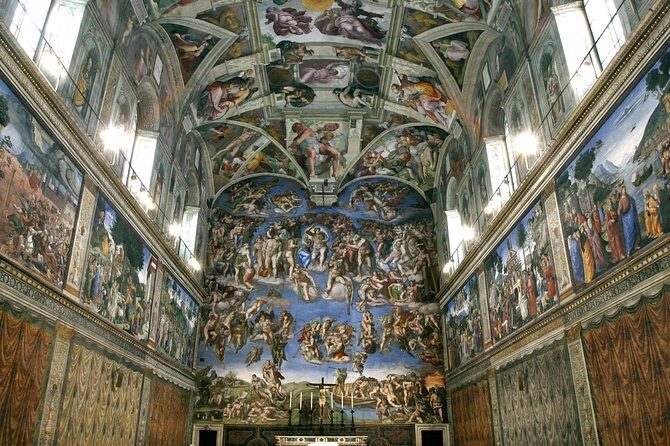
- The Sistine Chapel: Michelangelo’s frescoes in your face
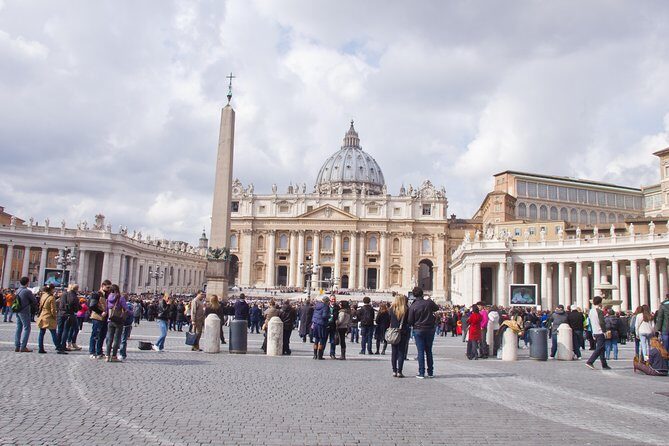
- St. Peter’s Basilica: Michelangelo’s Pietà stop
- What you gain from a guided art historian style tour
- Crowds, ears, and the reality check
- Pickup and getting there smoothly
- Price and value: is $103 a fair deal?
- Who this tour fits best
- Should you book the Vatican and Sistine Chapel Afternoon tour?
- FAQ
- What time does the Vatican and Sistine Chapel Afternoon tour start?
- How long is the tour?
- How big is the group?
- What is included in the price?
- Is transportation or pickup included?
- What should I wear and bring?
- Are meals included?
- Can I cancel for a refund?
Quick hits before you go
- Priority entry that saves time: you’re not stuck in the longest entrance lines trying to find the right ticket queue.
- Headsets for a clear guide-track: designed so you can keep up through galleries and tight spaces.
- You focus on the big-name stops: Belvedere Courtyard, Gallery of Maps, Gallery of Tapestries, and the Sistine Chapel.
- Michelangelo stops are part of the route: you’ll see the Sistine frescoes and also St. Peter’s Basilica highlights.
- Dress code is real-world strict: you’ll want to plan clothes to avoid last-minute problems at security.
Why an afternoon Vatican tour can feel smarter
The Vatican is one of those places where timing changes everything. Morning tours can be chaos. Afternoons can be calmer—though still busy—because you’re not starting your day at peak crowd pressure.
This tour runs from 2:45 pm for about 2.5 hours, which is a sweet spot if you have other Roman plans in the morning (Colosseum, a long lunch, or just wandering streets without rushing). The pacing also helps because you’re not trying to do the entire Vatican on your own in a single day.
I also like the focus. Rather than telling you to survive 3 miles of museum corridors with a vague map, you follow a set route of major rooms, so you can actually enjoy the art instead of playing Where am I? every five minutes.
And yes, there can be pickup offered, which is handy if you don’t want to think too hard about getting to Via Vespasiano, 28, 00192 Roma right on time.
You can also read our reviews of more tours and experiences in Vatican City.
Priority entry: what it actually means for your day
“Skip the line” sounds simple. In real life, it’s more like: skip the longest, most random parts of the entry mess. With skip-the-line tickets for priority entry, you should spend less time standing outside and more time inside seeing work you came for.
But here’s the honest part: the Vatican still requires mandatory security checks. Even if your entry is prioritized, security can add waiting time. So I’d treat priority entry as a time-saver, not a magic teleport.
Also, priority entry doesn’t prevent crowding once you enter. The museum floors can get packed fast, especially around major photo spots. Your guide route helps—because you’re moving with purpose—but you’ll still want a “shoulder-to-shoulder” mindset.
Small group + headsets: your secret weapon in crowded rooms
This is a maximum 10 travelers setup, and it matters more than you might think.
In large groups, guides get swallowed by the crowd. People get separated. You hear half a sentence, miss a key point, and then spend the rest of the visit trying to catch up. In a small group, you’re closer to the front, and the guide can steer you through the spaces more efficiently.
The headsets help even more. The Vatican Museums and Sistine Chapel areas are loud in their own way: foot traffic, echoing ceilings, sudden photo stops, and the general buzz of people trying to do everything at once. The headsets are meant to keep the commentary usable even when it’s noisy.
One caution: if the crowd noise spikes, some moments can still be hard to hear clearly. If you want the clearest audio, keep your headset in place and make sure you’re facing toward the guide when explanations start.
Meeting point and what to wear (so you don’t lose time)
You’ll meet at Via Vespasiano, 28, 00192 Roma and start at 2:45 pm.
The Vatican’s dress rules are not “best effort.” They’re strict enough to affect your day. Plan for:
- No shorts above the knees
- No sleeveless t-shirts
- Avoid clothing that won’t pass through checks
- Bring comfortable shoes (you’ll be on your feet)
- Bring a refillable water bottle
There are also practical restrictions that can trip you up:
- No big backpacks
- No big umbrellas
- No pointed objects
I strongly recommend traveling light. When everyone arrives with tidy bags and simple clothing choices, the whole group moves faster—and that’s when these tours feel worth the money.
The Vatican Museums route: what you’ll actually see and why it’s worth it
The tour focuses on the museum highlights people talk about for a reason. Over about 2.5 hours, you’ll move through major spaces that show different sides of Vatican art—from classical sculpture to grand picture galleries.

Belvedere Courtyard: Apollo and Laocoön energy
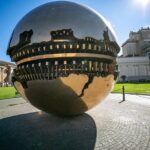
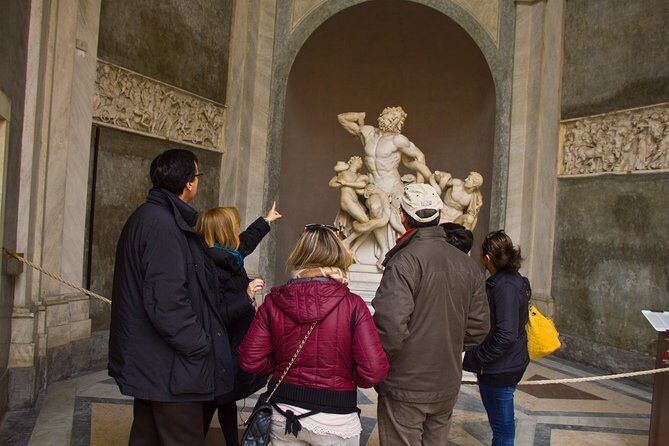
You’ll start with the Belvedere Courtyard, including the Apollo and the Laocoön. This area sets the tone fast: it’s classical Rome in sculpture form, big scale, strong drama.
Why it’s a smart first stop: it gives you a visual framework. Once you’ve seen how the museum displays famous bodies and poses, it’s easier to understand how later rooms treat art as status, myth, and power.
Room of the Muses: Torso of the Belvedere
Next up is the Room of the Muses, where you’ll see the Torso of the Belvedere. Even if you don’t know the piece by name, you’ll feel the skill immediately: anatomy, texture, and the way the torso is displayed like a study in form.
This is a good stop for your brain. It slows your eyes down. You’re not scanning a thousand items; you’re comparing one iconic sculpture with what came before it visually.
Round Room with Nero’s Bathtub: surprising and human
Then comes the Round Room with Nero’s Bathtub. It’s the kind of item that feels oddly specific—almost like a real-life artifact wedged into a museum that otherwise feels ceremonial.
I like this pause in tone because it breaks the “all myth, all grand” expectation. You start remembering the Vatican wasn’t only built for viewing. It was also built from history that includes everyday structures and objects.
Gallery of the Candelabra: depth and drama
In the Gallery of the Candelabra, you’ll be surrounded by visual rhythm: repeating forms, strong symmetry, and lots of decorative energy. For me, galleries like this are where the Vatican shows off how it stages art to feel theatrical.
If you’re short on time, this is still worth it. It’s one of those rooms where your guide’s context helps you see the design choices, not just the objects.
Gallery of the Maps: geography as political messaging
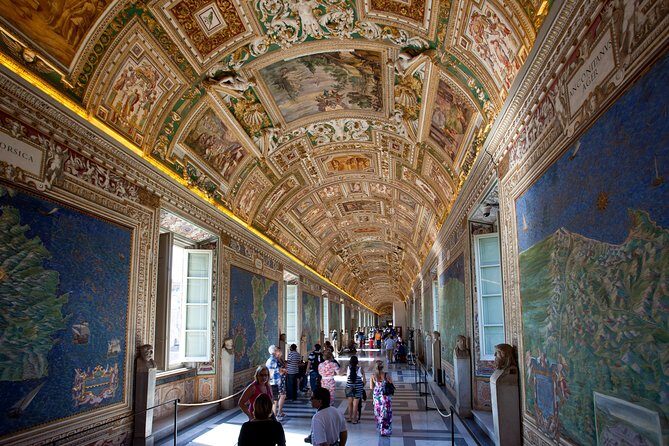
The Gallery of the Maps is a fascinating pivot. Maps don’t sound romantic, but in the Vatican they can be political. As you walk through, you’re watching how the Church framed the world—how power and faith got drawn onto the ceiling-level scale.
Even if you’re not a map person, this room can change how you interpret the museum’s purpose.
Gallery of the Tapestries: art that’s meant to be looked at close
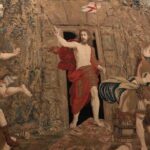
Then the Gallery of the Tapestries gives you a different texture of art. Tapestries are visual stories, and they’re meant to be read from a distance and then noticed for detail up close.
Here’s a practical tip: take a second to slow down and let the images settle. It’s easy to rush when the group is moving, but tapestries reward a slower pace.
The Sistine Chapel: Michelangelo’s frescoes in your face
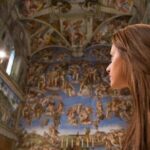
Your route then heads toward the Sistine Chapel, with Michelangelo’s frescoes as the headline.
This is where your guide makes the biggest difference. The chapel is not a museum you can casually “wander” through. It’s a focused space, rules are strict, and crowding can make it hard to find your own point of view.
If you want the chapel to feel less overwhelming, go for guidance. You’re there for the stories and the composition, not just the wow-factor photo.
St. Peter’s Basilica: Michelangelo’s Pietà stop
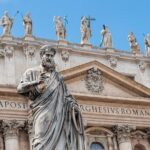
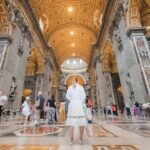
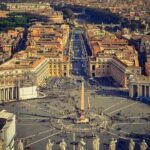
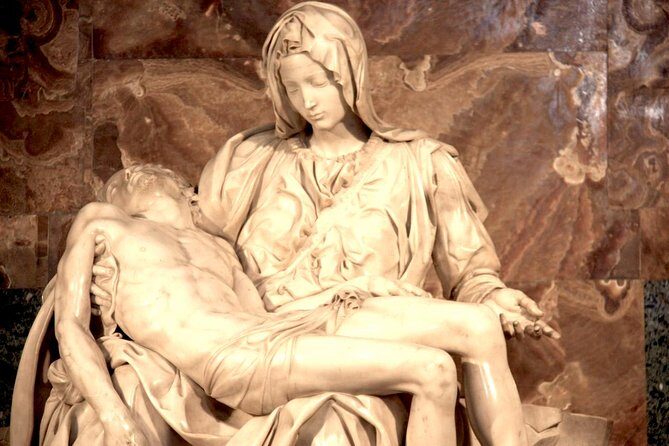
Finally, the tour includes a stop at St. Peter’s Basilica, highlighting Michelangelo’s Pietà.
This matters because it connects the Vatican Museums to the Vatican’s bigger religious center. It’s not just art trapped behind museum walls. It’s art integrated into a living landmark.
Also, seeing the Pietà as part of the same guided day helps you read Michelangelo as both a craftsman and a storyteller across different settings.
What you gain from a guided art historian style tour
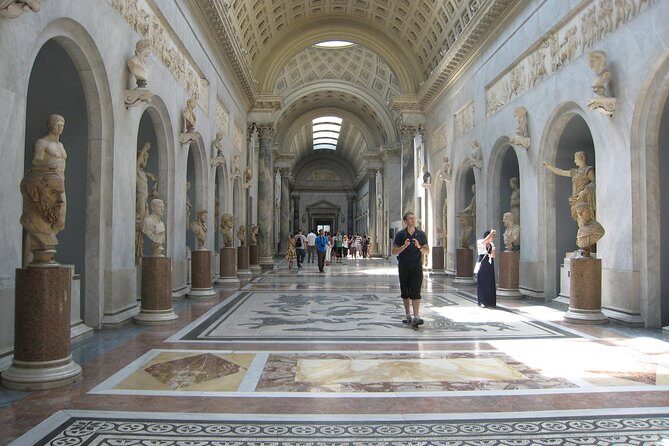
The ticket gives you access. The guide gives you meaning.
With an art historian guide, you’re not just hearing names. You’re learning what to look for: how sculpture posture signals authority, why certain decorative programs exist, and how the Vatican uses artwork to communicate power and belief.
One thing I appreciate is that the headset setup lets you keep listening while you’re standing still. That’s huge in the Vatican, because the best points of view sometimes require you to stop and stare.
A note on pacing: I’d be ready for dense commentary. In spaces like this, time gets compressed. If you prefer slower explanations, ask your guide (through the group flow) to repeat key points if you miss them.
Crowds, ears, and the reality check
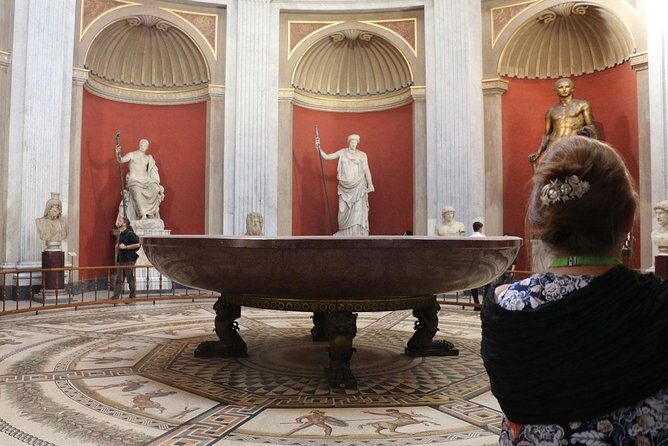
This kind of tour happens in one of the busiest places on earth, so “crowd management” becomes part of the experience even if it’s not the tour’s fault.
Two issues that can affect your enjoyment:
- Noise vs. audio clarity: headsets help, but the Vatican can get loud.
- Organization moments at the start: if you’re even a few minutes off schedule, you might feel stressed when the group needs to assemble.
To protect your mood, I’d arrive at the meeting point a bit early, not just on time. Then keep your plans flexible for the day—Rome has a way of reminding you it’s not a theme park.
Pickup and getting there smoothly
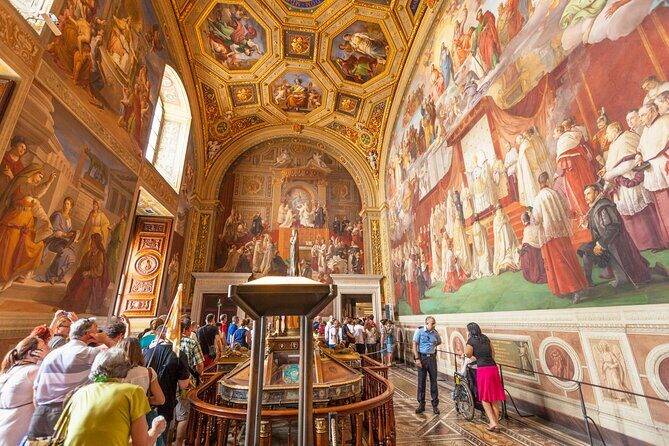
Pickup is listed as being offered, which is great if you’re staying somewhere that’s annoying to reach quickly on foot.
If pickup isn’t available for your exact booking, treat the meeting point as a core plan detail. Via Vespasiano is walkable from public transportation, but you’ll still want to leave buffer time so you’re not sprinting in a hot afternoon.
Also remember: you can’t bring everything. Big backpacks and umbrellas are not allowed, so pack accordingly.
Price and value: is $103 a fair deal?
At $103, you’re paying for three main things:
- Time savings through priority entry
- A licensed guide who turns the museum into an understandable route
- Headsets plus a small-group experience
If you attempted this on your own, you’d still need tickets, you’d still face security lines, and you’d still have to choose what to see without a guide’s structure. The value is that you’re buying direction and interpretation, not just access.
Is it always perfect? No. If you end up in a very noisy session, or if the group pace is too fast for your style, the experience can feel like “I saw a lot but didn’t fully absorb it.” Still, compared to trying to self-navigate the Vatican at peak times, this format is usually the more efficient route for most visitors.
Who this tour fits best
This tour makes the most sense if you:
- Want the most famous highlights without building a day-by-day plan
- Like guided context, especially for art and religious symbolism
- Prefer small groups over mass tour lines
- Are comfortable standing and walking with moderate effort
- Are visiting in the afternoon and want a focused schedule
If you’re the type who loves wandering slowly and reading every caption yourself for hours, you might still enjoy it—but you may feel limited by the set route and time window.
Should you book the Vatican and Sistine Chapel Afternoon tour?
If your priority is seeing the key Vatican rooms and the Sistine Chapel with priority entry, headsets, and a small-group guide flow, I’d say yes. For a price point like $103, you’re mainly buying back time and clarity—two things that make the Vatican feel less overwhelming.
I would not book only if you already have a very flexible plan to self-guide with lots of extra time, or if you strongly dislike structured pacing in crowded museums. Otherwise, this is a practical, high-impact way to experience the Vatican without turning your trip into a queue-focused scavenger hunt.
FAQ
What time does the Vatican and Sistine Chapel Afternoon tour start?
It starts at 2:45 pm at the meeting point on Via Vespasiano, 28, 00192 Roma RM, Italy.
How long is the tour?
The tour is about 2 hours 30 minutes (approximately).
How big is the group?
The tour has a maximum of 10 travelers.
What is included in the price?
Included are skip-the-line tickets, a licensed guide, a 2.5-hour Vatican tour, and headsets.
Is transportation or pickup included?
Pickup is offered, but transportation details aren’t listed beyond that.
What should I wear and bring?
Wear proper attire for Vatican museums. That means no shorts above the knees and no sleeveless t-shirts. Bring comfortable shoes and a refillable water bottle.
Are meals included?
No, meals are not included.
Can I cancel for a refund?
Yes. You can cancel for a full refund if you cancel at least 24 hours in advance. If you cancel less than 24 hours before the start time, there is no refund.