REVIEW · ROME
Unveil Rome : Crypts, Underground Aqueducts and Iconic Monuments
Book on Viator →Operated by Underground Rome · Bookable on Viator
Rome has a habit of going underground.
This tour strings together three very different sides of the city: the Capuchin Friars crypt, a real working aqueduct (still tied to Trevi Fountain), and then classic sights in the open air. I like the mix because you’re not just ticking boxes—you’re getting that Rome contrast where sacred spaces and everyday life share the same streets.
Two things I really like: first, the Capuchin crypt visit includes the admission and actually explains the why behind the bones-and-ornament setup, not just the shock value. Second, I enjoy the underground aqueduct stop, because finding the Acquedotto Vergine is half the fun—then you pop back up into the famous Rome moments.
One drawback to plan for: you’ll be moving on foot for a short time span and you should expect some stairs and a bit of walking. Also, a couple stops are underground, so if you don’t love tight, enclosed spaces, it’s worth thinking twice.
In This Review
- Key highlights at a glance
- A 4:30 pm Rome evening that hits crypts and icons in one go
- Capuchin Friars crypt: bones, chandeliers, and what it means
- Acquedotto Vergine underground: the aqueduct still tied to Trevi
- Trevi Fountain: famous photos plus a reality-check on the weird stories
- Pantheon exterior viewing: dome and bronze door, plus the surprises
- Piazza Navona: Bernini’s Four Rivers and what Rome left under you
- Price and logistics: what you’re really paying for
- Guide quality: Giuseppe and Riccardo set a high bar
- Who should book this tour (and who might prefer a different plan)
- Should you book this tour or not?
- FAQ
- Does this tour include admission tickets?
- How long is the tour?
- What time does the tour start?
- Where do you meet for the tour?
- Where does the tour end?
- Is the tour in English?
- How big is the group?
- Do I need a weather forecast?
- Is it suitable for most people?
- Will I get a ticket on my phone?
- Can I cancel for free?
Key highlights at a glance
- Capuchin Friars crypt with admission included and a clear explanation of the religious idea behind the decor
- Acquedotto Vergine under Rome, reached underground and described as still connected to Trevi Fountain
- Trevi Fountain + guide context so your photos come with stories, not just crowds
- Pantheon exterior focus with details on the dome and the bronze door’s Roman roots
- Piazza Navona beneath your feet, tied to Bernini’s Four Rivers and what’s been hidden since ancient Rome
- Small group size (max 10) for a more personal pace and questions in real time
A 4:30 pm Rome evening that hits crypts and icons in one go
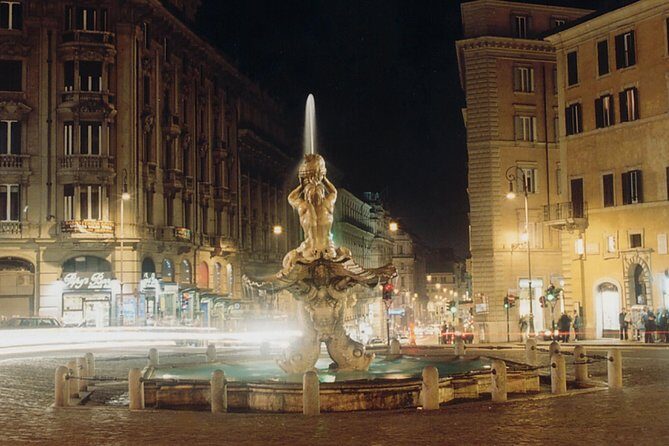
This is a 3-hour small-group tour that starts at 4:30 pm, running from the Fontana del Tritone (Piazza Barberini) area to Piazza delle Cinque Lune near the stadium of Domitian. The timing is smart if you’re trying to see Rome without spending the whole day in a line or on one long site.
The whole idea works because the itinerary flips settings fast. You begin with an underground, deeply unusual cemetery experience. Then you go even more underground to connect to the city’s water story. After that, you surface for Trevi Fountain, Pantheon exterior views, and Piazza Navona—all within the same outing.
You also get English-language guiding and a mobile ticket, which keeps things simple once you’re in the meeting area. With a maximum of 10 people, it usually feels more like a guided walk with stops than a bus tour where you stare at your shoes the whole time.
You can also read our reviews of more tours and experiences in Rome.



Capuchin Friars crypt: bones, chandeliers, and what it means
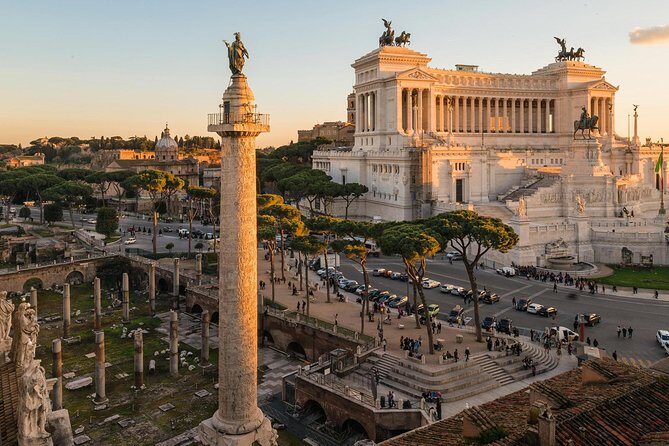
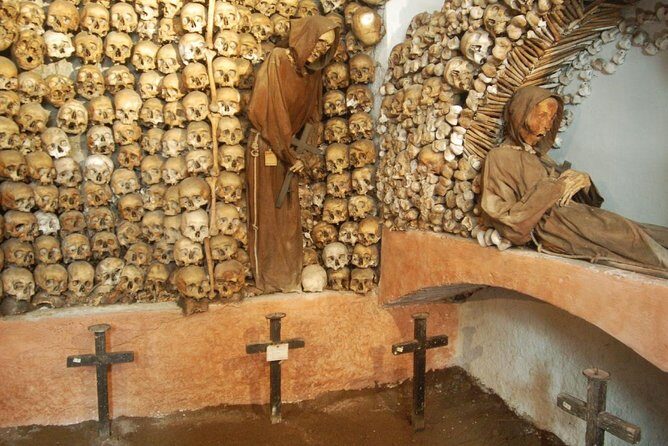
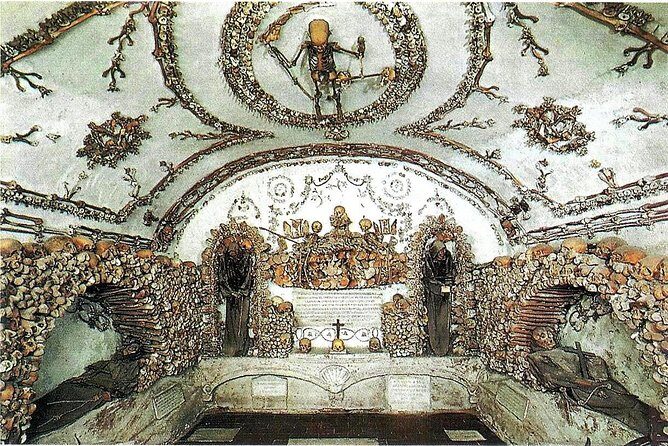
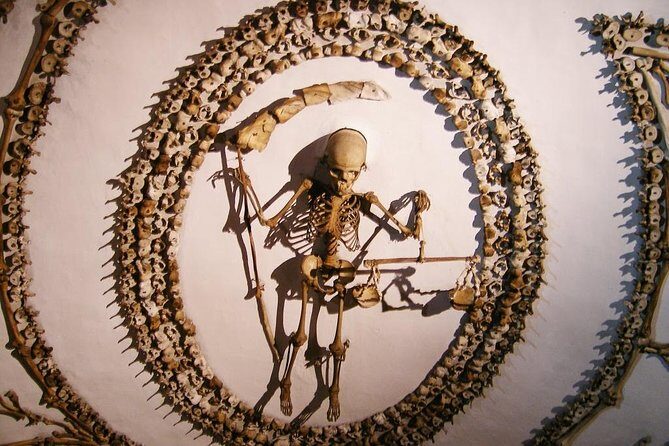
The first stop is the Museum and Crypt of the Capuchin Friars, with admission included and about 40 minutes on site. This isn’t presented as a gimmick. The guide frames it as a cemetery for the friars, and then explains their beliefs about human remains—specifically the idea that the physical body matters less than the spiritual side.
Here’s what you’ll notice when you’re inside: you’re not looking at a single display. The crypt treats the bones like part of a designed setting, including bones chandeliers and furnishings. That’s why the experience lands so hard. You end up thinking about death, faith, and display in a way that a normal church visit rarely forces you to.
What I like in particular is the pacing. Forty minutes gives you enough time to actually absorb what you’re seeing instead of rushing out for the next photo stop. And because the guide is there to interpret what you’re looking at, you don’t have to guess why it looks the way it does.
One consideration: it’s a crypt and it’s indoor. So it can feel enclosed and cool. If you’re uncomfortable in tight spaces or you’re sensitive to visual reminders of mortality, go in knowing what the stop is.
Acquedotto Vergine underground: the aqueduct still tied to Trevi
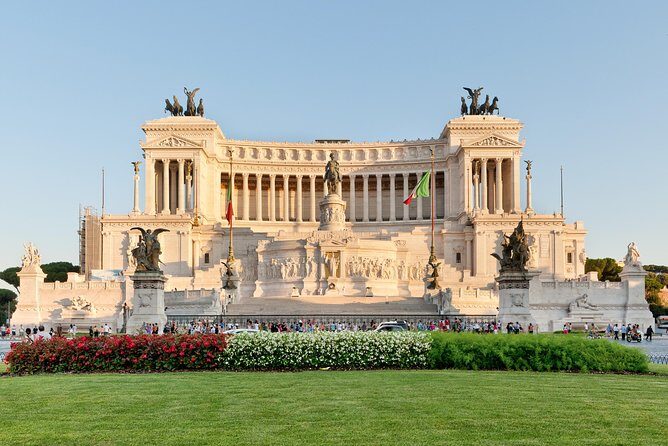
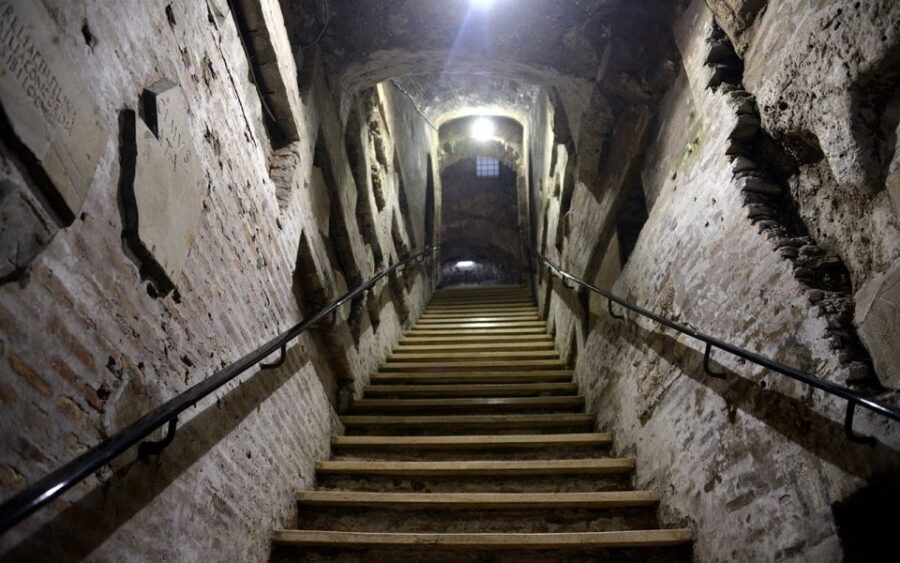
Next up is a quick but memorable underground break: Acquedotto Vergine (the Virgin Aqueduct). The tour schedules about 20 minutes, and the stop is ticket free. The big twist is how you access it: you go underground into the bowels of a luxury shopping mall to find the hidden aqueduct.
This is where the tour earns its “you didn’t expect that” factor. Rome loves to bury history under daily life, and this place makes that point immediately. You’re not just looking at stones in an open ruin field—you’re finding a water system with a direct line to one of the most famous fountains in the world.
The guide also connects the dots: the aqueduct was built in 19 BC and it’s described as still carrying water to Trevi Fountain. That’s the kind of detail that makes Trevi feel less like a postcard and more like part of an ongoing system that has survived for centuries.
Drawback to plan for: the mall setting means the vibe isn’t “ancient tunnel romance.” It’s more practical and urban. If you’re expecting a dramatic walk through a purely archaeological underworld, this may feel surprising—but in a good way, especially if you like history that’s still functioning.
Trevi Fountain: famous photos plus a reality-check on the weird stories
After the underground detour, you reach the Fontana di Trevi with about 20 minutes. Entry is free, and that short time slot is enough to do the essentials: see it in person, take the iconic photo, and listen for the stories the guide highlights.
Trevi is crowded. Even when it’s not shoulder-to-shoulder, it can still feel chaotic. That’s why I appreciate having a guide-led angle. You’re more likely to notice details beyond the fountain’s surface drama, and you’ll have context for the “bizarre events” the guide mentions connected to the site.
A practical note: with a stop this famous, you’re not here to linger for an hour-long portrait session. The value is in the combination—crypt and aqueduct context first, then Trevi as the payoff moment.
Pantheon exterior viewing: dome and bronze door, plus the surprises
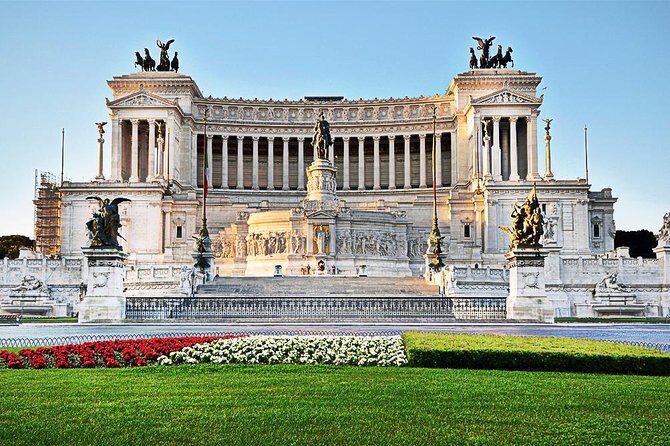
The tour then shifts to the Pantheon, but you view it from the outside. This takes about 20 minutes and is free, so it’s best thought of as a guided orientation stop rather than a full museum visit.
You’ll focus on what makes the Pantheon so mythic in the Roman imagination. The guide highlights that the dome is described as the original, built in 27 BC, and that the bronze door is the one traced to Roman times. Even without stepping inside, those details help you read the building like a real artifact, not just a pretty facade.
This is also where the guide adds stories that often don’t show up in casual guidebook talk—history that many people (including Romans, as the tour frames it) might not know. The aim is not to overwhelm you with dates. It’s to make the site feel like it has had plot twists.
A consideration: because the stop is exterior-focused, if you want long, in-depth time inside the Pantheon building itself, this tour won’t replace that. It’s designed to keep your afternoon moving toward the final stop.



Piazza Navona: Bernini’s Four Rivers and what Rome left under you
Your last main stop is Piazza Navona, scheduled for about 20 minutes with free entry. This is where Rome’s theatrical side shows up. The square is known for the debate locals make between it and other famous spots in the city, but what matters for you is what you see and what the guide explains.
The highlight is Bernini’s Fountain of the Four Rivers, and the guide also calls out hidden meanings tied to the monument. On top of that, the tour connects the place to modern pop culture references—specifically its appearance in the movie Angels and Demons—without letting that swallow the original context.
Then comes the under-your-feet part: the guide reveals what has been hidden under Piazza Navona since ancient Roman times. That angle is exactly why this tour works as a sequence. You start under the ground in a bone crypt, then find underground water infrastructure, and you finish by realizing the ground-level square rests on older layers.
It’s a short stop, so you won’t fully “solve” the square. But you will leave with a stronger sense of how the city stacks time on top of time.
Price and logistics: what you’re really paying for
At $166.80 per person for around 3 hours, the price is not “cheap Rome.” It’s the kind of ticket you buy because you want a guided route that uses time efficiently and includes at least one meaningful paid entry: the Capuchin crypt admission is included.
Everything else is set up as quick, high-impact moments at major sights:
- Aqueduct stop: ticket free, but you’re paying for the guided access to the underground location
- Trevi Fountain: ticket free, guided storytelling included
- Pantheon: exterior views, ticket free, guide interpretation included
- Piazza Navona: ticket free, guided explanation included
That’s the key value equation. You’re paying for someone to connect the dots between oddball and iconic Rome sites—especially the underground segments—without wasting time figuring out where to go or what to look for.
Group size is capped at 10, and that matters. In Rome, even “short” tours can feel long if you’re stuck with constant waiting. A smaller group makes it easier to keep your pace and ask questions without shouting.
Bring comfortable walking shoes. One guide-led outing described enough stairs that the pace can feel like mini training. You’re not doing a marathon, but the combination of exterior sites plus underground stops can add up.
Guide quality: Giuseppe and Riccardo set a high bar
The tour’s success rides heavily on the guide. The names that show up in the experience are Giuseppe and Riccardo, both praised for being engaging and for translating Roman history into something you can actually picture.
Giuseppe is noted as entertaining and highly informative, with a focus on both crypts and aqueduct history. Riccardo is credited with deep knowledge and a patient approach, including accommodating a slower walking pace. That’s not just nice service—it affects what you get out of the tour. When the guide can set a calm pace and explain clearly, the underground stops land better and the “outside view” monuments stop feeling like a drive-by.
So if you care about explanations as much as photos, this tour is more likely to satisfy you than a basic hop-on/hop-off style outing.
Who should book this tour (and who might prefer a different plan)
Book this if:
- you want an evening with both underground Rome and famous surface Rome
- you like your sights explained, not just pointed at
- you’re okay with short stops that move you along quickly
- you prefer a small group atmosphere
You might skip it if:
- you want long indoor museum time at the major monuments (Pantheon is exterior here)
- you get uncomfortable in enclosed spaces, since crypt and underground aqueduct stops are part of the route
- you’re extremely time-restricted and need total certainty without any risk of minor meeting-point confusion (this is rare, but it’s worth arriving on time and checking your meeting location)
Should you book this tour or not?
I think it’s a good buy for the right traveler. If your Rome plan already includes big-ticket icons, this tour adds an important twist: Capuchin crypt + Acquedotto Vergine underground access + guided context at Trevi, Pantheon, and Piazza Navona. That combo is hard to assemble on your own without either missing the underground connection or spending extra time hunting for explanations.
If you’re traveling with limited time, this is a practical way to get more meaning out of the evening. Just set expectations: it’s fast, it includes stairs, and it’s more about guided storytelling and access than about long stays at each monument.
FAQ
Does this tour include admission tickets?
Yes. Admission for the Museum and Crypt of the Capuchin Friars is included. The other main stops listed are noted as ticket free.
How long is the tour?
The duration is listed as about 3 hours.
What time does the tour start?
The tour start time is 4:30 pm.
Where do you meet for the tour?
The meeting point is at Fontana del Tritone, Piazza Barberini, 00187 Roma RM, Italy.
Where does the tour end?
The tour ends at Piazza delle Cinque Lune, 105, 00186 Roma RM, Italy, described as the area at the stadium of Domitian.
Is the tour in English?
Yes. It is offered in English.
How big is the group?
The tour has a maximum of 10 travelers.
Do I need a weather forecast?
The experience requires good weather. If it’s canceled due to poor weather, you’ll be offered a different date or a full refund.
Is it suitable for most people?
The listing says most travelers can participate.
Will I get a ticket on my phone?
Yes. The tour includes a mobile ticket.
Can I cancel for free?
Yes. Free cancellation is available up to 24 hours in advance for a full refund.
If you tell me your travel dates and whether you prefer lighter walking or a more intense pace, I can suggest a smart “pair it with” plan for the rest of your Rome day.