REVIEW · TREVI FOUNTAIN TOURS
Trevi Fountain District Underground Domus Tour and Gelato
Book on Viator →Operated by TOURISTATION · Bookable on Viator
Rome hides a whole water city below Trevi.
What makes this tour fun is that you get guided access to the Vicus Caprarius domus (not just a quick peek), and it’s run as a small capped group so the guide can actually answer questions. My only caution: this is a short, focused visit, so if you expect a long, sprawling underground museum route, you may find it more compact than you hoped.
You also don’t have the headache of buying separate tickets. Entry is handled for the underground stop, and you’ll walk to the Trevi Fountain meeting point area at a pace that keeps the whole hour from feeling rushed.
The payoff is you end right by a gelato shop with Italian gelato included, which is a nice way to land your thoughts after the Roman layers underground. The tour is offered in English, and it typically suits people who like history told clearly, with specific details you can visualize.
In This Review
- Key highlights you’ll feel right away
- Tour vibe: small capped group and a Trevi-area start
- Vicus Caprarius: the City of Water under former Cinema Trevi
- Trevi Fountain stop: coin toss tradition with a practical twist
- Gelato finish at Melograno: a tasty close by Trevi
- Price and value: what $55.39 gets you in real terms
- Who this tour suits (and who should think twice)
- What to look for during the underground visit
- Should you book this Trevi Fountain District Underground Domus Tour?
- FAQ
- How long is the Trevi Fountain District Underground Domus Tour and gelato?
- What is the price per person?
- Is English available for this tour?
- Is the entry ticket included for the underground stop?
- Where do I meet the guide?
- Where does the tour end?
- Is hotel pickup included?
- Is gelato included?
- Is food or drinks besides gelato included?
- What’s the group size limit?
Key highlights you’ll feel right away

- Entry is covered for the underground domus stop, so you can focus on the experience instead of ticket logistics
- Max 15 travelers keeps the group manageable and helps the guide stay interactive
- Vicus Caprarius, City of Water connects the underground space to real Roman water engineering
- Trevi Fountain coin traditions come with practical legend details (and a charity angle tied to the fountain’s upkeep)
- Easy-to-find Trevi neighborhood meeting point at Vicolo del Puttarello 25
- Gelato included afterward at the end location near Piazza di Trevi
Tour vibe: small capped group and a Trevi-area start
This is the kind of Rome tour I like when I’m staying in the center: it starts close to Trevi and keeps you moving on foot without endless transfers. The group is capped at 15 travelers, which matters in a place like Rome where big tours can turn into a shuffle line. Here, you’re close enough to the guide to catch the little factual bits without craning your neck the whole time.
The meeting point is Vicolo del Puttarello, 25 (00187 Roma RM). That’s a short walk from the Trevi area, but it’s not inside the busiest postcard swirl. I’d plan to arrive a little early, because it’s easier to find the guide when the street is calm and you can read the surroundings.
Also note: there’s no hotel pickup. You’ll want to be comfortable starting your day with your own transit to the Trevi neighborhood.
You can also read our reviews of more tours and experiences in Rome.



Vicus Caprarius: the City of Water under former Cinema Trevi
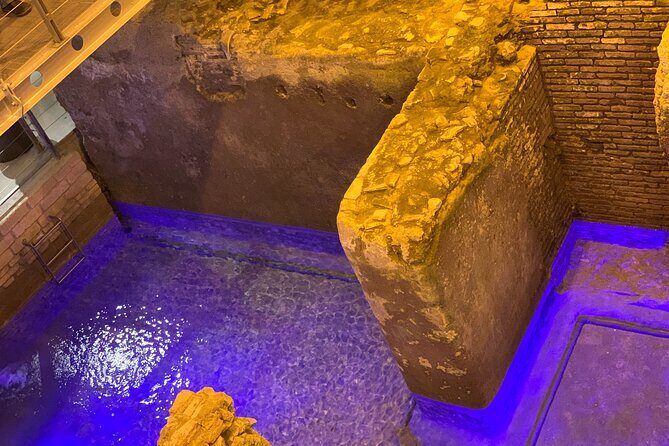
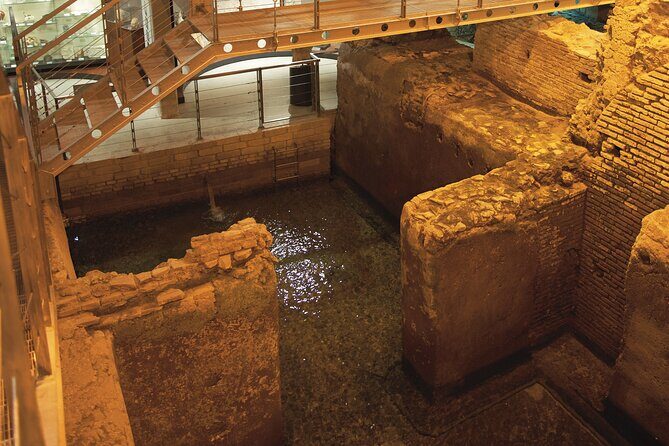
Stop one is the star. You’ll step into the world of Vicus Caprarius, sometimes described through its role as the City of Water—because this area connects to Roman water systems in a way you can literally stand on. The guide points out structures tied to an imperial domus and references the castellum aquae connected to the Virgin Aqueduct. In other words, this isn’t just “cool ruins.” It’s Roman engineering tied to daily life.
What I like most here is how the tour helps you understand time in Rome. The domus and exhibits are presented as part of Rome’s millennial stratification—the idea that layers pile up. You’re shown archaeological evidence that frames major moments in the city’s history, including periods linked to events like the realization of Aqua Virgo, the fire of Nero, later upheavals such as the sack connected with Alaric, and the siege of the Goths. Even if you don’t memorize names, the guide’s timeline makes the underground space feel like a living record.
There’s also a sense of place tied to the modern setting: the exhibits were found during renovation of a former Cinema Trevi space. That detail helps you picture how Rome works—old structures didn’t politely move out of the way. They waited under what came later.
One specific exhibit highlight mentioned in the tour materials is the famous face of Alessandro Helios. If you enjoy seeing how archaeologists identify and preserve imagery, this kind of named artifact can make the underground feel more human and less abstract.
Time-wise, this stop runs about 45 minutes. That’s just enough for a guided story and some looking time, without turning into an all-day underground slog. If you’re the type who needs more space to wander and reread every panel, you might want to plan extra independent time nearby afterward.
Trevi Fountain stop: coin toss tradition with a practical twist
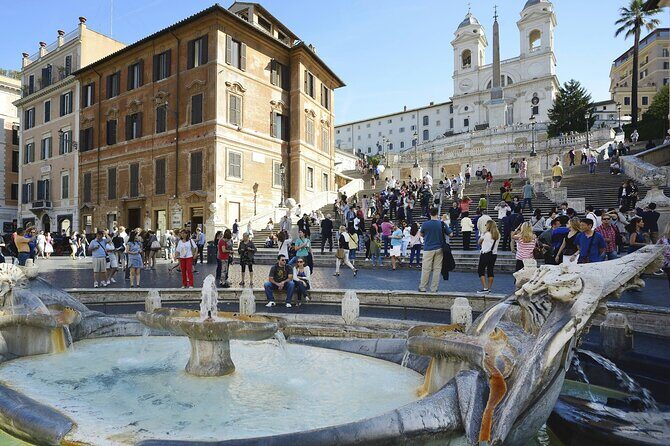
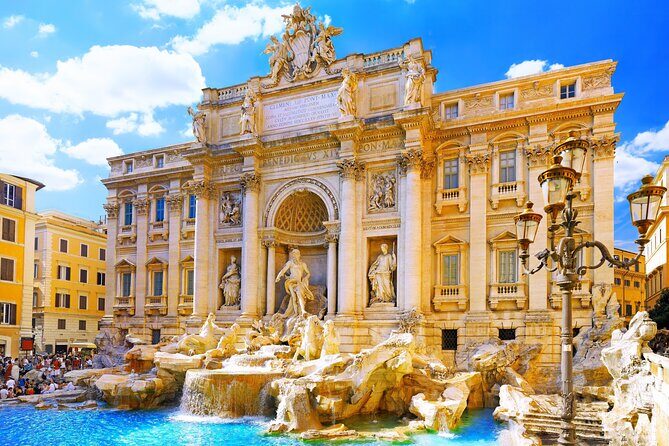
After the underground, you surface into the louder, iconic world of Fontana di Trevi. The tour’s Trevi segment is shorter—about 10 minutes—so I treat it as an introduction rather than a full sculpture seminar. You’ll get the essentials of what makes it famous: water, stone, and the dramatic Baroque impact that’s hard to understand until you’re standing close enough to see the details.
This stop also includes the classic coin ritual. The tradition goes like this: toss a coin into the fountain, and legend says you’ll return to Rome. The commonly repeated method is to keep your eyes closed and throw the coin into the water over your left shoulder using your right hand. There’s also a love-and-marriage variation: two coins are linked to love in Rome, and three coins are linked to marriage (and even a divorced version of the same myth).
Here’s the practical angle I appreciate: you don’t just get folklore. You also learn about care and upkeep. The fountain is cleaned regularly, and a reported large portion of proceeds from that maintenance is donated to charity. In particular, the tour notes that the municipality cleans the Trevi Fountain weekly and donates a substantial amount annually (reported as 1.4 million per year) to support poor families. It’s a good reminder that this is public art with real-world costs and efforts behind the scenes.
One more thing: because this stop is brief, you’ll probably get a quick guide through the main ideas and symbolism, but not a slow, deep explanation of every figure. If you love spending time with art details, pair this tour with a separate longer visit at another time when you’re not on a schedule.
Gelato finish at Melograno: a tasty close by Trevi
The tour ends at Melograno – Gelato, Pizza e Caffè near Trevi (the map pin is listed as Piazza di Trevi area). Gelato is included, so you don’t have to figure out when to squeeze it in. This is also one of the smarter parts of the design: you’re done with guided walking, and you still end up right where you want to be for your next stop.
In this neighborhood, your instinct might be to grab whatever looks busy. Instead, think about speed and comfort. After an hour of standing and looking, you’ll probably appreciate sitting for five minutes and letting the information “settle” before you tackle crowds around the fountain.
If you’re traveling with a tight schedule, that included gelato can be a quiet budget win. You’re paying for the experience, not stacking extra food purchases on top.
Price and value: what $55.39 gets you in real terms
At $55.39 per person for about 1 hour, the price is not “cheap,” but it’s also not trying to be. The best value comes from two things you’d otherwise pay for or deal with:
1) Reserved entry for the underground domus stop is covered.
2) Trevi access is included in the package, rather than you figuring out separate timed entry.
For Rome, that kind of planning help can matter as much as the guide. If you’ve ever tried to line up timed sites in the city center, you know the stress factor is real. Here, the “make it easy” part is the point.
The guide-led storytelling also shifts the value beyond logistics. You’re not just seeing an underground room; you’re getting the Roman water engineering connections (Virgin Aqueduct, castellum aquae) and a narrated sense of how later events land on top of earlier ones. In a city where self-guiding can be scattered, that guided throughline can make a short tour feel longer in your mind.
Group size helps too. When the group stays capped at 15, the per-person value of an actual human guide tends to rise.



Who this tour suits (and who should think twice)
This tour is a strong match if you like:
- Roman history that connects the dots between engineering, daily life, and later events
- Short walking plans that start near your main sights (Trevi is right there)
- Tours where you can ask questions without feeling lost in a crowd
It’s also a good pick if you’re limited on time. One hour is easy to fit into an arrival day or a busy day when you’re juggling other major sites.
I’d think twice if you:
- Want a long, wandering underground exploration with lots of visuals and wide-open viewing time
- Expect the Trevi Fountain stop to be a full, slow art-history walkthrough
- Need hotel pickup or a more involved itinerary structure
One last note: a separate guest experience in the feedback mentioned a no-show guide situation that caused a long wait before a substitute arrived. That sounds unusual, but it’s worth knowing that rare operational hiccups can happen anywhere. If you have a very strict schedule, build in a small buffer around the meeting time.
What to look for during the underground visit
To get the most from Vicus Caprarius, I’d go in with a simple mental checklist:
- Water systems: listen for how the Virgin Aqueduct ties into what you’re seeing underground
- “Layers of Rome”: notice how the guide frames archaeological evidence as evidence of big historical moments
- Specific artifacts: keep an eye out for the named items like the Alessandro Helios face, since highlights help your memory later
- Questions: with a capped group, ask one good question. The guide can usually answer it clearly, and you’ll feel like you got more than a passive walkthrough
The underground area isn’t trying to act like a theme park. It works best when you treat it like a guided reading of a very compressed timeline.
Should you book this Trevi Fountain District Underground Domus Tour?
If you’re in Rome for a few days and want one guided experience that feels both practical and unusual, I’d say yes. The combination is smart: underground domus story first, then the most famous fountain surface encounter in the city, then included gelato to end on a simple note.
You might skip or swap it if you mainly want a long, visually sprawling underground route, or if you’re the type who wants to spend more time analyzing Trevi’s sculptures without time limits. For most people, though, this hits a sweet spot: a compact tour that gives you context, not just sightseeing.
FAQ
How long is the Trevi Fountain District Underground Domus Tour and gelato?
The tour is listed as approximately 1 hour.
What is the price per person?
The price is $55.39 per person.
Is English available for this tour?
Yes, the tour is offered in English.
Is the entry ticket included for the underground stop?
Yes. The Vicus Caprarius reserved entry ticket and guided tour are included, and Trevi Fountain access is included as well.
Where do I meet the guide?
You meet at Vicolo del Puttarello, 25, 00187 Roma RM, Italy.
Where does the tour end?
It ends at Melograno – Gelato, Pizza e Caffè at Piazza di Trevi, 101, 00187 Roma RM.
Is hotel pickup included?
No. Pick up from and to the hotel is not included.
Is gelato included?
Yes. Italian gelato is included.
Is food or drinks besides gelato included?
No. Food and drinks other than the included gelato are not included.
What’s the group size limit?
The tour has a maximum of 15 travelers.