REVIEW · ROME
Tour of Rome in Golf Cart: Seven Hills of Rome
Book on Viator →Operated by Luxurbe · Bookable on Viator
Rome has hills. A golf cart helps.
This Seven Hills of Rome tour is built for getting around fast while still seeing the city’s big-name spots and the quieter look-you’ll-miss-it corners. You cover a lot of ground in about three hours, with photo stops and an English-speaking guide/driver who keeps the pace friendly and the stops timed for views.
I like that it leans on Rome’s classic “walk-but-not-all-day” mix. You get quick moments at places like the Orange Garden and Aventine viewpoints, plus a handful of major anchors that help you understand how the city is laid out.
One watch-out: the schedule can shift with traffic and safety rules, so some stops may feel short. Also, the Colosseum entrance isn’t included, so plan ahead if you want to go inside rather than just take photos outside.
In This Review
- Key highlights worth planning around
- A golf cart tour is the smart way to handle Rome’s steep reality
- Piazza del Popolo start, then Via dei Condotti for instant Rome energy
- Piazza Venezia and the Vittoriano: the view that puts Italy in one frame
- Michelangelo’s Campidoglio and the Quirinale viewpoints
- Palatine Hill plus the Imperial Fora: ruins with the volume turned up
- Bocca della Verità and Caelian Hill: the quieter stories between big stops
- Acquario Romano and a Rome-wide pacing reset
- Colosseum photo stop: plan for the experience you want
- Aventine Hill calm: Roseto, the keyhole view, and the Orange Garden
- Timing, stop length, and why your expectations should be flexible
- Price and value: what $84.09 buys you (and what it doesn’t)
- Should you book this Seven Hills golf cart tour?
- FAQ
- What is the duration of the Seven Hills of Rome golf cart tour?
- Is the tour guided in English?
- Does this tour include hotel pickup and drop-off?
- Where does the tour start and end?
- Are entrance tickets to monuments included?
- How big is the group?
Key highlights worth planning around
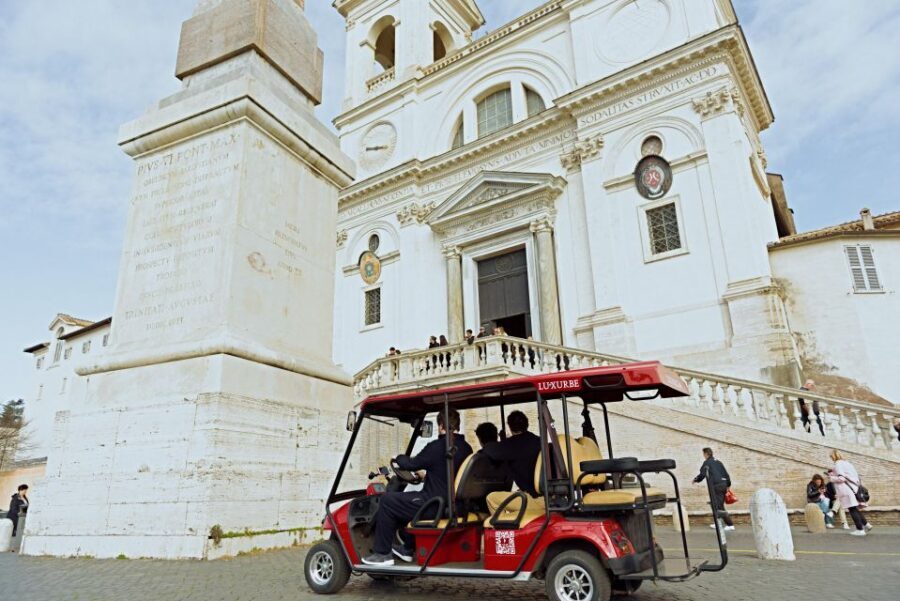
- A golf cart that reaches smaller streets so you spend less time fighting traffic and walking steep stretches
- Quieter Aventine stops (Orange Garden, keyhole view) that feel calmer than the main crowds
- Photo stops built into the route—helpful when you want skyline shots without stopping the group
- An orientation-style route that helps you decide where to spend your extra time later
- Small group size (up to 15) for easier control and a less chaotic feel
A golf cart tour is the smart way to handle Rome’s steep reality
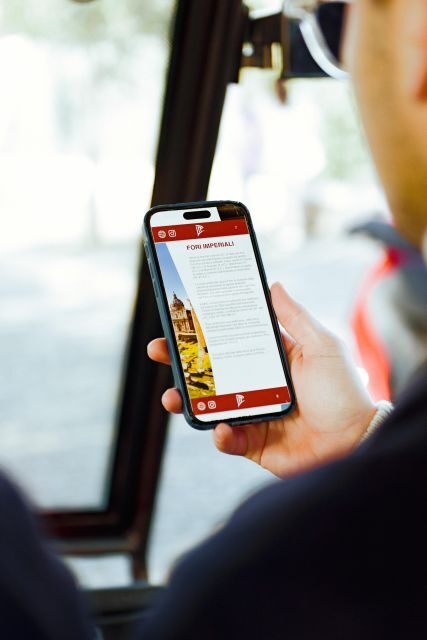
Rome punishes your knees. It’s not personal, it’s just the terrain. This tour handles that with an electric golf cart format, so you can enjoy “Rome on wheels” without spending half your day climbing and descending.
What you get isn’t just transport. You also get context. The guide/driver’s job is to point out what you’re seeing and connect neighborhoods and monuments so your first day doesn’t feel like random photos. If you’re visiting for a few days—or you’re doing Rome in a tight timeline—you’ll appreciate that orientation effect fast.
And since the group is capped at 15 people, the ride usually feels controlled. You can still get out for short walks and photos, but you’re not stuck behind a slow line of people trying to squeeze in and out.
You can also read our reviews of more tours and experiences in Rome.



Piazza del Popolo start, then Via dei Condotti for instant Rome energy
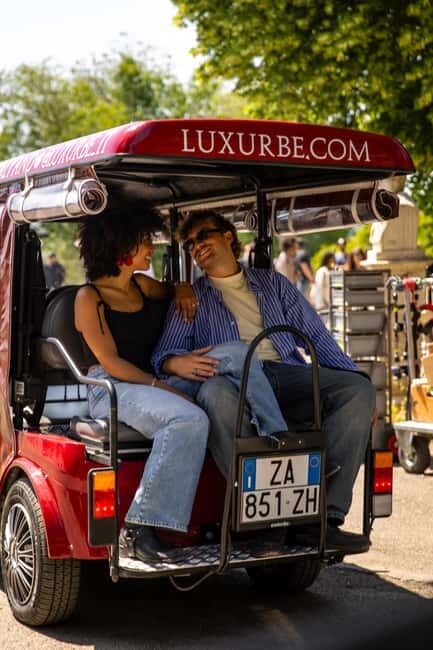
Your tour meets at Piazza del Popolo, 11 (00187 Roma) and returns there at the end. Even before you start hitting major monuments, you’re set up in a great “Rome hub” area where you can orient yourself quickly.
A key early stop is Via dei Condotti, Rome’s luxury shopping street near the Spanish Steps. This is one of those places where you can stand there for a few minutes and instantly see what makes Rome feel theatrical: cobblestones, classic lampposts, and grand architecture that changes character as you move along the street.
Practical tip: if you’re the type who likes to browse, this is a fun stretch to skim. If you’re not, it still works as a visual warm-up—like the city’s “front door” before you head into the hills and ruins.
Piazza Venezia and the Vittoriano: the view that puts Italy in one frame
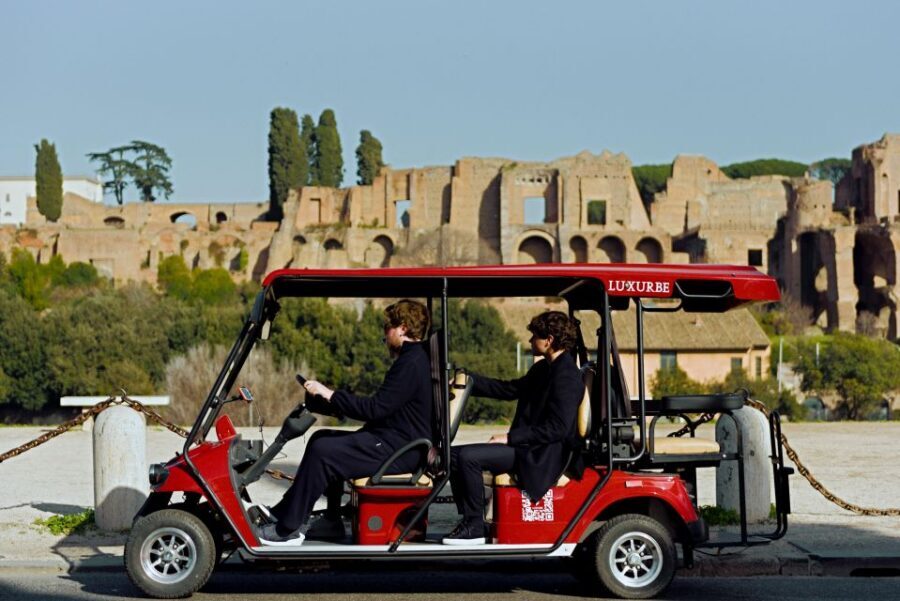
Next up is Piazza Venezia, centered on the enormous white marble Altare della Patria (Vittoriano). This monument is hard to miss in real life. Up close, it feels like a whole stage set—symbol-heavy and designed for dramatic scale.
You’ll get time around the square (around 10 minutes) with a focus on photos and on understanding what you’re looking at. The Vittoriano also includes the Tomb of the Unknown Soldier, which is one reason the site hits a more serious note than it first seems.
One thing I like about this stop: it’s a natural “anchor.” Once you understand the Piazza Venezia area, it’s easier to understand how other major sights relate to each other, especially if you plan to revisit later.
Michelangelo’s Campidoglio and the Quirinale viewpoints
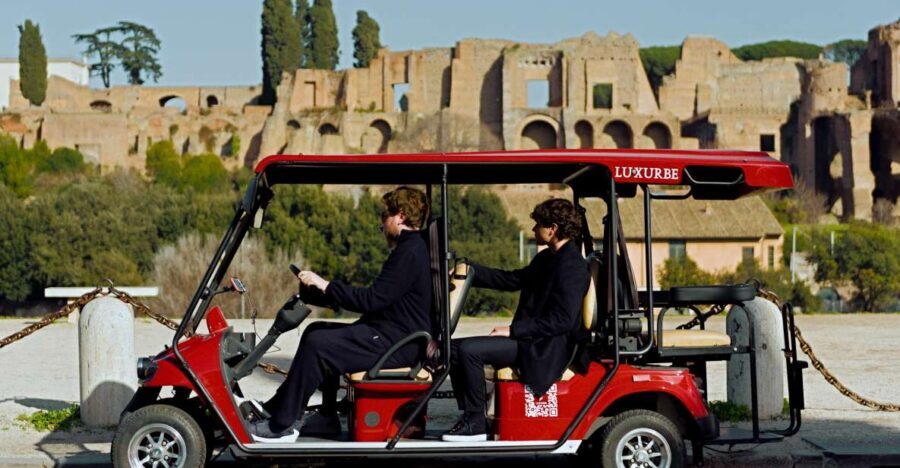
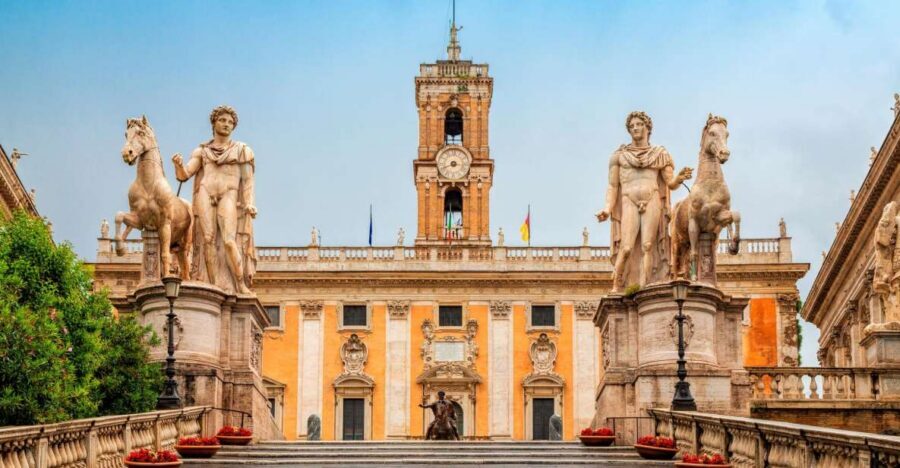
From Piazza Venezia, the route climbs toward Piazza del Campidoglio on Capitoline Hill. This is the famous square designed by Michelangelo, complete with statues and the iconic equestrian presence of Marcus Aurelius. Even with limited time, the square gives you that “Rome was planned by genius” feeling.
Then you head toward Palazzo del Quirinale on Quirinal Hill. The big draw here is the location: panoramic views and the sense of history around the official residence of the President of Italy. You may not spend hours here, but you’ll get a strong skyline perspective that helps you picture where everything sits.
If you like photography, this section is a good bet. The mix of formal architecture and open sightlines gives you more than one angle without needing a long walk.
Palatine Hill plus the Imperial Fora: ruins with the volume turned up
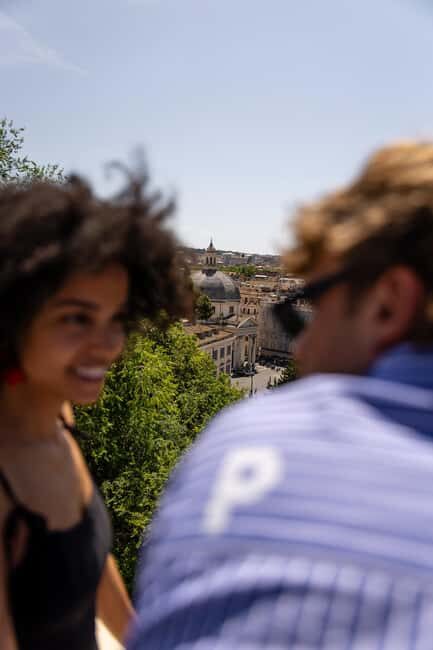
This tour hits two heavy-hitter areas back-to-back: Palatine Hill and the Imperial Fora along Via dei Fori Imperiali. This is where the ride earns its name Seven Hills, because the city starts feeling like layered time—Rome stacked over Rome.
At Palatine Hill, you’re looking at imperial-era ruins with views that reach toward the Forum and Circus Maximus. You’ll get time for photos and brief wandering, enough to recognize the scale and atmosphere, even if you don’t go deep on every artifact.
Then you move to Via dei Fori Imperiali, where the route takes you past the monumental forum area tied to major Roman emperors and public building projects. It’s a stretch that’s perfect for “see it, get it, move on” touring: large spaces, obvious architecture lines, and a sense of power you can feel even in ruins.
Timing note: stops here are short (think 15–20 minutes). If you’re the type who loves reading every plaque, you might want a longer self-guided visit later. If you want orientation and the big picture now, this format works well.



Bocca della Verità and Caelian Hill: the quieter stories between big stops
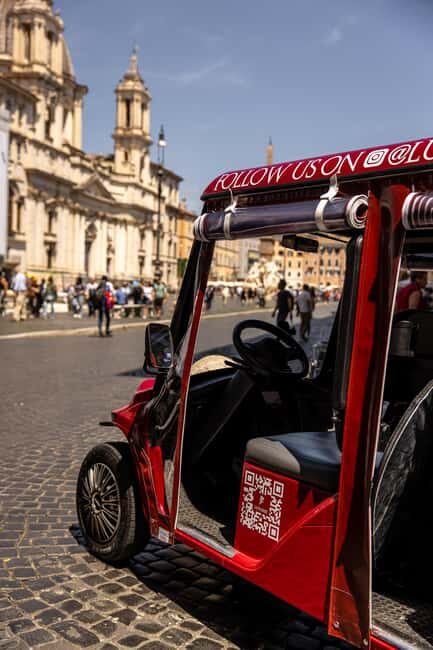
Not every stop is a “poster landmark,” and that’s a big reason this ride can feel better than a strict highlights-only tour.
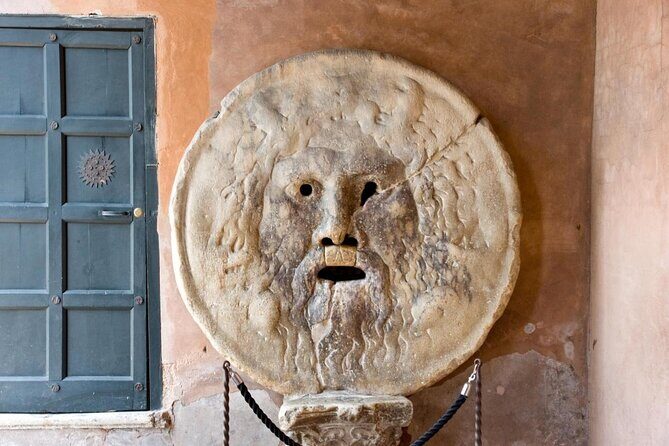
One memorable stop is Bocca della Verità, the marble mask at the portico of Basilica di Santa Maria in Cosmedin. It’s one of those places where the folklore is almost as fun as the stone itself. The idea is simple: place your hand where you can and take a picture. It’s a silly moment that breaks up the heavier ruins.
From there, you spend time on Caelian Hill with the Church of San Gregorio Magno (Celio area). This church is described as a serene pause, and it’s known for frescoes and a quiet cloister garden—exactly the kind of place that makes Rome feel human, not just monumental.
You also pass by Case Romane del Celio, the Roman houses on Caelian Hill. This is an excellent stop if you want a feel for domestic life and everyday luxury rather than only palaces from the outside. The focus is on preserved details like frescoes and mosaics, and it’s more “lived-in” than many outdoor ruins.
Acquario Romano and a Rome-wide pacing reset
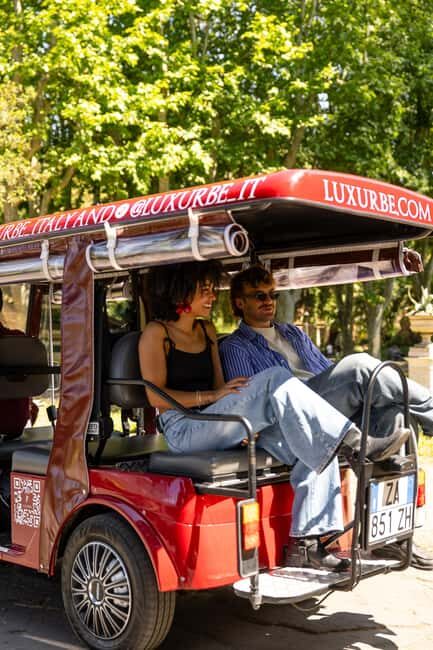
The route also includes Acquario Romano in the Esquilino area. It’s a stop that can feel different from the rest of the day because it’s less about ancient marble and more about a place that connects modern life with the city’s ongoing energy.
Even if you don’t linger long, this part of the ride functions like a pacing reset. By the time you reach it, you’ve already seen major civic spaces and high-energy architectural sights. A shorter stop here helps the day stay comfortable and keeps you from feeling “ruined out.”
Colosseum photo stop: plan for the experience you want
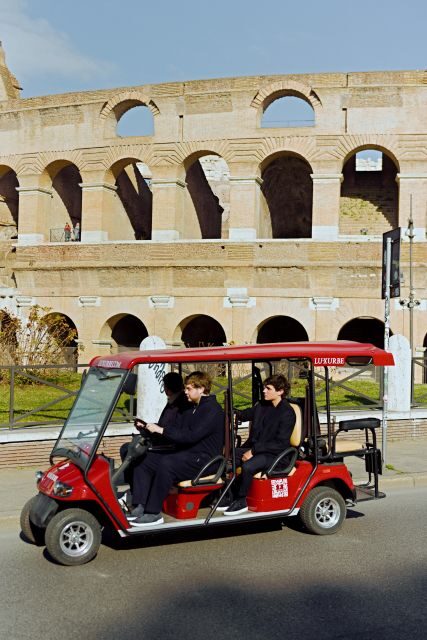
The Colosseum is a defining stop on the route, with around 20 minutes set aside. The amphitheater is huge, and seeing it from close range gives you instant scale—travertine and sandstone, and that sense of engineering that Roman builders pulled off again and again.
But here’s the key practical detail: Colosseum entrance tickets are not included. So during this stop, you should expect photos and a quick look from the outside rather than a full interior visit.
If Colosseum tours inside are on your must-do list, you’ll want a separate ticket and timing plan. This golf cart stop is best as a spotlight and orientation moment—then you decide how much deeper to go later.
Aventine Hill calm: Roseto, the keyhole view, and the Orange Garden
If there’s one area where this tour shows its personality, it’s the Aventine Hill section. This part feels calmer than the center of town, and it’s packed with viewpoints that make Rome look like a dream you can’t quite explain.
You’ll get time at the Municipal Rose Garden (Roseto Comunale). It’s seasonal, with a large collection of roses and city views. Even if roses aren’t in peak bloom on your date, the layout and lookout points still give you a peaceful break.
Next comes Buco della Serratura dell’Ordine di Malta, the famous keyhole view. Looking through the keyhole frames St. Peter’s Basilica in a tight, deliberate composition. It’s short, but it’s one of those “worth doing once” experiences because the alignment is the whole point.
Then you reach Giardino degli Aranci (Orange Garden). This is a standout. You’ll walk through orange-tree paths, sit where you can, and enjoy panoramic views—especially with St. Peter’s Basilica visible in the distance. It’s exactly the kind of quieter corner that makes a golf cart route feel like more than just sightseeing boxes.
Photo tip: aim for the best light you can. Even without a sunset plan, the viewpoints tend to photograph well because the sightlines are open.
Timing, stop length, and why your expectations should be flexible
This tour runs about 3 hours, with multiple start times and a maximum group size of 15. That’s a good duration for orientation and highlights, especially if you’re not trying to spend the whole day ticketing museums and climbing towers.
Still, you should go in with one mindset: short stops are part of the design. Traffic, safety conditions, and local rules can change what happens minute-to-minute, and some stops may feel brief.
I’d also plan your day so you’re not dependent on this tour being your only chance to visit a specific place. Use it to orient and to pick your next round trip. If a stop sparks your interest—like the Palatine/Forum area or the Colosseum—then you’ll know what to book next.
One more small note: an audio option is mentioned as being available upon request. If you like that kind of support, ask your guide early.
Price and value: what $84.09 buys you (and what it doesn’t)
At $84.09 per person for about three hours, the value comes from combining several things that usually cost you time on your own:
- an electric golf cart that handles steep stretches
- an English-speaking driver/guide
- photo stops at major landmarks
- hotel pickup/drop-off if you select it
Also, many of the listed stops don’t require paid admission. But you still need to budget for exceptions. The big one is the Colosseum entrance, which isn’t included.
To make this money work for you, treat the tour as a first-day mapping tool. After it, you’ll know where to focus your legs and your tickets. If you go in trying to get everything in one pass, you might feel rushed. If you go in trying to set direction, the price feels fair.
Should you book this Seven Hills golf cart tour?
Book it if you:
- want a high-impact orientation to Rome on day one or day two
- prefer less walking and better access to hill neighborhoods
- like short stops with photo opportunities and guide storytelling
- have limited time and want a route that connects many famous sights
Skip—or at least plan a separate Colosseum day—if you:
- need long, slow museum-style visits
- want to go inside the Colosseum during the tour (tickets aren’t included)
- get very upset when schedules change due to traffic or safety rules
If you’re in the first group, this tour is a practical win. You’ll leave with a mental map of Rome’s topography and a shortlist of what deserves a second visit.
FAQ
What is the duration of the Seven Hills of Rome golf cart tour?
The tour runs for about 3 hours.
Is the tour guided in English?
Yes. The experience is offered in English.
Does this tour include hotel pickup and drop-off?
Hotel pickup and drop-off are included if you select that option. If pickup is offered, you wait outside your hotel at street level.
Where does the tour start and end?
It starts at Piazza del Popolo, 11, 00187 Roma RM, Italy, and ends back at the same meeting point.
Are entrance tickets to monuments included?
Entrance tickets are not included. The itinerary lists most stops as free, but the Colosseum admission is explicitly not included.
How big is the group?
The tour has a maximum of 15 travelers.