REVIEW · ROME
Tour of Rome in 7 Seater Golf Cart
Book on Viator →Operated by ETuk Tours Rome · Bookable on Viator
Rome moves fast. Your plan can too.
This 7-seater golf cart tour is built for seeing a lot of Rome without the usual grind of long walks and endless queue lines. In about 3 hours, you roll past major landmarks, pause for photos, and get guide commentary at a pace that feels manageable.
What I like most is the simple logistics: you stay close to the action and keep moving, even if you are trying to protect your feet. I also like that the route includes viewpoints and classic photo moments, from the Aventine keyhole setup to the Trevi Fountain stop, without making you fight your way through every crowd. One thing to keep in mind: some stops are brief, so if you want deep time inside museums or long guided explanations at every site, you’ll feel the time limit.
In This Review
- Key Reasons This Golf Cart Tour Works in Rome
- A 3-Hour Cart Ride That Keeps Rome Fun (Not Exhausting)
- What’s Included (And Why It Matters for Value)
- Your Route in Order: From Aventine Keyhole to Colosseum
- Stop 1: Aventine Hill (Rose Garden, Orange Garden, Keyhole)
- Stop 2: Circo Massimo (Chariot Races’ Setting)
- Stop 3: Trastevere (Small Streets and Food-Energy Streets)
- Stop 4: Janiculum Hill (Rome’s Best View Moment)
- Stop 5: Vatican City Area (St. Peter’s Square and Basilica)
- Stop 6: Pantheon (This Monument Stop)
- Stop 7: Trevi Fountain (The Famous One)
- Stop 8: Piazza Venezia / Ancient City (Altare della Patria)
- Stop: Mouth of Truth (Passed in Front)
- Stop: Roman Forum (Visit Time)
- Stop 9: Spanish Steps (Classic Steps Stop)
- Stop 10: Villa Borghese (Time for a Beautiful Pause)
- Stop 11: Piazza del Popolo (Largest Square Moment)
- Stop: Tomb of Emperor Augustus (Brief but Historical)
- Stop 12: Colosseum (Rome’s Symbol, Ticket Not Included)
- Photos, Queues, and Why the Order Is Smart
- Comfort on Cobblestones and Hearing the Guide
- Who This Tour Suits Best
- Tips to Make Your Cart Tour Feel Like a Win
- Should You Book This Rome Golf Cart Tour?
- FAQ
- How long is the Rome Tour of Rome in a 7 Seater Golf Cart?
- How much does the tour cost?
- Is the tour offered in English?
- How many people are on the tour?
- Where do we meet and where does the tour end?
- What is included in the price?
- Are entrance fees included?
- Which stops have tickets not included?
- Is the tour suitable for visitors with mobility needs?
- Do I get a ticket on my phone?
- What if the weather is bad?
- Can I cancel for a full refund?
Key Reasons This Golf Cart Tour Works in Rome
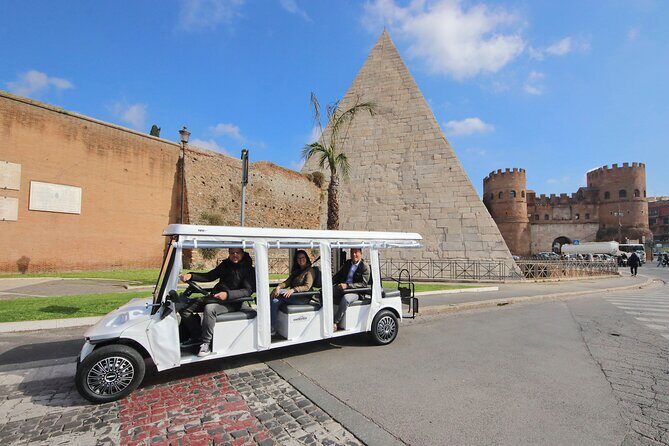
- Max 7 travelers means it stays small enough for personal pace and easier photo stops
- Minimal walking helps you cover hills and long distances without burning your whole day
- A guided route that blends big icons with quieter angles, like Aventine Hill and Janiculum Hill views
- Planned stops around Rome’s most famous viewpoints (Aventine, Vatican area, Trevi, Spanish Steps, Colosseum)
- Accessibility-friendly design for visitors who need an easier way to get around
A 3-Hour Cart Ride That Keeps Rome Fun (Not Exhausting)
Rome has two speeds: the one you want, and the one your legs deliver. This tour aims squarely at the first one. You travel by golf cart between sights, then stop long enough to look, take photos, and get context from your guide before rolling to the next spot.
You’ll get the classic Rome checklist, but arranged with real-world rhythm. You’re not spending your time doubling back, wrestling cobblestones for blocks, or losing momentum to transit waits. It’s especially helpful on a first day when you want to get your bearings fast and decide what you want to return to later.
Because it’s a small group (up to 7 people), the experience can feel more like a guided outing than a conveyor-belt bus tour. Multiple guides have stood out for being friendly and patient, and the guides named in customer notes range from Tomas and Frederico to Cristiano, Andrea, Edwin, and Luka. Even if you don’t know the names ahead of time, you can take from that pattern that the guides put real care into keeping the experience smooth and conversational.
You can also read our reviews of more tours and experiences in Rome.



What’s Included (And Why It Matters for Value)
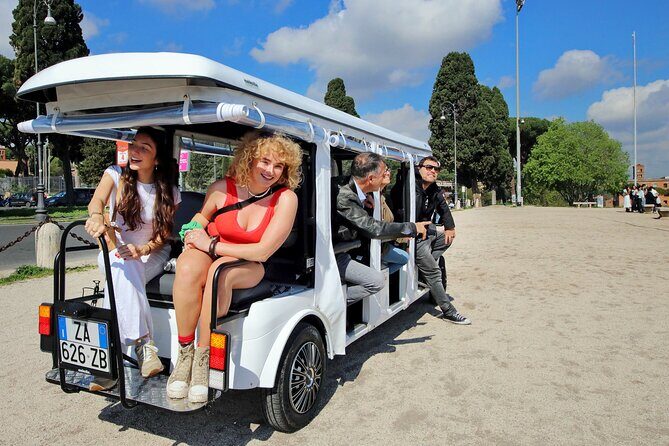
The big included item is private transportation. That matters because Rome is not built for efficient sightseeing on foot. Streets are uneven, distances add up quickly, and parking or traffic can slow buses. A cart route helps you stay flexible and keep the time you pay for focused on sightseeing.
The price is $118.94 per person for about 3 hours. Is that “cheap”? No. But compared with the cost of losing half a day to walking fatigue, splitting your day into taxis, or paying for multiple transit tickets and skip-the-line add-ons, it can be solid value—especially if you’re a couple, a small group, or anyone who wants to see a lot without turning the trip into a stamina test.
Entrance fees are not included. That’s not a dealbreaker, because many stops are outside viewpoints or areas you can access without paid admission. But you should expect to pay if you choose to enter specific sites that list ticketing separately, especially the Pantheon and the Colosseum.
Your Route in Order: From Aventine Keyhole to Colosseum
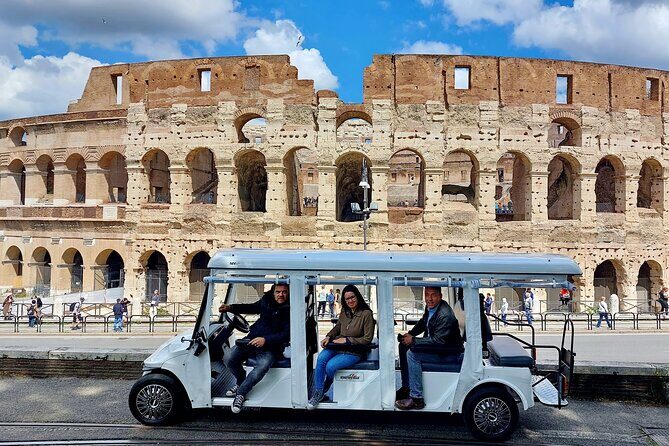
The best way to judge this tour is to look at how the stops work together. You get an arc across Rome that mixes hills, river-adjacent views, major squares, and the ancient core.
Stop 1: Aventine Hill (Rose Garden, Orange Garden, Keyhole)
You start on Aventine Hill, a classic for the postcard moments. The itinerary includes time for the rose garden, the orange garden, and the famous keyhole view. These are exactly the kind of stops that justify a cart tour: you’re getting a signature photo angle without turning the whole outing into a hike.
Watch for a quick-but-meaningful rhythm here. It’s not a long garden stroll; it’s the highlight reel.
Stop 2: Circo Massimo (Chariot Races’ Setting)
Next is Circo Massimo, where Romans held chariot races. Even if you’ve seen the photos before, it helps to stand in the right space and understand what the site was built to do.
Time is short here (about 5 minutes), so use it for orientation and a couple of snaps.



Stop 3: Trastevere (Small Streets and Food-Energy Streets)
You’ll see Trastevere, known for its narrow lanes and strong food culture—restaurants, pizzerias, and gelato spots. This is a great “feel Rome” moment: it’s less about monuments and more about atmosphere.
It’s also a useful preview. If this area hits your style, it’s an easy neighborhood to plan a return visit for dinner.
Stop 4: Janiculum Hill (Rome’s Best View Moment)
Then you climb (in a way that doesn’t exhaust you) to Janiculum Hill, where you get the best view of the city of Rome. This is one of those stops where the cart pays off. You get the payoff view without the long climb on foot.
Plan to spend a little time just looking. Rome’s scale is the whole point here.
Stop 5: Vatican City Area (St. Peter’s Square and Basilica)
You roll into the Vatican City area and see Piazza S. Pietro and the Basilica of S. Pietro. This works well because it’s a “big picture” stop. You’re absorbing the layout and the main visual cues, which makes it easier to plan a deeper visit later.
Time is about 15 minutes. If Vatican museums are on your dream list, this tour won’t replace a dedicated Vatican day, but it will help you know where to go when you do return.
Stop 6: Pantheon (This Monument Stop)
You get a stop at the Pantheon, for about 20 minutes, and entry fees are not included. That means you should expect that the cost to go inside, if applicable, is on you.
This is the kind of stop where I like having a guide, because the building is famous, but the context makes it click fast. If you’re the type who wants to see details, spend your time with intention: look up, then look around.
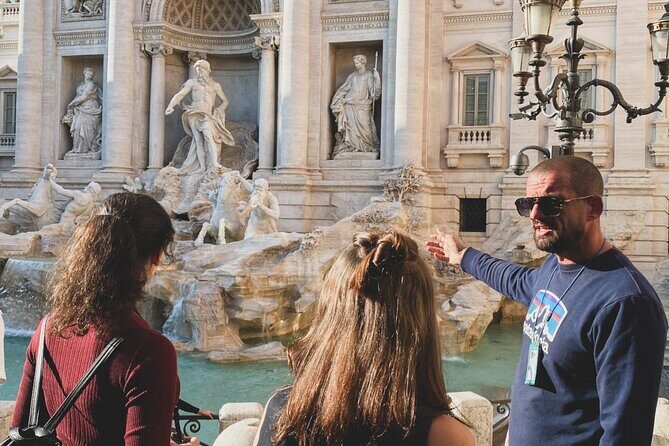
Stop 7: Trevi Fountain (The Famous One)
Then it’s Trevi Fountain, with about 20 minutes. It’s the world’s most famous fountain for a reason: it’s instantly recognizable even from the edge of the scene.
This is also where you’ll appreciate the tour’s promise of minimal queueing for photo moments. You’re not trying to stand in a line for ages to just get a quick shot.
Stop 8: Piazza Venezia / Ancient City (Altare della Patria)
You head to Piazza Venezia to see Altare della Patria. It’s a “wow” piece of Rome’s monumental landscape, and it’s a smart stop because it sets up the ancient-city context right afterward.
This segment is about 10 minutes, so treat it like a photo-and-glance stop.
Stop: Mouth of Truth (Passed in Front)
You’ll pass in front of the Mouth of Truth. This is one of those Rome moments that feels small in time but huge in recognition. It’s quick, but it helps you connect pop-culture familiarity with the real location.
Stop: Roman Forum (Visit Time)
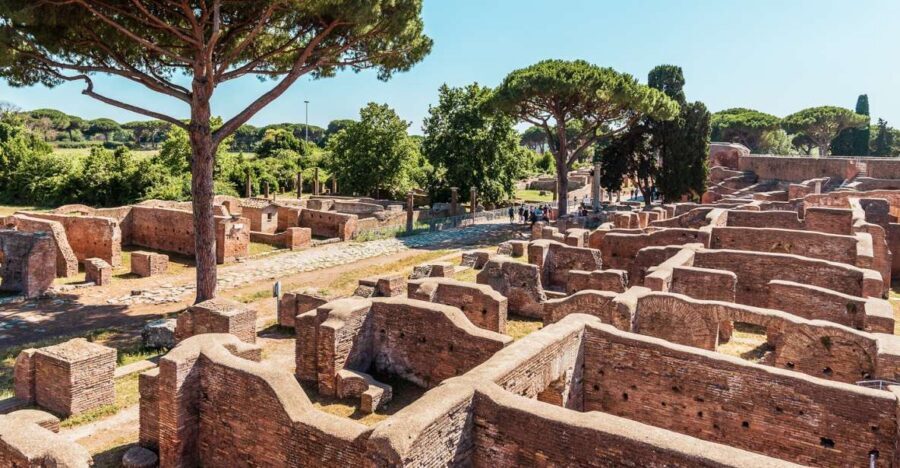
Next comes the Roman Forum. You’ll go to visit it, and this portion is about catching the main scale and feel of the ancient center.
The limitation is time, but that’s where a cart tour shines. You’re mapping the space so you can decide what to return to for longer exploring.
Stop 9: Spanish Steps (Classic Steps Stop)
Then: Spanish Steps for about 10 minutes. This stop is built for the classic photo moment and a quick orientation of the surrounding area.
If your first instinct is to wander the side streets right afterward, you’re not alone. This tour gets you to the entrance of the experience, not the entire book.
Stop 10: Villa Borghese (Time for a Beautiful Pause)
You’ll see Villa Borghese in about 10 minutes. Even without a deep visit, it’s a calming contrast to the heavier monument stops.
It’s also a smart inclusion because it signals Rome isn’t only stone and ruins. There’s green space in the city’s story too.
Stop 11: Piazza del Popolo (Largest Square Moment)
Piazza del Popolo comes next, with about 5 minutes. It’s the largest square in Rome, and it works as a visual reset point before you head back toward the ancient icons.
Stop: Tomb of Emperor Augustus (Brief but Historical)
You’ll see the Tomb of Emperor Augustus. This is a quick hit, but the payoff is that you’re connecting the late Roman world to the earlier city core you just visited.
Stop 12: Colosseum (Rome’s Symbol, Ticket Not Included)
Finally, you reach the Colosseum. The tour includes a stop of about 10 minutes, and admission is not included. This last stop is designed for big recognition and photos, not for a full inside visit.
If you want to go inside the Colosseum, plan to handle entry separately. If you’re not entering, you’ll still get the impact of seeing it in the right context at the end of the route.
Photos, Queues, and Why the Order Is Smart
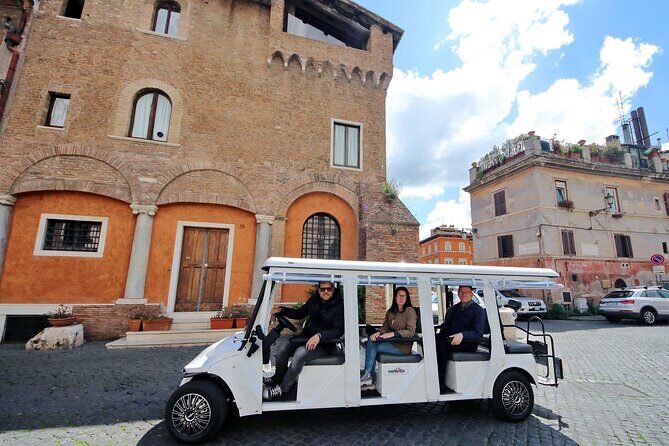
Rome is a city where photos can either be fun or frustrating. The good news here is the route is built to keep your photo moments practical. Instead of forcing you into long waits, you’re stopping at key moments and moving on—so you spend more of your time looking and less of it in line.
The order also helps. You start with viewpoint-heavy stops (Aventine, Janiculum), then sweep into iconic religious and monumental sites (Vatican area, Pantheon, Trevi), then move through major squares and ancient anchors (Piazza Venezia, Forum, Tomb of Augustus, Colosseum). It’s a logical arc that makes the city feel connected rather than random.
Comfort on Cobblestones and Hearing the Guide
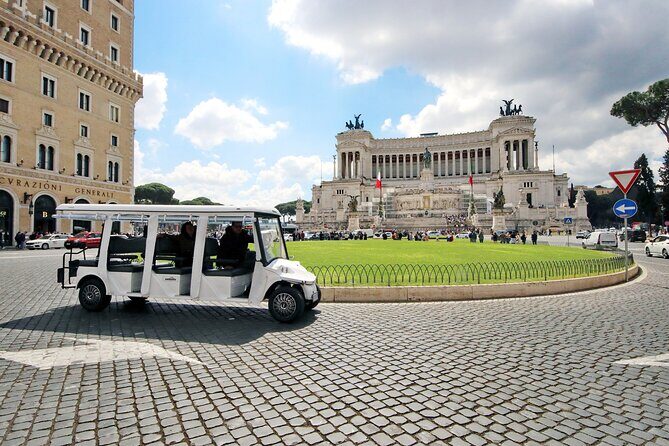
A cart tour sounds easy, and for most people it is. Still, Rome’s streets are not designed for smooth wheels. If you’re sensitive to bumps, expect some vibration and shifting over uneven pavement.
Another practical note from real-world experiences: audio can be uneven depending on how the guide handles it and where you sit. If you’re picky about hearing every word, ask your guide how they will share commentary and position yourself so you’re not stuck far from the driver/guide.
Who This Tour Suits Best
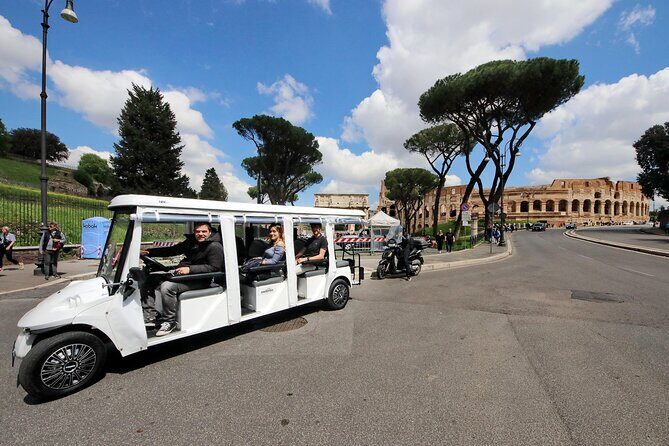
This tour fits best if you want an overview and you don’t want to spend the day physically “paying” for sightseeing.
It’s a great match if:
- It’s your first day and you want to build your personal plan for what to return to
- You want a route that supports mobility needs and reduces long walking
- You like photo stops but don’t want to lose half your day to crowds and queues
It may be less ideal if:
- You want a museum-style pace with deep time inside major sites every stop
- You’re the type who enjoys long wandering on foot as part of the main experience
Tips to Make Your Cart Tour Feel Like a Win
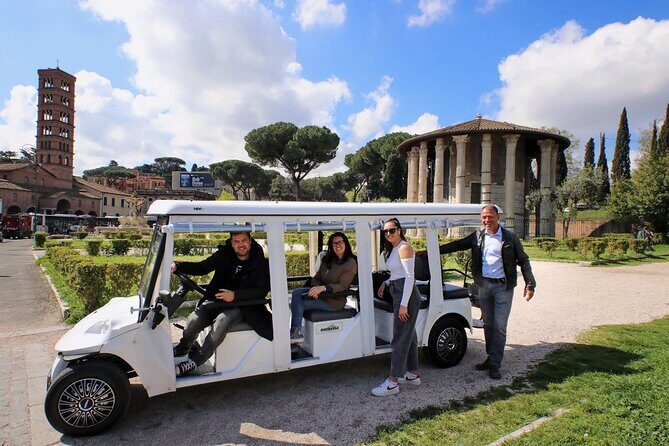
A few small choices can make a big difference.
- Wear shoes you can stand in comfortably for short periods. Even on a cart tour, you’ll still step out for views and photos.
- Bring a camera/phone strap or stable grip. Quick stops mean you’ll want shots fast before the group rolls.
- If you care about particular sites (Pantheon entry, Colosseum entry), decide ahead of time so you’re not making budget choices on the fly.
- Use your map pin for the start at Via di S. Giovanni in Laterano, 2. The meeting point is near public transportation, but it still helps to arrive early and double-check the exact spot.
Should You Book This Rome Golf Cart Tour?
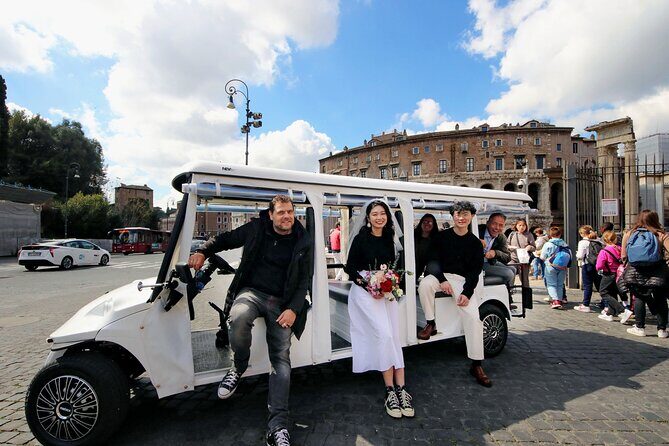
I think it’s a smart booking if your priority is efficiency without losing the fun parts of Rome. For a little over $118 per person, you get a structured, small-group route with minimal walking, built-in photo time, and a guide who can keep the pace flexible. It’s also a strong option for mobility-challenged visitors, because the route is designed around getting you close instead of asking you to “power through.”
Skip it only if you know you want a slow, detailed deep-dive at a handful of sites, and you’re happy spending most of your day walking or standing in specific ticket lines. If you want the best day-one overview, this tour is very likely to deliver what you came for.
FAQ
How long is the Rome Tour of Rome in a 7 Seater Golf Cart?
It’s approximately 3 hours.
How much does the tour cost?
The price is $118.94 per person.
Is the tour offered in English?
Yes, it is offered in English.
How many people are on the tour?
The maximum group size is 7 travelers.
Where do we meet and where does the tour end?
You start at Via di S. Giovanni in Laterano, 2, 00184 Roma RM, Italy and end at Piazza Venezia, Roma RM.
What is included in the price?
Private transportation is included.
Are entrance fees included?
No. Entrance fees are not included.
Which stops have tickets not included?
Pantheon and the Colosseum list admission tickets as not included.
Is the tour suitable for visitors with mobility needs?
The tour is described as accessible for all visitors, including those with additional mobility needs, and most travelers can participate.
Do I get a ticket on my phone?
Yes, it uses a mobile ticket.
What if the weather is bad?
The experience requires good weather. If it’s canceled due to poor weather, you’ll be offered a different date or a full refund.
Can I cancel for a full refund?
You can cancel up to 24 hours in advance for a full refund. If you cancel less than 24 hours before the start time, the amount paid is not refunded.