REVIEW · OSTIA ANTICA TOURS
Ostia Antica Small Group Tour
Book on GetYourGuide →Operated by Rome - Tour · Bookable on GetYourGuide
Ostia Antica feels like stepping into a quieter Rome. This 4-hour outing takes you to the once-busy port town outside the city, where mud and silt helped preserve streets, homes, and public buildings for modern eyes. I love the small-group pace, and I also like that you get skip-the-line access so your time goes to seeing the best parts instead of waiting.
One heads-up: plan for serious walking on uneven ground. It’s not recommended for people with reduced mobility or wheelchair users, and large bags or luggage aren’t allowed.
In This Review
- Key Things to Know Before You Go
- Why Ostia Antica Works Better Than Another Big City Ruin Day
- The Small-Group Format: Easier Questions, Better Story Flow
- Getting There the Easy Way: Train Included, No Fancy Detours
- Teatro Grande: The Outdoor Theater Where Plays Were Only Part of the Plan
- Square of the Guilds: The Money Side of Roman Life
- Baths of Neptune: A Roman Gym, Pool, and Social Hub
- House of Diana: A Surprisingly Sophisticated Home
- How Much Time You’ll Actually Need (And Why 4 Hours Feels Right)
- What to Bring for Comfort: Shoes, and Don’t Underpack for Heat
- Who This Tour Is Best For (And Who Might Feel Frustrated)
- Price and Value: What $94 Buys You in Real Time
- The Best Way to Use This Tour: Arrive Curious, Stay Flexible
- Should You Book Ostia Antica? My Honest Take
- FAQ
- Where do I meet for the Ostia Antica Small Group Tour?
- How long is the tour?
- What’s included in the price?
- How many people are in the small group?
- What languages are the live guides?
- What should I bring and wear?
- Is the tour suitable for wheelchair users or reduced mobility?
Key Things to Know Before You Go
- Small group of up to 10 means you can ask questions and actually hear the details.
- Skip-the-line park tickets via a separate entrance help you start faster.
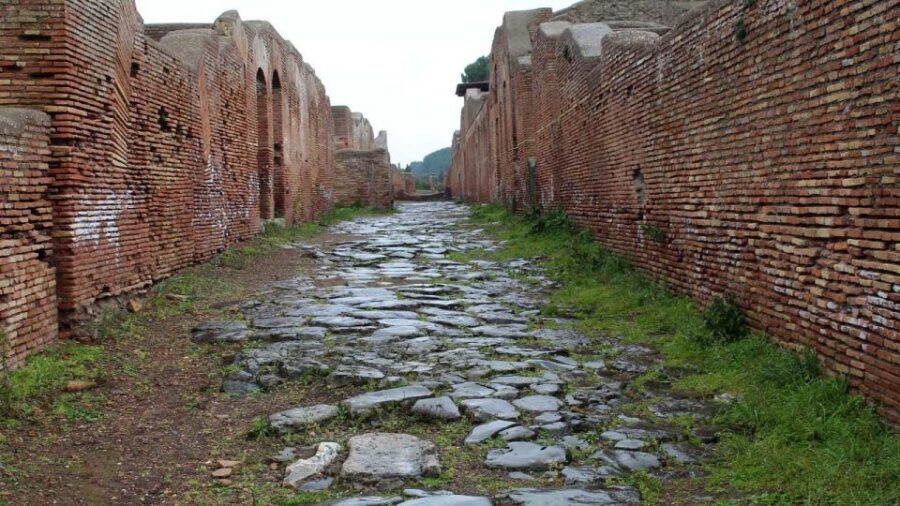
- Theater + port-town streets give you a full sense of how Romans lived and worked.
- Baths of Neptune show daily life beyond temples and monuments.
- House of Diana adds a more personal, residential look at ancient routines.
Why Ostia Antica Works Better Than Another Big City Ruin Day
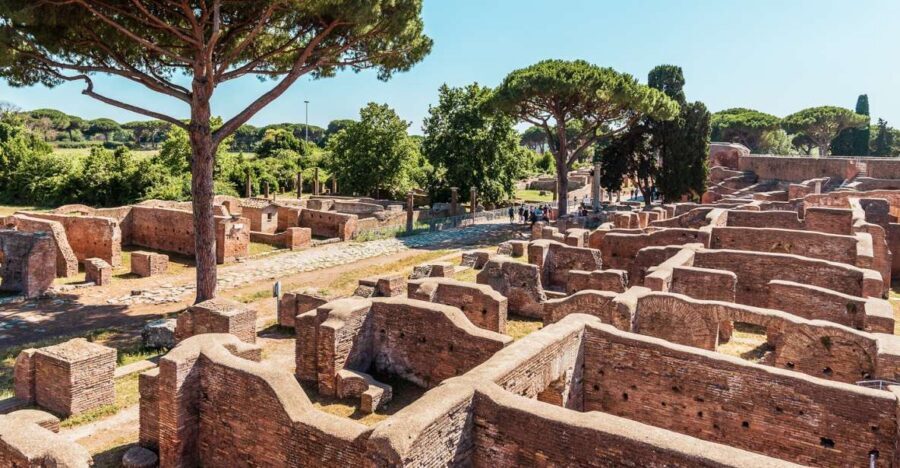
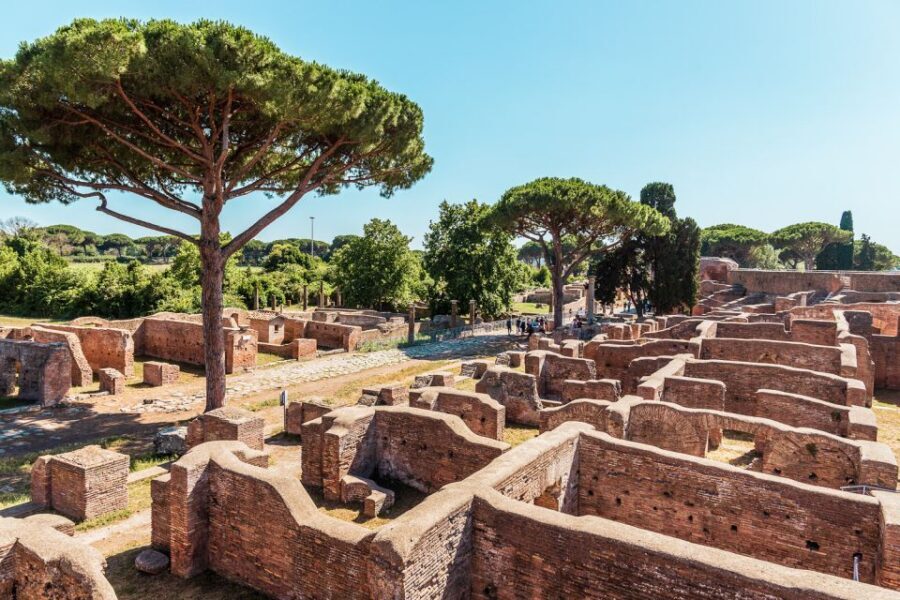
Ostia Antica is Rome’s port story, not just another scatter of columns. The site was a thriving commercial hub, and after the Roman Empire declined it was gradually abandoned. When the Tiber River shifted course, silt and mud covered the city, which is exactly what helped preserve so much of it for excavation.
That “protected by the river” detail matters for you. It’s one reason the ruins feel readable as a real town instead of only a few dramatic monuments. You’re walking through spaces that still make sense—public buildings, homes, and places where goods and people moved in and out.
And it’s a smart break from the heaviest crowds in Rome. Even on a busy season, Ostia Antica has a different feel, because you’re dealing with an archaeological park spread out over time and terrain rather than a tight cluster of famous landmarks.
You can also read our reviews of more tours and experiences in Rome.



The Small-Group Format: Easier Questions, Better Story Flow
This is capped at 10 participants, and the best reviews talk about how the guides keep things relaxed. In plain terms, that means you get time to ask what you’re seeing, not just march past it. Several guide names come up often—Sonia, Sarah, Claudia, Antonio, and Kathleen—and the common thread is how they connect the ruins to Roman daily life.
You’ll also notice the difference in pacing. A big tour can feel like a stopwatch. Here, you’re more likely to get a slower look at key spots, plus the context that makes one building connect to the next.
One more practical advantage: the group size makes it easier to follow through a site that can feel like a maze once you’re inside. If you like archaeology but you also like knowing what you’re looking at, this format supports both.
Getting There the Easy Way: Train Included, No Fancy Detours
You meet at Roma Ostiense Train Station area, specifically in front of the station at Piazzale Ostiense, 9, 00154 Roma RM. Then you take a local train to the archaeological park area. The roundtrip train ticket is included, so you’re not stuck figuring out schedules mid-trip.
This matters if you’re new to Italian trains. More than one review highlights how helpful it is when the tour handles the transit piece for you, especially if you’re taking public transport for the first time. You still experience it as a real commute, but you’re not doing it blind.
Once you arrive, you get skip-the-line tickets into Ostia Antica through a separate entrance. That’s the kind of small advantage that makes a half-day feel like a half-day, not half a day plus waiting.
Teatro Grande: The Outdoor Theater Where Plays Were Only Part of the Plan
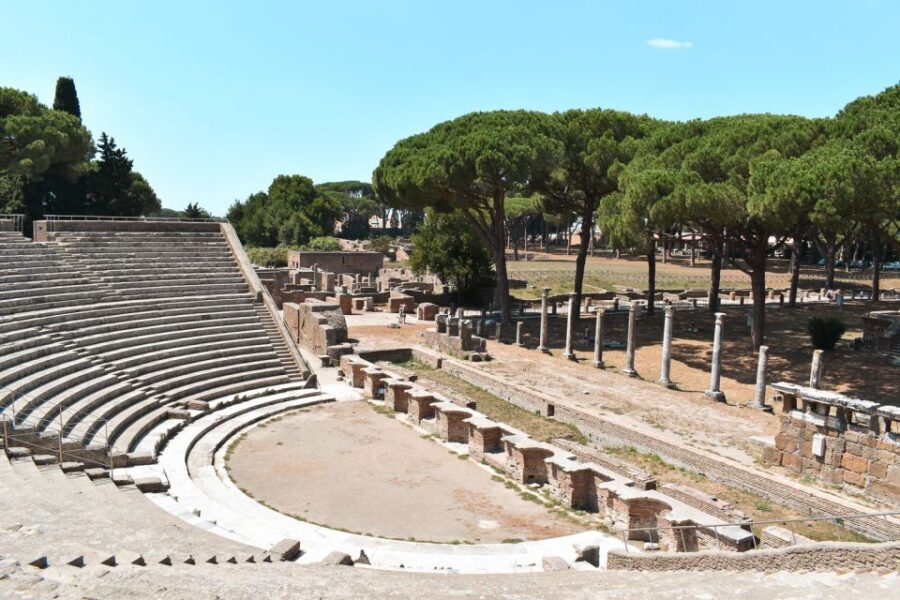
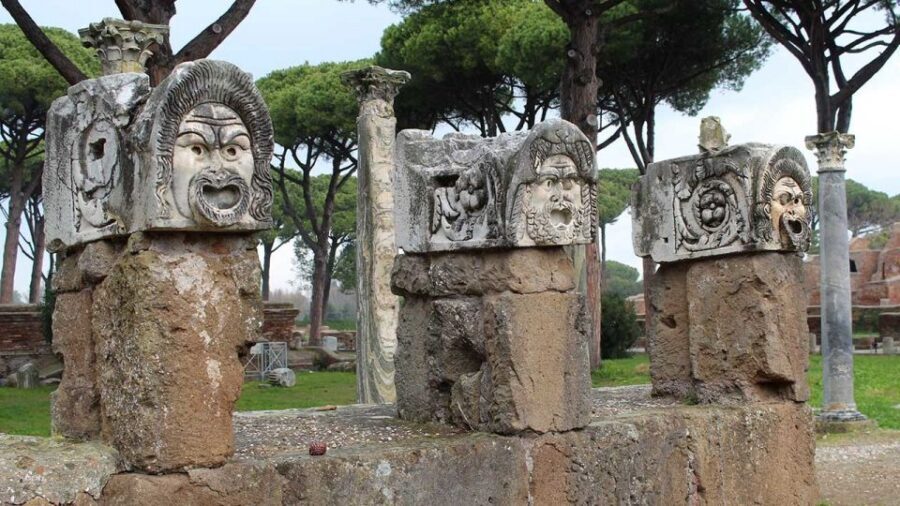
One of the first big wow-stops is the grand outdoor theater. This was a stage for plays, but it was also used for events that people of the era associated with spectacle—yes, including gladiator fights. Seeing it in daylight helps you grasp how Roman public entertainment worked: open space, lots of seats, and drama built for the crowd.
Here’s what you’ll appreciate as you look around. You’re not just seeing architecture. You’re seeing how a city gathered people in one place with a shared purpose—watch, react, remember.
A guided stop also helps you avoid the common problem at ancient sites: you can recognize the shape of a theater, but you miss what made it social and political. With a guide leading you through the why, you’ll pick up more than the location of the seating.
Square of the Guilds: The Money Side of Roman Life
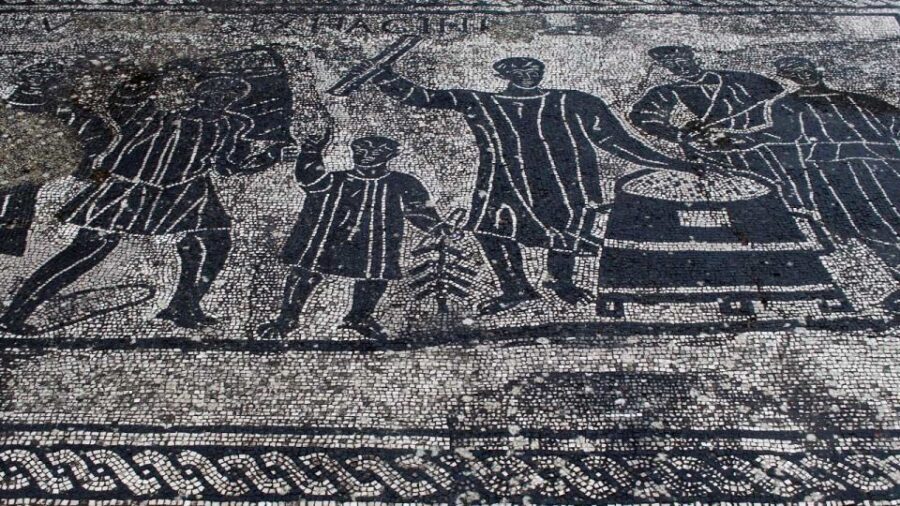
Next you’ll head to the Square of the Guilds, which is where Ostia Antica starts to feel like a working economy, not only a collection of ruins. This was a point where ship owners and merchants came together to try their luck. In other words, it was ambition in stone—people betting on trade routes, supplies, and profits.
For you, this is one of the most useful stops because it connects your visit to Roman “work life.” It’s easy to focus on temples and statues, but squares like this show the practical engines behind the city: commerce, transport, and organized business.
Even if you don’t know Latin, the idea is clear when you’re standing there. You’re learning why the port mattered and how the town functioned day to day. If you like understanding the daily rhythm of the ancient world, this square delivers.



Baths of Neptune: A Roman Gym, Pool, and Social Hub
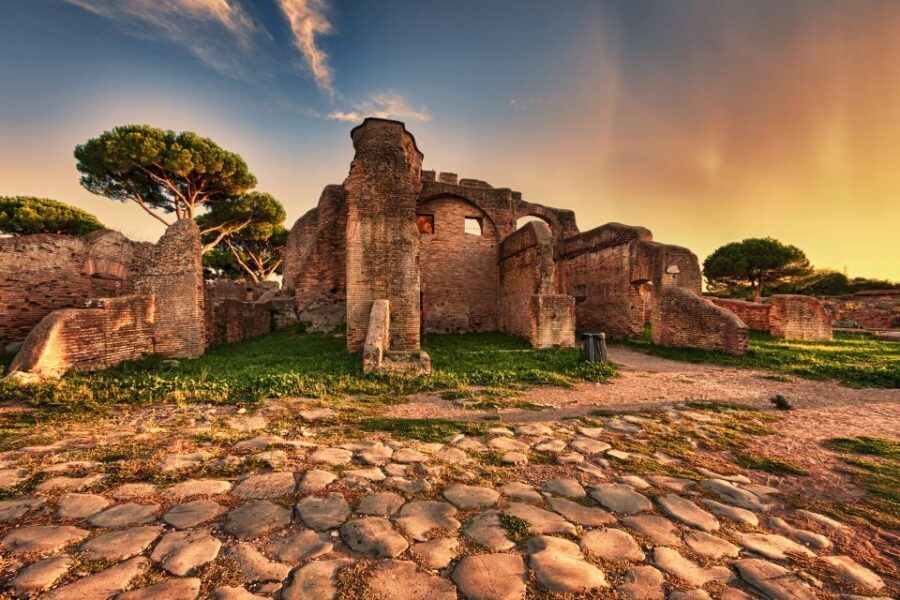
From the guild square, you’ll see the Roman-style baths known as the Baths of Neptune. The baths weren’t only for soaking. People used them to lounge in pools, work out, and clean themselves with olive oil.
This is a great stop because it’s so human. You’re looking at a place built for routines we’d recognize—exercise, hygiene, and social time—just arranged through Roman culture. Even small details you might notice from the architecture help you imagine how long people could spend there and how public the experience could be.
The guide’s job here is important. Baths can look repetitive if you just see walls and steps, but context turns it into a story about leisure and status. You’ll get more meaning when you understand how this kind of place fit into the day of a port city.
House of Diana: A Surprisingly Sophisticated Home
Then you walk to the House of Diana, described as a more sophisticated abode. This is where the tour shifts from public spaces to private life—the part of Ostia Antica that reminds you people weren’t just passing through as shoppers and sailors.
Seeing a home in an ancient city changes how you picture the whole place. You start to connect the port and markets to families, sleeping quarters, and everyday routines. The stop is also a reminder that “big history” is made of ordinary nights—ancients laid their heads here at night, just like we do now.
If you’re the kind of visitor who likes architecture plus atmosphere, this is one of the best moments. It’s not just about seeing something old. It’s about recognizing how residents organized their lives inside a functioning town.
How Much Time You’ll Actually Need (And Why 4 Hours Feels Right)
The tour is 4 hours, and that duration is a sweet spot. Ostia Antica is big, but the guided highlights help you cover the areas that matter most for understanding the city’s layout and story.
You don’t have to rush to fit everything in. Several reviews also point out something practical: the park has good signage and even an audiobook option. But because the site can be vast, a guide helps you prioritize what to look at and explains the connections between stops.
If you’re the type who likes to linger, you’ll likely appreciate that the plan supports exploring further after the guided portion. Even if you only do a short wander, you’ll have a stronger sense of the park and what you’re seeing.
What to Bring for Comfort: Shoes, and Don’t Underpack for Heat
This tour is mostly walking, and the ruins sit on uneven ground. Wear comfortable shoes with good grip. If you’re visiting during warm months, you’ll want to think about sun protection and hydration.
One useful tip that shows up in feedback: bring a hat and sunscreen, and carry water. That’s not overkill at a Roman archaeological park, especially when you’re moving between key buildings without shade guarantees.
Also keep it simple with your bag situation. No luggage or large bags are allowed, so travel light. If you’re trying to balance this with a Rome day, pack like you would for a half-day hike, not a full museum visit.
Who This Tour Is Best For (And Who Might Feel Frustrated)
This tour fits you if you want Rome without the full-time chaos. I especially like it for people who want context—how the port economy worked, how public entertainment operated, and how daily routines shaped the city.
It also suits history lovers who care about daily life, not only famous monuments. The stops cover theaters, commerce spaces, baths, and homes, which means you get a rounded picture instead of one theme.
It might feel frustrating if you need accessibility support. The tour specifically notes it isn’t recommended for people with reduced mobility or wheelchair users, and the walking is a big part of the experience.
Price and Value: What $94 Buys You in Real Time
At $94 per person, the price isn’t just paying for a guide voice in a headset. You’re also getting a roundtrip train ticket and skip-the-line tickets to the archaeological park. Put together, that helps protect your time.
You’re paying for the parts that are hardest to DIY quickly. Yes, you can visit Ostia Antica on your own, but you’ll likely spend more time figuring out routes and then more time sorting out what you’re looking at once you’re inside. With this tour, you get an organized path through the highlights: theater, Square of the Guilds, Baths of Neptune, and the House of Diana.
The small-group cap also adds value. A smaller group usually means fewer delays and more room for questions, which is a big deal at a site that can feel like a maze.
If you’re trying to get the most meaning from your time outside Rome, this price makes sense for a half-day plan.
The Best Way to Use This Tour: Arrive Curious, Stay Flexible
The tour gives you a guided path, but you’ll enjoy it more if you go in with a few expectations. Think of Ostia Antica as a working town built around the port. That framing helps you connect each stop instead of treating them as separate photo opportunities.
Bring questions too. When you’re standing in the theater, ask what kinds of events it hosted and why the Romans needed public gatherings like this. When you’re in the baths, focus on how hygiene and exercise fit into social life. At the House of Diana, try to imagine how a home functioned in a busy port city.
And don’t overplan the rest of your day. If you want to wander afterward, you’ll likely have an easier time when you already know what you saw on the tour. The guided piece helps your second look make sense.
Should You Book Ostia Antica? My Honest Take
Book this tour if you want a calmer, more complete view of Roman life than what you’d get from a rushed stop. The combination of small group, included train ride, skip-the-line entry, and standout stops makes it a smart way to spend 4 hours away from Rome’s main crowd magnets.
Skip it if walking is a problem for you, or if you need a fully accessible route. Also skip it if you’re looking for a mostly hands-off visit with minimal walking; this one is built around movement through the site.
If you like your archaeology with context and you appreciate that not every Roman stop has to be in the city center, this is an excellent choice.
FAQ
Where do I meet for the Ostia Antica Small Group Tour?
You meet in front of the Roma Ostia Lido Train Station area at Piazzale Ostiense, 9, 00154 Roma RM, Italia.
How long is the tour?
The tour lasts 4 hours.
What’s included in the price?
It includes a roundtrip train ticket, skip-the-line tickets to the Ostia archaeological park, and a licensed English tour guide, plus the small-group tour format.
How many people are in the small group?
The group is limited to a maximum of 10 participants.
What languages are the live guides?
Live tour guidance is available in Spanish, English, and French.
What should I bring and wear?
Bring a passport or ID card and wear comfortable shoes.
Is the tour suitable for wheelchair users or reduced mobility?
No. The tour is not recommended for people with reduced mobility or wheelchair users, and it isn’t designed for those needs.