REVIEW · 1-DAY TOURS
Day Trip from Rome to Florence and Pisa
Book on Viator →Operated by RomaExperience Tours · Bookable on Viator
Florence and Pisa in one long day sounds crazy. And it is a lot—but this plan makes it workable, with high-speed train time and private car rides that cut down the hassle. I like that you get a guided whirlwind of Florence’s biggest icons (including Michelangelo’s David at the Accademia), plus a guided Leaning Tower climb in Pisa with the right tickets. One thing to keep in mind: this is not a slow, sit-and-stare tour. With only about 12 hours total, you’ll move quickly between stops and you’ll have limited time for wandering on your own.
The best part is how much of the day is handled for you: round-trip transport between Rome and the station, train tickets, and skip-the-line access to key sights. In real terms, that means less waiting, fewer logistics headaches, and more time actually looking at the art and monuments. I also love the human side of it—on-the-ground coordination and guides like Silvia in Florence and Monica and Alessandro in Pisa were specifically praised for clear, lively explanations.
The possible drawback is pacing. One review flagged slow walking-to-info timing and not enough time at the Accademia for deeper art understanding. If you’re the type who wants long breaks, big museum time, and lots of free roaming, this one-day format may feel rushed.
In This Review
- Key points before you go
- How this one-day Florence and Pisa trip actually feels
- Rome to Florence: high-speed train + private support that saves your morning
- Florence: Ponte Vecchio to the Accademia David (and why that order helps)
- Ponte Vecchio: a shortcut into Renaissance Florence
- Galleria dell’Accademia: skip-the-line for Michelangelo’s David
- Baptistero di San Giovanni: Ghiberti’s doors from the outside
- Florence landmarks: Duomo area, open-air sculpture, and power in the streets
- Duomo (Santa Maria del Fiore): outside explanations that set the stage
- Loggia dei Lanzi: open-air sculptures you can actually see
- Palazzo Vecchio (outside): power and politics in stone
- Piazza della Repubblica: a Renaissance-feeling pause
- Mercato Nuovo and Fontana del Porcellino: street Florence, not just monuments
- Pisa: making the most of limited time with a tower climb
- Leaning Tower of Pisa: the climb and its age rule
- Cattedrale di Pisa and the Baptistery: more than background
- Camposanto: frescoes and Medici sepulchers in a cloister
- Price and value: what $1,556 per person is buying
- Who this tour suits best (and who should think twice)
- Practical tips to get more out of every stop
- Should you book this Rome to Florence and Pisa day trip?
- FAQ
- What time does the tour start and how long is it?
- Is hotel pick-up included?
- What’s included in the price?
- Which attractions include skip-the-line or paid admission?
- Can children climb the Leaning Tower?
- Is food included?
- What’s the cancellation policy?
Key points before you go
- High-speed rail plus private car transfers: designed to compress Rome–Florence–Pisa without constant schedule stress
- Skip-the-line at the Accademia and tickets for the Leaning Tower climb: reduces the biggest bottlenecks
- Florence highlights from river to market to sculpture court: Ponte Vecchio, Loggia dei Lanzi, Palazzo Vecchio area, Mercato Nuovo
- Pisa isn’t just photos: you’ll get guided context, not only the tower shot
- Real coordination on the ground: people reported reps meeting them at Rome’s train station and guiding correct connections
- A moderate-fitness plan: you should expect walking and moving between stops, not wheelchair-style pacing
How this one-day Florence and Pisa trip actually feels
This is the kind of day trip you book when you want the icons, but you also want your day to run. It’s built around the practical reality that Rome to Florence is best done by train, and Pisa works best when you’re already in Tuscany and can use car transfers to reduce “dead travel time.”
Instead of one big group bus with random timing, you get a split format: train leg(s) plus private car hops within cities, with expert guides for the main sight areas. That structure matters because Florence and Pisa aren’t just museums and monuments—they’re walkable city centers with traffic, crowds, and confusing streets if you’re doing it alone.
The tour is also clearly aimed at people who don’t want to figure out train platforms, ticket timing, and guided-entry logistics at the same time. Reviews praised coordinators who met people at the station and made sure the right train was taken—exactly the kind of help that prevents a good plan from turning into a frustrating one.
You can also read our reviews of more tours and experiences in Rome
Rome to Florence: high-speed train + private support that saves your morning
Your day starts at 8:00 am and is designed to keep you moving. The schedule uses transportation time efficiently: you’re not just “going to Florence,” you’re getting there fast enough to still do a real slice of sightseeing.
Included logistics that make a difference:
- Round-trip transfer from your Rome hotel to and from the station is listed as a highlight, but the separate notes say hotel pick-up and return aren’t included. In practice, at least some bookings appear to arrange a driver meeting you in Rome. The safest move is to confirm what your exact booking includes in your confirmation message.
- Train tickets are included, so you’re not juggling purchase timing.
- The tour is listed as private, meaning it’s only your group, not a mixed crowd.
In terms of pacing, expect a morning that feels “scheduled.” You’ll board the train, arrive, and then meet a Florence guide who walks you through the key sights and transitions you to the next driver for the Pisa leg.
One real-life note: one review described an issue when a train broke down on the return to Rome, causing a delay. The positive part of that story wasn’t the delay—it was that the driver still collected the group at the train station. That’s the kind of contingency you want in a day trip this tightly timed.
Florence: Ponte Vecchio to the Accademia David (and why that order helps)
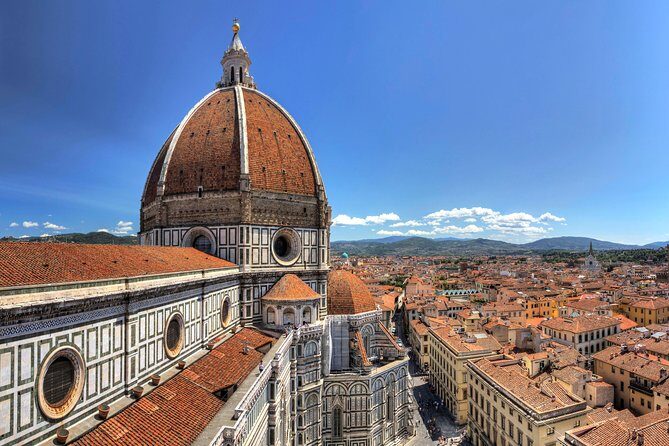
Florence can feel like sensory overload. This route helps because it places the big “gateway” sights early and then stacks art and architecture after you’ve already gotten your bearings.
Ponte Vecchio: a shortcut into Renaissance Florence
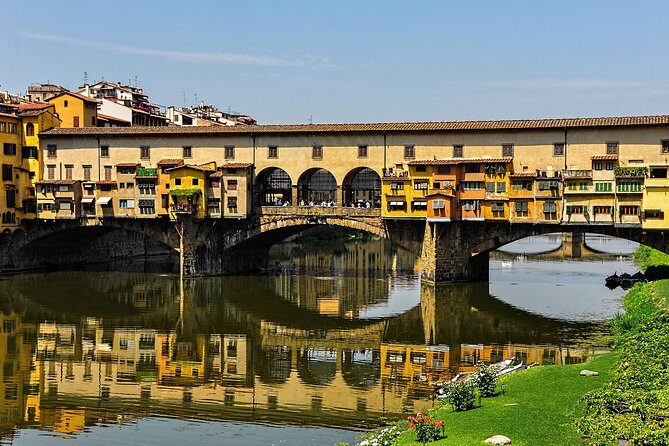
You start with Ponte Vecchio, the famous bridge lined with jewelers. The interesting angle here is that the bridge isn’t only pretty. It links to the Renaissance-era idea of power and privacy, including a secret passage used by Florentine aristocracy.
Even if you’re only stopping briefly, Ponte Vecchio works as a mental reset: it’s a recognizable image from postcards, but a good guide makes it more than a photo spot.
Galleria dell’Accademia: skip-the-line for Michelangelo’s David
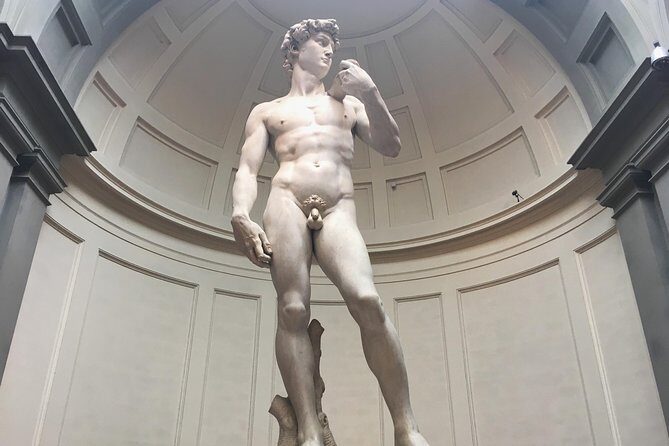
The Accademia Gallery stop is built around Michelangelo’s David, including skip-the-line entry. The tour notes mention the scale—David is about 17 ft—which is a big deal. When you see David in person, that size hits you fast, and your guide’s context can help you understand why “imperfect marble” mattered in how the sculpture was made.
Time at the Accademia is relatively short (about 30 minutes listed). That’s fine for a hit tour, but it also explains the main complaint you might worry about: if you want to study art like you’re in a museum for hours, this won’t be that experience. It’s more about seeing the masterpiece and getting oriented quickly.






Baptistero di San Giovanni: Ghiberti’s doors from the outside
From outside, you’ll see Lorenzo Ghiberti’s bronze doors with Old Testament scenes. These doors are known for their intricate detail, but you won’t have the long viewing time you’d get in a deeper museum stop. Still, it’s a smart move to place them here because you’re already in the cathedral complex zone and the afternoon will keep building the Florence picture.
Florence landmarks: Duomo area, open-air sculpture, and power in the streets
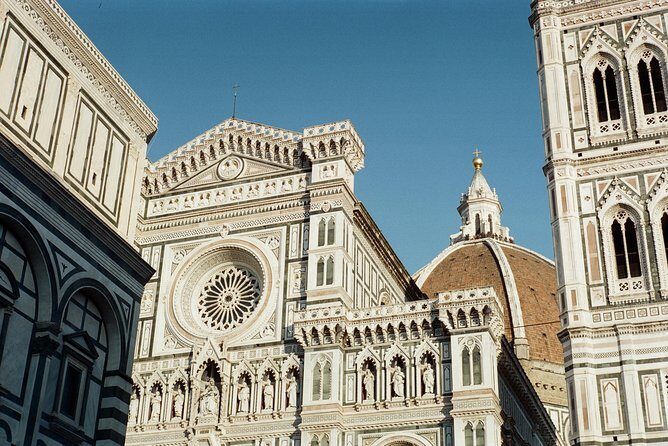
After Accademia, the tour keeps Florence’s “big symbols” moving in a way that feels efficient. You’re bouncing through the city center without getting stuck inside-ticket lines.
Duomo (Santa Maria del Fiore): outside explanations that set the stage
You’ll visit the Duomo of Santa Maria del Fiore from outside, with commentary about the story behind it and architect Brunelleschi. Even outside, this matters—because the Duomo is one of those buildings you can’t properly appreciate without hearing why it was so difficult to build.
Loggia dei Lanzi: open-air sculptures you can actually see
Next is Loggia dei Lanzi, described as one of the world’s best open-air galleries. The time is short (about 30 minutes), but the guide can pack a lot into that window. You’ll see major works mentioned in the itinerary like Donatello’s Judith and Holofernes and Cellini’s Perseus and Medusa.
For many people, this is a highlight because it breaks the “museum-only” feeling. You get sculpture in context—Florence air, street-level perspective, and quicker viewing than indoor galleries.
Palazzo Vecchio (outside): power and politics in stone
You’ll also see Palazzo Vecchio from outside, tied to the Florentine Republic and the Medici. The itinerary even notes “blood-stained history,” which is a blunt reminder that Florence’s art and architecture developed alongside political control. It’s not just a pretty façade stop; it’s a story stop.
Piazza della Repubblica: a Renaissance-feeling pause
You’ll stand in Piazza della Repubblica and hear the history, plus the atmosphere of the square. This is a good breather moment—one where your legs recover a little before the tour moves toward markets and small traditions.
Mercato Nuovo and Fontana del Porcellino: street Florence, not just monuments
You’ll visit Mercato Nuovo, a 16th-century market still alive today. Then there’s the Fontana del Porcellino (wild boar fountain), including the tradition of rubbing the boar’s nose for luck and a “return to Florence” superstition.
These are the stops that can feel small on paper, but in real life they give your day texture. They’re also where you can spot where locals shop and eat—helpful even if the tour itself doesn’t include food.
Pisa: making the most of limited time with a tower climb
After Florence, the day shifts to Pisa. The itinerary indicates you’ll drive close to the tower so you can spend less time negotiating streets and more time actually visiting.
Leaning Tower of Pisa: the climb and its age rule
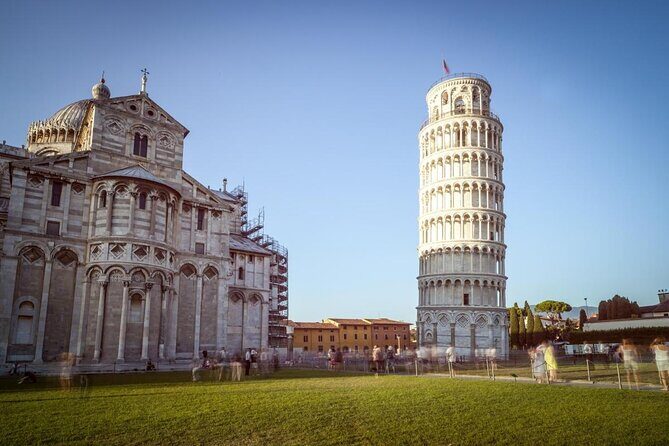
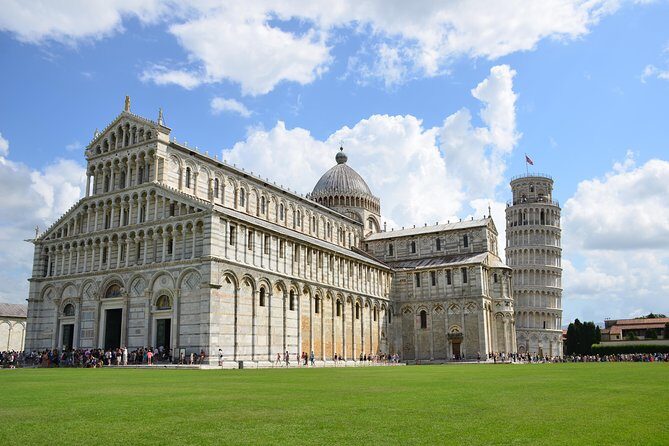
Pisa’s centerpiece is the Leaning Tower of Pisa. The itinerary specifically includes an ascend the tower experience with your expert guide, but notes a rule: children under 8 cannot ascend.
This detail matters for planning. If you’re traveling with young kids, you’ll want to know ahead of time how the tour handles the group segment with tower access. The good news is that the tour is structured around guided time, so even if not everyone can climb, the rest of the Pisa program should still feel complete.
Cattedrale di Pisa and the Baptistery: more than background
You’ll see the Cattedrale di Pisa and also spend time at the Battistero di San Giovanni, described as Italy’s largest baptistry with a standout dome and charming Gothic style. The stop durations are shorter (about 20–30 minutes), but they’re positioned so you can absorb the visual rhythm of the Piazza dei Miracoli complex.
Camposanto: frescoes and Medici sepulchers in a cloister
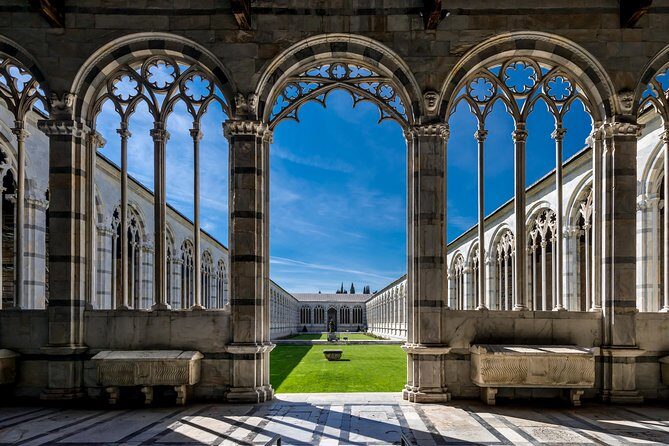
You’ll also visit Camposanto, described as a Monumental Cemetery cloister with impressive frescoes and sepulchers, including those of the Medici family. This isn’t the first stop most people think of when they picture Pisa. That’s exactly why it can work well in a one-day plan: it adds depth without requiring a full second day in the city.
Price and value: what $1,556 per person is buying
Yes, this is expensive—about $1,556.05 per person. The value question is: what parts are expensive and what parts are simply time-saving?
Here’s what you’re paying for, based on what’s included:
- Private car transport with AC for the Rome-to-station part and the city-to-city handling
- Train tickets between Rome and Florence
- Skip-the-line admission (at least for the Accademia)
- Guided tours with expert commentary for the core sights
The biggest value is time compression with reduced stress. If you try to DIY this in one day, you’ll run into planning friction: train timing, station navigation, ticket windows, and entry lines, especially in Florence. This tour essentially turns those unknowns into a scheduled plan with guides who know where to stand, what to look for, and how long things take.
Is it still a whirlwind? Absolutely. But when you compare “paid convenience” against “unpaid confusion,” the price can start to make sense if you have limited days in Rome and you really want both Florence and Pisa in one shot.
Who this tour suits best (and who should think twice)
This day trip makes the most sense if:
- you have very limited time in Italy and want the top hits in one day
- you prefer guided pacing over self-planning
- you want skip-the-line benefits where they count (especially for the Accademia)
It may not fit as well if:
- you want deep museum time and long sit-down looking (the Accademia stop is short)
- you dislike structured itineraries and prefer flexible roaming
- you’re traveling with very young kids who need special attention for the tower climb age restriction
A nice bonus from reviews: guides sometimes worked in small detours for shopping and local shortcuts. That’s not guaranteed on every day, but it signals that the guide team is paying attention to how people actually want to experience Florence between monuments.
Practical tips to get more out of every stop
A few common-sense moves will help you enjoy the day more:
- Wear comfortable walking shoes. You’re moving between city-center sights, not strolling in one spot all day.
- Bring water and plan for snacks or quick meals because food and drink aren’t included.
- Keep your expectations aligned: many stops are brief and best enjoyed with guide-led context.
- If you’re sensitive to timing, mentally treat the tour as a highlights circuit rather than a slow museum day.
- If you’re aiming to shop, know that the schedule is tight. If a guide offers a short detour, be ready to move quickly.
Should you book this Rome to Florence and Pisa day trip?
I’d book it if you want a high-impact day with guided hits and you value reduced logistics—especially if you’re starting from Rome with limited time and want to see Michelangelo’s David and climb the Leaning Tower. The tour is built around skip-the-line entry and real coordination, and the guide quality seems to be a consistent strength, with names like Silvia, Scilla, Monica, and Alessandro mentioned for their energy and expertise.
I’d pause if you hate tight schedules or you’re the type who wants to linger long in museums. The Accademia time is limited, and Pisa is structured for highlights rather than deep study.
If you’re deciding between “more time in one city” versus “cover everything in a day,” this tour chooses the second option for you. For many people, that’s exactly the trade-off that makes it worth booking.
FAQ
What time does the tour start and how long is it?
It starts at 8:00 am and runs about 12 hours (approx.).
Is hotel pick-up included?
The tour notes say hotel pick-up and return are not included, but the highlights mention pickup offered. Check your booking confirmation to see what’s arranged for your exact pickup point.
What’s included in the price?
Included items are private car transport with AC, train tickets, skip-the-line admission, and a full tour with an expert guide.
Which attractions include skip-the-line or paid admission?
Skip-the-line entry is included for Florence’s Accademia. Admission to ascend the Leaning Tower of Pisa is included as part of the program.
Can children climb the Leaning Tower?
The tour notes say children under 8 cannot ascend the tower.
Is food included?
No. Food and drink aren’t included.
What’s the cancellation policy?
This experience is non-refundable and cannot be changed for any reason.