REVIEW · ROME
Top 10 Attraction of Rome – Small group Tour
Book on Viator →Operated by World City Tour · Bookable on Viator
Rome at night moves faster than you think. This 2-hour small-group walk strings together big icons you expect like the Spanish Steps and Trevi Fountain, plus real Roman street corners, all explained by guide Vijay from World City Tour.
I especially like the small group size (max 10), which makes it easier to ask questions and keep moving. I also love the built-in gelato, plus the convenience of a mobile ticket so you’re not digging for paper.
The one catch is the pace: you cover a lot of ground on cobblestones and steps, and some stars like the Colosseum and Pantheon are seen from the outside, not inside.
In This Review
- Key highlights to look for
- A Quick Night Sampler From Spanish Steps to the Colosseum
- What You Get For $34: Small Group, Mobile Ticket, and Gelato
- Stop-by-Stop: Spanish Steps, Piazza di Spagna, and Trevi Fountain at Night
- From Hadrian to the Pantheon Exterior: How the Guide Makes Stone Make Sense
- Largo Argentina and Piazza Venezia: Ruins, Power, and Quick Photo Moments
- Forum of Augustus and Via dei Fori Imperiali: Reading the Empire From Street Level
- Colosseum From the Outside: Worth Seeing Without Entering
- Tips to Make This Walk Comfortable and Fun
- Who Should Book This Top Spots Walking Tour?
- Should You Book This Small-Group Top Spots Tour?
- FAQ
- Where is the meeting point?
- Where does the tour end?
- What time does the tour start, and how long does it last?
- How many people are in the group?
- Is gelato included?
- Are admission tickets included for the Pantheon and Colosseum?
- Do you enter the Colosseum?
- What happens if weather is bad?
Key highlights to look for
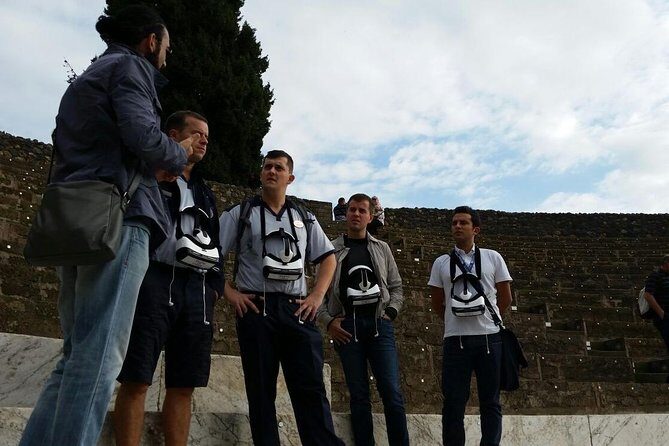
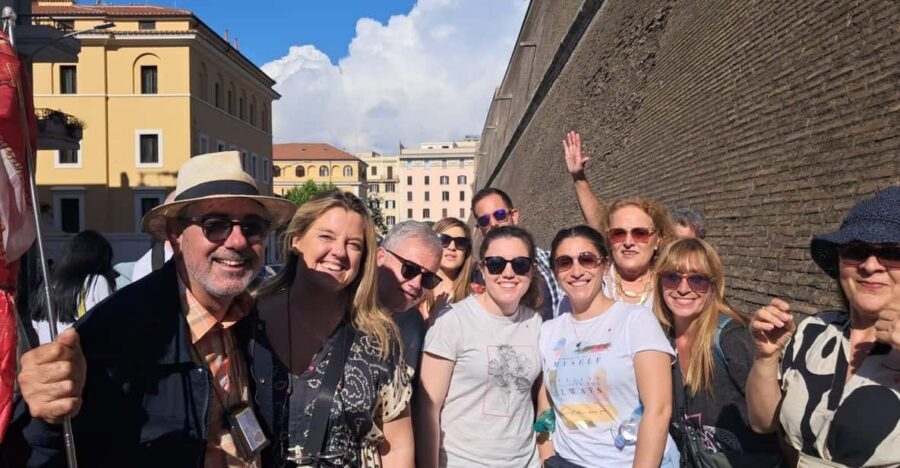
- Max 10 people means the walk feels personal, not like a herd
- Vijay’s on-the-spot explanations use simple visual help on a tablet
- Trevi Fountain coin wish plus gelato gives you two memorable “Rome moments”
- Roman ruins without the museum marathon: Largo Argentina and the Imperial Forums from street level
- Colosseum exterior stop keeps the tour moving while you still get the wow factor
A Quick Night Sampler From Spanish Steps to the Colosseum
This is the kind of Rome tour that helps you get oriented fast. In about two hours, you walk from the Spanish Steps down through the central swirl of Rome and end at the Colosseum area. Since it starts at 8:00 pm, you’ll often catch monuments with softer evening light and a different rhythm than daytime crowds.
What makes this outing work is the order of stops. You begin with the city’s showpieces that most people already have on their list, then you move into the “in-between” places—temple fragments, archaeological areas, and forum streets—where the stories feel closer to real life. By the time you reach the end point, the city’s layout starts to click.
And yes, you’ll also enjoy the practical side: it’s designed to cover major sights mostly by foot, with guided context rather than long lines or ticket logistics.
You can also read our reviews of more tours and experiences in Rome.



What You Get For $34: Small Group, Mobile Ticket, and Gelato
For $34, this tour stacks a few smart value points together. First is the small group size—maximum of 10 travelers—which changes the whole feel of a walking tour. You get space to ask follow-up questions, and the guide can adjust the pacing to the group.
Second, you get a complimentary gelato cone or cup of Italian gelato. That’s not just a perk; it’s built in at a moment when you’re likely to want a break, and it keeps the tour from feeling like a nonstop history lecture.
Third, it’s a mobile ticket experience. That matters more than it sounds. In Rome, saving time at check-in points can be the difference between relaxing and rushing.
Finally, you don’t have to pay for everything. Several stops are listed as admission free, and the ones that aren’t are called out clearly—so there are no surprise costs mid-walk.
Stop-by-Stop: Spanish Steps, Piazza di Spagna, and Trevi Fountain at Night
You start at Babington’s tea room at Piazza di Spagna, 23. From there, the tour launches straight into the dramatic stair-and-square axis that defines this part of Rome.
Spanish Steps
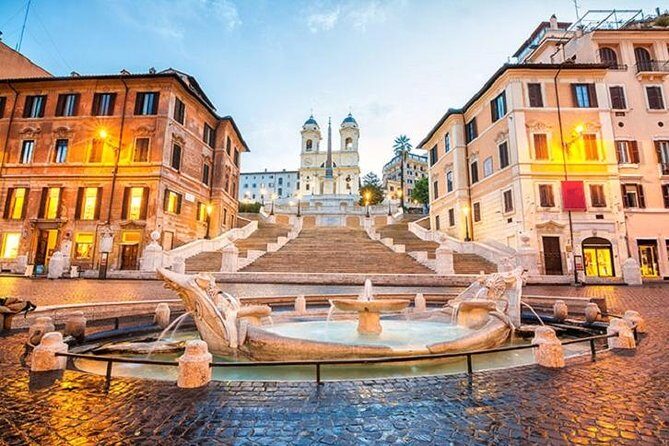
This is more than a photo spot. The steps form a wide, irregular gathering place made up of 138 steps—a mix of curves, straight flights, vistas, and terraces. In an evening walk, it’s a great opener because you can see how Rome uses vertical space: it’s not just streets and buildings, it’s levels. You’ll get context on why this spot matters in how people gather and move through the city.
Piazza di Spagna
Right by the steps, this square carries layers of meaning. The area became a romantic center in the nineteenth century, but even earlier—back in the fifteenth century—it developed a strong commercial role. One reason: hotels and foreign residents were drawn here by the presence of representatives from the Spanish and French governments.
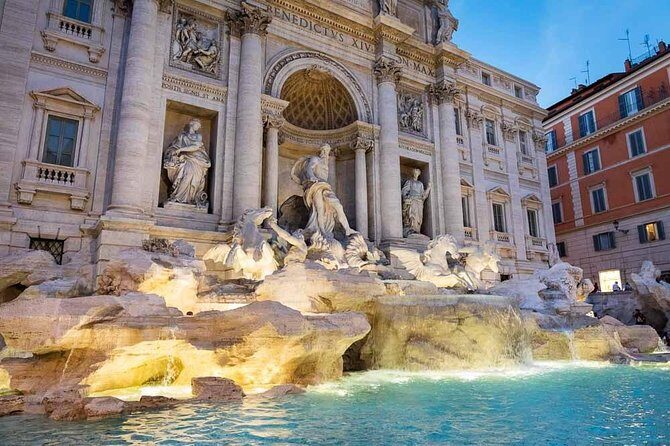
Trevi Fountain (Fontana di Trevi)
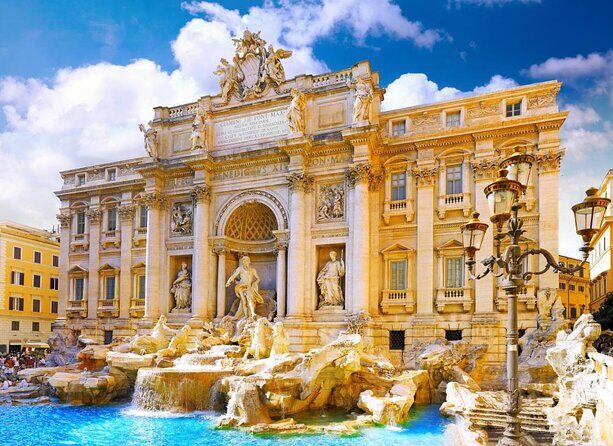
Trevi is famous for one reason: it delivers. The fountain is framed as the most beautiful and spectacular fountain in Rome, and millions of people visit each year to make a wish. This is one of those stops where the guide’s comments help you read the place beyond the crowd lines. Expect a quick, focused look—enough time to take in the structure and make the moment count without turning it into a half-day detour.
Practical note: Trevi can be busy, so keep your phone ready but don’t try to stop in the middle of foot traffic. The tour’s timing is short here on purpose.
From Hadrian to the Pantheon Exterior: How the Guide Makes Stone Make Sense
After Trevi, you shift from Baroque spectacle into the Roman world underneath. This is where the tour becomes more than a hits list.
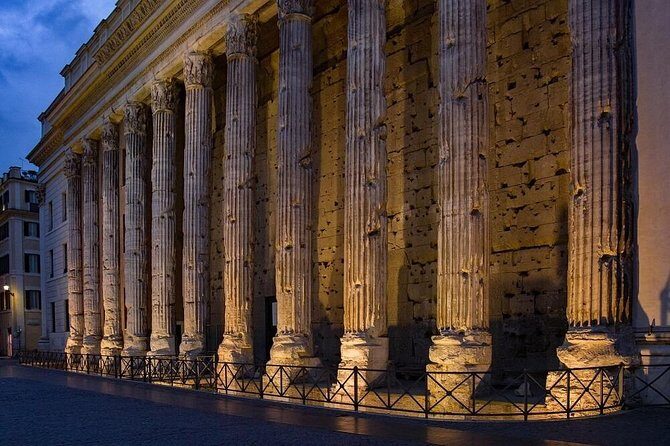
Tempio di Adriano
You’ll see the Tempio di Adriano, a temple erected in honor of Emperor Hadrian. After Hadrian’s death, he was deified by his successor Antoninus Pius—so this place ties politics, religion, and legacy together in one visible footprint. What’s especially interesting is how the remains got folded into later Rome: parts are incorporated in a seventeenth-century building erected by Carlo Fontana.
This stop is brief, but it’s a useful reminder of how Rome works. You’re not looking at one “time period.” You’re looking at time stacked on top of time.
Pantheon (from the outside)
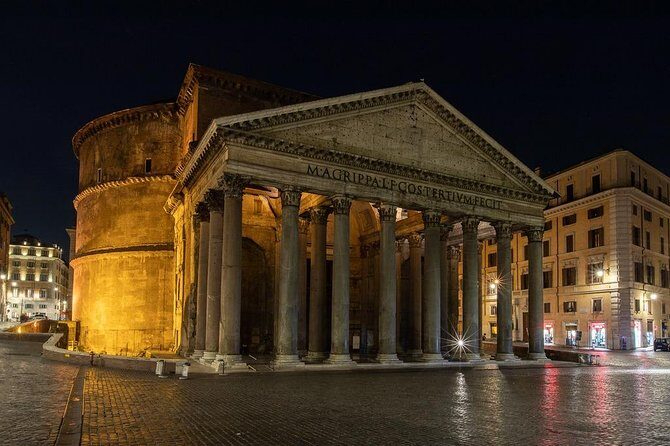
The Pantheon is often described as the best-preserved building from ancient Rome, and you’ll appreciate it even without entering. The exterior view is the deal here—so don’t plan on going inside or hunting for an entrance. Instead, use the time to notice how the building still looks solid and intentional, like it was meant to last.
If you’re the type who likes architecture, this stop pays off. The guide’s talking points tend to connect the shape and durability to why it survived when so much else didn’t.
Largo Argentina and Piazza Venezia: Ruins, Power, and Quick Photo Moments
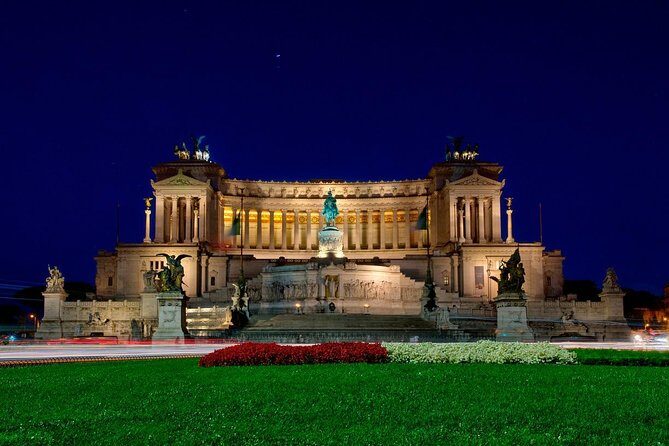
Next, you head toward a part of Rome that feels different: archaeological remains in an open square and then a shift to monuments tied to Italy’s national story.
Area Sacra di Largo Argentina
This is an archaeological complex set in a paved square where you can see the remains of four Republican-age temples. You’ll hear it referenced by the first four letters of the alphabet (since their identifications aren’t fully certain). It’s a strange, compelling feeling to see Roman temple foundations sitting in a modern urban space.
In a short tour, this stop works because it gives you a mental map. Once you’ve seen Largo Argentina, other ruins across Rome start to feel less random and more like a system.
Piazza Venezia and Altare della Patria photos
From there, the tour takes you through Via dei Fori Imperiali and stops for photos at Venezia Square in front of the Altare della Patria. This is a quick window, but it’s a helpful one if you want a skyline-style moment tying together the forum area with Rome’s later monumental identity.
One thing to watch: photo time is limited. Choose your angle quickly and don’t linger in a way that blocks others. The guide keeps the rhythm so everyone reaches the next stop on schedule.



Forum of Augustus and Via dei Fori Imperiali: Reading the Empire From Street Level
This segment is for people who like their history concrete—literally. You’ll walk through the Imperial Forums area, where major political power was centered in ancient Rome.
Forum of Augustus
The Forum of Augustus was inaugurated in 2 B.C. and sits within an architectural complex stretching between the Capitol and the Quirinal. In simple terms, this is part of the Roman machine that turned victories and authority into buildings you could walk through.
Via dei Fori Imperiali
This monumental street connects a series of buildings and squares. The tour frames it as a complex formed over about 150 years, built between 46 BC and 113 AD. Even if you don’t know every structure by name, you can sense the scale. The street feels like a long statement: Rome made power visible.
This is also a good place to let the guide’s comments “translate” what you’re seeing. A walking tour can’t recreate the original height of every structure, but it can help you understand what the space was built to do.
Colosseum From the Outside: Worth Seeing Without Entering
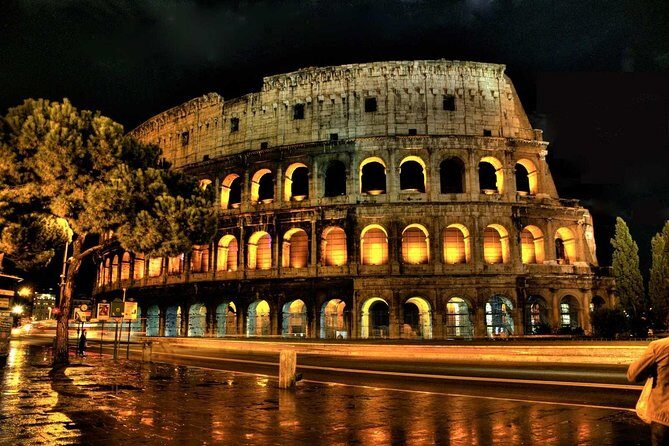
The tour ends at the Colosseum area, specifically at Piazza del Colosseo, 1. Importantly, the plan is not to enter. Colosseum admission tickets are not included, and the stop is an exterior look only.
That might sound like a compromise, but it isn’t automatically a dealbreaker. The Colosseum’s sheer form is the point: you still get the iconic view, and you get it at the end of a walk that has already put Roman context in your head. After seeing Largo Argentina and the forums, the Colosseum doesn’t feel like a standalone attraction. It starts to feel like the culmination of the city’s public life: politics, spectacle, and architecture all in one place.
If you know you’ll want to go inside later, this tour is still useful. It helps you decide where you want to spend your ticket time.
Tips to Make This Walk Comfortable and Fun
This is a walking tour. That’s a good thing, but it means you should dress for movement. You’ll encounter steps at the start and plenty of uneven pavement as you go.
A few practical choices help:
- Wear shoes with grip for cobblestones and stone surfaces.
- Bring a layer if you get cool at night. Rome can be mild, but evenings vary.
- Keep your daypack small and secure so you can stop fast for photos.
- If you’re asking questions, do it after the group moves a few paces, so you’re not stuck in the middle of the flow.
Also, treat the timing like a feature. Stops are short on purpose, so you’re not exhausted by the end. You’ll leave with a list of places to revisit later with a better plan.
Who Should Book This Top Spots Walking Tour?
This tour fits best if you want a quick “Rome orientation” without committing to a full day. It’s ideal for first-timers who already know the major names—Spanish Steps, Trevi, Pantheon, Largo Argentina, the Imperial Forums, and the Colosseum—but need a guide to connect the dots.
It also works well for people who like small-group energy. With up to 10 travelers, you’re less likely to feel like a number, and you can get answers to the odd question that pops up when you’re standing in front of ancient stones.
If you need full interior access—especially if the Colosseum is the main event—you may want to pair this with another plan that includes entry. Since this one is exterior-only for the big monuments, your priorities should match the style: see, understand, then return.
Should You Book This Small-Group Top Spots Tour?
I’d book it if you want to cover the classics in a smart, efficient 2-hour outing that starts at 8:00 pm. The combination of small group size, guided explanation from Vijay, and complimentary gelato is a strong match for the price.
I’d skip it or adjust expectations if you’re expecting inside visits. The Pantheon and Colosseum are both outside experiences here, and you won’t have Colosseum admission included.
If your goal is to leave with your bearings fast and a few story-rich stops you’ll remember later, this tour is a good use of your time in Rome.
FAQ
Where is the meeting point?
You meet at Babington’s tea room, Piazza di Spagna, 23, 00187 Rome, Italy.
Where does the tour end?
The tour ends at the Colosseum area, Piazza del Colosseo, 1, 00184 Rome, Italy.
What time does the tour start, and how long does it last?
It starts at 8:00 pm and runs for about 2 hours.
How many people are in the group?
The tour has a maximum of 10 travelers.
Is gelato included?
Yes. A complimentary cone or cup of Italian gelato is included.
Are admission tickets included for the Pantheon and Colosseum?
No. The Pantheon stop lists admission ticket not included, and the Colosseum admission ticket is not included.
Do you enter the Colosseum?
No. The tour does not enter the Colosseum.
What happens if weather is bad?
The tour requires good weather. If it’s canceled due to poor weather, you’ll be offered a different date or a full refund. The cancellation policy is free up to 24 hours in advance for a full refund.