REVIEW · CATACOMBS TOURS
The Original Roman Crypts and Catacombs Tour with Transfers
Book on Viator →Operated by City Wonders Ltd · Bookable on Viator
Rome’s underground side is startling. This tour strings together three eerie, very different sites that most visitors never see in one go: the Capuchin Crypt, the Domitilla Catacombs, and San Martino ai Monti under its church. I like the way the route is guided and structured, so you’re not wandering in the dark with guesswork. I also love the chance to connect what you’re looking at with how early Christians lived, worshiped, and later how the Capuchins handled death rituals. One big consideration: the catacombs and crypt spaces can feel tight and dark, and it’s not suitable if you’re dealing with claustrophobia.
What makes it extra worth it is the practical stuff: skip-the-line entry at three major stops, plus transfers in a private, air-conditioned coach between locations. You’re also not just getting a checklist. Guides such as Heather, Alan, Andrea, Paula, and Emiliano Berni are repeatedly praised for keeping people engaged and answering questions without rushing you out of the story.
A few details to plan around up front. You’ll walk and descend underground, so bring comfy shoes and a calm pace. Dress code matters at some sites, too: knees and shoulders must be covered, and you can’t take photos inside during the tour. If you prefer Rome after the daytime crowds, there’s an after-hours option starting at 5pm with a shorter schedule.
In This Review
- Key things that make this tour click
- Three stops, one route that avoids the worst of Rome
- Capuchin Crypt: the Bone Chapel and the audio-led story
- Domitilla Catacombs: walking corridors with early Christian symbols
- San Martino ai Monti: Baroque frescoes above, early worship below
- Transfers, walking, and pacing: what to expect on the ground
- Dress code, no photos, and claustrophobia warnings you should not ignore
- Price value: why $66.51 can make sense in Rome
- After-hours (5pm): a quieter way to see the tunnels
- Who this tour fits best (and who should skip it)
- Should you book it?
- FAQ
- What are the main stops on the tour?
- How long is the tour?
- Does the tour include skip-the-line access?
- What’s included in the price?
- Is hotel pickup included?
- Where do I meet the tour?
- Where does the tour end?
- What dress code do I need?
- Can I take photos inside the sites?
- Is it suitable if I have claustrophobia?
- Is the church stop guaranteed on Sundays?
Key things that make this tour click
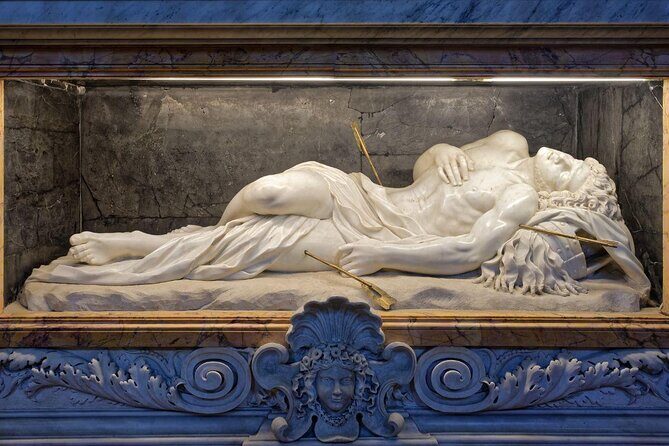
- Skip-the-line access at three attractions saves serious time in Rome
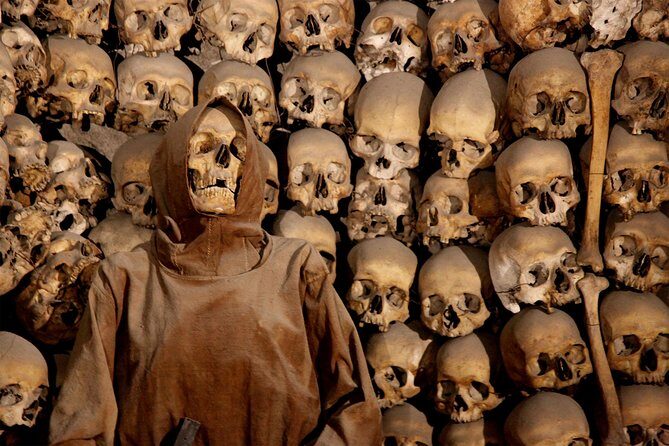
- Capuchin Crypt Bone Chapel built from the remains of nearly 4,000 monks
- Domitilla Catacombs with frescoes and early Christian symbols, guided through the tunnels
- San Martino ai Monti beneath the church: Baroque art plus early Christian layers and underground remains
- Group size max 25 helps the guide keep track of everyone and keep questions flowing
Three stops, one route that avoids the worst of Rome
This is a “connect-the-dots” kind of evening—or afternoon—tour. You start near Piazza Barberini at Fontana del Tritone, then move through three sites that are all underground or built over older layers. The big win is that the tour is designed to be compact: about 3 hours 30 minutes total (and roughly 2.5 hours if you book the after-hours version).
Between stops, you’re not stuck getting your bearings in traffic. Transfers are handled by a private air-conditioned coach, so you’re spending your energy where it matters: looking closely at the sites and listening to the explanations.
This format also keeps the experience from feeling random. The Capuchin Crypt focuses on death ritual and symbolism. The Domitilla Catacombs show early Christian burial practices under persecution. Then San Martino ai Monti gives you a layered “Rome timeline,” from early foundations to later Baroque decoration, plus underground remains.
You can also read our reviews of more tours and experiences in Rome.



Capuchin Crypt: the Bone Chapel and the audio-led story
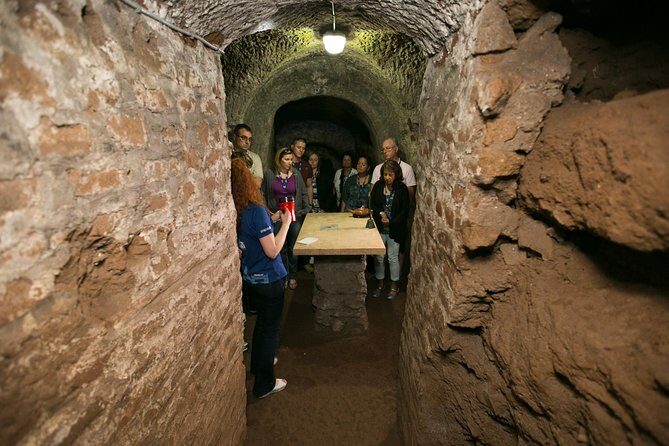
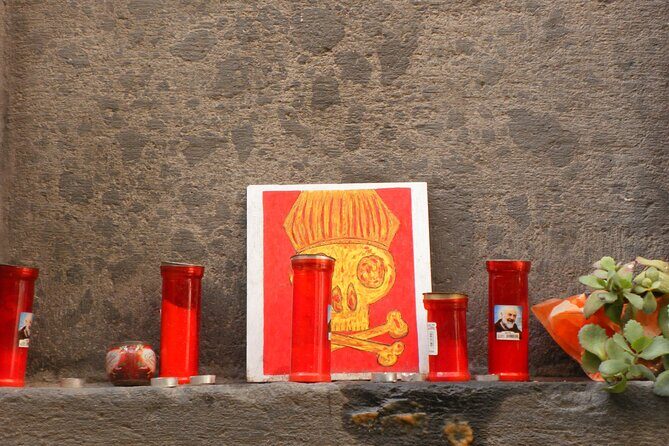
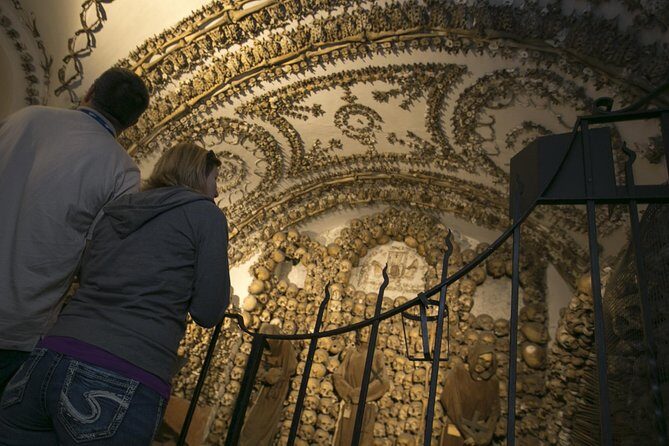
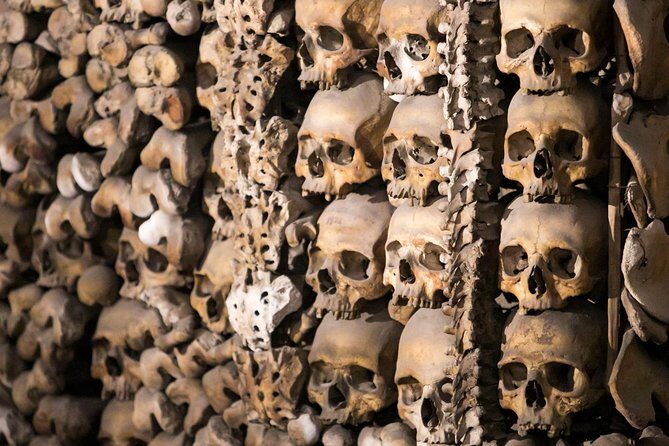
Your first stop is the Museum and Crypt of the Capuchins Friars, often called the Bone Chapel. Here’s the core idea: the Capuchin monks used the bones of nearly 4,000 of their brothers to create floor-to-ceiling designs. It’s unsettling in the way museums can be unsettling—art made out of mortality, not gore.
You’ll enter with admission included, and you’ll have time to explore using an audio guide. That matters. In spaces like this, you don’t want your guide talking at you nonstop. You want a way to pause, look, and then follow the explanation at your own speed. The tour format gives you that chance.
Practical tip: this is a stop where you should take your time on the first pass. Don’t rush to the most obvious arrangements. The “why” behind the practice is part of what the audio guide covers, and it lands better if you’ve already let the room sit with you.
A note from real-world experience in places like this: they can be cool and damp underground. One review specifically suggested dressing warm, and I agree. Bring a light layer, even in a mild season.
Domitilla Catacombs: walking corridors with early Christian symbols
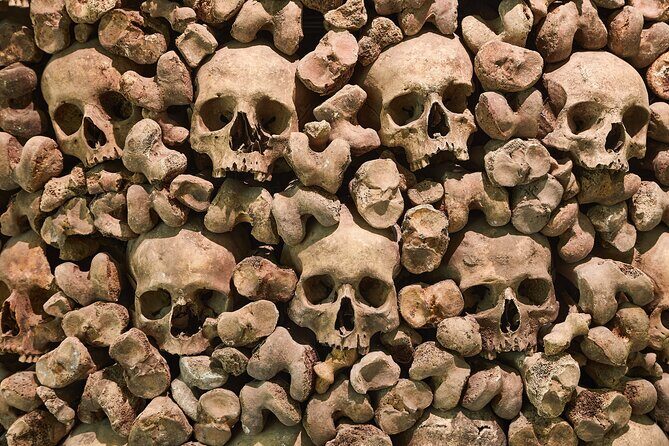
Next you go to Catacombe di Domitilla, one of Rome’s larger catacomb networks. This is where the tour shifts from death-as-symbol to death-as-history.
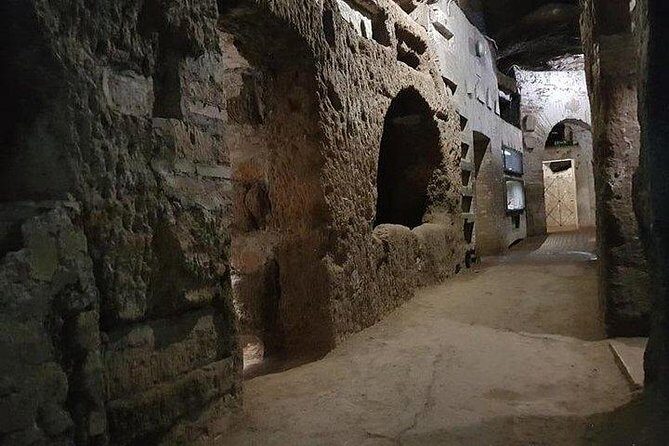
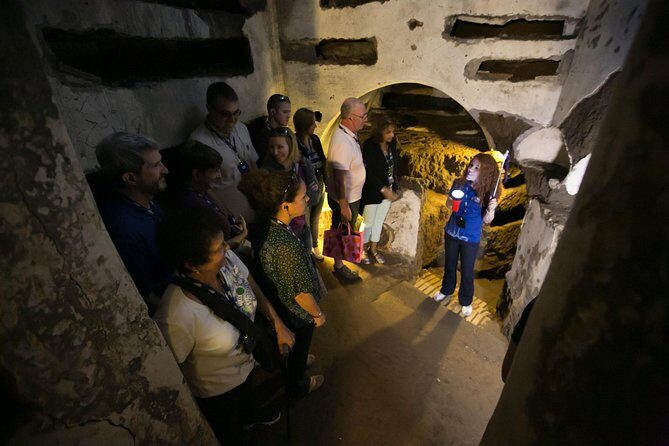
You descend into corridors carved into soft volcanic rock and learn how these spaces connect to the first Christians in Rome. You’ll see burial areas that doubled as worship spaces during periods when Christians were persecuted. You’ll also focus on the visuals that make Domitilla more than just “tunnels underground”: frescoes and early Christian iconography.
What I like about having a guide here is the context. Catacombs can feel like a maze even when you’re not lost. A good guide helps you understand what you’re looking at and why it mattered, instead of treating everything as an indistinguishable wall of stone.
This stop is also physically demanding in a way that surprises people. Narrow paths, steady walking, and underground stairs can add up. I’d plan for a moderate fitness level. If you know you get tense in tight, enclosed spaces, this part is where that matters most—so consider the suitability warning seriously.
San Martino ai Monti: Baroque frescoes above, early worship below
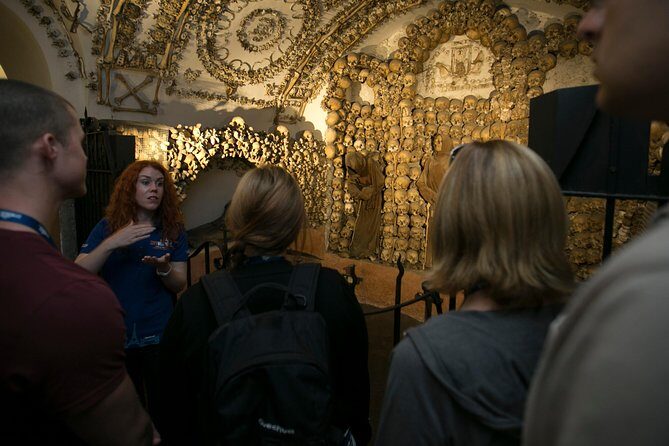
The final stop is Basilica dei Santi Silvestro e Martino ai Monti (often referred to as San Martino ai Monti). This is the tour’s “layers of Rome” payoff.
On top, you can admire Baroque-era frescoes. Underneath, the story goes older. The tour includes access to underground spaces connected to early Christian worship, including remnants of an early titulus—an early site for underground Christian gatherings. You’ll also explore ancient ruins beneath the basilica.
It’s a clever ending because it changes your frame of reference. Earlier stops were about death and burial. This one shows how religious spaces physically evolved on top of earlier communities. You don’t just walk from one attraction to another. You feel how Rome built itself again and again.
A heads-up for planning: on Sundays, the church visit is not guaranteed due to liturgical activities. If your schedule includes a Sunday, it’s worth keeping your expectations flexible.
Transfers, walking, and pacing: what to expect on the ground
Even though the tour is only about 3.5 hours, it doesn’t feel like a “sit and watch” experience. You’ll walk between locations and spend real time underground.
Transfers in a private air-conditioned coach are included, which helps. One review specifically mentioned getting rests on the bus between places, and that fits with the design here: you’re not constantly on your feet the entire time.
Still, you should build in buffer for Rome’s real timing. Underground sites involve security checks, crowds, and narrow routes. Reviews mention occasional delays and that busy periods can slightly reduce how long you spend inside some venues. The takeaway for you: don’t schedule a “must-be-there” appointment right after this tour. Give yourself breathing room.
And yes, the group is capped at 25 travelers, which helps. But some people still felt the group size could be large when moving through tight underground passages. If you dislike crowds at any scale, bring your patience along. This isn’t a quiet, slow museum stroll.



Dress code, no photos, and claustrophobia warnings you should not ignore
This tour includes multiple sacred or museum-like spaces with rules that are part of the experience. Plan for them before you arrive.
- Dress code: knees and shoulders must be covered for entry into some sites.
- No photos inside: the tour notes that you can’t take photos during the tour.
- Claustrophobia: it’s not suitable if you’re affected by claustrophobia.
That last point matters. Even if you’re not severely afraid, the catacomb environment includes enclosed stone corridors and underground stairs. If you know you’ll panic, it’s better to choose a different Rome experience.
Also, bring water if you tend to get lightheaded with underground walking. The tour includes multiple stops but doesn’t mention water being provided, so it’s smarter to show up prepared.
Price value: why $66.51 can make sense in Rome
At $66.51 per person, the value here is mostly about what you avoid and what you get included.
Included items you’d otherwise pay for separately:
- admission tickets for the Capuchin Crypt, Rome catacombs, and the San Martino ai Monti church (unless you choose after-hours)
- an English (or Spanish) speaking guide
- mobile tickets
- private air-conditioned coach transfers
If you try to DIY these stops, you’d spend time coordinating entry times, booking multiple tickets, and figuring out public transport or taxi logistics. Rome is manageable, but underground tours are where planning mistakes cost you the most time.
That said, this isn’t a “cheap and cheerful” tour. If you strongly prefer a totally free-form visit where you can wander without structure, you might feel constrained by a fixed route. Also, if you’re going when the sites are crowded, the tour length inside certain sections can tighten.
So I’d treat this price as paying for order: skip-the-line, guided interpretation, and transportation between sites.
After-hours (5pm): a quieter way to see the tunnels
If you hate daytime queues, the after-hours option is designed for you. It starts at 5pm, lasts about 2.5 hours, and ends at Piazza della Repubblica.
The core benefit is timing. Catacombs and crypts can feel even more intense in large daytime crowds. An evening schedule tends to feel calmer, and you get nearly the same “three stops” arc, just with less overall time.
Pick after-hours if:
- you want fewer crowds inside
- you like the idea of seeing underground Rome with softer, late-day energy
It also helps if you want a tour that ends closer to a central area for dinner plans, since Piazza della Repubblica is a very practical end point.
Who this tour fits best (and who should skip it)
This is a great match if you:
- like guided context and stories tied to what you’re seeing
- want underground Rome without spending hours planning
- enjoy unusual history (Capuchins, early Christian burial spaces, layered churches)
It may not be the best fit if you:
- have claustrophobia
- need lots of “free time” to wander and stop as long as you want in each room
- are traveling with very young kids (one review warned it isn’t for young kids, and the underground nature supports that)
Should you book it?
Yes, if you want a well-planned route through Rome’s darker underworld and you appreciate interpretation along the way. The combination of skip-the-line entry, guided storytelling, and included transfers makes the price feel reasonable for what you actually get in the field.
Also, take the practical warnings seriously. Wear the right clothes, plan for underground walking, and don’t force it if enclosed spaces make you anxious. If you do that, you’ll likely come away with the kind of Rome experience that sticks: bones turned into an artwork-like display, and early Christians leaving their visual marks in stone corridors beneath the city.
If you want a calmer visit, consider the after-hours slot. It’s a smart way to see the same core sites when Rome is less packed.
FAQ
What are the main stops on the tour?
You’ll visit the Museum and Crypt of the Capuchins Friars, the Catacombe di Domitilla, and Basilica dei Santi Silvestro e Martino ai Monti (with the church stop not included in the after-hours option).
How long is the tour?
The day tour is about 3 hours 30 minutes. The after-hours option runs about 2.5 hours.
Does the tour include skip-the-line access?
Yes. The tour highlights skip-the-line entry at three attractions.
What’s included in the price?
Your ticket includes an English (or Spanish) speaking guide, entrance tickets for the Capuchin Crypt and Domitilla Catacombs, and entrance to San Martino ai Monti for the day tour option, plus transfers in a private air-conditioned coach.
Is hotel pickup included?
No. The tour does not include hotel pickup and drop-off.
Where do I meet the tour?
Meet at Fontana del Tritone, Piazza Barberini, 00187 Roma.
Where does the tour end?
For the day tour it ends at Basilica dei Santi Silvestro e Martino ai Monti. For the after-hours option it ends at Piazza della Repubblica.
What dress code do I need?
Some sites require covered knees and shoulders.
Can I take photos inside the sites?
No photos are allowed inside the venues during the tour.
Is it suitable if I have claustrophobia?
No. The tour is not suitable for people who suffer from claustrophobia.
Is the church stop guaranteed on Sundays?
The church visits are not guaranteed on Sundays due to liturgical activities.