REVIEW · CATACOMBS TOURS
The Labyrinth of Rome between catacombs and ancient quarries
Book on Viator →Operated by Underground Rome · Bookable on Viator
Rome has a secret underground maze.
This tour takes you from daylight into the Sotterranei di Roma, where Roman labor carved tunnels for building materials and later layers became catacombs and other underground spaces. I like that it is not just a walk through dark hallways, it is a guided story you can follow, with highlights like chisel marks and burial tunnels that run for dozens of kilometers.
I also really like the small-team feel, with a maximum of 10 people, and the way guides such as Riccardo and Giuseppe explain what you are seeing in plain, usable terms. One practical consideration: you should plan for a decent trek before the underground starts, plus the underground itself can feel damp and cool, so bring a layer.
In This Review
- Key Things I’d Book This For
- Why This Underground Route Feels Like Rome, Not a Checklist
- Caffarella Park to the Underground Start: The Part You Should Plan For
- Sotterranei di Roma: Roman Quarries, Chisel Marks, and Real Texture
- Catacombs by Lamp Light: Burial Tunnels You Can Actually Follow
- WWII-Era Fungus Remains: When the Underground Keeps Writing
- Pagan Temple Spaces and the Mithraeum Connection
- What the Small Group of 10 Means for Your Experience
- Practical Tips That Will Make This Tour Easier
- Value and Price: Is $114.14 Worth It?
- Should You Book the Labyrinth of Rome Tour?
- FAQ
- Where does the tour start and end?
- How long is the Labyrinth of Rome tour?
- How much does it cost?
- What language is the tour offered in?
- Is the ticket mobile?
- How large is the group?
- Is service provided for people with service animals?
- Do I need good weather?
- Is free cancellation available?
- FAQ
- What happens if the tour is canceled because the minimum number of travelers is not met?
- Is it near public transportation?
- Is the tour suitable for most people?
Key Things I’d Book This For
- Max 10 people: more questions, less crowding when the rooms get tight.
- Caffarella Park warm-up: about a 1 km walk through a calmer part of Rome before going underground.
- Ancient tools made visible: chisel marks and stonework you can actually spot.
- Lamp-lit darkness: you cross the dark with an ancient Roman lamp, not just a flashlight tour.
- Multiple time periods in one route: Roman quarries, Christian catacombs, and a WWII-era fungus remnant.
Why This Underground Route Feels Like Rome, Not a Checklist
Most Rome tours give you one famous sight at a time. This one flips that idea. You get a sequence of underground spaces that show how the city kept reusing what earlier generations built. That reuse matters because it means the tour feels like a layered puzzle: Roman quarrying becomes burial space, and later eras leave their own marks behind.
I also like that the story stays tied to physical details. You will look at the stonework, the shapes of niches and passages, and the signs of human hands. That is how you remember it later. It is not only facts, it is the sense of scale: miles of tunnels dug for imperial construction and then repurposed over centuries.
If you are trying to escape the constant crowds of central Rome, this is a smart angle. The day starts with a peaceful park walk, then you shift underground where the air cools off and the pace slows.
You can also read our reviews of more tours and experiences in Rome.



Caffarella Park to the Underground Start: The Part You Should Plan For
Before you go into the tunnels, you cross Caffarella Park on a regenerating walk of about 1 kilometer (just over half a mile). This is not a long distance, but it is still a real warm-up. On hot Roman days, that surface walking can feel longer than you expect.
One review-based pattern to keep in mind: some people report a much longer walk to the underground entrance, around 45 minutes. That can happen depending on route pacing and how long you spend adjusting shoes, finding the meeting spot, or waiting for the group to assemble. The practical fix is simple: arrive on time, wear comfortable shoes, and don’t assume you can sprint through this section.
A few more good habits:
- Bring a light layer even if Rome feels hot above ground.
- Wear grippy footwear. The underground area is damp, and you do not want a slip.
- If you are minimizing walking that day, use public transit or a short taxi ride to get to the meeting point at Via Amedeo Crivellucci, 8.
Sotterranei di Roma: Roman Quarries, Chisel Marks, and Real Texture
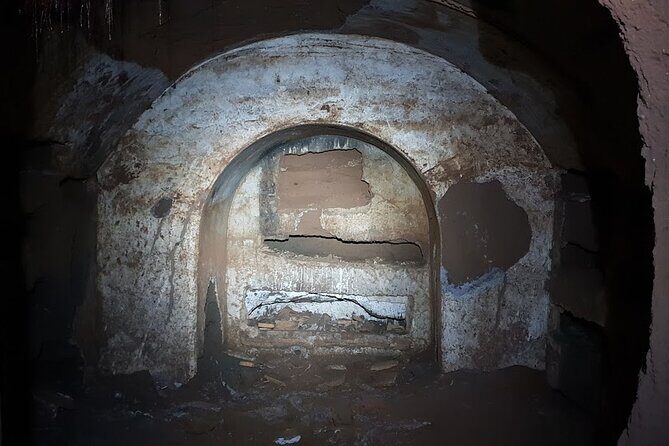
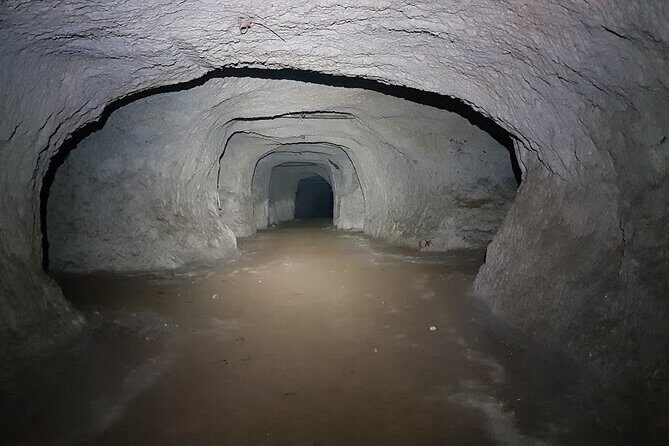
Once you reach the underground, the tour’s tone changes fast. You enter Sotterranei di Roma, an underground system created by digging tunnels to extract the materials needed to build the imperial city. The difference here is that you are not just reading about Rome’s building boom, you are stepping into the places where it happened.
You’ll notice the wall evidence of the people who worked there. The tour highlights chisel marks left by ancient laborers, and it treats those marks as a kind of map. In other words, you learn to look. That is the whole trick of the experience: after the first few minutes, you start seeing clues everywhere—small niches, stone surfaces, and how the space was cut and shaped for function.
There is also an important emotional shift. Quarries are not dramatic like a theater, but they are heavy with purpose. The tour leans into that: you see the stark light-and-shadow feel of the passageways, and the guide helps you picture daily work in cramped, harsh conditions.
Catacombs by Lamp Light: Burial Tunnels You Can Actually Follow
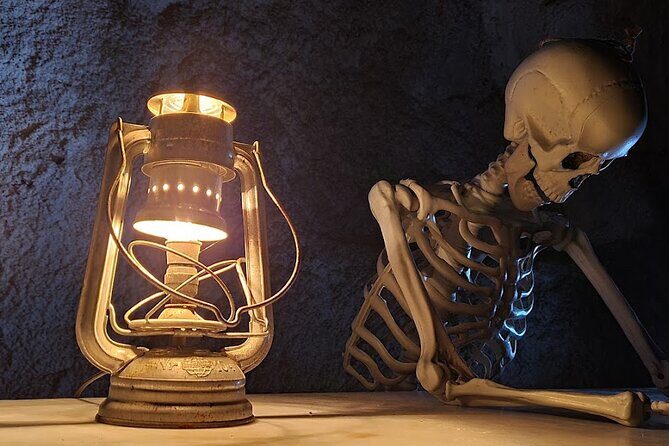
Next comes the catacombs area, where early Christians buried loved ones in long underground tunnels. This section is where the tour most strongly earns its name, because the space is designed for darkness. You do not just walk through it while the guide talks. You cross the darkness with an ancient Roman lamp, then continue with the group learning the logic of how these spaces were used.
One of the best parts is that the tour brings you closer to the burial tradition rather than treating it like a museum display. You hear about how burial worked in these underground routes and why the location mattered when you had limited options above ground.
It is also colder and more damp here than outside. A helpful review tip: bring a jumper or light jacket. People often end up putting one on partway through once they feel the underground humidity and temperature drop.
As you move through the catacombs, pay attention to the details the guide points out, like inspection wells and cut-out areas. Even if you are not a hardcore archaeology person, you will feel the difference between random tunnels and spaces deliberately shaped for human use.
WWII-Era Fungus Remains: When the Underground Keeps Writing
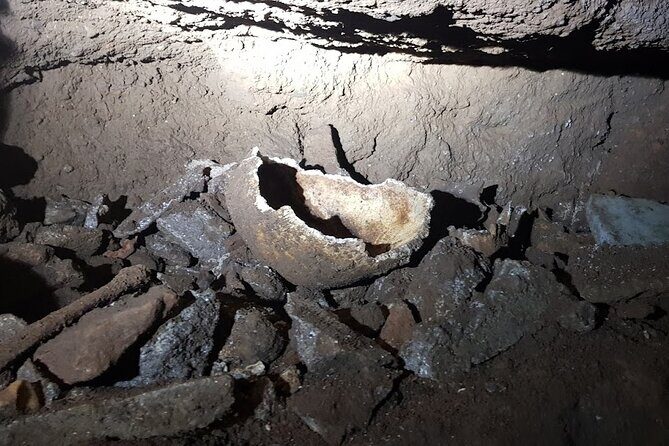
One of the more unusual highlights is stopping to see what remains of a fungus dating back to World War II. That detail may sound niche, but it changes how you think about the site. It shows that these underground spaces did not stop being useful once the Romans moved on.
Underground sites tend to stay active in new ways because they are protected from weather and extremes. The tour uses this point to connect past to more recent history, without turning the experience into a war museum. Instead, it feels like proof of resilience and reuse—Rome’s underground kept being part of life long after the first builders walked away.
If you are sensitive to air or stuffiness, plan for it. One comment noted poor air quality in parts of the route. You cannot fix that, but you can handle it: take your time, breathe normally, and let the guide’s pacing do its job.



Pagan Temple Spaces and the Mithraeum Connection
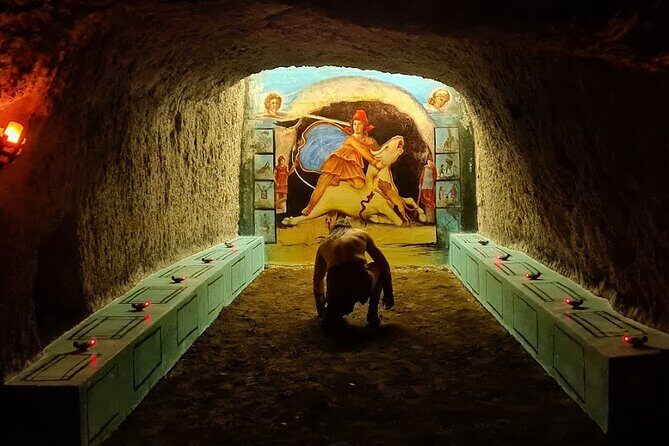
After the Christian burial areas, the tour ends with a pagan temple dug into the ground. The experience ties this into the wider picture of how Christianity spread in ancient Rome. The guide helps you understand the point of comparison: different belief systems used different spaces, and those spaces left physical traces you can still read.
A review detail that helps you picture the moment: you will see a Mithraeum example, and you will get context for what you are looking at. These rooms and passages are not generic caves. They were built for ritual space, and the tour treats that seriously, connecting the physical form to belief and practice.
You might also get a practical taste moment here. Some tours in this route include drinking Roman wine, described as mulsum—wine with honey and spices—paired with a story about Roman recipes. If that is part of your group’s schedule, it adds a “close the loop” feeling: you go from stone to senses.
What the Small Group of 10 Means for Your Experience
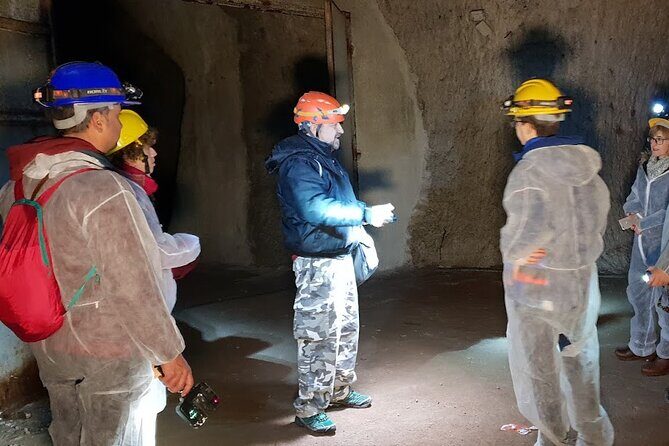
With a maximum of 10 travelers, this is not the kind of tour where you spend half the time waiting for your place in line. The guide can slow down when someone spots a detail on the wall. You can ask follow-up questions without feeling like you are holding the whole group hostage.
That matters most underground, where passages can feel narrower and the group spacing can get awkward. A smaller group also makes the lamp-light moments feel more personal. Standing in near-darkness while a guide explains burial routes and quarrying work is easier when you are not elbow to elbow.
Language is also a factor. The tour is offered in English, and the tour description emphasizes guides leading in English. In a small group, you typically get better clarity and fewer missed points than on bigger tours.
Practical Tips That Will Make This Tour Easier
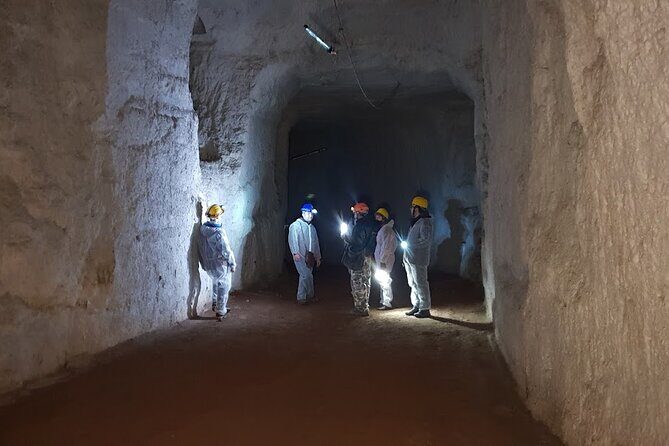
This is not a casual stroll. You are combining an above-ground park walk with a cool, damp underground route. A few practical moves can make the difference:
- Bring a jacket: underground gets chilly and very damp.
- Wear solid shoes: the floor can be uneven or slick.
- Plan your timing: the day starts with a walk, and some people report it taking close to 45 minutes depending on pace and conditions.
- Keep expectations realistic about visuals: one comment mentioned that some paintings may be modern, since they were not originally there. If you are expecting untouched frescoes only, you may feel let down. If you are there for the overall physical experience and the archaeology storytelling, you will likely be happier.
- Use transit smartly: the meeting point is near public transportation, and a short taxi or Metro ride can save you energy before the park walk.
One more value note: this tour is often booked about 59 days in advance. That is not a “must” rule, but it suggests demand. If you have a limited Rome window, booking ahead helps.
Value and Price: Is $114.14 Worth It?
At $114.14 per person for about 2 hours 30 minutes, you might wonder what you are actually paying for beyond the ticket. Here is how I think about the value:
You are paying for access to an underground space that is not part of Rome’s busiest postcard circuit. You are also paying for a guide who focuses on what you can see—chisel marks, stonework, niches, and the logic of the catacombs route—rather than only reciting dates.
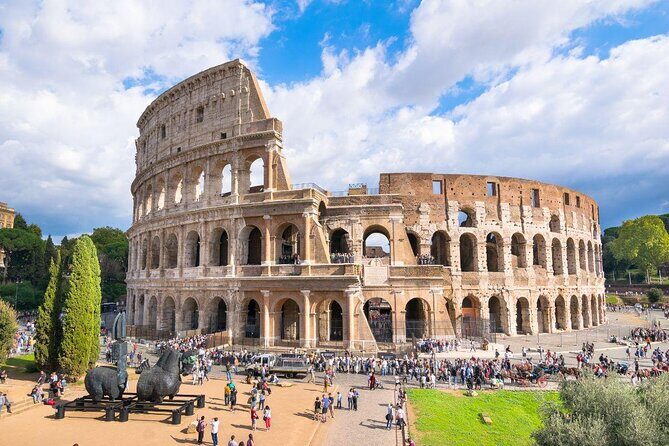
The best value is when you love this kind of museum-meets-fieldwalk experience. If you want only monumental ruins like the Colosseum, this may feel more quiet and less flashy. But if you like archaeology with atmosphere and a “follow the space” approach, the time and cost fit.
Also, the small group size is part of the value. You get more control over your experience, and less time squeezed in crowds.
Should You Book the Labyrinth of Rome Tour?
Book it if you want an off-the-beaten-path Rome experience with real physical archaeology: Roman quarries, Christian catacombs, and underground pagan space, all stitched together by an English-speaking guide like Riccardo, Giuseppe, Daniela, Roberto, or Maurizio.
Skip or reconsider if you:
- hate damp, dark spaces or are uncomfortable in poor air sections
- expect a short, easy walk with minimal effort
- want only original wall art with no modern reconstructions
One last honest note from the experience details you provided: there have been rare reports of a no-show, including a case where a last-minute booking created communication trouble. That does not mean it will happen to you, but it is a good reason to be ready to contact the tour operator if something seems off right at the start time.
If you can handle cool, damp underground and you like stories anchored to stone, this is a very strong pick for seeing a side of Rome most visitors miss.
FAQ
Where does the tour start and end?
The tour starts at Via Amedeo Crivellucci, 8, 00179 Roma RM, Italy and ends back at the same meeting point.
How long is the Labyrinth of Rome tour?
The duration is about 2 hours 30 minutes.
How much does it cost?
The price is $114.14 per person.
What language is the tour offered in?
It is offered in English.
Is the ticket mobile?
Yes, the tour uses a mobile ticket.
How large is the group?
The maximum group size is 10 travelers.
Is service provided for people with service animals?
Service animals are allowed.
Do I need good weather?
Yes. The experience requires good weather, and if it is canceled due to poor weather you will be offered another date or a full refund.
Is free cancellation available?
Free cancellation is available up to 24 hours in advance for a full refund.
FAQ
What happens if the tour is canceled because the minimum number of travelers is not met?
If the minimum number of travelers is not met and the tour is canceled, you will be offered a different date/experience or a full refund.
Is it near public transportation?
Yes, the meeting point is near public transportation.
Is the tour suitable for most people?
Most travelers can participate.