REVIEW · FULL-DAY
The Heart of Rome and its Treasures: Full-Day Tour with Lunch
Book on Viator →Operated by Welcome Italy · Bookable on Viator
Rome feels close-up on foot.
This full-day guided tour strings together the Heart of Rome with major stops in a way that makes the city’s different layers feel connected: Roman remains, the Jewish Ghetto area, and the Baroque big hitters like Piazza Navona, the Pantheon, Trevi Fountain, and Piazza di Spagna. I especially like that lunch at Cantina del Duca includes wine tasting plus Roman cuisine, so you’re not scrambling for food mid-sightseeing. I also like the skip-the-line element, since time matters when you’re trying to cover a lot. The main drawback to consider is that it’s still a 6-hour walking day with limited time at each stop, so you’ll want comfortable shoes and a moderate fitness level.
You’ll be moving through some of Rome’s most famous and most meaningful neighborhoods in a group capped at 24 people, which helps keep things friendly and manageable. Expect a professional guide, plus emergency support by WhatsApp. One more useful note: confirmation comes at booking, and the day before you’re asked to call to confirm pickup.
In This Review
- Key reasons this tour makes sense
- What this 6-hour Heart of Rome route gets right
- From Teatro di Marcello to Portico d’Ottavia and the Roman Ghetto
- Campo de’ Fiori and Giordano Bruno’s statue
- Isola Tiberina and the quiet power of Ponte Sisto
- Cantina del Duca lunch: wine tasting plus Roman comfort food
- Piazza Navona: stadium shape, Baroque drama, and crowd control
- Pantheon without the wait you don’t want
- Trevi Fountain: the coin tradition meets a powerful myth
- Piazza di Spagna and the Barcaccia Fountain ending act
- Price and Logistics: is $380.02 good value?
- Tips to enjoy it more (and feel less rushed)
- Should you book this Heart of Rome tour?
- FAQ
- How long is the tour?
- What time does the tour start and where is the meeting point?
- Is lunch included, and where do you eat?
- Does the tour include skip-the-line entry?
- Is there a vegetarian option?
- How many people are in the group?
Key reasons this tour makes sense
- Jewish Ghetto to Baroque Rome in one day: you go from centuries-old streets to grand monuments without wasting hours.
- Lunch is part of the plan, not an afterthought: wine tasting and Roman cuisine at Cantina del Duca.
- Skip-the-line museum access included: less time in queues, more time looking up at domes and fountains.
- Smarter sight choices: you pass iconic landmarks and also slower, local-feeling corners like Trastevere-adjacent spots.
- Smaller group size: max 24 travelers means it’s easier to hear the guide and keep pace.
What this 6-hour Heart of Rome route gets right
This tour is built for people who want Rome’s best-known sights plus the in-between places that give those sights context. In one day, you’ll touch ancient Rome, the Jewish quarter area, and the Baroque postcard scenes—without having to plan three separate outings.
Because it lasts about 6 hours, it’s not a slow stroll. You’ll cover a lot of ground, and you’ll feel it. The tour fits best when you’re okay with shorter stops and you want your guide to do the heavy lifting: turning landmarks into stories, and stories into meaning.
You also start at a very practical meeting point: Antico caffè del teatro di Marcello, Via del Teatro di Marcello 42. The 10:00 am start helps you get a chunk of the day before the hottest and most crowded waves hit the most famous squares.
You can also read our reviews of more tours and experiences in Rome
From Teatro di Marcello to Portico d’Ottavia and the Roman Ghetto
Early on, you anchor your day in a part of Rome that helps you understand why the city’s layout still matters. The first stop is near the Antico caffè del teatro di Marcello area, so you begin close to major ancient structures instead of starting far from the action.
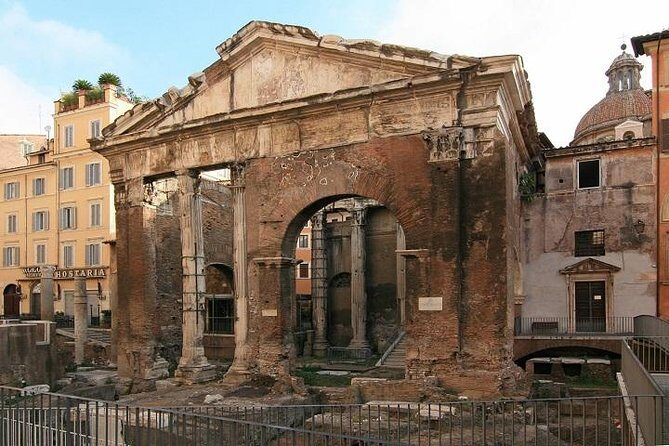
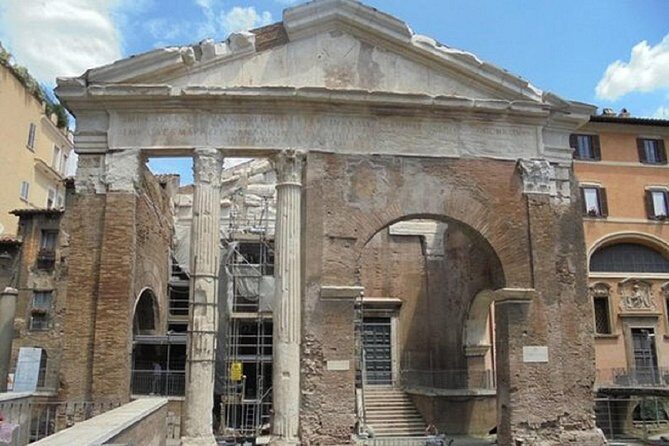
Next comes Il Portico Di Ottavia. This quadriportico complex is described as the only preserved portico of a much larger system that once bordered the northern side of the Circo Flaminio area. What I like here is the very specific historical layering: it was rebuilt by Augustus in the 1st century BC, then restored and partially rebuilt in 203 AD after a fire in 191 AD. Even without memorizing dates, you can feel the idea of Rome constantly being rebuilt on top of itself.
You’ll then head to Ghetto Ebraico di Roma, the Jewish quarter area near the Theater of Marcellus. This is one of the oldest Jewish quarters in the world, and it traces back to Pope Paul IV’s 1555 bull—after Venice had already established an early ghetto model. The tour framing makes it clear this wasn’t a vague “old neighborhood,” but a real, historical policy with long consequences.
Why this stop is valuable: it gives you a different lens. You’ll see the area today as lively and beloved, but your guide will connect it to why it became what it is. The main consideration is emotional weight. If you prefer only light, purely scenic sightseeing, plan for this portion to feel heavier than the fountains later in the day.
Campo de’ Fiori and Giordano Bruno’s statue
After the Ghetto area, you move into Campo de’ Fiori, a square that’s famous precisely because it’s different. It’s the only monumental square in the historic center that doesn’t host a church or basilica. It was ordered by Pope Calixtus III on the site of an ancient flower field, which explains the name, and it later became a hub for pilgrims with inns and hotels around the perimeter.
This square also has a darker side. Capital executions were held here, and that history is part of what makes the place feel like more than just a photo stop. A statue of Giordano Bruno anchors the area, giving you a physical landmark to tie the story together.
Campo de’ Fiori also functions like a magnet for daily life. The market traditionally happens in the morning Monday to Saturday, and the square became the market location in 1869 after it had previously been held in Piazza Navona. You’ll likely notice the energy around you even during a short guided stop.
The one drawback to keep in mind: this is one of Rome’s most social squares, so the crowd level can jump fast. If you’re prone to feeling rushed, try to focus on the guide’s walking explanations rather than trying to stare at everything at once.
Isola Tiberina and the quiet power of Ponte Sisto
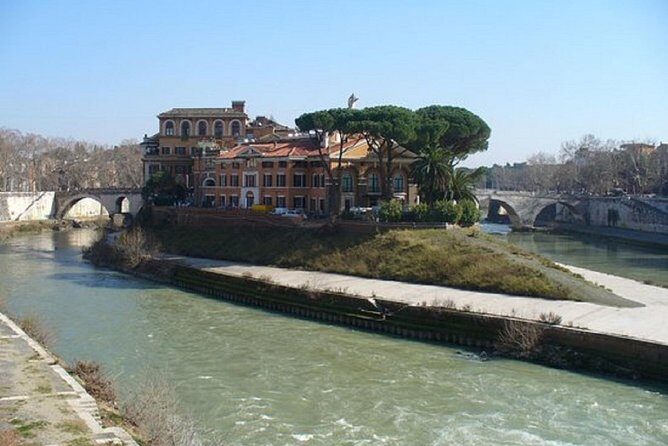
One of the smarter breaks in this itinerary is the move toward the Tiber River. You cross Ponte Sisto to see Isola Tiberina, the only urban island on the Tiber. The numbers are part of what makes it vivid: about 300 meters long and roughly 90 meters wide.
The island connects to both sides of the river. Toward Trastevere you have the Cestio bridge, and toward the Ghetto you have the Fabricio bridge, also known as Quattro Capi, named for the Roman herms decorating its parapets. It’s a small detour, but it helps you understand Rome’s geography—how neighborhoods relate to waterways, not just squares.
Then you land in Piazza Trilussa, in the heart of Trastevere, positioned in front of Ponte Sisto. This isn’t a giant tourist plaza. It’s a meeting place for young Romans and visitors, and it feels like a pause between the heavy hitters.
Piazza Trilussa is dedicated to the satirical poet Carlo Alberto Salustri, better known as Trilussa. One reason this stop works is because you’ll see a real civic landmark: the Acqua Paola fountain. Designed by architects Van Santen (Vasanzio) and Giovanni Fontana, it was commissioned by Pope Paul V Borghese in 1613 to supply the districts of Trastevere, Borgo, Regola, and Ponte. That means the fountain isn’t only decoration—it’s tied to how Rome worked and grew.
Practical consideration: because the day is packed, these river and neighborhood stops are usually brief. Come ready to absorb the main details in the moment, and save deeper exploration for a return trip.
Cantina del Duca lunch: wine tasting plus Roman comfort food
The tour includes a proper food break at Cantina del Duca, with a tasting of wines and Roman cuisine. This is a big deal for value because you’re not just getting “somewhere to eat.” The tasting is built into the experience, and it keeps you on schedule.
I like that the lunch is positioned after the morning’s history-heavy portion. You’ll have time to reset before you go back into Rome’s iconic monument zones later in the day. With 45 minutes allocated for the restaurant stop, it’s long enough to eat comfortably, but not so long that you fall behind the group.
There’s also a vegetarian option, as long as you advise the agency at booking. That’s worth prioritizing because Rome dining can be easy or frustrating depending on whether you plan ahead.
One tip: since the afternoon includes big viewing stops like the Pantheon and Trevi, don’t plan on a huge meal that makes walking harder. Take your time, pace the tasting, and keep water nearby if you tend to get dehydrated.
You can also read our reviews of more tours and experiences in Rome
Piazza Navona: stadium shape, Baroque drama, and crowd control
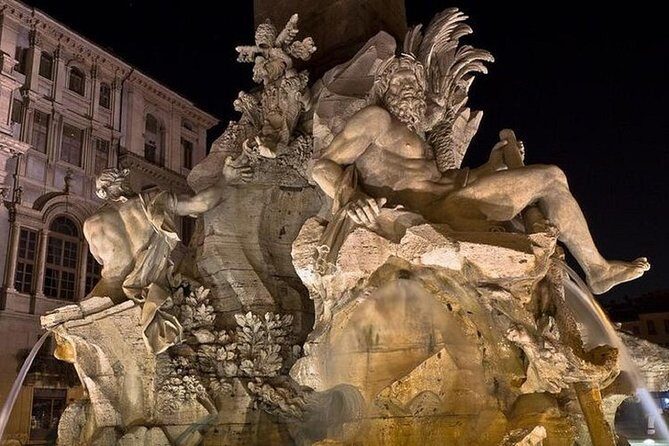
Piazza Navona is one of those squares that looks like it was designed for theatre, because it basically was. The square’s outline follows the old Stadium of Domitian, with the stadium shape still echoing in the plaza’s dimensions. You’re not just looking at buildings—you’re walking the footprint of ancient athletics and horse racing.
The church of Sant’Agnese in Agone dominates the space. It was begun by Carlo and Girolamo Rainaldi, then completed with major work by Borromini, making it one of Rome’s most striking Baroque structures. Next to it sits Palazzo Pamphili, adding to the sense that this is Rome’s stage set for grand architecture.
What I like about including Piazza Navona in this tour: it gives you a visual bridge between eras. After the Pantheon later, you’ll have seen how Rome used both ancient geometry and Baroque design language to create “wow” spaces.
The drawback is predictable: this is a famous square, so crowding is normal. If you want better photos, try to step slightly aside from the central flow when your guide explains key details.
Pantheon without the wait you don’t want
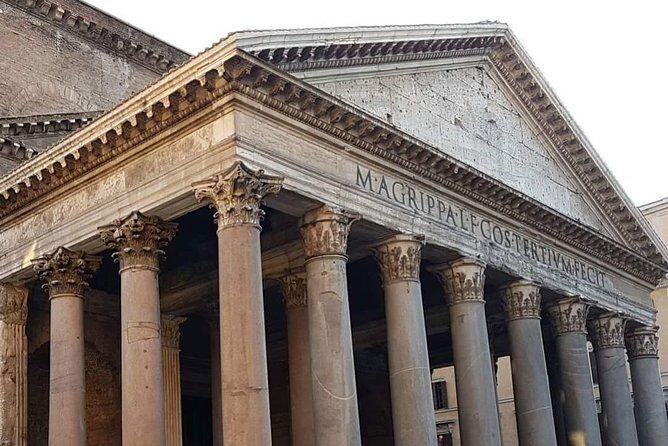
The Pantheon is one of those rare monuments where the hype is earned. It’s described as the most beautiful remnant of Roman antiquity and one of the best-preserved examples of Roman monumental architecture.
The story starts in 27 BC with Marco Vipsanio Agrippa, who built the first temple dedicated to all the gods. The current structure is due to Hadrian, rebuilt between 118 and 125 AD. The rebuilding included enlarging it and reversing its orientation, plus creating a large porticoed square in front.
Inside, you’re looking at a massive engineering feat: thick masonry walls, eight large pillars, and the weight of the hemispherical dome distributed through the structure. The dome’s scale is often compared to St. Peter’s Basilica because it’s that dramatic—even if you’re not studying construction, you feel the effect instantly.
This is also where skip-the-line access can make a real difference. Even if you’re focused on walking and views, not waiting matters. A short time saved here helps you enjoy Trevi and the Spanish Steps without feeling like you’re chasing daylight.
Consideration: the Pantheon interior can feel packed depending on when you arrive. Keep an eye on your group and your guide’s timing so you don’t get separated in the busiest moments.
Trevi Fountain: the coin tradition meets a powerful myth
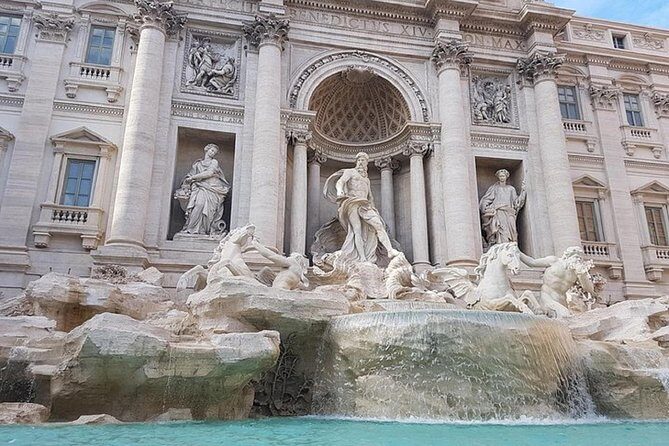
Trevi Fountain is Rome’s most famous fountain for a reason. It’s tied to local naming and street layout, and it’s anchored by dramatic sculpture: Oceanus in a shell-shaped chariot pulled by horses. If you’ve only seen it from postcards, being there in person still feels bigger than expected.
The tour’s framing explains that the name Trevi is connected to the confluence of three streets, or the triple outlet of water from the original fountain. The current fountain design is due to Pope Clement XII, who in 1732 selected architect Nicola Salvi’s plan.
The fountain is one of the easiest places to join the city’s traditions. Before leaving, you’ll likely hear the suggestion to throw a coin into the fountain as custom says you’ll return to Rome. For anyone in the mood for romance, the tradition of flipping a second or third coin is also part of the folklore.
Practical note: Trevi is also one of the hardest places to move freely once it’s peak time. Expect crowds and plan to watch the fountain, not fight for a clear line to photograph it.
Piazza di Spagna and the Barcaccia Fountain ending act
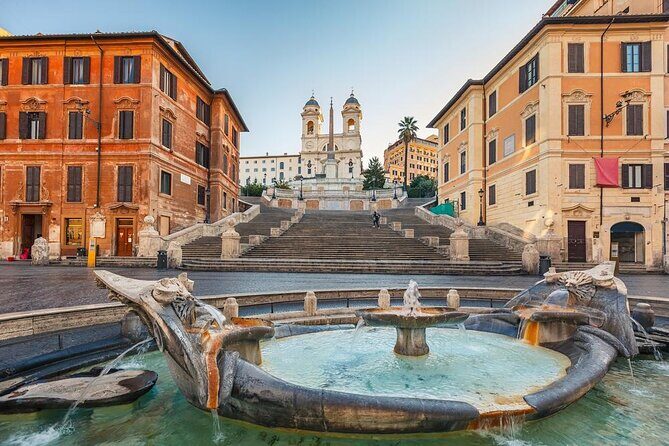
The tour finishes at Piazza di Spagna, one of Rome’s most visited squares. It’s famous for its position at the center of the city and for the iconic steps leading up to Trinità dei Monti.
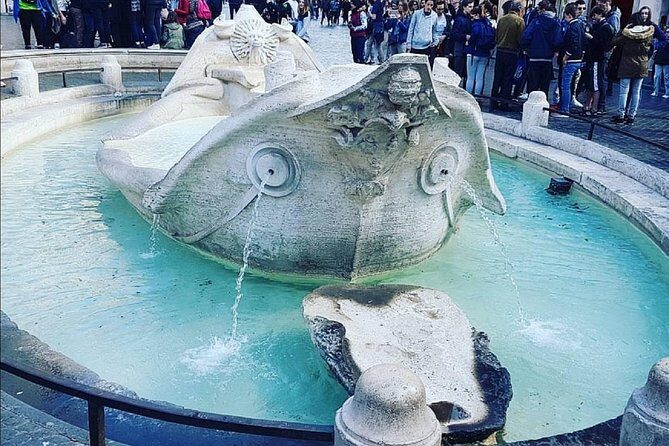
The centerpiece is the Barcaccia Fountain, designed and sculpted in Baroque style by Pietro and Gian Lorenzo Bernini. The fountain sits at the base of the stairway, and the piazza’s shape is often described as two triangles intersecting, giving it a butterfly-like outline. This is the kind of place where Rome’s Baroque design feels like it was built to be looked at from every angle.
Why this ending works: after a day of ancient and major monuments, you get a softer-feeling finish with the steps as a natural viewing frame. If you’re up for it, lingering a few minutes after the official end can help you catch a different vibe and pick a calmer corner for photos.
The only real drawback: late-day crowds can be intense here too. If you hate standing in place for long, keep expectations flexible and use your guide’s final explanations as the key moment.
Price and Logistics: is $380.02 good value?
At $380.02 per person for about 6 hours, this tour is not a budget outing. You’re paying for three things that add up in real life: a professional guide, included wine tasting and Roman cuisine, and skip-the-line access to museums.
That lunch component can turn this into a more efficient use of your day. Instead of hunting for a meal that fits your schedule and dietary needs, you’re scheduled into a restaurant tasting experience at Cantina del Duca. It’s also a chance to try Roman flavors in a structured setting while you’re still in sightseeing mode.
The skip-the-line museum access is the other major value driver. Rome is full of sites where waiting can drain your energy. If you’re visiting with limited time, reducing those waits can be worth a lot.
The final piece is group size. With a maximum of 24 travelers, the tour is big enough to feel social but small enough that it’s easier for the guide to manage the group pace. It’s listed as suitable for moderate physical fitness, so it’s aimed at most visitors who can handle city walking.
Tips to enjoy it more (and feel less rushed)
- Wear comfortable shoes. The day is built from multiple short segments stitched together.
- Bring a little flexibility. Some squares and churches can get crowded quickly, and your best move is to follow the guide’s flow.
- If you want the vegetarian option, make sure it’s stated when you book.
- If you plan to toss a coin at Trevi, have a small coin ready.
- One day before, call to confirm pickup as requested. It helps avoid last-minute confusion.
- Keep your phone accessible in case you need the emergency number that works via WhatsApp.
Should you book this Heart of Rome tour?
Book it if you want a guided day that mixes the Jewish Ghetto area, classic central Rome squares, and major monuments like the Pantheon and Trevi Fountain—plus an included lunch with wine tasting at Cantina del Duca. It’s also a good fit if you like having someone translate what you’re seeing, so you don’t end the day with photos but without understanding.
Skip it if you want deep, slow time at only one or two sites. This route moves. It’s designed to give you a strong sweep of Rome in one go, not to provide hours inside every major landmark.
If you’re the type who likes your history with a side of good food and you’re trying to make the most of limited time, this one is a solid match.
FAQ
How long is the tour?
It runs for about 6 hours.
What time does the tour start and where is the meeting point?
The start time is 10:00 am. The meeting point is Antico caffè del teatro di Marcello, Via del Teatro di Marcello 42, 00186 Roma RM, Italy.
Is lunch included, and where do you eat?
Lunch is included as a wine tasting and Roman cuisine stop at Cantina del Duca.
Does the tour include skip-the-line entry?
Yes. Skip-the-line entrance to museums is included.
Is there a vegetarian option?
Yes. A vegetarian option is available if you advise at the time of booking.
How many people are in the group?
The maximum group size is 24 travelers.