REVIEW · ROME
Small-Group Tour at Underground Temples of St. Clement’s Basilica
Book on Viator →Operated by TOURIKS · Bookable on Viator
This is Rome with the floor lifted. I like that St. Clement’s Basilica is run as a small-group tour with an expert guide, then sends you 14 meters down through layers of worship. You get both a Mithraic temple and early Christian frescoes in the same visit, so the history feels concrete, not abstract.
The main catch is the tight underground space and lots of steps, and the tour is not recommended for claustrophobia. Churches also have strict rules: knees-and-shoulders covered, phone on silence, and no photos inside.
In This Review
- Key highlights you’ll actually feel
- Why St. Clement’s Basilica feels different from other Rome church tours
- The 2-hour rhythm: what you’ll do and how it flows
- Stop 1 at San Clemente: the golden mosaic and why it matters
- Descending 14 meters: the early Christian world under the church
- The Mithraic temple beneath your feet (and that eerie river sound)
- Basilica di Santo Stefano Rotondo al Celio (optional upgrade)
- Price and value: is $70.81 worth it?
- Small-group comfort: max 16, headsets, and the real-world pace
- Practical tips so you don’t trip over the rules
- Who this tour suits best (and who should think twice)
- Should you book this Underground Temples tour?
- FAQ
- How long is the Underground Temples of St. Clement’s Basilica tour?
- What’s included in the price?
- Is the Santo Stefano Rotondo upgrade worth it?
- Where do I meet for the tour?
- Are photos allowed inside the churches?
- What should I wear or bring?
- Is this tour suitable for claustrophobia or children?
Key highlights you’ll actually feel
- 14-meter descent from a 12th-century basilica to a buried 4th-century church
- Two religions in one site: early Christianity plus a well-preserved Mithraic temple
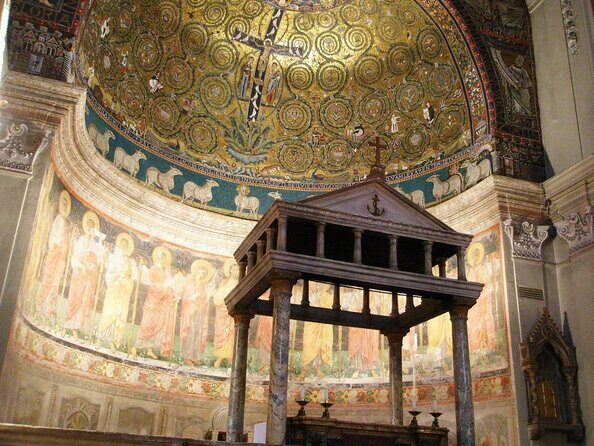
- Golden apse mosaic above ground that helps you understand what you’re seeing underground
- Headsets included, so you don’t have to crane your neck to hear the guide
- Optional Santo Stefano Rotondo upgrade for a circular church and colorful martyr frescoes
- Underground river atmosphere, adding a strange hush to the experience
Why St. Clement’s Basilica feels different from other Rome church tours
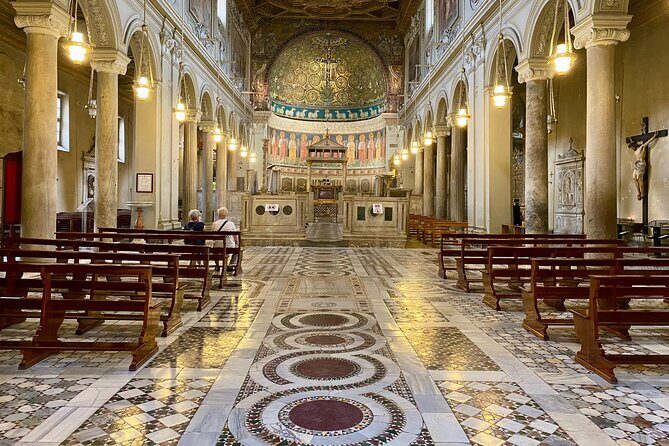
Most Rome church visits ask you to appreciate the building. This one asks you to watch the building evolve. St. Clement’s Basilica is layered like a historical sandwich: you start high enough to see the 12th-century church look and its famous apse mosaic, then you go down to find earlier Christian spaces built over even older homes and religious sites.
That vertical movement matters. When history is stacked in front of you, it stops being a vague timeline and becomes something you can picture: people kept rebuilding on the same sacred ground. You don’t just learn dates. You watch how styles, beliefs, and priorities changed over centuries.
I also like the tour pacing. It’s limited to a maximum of 16 travelers, and you’re given headsets. That combination makes it easier to ask questions and hear the guide clearly, especially in the underground sections where the acoustics can get strange.
You can also read our reviews of more tours and experiences in Rome.



The 2-hour rhythm: what you’ll do and how it flows
Your visit is built around one main anchor: St. Clement’s Basilica. It runs about 2 hours total, with Stop 1 taking about 1 hour. If you choose the optional upgrade, you add Basilica di Santo Stefano Rotondo al Celio for about 45 minutes (the order can flip depending on scheduling).
Here’s the practical way to think about the timing: you’ll have time to look up at the basilica above ground, then time to explore the underground level in a guided, step-by-step way. That matters because the site is compact in places, with stairs and narrow passageways. Trying to do it on your own can mean missing the connections between the fresco scenes, the layers of construction, and the Mithraic section.
Also, since photography inside the basilicas is not allowed, your “souvenir” will be what the guide helps you notice. This is one of those tours where listening pays off.
Stop 1 at San Clemente: the golden mosaic and why it matters
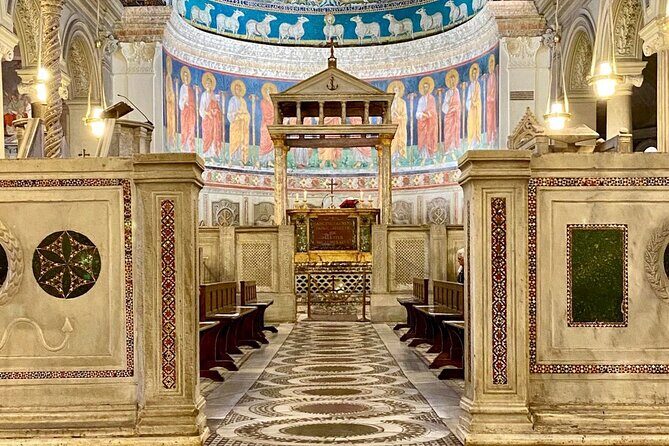
The tour begins at Piazza di San Clemente. From there, you start at the 12th-century basilica and work your way into the story from the top. Expect the guide to point you toward the golden mosaic in the apse, and to explain its spiritual meaning in the context of later Christian worship.
Why do this first? Because the upper church is your visual reference point. You see what the site looked like when it was built and maintained as a Christian basilica, with the mosaic creating a focal mood. Then, when you descend, the guide can make the switch from art to archaeology feel smooth instead of random.
If you’re someone who likes structure—where the guide tells you what to look for before the real chaos starts—you’ll probably enjoy this setup. Guides who have led this tour include Francesca, Tom, and Ernesto, and their style (based on their credited histories on this tour) focuses on explaining symbolism, not just facts.
Descending 14 meters: the early Christian world under the church
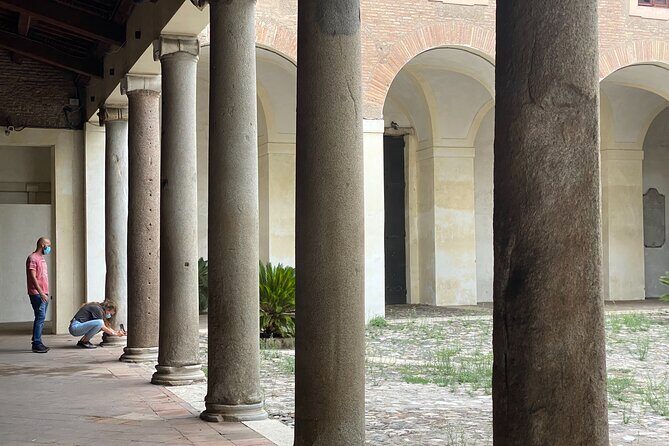
After the above-ground intro, you descend 14 meters beneath St. Clement’s. This is the core experience. Underground, you’ll find a 4th-century underground church, built directly on top of St. Clement’s home (St. Clement is described here as the third pope of Rome).
The guide’s job is crucial at this point. Early Christian frescoes can be overwhelming when you’re staring around trying to figure out which scene is which. With a guide, you get the meaning behind the imagery—martyrs’ stories and the struggles early Christians faced. You’ll also get a sense of how people used this space, not just what it contains.
One reason this visit hits harder than typical museum stops: you’re not walking through a climate-controlled gallery. You’re moving through the physical remains of worship spaces where people once lived, prayed, and (in the stories) suffered.
Practical reality check: the underground areas are tight and the route includes many steps and stairs. Wear comfortable shoes. If you’re prone to panicking in confined spaces, this is where the tour can become stressful.
The Mithraic temple beneath your feet (and that eerie river sound)
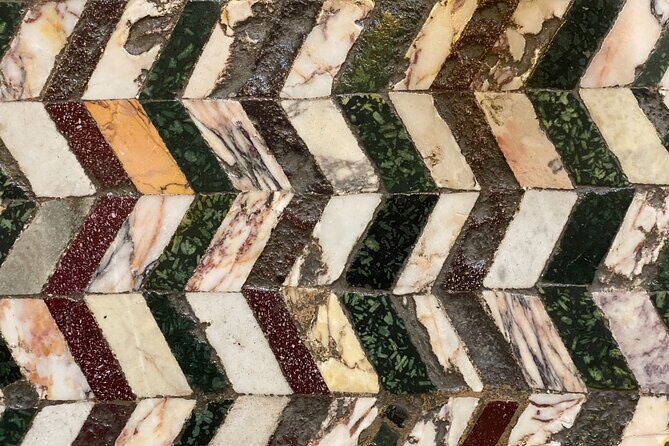
Keep going underground and you’ll encounter one of Rome’s best-preserved Mithraic temples. This is the part many people don’t expect: a major layer of the site is connected to the Mithraic cult, which thrived before Christianity rose to power.
The guide connects the dots here—what the cult believed, what rituals mattered, and why the temple survives where it does. You’re not just looking at old stone. You’re being helped to imagine a whole set of practices that came before the Christian structures you saw above.
There’s also an atmosphere detail that helps the whole experience click: the site includes an underground river, which creates an unsettling, mysterious ambiance. Even if you don’t care about mythology, that environmental touch makes the space feel alive in a very different way than an outdoor ruin.
If your favorite Rome sights are the ones that show everyday complexity—where different faiths and communities overlapped—this Mithraic section is the big payoff.



Basilica di Santo Stefano Rotondo al Celio (optional upgrade)
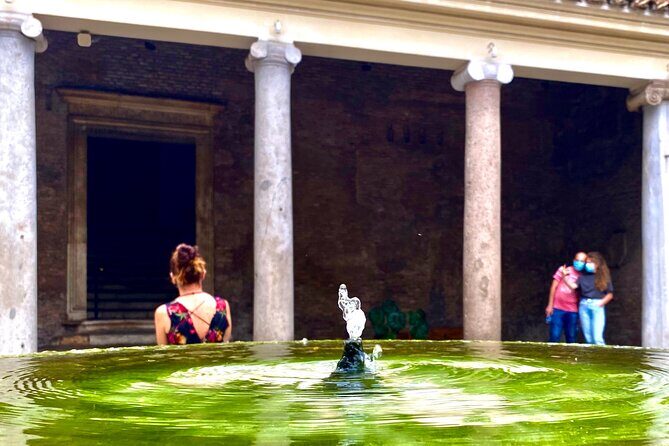
If you add the upgrade, you visit Basilica di Santo Stefano Rotondo al Celio after (or sometimes before) St. Clement’s. Plan on about 45 minutes.
This church is known for its circular design—a distinct architectural choice that changes how you experience the interior. Instead of the visual pull of a mosaic apse, you’re looking at colorful frescoes that depict scenes of early Christian martyrs. The guide will connect those images to stories of saints enduring trials for their faith.
One important note for families: the frescoes inside Santo Stefano Rotondo depict graphic scenes of martyrdom, and the tour data says they may not be appropriate for children. If you’re traveling with kids, I’d treat this as a “consider carefully” situation rather than a casual add-on.
Also, the tour operator states the order and ending point may vary with scheduling. So if you have timed plans after the tour, build in a little slack.
Price and value: is $70.81 worth it?
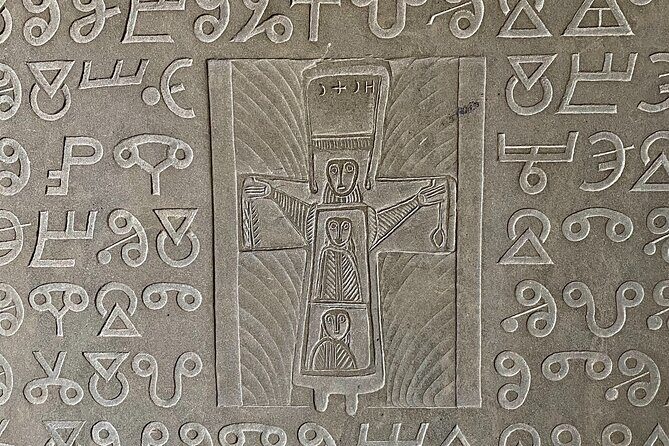
At $70.81 per person for about 2 hours, the value depends on what you want most: interpretation and access, not just sight-seeing.
Here’s what you’re getting for your money, based on the tour inclusions:
- An expert live guide
- Entrance fees to the Basilica of San Clemente
- Headsets so you hear clearly
- A luggage deposit at the office during the tour
- The guided visit to Santo Stefano Rotondo only if you choose that option during purchase
That combo is why this price can feel fair. Underground Roman sites are easy to miss without a guide. The headsets matter too, because hearing the story makes the underground sections much more meaningful. And entrance fees aren’t just a formality here; the whole point is access to the stacked spaces that are hard to appreciate alone.
Would I recommend it at full price? If you’re interested in how pagan and early Christian worlds overlapped, yes. If you only want a quick church photo stop, you’ll probably feel rushed.
Small-group comfort: max 16, headsets, and the real-world pace
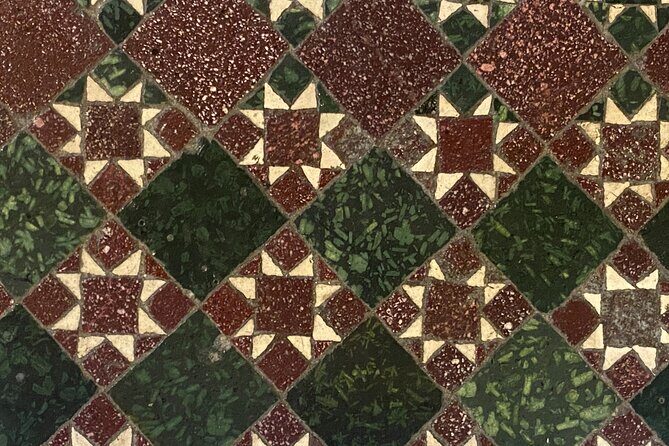
A group size of 16 travelers max is a sweet spot for a site like this. Big groups can turn churches into a shuffle. Here, the smaller size keeps the experience more attentive, especially underground where space tightens and people tend to slow down.
Headsets are included. That sounds like a minor perk, but it’s actually a quality-of-visit upgrade. Underground sections can be acoustically messy, and you don’t want to miss the guide’s explanations while you’re trying to figure out what you’re looking at.
In the same spirit, the tour also suggests bringing your own headphones to minimize plastic waste. So if you travel with earbuds anyway, it’s an easy win.
Practical tips so you don’t trip over the rules
These churches are strict, and they mean it. A few things will help you avoid last-minute frustration:
- Dress code: knees and shoulders covered
- Phone rule: put your phone on silence before entering the basilicas
- Photos/filming: not allowed inside the basilicas
- Bring: comfortable shoes for many steps and stairs
- If you’re planning what to carry: there’s a luggage deposit in the office for the tour duration
- Pets: not allowed inside the churches
Also, photography rules matter because this tour is about interpretation. Instead of trying to capture every view, focus on the scenes the guide points out. You’ll remember them later more clearly than a blurry screen photo.
Who this tour suits best (and who should think twice)
This is a strong fit if you:
- Love Rome for its layers—where one era builds on the next
- Want both early Christianity and Mithraic religion in a single visit
- Enjoy having a guide help you interpret art and symbolism
- Prefer a small group and clear audio (headsets)
It’s a tough fit if you:
- Have claustrophobia (the tour is explicitly not recommended)
- Get uncomfortable with tight spaces and lots of stairs
- Are looking for a quick stop without rules (no photos, phone silence, dress code)
For families, Santo Stefano Rotondo’s martyr scenes are worth considering carefully. The guide explanations can be fascinating, but the imagery can be intense.
Should you book this Underground Temples tour?
I’d book it if your idea of value is this: you want the best teacher for a hard-to-understand site, and you want access to both the Christian and Mithraic layers without guessing what you’re seeing. The 14-meter descent, the early Christian fresco stories, and the Mithraic temple are the kind of experience that changes how you look at Rome’s churches afterward.
Skip or reconsider if you hate tight spaces, dislike stairs, or want to take lots of photos. Also, if you’re not into religious art and symbolism, you might feel the tour moves too much by explanation rather than by free-roaming time.
FAQ
How long is the Underground Temples of St. Clement’s Basilica tour?
The tour is about 2 hours approximately. The St. Clement’s portion is about 1 hour, and the optional Santo Stefano Rotondo add-on is about 45 minutes.
What’s included in the price?
You get an expert live guide, entrance fees to the Basilica of San Clemente, a luggage deposit in the office for the tour duration, and headsets to hear the guide clearly. The Santo Stefano Rotondo guided visit is included only if you select the option during purchase.
Is the Santo Stefano Rotondo upgrade worth it?
If you choose the upgrade, you’ll get a guided visit to Basilica di Santo Stefano Rotondo al Celio. It has a circular design and frescoes depicting early Christian martyrs. Admission for Santo Stefano Rotondo is listed as free.
Where do I meet for the tour?
The tour starts at Piazza di San Clemente (Piazza di S. Clemente, 00184 Roma RM, Italy). The activity ends in a different location, and the exact end point depends on details provided for your booking.
Are photos allowed inside the churches?
No. Photography and filming inside the basilica’s is not allowed.
What should I wear or bring?
You need a church-appropriate outfit with knees and shoulders covered. Wear comfortable shoes for stairs. Put your phone on silence before entering. The tour also recommends bringing your own headphones.
Is this tour suitable for claustrophobia or children?
It’s not recommended for customers with claustrophobia. For children, the Santo Stefano Rotondo frescoes depict graphic scenes of martyrdom and may not be appropriate for them.