REVIEW · ROME
Small Group Rome’s Jewish Ghetto and Trastevere Tour
Book on Viator →Operated by City Stories Tours · Bookable on Viator
Rome’s backstreets hold big stories.
This small-group tour links the Jewish Ghetto to Trastevere in about 2.5 hours, with a smart mix of archaeology, street-level history, and neighborhood wandering. You’ll pause for iconic spots like Teatro di Marcello and Il Portico di Ottavia before you get to the streets where Jewish life in Rome shaped centuries of change. Limited to a maximum of 15 people, it’s the kind of route where your guide can actually answer questions without rushing you.
I love how the pace gives you time to look, then time to understand. Two highlights for me are the guide-led story thread that treats the Ghetto’s history with care, and the way the route blends big landmarks with everyday details, including a classic fountain stop and an optional break by Isola Tiberina.
One possible drawback: you’ll see the Great Synagogue area from the outside only. If you want interior access, this route won’t be your match, and you should plan a separate stop if that matters to you.
In This Review
- Key things that make this tour worth your time
- A Route That Connects Two Rome Neighborhoods Fast
- Meeting Point and How the Walk Actually Fits Together
- Teatro di Marcello: A Roman Theater That Still Feels Alive
- Il Portico di Ottavia: When Buildings Become a Timeline
- The Roman Ghetto: Walking Through Over 2,000 Years
- Fontana delle Tartarughe: A Small Fountain With a Big Backstory
- Tempio Maggiore di Roma: Synagogue Exterior, Meaning Inside the Details
- Trastevere in One Hour: Alleyways, Bohemian Energy, and Real Feel
- Isola Tiberina Break: Gelato or Coffee, Plus 2,500 Years of Stories
- Pont Fabricius: One of Rome’s Oldest Bridges
- Price and Value: What $36.05 Buys You
- Who Should Book This Tour (and Who Might Pass)
- Should You Book It? My Practical Take
- FAQ
- How long is the Jewish Ghetto and Trastevere tour?
- What is the price per person?
- Is the tour limited to a small group?
- Does the tour include entry into the synagogue?
- Where does the tour start and end?
- Can I cancel for a full refund?
Key things that make this tour worth your time
- Small group of up to 15 for a more personal pace and better Q&A
- Ghetto focus with real street context, not just names and dates
- Trastevere wandering that feels like a neighborhood walk, not a checklist
- Multiple “photo + meaning” stops, including a fountain and the synagogue exterior
- Isola Tiberina break option so you can reset with gelato or a drink
A Route That Connects Two Rome Neighborhoods Fast
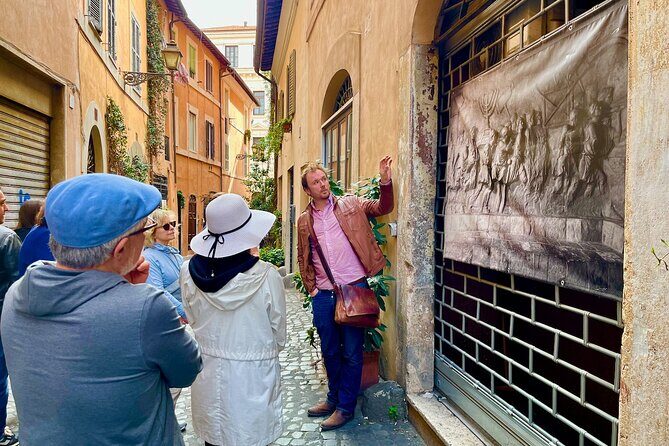
This is a tight but satisfying walk: about 2 hours 30 minutes, starting in Campitelli and ending in Trastevere. The route is designed to move you through layers of Rome in a way that feels chronological, even though you’re physically hopping between places.
You start with Roman monuments, then shift into the heart of the Ghetto, and finally head into Trastevere’s alleyways. It’s a great format if Rome’s history can feel like a blur. Here, you get a storyline you can follow with your feet.
The maximum group size is 15, which matters more than it sounds. With a small group, your guide can slow down at interesting corners and handle questions without turning the tour into a sprint.
You can also read our reviews of more tours and experiences in Rome.



Meeting Point and How the Walk Actually Fits Together
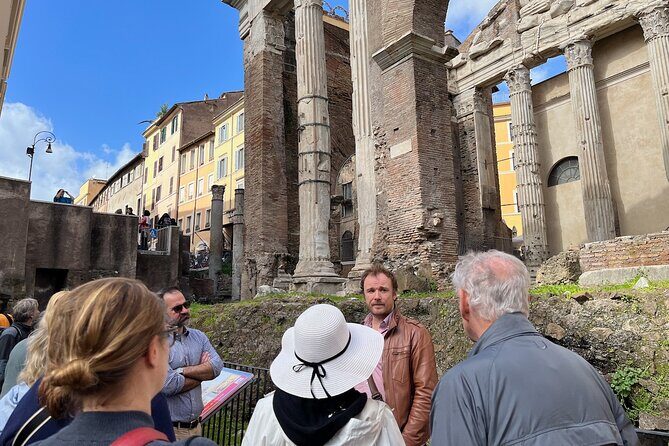
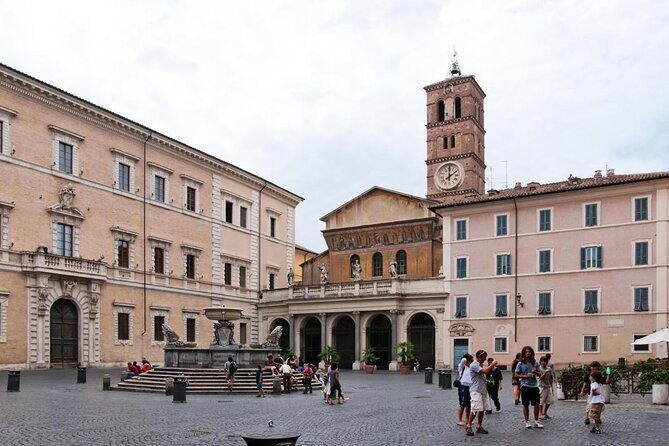
The tour starts at Saint Rita of Cascia in Campitelli, Via Montanara, 00186 Roma and ends at Piazza Trilussa, 00153 Roma in Trastevere. The end point is helpful because Piazza Trilussa is a natural launchpad for the evening vibe in Trastevere.
You’re also told it’s near public transportation, so you’re not stuck figuring out a far-flung pickup point. Still, do give yourself a little buffer to find the exact start area, since Rome streets can be confusing even when you’ve got the right neighborhood.
Also note the tour uses a mobile ticket, and confirmation is received at booking. That’s one less thing to worry about when you’re already juggling museum lines and dinner reservations.
Teatro di Marcello: A Roman Theater That Still Feels Alive
The first stop is Teatro di Marcello, a major Roman ruin where you can see how the city used architecture to shape public life. Even without going inside a museum, the scale is impressive, and it gives you a baseline for the rest of the walk.
Your guide pauses here to explain why it’s special. This is a smart opener because it tunes your eyes. Instead of treating the stones as background, you learn what to look for—how Roman design made civic space feel permanent.
Practical win: this stop is free and only about 5 minutes. It won’t eat your time, but it sets context before the tour turns toward the Ghetto.
Il Portico di Ottavia: When Buildings Become a Timeline
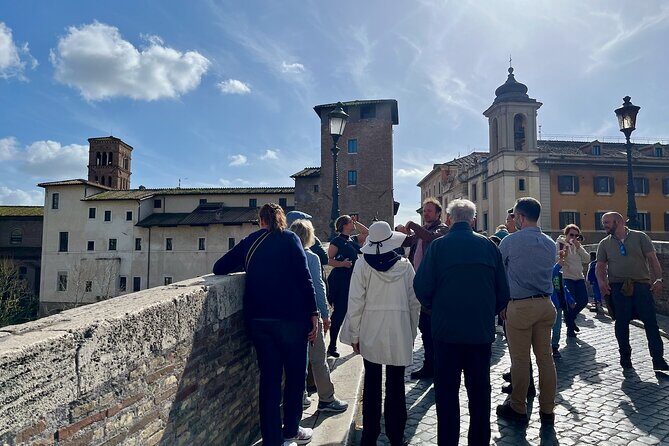
Next up is Il Portico di Ottavia. This is one of those places where a structure can feel like a history textbook written in stone. Your guide highlights how its role and form changed over about 2000 years, starting from its foundation in the 1st Century BC and continuing into what you see today.
This is where I start appreciating what good guiding can do. Without context, you might walk past a complex facade and think it’s just another Roman fragment. With the explanation, the building becomes a timeline: old foundations, later layers, and shifting uses across centuries.
Again, it’s a short pause of about 5 minutes, with no admission ticket needed for this stop. It’s the kind of stop that keeps momentum while still packing in meaning.
The Roman Ghetto: Walking Through Over 2,000 Years
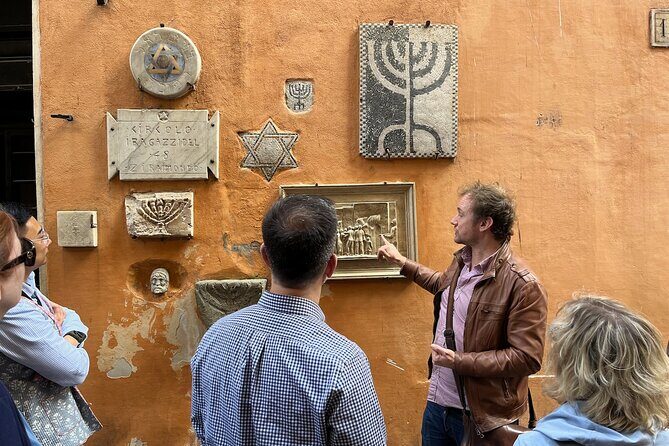
Then you reach the main event: the Roman Ghetto. The tour focuses on the Jewish community’s history, centered in the Ghetto area, spanning over 2000 years. This isn’t presented as a quick culture pop-in. It’s framed as a real relationship between communities—through change, pressure, and resilience.
What makes this stop work is the way it connects history to street shapes. You’re not just learning facts. You’re learning how the neighborhood’s layout and landmarks matter when you’re trying to understand how life operated under different rules across time.
The guides on this route are known for telling stories with respect and clarity, and for making the subject feel human rather than textbook-only. If you’re hoping for an orientation to the complicated Jewish-Roman story—without it turning dry—this is the portion that usually hits hardest.
It’s allotted about 50 minutes, which is a solid amount of time for a walking history segment in a dense area.



Fontana delle Tartarughe: A Small Fountain With a Big Backstory
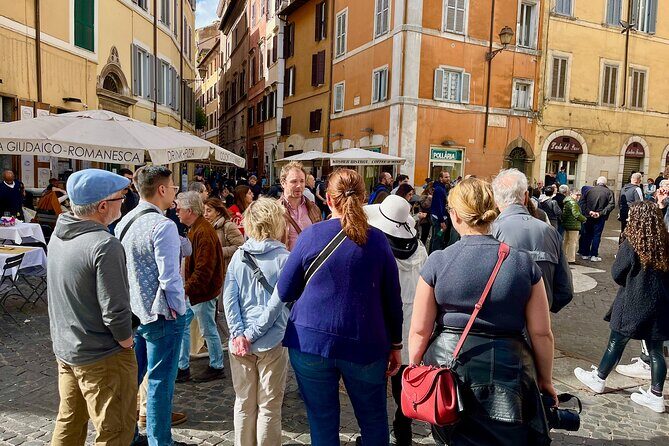
After the Ghetto, you get a breather at Fontana Delle Tartarughe, one of Rome’s beautiful smaller fountains. The stop lasts about 5 minutes, and your guide explains the story behind it.
Why this matters: after heavy history, a fountain stop can feel like a reset. You get something visual and memorable, and you also get reminded that art and public life continued alongside social change.
It’s also a quick stop that doesn’t derail your schedule. If you’re the type who likes to take photos but wants more than just a pretty picture, this fits.
Tempio Maggiore di Roma: Synagogue Exterior, Meaning Inside the Details
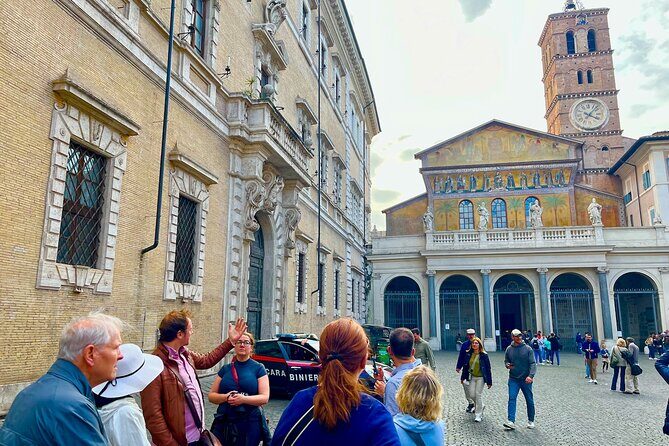
You’ll then see the Tempio Maggiore di Roma from the outside. The tour includes an explanation of the Great Synagogue’s history and the subtle meanings behind its decoration and construction, but it does not include entry.
This approach can be a plus if you prefer street-level context. From outside, you can still understand what the building communicates. And your guide can point out design choices you might miss if you were scanning only for dramatic photo angles.
It’s about 5 minutes, free, and it keeps the flow moving toward Trastevere. If interior visiting is your top priority, plan a separate visit. This tour is about context on the street, not ticketed access.
Trastevere in One Hour: Alleyways, Bohemian Energy, and Real Feel
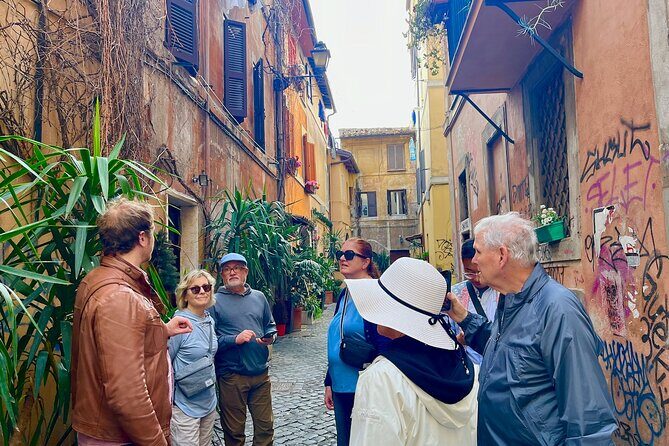
Finally, you get to Trastevere, and this is where the tour turns from history lecture to neighborhood stroll. The schedule gives you about 1 hour, and the focus is on wandering the small alleyways and charming streets while learning why the area still feels magical today.
Trastevere has a long reputation for artful energy and bohemian vibes, and this tour leans into that atmosphere. You’re not just walking through it. You’re learning the backstory while you’re in it—how the neighborhood formed its identity and why it stays a magnet.
This is also a good part of the day to ask route questions or food questions, because your guide is already thinking about what you’ll do next. The best value here is that you finish the tour knowing where you are and what to try on your own.
Isola Tiberina Break: Gelato or Coffee, Plus 2,500 Years of Stories
At Isola Tiberina, Rome’s small island in the Tiber, the tour offers an optional break for gelato or coffee/drinks. The stop is about 15 minutes.
The guide then shares stories about this tiny place, spanning over 2500 years. Even if you just stand at the river edge for a few minutes, the island context helps you see the Tiber as more than a backdrop. It becomes part of the city’s long-term system of crossings, landmarks, and movement.
Practical note: this is a moment to slow down, hydrate if you need to, and reset your feet. It also breaks up the walk so the final stretch back toward your end point feels easier.
Pont Fabricius: One of Rome’s Oldest Bridges
To close out the route with a classic photo-worthy stop, you reach Pont Fabricius, one of Rome’s oldest bridges. Your guide explains why it’s significant to the city.
This final stop is brief—about 5 minutes—but it’s a strong ending beat. Bridges are natural story anchors in Rome: you can connect them to trade, travel, river history, and how the city’s geography shaped life.
Then you finish at Piazza Trilussa in Trastevere, where you can keep exploring on your own.
Price and Value: What $36.05 Buys You
At $36.05 per person for about 2.5 hours with an expert guide, this lands in the “good value” category for central Rome walking tours. Why?
First, the tour’s stops are free admission at each listed point, including Teatro di Marcello, Il Portico di Ottavia, the Ghetto segment, Fontana delle Tartarughe, Tempio Maggiore viewing from outside, Trastevere wandering, Isola Tiberina, and Pont Fabricius. You’re paying primarily for interpretation: someone to make the places legible and connect the dots.
Second, the group limit of 15 helps the price feel fair. You’re not getting a crowd experience; you’re getting a guided walk that can handle questions and keep pace.
Third, the route has breadth: you’re covering major Roman ruins, the Ghetto core, and Trastevere’s street life in one sitting. For many visitors, that’s the difference between spending a day hopping between neighborhoods solo versus getting a grounded orientation.
Who Should Book This Tour (and Who Might Pass)
This is a strong fit if you want:
- A focused introduction to the Jewish Ghetto’s history in Rome with street-level context
- A respectful, story-led approach rather than a rush of facts
- A single tour that combines Ghetto history plus Trastevere neighborhood time
It might not be your best match if:
- You strongly want to enter the synagogue. This tour keeps it to outside viewing.
- You want a more museum-style experience with indoor stops and ticketed access. This one is designed for walking and looking.
It’s also stated that most travelers can participate, and it’s service animals allowed. Since it’s a walking tour with multiple neighborhood crossings, comfortable shoes matter.
Should You Book It? My Practical Take
Yes, I think you should book it if you care about understanding Rome beyond the postcard layer. The strongest reason is the structure: Roman foundations first, Ghetto center next, Trastevere afterward. That order helps the story make sense as you go.
I’d especially recommend it as an early or mid-trip activity, so you can use what you learn to guide the rest of your days. Finish at Piazza Trilussa, then you’re set up to eat, wander, and connect the dots you just heard.
If synagogue interior access is a must for you, treat this as the context-builder, then plan a separate visit for the interior. In other words: book this for the storyline and the street understanding, not for entry tickets.
FAQ
How long is the Jewish Ghetto and Trastevere tour?
It lasts about 2 hours 30 minutes.
What is the price per person?
The price is $36.05 per person.
Is the tour limited to a small group?
Yes. The tour has a maximum of 15 travelers.
Does the tour include entry into the synagogue?
No. You’ll see the synagogue (Tempio Maggiore di Roma) from the outside.
Where does the tour start and end?
It starts at Saint Rita of Cascia in Campitelli (Via Montanara, 00186 Roma) and ends at Piazza Trilussa (00153 Roma) in Trastevere.
Can I cancel for a full refund?
Yes, you can cancel for a full refund if you cancel at least 24 hours before the experience’s start time. Canceling later than that won’t be refunded.