REVIEW · COLOSSEUM TOURS
Small group Colosseum with Arena Floor, Palatine Hill & Forum Tour
Book on Viator →Operated by Prime Tours Roma · Bookable on Viator
The Colosseum is one thing on a postcard and another when you’re down on the arena floor. This small-group tour is built for that wow-factor, then it keeps going—into the Forum and up toward Palatine Hill—so the stories connect instead of feeling like a checklist.
I love the combination of skip-the-line access plus the headset-guided narration. You get to hear the why behind the scenes, not just what you’re looking at, and guides like Andrea and Matteo are known for answering questions with real focus.
One thing to keep in mind: timing can be slightly fluid. In at least one recent experience, warm-weather guidance led to an expectation of an earlier start, but the tour didn’t begin right away, which can happen when coordinating multiple entry points in peak conditions.
In This Review
- Key points before you go
- Arena-Floor Access at the Colosseum: what you really see
- From the stands to the Forum: the Via Sacra route you’ll remember
- The central Forum square: why it felt like Rome’s command center
- Palatine Hill access: connecting the empire to the city’s roots
- Small-group pacing and headphones: the comfort factor you feel
- Tickets and value: what you get, and what you should not expect
- Best-fit traveler: who this tour suits (and who might want something else)
- Should you book this Colosseum, Arena Floor, Palatine Hill & Forum tour?
- FAQ
- How long is the tour?
- Does the tour include Colosseum arena-floor access?
- Are the Roman Forum and Palatine Hill entrances included?
- Is the Colosseum underground included?
- What group size should I expect?
- What documents do I need for entry?
Key points before you go
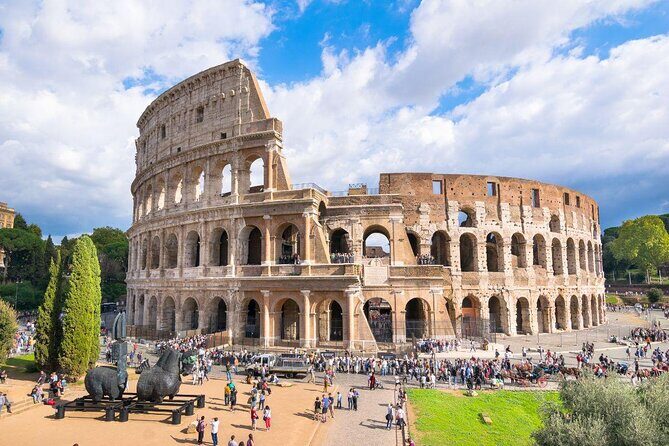
- Arena-floor walking path that lets you picture what ancient crowds actually saw
- Headphones included, so you don’t have to compete with street noise and crowd noise
- Forum stops along the Via Sacra, including major landmarks in a logical route
- Palatine Hill access to tie the empire to the city’s elite roots
- Max group size of 15, which helps the guide keep the pace and answer questions
Arena-Floor Access at the Colosseum: what you really see
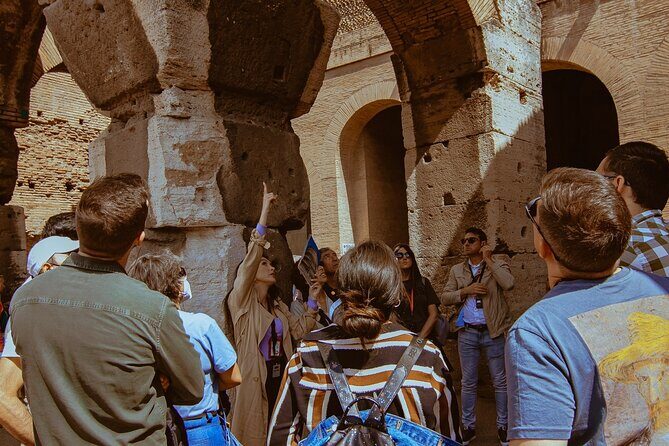
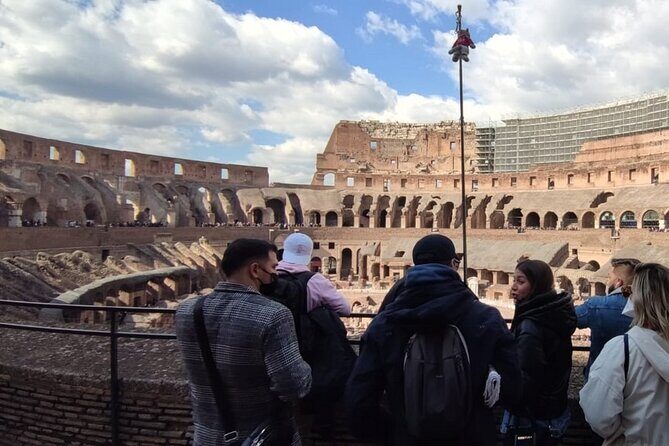
Walking into the Colosseum from the inside edge is a different kind of history lesson. From the arena, you get a real sense of height and distance—how the stands rise above you and how the space would have shaped sightlines during events. The tour includes ARENA FLOOR access and uses a reserved Colosseum and Arena entrance ticket, which is where the value shows up. You’re not just buying entry. You’re buying time and position.
This is also the part where the guide’s storytelling matters most. If you’ve ever toured ancient ruins with only your own imagination to work with, the arena gives you a strong anchor. You can look up and quickly understand the scale of the spectacle, then listen as the guide explains what you’re seeing in context of Rome’s imperial image. It’s the fastest path to turning a big monument into something you can picture clearly.
And yes, you’ll move through key interior areas rather than staying at a single viewpoint. That steady flow helps your brain build a map. You start with introductions to Ancient Rome, then head into the Colosseum, walk through the stands, and eventually descend again—so your perspective shifts instead of staying stuck at ticket-photo level.
You can also read our reviews of more tours and experiences in Rome.



From the stands to the Forum: the Via Sacra route you’ll remember
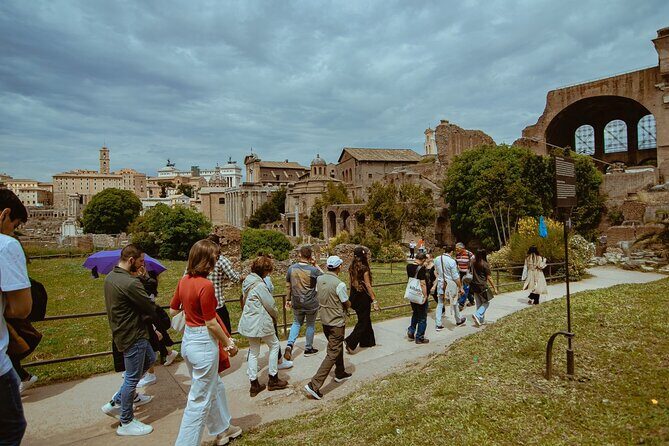
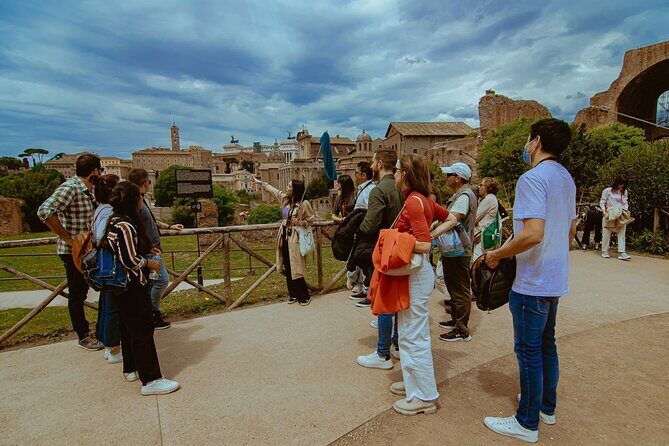
After the Colosseum, the tour follows a route that makes the ancient city feel like one connected place. You’ll head down into the valley area that leads toward the Roman Forum, and from there you’ll work along the Via Sacra—Rome’s famous processional route. That route is where a lot of visitors feel lost, because the Forum isn’t one “site.” It’s many sites layered on top of each other.
Along the Via Sacra, you’ll stop for standout landmarks that are easy to recognize once you know what they were for:
- The Basilica of Maxentius, a major public building that shows how impressive Roman civic architecture could be
- The bronze door of the Temple of Romulus, which adds a tangible clue that sacred spaces weren’t just ceremonial
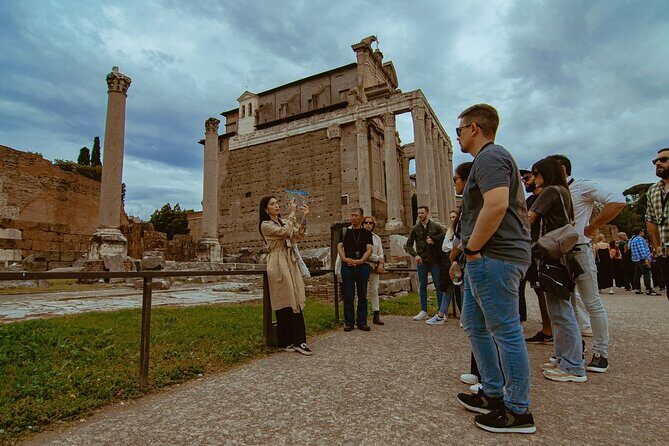
- The temple of Antoninus and Faustina, including the curious mention of a suspended door you’ll see referenced during the walk
- The house of the Vestals, which matters because it connects religion to power and everyday state life
Here’s the payoff: these stops don’t just get named. The guide ties them into how the city worked—politically, religiously, and legally. By the time you reach the central area of the Roman Forum, you’re ready to understand why it became the hub of ancient Rome over centuries.
In the heart of the Forum, you’ll admire and learn about key elements such as the Curia, the Arch of Septimius Severus, the Tabularium, the temple of Saturn, and more. Even if you can’t memorize every name, you’ll feel the structure of the place: this was where authority got displayed, decisions got made, and ceremonies played out in public view. That context is exactly what a good guide brings to the surface—without it, it can feel like a pile of stones.
The central Forum square: why it felt like Rome’s command center
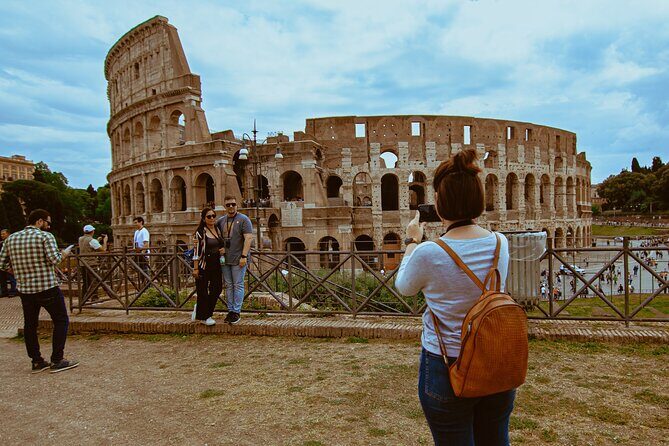
Once you’re in the Forum’s central area, the experience starts to click. The Roman Forum wasn’t only religious or only political. It was the mix—political, religious, economic, legal—rolled into one shared public stage.
You’ll see the Curia, the Arch of Septimius Severus, and other monumental markers that helped define where people should look and what institutions mattered. These weren’t random buildings. They were visual shorthand for power, loyalty, and legitimacy in an empire that needed constant messaging.
If you’re visiting Rome for the first time, this part helps you get your bearings fast. The Colosseum shows imperial entertainment, and the Forum shows imperial governance. Put together, you start to understand the full “Rome system” instead of treating each attraction like a separate theme park stop.
Palatine Hill access: connecting the empire to the city’s roots
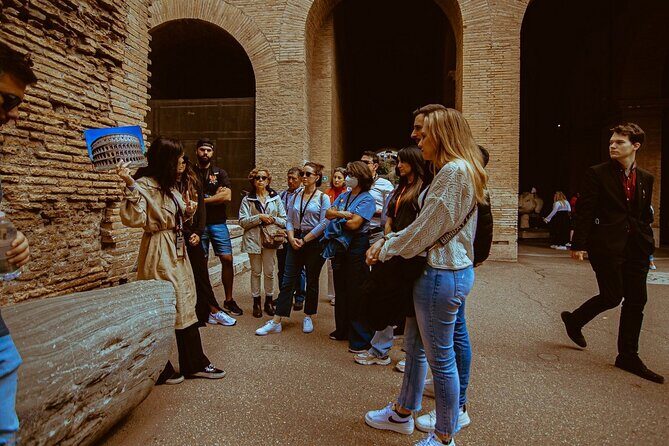
Palatine Hill rounds out the story by linking the imperial era back to older prestige. Palatine is often described as elite territory, and on this tour you get access without turning it into a long detour. That matters because you have limited time—about 2 hours 30 minutes—so the route needs to stay efficient.
The best way to use Palatine Hill on a timed tour is to treat it as a viewpoint and a context builder. The tour doesn’t just move you from one ticketed area to another. It uses Palatine Hill to reinforce the idea that Rome’s power wasn’t only in arenas and forums. It was anchored to the places where the city’s elite and ruling structures had deeper roots.
Even with short time on the hill, the combination with Colosseum and Forum gives you a smoother mental timeline: public spectacle, public governance, and elite foundations. If you’ve ever looked at maps and thought, I know these places are close, but I don’t see the story yet, this route is the answer.
Small-group pacing and headphones: the comfort factor you feel
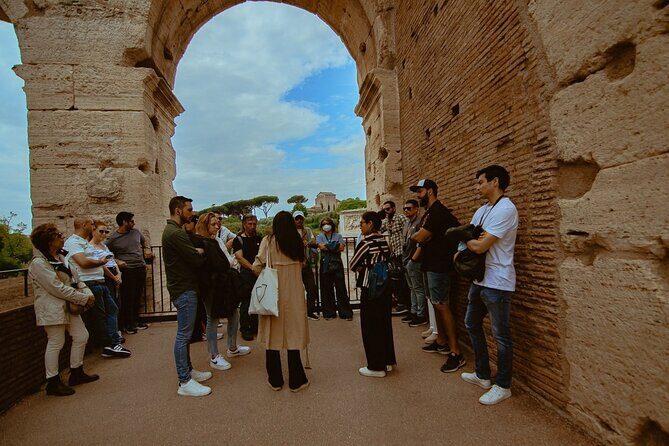
This tour caps at 15 travelers, and that single detail changes the whole experience. In Rome’s biggest sites, too-large groups turn guides into traffic control. Here, the pace is steadier and it’s easier to hear the guide’s explanations while walking through busy corridors.
Headphones are included too, with a headset set so you can listen to the guide without leaning close or shouting. That’s not just convenience. It’s how you keep your focus on what’s in front of you. When you can actually hear the story, the stops become more meaningful.
The overall rhythm is also built for attention. You get an introduction to Ancient Rome, then you head into the Colosseum, walk through the stands, go down toward the Forum area, and then continue through multiple Forum highlights. The tour stays active, but it’s not a sprint, and the small-group size helps it feel guided instead of rushed.



Tickets and value: what you get, and what you should not expect
The headline value is that the ticket package includes more than general entry. The tour includes admission access for the Colosseum, the Roman Forum, and Palatine Hill, plus ARENA FLOOR access. It also includes the Colosseum and Arena entrance ticket valued at €24 per person, and a Colosseum reservation fee valued at €2 per person, on top of the guided experience.
At $92.51 per person, the price makes sense if you’re prioritizing three things:
1) time saved with skip-the-line style entry,
2) a guide who explains the places as you see them, and
3) arena-floor access, which is the part most people miss when they only do standard Colosseum tours.
It’s also smart to know what’s not included. The tour does not include access to the underground of the Colosseum, and it does not include access to the Colosseum viewpoint. If those are must-haves for you, you’ll want to compare with options that explicitly include them.
Finally, the route ends on Via dei Fori Imperiali, which is useful for planning onward time. If you want to keep exploring on foot after the tour ends, you’ll likely be in a practical corridor for connecting to more sights.
Best-fit traveler: who this tour suits (and who might want something else)
This is a strong choice if you’re a first-timer to Rome or you want to get the emotional impact of the Colosseum plus the meaning of the Forum in one go. The route is designed to teach you how the Roman empire presented itself through both entertainment and public authority.
I’d also pick this style if you like asking questions. Guides such as Andrea and Matteo are singled out for expert narration and answering questions with enthusiasm. In a place as big as the Colosseum and as layered as the Forum, that interaction keeps the visit from turning into passive sightseeing.
You might choose a different option if you specifically want underground areas or the Colosseum viewpoint. This tour’s strengths are arena-level access, Forum landmarks along the Via Sacra, and Palatine Hill context—so plan around that.
Should you book this Colosseum, Arena Floor, Palatine Hill & Forum tour?
If you want the Colosseum to feel real instead of distant, I think it’s an easy yes. The arena-floor access plus the structured walk from the Colosseum into the Forum gives you a connected storyline in about 2.5 hours—and the small group size plus headphones help you actually follow along.
Book it if:
- you want skip-the-line entry and arena access in one package
- you’d rather have a guide connect the dots than just take photos
- you’re trying to cover Colosseum + Forum + Palatine without spending the whole day
Consider alternatives if:
- you specifically want the Colosseum underground or the viewpoint (not included here)
- you’re sensitive to timing changes on the day of the tour, since start times can shift in busy conditions
If your goal is to leave with a clearer sense of how Rome worked—public power, public religion, and public spectacle—this route is built for that.
FAQ
How long is the tour?
It runs for about 2 hours 30 minutes.
Does the tour include Colosseum arena-floor access?
Yes. Arena floor access is included.
Are the Roman Forum and Palatine Hill entrances included?
Yes. The tour includes access to the Roman Forum and Palatine Hill.
Is the Colosseum underground included?
No. Underground access is not included.
What group size should I expect?
The tour has a maximum of 15 travelers.
What documents do I need for entry?
You must bring a valid passport or ID document that matches the full name provided at booking. If the name doesn’t match the voucher at the ticket office, entry may be denied.