REVIEW · PRIVATE
Skip-the-line Vatican and Sistine Chapel Private Guided Tour
Book on Viator →Operated by Raphael Tours & Events · Bookable on Viator
Timing is everything at the Vatican. This private, skip-the-line tour is built to get you inside fast, then move with a guide through the Vatican’s biggest hits, including the Sistine Chapel’s most famous ceiling scenes. You also get a real sense of how the Vatican works, not just a photo stop.
I especially like the focus on the first grand moments—Belvedere Courtyard and the classical statues at the Pio-Clementino Museum—because they set the art and architecture in context right away. And I like that you’re not stuck in a huge crowd line all day; the tour is designed to leave room for questions as you go, which matters in places like the Raphael Rooms and the Sistine Chapel.
One key consideration: this tour does not include the inside of St. Peter’s Basilica. You can still see it from St. Peter’s Square and visit the Basilica separately by queueing, but you’ll need to plan extra time if that’s a must-do for you.
In This Review
- Key highlights at a glance
- Price and what you’re really paying for
- Meeting point, dress code, and your first 30 minutes
- Vatican Museums: how the tour sets you up for the big masterpieces
- Belvedere Courtyard: the Bramante moment
- Pio-Clementino Museum: statues that change your scale sense
- Galleries of Tapestries and Geographic Maps: Renaissance geography as power
- Sobiesky Room and Immaculate Conception Room: big canvases and roomful frescoes
- Why the pacing here is valuable
- Raphael Rooms (Stanze di Raffaello): School of Athens, Parnassus, and a guide’s focus
- Family-friendly note
- Sistine Chapel: what you’ll notice beyond the obvious
- The Creation of Adam moment
- A reality check: closures can happen
- Ending in St Peter’s Square: what you can do with the time you saved
- Guides, Q&A, and why private feels different here
- Who should book this tour
- Booking value: timing, crowds, and how to get your money’s worth
- Should you book this tour?
- FAQ
- How long is the Vatican and Sistine Chapel private tour?
- Where do we meet for the tour?
- Does this tour include skip-the-line entrance?
- Is the guide private and what language is it offered in?
- What parts of the Vatican are included?
- Is St. Peter’s Basilica included in this tour?
- What dress code do I need to follow?
- Are food and drinks allowed during the tour?
- What if the Sistine Chapel or other areas close last minute?
Key highlights at a glance
- Guaranteed skip-the-line entry with a mobile ticket
- About 3 hours covering Vatican Museums, Raphael Rooms, and Sistine Chapel
- Belvedere Courtyard and Pio-Clementino Museum to ground you in classical art and scale
- Stanze di Raffaello focus on School of Athens and Parnassus
- Sistine Chapel context including the papal conclave story
- Finish in St Peter’s Square for Swiss Guards and a view of the Pope’s Palace
Price and what you’re really paying for
At $396.37 per person for an approximately 3-hour private tour, this isn’t a budget option. But you are paying for two things that are hard to replicate on your own: skip-the-line access and an art historian style guide who can connect works you might otherwise just walk past.
This kind of tour also tends to work best when you’re short on time. The Vatican is too big to “wing it” if the Sistine Chapel is your priority. With this format, you’re moving from key zone to key zone without the usual lost hours circling for the right entrance.
One more value point: the tour is described as private, and you’re not dealing with large group pacing. If your family’s needs are different—kids who need breaks, or someone who wants more explanation—this structure usually fits better.
You can also read our reviews of more guided tours in Rome



Meeting point, dress code, and your first 30 minutes
You meet at Viale Vaticano, Roma (near the Vatican Museums entrance area). From there, the tour begins at the Belvedere Courtyard, then continues through the museum sequence, the Raphael Rooms, and finally the Sistine Chapel.
Plan for the dress code up front. You need knees and shoulders covered—no shorts and no sleeveless tops for both men and women. If you show up dressed too casually, you can be refused entry, and that’s the last thing you want after paying for a timed experience.
Also note the practical rules inside: food and drinks aren’t allowed in the museums except for bottled water. It’s a small thing, but it affects how you should pack your day. Wear comfortable shoes and keep an eye on your water.
Physically, this calls for moderate fitness. You’ll be walking through a lot of museum space, and parts of the Vatican can feel tight even when you move faster than the crowds.
Vatican Museums: how the tour sets you up for the big masterpieces
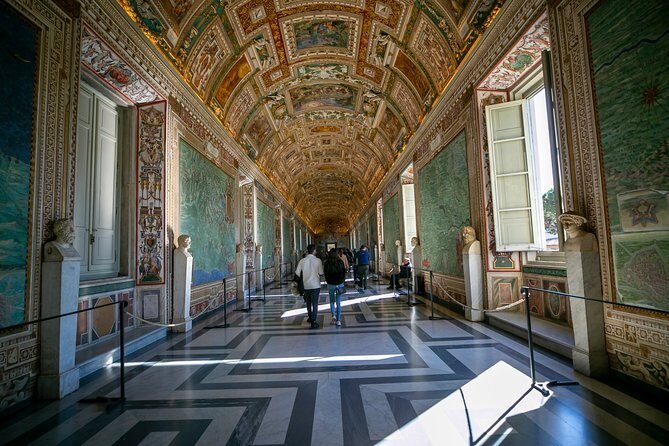
The Vatican Museums stop is where this tour does its best “smart sequencing” work. Instead of starting with the ceiling artwork and sprinting, you begin with spaces that teach you how to read what you’re seeing.
Belvedere Courtyard: the Bramante moment
You start at the Belvedere Courtyard, designed in the 16th century by Donato Bramante. This courtyard isn’t just pretty architecture. It’s a way to understand the Vatican’s approach to order and perspective—how spaces guide your eye and your pace.
Even if you only glance for a minute, this is one of those stops that helps the rest feel less random. You’re training your eyes before you hit the big art.
Pio-Clementino Museum: statues that change your scale sense
Next comes the Pio-Clementino Museum, with a large collection of ancient Roman and Greek statues. This matters because the Vatican is full of religious art, but it also borrows from classical ideals—proportion, posture, and storytelling through the body.
If you’re the type who worries the Vatican will feel like a list of paintings, the statues are a strong reset. They give you scale and anatomy, and they make the later Renaissance works feel more connected.
You can also read our reviews of more private tours in Rome



Galleries of Tapestries and Geographic Maps: Renaissance geography as power
You then move to the Gallery of Maps (described here as the Vatican’s grandest and most significant display of Renaissance maps). It’s not just cartography. It’s political and cultural messaging from the Renaissance world.
The tour also includes the Galleries of Tapestries and Geographic Maps, which helps you see how art was used to display status and knowledge. Maps and textiles might sound like niche interests, but in the Vatican they’re part of a bigger visual language.
Sobiesky Room and Immaculate Conception Room: big canvases and roomful frescoes
In the Sobiesky Room, you learn about the Vatican’s largest canvas painting. That’s the kind of fact that turns a “just a painting” moment into something you can feel: scale changes how you read brushwork and composition.
Then there’s the Immaculate Conception Room, with frescoes from the 19th century. The Vatican isn’t frozen in one era, and stopping here reminds you the collection keeps expanding and reshaping across centuries.
Why the pacing here is valuable
The stop time for the Vatican Museums segment is around 1 hour 30 minutes. That’s not long, but it’s long enough with a private guide to hit the right rooms and still ask questions.
This is where many visitors struggle on their own: you can get lost, or you can spend time in the wrong wings. A guided sequence helps you see more of the right things, not more hallway.
Raphael Rooms (Stanze di Raffaello): School of Athens, Parnassus, and a guide’s focus
The tour’s second stop is the Stanze di Raffaello—the Raphael Rooms commissioned by Pope Julius II in the early 16th century. Your guide keeps attention on Raphael’s standout works, especially The Parnassus and The School of Athens.
This focus is smart. If you try to look at every fresco equally, you end up with visual blur. With a guide spotlighting these particular rooms, you learn the themes and symbolism behind the scenes, not just the names of figures.
The Raphael Rooms can feel like a test of attention: dense compositions and lots to interpret. A good guide makes it easier by pointing out what to notice first—then what matters most.
Family-friendly note
Some guides in this experience are described as especially good at adjusting to families and younger visitors. If you’re bringing kids, this is one of the stops where an energetic explanation can keep attention from slipping.
Sistine Chapel: what you’ll notice beyond the obvious
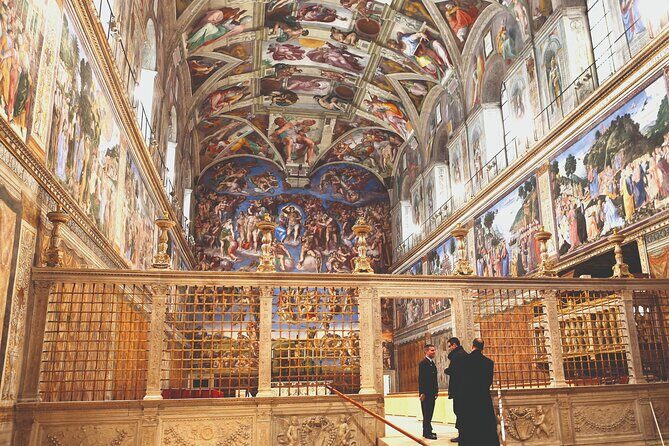
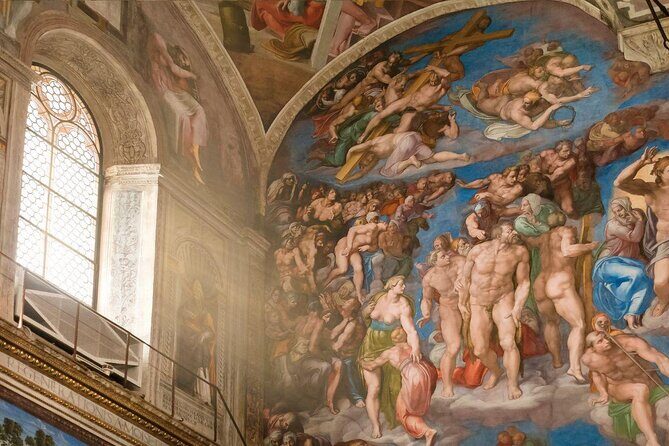
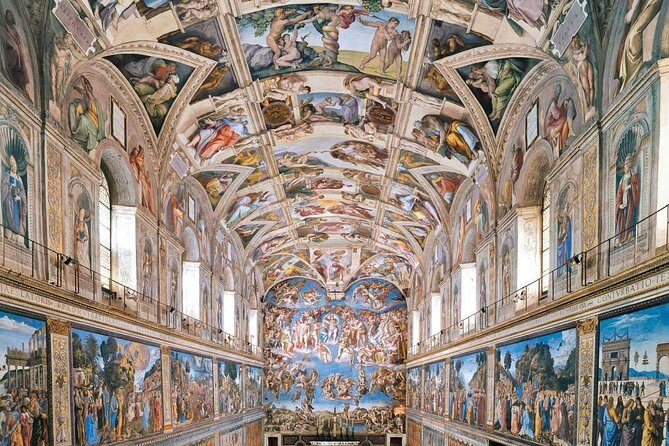
The Sistine Chapel stop is about 30 minutes, which is tight but workable when you’re there for the core scenes. You’ll see famous frescoes by Michelangelo and Botticelli and other artists.
What I like here is that the guide doesn’t treat it like a checklist. You get history, facts, and curiosities—plus the story of the papal conclave, since the election of a new pope happens in the Sistine Chapel.
That conclave context changes your experience. You’re not just staring at art in a holy room; you’re seeing why the room matters in practice, how it’s used, and why the atmosphere is so intense.
The Creation of Adam moment
This tour explicitly includes the chance to view The Creation of Adam by Michelangelo. If you’ve seen images before, the real ceiling can feel different in two ways: the scale is hard to guess, and the details pop when someone helps you know what to search for.
Even in a short time, you can learn how to “read” the fresco instead of only noticing it.
A reality check: closures can happen
The tour notes that Pope Francis’s busy schedule and mass events can cause last-minute closures. If the Sistine Chapel and/or St. Peter’s Basilica become inaccessible, the guide provides a valuable alternative focusing on the Vatican Museums.
That’s a big deal. You can’t control Vatican scheduling from your end, but you can choose a tour that plans for it.
Ending in St Peter’s Square: what you can do with the time you saved
After the Sistine Chapel, the tour ends with a stop in St Peter’s Square. You’ll see the Pope’s Palace and the Swiss Guards.
This is a good payoff for the time you saved earlier. The Vatican Museums can consume your energy. When you’re done inside, St Peter’s Square gives you a clearer sense of place—open space, big views, and a simple photo moment that doesn’t feel like another “museum room.”
Again, this tour does not include entry into St. Peter’s Basilica. If you want inside, you’ll need to queue from St. Peter’s Square on your own.
Given how access rules can change, I’d treat the Basilica as a separate plan. If it’s included, great. If not, you still finish with the square and the guards, and you can decide what to do next.
Guides, Q&A, and why private feels different here
The most praised aspect of this experience is the guide’s ability to turn the Vatican into a story. Multiple guides are mentioned by name—like Tommaso, Francesco, Maximillian, Bruno, Romina, and Michela—and the common thread is how they explain what you’re seeing.
You’ll also see patterns in how they teach:
- Lots of Q&A time, not just a fast lecture
- A sense of humor and pacing that keeps the day from feeling like school
- Attention to what matters most to your group’s interests
- Strong explanations for different ages, including families
One review mentions an archaeology background (a guide with a PhD in archaeology, as described). Another mentions “little pop quiz’s,” which sounds playful, but it’s also how you remember details when everything is overwhelming.
Even if your own interests lean strongly toward art, architecture, or religious history, the best part of private is control. You can ask, pause, and get your questions answered right where they apply.
Who should book this tour
This is a strong fit if:
- You’re a first-timer and want the Vatican’s top sights without getting lost in the maze
- You care about the Sistine Chapel experience and want a guide’s context
- You want to move at your own pace with room for questions
- You’re traveling as a family and need explanations that keep kids engaged
- You’re time-limited and want a plan that’s about the right rooms, not random wandering
It might be less ideal if:
- You want a long, slow Vatican day (this is about 3 hours)
- You’re mainly interested in spending hours in St. Peter’s Basilica, since this tour doesn’t include Basilica entry
- Your budget is tight. At nearly $400 per person, you’re buying convenience plus interpretation.
Booking value: timing, crowds, and how to get your money’s worth
The tour is described as booked on average 25 days in advance, which tells me something practical: prime time slots go first. If you’re traveling in a busy season or you have a narrow schedule, booking earlier helps.
Is it worth paying $396.37 per person? For me, the value equation looks like this:
- You’re paying for skip-the-line access (huge at the Vatican)
- You’re paying for an art historian / Blue Badge guide type experience, not just a person holding a headset
- You’re buying a clear route through the Vatican’s most important rooms in a short window
If you’re the kind of traveler who hates waiting and loves understanding what you’re seeing, it’s a good fit. If you’re okay with lines and you prefer audio guides, you can do it cheaper—just know you’ll spend more time managing the building and less time learning the art.
Also remember: this experience is described as non-refundable and cannot be changed for any reason. If your dates are flexible, you may want to think twice.
Should you book this tour?
Yes—if Vatican Museums, Raphael Rooms, and the Sistine Chapel are your priorities, and you want a guide to help you see instead of just look. The skip-the-line setup plus the private format is a smart combo for a place where crowds can crush your attention.
I’d say don’t book if St. Peter’s Basilica inside is your main goal and you hate the idea of queueing separately. But if you’re okay planning Basilica as an extra step, this tour gives you a focused, high-value way to experience the Vatican’s core artistic moments.
FAQ
How long is the Vatican and Sistine Chapel private tour?
The tour duration is approximately 3 hours.
Where do we meet for the tour?
The meeting point is Viale Vaticano, Roma RM, Italy.
Does this tour include skip-the-line entrance?
Yes. The tour includes a guaranteed skip-the-line entrance.
Is the guide private and what language is it offered in?
It’s a private tour with a local guide, and it’s offered in English.
What parts of the Vatican are included?
You visit Vatican Museums, the Raphael Rooms (Stanze di Raffaello), and the Sistine Chapel. St. Peter’s Basilica is not included inside.
Is St. Peter’s Basilica included in this tour?
No. The tour is not including Basilica entry. You can visit St. Peter’s Basilica separately by going to St. Peter’s Square and queueing there.
What dress code do I need to follow?
You need knees and shoulders covered. No shorts or sleeveless tops. You may risk refused entry if you don’t meet the dress requirements.
Are food and drinks allowed during the tour?
Food and drinks are not allowed in the museums except for bottled water.
What if the Sistine Chapel or other areas close last minute?
The tour notes that some areas might get closed last minute due to papal events. If that happens, your guide will provide a valuable alternative focusing on the Vatican Museums.