REVIEW · NAPLES
Skip the Line Herculaneum Ruins Ticket
Book on Viator →Operated by Askos Tours · Bookable on Viator
Herculaneum is the kind of site that makes ancient life feel close, not dusty. This skip-the-line ticket gets you inside the excavations, where Roman streets, homes, baths, and small rooms were sealed under volcanic mud and dust after the Mt. Vesuvius eruption in AD 79. I like that the ruins are well preserved and easy to explore at your own pace, and I also like the mix of big-name places (like the House of the Skeleton) and smaller rooms where you notice the details. One thing to keep in mind: the skip-the-line setup may not work as advertised on arrival, so plan for a bit of gate-time and have your voucher ready.
Because it’s self-guided, you can move fast when you want photos and linger when something catches your eye. You’ll get a suggested route with short stops (mostly 10–15 minutes each), but the pacing is ultimately yours. If you’re visiting in hotter months, you’ll also want to pace yourself—this is an outdoor archaeological site.
In This Review
- Key points before you go
- Herculaneum in context: why this buried city still feels real
- Skip-the-line tickets: what to expect at the gate (and how to avoid frustration)
- Meeting point and timing: the day starts at Ercolano’s excavations
- Your self-paced route through the Roman city (14 memorable stops)
- Mosaics, terraces, and the “this is where they lived” feeling
- Nero’s salon, the Skeleton house, and bath-time reality
- Courtyards, large doorways, and the boat room finale
- What to look for: mosaics, frescoes, and the small stuff that makes it click
- Duration: is 4.5 hours enough, or will you want more?
- Price and value: is $25 worth it?
- Real-world tips that make the visit smoother in Ercolano
- Who this ticket suits best (and who might want a different option)
- Should you book this Herculaneum skip-the-line ticket?
- FAQ
- How long is the Herculaneum visit?
- Where do I meet for the ticket?
- What time does the experience start?
- Is a guide included with the ticket?
- Is it self-paced or do I follow a group schedule?
- What’s the maximum group size?
- Are children allowed?
- Can I cancel for a full refund?
Key points before you go
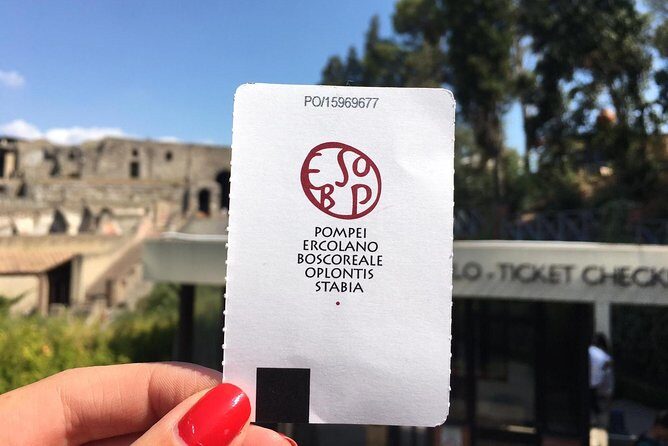
- Skip-the-line tickets can still mean some waiting at the gate, depending on how tickets are processed.
- More personal and atmospheric than Pompeii—the crowds tend to be lighter and the scale feels manageable.
- Mosaics and frescoes are a major reason people fall in love with Herculaneum.
- The route focuses on Roman homes, thermal baths, and daily-life details, not just statues and columns.
- It’s offered by Askos Tours with a small maximum group size, which helps the day feel organized even when you’re self-paced.
Herculaneum in context: why this buried city still feels real
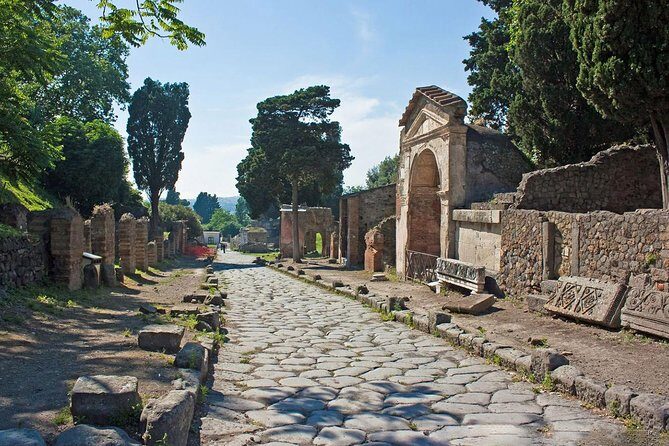
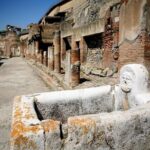
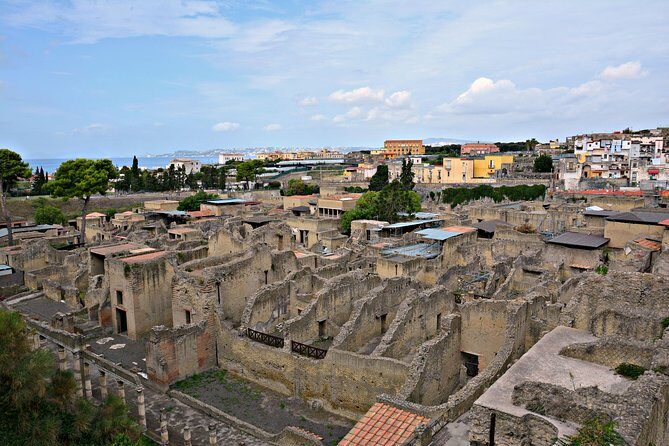
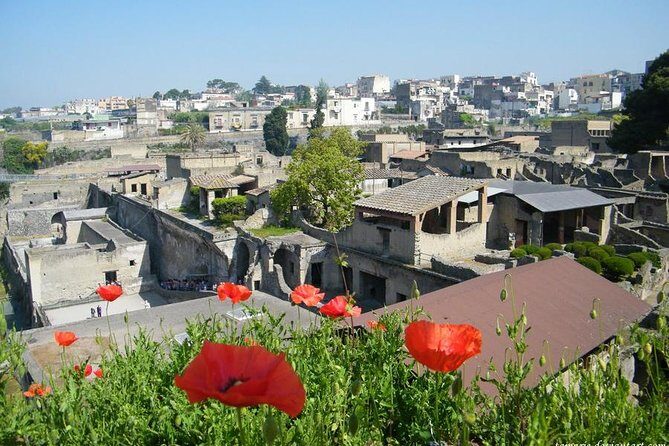
Herculaneum sits in Ercolano (near Naples), and the story is the same headline as Pompeii: Vesuvius erupted in AD 79 and buried the city. What makes Herculaneum special is the level of preservation. The volcanic mud and dust didn’t just hide buildings—it helped seal surfaces for centuries. That’s why you can wander through areas that feel like rooms you could step into, not ruins you only read about.
The experience is also different in feel from larger sites. Even when you don’t choose a guided option, the site design encourages strolling. The small houses, courtyards, and bath areas let you build a mental picture of Roman daily life. And when you catch a mosaic or wall painting in good condition, it lands emotionally. You stop thinking about “tour facts” and start thinking about people who lived there.
You can also read our reviews of more tours and experiences in Naples

Skip-the-line tickets: what to expect at the gate (and how to avoid frustration)
This ticket is specifically meant to help you skip the main entrance line. The simple goal is: get you into the excavations faster. The reality is a bit more complicated. Some sites handle e-tickets by barcode scanning, and sometimes the scanner doesn’t read certain formats. In that case, staff may ask you to exchange your voucher for paper entry, which can mean waiting anyway.
So here’s my practical advice: arrive with everything ready. Have your Viator voucher accessible on your phone, and if you can, also keep a printed copy. If the entry desk ends up making you queue for paper tickets, you’ll at least lose time without adding extra confusion.
Also note a detail that matters: there’s no guidance included. That means you’re not following a lecturer through the site. You’re moving yourself through a map-style route with listed stops. If you want a voice in your ear, you’ll need to get an audio guide option on your own.
Finally, there’s a small comfort factor: the maximum group size is listed as 15 travelers. Even though you’re self-guided, that usually keeps the entrance flow from feeling chaotic.
Meeting point and timing: the day starts at Ercolano’s excavations
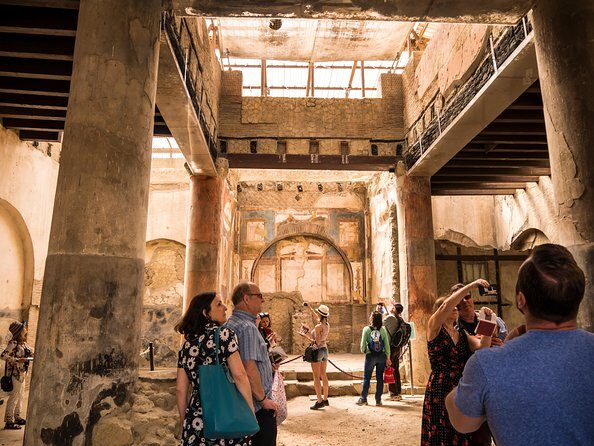
Your start point is at ExcavationsCorso Resina, 187, 80056 Ercolano NA, Italy, and the activity starts at 10:00 am. The tour ends back at the meeting point, which is nice because you’re not doing a complicated pickup/drop-off dance.
Plan your footwear like this is a real walking day. You’ll be moving between multiple house blocks and bath areas, and surfaces can be uneven. If you’re traveling with a backpack, one review also pointed out that the site is about 1 km from the train station in Ercolano—manageable, but not ideal if you’re carrying heavy gear.
If you’re coming from Naples, train is the most common approach, and the connection is a big reason Herculaneum is so popular as a day trip. Just remember: even with skip-the-line entry, you’ll still spend most of your time walking.
Your self-paced route through the Roman city (14 memorable stops)
The experience gives you a structured route with stops that are mostly 10–15 minutes each. That’s a helpful framework if you’re not sure where to go, but the best part is that you can linger. If you want more mosaic detail, stay longer. If you just want the big highlights, you can speed up.
Mosaics, terraces, and the “this is where they lived” feeling
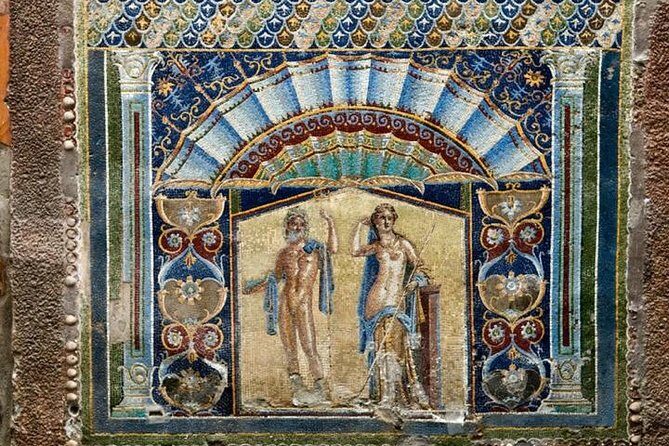
House of Neptune and Amphitrite is a strong start because mosaics set the tone fast. This is where Roman decorative art becomes more than a photo—when it’s in good preservation, it feels like a living-room floor. Even if you aren’t a mosaic nerd, the scene helps you imagine how people moved through the space.
Next is La Terrazza di M. Nonio Balbo. Terraces in Roman houses weren’t just for looks. They suggest lifestyle—light, air, and views. The short stop helps you catch the idea without turning the day into an architectural seminar.
Then head to Casa del Rilievo di Telefo (House of the Relief of Telephus). Relief scenes like this show how art and storytelling worked together in everyday spaces. You’ll spend time looking, then realize you’re building a picture of Roman tastes and myths as part of home decor.
Partem Domus lignea – Casa del Tramezzo di Legno focuses on the wooden partition. This is one of those details that makes Herculaneum feel different. You’re not just seeing stone; you’re seeing how the home was organized.
Stop five is House of the Deer. This is one of the “famous-name” stops that people use as a checkpoint for the best parts of Herculaneum. It’s a good place to slow down for photos and for that moment when you look at the floor and realize how much survived.
Finally for this first stretch, College of the Augustales adds a civic/religious flavor. You start shifting from private households to spaces tied to community identity. It helps the ruins feel like a real city, not just a set of villas.
You can also read our reviews of more tours and experiences in Naples

Nero’s salon, the Skeleton house, and bath-time reality
After the Augustales, House of the Black Salon (also described as the Salon of Nero) brings a dramatic shift. Dark painted areas and named rooms make you feel like the house had personality—and political attention. Even if you don’t know every Roman reference, the impact is visual.
Then one of the most famous stops: House of the Skeleton. This is where the name alone draws you in, but what stays with you is the emotional weight of seeing human traces in an ancient setting. It also helps you understand why preservation matters. Without that sealing effect, the story wouldn’t feel as close.
Casa Sannitica follows. It’s another house stop, and you’ll likely notice the pattern: Herculaneum isn’t a single palace. It’s many homes with distinct layouts and decorative choices.
Then come the baths: Central Thermae. Baths are always a highlight in Roman sites because they were social spaces, not just places to get clean. Here, the ruins help you picture routine, conversation, and the daily rhythm of the city. If you’re the type who thinks ruins are only “pretty,” bath areas flip that idea. They bring function back into focus.
Courtyards, large doorways, and the boat room finale
Casa del Bel Cortile (House of the Fine Courtyard) is a classic Roman home feature: the courtyard. When you stand in the courtyard zone, you get a feel for how light and space worked in dense city living. Courtyards are often where you can take a breath because you’re not always surrounded by narrow corridors.
Next is House of the Grand Portal (also referred to as the House with the Large Doorway) and linked stop House of Galba. Big doorways matter for two reasons: they signal status, and they show how the entry experience was designed. It’s a reminder that Roman homes had public-facing edges, not only private interiors.
Then you end with Salone della Barca di Ercolano (Salon of the Boat). This stop is a nice closer because it’s distinctive and memorable. It also helps you end the day on something unusual—something you won’t mistake for another ruin.
Across all stops, the time blocks are short enough to keep energy up, but long enough for you to get meaning from what you see.
What to look for: mosaics, frescoes, and the small stuff that makes it click
The ruins at Herculaneum are famous for preserved surfaces, and you’ll feel it most in decorative areas. One reason I’d steer you toward this visit is how much mosaic and fresco detail you can spot when you slow down for 30 seconds. The site is good at rewarding that habit.
Here’s a simple way to use your time:
- Pick one stop where you go “detail mode” and really scan the floor or wall decoration.
- Pick one stop where you go “layout mode” and think about how rooms connect.
- Pick one stop where you go “human story mode,” like the house with the Skeleton name.
This keeps you from treating the site like a checklist. It also helps when you’re in the heat, because you’re not trying to memorize everything—you’re noticing a few things deeply.
Photography works well too. Several visitors highlighted how the site is less crowded than Pompeii, which makes it easier to frame shots without battling shoulder-to-shoulder crowds.
Duration: is 4.5 hours enough, or will you want more?
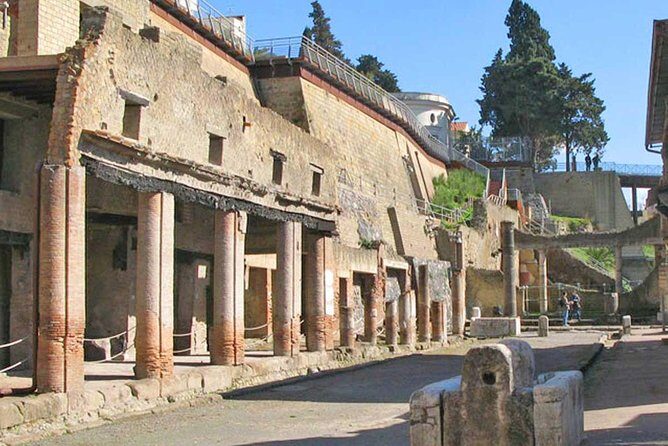
The planned time is about 4 hours 30 minutes. In practice, that’s a comfortable window for a self-paced walk that still gives you time to enjoy stops. Most listed stops are 10–15 minutes, so you won’t feel forced to rush, but you also won’t feel stuck in one area all day.
That said, the site doesn’t have to take forever. One review noted the visit could be done in around 1 hour if you move quickly. So treat 4.5 hours as your “slow but not lazy” option. If you’re traveling with kids or you want frequent breaks, you’ll like having extra time.
Heat matters. Even when you’re skipping lines, you’re outside walking between rooms. If you’re visiting in summer, bring water and plan to pause often. Take advantage of shaded courtyard zones when you can.
Price and value: is $25 worth it?
At $25, this ticket is priced like a basic entry add-on, not a full guided package. That makes it good value if you care about time. A skip-the-line entry is most valuable when queues are long, especially during peak visitor seasons.
But there’s a twist. Some people found that booking ahead was essentially unnecessary in low-season conditions, when queues were short. In June or other quieter periods, the “skip” benefit may shrink.
So how do you decide? Use this logic:
- If you’re visiting on a busy day, earlier in the morning, or during high season, the skip-the-line angle can save stress.
- If you’re in a slower month and you’re arriving early, you might save money by just buying at the site—though you never know what the line will look like that day.
Either way, the site itself is the real value. You’re paying for access to one of the best-preserved Roman ruins from the AD 79 disaster story.
Real-world tips that make the visit smoother in Ercolano
Start with logistics you can control. Readiness at the gate helps. Keep your voucher handy, and expect that the “skip-the-line” processing might still involve some paperwork. One review suggested the scanner situation can cause delays when e-tickets aren’t recognized, so have a backup plan in mind.
Second: take a map and plan your route. The route you follow matters, especially when you’re self-guided. Even if the stops are listed, it’s still smart to know what you want to prioritize so you don’t waste time backtracking.
Third: travel light when possible. Herculaneum is manageable, but it’s still a walk with multiple transfers inside the site. If you’re coming from the station with gear, that 1 km walk can add up.
Finally: use an audio guide if you like context. One review talked about a self-guided audio approach that supported both spoken explanation and written material. If you prefer to understand what you’re seeing in real time, that can make the ruins feel far more alive.
Who this ticket suits best (and who might want a different option)
This is a great fit if you want:
- Self-paced exploring without paying for a guide
- A structured route through Herculaneum’s key rooms
- More of a “stroll and notice” day than a lecture
It’s also a smart choice if you’re pairing Herculaneum with other Vesuvius-area stops. If you only have one half-day, a focused entry ticket like this helps you make it count.
If you’re the type who wants a live guide to explain the symbolism behind each room, you may feel limited because no guidance is included. In that case, consider adding a guided option separately.
And if you love people-based storytelling, you’ll likely enjoy the named, emotional stops like the House of the Skeleton. Even without a guide, the ruins’ preservation does a lot of the work.
Should you book this Herculaneum skip-the-line ticket?
I’d book it if you want to see Herculaneum’s preserved Roman homes and baths without adding a full guided cost. The price is reasonable, the route is built for self exploration, and the site is often described as less crowded and more atmospheric than Pompeii, which makes the day feel calmer.
Skip it only if you’re visiting on a very quiet day and you’re comfortable buying entry on the spot. In low season, the “skip-the-line” benefit may feel small.
My call: for most people, especially on busy dates, this is a practical way to get into Herculaneum on your terms—just be ready for possible gate processing and bring your voucher in a form staff can scan or verify.
FAQ
How long is the Herculaneum visit?
The duration is about 4 hours 30 minutes (approx.).
Where do I meet for the ticket?
The meeting point is ExcavationsCorso Resina, 187, 80056 Ercolano NA, Italy.
What time does the experience start?
The listed start time is 10:00 am.
Is a guide included with the ticket?
No. The ticket includes skip-the-line entry, but it does not include guidance.
Is it self-paced or do I follow a group schedule?
It’s self guided. You explore at your own pace, and the activity ends back at the meeting point.
What’s the maximum group size?
The maximum group size is 15 travelers.
Are children allowed?
Children must be accompanied by an adult.
Can I cancel for a full refund?
Yes. Free cancellation is available up to 24 hours in advance for a full refund.