REVIEW · PRIVATE
Semi Private Art Tour: Michelangelo, Bernini & Borromini
Book on Viator →Operated by Italy In Love Tours · Bookable on Viator
Three masters, two hours, one great plan. This semi-private art tour strings together some of Rome’s most talked-about Renaissance and Baroque works—so you’re not just seeing famous spots, you’re learning how they connect. I like the tight narrative around Michelangelo, Bernini, and Borromini, and I also like that it’s a small-group format (max 6), which makes it easier to ask questions and actually hear the guide.
Two things make this especially satisfying: you start with Michelangelo’s Moses at San Pietro in Vincoli, then you move through the public art and architecture of Piazza del Campidoglio and Piazza Navona—where the stories of these artists feel physical, not theoretical. One possible drawback is the pace: it’s about 2 hours 30 minutes, so every stop is brief, and you’ll want to prioritize what you want to linger at on your own afterward.
In This Review
- Key Highlights I’d Prioritize
- Moses at San Pietro in Vincoli: Where the Tour Starts Strong
- Campidoglio to Piazza Navona: Michelangelo’s Geometry Meets Baroque Drama
- Sant’Agnese in Agone: The Best Kind of Confusing (In a Good Way)
- The Barcaccia Fountain Finish Near Piazza di Spagna
- What’s Included: Tickets, Group Size, and the Granita Break
- How to Prepare So the 2.5 Hours Feel Like More
- Who This Tour Is For (and Who Might Skip It)
- Should You Book This Semi-Private Michelangelo, Bernini & Borromini Tour?
- FAQ
- How long is the semi-private art tour?
- How many people are in the group?
- What does the tour cost?
- What are the main included experiences?
- Where does the tour start and end?
- Are tickets included for the sights?
Key Highlights I’d Prioritize
- Michelangelo’s Moses inside San Pietro in Vincoli, with a focused intro to the Pope Julius II tomb link
- Campidoglio’s viewpoint plan by Michelangelo, plus a short, scenic breather on one of Rome’s seven hills
- Piazza Navona fountains, including Bernini’s Fountain of the Four Rivers with the four named rivers
- Sant’Agnese in Agone face-to-face with Baroque details, tied to both Bernini and Borromini roles
- Granita/gelato tasting to reset your brain mid-walk
- Semi-private group size (6) that keeps the experience from feeling crowded or rushed
Moses at San Pietro in Vincoli: Where the Tour Starts Strong
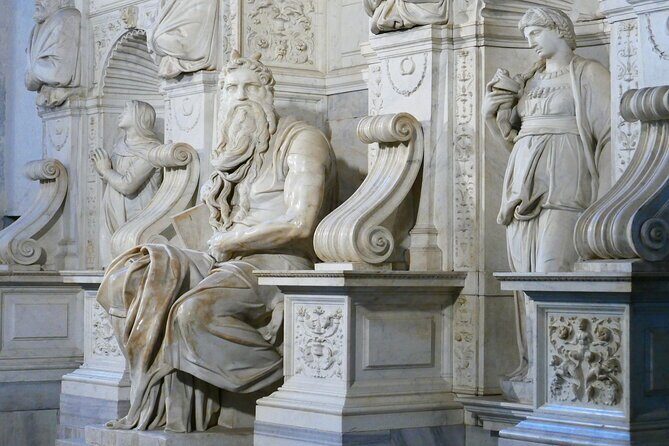
The tour begins at San Pietro in Vincoli, a church with real weight in Rome’s religious and artistic story. It’s known for housing Michelangelo’s iconic statue of Moses, made as part of Pope Julius II’s tomb project. You’re also dealing with the place’s deeper identity: the basilica traces back to the 5th century and originally aimed to preserve the chains of Saint Peter.
What I like about starting here is the emotional “anchor.” Moses isn’t just a famous sculpture you check off. Your guide sets you up to notice what Michelangelo was doing—how the piece reads as presence and power, not just anatomy. In a short 2.5-hour format, getting this kind of high-impact start matters, because it gives you a reference point before you move into Baroque showmanship.
Practical note: the stop is about 25 minutes, and the admission ticket is included. That’s plenty of time for the main highlights if you’re listening, but it’s not the kind of visit where you’ll wander slowly. If you’re the type who likes to linger, plan to come back later on your own for extra time.
You can also read our reviews of more private tours in Rome
Campidoglio to Piazza Navona: Michelangelo’s Geometry Meets Baroque Drama
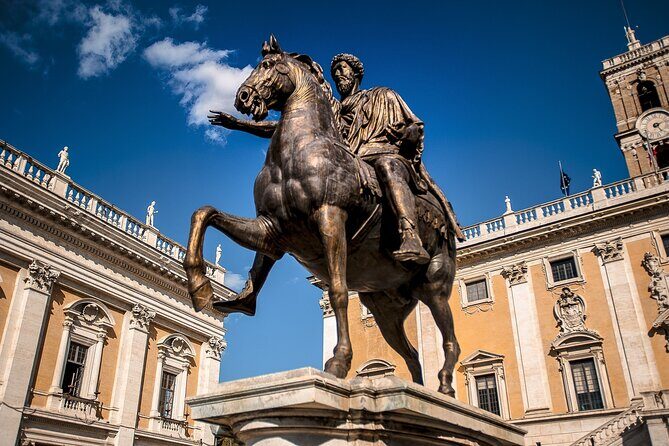
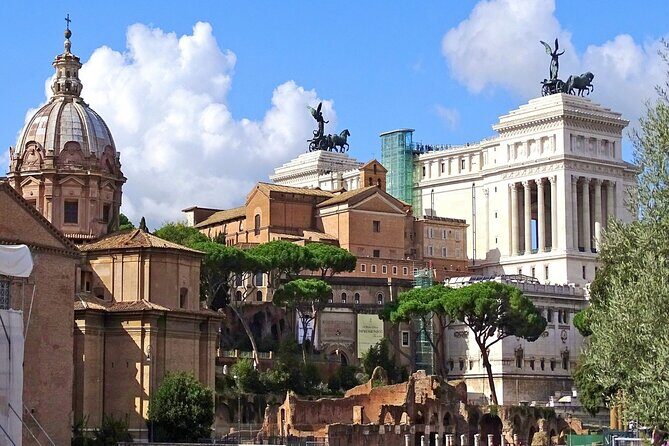
After Moses, you head to Piazza del Campidoglio, also called Monte Capitolino—one of Rome’s seven hills. This stop is tied directly to Michelangelo’s influence beyond sculpture. The design is tied to a 16th-century commission: Michelangelo was asked by Pope Paul III to impress Emperor Charles V, and the result is a square-plan built around bold perspective and controlled sightlines.
This matters because it changes how you see Rome. Instead of walking through random streets, you’re standing inside a designed “stage.” You get a chance to reset before the next visual burst.
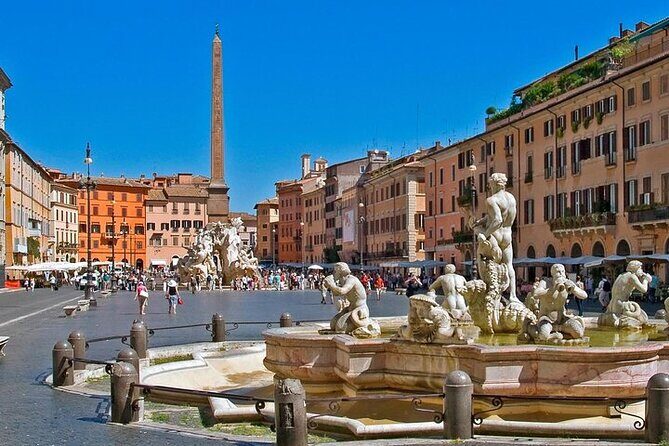
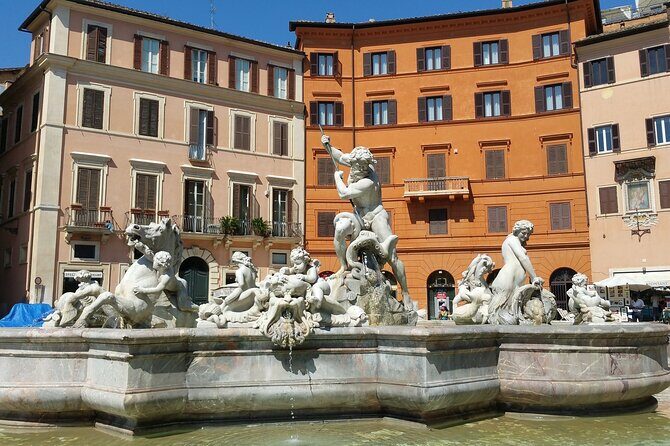
Then comes Piazza Navona, one of the city’s most satisfying squares for art-and-architecture lovers. It’s famous for its three magnificent fountains, with the centerpiece being Bernini’s Fountain of the Four Rivers. Here’s the detail that your guide will point out for you: the fountain symbolizes four major rivers—the Nile, the Ganges, the Danube, and the Rio de la Plata. That’s more than trivia. When you know what you’re looking at, the sculpture feels more like an idea made visible: power, world reach, and Baroque confidence, all in water and stone.
Time is again about 25 minutes, and both Piazza Navona and the fountains are free to view during the tour. The upside is you can focus on the art without worrying about tickets. The downside is that the square can get busy, and your group needs to move as a unit so the guide can keep the storyline going.
Sant’Agnese in Agone: The Best Kind of Confusing (In a Good Way)
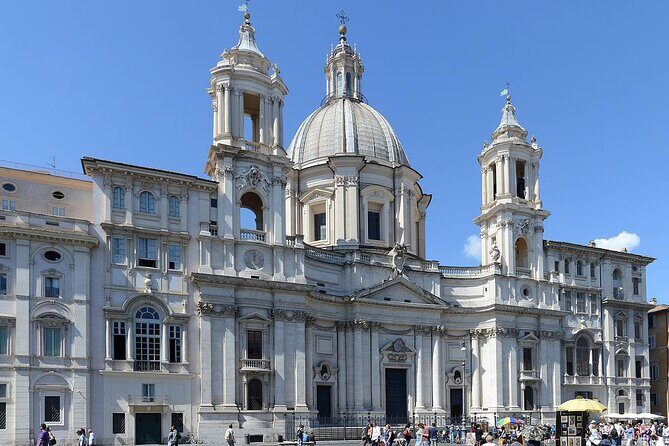
From Piazza Navona, you move to Chiesa di Sant’Agnese in Agone. This is one of those places where Rome’s artistic “collaboration” shows up in real materials—facade and interior are part of the same conversation between artists.
In the information shared for this tour, the facade is attributed to Gian Lorenzo Bernini, with a Baroque approach. The interior architecture is described as the work of Francesco Borromini and Bernini together. Even if you already know the big names, seeing how the roles shift between exterior and interior is a useful lesson in how Baroque churches function. The street-facing face can announce style; the interior can argue with it.
Why I think this stop is valuable in a short tour: it helps you stop thinking of Renaissance versus Baroque like separate teams. Here, you can feel overlap. The tour frames it like an artistic dialogue, which makes the whole day click into place—Michelangelo’s influence isn’t only earlier work, and Baroque isn’t only about drama. It’s about technique, persuasion, and how spaces control your attention.
This stop runs about 25 minutes. If you tend to rush interiors, take a moment to slow down once you’re inside. Even with limited time, you can still pick out what feels different between exterior impact and interior design.
The Barcaccia Fountain Finish Near Piazza di Spagna
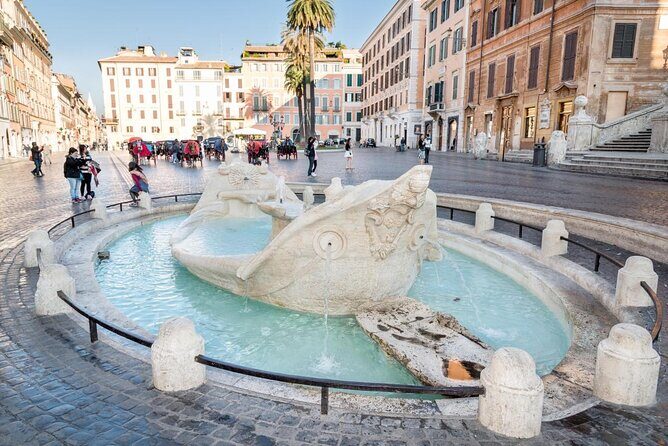
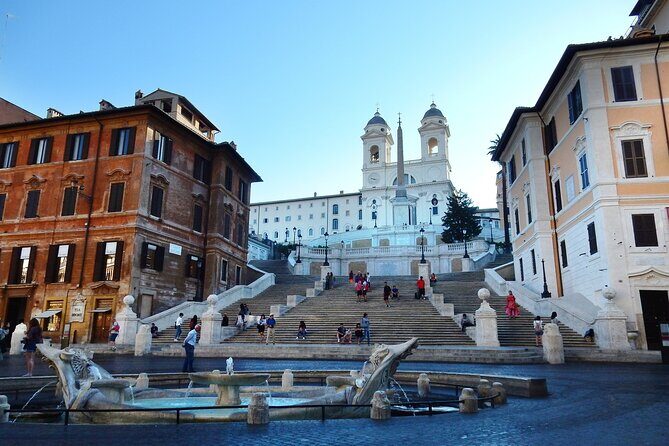
Your tour wraps up near Piazza di Spagna, finishing at the area around the Fontana della Barcaccia. This is a calmer kind of ending compared with Piazza Navona’s fountain intensity. The Barcaccia fountain—part of one of Rome’s most recognized squares—works as a visual breather. After sculpture, church facades, and fountain symbolism, it feels good to land in a public space where you can look around and re-orient yourself.
The tour is listed as ending at Piazza di Spagna, so you’ll already be close to a lot of easy wandering if you want to continue on your own. This also makes practical sense: finishing in a central, well-known area helps you avoid the “now where do I go” feeling that can follow a concentrated art day.
One thing to keep in mind: the schedule shows about 25 minutes for the final segment, and the route can adjust if a venue has an unpredictable closure. If that happens, the provider says they’ll extend the tour to keep the total time near the advertised length—so you’re less likely to lose the value of the experience.
What’s Included: Tickets, Group Size, and the Granita Break
The price is $287.41 per person, and the tour runs about 2 hours 30 minutes. That’s not cheap, but it’s also not random. You’re paying for (1) a professional local guide, (2) a semi-private group limited to 6, and (3) included tasting time.
Included items:
- Tour with a professional, local, expert guide
- Semi-private group of up to 6
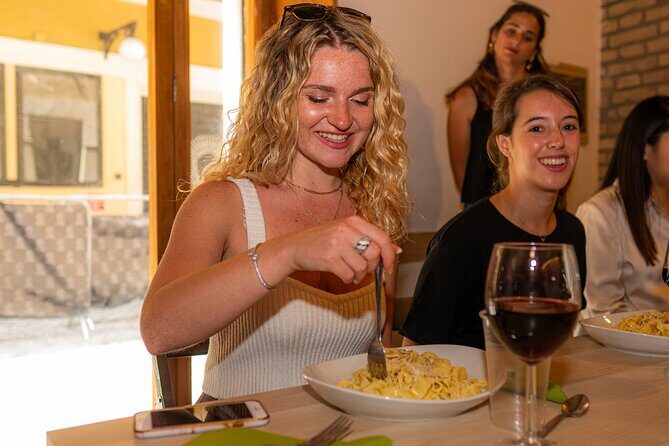
- Granita/gelato tasting
Ticket coverage:
- San Pietro in Vincoli includes the admission ticket
- The schedule also marks an admission ticket included on the final stop (so at least part of the paid logistics is handled)
The value question usually comes down to this: do you want someone to connect the dots for you in real time? If your answer is yes, this format fits. If you prefer to freestyle alone, you might spend less, but you’ll lose the focused thread that ties Michelangelo, Bernini, and Borromini together in one compact walk.
Also, the small-group size is a big deal in Rome. Big-group tours can feel like being herded. With only 6 people, you get better listening conditions and more chance to ask practical questions without the guide shouting over you.
For timing: confirmation happens at booking, and the average booking window is about 7 days in advance. If you’re visiting in peak season or on a packed itinerary day, earlier booking is smart.






How to Prepare So the 2.5 Hours Feel Like More
This tour lists a moderate physical fitness level. Translation: it’s walk-and-stand Rome, not a sit-everywhere museum day. Plan on some time on your feet, and wear shoes that work on cobblestones.
A simple strategy:
- Start your day well hydrated, because you’ll be outside for multiple stops.
- Bring your phone charged for photos, but keep it mostly down while you’re inside—your best “payoff” moments are when the guide is pointing out details.
- Expect some venues to run on unpredictable schedules. The provider notes that last-minute closures can happen, but they’ll extend the tour when that occurs to stay close to the advertised length.
The pacing is designed for art appreciation, not marathon endurance. You’ll see a lot, but you also won’t see everything deeply. If you already know which artist you love most—Michelangelo, Bernini, or Borromini—save 30 minutes on another day to return to your favorite spot and go slower.
Who This Tour Is For (and Who Might Skip It)
This is a great fit if:
- You want a guided art-and-architecture storyline rather than a checklist
- You’re interested in how Renaissance moves into Baroque (and how the same city expresses both)
- You love Piazza settings—church facades, fountains, and viewpoints—where art is part of daily life
- You prefer a smaller group and a guide who can keep you oriented
You might consider skipping if:
- You want a fully unhurried museum pace (this is not that kind of tour)
- You’re only looking for one artist and don’t care about the connections
- You’re traveling with very limited walking tolerance, since the route is still designed for moving between several major sites
Should You Book This Semi-Private Michelangelo, Bernini & Borromini Tour?
If you want a concentrated, high-value introduction to three heavyweights of Italian art—done in a small group with a real guide—this tour is easy to recommend. The starting point at San Pietro in Vincoli gives your day a strong anchor, Piazza Navona delivers Baroque visual impact fast, and the final landing near Piazza di Spagna keeps you in a central spot to keep exploring.
The main reason to hesitate is the pace. If you know you only enjoy art when you can linger and read every inscription, you may feel rushed. But for most people—especially first-timers who want a smart plan—this is the kind of “see the important things with meaning” Rome day that pays off later, when you’re on your own and the city looks clearer.
FAQ
How long is the semi-private art tour?
It’s listed at about 2 hours 30 minutes.
How many people are in the group?
The tour has a maximum of 6 travelers.
What does the tour cost?
The price is $287.41 per person.
What are the main included experiences?
You get a guided tour with a professional local expert guide, a semi-private group experience, and a granita/gelato tasting.
Where does the tour start and end?
It starts at Italy In Love Tours on Via del Cardello, 31, Rome, and ends in the Piazza di Spagna area.
Are tickets included for the sights?
Admission ticket inclusion is specified for San Pietro in Vincoli, and an admission ticket is also listed as included for the final stop. Other stops in the schedule are listed with free admission.