REVIEW · ROME
Rome’s Dark Side Ghosts and Legends Tour
Book on Viator →Operated by Dark Side City Tours · Bookable on Viator
Rome’s after-dark stories hit different. This 2-hour walk turns famous squares and alleyways into a living set for ghosts, executions, and old rumors of magic that still cling to the stones. I love how the tour keeps moving, so the mood stays spooky without feeling like you’re trapped in one spot.
Two things I really like: you get a small group (max 15) with professional storytellers who mix sharp history with dark humor, and the route lands at places you’d walk past in daylight but never understand in the same way.
One heads-up: expect a lot of standing and cobblestones on narrow streets at night, so comfy shoes matter more than you think.
In This Review
- Key Takeaways Before You Go
- Why Rome at Night Makes This Tour Work
- Price and Value: What $24.19 Really Buys You
- The Route From Campo de’ Fiori to Castel Sant’Angelo (What It Feels Like)
- Stop-by-Stop: Nine Dark Corners You’ll Walk Through
- Campo de’ Fiori: Where the Tour Starts With a Warning
- Piazza Farnese: Renaissance Grandeur With Hidden Stories
- Vicolo delle Grotte: An 18th-Century Magician in the Backstreets
- Ponte Sisto: The Woman Who Ruled Rome
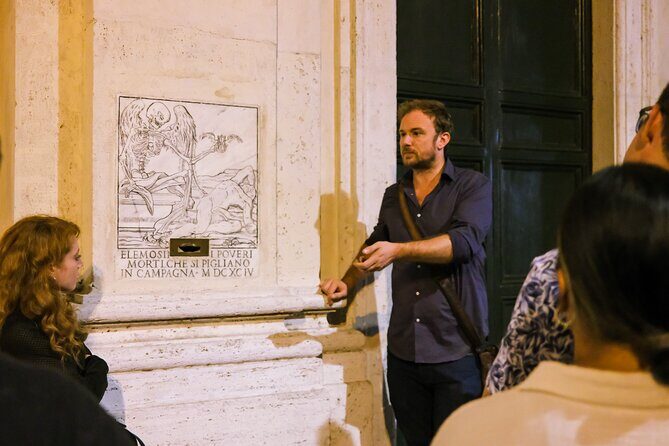
- Via Giulia: Monks, Order, and a Macabre Job
- Via di Monserrato: A Prison Story Plus a Notorious Pope
- Via dei Banchi Vecchi: Gelato Where Poisoners Used to Run the Shop
- Via del Banco di Santo Spirito: The Executioner’s House
- Castel Sant’Angelo: From Emperor’s Tomb to a Site of Executions
- How the Guides Keep You Hooked (And Why That Matters)
- Gelato, Cafe Breaks, and How to Plan Your Night
- Who Should Book This (and Who Might Want a Different Night)
- Should You Book Rome’s Dark Side Ghosts and Legends?
- FAQ
- What is the start time for the tour?
- How long is the tour?
- What language is the tour offered in?
- How large is the group?
- Where does the tour start and end?
- What’s included, and is food included?
- Is there free cancellation?
Key Takeaways Before You Go
- Night-first route: you’ll see Rome when it’s cooler and less crowded, which makes the stories feel more alive.
- Small group energy: max 15 people keeps the pace human and the guide easy to hear.
- Storytelling over tickets: the stops don’t require paid admissions, so you’re paying for the guide’s performance.
- Dark legends with real places: Campo de’ Fiori, Ponte Sisto, and Castel Sant’Angelo give the rumors a physical setting.
- Food break stays optional: you’ll get gelato and can pause at a cafe without derailing the walk.
Why Rome at Night Makes This Tour Work
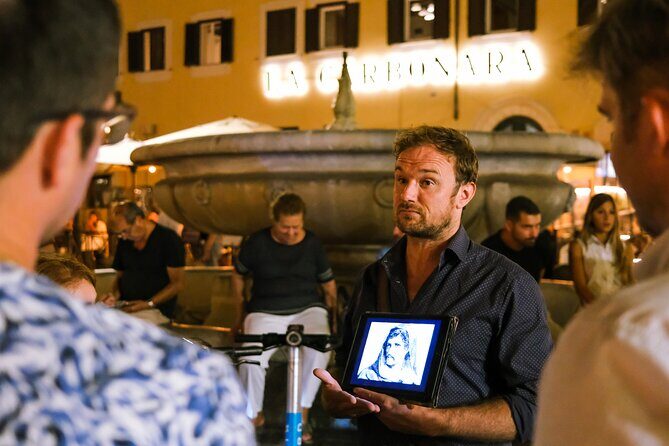
I’m always a little skeptical of theme tours. The good ones earn their theme. This one does.
Rome at night has a built-in advantage: fewer people, softer light, and streets that feel narrower and quieter. That matters because most of what you’re doing is listening while walking—half the fun is the rhythm, not just the facts. Guides lean into that timing, so the legends feel like they’re happening in real time rather than being read off a script.
Another thing I like is the tone. It’s not just horror for horror’s sake. The guides (I’ve seen praise for Ariel/Arielle, Ben, and Ivana, plus Alethea/Alethia) are repeatedly described as entertaining, funny in a dark way, and serious enough about the places that you actually learn what made these stories stick. You’ll hear about an 18th-century magician, an infamous pope and his family, and the grim reputation of Rome’s executioners—but it’s told in a way that keeps you awake.
You can also read our reviews of more tours and experiences in Rome.



Price and Value: What $24.19 Really Buys You
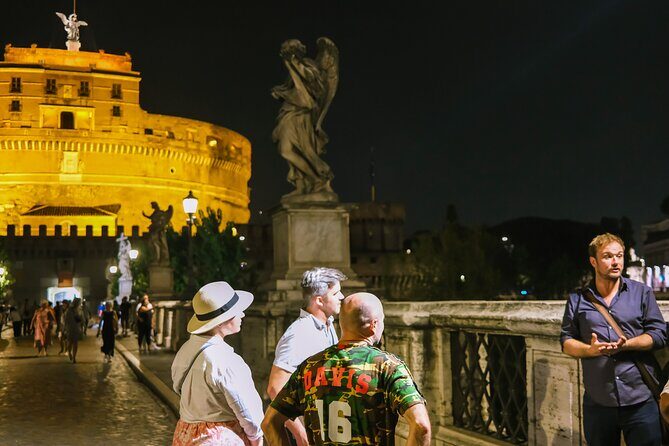
At $24.19 per person for about 2 hours, you’re not paying for a museum ticket. You’re paying for a night walk that connects nine specific locations, with an English-speaking guide and professional storytelling.
That’s where the value comes in:
- Small group (max 15): you get attention and momentum.
- Free admission at the stops: you’re guided through the area rather than forced into paid entry.
- You cover major landmarks by story: the last stretch reaches Castel Sant’Angelo, so your money supports a route that ends at a big Roman anchor.
What’s not included is straightforward. There’s no food or drink included in the price, though the experience includes a gelato stop and offers a cafe break for anyone who wants one. If you’re trying to keep travel costs tight, that structure is useful: you can stay on budget and still get one sweet payoff.
The Route From Campo de’ Fiori to Castel Sant’Angelo (What It Feels Like)
This is an evening walk that starts at Campo de’ Fiori and ends near St. Angelo Bridge / Ponte Sant’Angelo. The start time is 8:00 pm, and the whole thing runs around 2 hours.
Here’s the practical reality: you’ll be moving through historic center streets, including narrow lanes and cobblestones. Even when the pace is steady, you’ll spend a lot of that time standing and listening—something several people specifically called out. So think of it like a night performance with light walking, not a casual stroll you can drift through while texting.
The vibe is also worth planning for. You’ll hear about executions, prisons, and notorious figures. But multiple guide reviews stress that it feels safe at night and more like clever storytelling than jump-scare theater. If you want Rome’s dark side without feeling unsafe or overwhelmed, this is built for that sweet spot.
Stop-by-Stop: Nine Dark Corners You’ll Walk Through
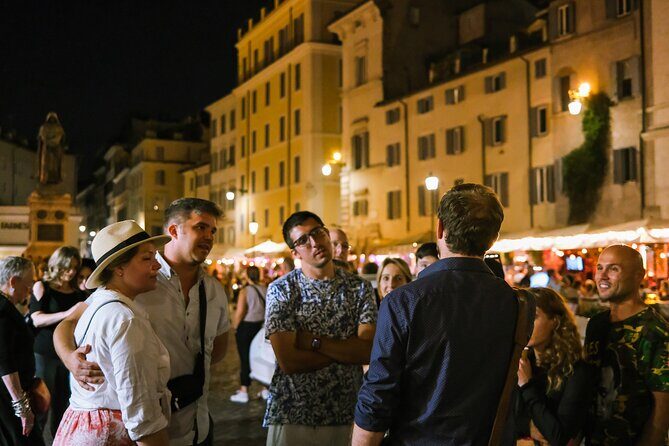
Below is the story arc, location by location. I’ll also flag what to watch for at each stop, because some places are more about the mood than the monument.
Campo de’ Fiori: Where the Tour Starts With a Warning
You meet at Campo de’ Fiori and the guide kicks things off right away. This is smart. You’re not warming up with small talk. You’re thrown into the era and the tone, which helps the rest of the route land.
What to expect: the first legend sets your expectations—expect a mix of real Roman setting and grim rumor.
Why it matters: starting here gives you a strong reference point before you slip into the side streets.



Piazza Farnese: Renaissance Grandeur With Hidden Stories
Next comes Piazza Farnese, where the surroundings carry big Renaissance weight. The tour uses that backdrop to talk about history that you might not get on a generic walk, including the kind of details that sound like gossip but are tied to how power worked.
What to expect: palace-and-neighborhood context plus stories that add an edge.
Drawback to consider: because this is an open area, you’ll want to keep your focus—wind and sound can carry, and the guide’s timing is important.
Vicolo delle Grotte: An 18th-Century Magician in the Backstreets
Then you turn into Rome’s darker backstreets, specifically Vicolo delle Grotte. This is where the tour leans into haunting-atmosphere storytelling: the tale of an 18th-century magician and the idea that he still haunts the area today.
What to expect: tighter streets, darker corners, and a story designed for night walking.
Practical tip: listen with your feet. Don’t stop dead in the lane; you’ll need to keep moving to match the group.
Ponte Sisto: The Woman Who Ruled Rome
At Ponte Sisto, you hear about a woman who ruled Rome—her rise to power and why the bridge is linked to haunting. This stop is fun because it turns a regular bridge into a character in the story.
What to expect: power, reputation, and why people still connect certain places to certain figures.
Why it works: bridges are natural “story stages.” You can feel how the city funnels movement, and the legend sticks better.
Via Giulia: Monks, Order, and a Macabre Job
Next is Via Giulia, where the tour brings in an order of monks with a task described as macabre. This is one of those “Rome does weird things in the name of duty” moments.
What to expect: the story focuses more on the purpose behind the behavior than on cheap shock.
If you’re sensitive: it’s dark, but presented as legend/history rather than graphic spectacle.
Via di Monserrato: A Prison Story Plus a Notorious Pope
At Via di Monserrato, the tour tackles one of Rome’s worst prisons and ties it to the history of a notorious pope and his family, including how the area is said to be haunted now.
What to expect: grim human stories that explain how fear and punishment shaped daily life.
Why it matters: this stop adds weight. Before this, the legends feel like eerie tales. Here, they become about systems—what institutions did and how reputations lasted.
Via dei Banchi Vecchi: Gelato Where Poisoners Used to Run the Shop
This is one of the most memorable twists: you’ll stop at Via dei Banchi Vecchi and see the modern gelato shop that used to be run by prolific poisoners. It’s a perfect example of why night walking works: you’re not just reading about the past—you’re staring at a present-day doorway that used to be something else.
What to expect: a gelato break that’s quick and fits the flow.
Why it’s valuable: you get a sensory reset—cold, sweet, and normal—so the darker stories don’t clobber your energy.
Via del Banco di Santo Spirito: The Executioner’s House
At Via del Banco di Santo Spirito, the tour shares the story of Rome’s most famous executioner, linked to his house.
What to expect: this is character-focused storytelling—fame, fear, and why certain jobs become legends.
Good to know: you may see how the city’s layout preserves memory. Even when buildings change, rumors attach themselves to place.
Castel Sant’Angelo: From Emperor’s Tomb to a Site of Executions
The final stop is Castel Sant’Angelo. The tour looks at its origins as an emperor’s tomb, then follows its later use as a site of executions, ending with one of Rome’s tragic stories that happened right there.
What to expect: a larger-scale wrap-up that pulls together the themes: power, punishment, and how Rome keeps telling the same story in different costumes.
Bonus: because this is the last stop, your energy has a clean landing point. You’ll leave with a strong sense of where the legends end and the real city begins.
How the Guides Keep You Hooked (And Why That Matters)
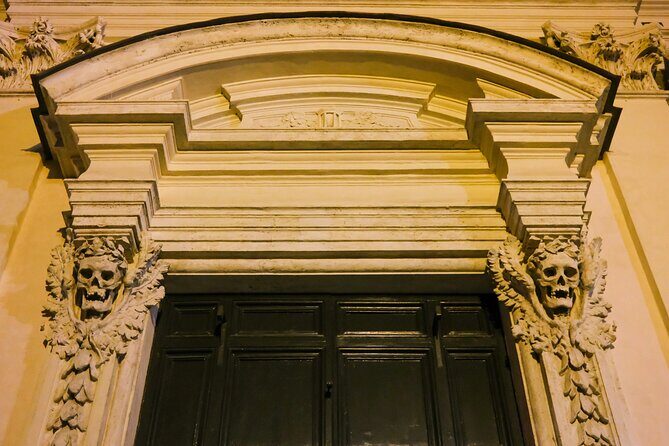
This is one of those tours where the guide quality is the whole product. And the reviews you provided are consistent: people call the guides funny, engaging, and able to keep attention the entire time.
A few patterns show up:
- Dark humor on purpose: Guides like Ariel/Arielle are praised for a mix of history and dark comedy.
- Entertainment without losing the facts: Ben gets repeat mentions for making the darker side fun but still tied to real places.
- Clear storytelling rhythm: People say they could have listened longer, which is a big deal for a walking tour.
- Safety and confidence: Multiple comments mention feeling safe wandering at night with the guide.
If you’re the type who enjoys hearing about notorious people but also wants it organized, this tour fits. It’s not chaos. It’s pacing. Stop, story, move on.
Gelato, Cafe Breaks, and How to Plan Your Night
There’s no pressure to buy anything along the route beyond the gelato moment. But there is an optional pause.
You’ll get:
- Gelato from a specific shop tied to the poisoner legend.
- A cafe stop offered during the walk for anyone who wants a break.
- Food and drinks are not included in the tour price, so treat the cafe like a choose-your-own-stop.
My practical suggestion: eat a light meal before you go. Then the gelato feels like a treat instead of dinner. Also, if you’re ordering at the cafe, keep it quick—this is a guided experience and the guide will keep the group moving.
Who Should Book This (and Who Might Want a Different Night)
This is ideal if you:
- want Rome’s side streets and not just the postcard stops
- like short, focused storytelling that pairs history with legend
- want a fun evening that doesn’t require museum tickets
- enjoy learning about infamous characters—poisoners, executioners, prisons, and all
It may be less ideal if you:
- don’t handle cobblestones or lots of standing well
- hate walking narrow streets at night (even if it feels safe)
- need a mostly seated experience
Also note: one review mentioned they ended up skipping the tour because they were too tired after a long day. That’s not a criticism of the tour—it’s a reminder to protect your energy. You’re paying for an evening performance. If you’re wiped out, you’ll miss the point.
Should You Book Rome’s Dark Side Ghosts and Legends?
Yes, if you want a memorable night in Rome that’s more about atmosphere and storytelling than ticking off monuments. The price is reasonable for a 2-hour small-group walk, and the route ends at Castel Sant’Angelo, which gives the experience a satisfying finish.
Book it especially if:
- you like dark humor with history
- you want a guide who can turn normal streets into a story stage
- you’re going in the evening and want something that uses Rome’s nighttime mood well
Skip it (or consider another style of tour) if you’d struggle with uneven cobblestones and lots of standing. If that’s your situation, you may still enjoy the stories—but the physical side could be the limiting factor.
If you’re ready for Rome after dark, this is the kind of tour that makes the city feel personal. You’ll leave with legends stuck in your head—and a new way of seeing the places you already thought you knew.
FAQ
What is the start time for the tour?
The tour starts at 8:00 pm.
How long is the tour?
It lasts about 2 hours (approx.).
What language is the tour offered in?
The tour is offered in English, with an English-speaking expert guide.
How large is the group?
The group is limited to a maximum of 15 travelers.
Where does the tour start and end?
It starts at Campo de’ Fiori and ends at St. Angelo Bridge / Ponte Sant’Angelo (Castel Sant’Angelo area).
What’s included, and is food included?
Included are the English-speaking guide, small group size, and the storytelling entertainment. Gelato is part of the experience, but food and drink beyond that are not included; there is also a cafe break offered.
Is there free cancellation?
Yes. You can cancel for a full refund up to 24 hours in advance of the experience start time.