REVIEW · ROME
Rome: Walking Tour of World War 2 in Rome
Book on GetYourGuide →Operated by Roman Vacations · Bookable on GetYourGuide
WWII in Rome isn’t in a museum. It’s on the streets. This walking tour pulls you from familiar landmarks into the real story behind them, starting near Trajan’s Column and moving through the political heart of Fascist Rome. You’ll see how daily life, power, and propaganda shaped what Romans built, restored, and memorialized during the war years.
I especially love how the guide turns iconic sights into readable evidence. You’ll learn why Piazza Venezia matters and how Mussolini used grand public space to stage loyalty. Second, I like the way the walk teaches you what to notice in plain sight, so Fascist-era details stop looking like random stone and start looking like deliberate messages.
One consideration: this is a 2.5-hour walking tour, and it moves at a pace that works best if you’re comfortable staying on your feet. If heat, cold, or lots of steps slow you down, you’ll want to plan ahead and come prepared.
In This Review
- Key things I think you’ll care about
- Meeting at Trajan’s Column and getting your bearings
- From Trajan’s Column to Piazza Venezia: Mussolini’s stage
- The Roman Forum and Capitoline area: when Fascism remixed Rome
- The Jewish Ghetto stop: history that can’t be skipped
- Piazza Navona to the Tiber River: Church power in Fascist times
- June 1944: liberation you can almost feel
- Why the guide makes or breaks this tour
- Small-group format: better questions, better pacing
- Price and value for an $88, 2.5-hour walk
- Practical tips so you don’t suffer through the best parts
- Who should book this WWII Rome walk
- Should you book the Rome WWII walking tour?
- FAQ
- How long is the Rome WWII walking tour?
- Where do I meet the tour guide?
- Is the tour wheelchair accessible?
- What group size should I expect?
- Is the tour offered in English?
- What should I wear or bring?
- Will the tour run in bad weather?
- Is transportation included?
- Is there a cancellation window?
Key things I think you’ll care about
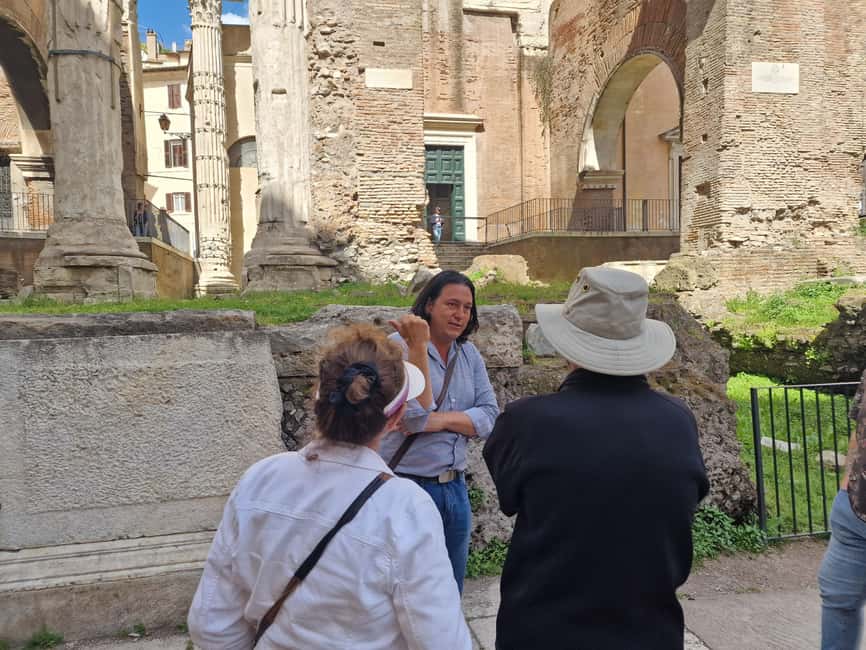
- Trajan’s Column as your anchor point, so the route feels grounded from the start
- Piazza Venezia and Mussolini’s balcony perspective on how spectacle replaced debate
- The Forum’s physical clues to Mussolini’s obsession with Ancient Rome and what it changed
- Jewish Ghetto history tied directly to what happened to Rome’s Jewish community during the war era
- Piazza Navona and the Tiber-area stops that connect the Church’s role to Fascism and wartime politics
- June 1944 liberation focus, ending with the moment Nazis fled and US Fifth Army entered amid jubilation
Meeting at Trajan’s Column and getting your bearings
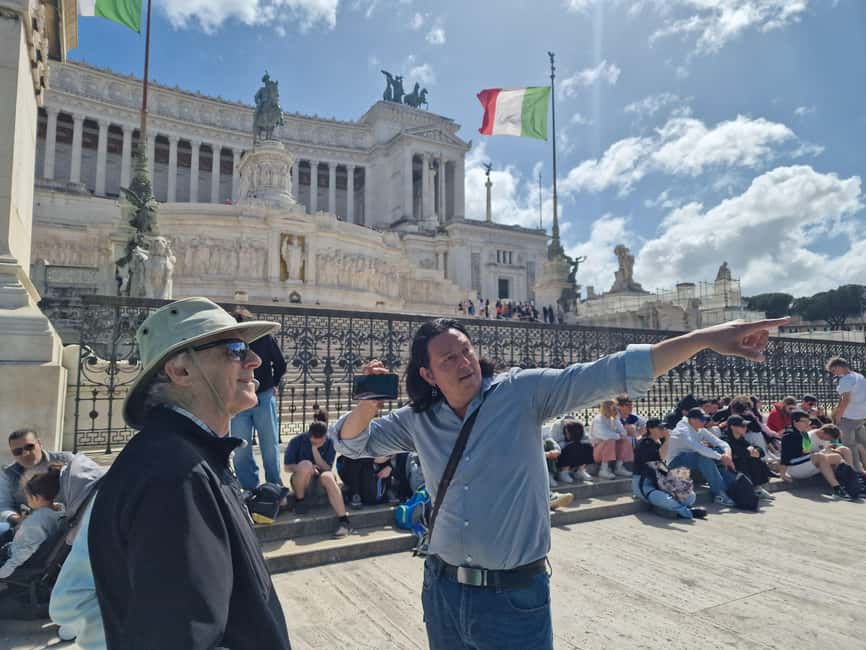
Start at Trajan’s Column, at the cafe in front of it, along the fencing. Look for the guide holding an orange sign with a lion head. Do yourself a favor and arrive about 15 minutes early, because the tour departs promptly.
This matters more than it sounds. Rome can be confusing even when you think you know it. Getting started on the right corner helps you settle into the “historical map” the guide is building: Fascism first, Nazi occupation next, liberation after.
Also, the tour is designed for small groups (limited to 10), and the guide leads in English. That combo is ideal for Rome, where the best parts of the city are often the small ones people walk past.
You can also read our reviews of more tours and experiences in Rome.



From Trajan’s Column to Piazza Venezia: Mussolini’s stage
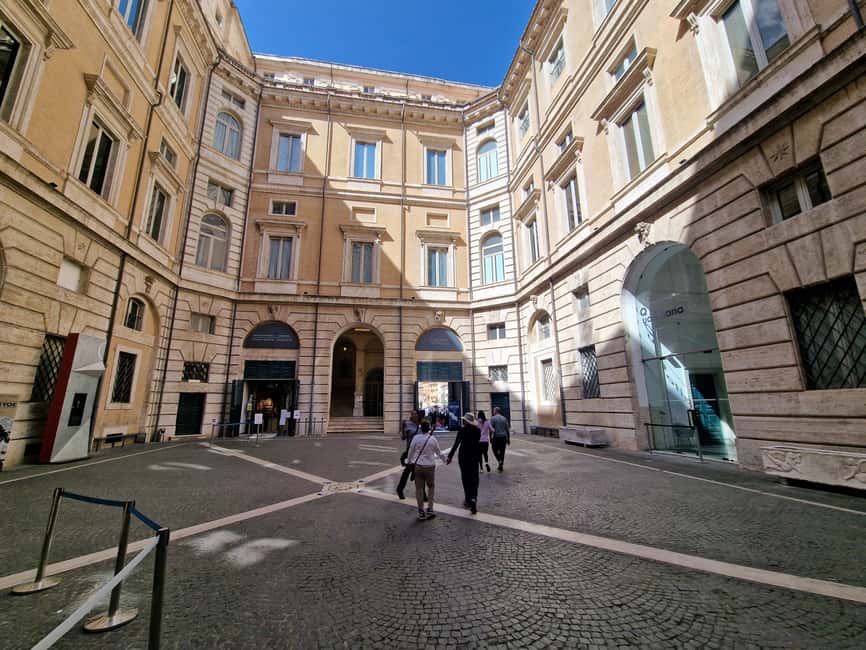
The walk quickly orients you from the ancient past toward the Fascist present. You begin at Trajan’s Column, then head toward Piazza Venezia, which served as the dramatic center stage of Fascist Italy.
Here’s what makes this stop click. You’re not just looking at a square; you’re looking at a system for controlling attention. The guide explains how Mussolini spoke from his famous balcony to thousands gathered below. The point isn’t to replay speeches. It’s to understand how the regime used public space, timing, and crowds as part of governance.
You’ll also start noticing the pattern the tour builds on: Rome often hides the 20th century in the same places tourists already photograph. Once the guide explains the why, Fascist-era signs start showing up everywhere you turn, like the city is giving you clues with a wink.
The Roman Forum and Capitoline area: when Fascism remixed Rome
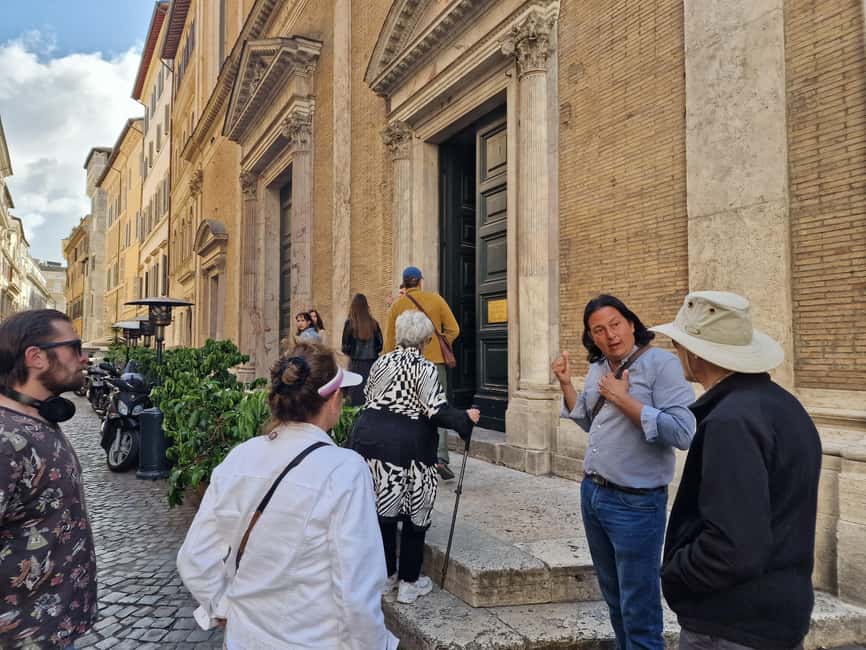
Next comes the Ancient Roman Forum and the surrounding areas tied to Rome’s political storytelling. This is where the tour gets especially useful if you’ve visited the Forum before and felt like you were mostly reading columns and dates.
The guide connects the dots between Mussolini’s obsession with Ancient Rome and the physical changes that obsession left behind. The big idea: Fascists deliberately promoted ancient imagery to legitimize the modern regime. They didn’t just admire the past. They acted on it.
One of my favorite “aha” moments in this kind of tour is when you realize you’re standing in a space that was shaped for a purpose beyond ancient history. The Forum becomes more than a site of ruins. It becomes a stage set for linking modern Italy to imperial Rome.
And if you’re a Roman history buff, you may also be guided to a spot associated with Julius Caesar’s assassination. One review noted this was somewhere they had walked past several times without realizing what they were looking at. That’s the tour’s value in a sentence: you start seeing what your eyes were missing.
The Jewish Ghetto stop: history that can’t be skipped
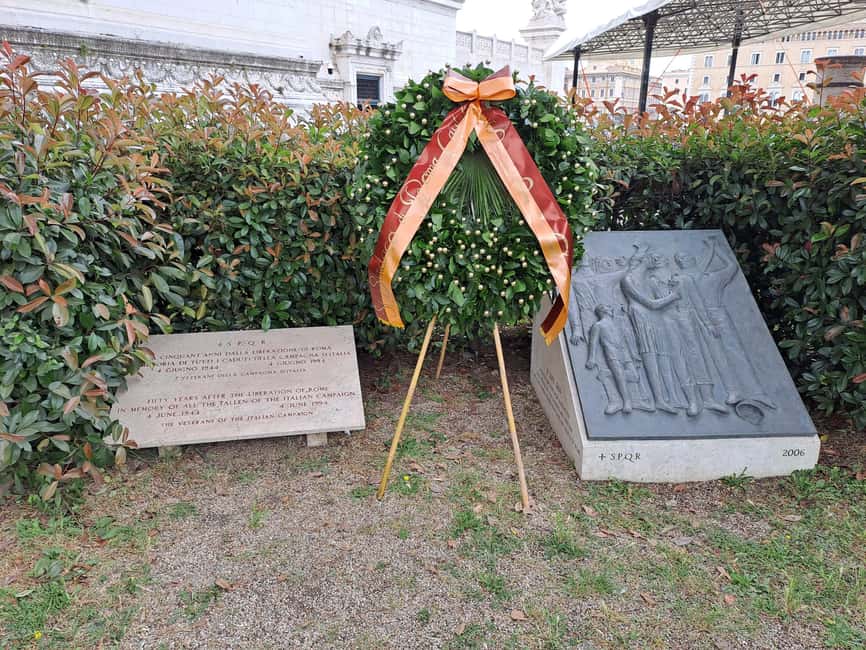
From the political centers, the route heads toward the Jewish Ghetto, where the guide discusses the history of Rome’s Jewish community and how the war-era reality shaped their experience.
This stop is important because it keeps the tour from becoming only about rulers, uniforms, and speeches. Rome’s story during WWII includes people who didn’t hold power, and the consequences weren’t abstract.
You’ll hear the historical background of the community in Rome, then connect it to the broader context of Nazi occupation. The guide’s framing is practical: you learn why remembering specific communities matters when the city’s monuments can sometimes make the era feel distant or generalized.
It’s also an emotional pause without turning into a lecture. You’re walking through a part of the city that still carries memory, and you come away with a more complete sense of how war changes a society, not just a government.
Piazza Navona to the Tiber River: Church power in Fascist times
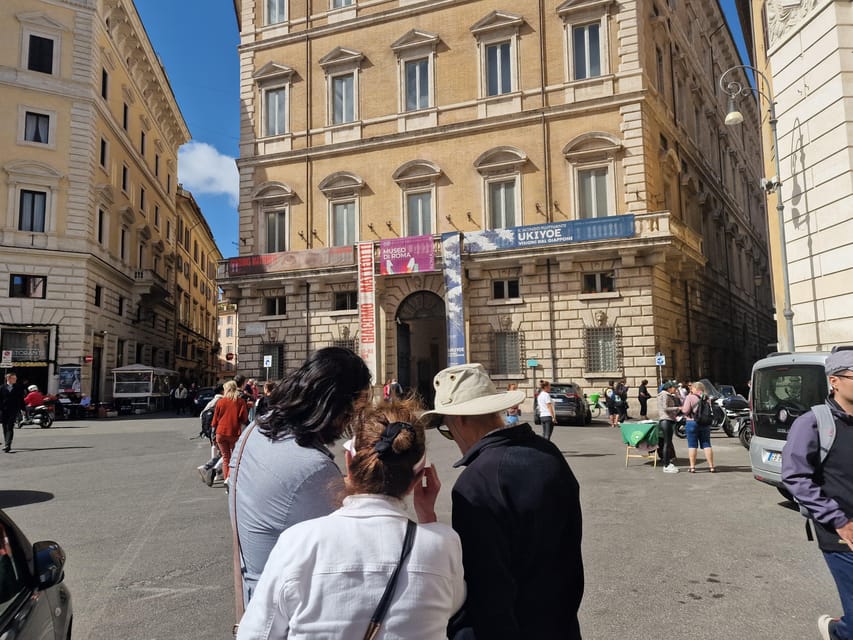
After the ghetto, the route continues toward Piazza Navona and then to the Tiber River area, with discussion focused on the Church and its position during the Fascist period and the war.
This is where you get a different angle than the usual “who won the war” framing. You learn how institutions like the Church fit into the political climate of the time, and why Rome’s religious identity can’t be separated from its politics.
Piazza Navona is already one of those places that looks like a postcard when the sun hits it. The tour doesn’t ruin the beauty. It gives it weight. The same buildings and open space you’d normally treat as scenery become part of how authority spoke to people.
At the river, the conversation broadens again. You start thinking about Rome as a living system: power flows through streets, bridges, and public gathering spots. History isn’t only inside monuments. It’s in the geography of movement and control.



June 1944: liberation you can almost feel
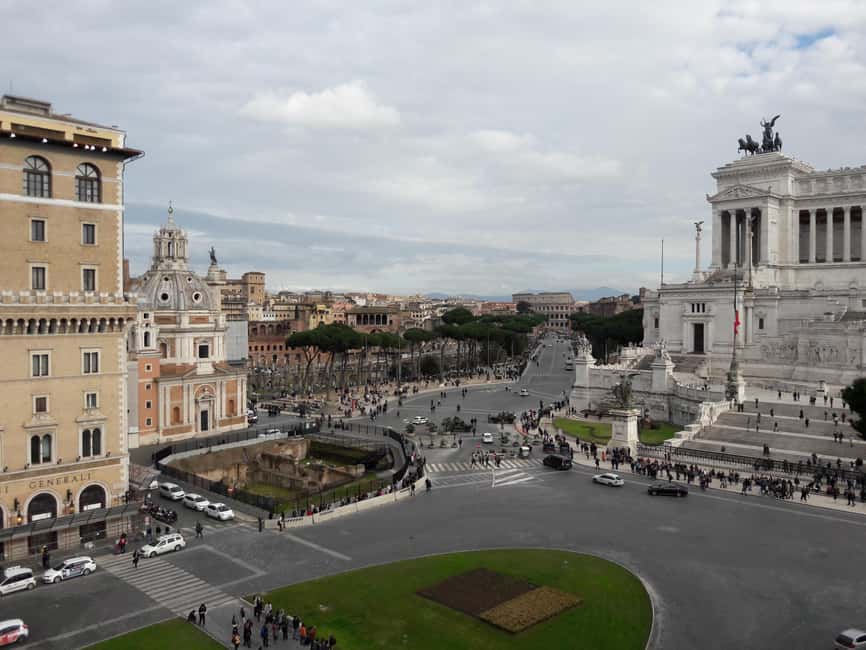
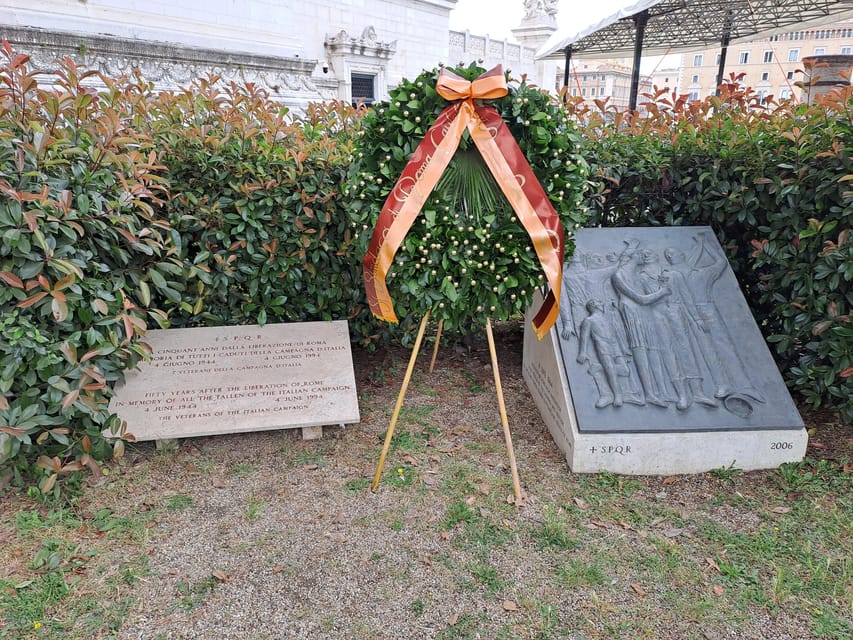
The tour ends with the turning point that changes everything: June 1944, when the Nazis fled the city and the US Fifth Army entered Rome. The guide describes the scenes of mass jubilation, and this ending lands because you’ve spent 2.5 hours seeing how the city worked under Fascism and occupation.
By the time you reach liberation, it’s not just a date. It’s a contrast. You’ve seen the propaganda stage; you’ve seen how the regime tried to connect itself to ancient legitimacy; you’ve seen how different communities were affected. Then you get the moment when that control breaks.
This final segment also helps you process what you’ve been told earlier in the walk. The tour doesn’t treat WWII as a straight line. It treats it as a set of pressures that reshaped Rome in visible ways—until the pressure eased and something new could begin.
Why the guide makes or breaks this tour
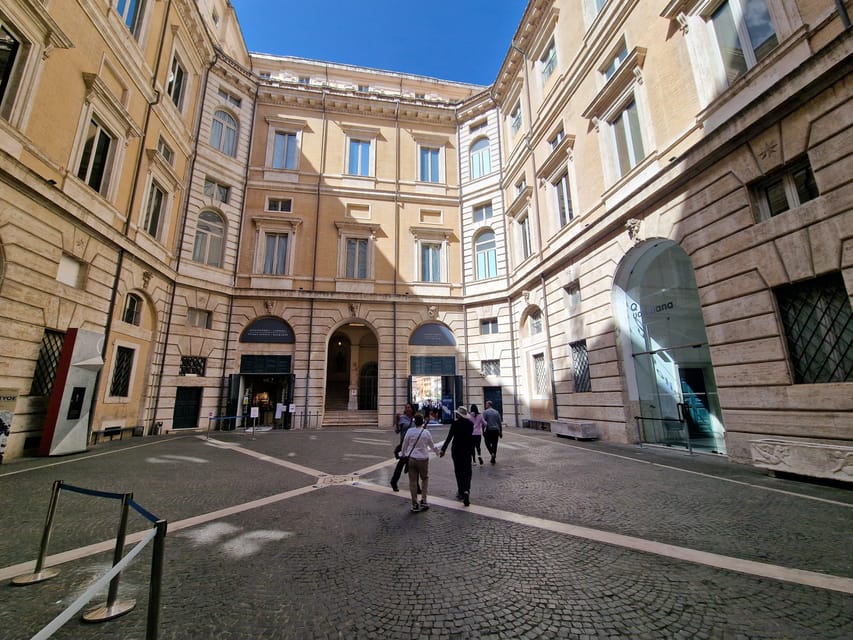
The guide is central here. Roman Vacations runs the experience, and the reviews highlight that the guides don’t just recite facts. They explain what you’re looking at and why it matters.
One review specifically praised James as an expert, with answers to questions and a talent for pointing out the small things—details like how to spot signs of the Fascist past in buildings, markers, and monuments. That kind of teaching matters because Rome is full of symbols, and without guidance you might miss the meaning entirely.
Another review praised the tour’s storytelling, including support with historical photos and video that helps bring wartime Rome to life. You should expect the tour to feel like guided interpretation, not a slow march of timestamps.
The payoff: when you leave, you won’t just remember stops. You’ll know how to read the city.
Small-group format: better questions, better pacing
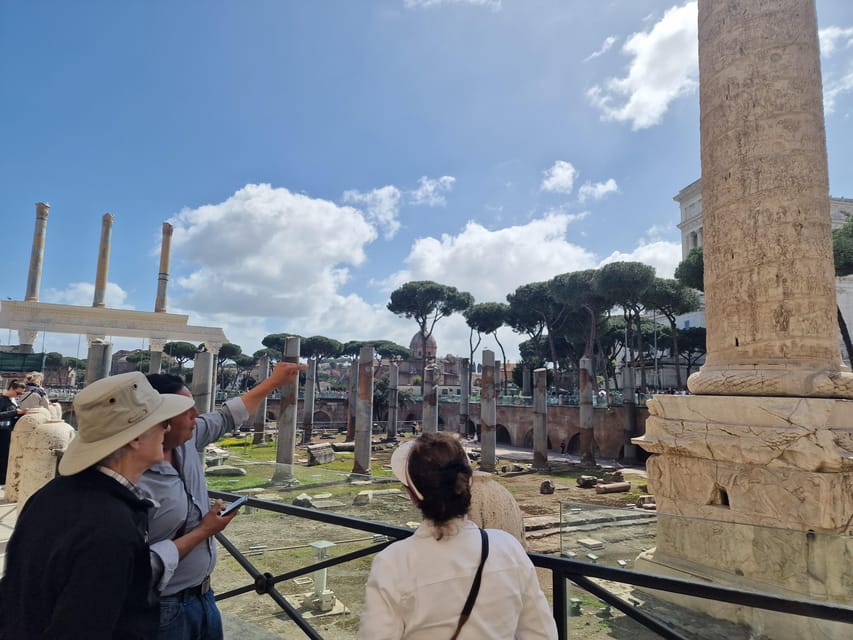
Limited to 10 participants, this tour keeps the conversation possible. In Rome, the best tours are the ones where you can ask your own question rather than just listening to the group.
If you’re traveling with a couple of friends or as a solo traveler, you’ll likely get more back-and-forth than on larger bus-style experiences. And because the route links multiple themes—Fascism, occupation, Jewish history, the Church, liberation—you want a guide who can flex with your interests.
It’s also wheelchair accessible, which is a strong plus if you need that consideration and can plan for uneven sidewalks.
Price and value for an $88, 2.5-hour walk
At $88 per person for about 2.5 hours with an expert guide, the cost is not budget-crumbs territory. But it also isn’t overpriced for what you get in a city like Rome.
Here’s the value logic: this tour isn’t only about seeing famous sights. It’s about understanding them in a way that costs money elsewhere. Once you have the framework, you can walk around on your own and suddenly recognize what you missed. That can turn a single guided afternoon into three or four more meaningful walks later in your trip.
Also, the tour includes the most expensive part of any walking experience: live interpretation. You get to ask questions, and you get guidance on what to look for, including small remnants and memorials that might otherwise blend into the background.
One caution on value: if you already have a deep WWII background and want a self-guided experience, you might get less out of it. But if you want context that makes the whole city click, the guide’s role justifies the price.
Practical tips so you don’t suffer through the best parts
Bring what you’ll actually use. The tour recommendation list is simple and spot-on:
- bottled water, sunscreen, and a hat (Rome can be relentless)
- an umbrella just in case
- comfortable walking shoes
- a shoulder cover for inside churches
- dress warmly in colder months, and bring a cover for bare shoulders in warmer months
One more practical note: the tour runs in all weather conditions unless authorities close a site for safety reasons. That means you should plan for light rain and shifting temperatures. If you show up prepared, the experience stays enjoyable rather than annoying.
And because it’s a walking tour through central Rome, you’ll want to keep your expectations realistic. You’ll cover plenty of ground, but the goal is interpretation, not “see everything in one day.”
Who should book this WWII Rome walk
This is a strong fit if you:
- want WWII context tied to places you already see in central Rome
- like history that changes how you look at monuments
- enjoy asking questions and getting answers in English
- want a route that focuses on Fascism, Nazi occupation, the Jewish Ghetto, the Church, and liberation as a connected story
It’s also a great option for your last days in Rome. One review described it as a final tour that transformed how they understood everything else they’d seen. That’s exactly the “last puzzle piece” role this kind of tour plays.
If you only have one afternoon and you’d rather do a classic highlights sweep, this might feel heavier. But if you want meaning over medals, it’s an excellent use of time.
Should you book the Rome WWII walking tour?
Yes, if you want to see Rome with sharper eyes. The Fascist-to-liberation storyline gives you context that makes ordinary streets feel charged. And the guide-led interpretation helps you spot what the city tries to hide in plain sight.
Skip it only if you hate walking, prefer purely visual sightseeing, or already know the material so well that you’d rather save time for other neighborhoods. Otherwise, this tour is one of the best ways to turn Rome from a photo album into a place with consequences.
FAQ
How long is the Rome WWII walking tour?
It lasts about 2.5 hours.
Where do I meet the tour guide?
Meet near Trajan’s Column, in front of the cafe and along the fencing. The guide holds an orange sign with a lion head.
Is the tour wheelchair accessible?
Yes, it is wheelchair accessible.
What group size should I expect?
It’s a small group limited to 10 participants.
Is the tour offered in English?
Yes, the live tour guide is English-speaking.
What should I wear or bring?
Wear comfortable walking shoes and bring a shoulder cover for any churches. It’s also recommended to bring bottled water, sunscreen, a hat, and an umbrella.
Will the tour run in bad weather?
It proceeds in all weather conditions unless a site is closed by authorities for safety reasons.
Is transportation included?
Transportation to and from the meeting point is not included, and transportation during the tour is not included.
Is there a cancellation window?
Yes. Free cancellation is available up to 24 hours in advance for a full refund.