REVIEW · GUIDED
Rome Vittoriano Capitol Hill and Aracoeli Guided Tour with Maria
Book on Viator →Operated by Maria Tours · Bookable on Viator
Rome has a monument many skip.
This guided 90-minute stroll helps you read the Vittoriano complex beyond its big postcard silhouette. You’ll pair it with a walk to Michelangelo’s Piazza del Campidoglio, then finish at Santa Maria in Aracoeli above the Forum area—so the time feels like a mini tour of how Rome puts power, art, and faith on display.
I especially like the small-group size (10 people max). It makes the route easier to follow and lets the guide slow down when details matter, like what the Vittoriano is actually celebrating and how the Capitoline area was reshaped. The other big win for me is the momentum: short fountain stops set you up for the hilltop views, then the tour lands where the views and compositions really payoff.
One possible drawback: the schedule is tight. You only get brief moments at several outdoor stops, so if you want long, unhurried time inside the Vittoriano or extra climbing time, you’ll likely need to plan a little solo time on your own before or after.
In This Review
- Key things I’d circle before booking
- Vittoriano in context: why it’s worth your attention
- Fontana stops near Piazza Venezia: quick breaks that make the route work
- The heart of the tour: Piazza del Campidoglio and Michelangelo’s plan
- Santa Maria in Aracoeli: closing the loop above the Forum
- The 1.5-hour flow: what to expect minute by minute
- Price and value: is $248.63 worth it for 90 minutes?
- Who this tour suits best (and who might want something else)
- Practical tips to make the most of your walk
- Should you book the Rome Vittoriano, Campidoglio, and Aracoeli guided tour with Maria?
- FAQ
- What’s the duration of the tour?
- Where does the tour start and end?
- How many people are in the group?
- What’s included?
- Do I need to bring a printed ticket?
- Are any of the stops free to enter?
- Is the tour suitable for children?
- Are service animals allowed?
- Can I cancel for a refund?
Key things I’d circle before booking
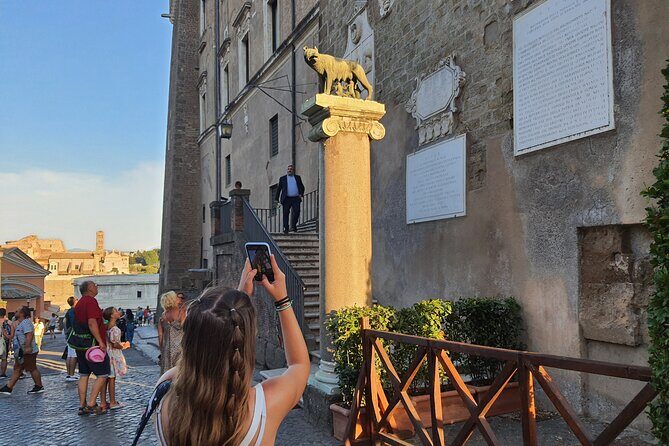
- Vittoriano explained for what it is, not just what it looks like
- Michelangelo’s Piazza del Campidoglio, designed and restored with bold geometry
- Forum-area views from the Capitoline Hill during the walk
- Short, smart stops at the Fontana della Pigna, Fontana dell’Adriatico, and Fontana del Tirreno
- Small group (max 10) for smoother pacing and better Q&A
Vittoriano in context: why it’s worth your attention
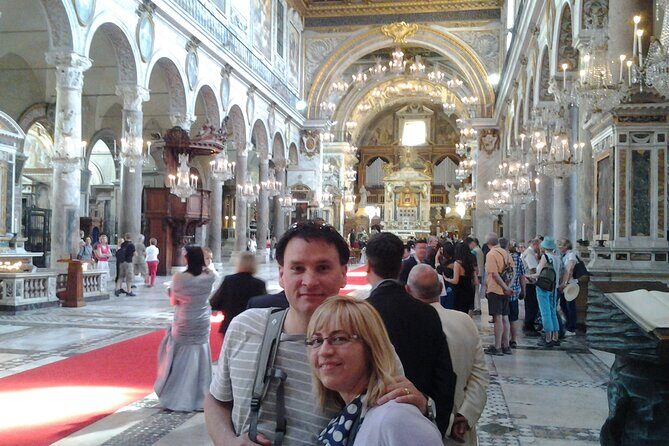
The Vittoriano is one of Rome’s most striking monuments, and it’s also one of the most frequently overlooked because people rush toward the Colosseum and Forum. The payoff here is that the guide gives you the logic behind the whole complex—what it represents and why it was built when it was.
Even from the outside, the Vittoriano can feel like a city within a city: multiple levels, big forms, and a sense that you’re looking at a statement meant to be seen from afar. A guided walk helps you notice the cues you might otherwise miss—how the monument’s purpose shapes what you see and where you’re supposed to stand.
This is also where you get that practical benefit of time with a guide: you don’t just look, you interpret. The tour’s focus on the section dedicated to King Victor Emmanuel II turns the monument from a landmark into a story you can carry with you as you head up to the Capitoline Hill.
If you’re the type who likes to understand symbolism—who built it, why, and what it was meant to communicate—this tour fits well. If you’re only chasing the easiest photo angles, you might feel slightly constrained by the short, structured duration.
You can also read our reviews of more guided tours in Rome



Fontana stops near Piazza Venezia: quick breaks that make the route work
The tour starts in the Piazza Venezia area, which is a good move because it keeps you near one of the most central hubs for walking in Rome. Before you get deep into the hilltop highlights, you pass three fountain moments—each one short, each one with a clear visual theme.
First up is the Fontana della Pigna, with its pine-cone motif. It’s connected to bronze pinecone imagery you may also see elsewhere around Rome, so it’s a quick way to train your eye on recurring symbols.
Next is Fontana dell’Adriatico, which features a statue representing the Adriatic Sea. That subject matter matters because it reminds you that these are not random street decorations. In Rome, lots of public art is tied to identity—geography, power, and what people want to claim as part of their story.
Then the route includes Fontana del Tirreno, meant to reproduce the Tirrenian Sea. By the time you reach the Campidoglio, these fountain stops do something subtle: they break up the walk into digestible pieces, so you’re not only climbing toward one big viewpoint. You’re also getting a mini education in how Rome uses water, sculpture, and naming to signal meaning.
A small consideration: each fountain stop is brief (around 5 minutes each). If fountains are your top priority, you might want extra solo time later. But as a setup act for the main sights, it’s a smart pacing choice.
The heart of the tour: Piazza del Campidoglio and Michelangelo’s plan
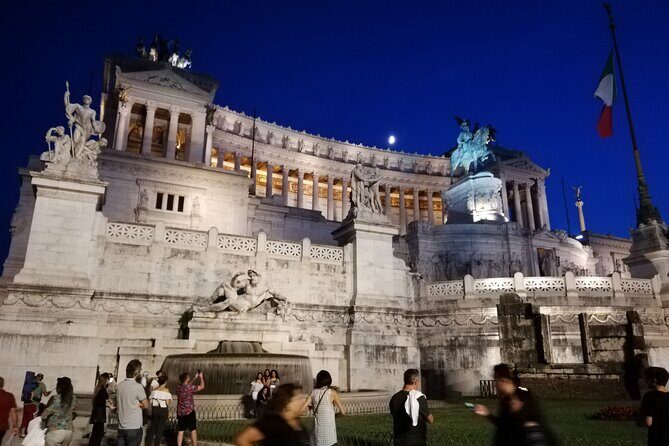
From the Vittoriano area, the tour moves onto the Capitoline Hill, where the star is Piazza del Campidoglio. This is the kind of place that rewards attention. From the moment you step into the composition, you can feel that it was designed, not just arranged.
Michelangelo’s restoration matters here because the space isn’t random. The layout pulls your eye into a specific viewpoint language, guiding where you should look and how you should move. Even if you only spend about 10 minutes on this stop during the guided portion, you’ll likely understand why people keep returning to this spot for perspective, photos, and that classic Rome moment of looking down toward the city.
The tour also ties the viewpoint to real geography: you get views over the Roman Forum area from this height. That matters because the Forum can look chaotic from ground level. From the Capitoline, you get a clearer sense of how the city unfolded—why these neighborhoods mattered and how the view connects monument to purpose.
One tip if you want the most from this portion: pause before you rush into pictures. The composition works best when you stand still long enough to notice how the space frames what you’re seeing.
Santa Maria in Aracoeli: closing the loop above the Forum
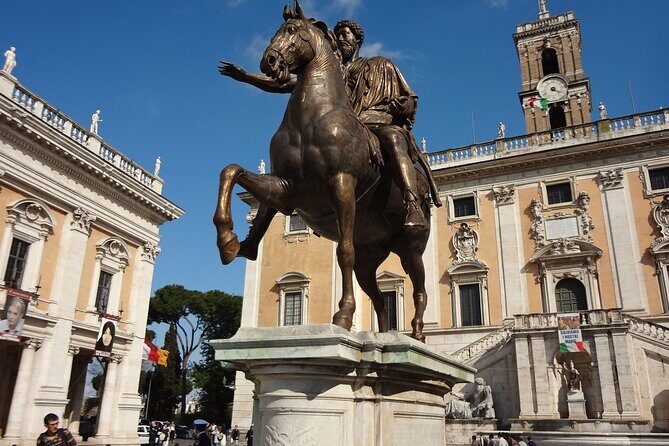
The tour ends at Santa Maria in Aracoeli Basilica, a church set up on the hill above the Roman Forum area. The location is the whole point. You’re finishing where the city’s layered identity—power, religion, and viewpoint—really comes together.
Santa Maria in Aracoeli sits in a spot that naturally gives you a sense of elevation and control over the surrounding urban fabric. It’s a fitting finale after Campidoglio because both places are about framing Rome from above. If you’ve been walking with your mind on symbolism, this stop gives you a different angle: the church as part of Rome’s vertical story.
The guided portion doesn’t turn this into a long church visit. Instead, it works like a capstone: you arrive, take in the setting, and then you’re free to explore at your own pace from there.
If you want to do more on your own after the tour, this is a good point to slow down and linger. Just remember Rome hills can add up fast—so keep comfortable shoes high on your packing list.
The 1.5-hour flow: what to expect minute by minute
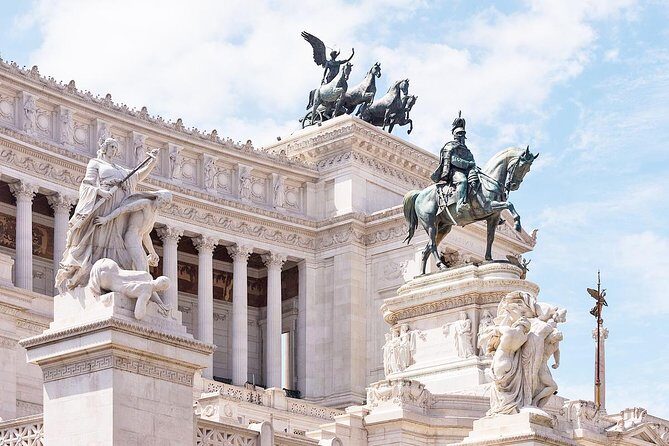
The full experience is about 1 hour 30 minutes, and that time is built around a tight route: outdoor sights, short fountain moments, then the hilltop viewpoints. It doesn’t pretend you’ll master Rome in 90 minutes. What it does do is give you a guided route that hits the highlights of a theme: Rome’s symbolism at ground level, then translated upward to the Capitoline and above.
Here’s how I’d think about the pace:
- You start with Vittoriano context, so your “first big moment” isn’t just a photo stop.
- You get quick fountain breaks that keep the walk from feeling like a nonstop slog.
- You land on Piazza del Campidoglio long enough to understand what’s special about the design and to take in Forum views.
- You finish at Santa Maria in Aracoeli, where the hilltop location does most of the storytelling.
This pacing is best if you like structure. If you’re someone who always wants extra time at one single monument, this may feel a bit “sample platter.” But the upside is that you’ll leave with a coherent route and clearer meaning than you’d get from wandering without a plan.



Price and value: is $248.63 worth it for 90 minutes?
At $248.63 per person, this isn’t a budget add-on. So the value question comes down to what you get beyond just walking around the area.
What you’re paying for:
- A local guide who explains the symbolism and history tied to the Vittoriano focus and the Capitoline area
- Small-group format (max 10), which usually means more clarity and fewer times lost asking the same question
- A route that strings together landmarks efficiently, so you don’t spend your time guessing which viewpoint to prioritize
If you enjoy learning while you walk—especially when monuments have political and symbolic meaning—this price can make sense. If you’re more of a “I’ll read the plaques later” type and you don’t care much about guide-led context, you might find the outing expensive for the amount of time spent at any single spot.
For many people, the sweet spot is this: use the guided time to build understanding, then return later on your own for deeper exploring. In Rome, that strategy usually wins.
Who this tour suits best (and who might want something else)
This guided route is a strong fit for people who want:
- A focused introduction to Vittoriano and the Capitoline area without getting lost
- Forum views plus a guided explanation of how the spaces connect
- A small group format that makes it easier to keep up with directions
It’s also a good match if you’re visiting with limited time and you want a route that logically combines monuments and viewpoints.
It may not be the best fit if:
- You want lots of free time to linger inside major sites
- You prefer unstructured roaming more than guided interpretation
On the plus side, most people can participate, and it’s set up near public transportation. Service animals are allowed too, which is helpful to know.
Practical tips to make the most of your walk
You can improve your experience with a few simple moves.
- Wear shoes you trust. Rome surfaces and hills add up, especially when the day includes Capitoline stairs and walking between levels.
- Bring a phone with battery. You’ll use a mobile ticket, and you’ll probably want to reference meeting and location details.
- At Piazza del Campidoglio, pause before photos. The composition makes more sense when you slow down for a minute.
- If you love reading details, take your time at the Vittoriano stop. This is where the guided explanation helps you see connections faster later.
If your goal includes climbing or going inside areas of the Vittoriano on your own, plan extra time. Some sections are accessible by stairs and there’s also mention of an elevator option in other contexts—so don’t assume the guided time covers everything. Use the guided portion to get oriented, then decide what you want to add.
Should you book the Rome Vittoriano, Campidoglio, and Aracoeli guided tour with Maria?
If you want a short, guided introduction to a side of Rome that often gets skipped, I think this is a good booking. The small group size, the Vittoriano focus on meaning (especially King Victor Emmanuel II’s dedication), and the two “above Rome” moments—Campidoglio and Santa Maria in Aracoeli—are a solid combination for first-time or time-crunched visitors.
I’d book it if you’ll actually use the guide to understand symbolism and viewpoints. I’d hesitate if you prefer self-guided wandering with long stays at each monument, because the schedule is built to cover a lot in a compact window.
FAQ
What’s the duration of the tour?
It runs about 1 hour 30 minutes.
Where does the tour start and end?
It starts at Piazza Venezia, Roma RM, Italy and ends at Santa Maria in Aracoeli Basilica, Scala dell’Arce Capitolina, 12, 00186 Roma RM, Italy.
How many people are in the group?
The group is limited to a maximum of 10 travelers.
What’s included?
The tour includes a local guide and the small-group experience. You also use a mobile ticket.
Do I need to bring a printed ticket?
No. The tour uses a mobile ticket.
Are any of the stops free to enter?
The stops listed for Fontana della Pigna, Fontana dell’Adriatico, Piazza del Campidoglio, and Fontana del Tirreno show admission ticket free.
Is the tour suitable for children?
Children must be accompanied by an adult.
Are service animals allowed?
Yes, service animals are allowed.
Can I cancel for a refund?
Free cancellation is available. You can cancel up to 24 hours in advance for a full refund. Changes less than 24 hours before the start time aren’t accepted, and cancellations inside that window don’t get refunded.