REVIEW · TREVI FOUNTAIN TOURS
Rome: Trevi Fountain Underground Small Group Tour
Book on GetYourGuide →Operated by ROME WITH SILVIA · Bookable on GetYourGuide
Trevi Fountain has a second life underground. Above ground, it’s pure Rome movie magic. Below, you get to see how the city’s water system once worked—straight under the fountain area—at Vicus Caprarius – the City of Water.
I like two things most. First, the tour is laser-focused on the Roman aqueduct remains of Aqua Virgo, including the castellum aquae water-tank area and other layers of Roman-to-medieval reuse. Second, you’re given a proper guide with English headsets, so you can actually follow what you’re seeing instead of reading signboards in a hurry. One drawback to consider: it isn’t a long “walk through the exact space of the fountain,” so if you’re expecting to go fully beneath where the main Trevi Fountain water splashes, your expectations may need a small reset.
In This Review
- Trevi Fountain Above vs. City of Water Below
- Vicus Caprarius: Aqua Virgo and Roman Water Engineering
- Underground Passages, Domus, Medieval Houses, and Hadrian’s Water Tank
- The Trevi Fountain Photo Stop: What You Should Look For
- Price and Value for a 45-Minute Roman-Engineering Lesson
- Where to Meet at Piazza dei Crociferi (and How Not to Miss the Start)
- What to Wear and Bring for Rain, Stairs, and Underground Surfaces
- Who Should Book This Tour, and Who Might Want a Different Plan
- Should You Book the Rome Trevi Fountain Underground Small Group Tour?
- FAQ
- Where do I meet for the Trevi Fountain underground tour?
- How long is the tour?
- Is the tour guide available in English?
- Does the tour include tickets and skip-the-line entry?
- Is this tour suitable for wheelchair users?
- What should I bring?
- Does the tour run in bad weather?
Trevi Fountain Above vs. City of Water Below

Trevi Fountain is famous for a reason: it’s instantly recognizable, photographed nonstop, and tied to pop culture—especially Federico Fellini’s La Dolce Vita. But the real eye-opener here is what you get to connect to that postcard scene: Rome’s water infrastructure. The tour takes you from the bustling piazza to an archaeological site where the city’s layers are physically visible.
The experience works because it teaches you to look differently. Instead of treating the fountain as a standalone monument, you start seeing it as a point on a much older system—Roman plumbing that served Campo Marzio. Once you understand that, even the crowds around Trevi make more sense. You’ll still enjoy the fountain’s beauty, but you’ll also understand why water was there in the first place.
The underground setting also matters for comfort and pace. You’re going with a small group and a live guide, and the key is that you’re not stuck listening through the noise of the plaza. Headsets help a lot when you’re in enclosed spaces where sound can bounce.
Vicus Caprarius: Aqua Virgo and Roman Water Engineering

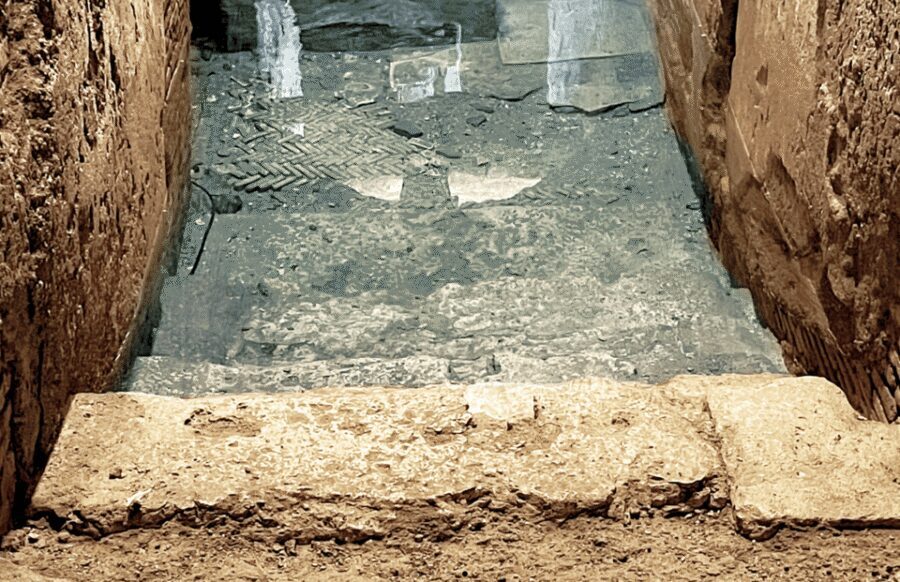
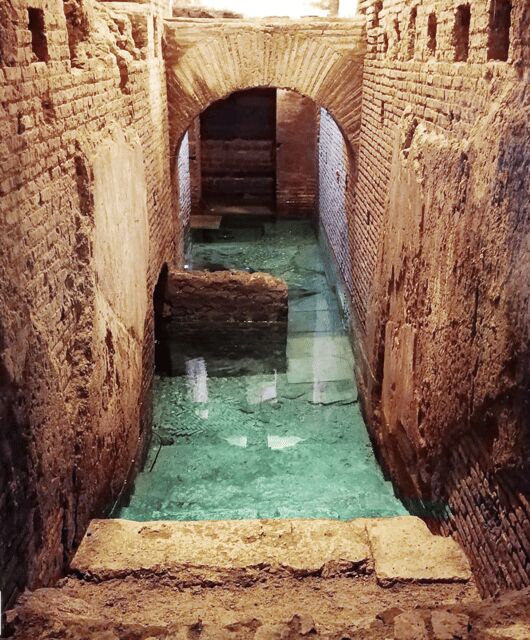
The heart of the tour is Vicus Caprarius, the “City of Water” area that sits underground beneath Trevi Fountain. This archaeological site came to light during renovation works of the old Cinema Trevi in 1999, and it later opened to the public in 2004. That background gives the whole experience a modern twist: you’re seeing Roman remains that were literally uncovered by twentieth-century changes above them.
Here’s what you’re going to focus on underground:
- the remains connected to the Roman aqueduct system
- the name Aqua Virgo, tied to the idea of pure, clear water
- the “city of water” layout that shows how water mattered in daily life
The Romans built aqueducts—eleven in this wider system context—and Aqua Virgo is one of the best-known because of the way people relate its name to water quality. Another legend attached to the naming involves a young woman—virgo in Latin—who allegedly guided thirsty soldiers to a spring. Even if you treat that story as legend, it’s a useful lens: it shows how Romans and later generations explained water as something almost personal, not just mechanical.
What I find especially worthwhile is how the tour frames this as historical stratification. In Rome, ruins aren’t just “old stuff.” They’re layers. Different eras reuse space. Here, you don’t just see one moment—you see evidence that the location kept serving a purpose long after the original Roman system.
You can also read our reviews of more tours and experiences in Rome.



Underground Passages, Domus, Medieval Houses, and Hadrian’s Water Tank

Underground, you’ll also explore the passages and structures associated with the Trevi Fountain area. The experience isn’t only about the aqueduct wall or a single corridor. You’re shown how the site evolved—so you start recognizing that what you’re viewing is part Roman, part later adaptation.
The tour includes a visit to:
- a domus from the Imperial era (a more private residential space)
- medieval houses built in later periods
- the castellum aquae linked to the Aqua Virgo aqueduct
That last item is a big deal. A castellum aquae is essentially a monumental water tank meant to optimize water supplies in the Campo Marzio area. Emperor Hadrian is tied to this tank, and that connection helps you understand the scale of planning. This wasn’t a trickle intended for a few fountains. It was organized water distribution for a growing city.
You’ll likely hear how the aqueduct system connects to the visible fountain above ground. Even when you can’t “see the entire aqueduct,” the underground layout helps your brain connect dots: water traveled, it was stored and controlled, and the city built around those systems. That’s the kind of knowledge that makes future Rome stops click.
Also, the tone of many of the guides seems to be practical and clear. Recent feedback includes an excellent experience with a guide named Virginia (noted as a guess, but still a real name mentioned) and strong praise for guides generally. Another name that shows up in feedback is Sylvia, which matches the tour’s provider branding, Rome with Silvia. I wouldn’t rely on any single name for planning, but it tells you the tours often use real people who can explain the site in plain English.
The Trevi Fountain Photo Stop: What You Should Look For
After the underground portion, you’ll get a photo stop and guided time at Trevi Fountain. This is short, and that’s honestly the right call. The tour’s core value is underground. Above ground is for perspective.
With even a brief stop, you can make it count by knowing what to watch for:
- the fountain’s central sculptural story (you’ll spot it quickly)
- how the flow and layout feel like they’re part of a bigger water system
- the way the water seems “designed” rather than just decorative
One caution: some people expect to spend more time literally “under the fountain.” The underground area is under the Trevi Fountain vicinity, but it’s not the same as standing directly beneath every visible element of the main scene. So go in with the right mental model: think aqueduct-era remains under the Trevi footprint, not a full walking tour beneath the exact splash zone.
If you do that, the photo stop becomes more than a souvenir. It becomes a way to check your understanding. You’ll come out knowing what the water system was doing, and then seeing how Rome turned that necessity into art.
Price and Value for a 45-Minute Roman-Engineering Lesson
At $71 per person, this tour isn’t the cheapest thing you’ll do around Trevi. But it isn’t overpriced for what you get either, especially in Rome where “fast and cheap” often means crowded, confusing, or hard to follow.
Here’s the value logic:
- Entry tickets are included, so you’re not paying extra once you’re there.
- You’re paying for an official English-speaking guide plus headsets, which turns the underground site from “interesting walls” into “understandable story.”
- The standout part is the specific focus on the underground remains—Vicus Caprarius—and the connection to Aqua Virgo and its water distribution system.
The duration is listed as 45 minutes, which likely refers to the core guided underground portion. In the flow of the experience, you’ll also have time at Trevi Fountain for photos and a guided moment. Either way, this is a compact tour format: you can fit it into a busy Rome day without losing half your afternoon to transit and long queues.
One practical note on expectations: the tour format is designed for a guided visit, not a free roam. If you’re someone who wants lots of time to linger in silence, you may wish you had more minutes underground. But if you want the why behind what you’re seeing, the time feels about right.
If you like planning with flexibility, the experience includes free cancellation up to 24 hours in advance and a reserve-and-pay-later option. That’s helpful when Rome weather changes fast.
Where to Meet at Piazza dei Crociferi (and How Not to Miss the Start)
Meeting logistics are one of the biggest make-or-break moments for small-group tours, and Trevi is a place where it’s easy to get turned around fast. The meeting point is Piazza dei Crociferi, a tiny square near Trevi Fountain.
Your guide will be recognizable by a sign with the logo for Rome with Silvia.
Two key tips that will save you stress:
- Don’t wait at the entrance of the archaeological site. Meet at Piazza dei Crociferi.
- Give yourself a little buffer. Even a few minutes can matter when the group is about to start and the tour moves on a tight schedule.
From feedback, one disappointing experience involved late arrival pressure and a guide who didn’t provide much beyond repetitive facts. That’s the kind of situation you want to prevent by arriving on time and checking the exact meeting location before you head there.



What to Wear and Bring for Rain, Stairs, and Underground Surfaces
This tour takes place rain or shine. So dress like it’s a walking plan in the city, plus a short time in a site that can feel cooler and damp.
Bring:
- Passport or ID card
- Comfortable shoes
- Weather-appropriate clothing
As for physical access, it’s not suitable for wheelchair users. If you need mobility support, this is a real limitation to keep in mind before booking.
In terms of comfort, the fact that you have headsets is a plus. You’ll spend time in a guided environment, and the audio support helps you keep pace without craning your neck or guessing what’s being said.
Who Should Book This Tour, and Who Might Want a Different Plan
This is a great choice if you fall into any of these categories:
- You love Roman engineering and want to see aqueduct-era remains tied to a specific place you already recognize.
- You want a guide for the underground layers, not just a standalone ticket.
- You’re short on time and prefer a focused, timed experience near Trevi.
It may be less ideal if:
- You need long unhurried exploration time underground (this is guided and time-bound).
- You expected to walk fully beneath the main fountain’s visible structure rather than explore the underground archaeological complex.
- You rely on wheelchair access (this one isn’t set up for it).
Should You Book the Rome Trevi Fountain Underground Small Group Tour?
Book it if you want Trevi Fountain to make more sense. The underground portion gives you the missing ingredient: where the water came from and how the city managed it. The English-speaking guide with headsets turns the visit into an actual learning experience rather than a quick look at ruins.
Skip it only if your priorities are different—if you want maximum time at the surface fountain, or if you need accessibility accommodations it doesn’t offer. Otherwise, this is a strong value for a focused underground experience tied to one of Rome’s most photographed landmarks.
If you do book, show up at Piazza dei Crociferi, not the archaeological entrance, and wear shoes you trust on stone.
FAQ
Where do I meet for the Trevi Fountain underground tour?
You meet at Piazza dei Crociferi, a tiny square near Trevi Fountain. Your guide will be recognizable by a sign with the Rome with Silvia logo, and you should not wait at the entrance of the archaeological site.
How long is the tour?
The underground guided portion is listed at 45 minutes.
Is the tour guide available in English?
Yes. The tour includes an official English-speaking guide.
Does the tour include tickets and skip-the-line entry?
Yes. Entry tickets are included, and there is skip-the-line access via a separate entrance.
Is this tour suitable for wheelchair users?
No. It is not suitable for wheelchair users.
What should I bring?
Bring passport or ID, comfortable shoes, and weather-appropriate clothing.
Does the tour run in bad weather?
Yes. The tour takes place rain or shine.