REVIEW · ROME
Rome: Bone Crypts Express – Tour in ENGLISH with tickets
Book on GetYourGuide →Operated by Rome With Mike · Bookable on GetYourGuide
Rome’s bones tell stories, fast. This one-hour Bone Crypts Express gets you skip-the-line into the Capuchin Crypts with a small group guide, so you spend your time seeing chapels, not waiting. I love how the tour pairs history with clear, human storytelling, and I love that you visit multiple bone-decorated chapels with specific themes. One drawback: it’s a holy site with a strict dress code, and the subject matter is emotionally heavy.
In practice, this is the kind of stop that resets your Rome brain. One moment you’re above ground near Piazza Barberini; the next you’re learning why Franciscan/Cappuchin beliefs shaped this underground-looking (but not always deep) burial space. If you want a darker side of Rome that still feels thoughtful instead of just spooky, this tour fits.
In This Review
- Key things that make this Bone Crypts Express tour worth your time
- Meeting at Piazza Barberini: your starting point and your first taste of the vibe
- The walk to the Capuchin Museum: where the story gets its meaning
- Entering the bone chapels: six rooms with very different messages
- Crypt of the Three Skeletons
- Crypt of the Leg Bones and Thigh Bones
- Crypt of Pelvises (friars arranged in arches)
- Crypt of the Skulls, crowned by an hourglass
- Crosses embedded in the floor
- The overall layout surprise
- Caravaggio and Baroque stories above and around the crypts
- The pacing: 70 minutes of guided time, plus how skip-the-line changes your day
- Dress code and what to wear: a simple rule that can save your trip
- Who this Bone Crypts Express tour is best for (and who should skip)
- Value check: is $35 a fair price for a 1-hour crypt visit?
- What to bring (so you can focus on the story, not logistics)
- My booking advice: should you book this bone-crypt express tour?
- FAQ
- Where do I meet the guide?
- How long is the tour?
- Is the tour offered in English?
- Is skip-the-line entry included?
- Do I get an audio guide included?
- What clothes are required to enter?
- Is this tour suitable for kids or people with mobility/accessibility needs?
Key things that make this Bone Crypts Express tour worth your time
- Skip-the-line entry so your schedule doesn’t get eaten by queues
- Six bone chapels with distinct designs, from skulls and an hourglass to leg-bone scenes
- Franciscan and Capuchin history explained in plain English (with the order’s mindset made clear)
- Caravaggio context and Baroque-era stories tied into what you’re seeing
- A small group capped at 10 for better questions and a calmer pace
- A short, 70-minute guided loop that’s easy to plug into a busy Rome day
Meeting at Piazza Barberini: your starting point and your first taste of the vibe
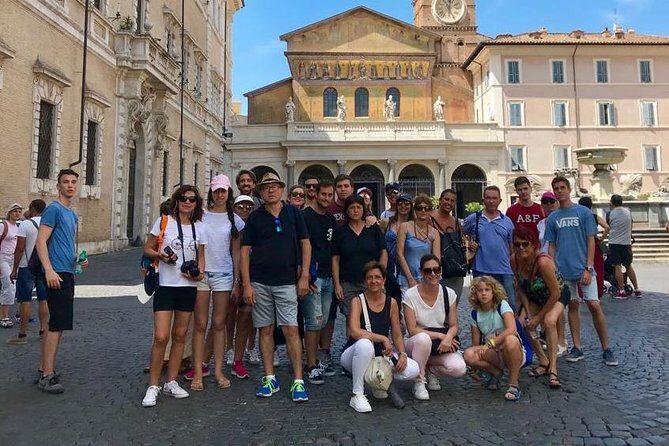
You start at Piazza Barberini, meeting your English guide in front of the Triton Fountain (face side). It’s central and easy to reach, which matters because this tour is short—about an hour total—so you want minimal pre-walk stress.
From there, you’ll move on to the Capuchin Museum area. This isn’t just a formality. The early part sets expectations: this is a sacred burial ground, and the tone is meant to be respectful, not loud and “party-macabre.” If you show up ready to listen, the whole experience lands better.
The group size stays small (limited to 10), which helps with flow. You’ll generally walk together, stop when the guide needs you to look, and move at a pace that keeps the story coherent.
The walk to the Capuchin Museum: where the story gets its meaning
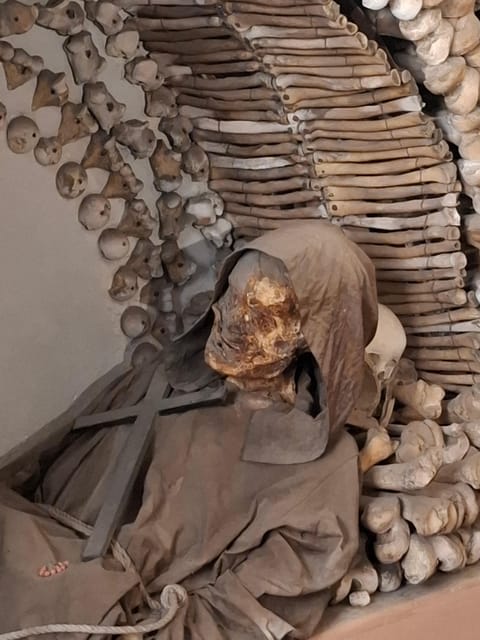
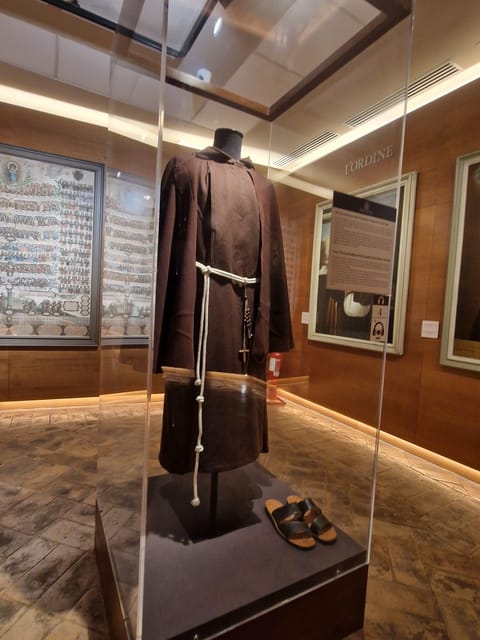
The route begins with a guided visit that explains the Franciscan and Capuchin Orders. You’ll get the framework: why these monks believed the way they did, how burial practices shaped the site, and why the place looks the way it does today.
This is also where you learn about the darker logistical side of the story. The tour connects the “creation” of the crypts to real events, including the relocation of remains from an older friary near the Trevi Fountain area. That detail turns the crypts from a curiosity into something with consequences and history.
Two other pieces I’d call out:
- You’ll hear how Capuchin burial laws influenced what could be done with remains.
- You’ll get a sense that the bones here aren’t random decoration. They’re part of a belief system.
You should expect some sections of the visit to be supported by an audio guide. That audio element isn’t listed as included, so don’t plan on it being provided as part of your ticket. Still, the tour itself is guided in English, and your guide will carry most of the story.
Entering the bone chapels: six rooms with very different messages
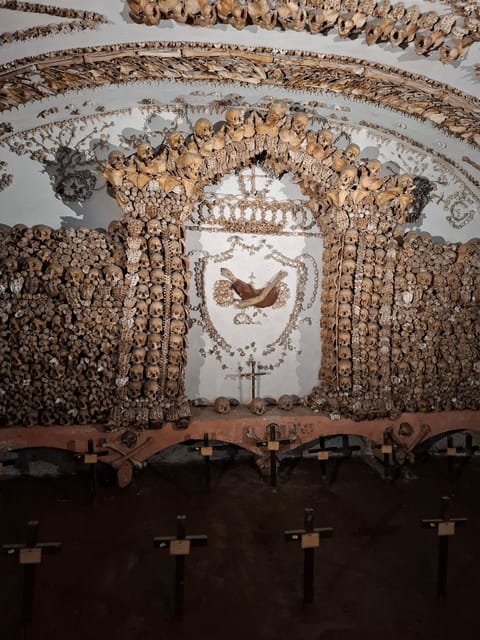
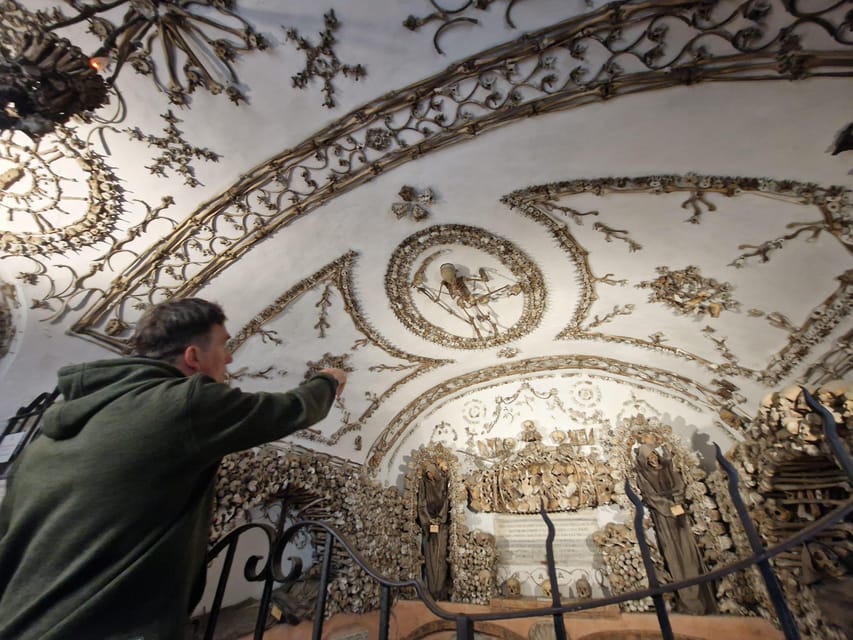
Then comes the main event: descending into the Capuchin Crypts and moving through six chapels. Each one has a theme and a visual “symbol language.” The guide doesn’t just point; you’ll learn what you’re looking at and why it was arranged that way.
Here’s what you can expect as you move chapel to chapel:
Crypt of the Three Skeletons
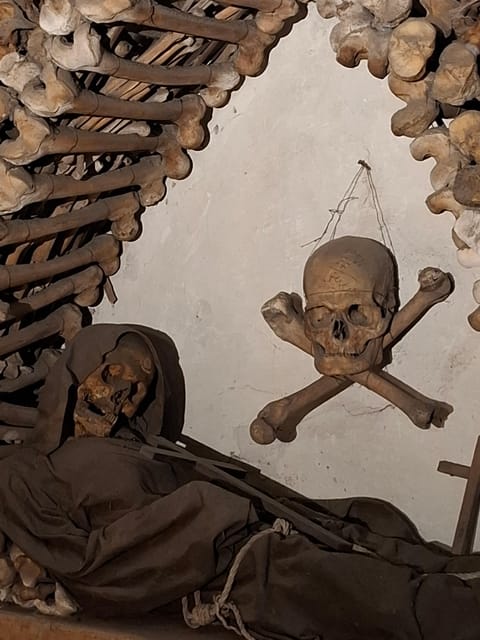
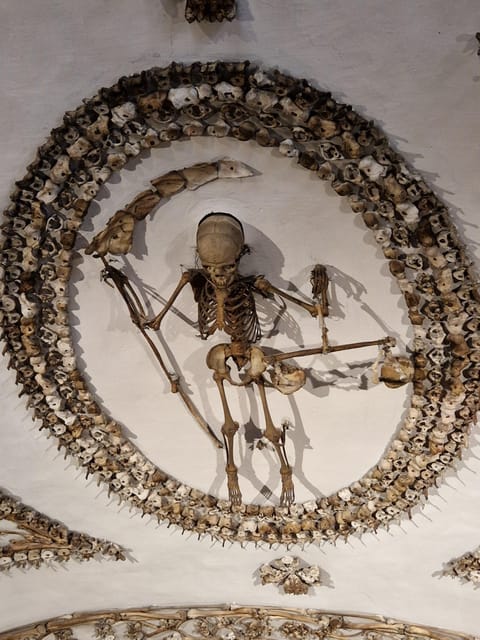
This is the scene that hits fast. You’ll see the skeletons arranged in a way designed to prompt reflection—mortality made visible, but framed as spiritual teaching. The guide’s job here is to keep you from treating it as a Halloween display. You’re meant to understand the intention.
Crypt of the Leg Bones and Thigh Bones
The themed focus shifts from faces and skulls to the body’s structure. You’ll notice the repeating design logic: the bones are organized to create a message, and the message is tied to the Capuchin view of life, death, and remembrance.
Crypt of Pelvises (friars arranged in arches)
This room tends to feel the most “orderly.” The friars are arranged in peaceful arches using pelvises. That word peaceful matters. Even when the subject is bleak, the arrangement is meant to suggest calm, ritual, and acceptance rather than shock.
Crypt of the Skulls, crowned by an hourglass
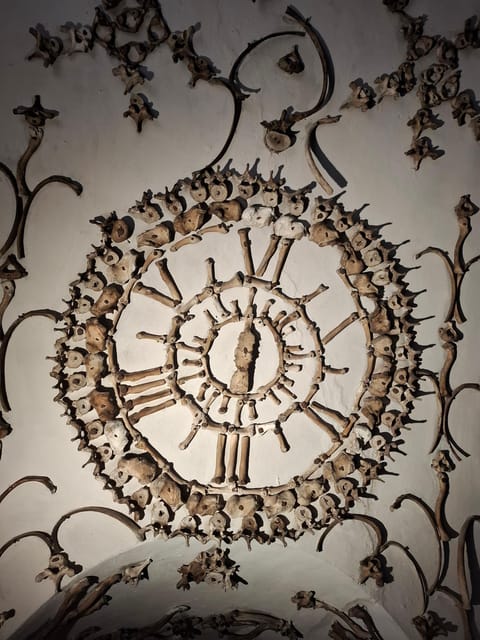
This one is iconic. The hourglass adds a time-and-fate layer: life moving forward, then ending, then repeating as a lesson. When you see it in person, it’s hard to ignore the symbolism.
Crosses embedded in the floor
As you move around, you’ll see crosses set into the floor marking the final resting places of seven monks. This is one of the details that makes the experience feel most “real.” You’re not just looking at art made from remains; you’re reading a grave-site map.
The overall layout surprise
You might walk in expecting a deep underground maze of tunnels. In reality, the remains are more presented in separate rooms/chapels than in a single dramatic subway-like crypt. That makes the visit feel easier to navigate, and it also helps explain why you cover several themed spaces in a short window.
Caravaggio and Baroque stories above and around the crypts
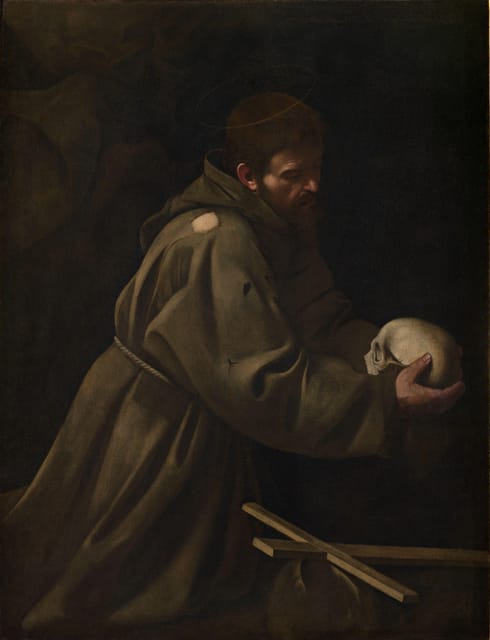
One of the highlights listed is art: Caravaggio, described as a master Baroque artist and a Bad Boy of Rome. The tour uses this as a way to connect what you’re seeing to Rome’s larger cultural story.
You’re not going to get a museum lecture that turns into paperwork. Instead, the guide weaves the art context into the emotional and spiritual context of the crypts. It works best when you let it do its job: help you see that the Baroque era loved big symbols, strong contrasts, and dramatic teaching tools.
If you’re the kind of person who enjoys connecting dots—religion, art style, and the mood of a place—this part gives you extra payoff for the 35-dollar price tag.
The pacing: 70 minutes of guided time, plus how skip-the-line changes your day
The guided portion is listed at about 70 minutes, with the whole experience around one hour. That’s compact, which is exactly why the skip-the-line ticket matters.
Skip-the-line isn’t just convenience. It’s schedule control. Rome can swallow hours fast when you’re waiting. Here, you show up, meet your guide, and get moving. If you’re trying to fit the crypts into a packed day between major sights, this format is practical.
The small group cap (10 people) also helps with pacing. You’re less likely to feel rushed, and you’re more likely to get direct answers when you ask something during stops.
Dress code and what to wear: a simple rule that can save your trip
This is a holy site, and the entry requirement is clear: shoulders and knees must be covered.
So plan ahead:
- No shorts
- No skirts
- Cargo shorts are acceptable
- Comfortable clothes are key since you’ll be walking and standing for a while
This matters more than you’d think. A dress-code miss can kill your day in the middle of your Rome schedule. Bring a light layer if your plan is borderline. Keep it simple: cover properly, move easily, and you’ll get the full tour experience without interruptions.
Who this Bone Crypts Express tour is best for (and who should skip)
This is a strong fit for adults who like history, religious symbolism, and art context. You don’t need to be an expert on monks or Baroque painting. You just need curiosity and a willingness to treat the place as sacred.
It’s also a good match if you want something focused. You’re not wandering aimlessly through multiple museums. You have a tight arc: museum context, then six chapel stops with themes, then a clear closing reflection.
On the other hand, this tour isn’t suitable for:
- Children under 10
- Pregnant women
- Wheelchair users
Also, if you’re easily distressed by death-related imagery, you should read that as your sign. The tour is framed with respect, but it still shows bone arrangements and memorial-style symbolism.
Value check: is $35 a fair price for a 1-hour crypt visit?
For 35 dollars, you’re paying for three things:
- Skip-the-line access (time saved in a city that loves delays)
- A live English guide who translates history and symbolism into something you can actually follow
- A structured visit to six themed chapels, not just a quick peek
If you compare this to doing it on your own, the main value is clarity. Crypts can feel confusing if you don’t know what you’re looking at. Here, the guide does the work of turning bone décor into a coherent story: orders and beliefs, relocation history, burial laws, and the symbolism behind each room.
Yes, it’s short. But short can be smart. If you’re spending your Rome time on bigger sights, this one-hour express format gives you a memorable contrast without draining an entire half-day.
What to bring (so you can focus on the story, not logistics)
Bring what makes you comfortable and compliant:
- Comfortable clothes
- Something that covers shoulders and knees
That’s it. No need to bring anything dramatic. The experience is already heavy enough on its own.
Also, a strong English level is recommended. The tour is in English, and a lot of the impact comes from the guide’s explanations and how they guide your attention room by room.
My booking advice: should you book this bone-crypt express tour?
Book it if you want:
- A small-group, guided version of a famous Rome site
- An English story that connects the crypts to religious and historical context
- A tight one-hour plan that fits into a busy day
Skip it if:
- You can’t meet the dress code (or you don’t want to risk it)
- You’re looking for something more lighthearted
- You have accessibility needs covered by the tour’s listed limitations
- You’d rather do a longer, self-paced exploration instead of a guided express format
If your goal is the most meaningful way to see the Capuchin Crypts without spending your day stuck in line, this is a solid choice.
FAQ
Where do I meet the guide?
You meet in Piazza Barberini in front of the Triton Fountain (face side).
How long is the tour?
The total duration is 1 hour, and the guided tour portion is listed at 70 minutes.
Is the tour offered in English?
Yes. The live tour guide speaks English.
Is skip-the-line entry included?
Yes. The tour includes exclusive skip-the-line ticket access to the Capuchin Crypts.
Do I get an audio guide included?
The audio-guide is listed as not included, even though some sections of the visit are enhanced with an audio guide.
What clothes are required to enter?
Shoulders and knees must be covered. Shorts and skirts are not allowed. Cargo shorts are acceptable.
Is this tour suitable for kids or people with mobility/accessibility needs?
It’s not suitable for children under 10, pregnant women, or wheelchair users.