REVIEW · EVENING EXPERIENCES
Rome: Trevi Fountain & Other Highlights Guided Tour at Night
Book on GetYourGuide →Operated by Bea Tours · Bookable on GetYourGuide
Rome at night turns fountains into theatre.
This 2-hour guided walk threads together the big names—Trevi Fountain and Bernini’s Fountain of the Four Rivers—and a few quieter water artworks like Fontana dei Libri and the Four Fountains at Quattro Fontane. I love that the guide doesn’t just point and shrug; you get stories about the artists behind the work (yes, including Bernini) and the legends tied to the city’s streets. I also like the timing: night light makes the stone feel softer, and you’re not trying to solve Rome’s crowds on your own. One consideration: it’s a standing-and-walking tour, and it’s not suitable for wheelchair users.
You’ll start in the historic center and move at a pace built for seeing details. Expect pauses for explanation, plus photo moments that feel less frantic. Guides such as Bruno and Gabrielle (seen with this tour) are known for mixing humor with clear, practical context, which helps you remember what you’re looking at. The only drawback I’d flag is simple: if you’re hoping for lots of long sitting breaks, a 2-hour night stroll isn’t that kind of outing—come ready for comfortable shoes and a steady walk.
If you’re short on time but want Rome’s “water art” hits to feel meaningful, this works. It’s a small-group tour run in English, and it’s set up to connect fountain scenes with nearby landmarks like the Pantheon. You’ll finish with Trevi and a better sense of why these sculptures were designed the way they were—and what visitors used to “read” into them.
In This Review
- Key Points You’ll Actually Care About
- Why Trevi and Bernini Feel Different After Dark
- Meeting at Sant’Apollinare alle Terme: The Walk Starts In Real Rome
- Pantheon at Night: A Landmark Briefing You’ll Appreciate
- Piazza Navona and the Fountain of the Four Rivers
- Piazza Barberini: Triton and the Bees Fountain
- Quattro Fontane and Fontana dei Libri: Lesser-Known Stops With Real Payoff
- Trevi Fountain Finale: What the Stop Is Really For
- What the Two Hours Feels Like (And How to Get the Most From It)
- Price Value: Is $58 for a 2-Hour Walk Worth It?
- Who This Tour Suits Best (And Who Should Skip It)
- Should You Book This Trevi and Other Fountains Night Tour?
- FAQ
- Where does the tour start?
- How long is the guided tour?
- How much does it cost?
- Is the tour in English?
- Is this a small group tour?
- What are the main sights included?
- Is it suitable for wheelchair users?
- What should I bring?
- Can I cancel for a refund?
- Is there an option to reserve without paying right away?
Key Points You’ll Actually Care About
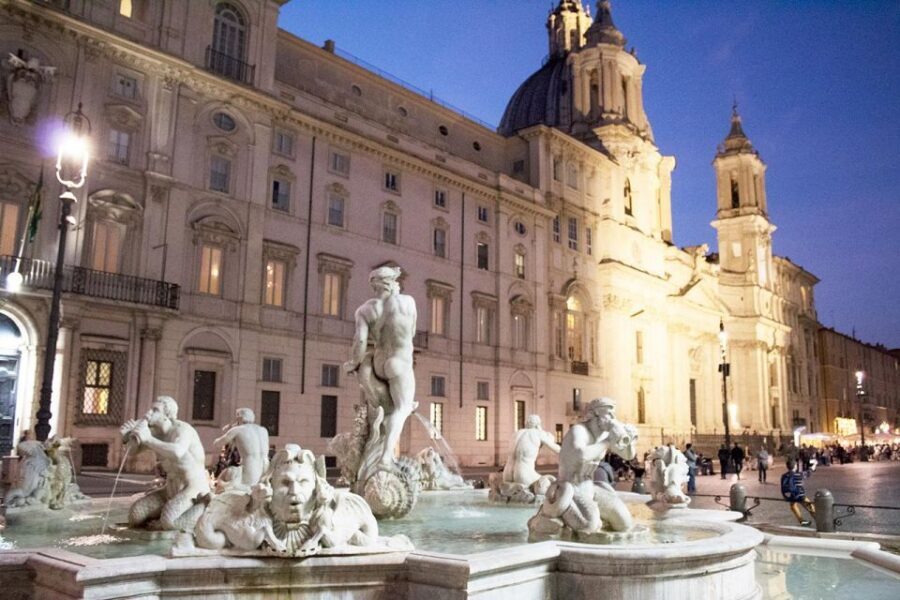
- Night lighting + fewer-stress viewing: The streets feel more relaxed after dark, and fountains look great with warm illumination.
- Bernini gets explained in plain language: You’ll connect the names (and styles) to what you see at Piazza Navona.
- You get more than the obvious stops: Fontana dei Libri and the Four Fountains at Quattro Fontane add variety beyond Trevi and Navona.
- Comfort matters on this 2-hour walk: It’s compact and active—wear shoes you trust on Rome’s uneven stone.
- A guide who tells stories, not just facts: Bruno and Gabrielle are examples of guides who keep things engaging and organized.
Why Trevi and Bernini Feel Different After Dark
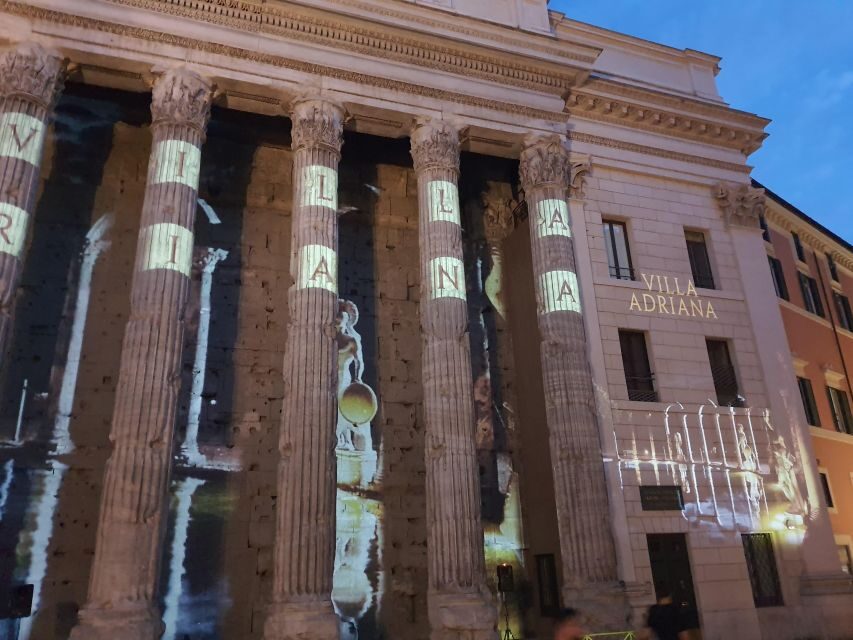
Rome’s fountains are famous in any lighting, but at night the mood changes fast. Daytime travel can turn art into a checklist. At night, the same scenes feel more like performance: the shadows deepen, the details pop, and the statues look less like “a photo spot” and more like sculpture you can study.
On this tour, I like how the focus stays on why these fountains were made—not just that they exist. You’ll hear context around the artists and masterpieces that shaped the look of Rome’s water fountains. That matters because many people see Trevi or Piazza Navona once and forget the “what am I looking at?” part five minutes later. With a guide steering you, it sticks.
Also, the route is designed for flow. You cover major landmarks—like the Pantheon—and then shift back to fountain-focused squares. In two hours, that’s exactly what you want: a tight loop that still feels like you’re seeing different sides of the city.
You can also read our reviews of more guided tours in Rome



Meeting at Sant’Apollinare alle Terme: The Walk Starts In Real Rome
Your guide meets you in front of the Basilica of Sant’Apollinare alle Terme. That’s a good starting choice because it’s not in the thickest tourist choke point, so the first part of the walk feels like you’re easing into the historic center.
From there, you’ll move through Rome’s streets with commentary timed to what you’re seeing. I like this approach because it keeps the tour from becoming a series of isolated “look over there” moments. You’ll get a sense of the city’s layout while you’re still fresh—an underrated benefit when you’ll likely want to wander on your own afterward.
Practical tip: because this is a night walking tour, bring weather-appropriate clothing even in mild seasons. Rome can cool down after sunset, and sudden drizzle is common enough that it’s worth planning for.
Pantheon at Night: A Landmark Briefing You’ll Appreciate
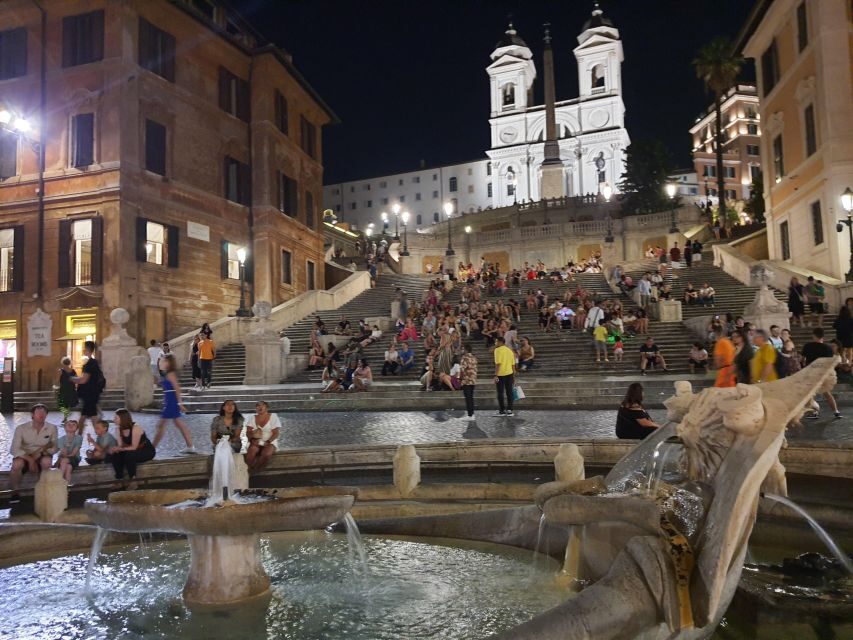
One of the highlights here is seeing the Pantheon along the way. Even if you’ve seen photos, the Pantheon has a way of reframing the whole area: it feels solid, central, and “this is where Rome’s ideas about power and art took shape.”
On a night tour, the Pantheon stop can feel extra efficient. You’re not stuck in a long daytime queue scenario; instead, you’re absorbing the monument as part of a bigger story about the city’s architecture and artistic choices. The guide’s job is to connect that monument energy to what comes next with the fountains.
What to watch for: don’t just glance up and move. Take a moment to look at how the surrounding streets frame the building. That “setting” matters, because later you’ll see fountains designed to dominate a square the way major churches and civic monuments do.
Piazza Navona and the Fountain of the Four Rivers
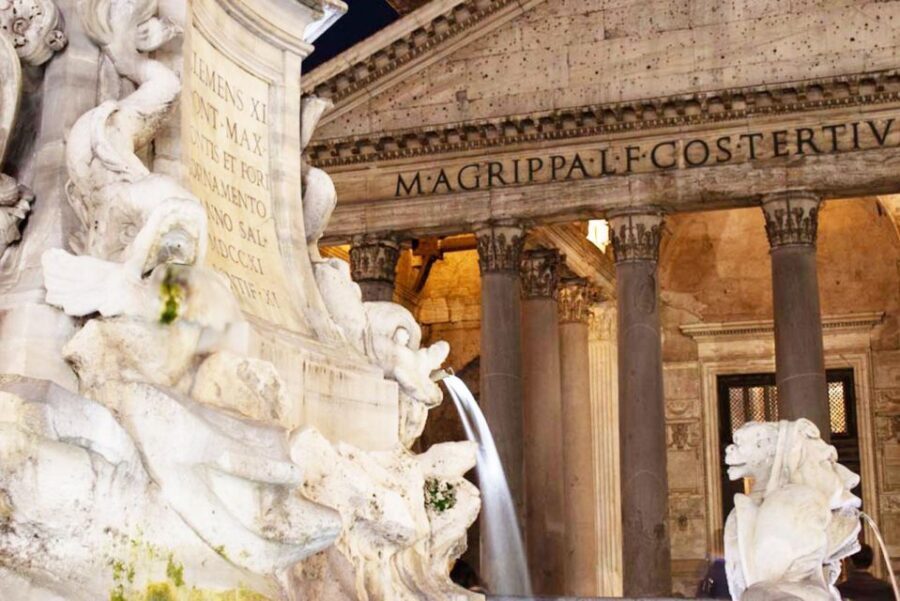
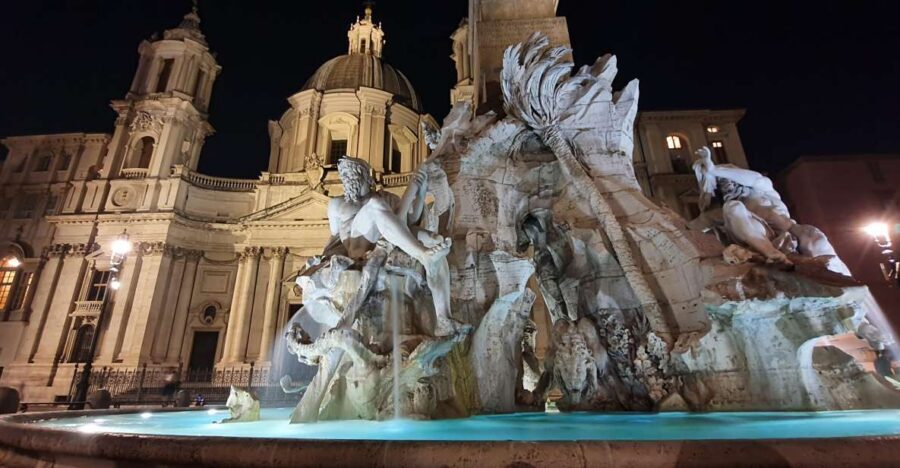
This is where the tour’s art talk really earns its place. You’ll reach piazza Navona and see Bernini’s Fountain of the Four Rivers. The guide explains the sculpture in a way that helps you connect parts of the artwork to the broader idea: Rome wasn’t just building fountains to be pretty. It was building them to communicate meaning.
Why Piazza Navona is such a good target at night: the square’s proportions and lighting make it easier to notice relationships between sculpture, building fronts, and open space. Daytime crowds can flatten attention. At night, you’re more likely to catch the “pose” of the figures and the drama of the composition.
Also, you’ll hear about the life and work of artists who shaped Rome’s fountain style. Bernini is a name you’ll hear again and again in Rome—and this stop is a chance to understand why. Instead of treating him like a famous label, you’ll understand what he was trying to do through water, movement, and sculpture.
A drawback to keep in mind: if you’re expecting a long, slow museum-style visit, this is still a walking tour. You’ll get meaningful time at each place, but you’ll also keep moving. If you want deep study, plan one extra daytime pass to linger.
Piazza Barberini: Triton and the Bees Fountain
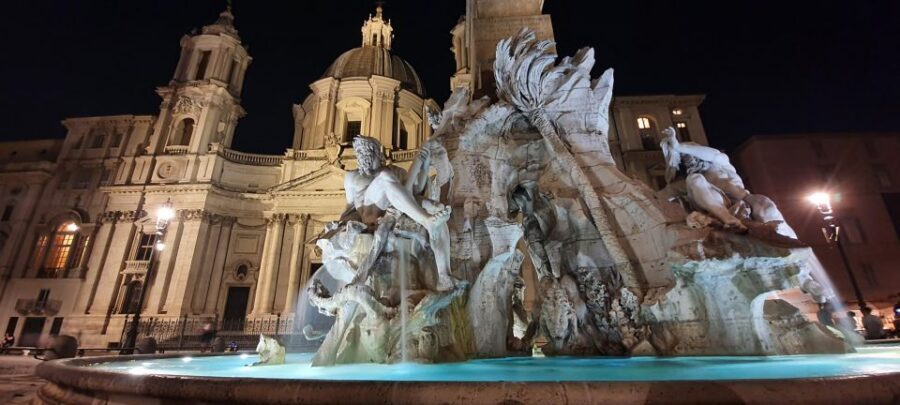
Next up is Piazza Barberini, home to the Triton and the Bees Fountain. This stop is especially valuable because it shows a different side of Rome’s fountain storytelling. Instead of only the grand spectacle style you see at Navona, you get a more focused, symbol-driven artwork that still feels like it belongs in the same artistic conversation.
I like that the tour doesn’t just hammer the most famous sites. It uses places like this to remind you Rome is consistent in its attention to detail: the symbolism isn’t random, and the visual language repeats across the city if you know what to look for.
In practical terms, this is a great square to walk around a bit and take photos from multiple angles, since fountains here can look different depending on where you stand. The guide’s commentary also helps you notice what you might otherwise miss—the small elements that make the fountain feel intentional rather than decorative.
You can also read our reviews of more evening experiences in Rome





Quattro Fontane and Fontana dei Libri: Lesser-Known Stops With Real Payoff
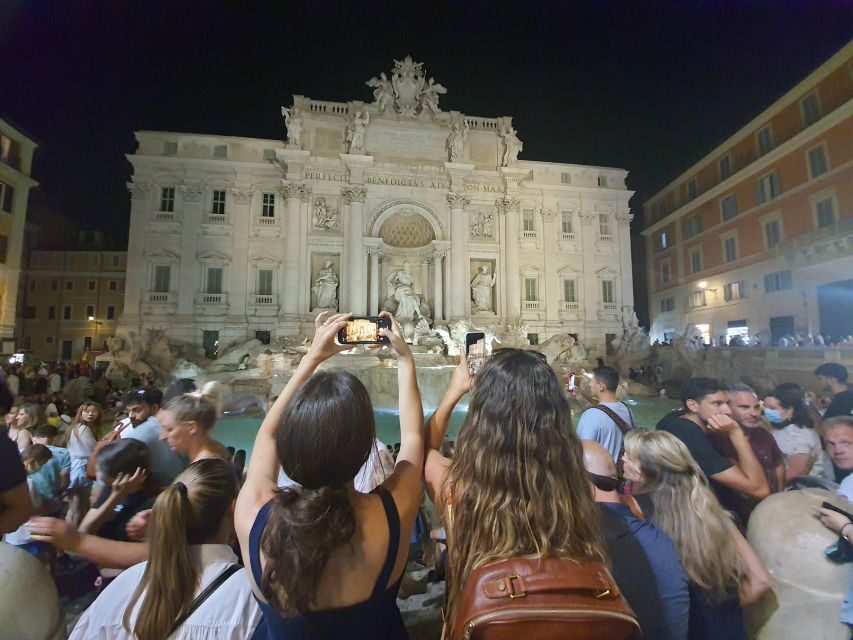
Two of the tour’s standout add-ons are the Four Fountains and Fontana dei Libri. These are exactly the kind of places you can walk right past if you don’t have someone pointing out what’s special about them.
The Four Fountains are tied to the idea of crossroads in Rome—monuments placed at key intersections so the city feels choreographed. Seeing this on a guided walk helps you understand how Rome uses public art to structure your experience as you move through streets.
Then comes Fontana dei Libri, a fountain that has a completely different mood. It’s the kind of stop that makes you slow down because it looks like a playful idea put into stone and water. This is also where a good guide can turn a quick photo moment into something you remember for months: you’ll hear stories and context that explain what you’re looking at and why it’s there.
If you’re the type who loves maps, this portion is a nice lesson. You learn how the city’s art is distributed so you start to see connections between areas, not just individual landmarks.
Trevi Fountain Finale: What the Stop Is Really For
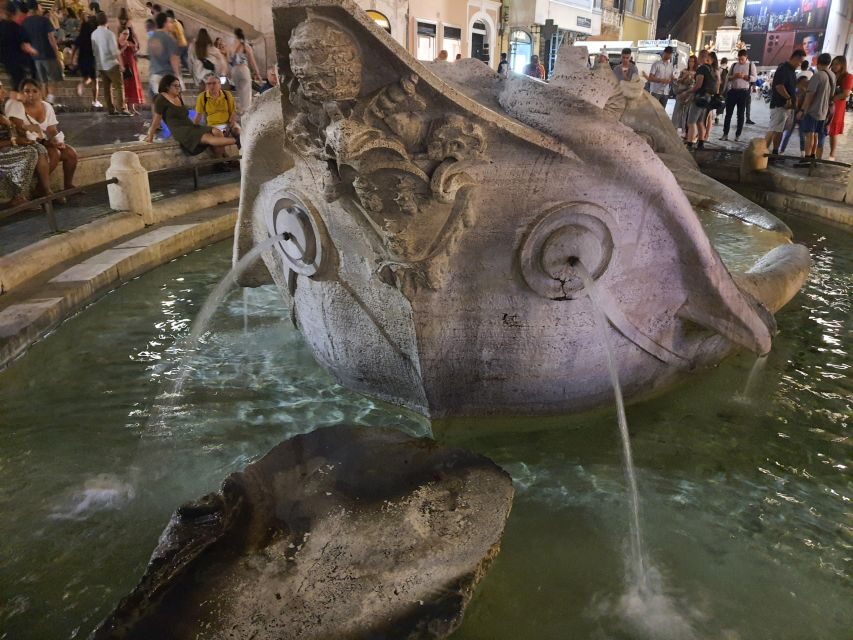
You’ll end up at Trevi Fountain, the obvious headline. But the smart part of doing Trevi on a guided night route is that the fountain stop isn’t just about the famous view—it’s about understanding the artwork and its role in Rome’s identity.
Trevi is one of those places where the temptation is to rush. The guide helps you slow down enough to catch details and symbolism instead of spending all your time searching for the best angle. You’ll learn context around the artists behind the fountain and the meaning you can read into the design.
Night also helps with the atmosphere. Warm lighting turns the sculpture into something closer to bronze and marble sculpture under candlelight. The background streets feel quieter, and you can focus on the fountain’s motion—water, texture, and the way the statues interact with the flow.
Practical tip: if you want a photo, be intentional. Take a first shot early in the stop, then step back and watch for a minute. You’ll likely get better results when you’re not blocking other people and you have your bearings.
What the Two Hours Feels Like (And How to Get the Most From It)
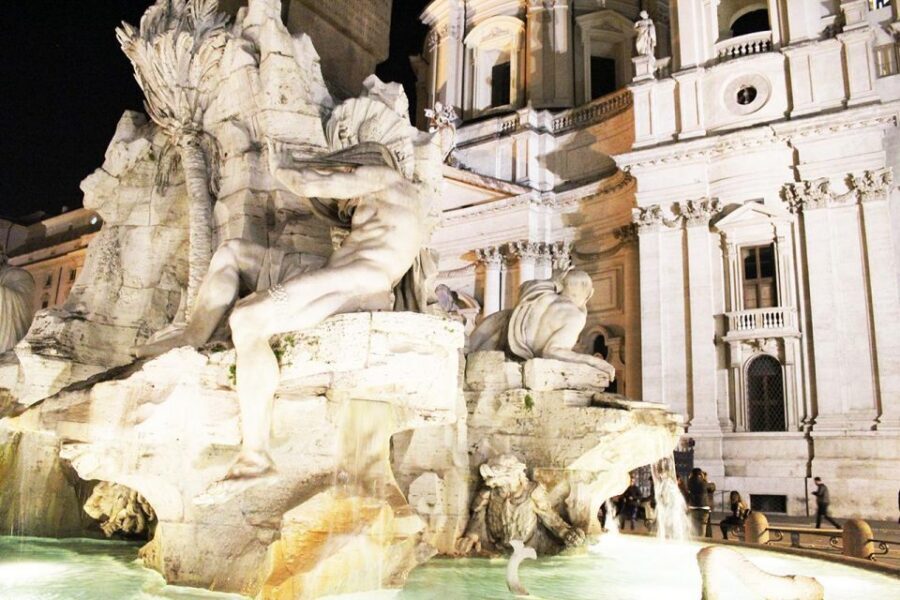
Two hours is short, which sounds limiting until you realize what it’s doing. This tour avoids the trap of trying to cover too much. Instead, it hits key areas where you’ll see fountain art in different “moods”: grand (Trevi, Four Rivers), symbolic and theatrical (Four Rivers), and smaller, quirky, and story-driven (Fontana dei Libri and the Four Fountains).
The pace is designed around walking between squares, with explanation timed so you understand what you’re looking at before you move on. Based on how guides like Bruno and Gabrielle have been described in connection with this tour, you can also expect the guide to keep things lively—funny when it fits, clear when it counts.
For you, that means less guesswork and more attention on the details that actually matter. When you leave, you’re not just tired—you’re oriented. You know what Bernini did here and why that matters. You can spot the different fountain styles instead of lumping them all together as stone and water.
Price Value: Is $58 for a 2-Hour Walk Worth It?
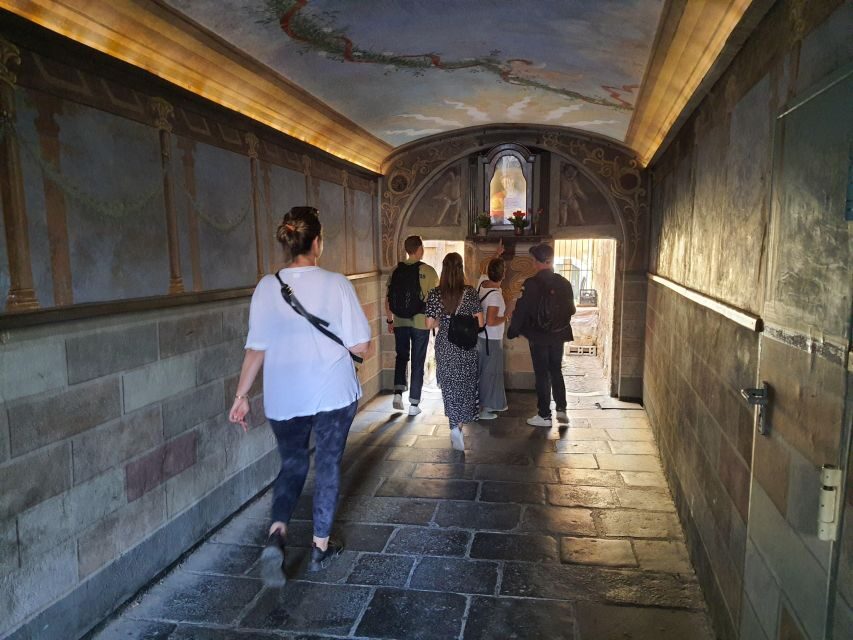
At $58 per person for a 2-hour small-group guided tour, the value comes down to two things: access to good explanation and time saved sorting out the “what you’re seeing” layer on your own.
If you go solo, you can absolutely see Trevi, Pantheon area sights, and Piazza Navona. But you’ll likely spend time figuring out which side you’re on and what each fountain is trying to communicate. With a guide, your time turns into understanding.
This tour also adds stops you might not prioritize alone, like Fontana dei Libri and the Four Fountains. Those are the kinds of places where a guide is worth the fee because the value is knowledge, not convenience.
If you love photography but also care about stories you can actually repeat, this price makes more sense. If you only want sweeping views and don’t care about artist context, a self-guided night walk could be cheaper. For most people who want both photos and meaning, this hits a solid middle ground.
Who This Tour Suits Best (And Who Should Skip It)
This is a great fit if you:
- Want the headline fountains plus a few lesser-known ones in a tight timeframe
- Appreciate stories about the art and the artists behind it (Bernini shows up in a meaningful way)
- Like night walking with a guide that keeps the pace comfortable
You might skip it if:
- You dislike walking tours or need lots of breaks
- You’re trying to optimize for maximum free time at one location for deep, slow exploring
- You use a wheelchair, since it’s not suitable for wheelchair users
Should You Book This Trevi and Other Fountains Night Tour?
If you’re in Rome for a short stay and want fountains to feel more than postcard stops, I’d book it. The strongest case is the mix: Trevi + Pantheon + Piazza Navona + Piazza Barberini, then the smarter extras like Fontana dei Libri and the Four Fountains. That combination gives you variety and context without eating your whole evening.
Book this when you want:
- a guided plan that keeps you from missing the quieter art
- English commentary that makes famous works easier to understand
- a two-hour window that leaves you energized, not stuck
If you’re unsure, think about what you want from your evening: a slow wander by yourself, or an organized walk that teaches you how to read Rome’s fountain scenes.
FAQ
Where does the tour start?
The guide meets you in front of the Basilica of Sant’Apollinare alle Terme.
How long is the guided tour?
It lasts 2 hours.
How much does it cost?
The price is $58 per person.
Is the tour in English?
Yes, the live tour guide speaks English.
Is this a small group tour?
Yes, it’s a small group tour.
What are the main sights included?
You’ll see Trevi Fountain, the Pantheon area, and major fountain squares such as piazza Navona and Piazza Barberini. The tour also includes Fontana dei Libri and the Four Fountains.
Is it suitable for wheelchair users?
No, it’s not suitable for wheelchair users.
What should I bring?
Wear weather-appropriate clothing and bring comfortable shoes.
Can I cancel for a refund?
Yes. You can cancel up to 24 hours in advance for a full refund.
Is there an option to reserve without paying right away?
Yes. You can reserve now and pay later.