REVIEW · TREVI FOUNTAIN TOURS
Rome: Trevi Fountain and Navona Square Underground Tour
Book on GetYourGuide →Operated by The Voyager · Bookable on GetYourGuide
Rome is full of surprises underfoot. This 2.5-hour walking tour connects Rome’s most famous squares with the underground remains that made them work in the first place. I like that it mixes iconic landmarks with real sub-street archaeology, so you’re not just looking, you’re understanding.
Two things I really like: first, the way you get to toss a coin at the Trevi Fountain and then see what’s going on below with the domus aqueduct and the City of Water. Second, the stop at Piazza Navona isn’t just the surface views—this tour takes you down to the Stadium of Domitian, around 5 meters below street level, where the square’s past becomes physical.
One thing to consider: most of your time is still spent above ground in major squares (because that’s where the context is). If you’re expecting an all-underground program, you may feel the balance isn’t what you imagined. Also, double-check the language you’re assigned, since language mix-ups can happen.
In This Review
- Key highlights you’ll feel fast
- Meeting at Piazza di Spagna: where the tour starts and how to find it
- Barcaccia Fountain and Spagna Square: the Rome surface that sets the stage
- Trevi Fountain and the domus aqueduct: the wish meets the plumbing
- Going underground for Vicus Caprarius (City of Water)
- Rotonda Square stop: finding the Pantheon in the walking flow
- Piazza Navona’s Quattro Fiumi and the Stadium of Domitian descent
- What the 2.5 hours really includes (and why it’s priced at $93)
- Language, guides, and small realities that can affect your experience
- Who should book this Trevi and Navona underground tour
- Should you book it? My call
- FAQ
- Where do I meet the guide?
- How long is the tour?
- Is there an audio guide?
- What should I bring?
- Does the tour run in bad weather?
- Is the tour suitable for claustrophobia or mobility impairments?
Key highlights you’ll feel fast
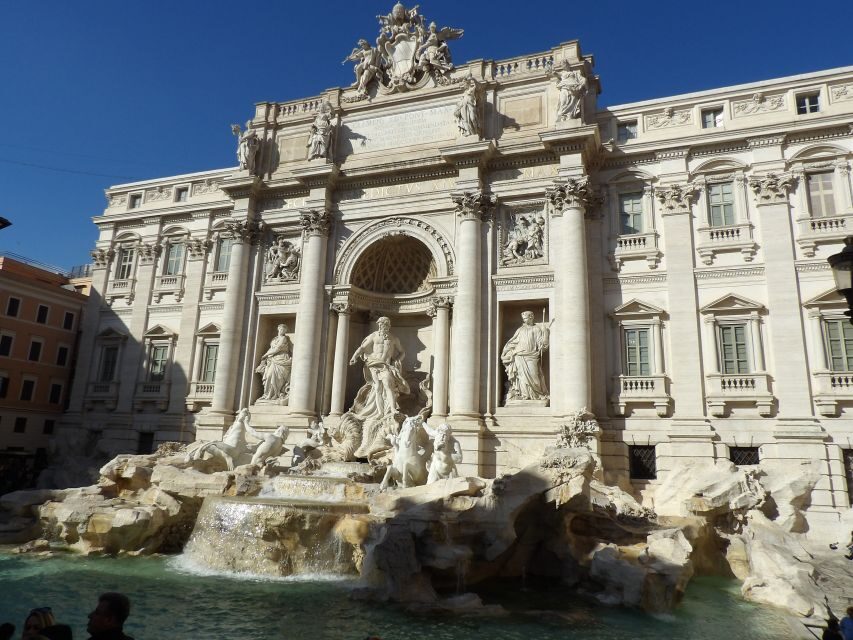
- Trevi Fountain wish, then the water story below with domus aqueduct connections
- Vicus Caprarius (City of Water) showing how water filtered through ancient masonry
- Piazza Navona’s Quattro Fiumi paired with a real archaeological descent
- Stadium of Domitian about 5 meters down, with the site’s evolution explained
- Bernini’s fountains on the surface so the underground makes sense
- Guide quality matters, and one guide named Michele has impressed visitors with strong explanations
Meeting at Piazza di Spagna: where the tour starts and how to find it
You meet at the Spanish Steps area, at Piazza di Spagna near the “Acqua di Parma” store. Your guide will have a lollipop with The Voyager logo, which is an easy visual cue when the area gets busy.
This meeting point is smart. You’re starting close to the Pantheon zone later (via Rotonda Square) and you’re close to the Barcaccia Fountain—so you don’t just “arrive” at Rome’s sights; you move through them in the order they naturally connect. It also means your first minutes are spent getting bearings rather than hunting meeting signs.
Bring basics that keep the tour enjoyable: comfortable shoes and water. The tour runs rain or shine, so pack for weather. And if you have luggage or large bags, plan on leaving them behind—large items aren’t allowed.
You can also read our reviews of more tours and experiences in Rome.



Barcaccia Fountain and Spagna Square: the Rome surface that sets the stage
Your tour kicks off at Bernini’s Barcaccia Fountain area, right around the Spagna Square / Spanish Steps zone. Before you go underground, you get a guided look at how Rome’s famous fountains and piazzas were designed to be seen, experienced, and remembered.
I like this start because it helps your brain build a map. You see how Bernini’s style looks in the open air—then later, when you learn about the underground water systems, the whole experience clicks. It’s one thing to hear about ancient infrastructure. It’s another to see the finished, theatrical results above ground first.
A practical note: you’ll be walking. This is a classic urban route across several iconic squares, so comfortable footwear isn’t optional if you want to enjoy the pace.
Trevi Fountain and the domus aqueduct: the wish meets the plumbing
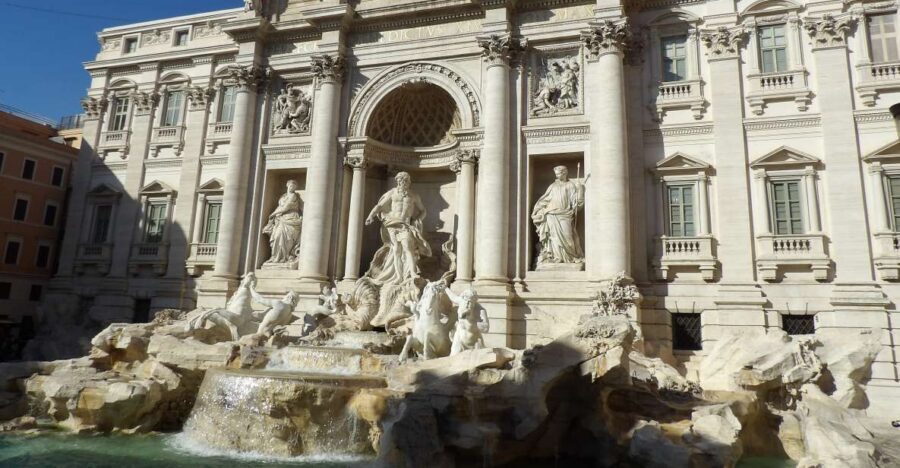
Next comes Trevi Fountain, the moment most people recognize from photos. Here you’ll make a wish by tossing a coin into the fountain—then your guide leads you toward the “hidden features” connected to the water system.
The tour’s big value at Trevi is that it doesn’t stop at the postcard. You’ll learn about the domus aqueduct, and you’ll pass through parts of the story that link the fountain’s water to ancient masonry and channels. In other words, you’re not only admiring design; you’re learning why the fountain exists the way it does.
If you’re someone who likes cause-and-effect, this stop is for you. You start with an iconic moment (coin toss), then your guide helps you connect it to the underground infrastructure that made the water flow possible.
One caution from real-world experience: language mix-ups can happen. Since tours run in English and Italian (with audio support), make sure you reserve for the correct language. If you end up in the other language, the audio guide can help, but it’s still worth being proactive.
Going underground for Vicus Caprarius (City of Water)
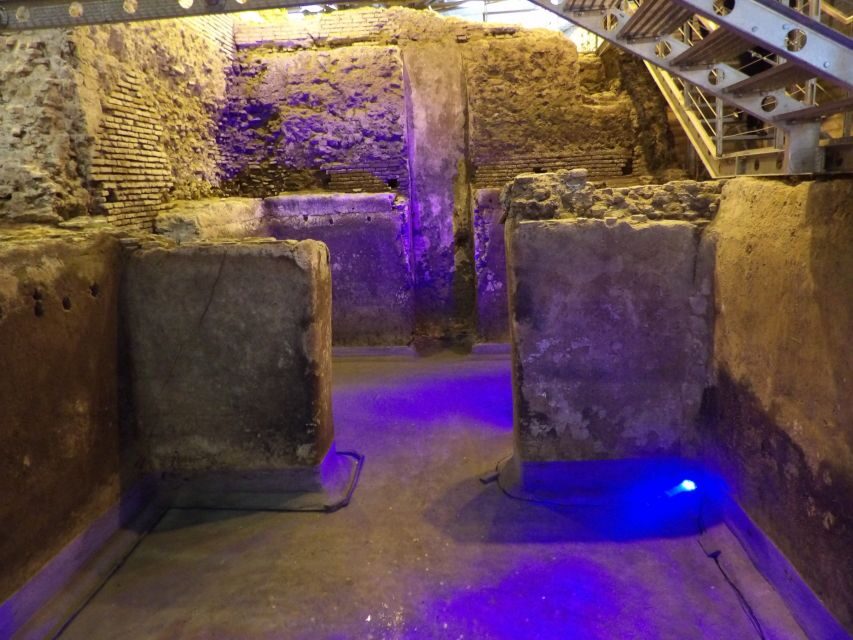
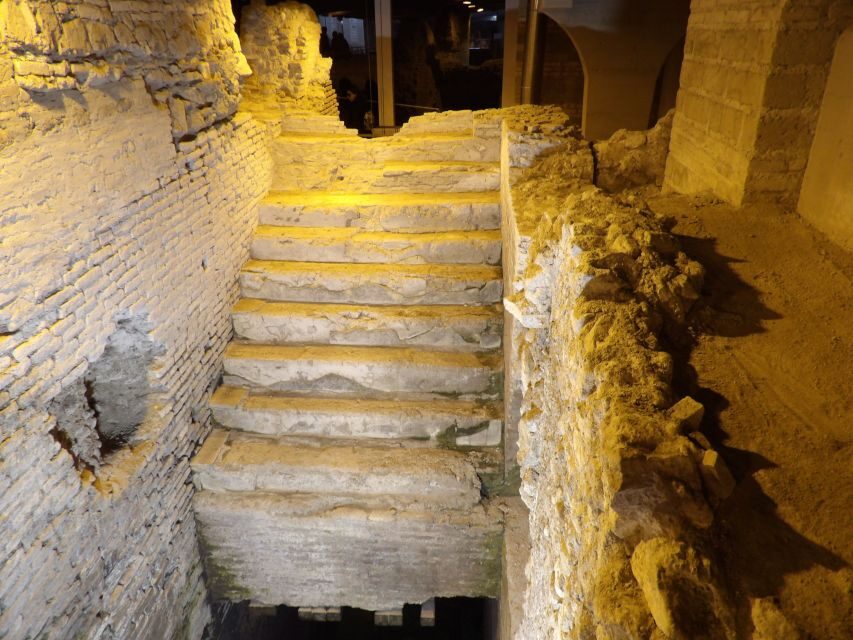
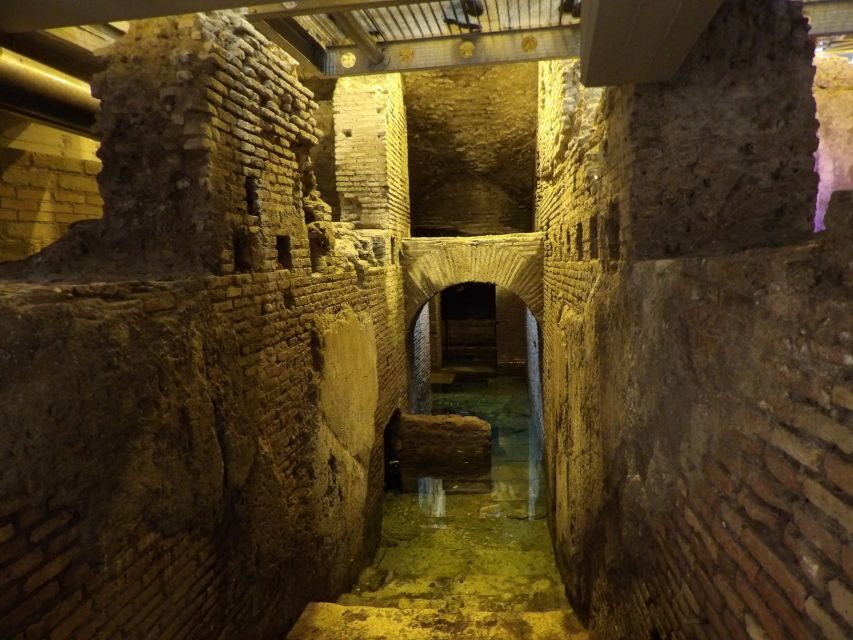
Now we get to the part you came for: you go below street level to the Vicus Caprarius, often described as the City of Water. This is where the tour shifts from landmark sightseeing to archaeology you can actually stand above and picture in your head.
The key idea here is water filtering. You’ll learn how the water connected to Trevi travels and filters through ancient masonry. That might sound abstract, but it’s presented in a way that makes the underground structures feel logical instead of random ruins.
You also see findings from excavations, including amphorae (ancient Roman jars) and coins. Those objects matter. They turn the underground site from a concept into a place where real people lived, stored, paid, and moved goods and water. You’re not just looking at stonework—you’re looking at the evidence left behind.
This stop tends to impress people who want more than surface explanations. It also rewards curious travelers: if you like infrastructure, systems, and how cities worked, this is one of the strongest segments of the whole tour.
Rotonda Square stop: finding the Pantheon in the walking flow
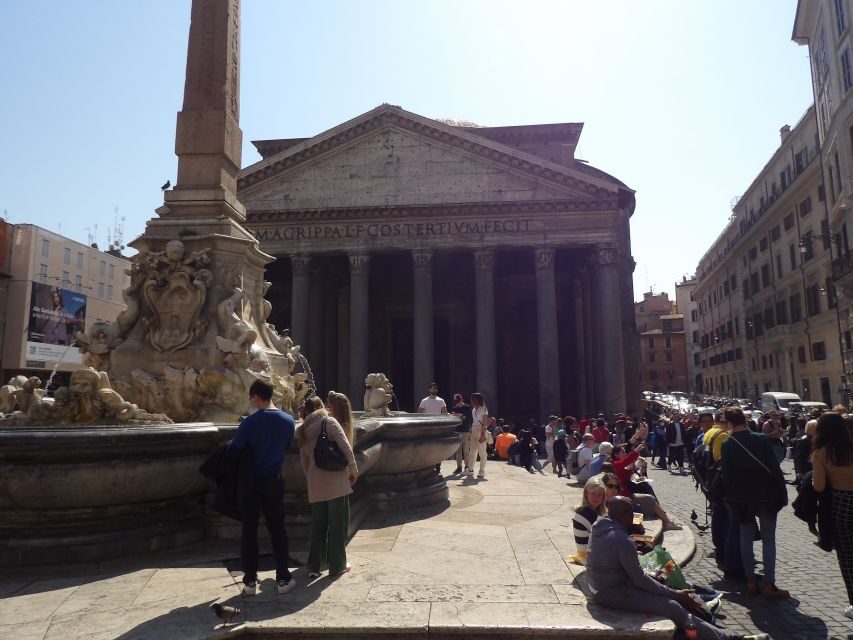
After the Trevi underground segment, you head back outside to Rotonda Square to see the Pantheon. This isn’t presented as a long Pantheon deep dive; it’s more of a grounding moment.
I like this approach because it gives your eyes a break after the underground. You shift from narrow, below-ground views to the big open perspective of central Rome. Plus, having Pantheon visible while you’re still thinking about Roman engineering (water, stone, construction) makes the day feel connected rather than segmented.
If your goal is to see the most major sights quickly, this stop delivers. If your goal is a long, focused Pantheon visit, you’ll likely want more time later on your own.



Piazza Navona’s Quattro Fiumi and the Stadium of Domitian descent
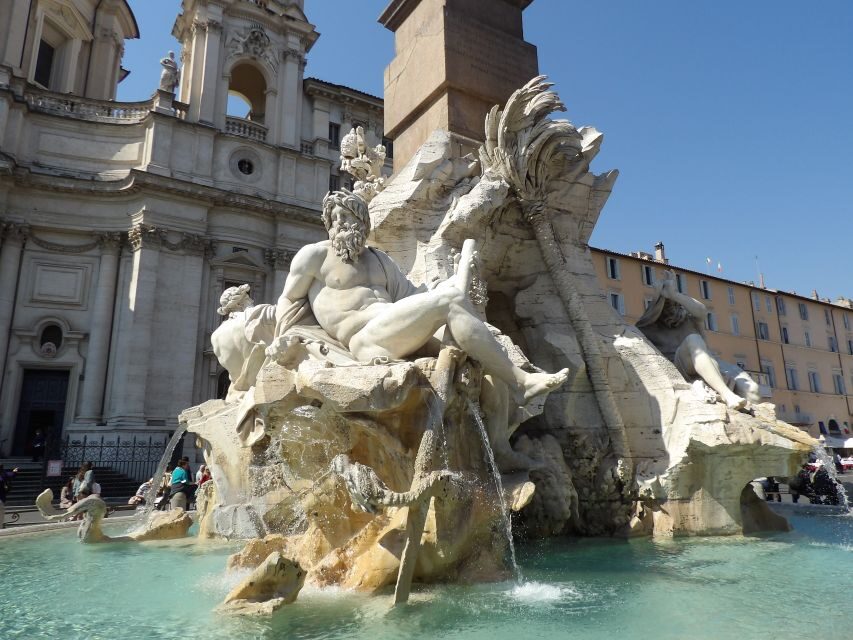
Then you reach Piazza Navona, where you see Bernini’s Fountain of the Four Rivers (Quattro Fiumi). The surface here is dramatic for a reason: you’re in a piazza built over earlier layers of the city.
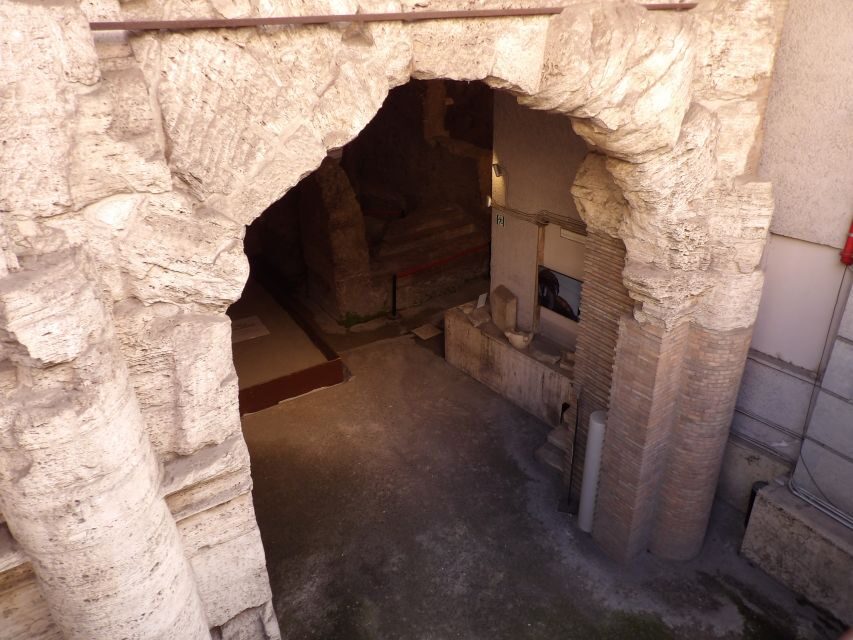
What makes this tour stand out is that Piazza Navona doesn’t end at the fountain photos. You’ll also explore the Stadium of Domitian, descending roughly 5 meters below street level. That depth is real enough that if you don’t like confined spaces, you should take the “not suitable for claustrophobia” warning seriously.
Inside, the guide explains how the site developed into the current square and how it ties to the evolution of ancient Roman sports. The value is in the translation: you’re looking at a piazza today, but your guide shows what it once served and how public life changed over time.
This stop also adds a second underground “wow.” If Trevi’s City of Water teaches you how Rome handled water, the Stadium of Domitian teaches you how Rome handled crowds, competition, and civic space. Together, they give you a more complete picture of how Rome operated above and below.
What the 2.5 hours really includes (and why it’s priced at $93)
At $93 per person for about 2.5 hours, the price is less about “how far you walk” and more about the combination of guided storytelling plus access to underground areas. You’re paying for:
- A local guide who links the surface fountains to the underground archaeology
- The underground access portions tied to Trevi and the Stadium of Domitian
- Headsets if your group is over 10 people, so you can actually hear explanations
- Audio guide support in English and Italian
- A setup that includes skipping the ticket line
For a short Rome outing, this is a fairly efficient use of time. You get multiple major piazzas in one go, and you still get the underground element that many standard walking tours only mention.
Where the value can vary for you is expectations. If you want a mostly underground program, remember that you’ll also be moving through famous squares like Trevi and Piazza Navona above ground. If you want a balanced route that makes the underground make sense, this format works well.
One more detail that’s worth respecting: you’ll want to keep your bags minimal. Not allowing luggage or large bags helps the underground portions move smoothly, and it prevents delays.
Language, guides, and small realities that can affect your experience
This tour runs with a live English/Italian guide, plus audio support in those languages. In a perfect world, you get the language you expect the first time. In the real world, booking assignments sometimes don’t match expectations, and some visitors have mentioned having to rely more on audio guidance when the language didn’t align with what they reserved.
Here’s how I’d handle that, practically:
- When booking, choose the language you want carefully.
- Once you meet the guide, quickly confirm you’re receiving the explanation in that language (or that audio will be easy for you to use).
- If you’re sensitive to language differences, plan for the audio guide as your backup, not your main plan.
Also, guide quality is a big factor. One review highlighted a guide named Michele for having huge knowledge and a professional, patient approach, including with teens. That kind of skill matters here because the underground stops work best when explanations are clear and specific.
Who should book this Trevi and Navona underground tour
You’ll likely love this tour if:
- You like Rome in layers: surface beauty plus the working logic underneath
- You’re curious about water and how cities run
- You want a guided route that hits Trevi, the Pantheon area, and Piazza Navona in one compact day
- You enjoy archaeology that comes with objects (like amphorae and coins) rather than only empty walls
Skip it or think twice if:
- You have claustrophobia (you’ll descend about 5 meters for the Stadium of Domitian)
- You need wheelchair access or have mobility limitations that make steps and tight underground areas difficult (it’s not suitable for mobility impairments)
- You’re traveling with large luggage, since luggage or large bags aren’t allowed
If you’re a first-timer, this tour can be a strong introduction because it ties famous places to the systems that built them. If you’ve been to Rome before, it’s still a good add-on because the underground access changes the day.
Should you book it? My call
Book it if you want the best kind of Rome mix: iconic fountains above ground and specific archaeology below, explained by a guide who connects the dots. The Trevi underground portion (Vicus Caprarius / City of Water) and the Stadium of Domitian descent are the kind of experiences that most standard walking tours can’t offer in one package.
Don’t book it if your dream day is mostly underground with minimal above-ground walking, or if you’re uncomfortable in tight spaces. Also, take a minute to double-check language selection so you’re not fighting the explanation while you’re trying to enjoy the experience.
If that sounds like you, this is a smart way to spend 2.5 hours in Rome.
FAQ
Where do I meet the guide?
Meet your guide at the Spanish Steps in Piazza di Spagna, near the Acqua di Parma store. The guide will have a lollipop with The Voyager logo.
How long is the tour?
The tour lasts 2.5 hours.
Is there an audio guide?
Yes. An audio guide is included in English and Italian, along with a live English/Italian guide.
What should I bring?
Bring passport or ID, comfortable shoes, water, and comfortable clothes.
Does the tour run in bad weather?
Yes. The tour takes place rain or shine.
Is the tour suitable for claustrophobia or mobility impairments?
No. It is not suitable for people with claustrophobia, mobility impairments, or wheelchair users.