Rome has a knack for hiding the best scenes in plain sight. This 2.5-hour walk is a great way to get past the big-name stops, with a small group and hands-on local storytelling. I love two things in particular: the chance to get close to Bernini’s Blessed Ludovica Albertoni and the focused look at one of Europe’s oldest Jewish communities. One thing to consider: you’ll be walking through church interiors and narrow lanes, so comfy shoes matter.
You’ll move from Trastevere’s lanes to the river island of Isola Tiberina, then finish in the Jewish Ghetto area around Il Portico di Ottavia. The pace is tight but not rushed, and a highlight for me is the access connected to Santa Cecilia—including time to explore the underground site tied to her story.
In This Review
- Key highlights I’d plan around
- Why this 2.5-hour walk beats the usual big-route Rome
- Price and value: what you pay for beyond a basic stroll
- Getting oriented: meeting point to finish point
- Stop 1: Chiesa di San Francesco a Ripa Grande and Bernini’s Blessed Ludovica Albertoni
- Stop 2: Santa Cecilia in Trastevere, the nuns’ access, and the underground apartment
- Stop 3: Vicolo Dell’Atleta for quiet corners and ancient clues
- Stop 4: Isola Tiberina and the Roman birth story
- Stop 5: Il Portico di Ottavia and the Jewish Ghetto area
- The guide factor: warm delivery and clear, usable stories
- Who should book this tour (and who should skip it)
- Tips to make the most of it
- Should you book the Rome Trastevere and Jewish Ghetto small-group tour?
- FAQ
- How long is this tour?
- What does the tour cost?
- Is the tour in English?
- How big is the group?
- Are entry tickets included?
- Do I need hotel pickup?
Key highlights I’d plan around
- Bernini’s statue at Chiesa di San Francesco a Ripa Grande, where you’ll spend real time looking, not just passing
- Santa Cecilia’s underground area, with entry ticket included and special access by the nuns
- Vicolo Dell’Atleta, a peaceful narrow alley where old Judaism and old Rome both show up in everyday places
- Isola Tiberina, the Tiber island with clues tied to Roman origins and even a bridge associated with Julius Caesar
- Il Portico di Ottavia and the Ghetto, with background that connects local buildings to the wider Rome you already know
- Maximum 12 people, keeping questions easy and the vibe calm rather than herding
Why this 2.5-hour walk beats the usual big-route Rome
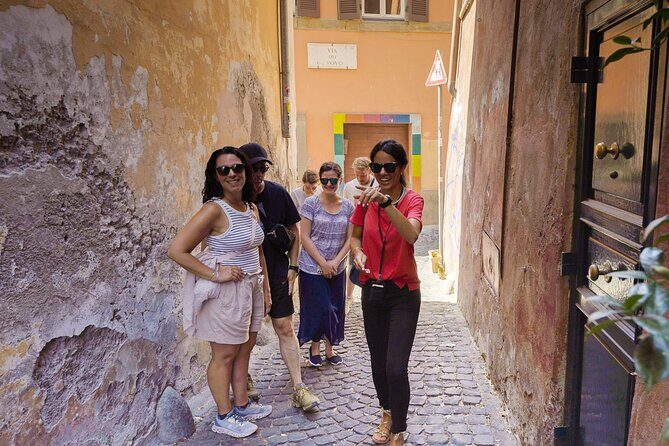
Most Rome tours try to cram too many landmarks into too little time. This one makes the opposite choice: fewer places, explained well, with just enough structure to keep you moving. You get around about 2 hours 30 minutes, and the stop lengths are balanced—so you can actually notice details instead of sprinting between photos.
The small-group size (max 12) is a practical win. In streets like Vicolo Dell’Atleta or around the ghetto, space gets tight. A big group means you lose the moment and spend it waiting. Here, you’re more likely to hear the story while you’re still standing in the right spot.
The route also makes sense geographically. You start near Piazza di San Francesco d’Assisi & Via Jacopa de’ Settesoli and end at Piazza Mattei. That means you can often match it with other nearby sights afterward without backtracking all over Rome.
You can also read our reviews of more tours and experiences in Rome.



Price and value: what you pay for beyond a basic stroll
The cost is $67.72 per person, which is a fair price for a small-group guided experience that includes more than just conversation. What makes it feel like value is the mix of:
- A trained local guide
- Entry included for the underground site tied to Santa Cecilia
- A Bernini stop plus multiple historical layers in lesser-visited streets
- Mobile ticket convenience
If you’ve ever paid for a tour that mostly points from the sidewalk, you’ll appreciate what’s included here. The underground access at Santa Cecilia is the kind of thing that usually costs extra time and coordination on your own. Getting it folded into a guided walk saves you headaches—and saves your vacation hours.
Not included: hotel pickup. You’ll need to get yourself to the meeting point. For most people, that’s fine because the start area is near public transportation.
Getting oriented: meeting point to finish point
The meeting point is at Piazza di San Francesco d’Assisi & Via Jacopa de’ Settesoli (00153 Roma RM). The tour ends at Piazza Mattei (00186 Roma RM).
That start-to-finish design matters. You get a one-way flow that takes you from Trastevere’s church territory toward the Tiber and then into the Jewish Ghetto area. You won’t spend your entire trip repeating the same streets just to get back to where you started.
Quick practical tip: bring your phone and keep your mobile ticket ready. Also plan for the fact that you’ll be in and out of church spaces and walking lanes where you can’t just stop wherever you like. If you like slow travel, this is still gentle enough to enjoy the pace—but you’ll want to stay with the group.
Stop 1: Chiesa di San Francesco a Ripa Grande and Bernini’s Blessed Ludovica Albertoni
This first stop is the kind of Rome entrance you remember later. At Chiesa di San Francesco a Ripa Grande, you’ll look for a major art moment: Bernini’s Blessed Ludovica Albertoni. Admission here is free, and the time on-site is about 30 minutes, which is long enough to really see the work instead of just glancing.
Why I like this start: it sets the tone. Before you wander into alleys and river views, you anchor the trip with real Renaissance-Baroque genius. The tour doesn’t treat churches as background. It treats them like story engines.
What to expect: you’ll focus your eyes and attention. A good guide helps you notice the details you’d miss on your own, especially with Bernini, where expression and movement are doing a lot of the talking.
Possible drawback: it’s early in the route, so if you’re not used to Roman church interiors, you might want a second to settle in. Once you do, this stop pays off.
Stop 2: Santa Cecilia in Trastevere, the nuns’ access, and the underground apartment
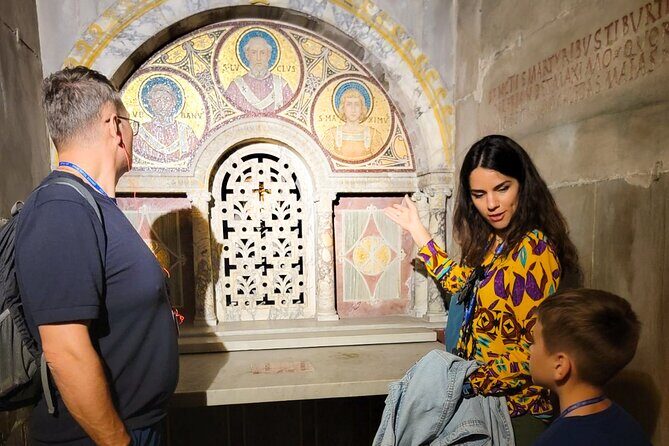
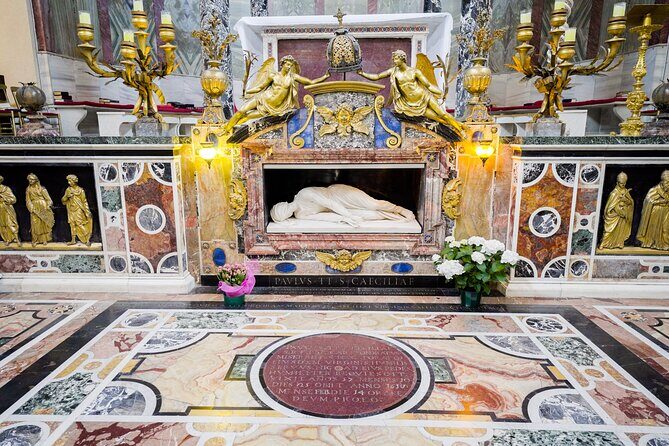
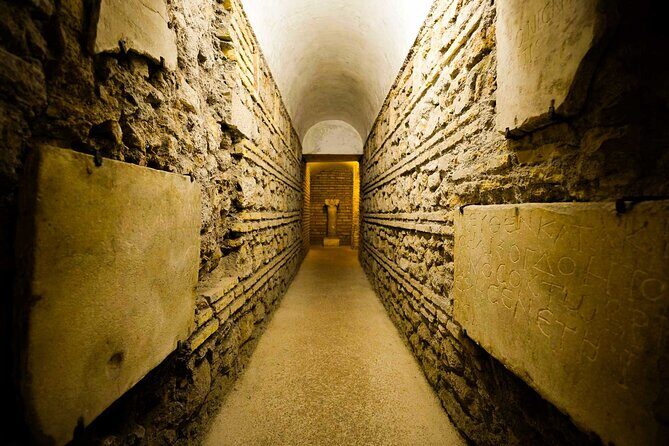
Next you move to Santa Cecilia in Trastevere, with about 1 hour here. The tour includes entry for the underground crypt area, and a standout detail is that you get special access by the nuns. That’s not just a logistical note—it changes what you experience, because you’re stepping into spaces with a different feel than the public church floor.
You’ll also hear the story of Saint Cecilia, described as resilient and strong-willed. The church complex gives you something visitors often don’t realize: the layers of the site, where multiple times and meanings sit on top of each other like plates in an architectural lasagna. The underground is part of that effect. You explore the site and find the ancient apartment connected with her story.
What makes this stop valuable for you: it connects faith, legend, and physical place. You’re not only reading about history—you’re looking at how it’s preserved and presented in a real building.
One practical consideration: underground spaces can feel cooler and darker than what you’re used to outside. If you’re taking photos, give your camera a moment to adjust before you commit to a shot.



Stop 3: Vicolo Dell’Atleta for quiet corners and ancient clues
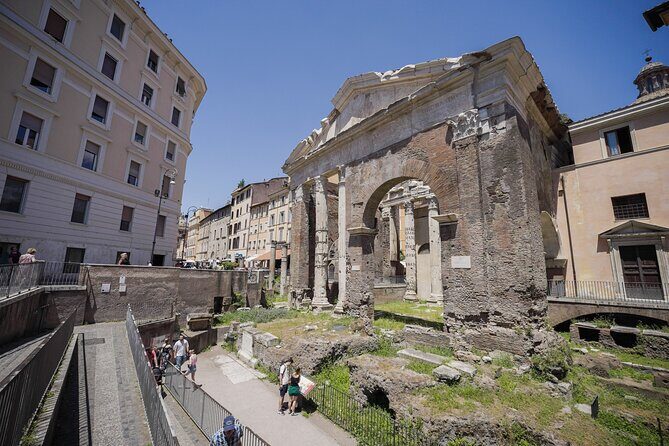
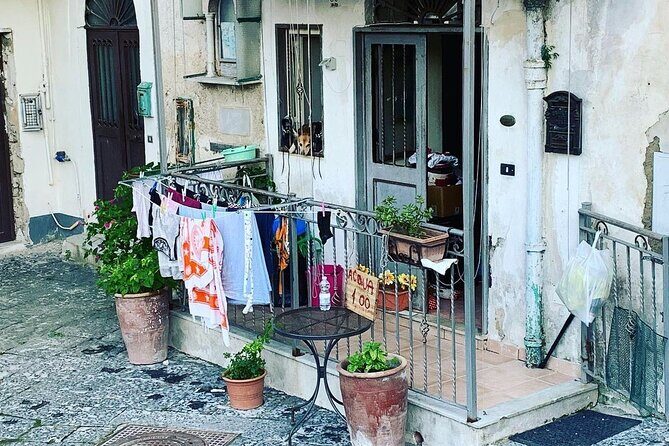
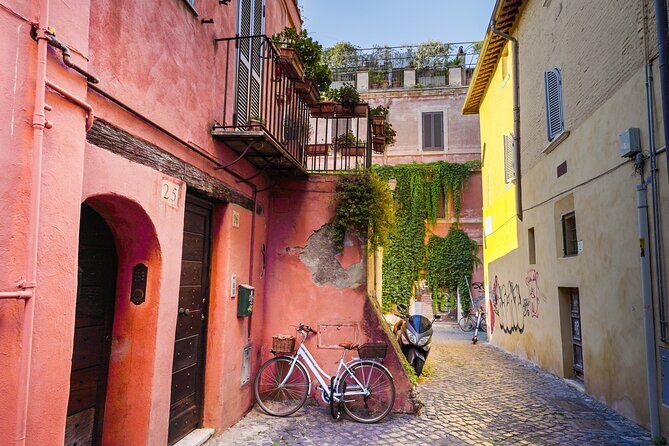
Then comes the lane part of Rome—the part that feels like Rome before you learned how to navigate Rome. Vicolo Dell’Atleta is a narrow alley with a peaceful atmosphere, and it’s short on paper at about 15 minutes. But it packs several “how did I miss this?” moments.
This is where you learn about:
- The most ancient synagogue of Rome, which today houses a restaurant
- A reference to one of the most ancient athletes of Rome
So yes, you’ll walk down a small street, but you’ll also get a lesson in how old Rome and old religious life can live inside everyday modern use. It’s one of those stops that makes you see the city differently, because nothing is labeled as loudly as you expect.
What to do with your time here: slow down. This lane works best when you stop trying to rush toward the next landmark. Look at the way the street narrows, notice the quiet, and let the story connect to what you’re seeing in front of you.
Stop 4: Isola Tiberina and the Roman birth story
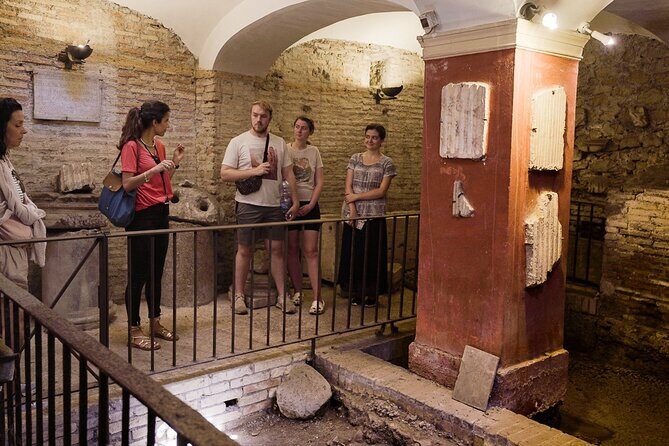
From alleys you shift to a river scene at Isola Tiberina. This is another 15-minute stop, but it’s a smart break from church and stone corridors.
The island sits in the center of the Tiber, and you’ll discover:
- A connection to the idea of where only the true Romans are born
- A bridge associated with Julius Caesar, described as the most ancient in Rome
Even if you’ve heard parts of Roman mythology before, this stop helps you picture the city’s physical logic. Rivers decide where Rome grows, where crossings happen, and where strategic spots become “important.” When you stand on or near a river island, the stories stop sounding abstract.
Practical note: you’re moving through a city center environment. If it’s busy, you’ll still get the value because the guide helps you focus on what to look for quickly and correctly.
Stop 5: Il Portico di Ottavia and the Jewish Ghetto area
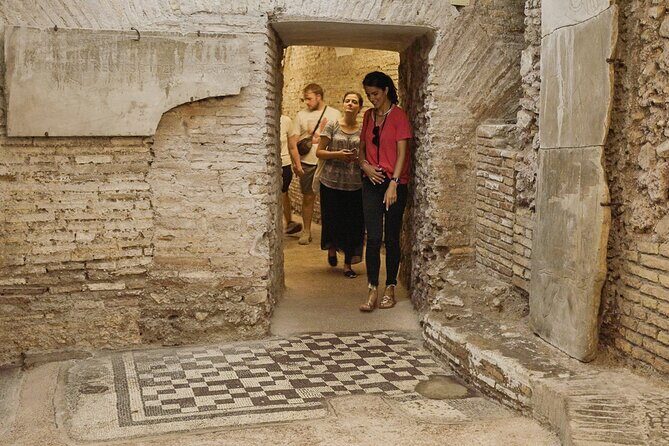
Your final major segment is the Jewish district, commonly referred to as the ghetto, around Il Portico di Ottavia. This is about 30 minutes, and it’s where the tour theme comes together.
You’ll learn about:
- The building that inspired the design of the Colosseum
- Food destinations in the area
- The story of the Jewish community of Rome, described as the most ancient Jewish community in Europe
This stop isn’t only about the past. It’s about continuity: how long-standing community life shaped the city’s layout and identity. And the connection to the Colosseum design is a strong example of how Rome’s major monuments link back to neighborhoods people often skip.
Also, you get a real sense of the district’s character because you’re walking in a small cluster of streets rather than circling a single big attraction. For me, that makes the knowledge stick.
The guide factor: warm delivery and clear, usable stories
This kind of tour rises or falls on the guide. Here, the experience includes a knowledgeable and friendly local guide—and the names that showed up in feedback were Frederica and Francesca. The common thread is a personable style and the ability to connect details into a narrative you can remember without studying.
What you’ll likely feel in a small group: you can ask real questions. With up to 12 people, you’re not shouting over a crowd. The route is also short enough that the guide can keep you oriented, so you know why each stop matters and what to look at.
One more nice touch: direct contact via phone or WhatsApp if you have questions. It’s not always needed, but it’s reassuring when you’re standing in an unfamiliar Rome neighborhood and want quick help.
Who should book this tour (and who should skip it)
This tour fits you if you want more than headline monuments. If you like Trastevere’s side-streets, enjoy churches with standout art, and want a focused look at Jewish Rome, you’ll probably love the way the route is built.
It’s also listed as suitable for children and is open to most travelers. That suggests the pace and stops are managed in a way that’s family-friendly, at least in terms of overall structure.
I’d skip it only if you dislike walking in older streets or you need a fully accessible route without any uneven surfaces. The tour includes church interiors and narrow lanes, which can be difficult for some mobility needs.
Tips to make the most of it
Here are a few practical moves that help on this exact route:
- Wear comfortable shoes. You’ll be on foot through narrow streets and church floors.
- Bring a fully charged phone. You’ll use a mobile ticket, and you may want to map back afterward from the end point at Piazza Mattei.
- Keep your pace steady. The stops are short, so if you lag behind, you’ll miss the best explanation moments.
- If you love Roman art, pay extra attention at the Bernini stop. It’s one of the few places where your “time with the artwork” is built into the plan.
Should you book the Rome Trastevere and Jewish Ghetto small-group tour?
If you want a Rome experience that mixes famous art with quieter neighborhood learning, this is a strong choice. For $67.72, you get a focused route, a maximum 12-person group, and real access to the underground crypt area at Santa Cecilia, plus multiple historical connections in Trastevere and the Ghetto.
The main reason to hesitate is simple: it is a walking tour with church stops, so it’s not the one for days when you want zero footwork. If that’s not your mood, book it. Also, it tends to be scheduled well ahead—on average about 63 days in advance—so if you’re traveling in peak season, consider reserving sooner.
FAQ
How long is this tour?
It’s about 2 hours 30 minutes.
What does the tour cost?
The price is $67.72 per person.
Is the tour in English?
Yes. The tour is offered in English.
How big is the group?
The experience is a small group with a maximum of 12 travelers.
Are entry tickets included?
Yes. Entry tickets to the underground crypt (related to Santa Cecilia) are included, and other stops noted are free.
Do I need hotel pickup?
No. Pick-up from the hotel is not included. You’ll meet at the provided start location and the tour ends at Piazza Mattei.