REVIEW · ROME
Rome: Trajan’s Markets & Museum of The Imperial Fora Tour
Book on GetYourGuide →Operated by Touriks · Bookable on GetYourGuide
Rome’s first mall still feels like shopping. This 1.5-hour guided visit turns Trajan’s Markets into a real window on everyday Roman life, with multi-level shop spaces and dramatic arches that are still standing after two thousand years. You get a guide who helps you read what you’re seeing, not just stare at stones.
I especially like two things: the chance to explore Trajan’s Markets as the world’s earliest shopping center, and the way the visit continues into the Museum of the Imperial Fora where sculptures, inscriptions, and artifacts connect the ruins to specific emperors and public life. One thing to plan for: the routes inside Trajan’s Markets include uneven surfaces and steps, so you should come with a moderate fitness level.
In This Review
- Key things you’ll notice on this tour
- Trajan’s Markets: Rome’s first shopping center, built to last
- Museum of the Imperial Fora: inscriptions and sculptures that explain power
- How the 1.5-hour guided format works (and why it helps)
- What makes Trajan’s Markets special for photos and understanding
- Museum visit tips: what to watch for inside
- Price and value: is $77 worth it?
- Starting at Trajan’s Column: meeting point and flow you can trust
- Wheelchair and mobility reality check (read this before you go)
- Which guide experience is best: what to expect from standout leadership
- Who this tour suits best
- Should you book Trajan’s Markets & the Imperial Fora Museum tour?
- FAQ
- How long is the tour?
- Where does the tour start?
- Where does the tour finish?
- What is included in the price?
- What is not included?
- Is there skip-the-line entry?
- How big are the groups?
- What languages are offered?
- Is the tour wheelchair accessible?
- What documents do I need to enter?
Key things you’ll notice on this tour
- Trajan’s Markets as the world’s first shopping mall, with shopfronts and Roman building techniques you can still see clearly
- Forum views that help you place the museum and markets in the heart of Imperial Rome
- A guided explanation that links daily commerce to empire-scale politics, using objects like inscriptions and sculptures
- Headsets included, so you’re not straining to hear in busy areas
- Small groups (up to 10) or private options, which usually makes questions easier
- Wheelchair support within the museum, but not every area is accessible
Trajan’s Markets: Rome’s first shopping center, built to last
Trajan’s Markets is one of those places where the layout does half the teaching. As you walk through the multi-level structure, you start to understand how Romans blended public buildings, trade, and urban life. The big idea here is simple: this was not just a monument. It was a functioning commercial space, and the fact that so much is still intact makes it unusually legible.
I like that the architecture does the heavy lifting. You can spot Roman engineering in the arches and the carefully stacked levels. Even if you know Roman history already, the physical design helps you picture how people moved, shopped, and worked in the city center. It feels like the building has kept its rhythm even after centuries.
There’s also something practical in the experience: Trajan’s Markets sits close enough to the Imperial Forums area that you’ll get sweeping views while you’re there. Those views matter because they help your brain connect the museum pieces to the big civic world around them. Without that, the ruins can feel like separate stops. With it, they start to feel like one urban system.
One more note for your comfort: the site is not flat. You should expect uneven surfaces and stairs. If your mobility is limited, this is still worth considering, but you’ll want to plan around the walking demands in Trajan’s Markets.
You can also read our reviews of more tours and experiences in Rome.



Museum of the Imperial Fora: inscriptions and sculptures that explain power
After Trajan’s Markets, the tour shifts into the Museum of the Imperial Fora, and the tone changes in a good way. Outside, you’re reading space and structure. Inside, you’re reading objects—sculptures, inscriptions, and artifacts—so the story becomes more specific and more human.
This is where the Imperial Fora stop feeling like general background. Your guide uses what’s on display to explain what these monumental complexes meant for Roman public life and how the emperors shaped that world. Inscriptions are especially important here because they turn a name you’ve heard into something tied to a place, a project, and an era.
If you’ve visited other Roman sites, you might notice that many of them are impressive but vague. The Museum of the Imperial Fora is different because it helps you connect the dots: the monumental architecture is not just decoration. It’s a political tool, built to broadcast authority and organize public activity.
You’ll also see how Roman art and writing worked together. Sculptures communicate status and values, while inscriptions act like built-in labels for history. Together, they make the Imperial Forums feel less remote and more understandable. It’s the kind of visit where you walk out with clearer mental pictures of who built what, and why it mattered.
If you’re sensitive to museum pacing, it helps to know the tour is short (about 1.5 hours total). That means you’ll get the best highlights, not every possible item in the collection. It’s a smart format if you want meaning without getting stuck for hours.
How the 1.5-hour guided format works (and why it helps)
This isn’t a long, slow crawl. It’s designed as a focused loop: start at Trajan’s Column area, move through Trajan’s Markets with a guided explanation, then end at the Mercati di Traiano Museo dei Fori Imperiali. Because the time is limited, the guide’s job is to select what will click fastest for you.
That’s where the headsets come in. Headsets are included, so you can actually hear your guide clearly instead of depending on shouting over foot traffic. If you’re traveling with kids, or if you just don’t enjoy playing audio detective, this is a real quality-of-life upgrade.
Small-group size is another reason the format works. With a maximum of 10 people for the small group option, you’re less likely to get stuck behind a wall of shoulders, and it’s easier to ask a question when something doesn’t make sense yet. If you prefer even more control, the private option is available.
One pacing thought: I’ve seen feedback that some guides may not move as quickly as a visitor expects. If you like a brisk tour with fewer pauses, you can set the tone early by asking for the key points first. A good guide can often adjust how they frame the stops when they know what you want.
What makes Trajan’s Markets special for photos and understanding
Trajan’s Markets has two strengths at once: good sightlines and good context. The structure gives you natural angles—especially around arches and multi-level views—so your photos look architectural instead of random. But the better part is the context. Your guide helps you connect those arches and shopfronts to what the building actually did in daily life.
The views toward the Forum area also improve the photo story. You get a sense of where you are in the urban map of ancient Rome. That matters because many travelers see the Forums as a single large open space. Here, you see nearby parts of the complex that make the whole area feel more coherent.
The tour is also a nice change of pace from the most crowded “classic” stops. If you’re trying to balance your Rome days, this is a good pick because it feels distinct: you’re walking through spaces that look like they were designed for people, not only for gods or emperors. That shift can make the city feel bigger and more three-dimensional.
Museum visit tips: what to watch for inside
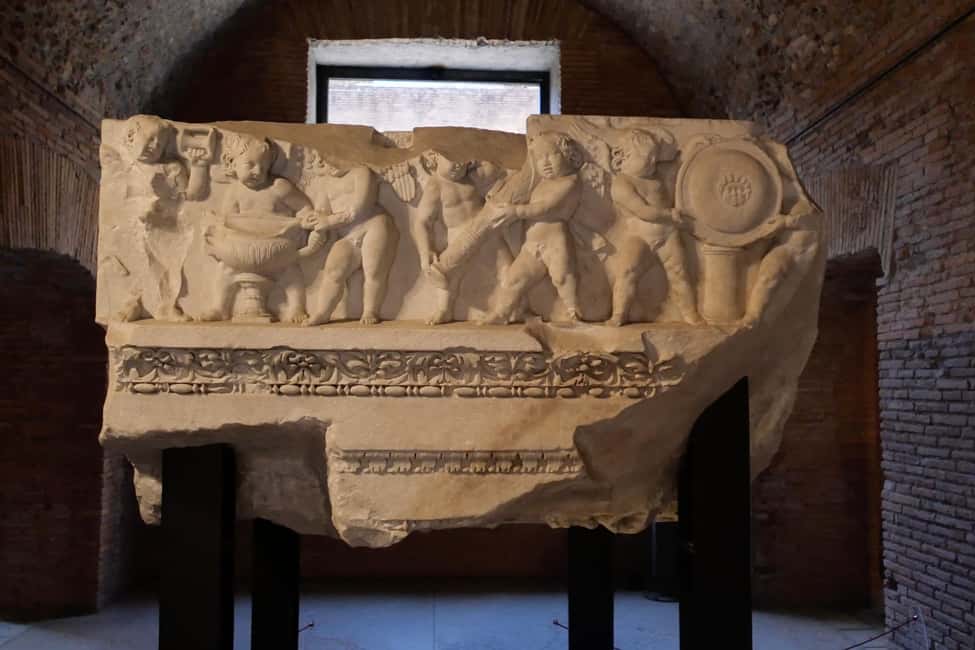
When you enter the museum space, I’d focus on three things while you listen. First, track how your guide explains the Imperial Fora projects. Look for how names, dates, and purposes get tied back to the objects you’re seeing. Second, pay attention to inscriptions and how they function as historical clues. Third, use the sculptures as a visual guide to status and messaging in public life.
Because the tour is guided, you don’t need to memorize every detail. But you do get more from the visit if you stay alert to the meanings your guide points out. This is one of those tours where asking one follow-up question can instantly make the next room make sense.
If you’re sensitive to stairs, mobility issues, or longer standing periods, the short duration helps. Just remember that the museum includes wheelchair access support, but not all areas are visitable by wheelchair.
Also check what the tour does not allow. No food or drinks, no luggage or large bags, and no drones are allowed. If you’re planning to carry a day bag, keep it small so you’re not stuck sorting out what you can bring.



Price and value: is $77 worth it?
At $77 per person for about 1.5 hours, this tour can be a strong value if you want guided context without paying for a bigger, longer-day commitment. You’re paying for three important inclusions: an expert live guide, entrance fees to Trajan’s Markets and the Museum of the Imperial Fora, and headsets to hear the guide clearly.
That combination is what makes the price feel reasonable. Entrance fees add up fast in central Rome, and a guide who can explain inscriptions, sites, and architecture helps you get more meaning per minute. In other words, you’re not just buying access. You’re buying clarity.
There is one cost consideration you should plan for: entry fees to and/or a guided tour of the Imperial Forums are not included. This tour still gives you Forum views, but if you want to step into additional Forum spaces afterward, budget separately.
Compared with doing everything solo, the big advantage is timing and interpretation. Solo visits can be great, but you’d likely spend more time figuring out what you’re looking at. Here, the guide helps you go straight to the “what this means” part.
Starting at Trajan’s Column: meeting point and flow you can trust
Your meeting point is in front of the iron gates of Trajan’s Column, opposite the church of Santa Maria di Loreto, on Via dei Fori Imperiali (00187 Rome). Look for a staff member holding a yellow Touriks sign.
The flow is straightforward: you start at Trajan’s Column area, then you move into Trajan’s Markets, and the tour finishes at Mercati di Traiano Museo dei Fori Imperiali. That ending point is convenient if you want to continue exploring nearby areas on your own.
This matters because you can plan your day with less guesswork. You’re not zig-zagging across the center of Rome just to finish where you started. It’s a tight route designed around the actual site geography.
Wheelchair and mobility reality check (read this before you go)
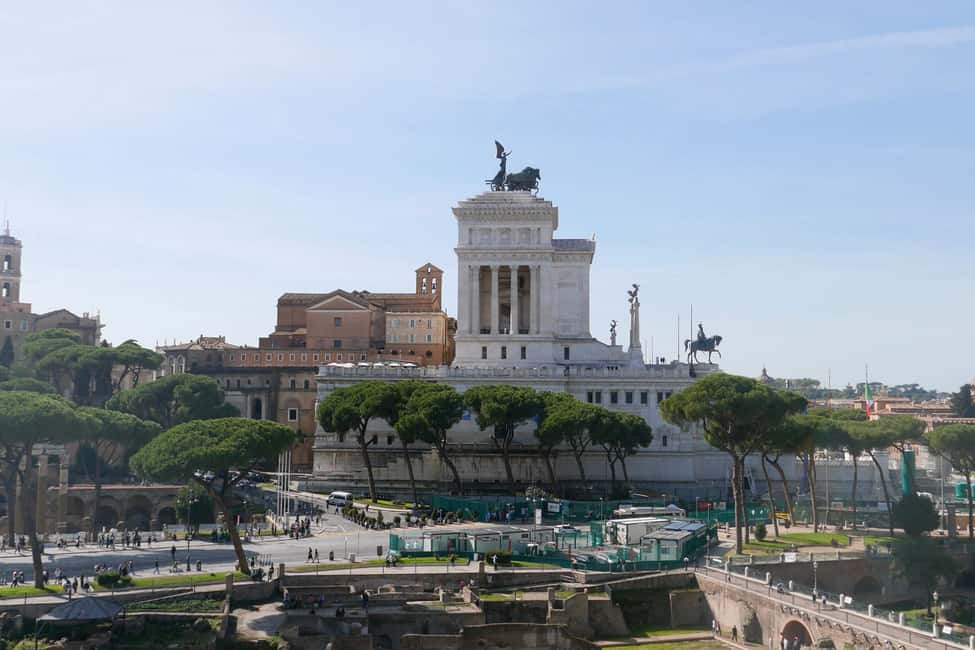
This tour is wheelchair accessible, but with real limits you should understand ahead of time. The museum provides a wheelchair for people with reduced mobility, and three floors of the museum are accessible by wheelchair. The lower two floors unfortunately can’t be visited with a wheelchair.
Also remember the moderate fitness recommendation for Trajan’s Markets itself. Trajan’s Markets includes uneven surfaces and stairs and that can affect everyone, even if you’re otherwise fine walking around Rome.
If you’re planning for mobility needs, consider contacting the provider about your specific route and comfort level so you don’t end up hoping stairs or uneven areas won’t be an issue.
Which guide experience is best: what to expect from standout leadership
The guide can make or break a short archaeology-style tour, and here that’s especially true. In particular, Francesca Massaccesi has been singled out for turning the site into something alive, with strong knowledge of Rome and the history tied to the ruins you’re seeing.
That kind of guide talent shows up in how quickly you get from seeing structures to understanding what they represented. If you care about pacing and explanation style, it’s worth looking at the guide details at booking. And if you prefer a faster, more direct explanation, tell your guide what you want early so they can adjust.
If you’re traveling with someone who needs constant engagement, this tour can still work, because the architecture and museum objects provide natural anchors. Just keep an eye on pacing preferences so everyone stays comfortable.
Who this tour suits best
I’d recommend this tour if you want a Rome experience that’s more built-environment than battlefield or statue gallery. It’s also a smart choice if you’ve already hit the biggest highlights and want something closer to daily life in the ancient city.
It’s especially good for:
- Travelers who like architecture and urban design
- People who enjoy learning through objects like inscriptions and sculptures
- Anyone who wants a guided experience that fits into a short time window
- Visitors who appreciate small group energy (up to 10) or want a private option
It may be less ideal if:
- You strongly dislike stairs and uneven walking
- You need a very fast-paced commentary with minimal stops
- You’re hoping the tour includes Imperial Forums entry and guided coverage beyond the markets and museum
Should you book Trajan’s Markets & the Imperial Fora Museum tour?
Book it if you want ancient Rome that feels practical and understandable. For $77, you get entrance included for Trajan’s Markets and the Museum of the Imperial Fora, a live guide, and headsets—all in about 1.5 hours. That’s a good deal for visitors who want their time to turn into meaning, not confusion.
Consider skipping or changing your plan if stairs and uneven surfaces will be a real problem for you. Also note that Imperial Forums entry and any guided tour of the Forums are not included, so you’ll need to decide separately if you want to go farther.
If you do book, go in with one mindset: try to see the spaces as systems—commerce, public life, and power all linked together. Do that, and Trajan’s Markets won’t just be an impressive ruin. It’ll be a clear chapter of how Rome worked.
FAQ
How long is the tour?
The tour lasts 1.5 hours.
Where does the tour start?
Meet in front of the iron gates of Trajan’s Column, opposite the church of Santa Maria di Loreto, Via dei Fori Imperiali, 00187 Rome. Look for a staff member holding a yellow Touriks sign.
Where does the tour finish?
The tour ends at Mercati di Traiano Museo dei Fori Imperiali.
What is included in the price?
The price includes an expert live guide, entrance fees to Trajan’s Markets and the Museum of the Imperial Fora, and headsets.
What is not included?
Food and drinks are not included, and there’s no pick-up or drop-off. Entry fees to and/or a guided tour of the Imperial Forums are also not included.
Is there skip-the-line entry?
Yes, the tour offers skip-the-ticket line.
How big are the groups?
There is a small group option with a maximum of 10 people, and a private option is also available.
What languages are offered?
The live guide is available in French, German, Italian, Spanish, Portuguese, and English.
Is the tour wheelchair accessible?
Yes, wheelchair access is available. The museum provides a wheelchair for people with reduced mobility, and three floors of the museum are accessible by wheelchair, but the lower two floors cannot be visited with a wheelchair.
What documents do I need to enter?
You must present a valid passport or ID document that matches the full name used when booking.