REVIEW · ROME
Pastamania in Rome
Book on Viator →Operated by Dalle Nostre Mani · Bookable on Viator
Fresh pasta lessons beat restaurant dinners. Pastamania in Rome, run by Dalle Nostre Mani, mixes a hands-on pasta-making workshop with a proper meal in a historic palazzo near the Pantheon and Piazza Venezia. I love the small group size (up to 10) and the fact that you shape ravioli, tortelli, and fettuccine yourself, not just watch from the sidelines.
One possible drawback: the site is not accessible for people with limited mobility, including crutches, so you’ll want a different plan if step-free access is a must.
In This Review
- Key highlights to know before you go
- Pastamania Rome: a 3-hour fresh pasta class in the Pantheon area
- Meeting at Palazzo Grazioli and settling into the lesson
- Making ravioli: kneading, rolling, and shaping pasta by hand
- Tortelli and the butter-sage sauce lesson
- Fettuccine with tomato sauce: the classic Italy you can recreate
- The communal table meal: wine, limoncello, and chocolate salami
- Price and value: why $49.58 feels reasonable
- Who this pasta class fits best in Rome
- Practical tips for an easy, tasty experience
- Should you book Pastamania in Rome?
- FAQ
- Where is the meeting point for Pastamania in Rome?
- How long is the experience?
- What language is the class taught in?
- Is a mobile ticket used?
- What pasta types will I make?
- What is served at the end of the class?
- What drinks are included?
- What is the group size limit?
- Is the venue accessible for people with limited mobility?
- What’s the cancellation policy?
Key highlights to know before you go
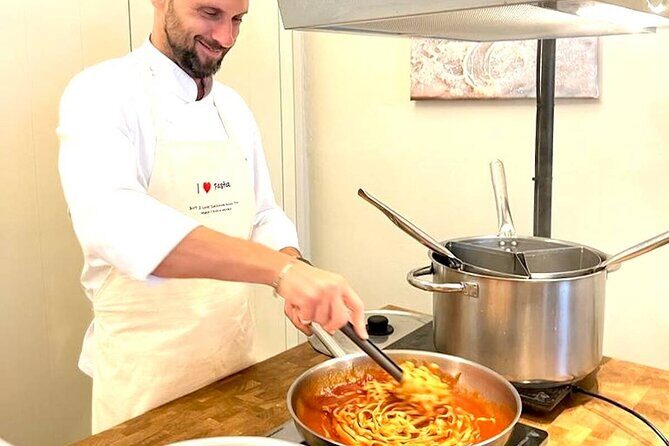
- Up to 10 people means you get real attention while you knead, roll, and shape pasta
- Ravioli, tortelli, and fettuccine so you taste variety in just one sitting
- Historic palazzo location in central Rome, a few minutes’ walk from the Pantheon area
- Communal table meal where you eat what you made with wine and limoncello shots
- Dessert includes chocolate salami, plus sweet treats during the experience
Pastamania Rome: a 3-hour fresh pasta class in the Pantheon area
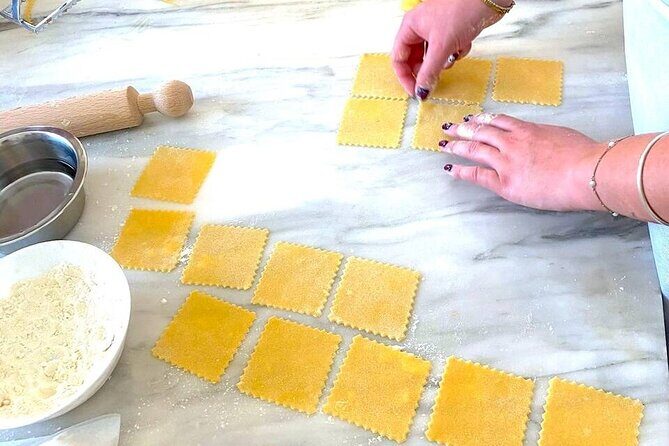
If your Rome plan is only churches and viewpoints, this class is a great left turn. Pastamania is built around doing. You learn how fresh pasta comes together, then you get to produce three different styles: ravioli, tortelli, and fettuccine. That hands-on pace is the point.
It also happens in a real inner-city setting: you meet at Palazzo Grazioli, Via della Gatta, 14 (00186 Roma) and do the lesson inside a historic palazzo. The location is practical too. You’re a short walk from major landmarks like the Pantheon area and Piazza Venezia, so you can slot this in without losing half a day to travel.
The price is $49.58 per person for about 3 hours, and what makes it feel fair is that you’re not just taking a ticket to eat. You’re taking a ticket to make, learn, and then sit down together.
You can also read our reviews of more tours and experiences in Rome.


Meeting at Palazzo Grazioli and settling into the lesson
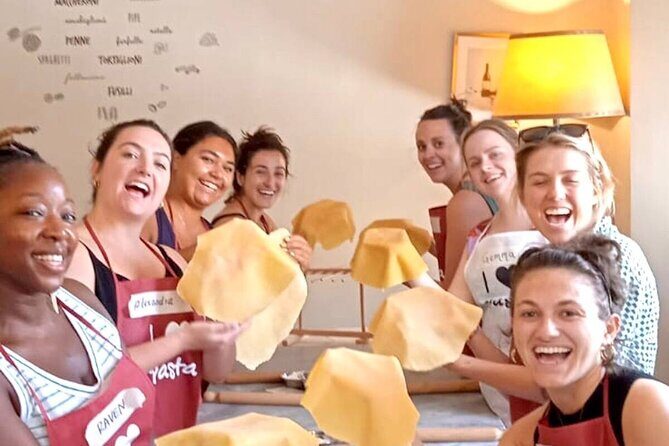
You’ll start and end at the same place: Palazzo Grazioli, Via della Gatta, 14. Most of the time, your evening goes smoothly because the neighborhood is easy to navigate and there’s near public transportation.
The experience runs in English and uses a mobile ticket, so you can keep it simple on your phone. After you arrive, your instructor brings the group into pasta mode. This is where you’ll notice one of the strongest themes: the teaching style tends to feel friendly and relaxed, not stiff.
You may meet instructors with names like Christian, Fabrizio, Giorgio, Ricardo, Sofia, Arianna, or Luca. Across the class, the common thread is the same: you’re given clear steps, and the mood stays playful. That matters, because pasta-making is part technique and part confidence. If the instructor keeps things light, you learn faster and stress less.
Making ravioli: kneading, rolling, and shaping pasta by hand
Ravioli is usually the “wow” moment, because it combines dough work with stuffing and shaping. This class is set up so you’re not stuck watching a demonstration. You’re the one kneading, rolling, and shaping.
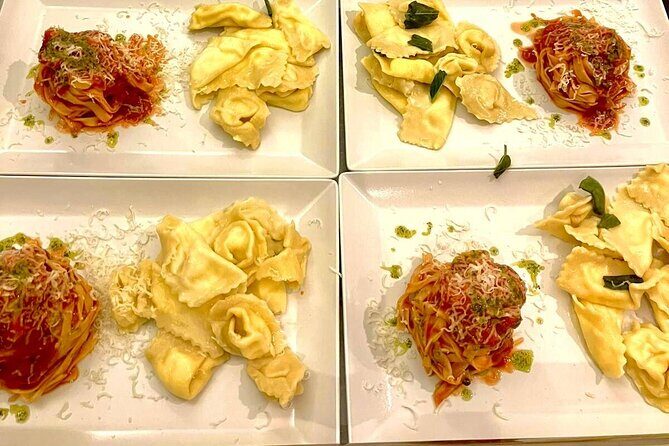
The menu gives you a good clue about what you’ll end up eating: one main is ravioli with parmigiano and ricotta filling with truffle oil, finished with butter and sage. That pairing is a classic Italian comfort combo, but the truffle oil adds a slightly more luxurious note without becoming fancy-food awkward.
During the lesson, the teacher will guide you through the workflow. Expect flour-to-dough work, then shaping, then learning how your pasta should look and feel as it comes together. The main benefit of doing ravioli first is momentum. Once you understand the dough basics, the rest of the shapes feel easier.
Also, since this is a small group (maximum 10), you’re more likely to get quick corrections. And those tiny adjustments are the difference between pasta that feels stretchy and pasta that fights back.
Tortelli and the butter-sage sauce lesson
Next comes tortelli, another stuffed pasta shape. This class doesn’t treat tortelli as a side quest. You’re still making it, and you’ll still get the satisfaction of eating something you created from scratch.
The sample menu lists tortelli with parmigiano and ricotta and nutmeg filling, served with butter and sage sauce. Nutmeg is one of those spices that can be subtle and comforting when it’s balanced, so it fits well with a warm sage-butter finish.
Why tortelli is a smart choice for this kind of class: it teaches you how changes in shape can change texture and bite. Even if you don’t fully remember every step later, you’ll remember the process—because you felt it in your hands.
Instructors like Fabrizio and Giorgio are often praised for being patient, even when the group includes people who don’t usually cook at home. That kind of teaching matters if you’re bringing kids, older family members, or anyone who just wants an easy win.
Fettuccine with tomato sauce: the classic Italy you can recreate
Then you shift from stuffed pasta to something simpler, but not less satisfying: fettuccine. The sample menu has fettuccine with tomato sauce, which is a great “home cooking” target. It’s the kind of dish you’ll actually want to repeat after your trip.
Fettuccine also gives you a different skill set. Instead of sealing edges and shaping fillings, you’re thinking about thickness, stretch, and long strips. That’s useful if you want your at-home pasta to look more like the real stuff you see in trattorias.
One of the best takeaways from instructors like Ricardo and Sofia is that the class focuses on practical advice. You’ll get tips for making pasta at home and storing it (that comes up directly in the experience). Even if you never become a pasta production line, the knowledge helps you shop smarter and cook with more confidence.
And yes, you’ll get to eat it. That part is huge. Cooking classes can be frustrating when you work hard and then only taste a tiny sample. This one ends with a communal meal where the portions are described as generous in multiple accounts.
The communal table meal: wine, limoncello, and chocolate salami
After the hands-on pasta work, you sit down at a large communal table to share what you made. That shared meal is the real payoff, and it’s also where the experience turns from a class into a memory.
From the menu and what people highlight, here’s what you can expect as part of the eating portion:
- Your pasta mains: ravioli and tortelli with butter and sage, plus fettuccine with tomato sauce
- Dessert: chocolate salami
- Drinks in many sessions: a glass of wine and limoncello shots (often described as part of the fun)
That combo—work, eat, relax—fits Rome well. You’re not just consuming; you’re doing something local, then ending like the Italians do: long enough to talk to new people.
Another detail worth noting: the group dynamic tends to be social. A lesson like this naturally attracts couples, friends, families, and even solo travelers. If you like meeting people, you’ll probably enjoy the dinner-table conversation. If you don’t, no worries—the format still works because everyone shares the same experience.
Price and value: why $49.58 feels reasonable
At $49.58 per person for about 3 hours, this isn’t a bargain like street food. But it also isn’t a luxury-only splurge.
Here’s why the value works:
- You’re paying for instruction plus hands-on production (not just a meal)
- You eat multiple pasta styles made by the group
- The setting is central, in a historic palazzo, which saves you time compared with classes that require a long commute
- Small group size (maximum 10) usually means better teaching and fewer people crowding around the same counter
Also, consider what you’re doing with your time. In three hours, you get an activity that’s both cultural and practical. It’s harder to do that with a museum ticket, because museums don’t give you a skill you can use later.
One more practical point: classes like this often book ahead. On average, this experience is booked about 25 days in advance, so if your Rome dates are set, it’s wise to reserve early to protect your schedule.
Who this pasta class fits best in Rome
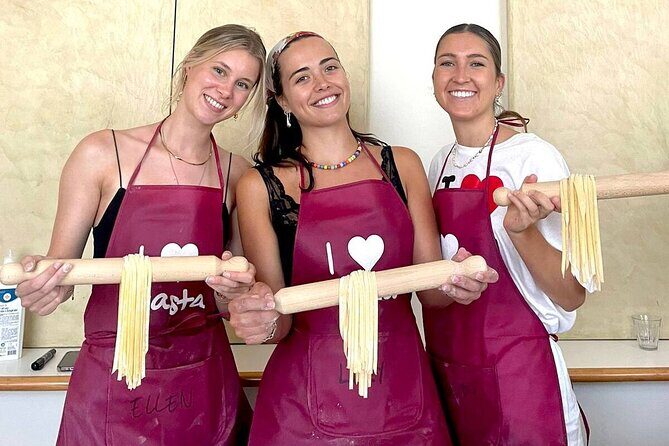
This works well for a lot of travelers because the teaching approach is hands-on and the group size stays small.
Best matches:
- Food lovers who want more than just tasting
- First-time pasta makers who want a guided, confidence-building experience
- Couples who want a date-night activity that feels more local than dinner-and-a-show
- Families: people have brought children, and the instructors are described as accommodating and patient
- Groups of friends who want something shared and fun, not another “separate interests” day
If you’re a solo traveler, it’s still a good bet. You join the group, learn the steps, then sit with the others around the same table. One nice thing about pasta work is that it levels the playing field. Everyone is learning the same moves.
The main mismatch is mobility. The venue is not accessible for limited mobility. If that’s your situation, you’ll need a different Rome plan.
Practical tips for an easy, tasty experience
Here are the small moves that make the class smoother:
- Come hungry. Multiple people mention that the tasting part is a big deal, and you don’t want to start with a full stomach.
- Plan for a hands-on session. You’ll knead, roll, and shape pasta. Wear something comfortable that you won’t mind if flour happens.
- Ask about home pasta tools. One practical regret that comes up is not buying a chitarra pasta maker when the chance existed. If the school offers tools, it’s worth asking what’s available and whether it fits your future pasta plans.
- Expect a friendly teaching vibe. Instructors like Christian, Fabrizio, Giorgio, Ricardo, Sofia, Arianna, and Luca are consistently mentioned for humor and patience. Still, show up ready to follow steps and you’ll get more out of it.
If you’re trying to fit it into a bigger day, the location near the Pantheon/Piazza Venezia area helps. You can pair it with a morning or early afternoon sightseeing plan, then make this your main “do something” activity.
Should you book Pastamania in Rome?
If you want a Rome experience that’s both cultural and practical, I think this is an easy yes. It’s one of those activities where the payoff is immediate: you make pasta, then you eat pasta you made. The format is social without being chaotic, and the small group size keeps the instruction personal.
Book it if:
- You’re excited to learn and not just watch
- You want to eat more than one pasta type in a single session
- You like the idea of a hands-on class in central Rome, close to major landmarks
Skip it if:
- Accessibility is a concern for you (the venue isn’t accessible for limited mobility)
- You hate cooking or don’t want to get your hands involved
If you’re on the fence, here’s the decision shortcut: if you’d rather spend three hours learning a skill you can repeat at home, this class is a strong use of your time.
FAQ
Where is the meeting point for Pastamania in Rome?
You meet at Palazzo Grazioli, Via della Gatta, 14, 00186 Roma RM, Italy.
How long is the experience?
It lasts about 3 hours.
What language is the class taught in?
The experience is offered in English.
Is a mobile ticket used?
Yes, this activity includes a mobile ticket.
What pasta types will I make?
You’ll work on homemade pasta including ravioli, tortelli, and fettuccine.
What is served at the end of the class?
The meal includes the pasta you make, with dishes like ravioli with parmigiano and ricotta (truffle oil filling) with butter and sage, tortelli with parmigiano and ricotta and nutmeg with butter and sage, fettuccine with tomato sauce, and dessert chocolate salami.
What drinks are included?
Many classes include wine and limoncello shots as part of the experience.
What is the group size limit?
The experience has a maximum of 10 travelers.
Is the venue accessible for people with limited mobility?
No. It is not accessible for people with limited mobility, including crutches.
What’s the cancellation policy?
Cancellation is free up to 24 hours in advance for a full refund. If you cancel less than 24 hours before the start time, the amount paid is not refunded.