REVIEW · MOTORBIKE & SCOOTER RENTALS
Rome tour by vespa
Book on GetYourGuide →Operated by Rome by fiat and Vespa · Bookable on GetYourGuide
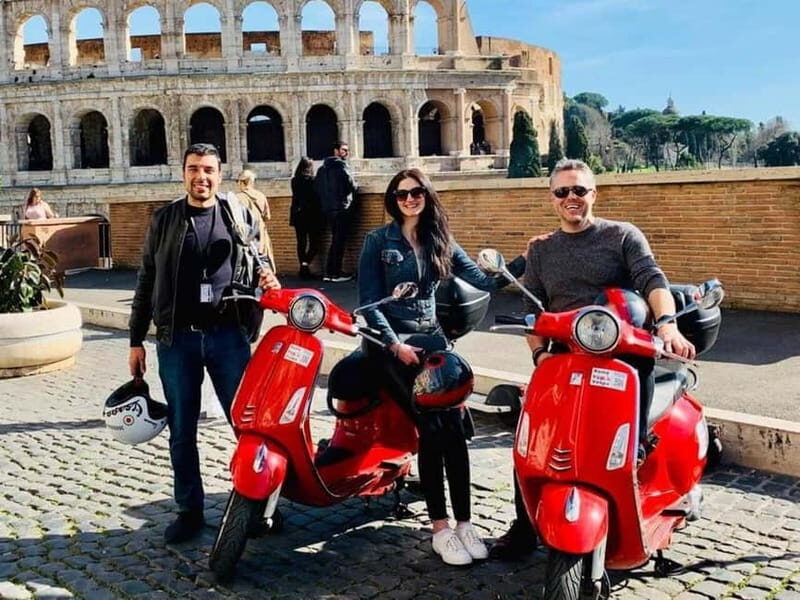
Rome feels different when you ride. This private 2.5-hour tour strings together the big names and quieter side streets on a vintage 60s Vespa, and I really like the stop-by-stop photo moments paired with time to wander on your own. One thing to consider: you’re moving fast, with many stops kept to short 10–15 minute chunks, so it’s not for people who want hours at a single sight.
I also like how the route balances postcard Rome with “wait, what is that place?” Rome—driving through narrow lanes, churchy squares, and hill viewpoints. You’ll start with either pickup or the meeting point at the bistro & wine bar Pasquino, and the guide works in English, Spanish, or Italian.
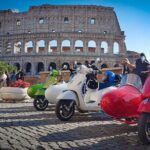
Finally, it’s worth knowing the ride setup can change. In one case, a last-minute Vespa problem led to a swap to a vintage Fiat 500, custom-painted a showy iridescent green—people even stopped to photograph it—so think of the vehicle as part of the fun, not the only constant. Starting before sunset also helps, since the city looks like it’s switching modes from bright daytime to evening glow.
In This Review
- Key Highlights to Know Before You Go
- Riding a Vintage 60s Vespa Makes Rome Feel Like a Movie
- Starting at Pasquino and Getting Picked Up Anywhere
- How the 2.5-Hour Plan Stays Fun Instead of Rushed
- Piazza Navona: Where the City Shows Off Its Square Magic
- Pantheon: Quick Entry, the Right Focus, and Photo Timing
- Piazza di Spagna, Trevi Fountain, and Via del Corso: A Rome Walking Dream from Your Scooter
- Piazza di Spagna
- Trevi Fountain
- Piazza Venezia and Vatican City: Big Symbols, No Long Walks
- Janiculum Hill (Gianicolo) and Pincio Views: Where the Drive Pays Off
- Trastevere and the Alley Feel: Rome That Doesn’t Perform on Cue
- Pyramid of Cestius and Circus Maximus: Two Stops Many People Skip
- Colosseum and the Aventine Keyhole: One Giant, One Secretive View
- Coffee, Wine, and Gelato: The Break That Makes It Feel Like a Day Out
- Guide Energy and Language: What You Get in a Private Group
- Price and Value: Is $169.93 Fair for 2.5 Hours?
- Who This Tour Is Best For (and Who Should Pass)
- Should You Book This Vintage Rome Vespa and Fiat Tour?
- FAQ
- How long is the Rome tour by Vespa?
- Is this a private tour?
- Where does the tour start?
- What are some of the main stops on the route?
- What food and drinks are included?
- Are there wine or other drinks during the ride?
- What languages are available for the guide?
- Is there free cancellation?
- Can I reserve now and pay later?
Key Highlights to Know Before You Go
- Vintage 60s Vespa driving through Rome’s tight streets, not a bus drop-off marathon
- Photo-led stops where you get guided pointers, then freedom to explore for a short window
- A classic Rome food break with coffee and gelato, plus snacks and drinks
- Iconic sights plus non-mainstream stops, from Pyramid of Cestius to Circus Maximus
- Hill viewpoints like Janiculum Hill, where the view makes the ride feel worth it
Riding a Vintage 60s Vespa Makes Rome Feel Like a Movie
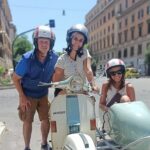
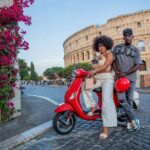
There’s a reason scooters are such a Rome thing. You move through the city in a way that feels street-level, hands-on, and way more personal than being stuck behind glass. This tour is built around that idea: you’re not just visiting landmarks, you’re also traveling through the real streets that connect them.
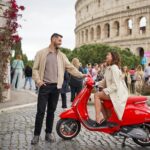
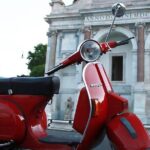
The vintage 60s Vespa (and, in some situations, a vintage Fiat 500) also changes the vibe instantly. It’s slower, louder, and more expressive than modern transport. You’ll spend part of the time paying attention just to what’s around you—stone façades, small church doors, the way the city funnels you around corners.
And yes, Rome is famous. But the best value here is how the tour uses fame without letting it swallow the whole experience. You get the big targets—Pantheon, Trevi Fountain, Vatican City, Colosseum—then you’re handed a short window to actually see them, not just pose at the edge.
You can also read our reviews of more tours and experiences in Rome

Starting at Pasquino and Getting Picked Up Anywhere
The tour begins at the bistro & wine bar Pasquino, and the ride also includes pickup options. If you’d rather not navigate meeting points, that flexibility matters. It makes the experience easier if you’re arriving from another area of Rome or you want to start right after you finish something else.
In practical terms, meeting at Pasquino is helpful because it’s in the center of the action. You’ll be positioned to hop into the route quickly, without long travel time eating up your tour.
The operator also runs it as a private group, so the pace and timing can stay smoother. You’re not negotiating with strangers about when to stop for photos or how fast to get back on the vehicle.
How the 2.5-Hour Plan Stays Fun Instead of Rushed
This is a short tour by design—about 2.5 hours—and it’s packed with stops. The trick is how those stops are managed. Each location is typically given around 10–15 minutes, with guided direction plus photo time, and then a chance for you to explore on your own if you want.
That structure is great if you like variety. You’ll see a lot of Rome without spending your whole day only standing in one place. It also helps if you don’t want to plan, navigate, and line up by yourself. The guide handles the sequencing, so you get a best-of route that still feels like you’re moving through real neighborhoods.
A possible drawback is exactly that pacing. If you’re the type who likes to linger for long stretches—30, 60 minutes or more—you may find the time windows tight. The tour rewards curiosity and momentum.
Piazza Navona: Where the City Shows Off Its Square Magic
Piazza Navona is one of those places that feels instantly alive, even before you read anything about it. During your stop, expect a quick guided walkthrough plus time to move around the square and grab photos.
What I like about starting here is that it’s a strong “Rome is Rome” introduction. You get a sense of scale and atmosphere right away, and you learn the basic visual cues—where to look, what angles help, and what details to notice in the buildings.
The only caution: squares get crowded fast. Even if your stop is short, you’ll want to be ready to move through people. The benefit is that your guide timing helps you avoid the slowest parts.
Pantheon: Quick Entry, the Right Focus, and Photo Timing
The Pantheon stop is built for short, high-impact attention. You’ll get a guided explanation and time to visit, with a photo stop built into the plan.
The Pantheon is one of those sights where the details matter more than the big “name.” If you’ve got limited time, a guide helps you focus on the right elements quickly—so you don’t just look at the exterior and call it done.
The drawback is simple: it’s popular. Short time windows mean you should decide early what you want most—interior view, architecture details, or a specific photo angle—and then move efficiently.
You can also read our reviews of more tours and experiences in Rome
Piazza di Spagna, Trevi Fountain, and Via del Corso: A Rome Walking Dream from Your Scooter
This portion of the ride is where Rome starts to feel like a highlight reel. You’ll pass through the shopping and street arteries that connect the major sights—areas like Via del Corso and Via Condotti—while still stopping for key squares and fountains.
Piazza di Spagna
The Spanish Steps area is a classic photo zone, but the real value here is learning how to view it without getting trapped in tourist traffic. Your stop includes guided direction and time to explore at your pace.
Trevi Fountain
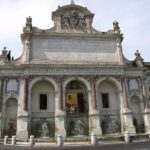
Trevi Fountain is also included with guided time and a photo stop. It’s famous for a reason, but you’ll get more out of it if you treat it like a moment rather than a checklist. Quick guidance helps you see what makes Trevi special and where to stand for better angles.
A practical note: fountains and steps can be busy. If you prefer quiet, you’ll have less control over crowd levels than if you went alone at an off time, but your guide’s pacing helps keep things smooth.
Piazza Venezia and Vatican City: Big Symbols, No Long Walks
From Trevi’s chaos to Piazza Venezia’s authority, the route keeps shifting Rome’s mood. Piazza Venezia acts like a visual anchor in the center, and the short guided stop helps you connect what you’re seeing to how Rome’s streets were designed to pull you forward.
Then you head toward Vatican City for another photo stop and guided visit. Even if you don’t plan to spend hours inside, this stop gives you a structured way to understand the area and see it from the right vantage points.
If you only have a limited time window in Rome, this part of the tour is strong value because it prevents you from burning your energy on long transfers. You get the highlights with less friction.
Janiculum Hill (Gianicolo) and Pincio Views: Where the Drive Pays Off
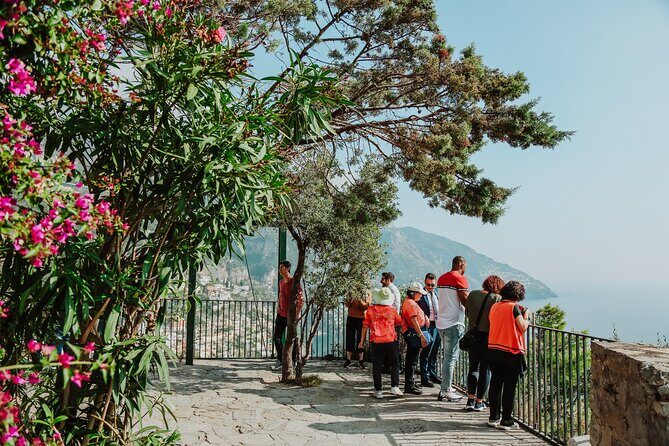
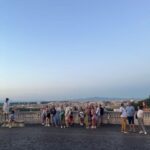
This is where the tour turns from monuments to panorama. Janiculum Hill (Gianicolo) is included as a break time with a longer stop—about 15 minutes—plus guided direction and photos.
Hill stops matter because Rome is built on layers. When you climb to viewpoint areas, the city stops looking flat and starts looking strategic. You’ll get more emotional payoff from these segments than from any single photo target.
The tour also mentions hill areas like Pincio. Together, these viewpoints help you understand why Rome’s famous sights aren’t just famous—they’re positioned.
Trastevere and the Alley Feel: Rome That Doesn’t Perform on Cue
Trastevere is where Rome starts acting like itself. Your stop includes guided time plus a photo moment, and then you’re free to wander on your own for a short window.
Trastevere works well on a tour like this because it’s not just a single sight—it’s a vibe. You can smell the food, see little shops, and notice the street texture. Even in a short stop, you’ll get enough time to feel like you’re in a neighborhood, not a set.
The tradeoff is that alleyways can be tight. If you have mobility limits, scooters can be less convenient than a flat walking route. The tour does offer short stops so you can take it at your speed, but you should still think about comfort and footing.
Pyramid of Cestius and Circus Maximus: Two Stops Many People Skip
This is one of the tour’s smarter choices: it adds stops that aren’t always at the top of every visitor’s list. Pyramid of Cestius is included with a photo stop and guided time, and Circus Maximus gets the same treatment.
These stops give you a wider Rome picture beyond the usual big ticket names. You’ll see how the city holds on to layers—ancient traces next to later streets—and you’ll get some context quickly without needing to research for hours.
If you love architecture and want variety, these are the stops that feel like extra credit.
Colosseum and the Aventine Keyhole: One Giant, One Secretive View
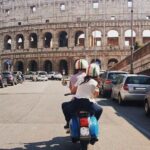
Colosseum is included as a break time stop with guided visit and photo time. It gets a slightly longer moment—about 15 minutes—so you can actually frame what you’re looking at.
Then the tour heads to the Aventine Keyhole, also called the key hole view. This is a very specific kind of Rome experience: small, pointed, and kind of quirky. It’s the kind of stop that turns into a story because it’s so oddly shaped and oddly satisfying when you see what it frames.
If you’re someone who likes iconic sights and the playful, less-obvious ones, this pairing is a great final arc. You go from grand scale to a precise little viewpoint, like the tour is saying: yes, you can have both.
Coffee, Wine, and Gelato: The Break That Makes It Feel Like a Day Out
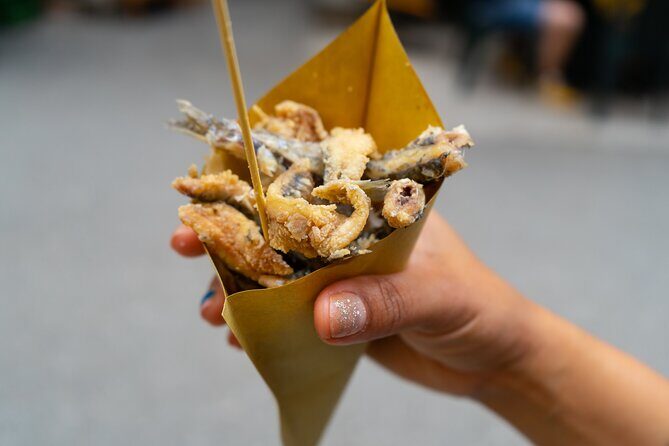
Food isn’t an afterthought here. You’ll stop for coffee at a popular bar, and you’ll also have snacks and drinks as part of the tour.
There’s also a cute element that shows up during the ride: wine from a bottle waiting for you in a picnic basket behind the car. It’s not something you’d plan on your own unless you’re already living the Roman sweet life. If you’re into that kind of mood, it’s a small moment that makes the tour feel less like sightseeing and more like a memory.
Then comes gelato—the famous Italian ice cream. It’s included, which is a simple win because you don’t have to search for where to get it mid-route.
The practical angle: keep in mind that stops are short. If you’re set on a specific beverage, it’s best to decide quickly once you’re at the break so you don’t lose time.
Guide Energy and Language: What You Get in a Private Group
This tour is private, and the guide is live on the ride in English, Spanish, or Italian. That matters because you can ask questions and get explanations that fit what you actually care about.
The guide style coming through in the feedback is warm and personal. Names you may see connected with this operator include Laki, who’s praised for a genuine, love-for-Rome approach, and an Erion and Lucky pairing, noted for strong knowledge of both major landmarks and quieter history points.
Even without getting overly “lecture-y,” having that human context makes the sights feel less like photos and more like places.
Price and Value: Is $169.93 Fair for 2.5 Hours?
At $169.93 per person for 2.5 hours, you’re paying for four main things:
- Transport in a vintage vehicle (and the time it saves you)
- A private guide who handles sequencing, photo stops, and short guided visits
- Snacks, drinks, coffee, and gelato, so you’re not paying extra for every break
- A structured Rome loop that covers a lot of top sites plus additional stops
Is it cheap? No. But it isn’t trying to be. For a short Rome trip, or for a first visit when you want orientation fast, the math can work because you’re compressing a lot of planning and walking into one outing.
The biggest value boost comes if you’re the type who wants both: major sights and side streets. If you only want one or two locations and you’d rather roam slowly on your own, you might find a cheaper walking option fits better.
Who This Tour Is Best For (and Who Should Pass)
This tour is a strong match if you:
- want maximum Rome variety in a short time
- like photos plus brief guided context
- appreciate neighborhoods like Trastevere rather than only monuments
- don’t want to spend your day on logistics and navigation
It may be less ideal if you:
- hate tight timing and short stops
- need lots of time inside major sites
- are very sensitive to the feel of riding through traffic and narrow streets
That said, the private setup helps flexibility. You can adjust your pace within the stop windows.
Should You Book This Vintage Rome Vespa and Fiat Tour?
I’d book it if you want a first-time Rome sampler that feels like a real day with a local driver, not a conveyor-belt city checklist. The short guided stops, the mix of iconic and less-famous sights, and the included coffee and gelato make it easier to justify the price.
If you’re chasing a slow, museum-style visit schedule, you may feel the timing pressure. But for people who want energy, great sight coverage, and that vintage ride mood, this tour has the right shape.
FAQ
How long is the Rome tour by Vespa?
The tour lasts about 2.5 hours.
Is this a private tour?
Yes, it runs as a private group.
Where does the tour start?
The meeting point is the bistro & wine bar Pasquino. Pickup anywhere in Rome is also offered.
What are some of the main stops on the route?
The stops include Piazza Navona, the Pantheon, Piazza di Spagna, Piazza del Popolo, Trevi Fountain, Piazza Venezia, Vatican City, Janiculum Hill, Trastevere, the Pyramid of Cestius, Circus Maximus, Colosseum, and the Aventine Keyhole.
What food and drinks are included?
The tour includes Italian snacks and drinks and gelato. There is also coffee during the tour.
Are there wine or other drinks during the ride?
The plan includes a glass of wine from a bottle waiting in a picnic basket behind the car.
What languages are available for the guide?
The live guide is available in English, Spanish, and Italian.
Is there free cancellation?
Yes. You can cancel up to 24 hours in advance for a full refund.
Can I reserve now and pay later?
Yes. The tour offers a reserve now & pay later option.