REVIEW · ROME
Rome: The Best of St. Peters’ Basilica in German
Book on GetYourGuide →Operated by Römerin · Bookable on GetYourGuide
St. Peter’s Basilica is a lot to take in.
This 2-hour German-language tour helps you focus, with a guide in German plus headsets so you can hear the stories clearly in the big space. You’ll also get a reality-check on scale, including the fun moment where the guide shows how many football fields fit inside in spirit, not just in your imagination.
I love how the tour points you to the big artistic hits without turning it into a checklist. Two standouts for me are Michelangelo’s Pieta with clear context and the Bernini works that explain how the decoration pulls you toward the altar. One consideration: entrance to the cupola is not included, so if dome views are your main goal, you’ll need a separate plan.
In This Review
- Key Points at a Glance
- Why This St. Peter’s Basilica Tour Works in Two Hours
- St. Peter’s Square Meeting Point and Getting Oriented Fast
- Security Checks: What to Expect Before You Go In
- Inside the Basilica: The Architectural Styles That Feel Like Different Centuries
- Michelangelo’s Pieta: The Moment That Changes Your Pace
- Bernini’s Bronze Baldachin Under the Dome
- The Dome, Scale, and the Cupola Entrance You Don’t Have
- The Fumata Spot: Election-Era Details You’ll Remember
- A Building That’s Meant for More Than One Opinion
- Price and Value: Is $61 Worth It?
- Who This German-Language Tour Suits Best
- What the Tour Feels Like Day-of (Based on Real Guide Styles)
- Should You Book This St. Peter’s Basilica Tour?
- FAQ
- Is this tour in German?
- How long is the tour?
- Is entrance to the cupola included?
- Where exactly do we meet?
- Can I enter St. Peter’s Square before the tour starts?
- What should I bring?
- Is the tour wheelchair accessible?
- What clothing is not allowed?
- What else is not allowed?
- FAQ
- Is the tour offered year-round with the same time slots?
- Is there security screening?
- Can I cancel and get a refund?
- Is there an option to pay later?
- How should I recognize the tour group?
- Can I bring an ID copy instead of my original documents?
- Is the tour worth it if I know a lot already?
- Does this tour focus on the dome?
- Is the meeting point indoors or outdoors?
Key Points at a Glance
- German guide + headsets make the stories easy to follow
- Michelangelo’s Pieta is the emotional anchor of the visit
- Bernini’s bronze baldachin is shown at the right moment and scale
- You’ll learn where the fumata smoke is connected to papal elections
- The tour helps you understand why St. Peter’s looks like multiple eras
- It’s a fast, well-paced way to experience one of the world’s biggest churches in about 2 hours
Why This St. Peter’s Basilica Tour Works in Two Hours
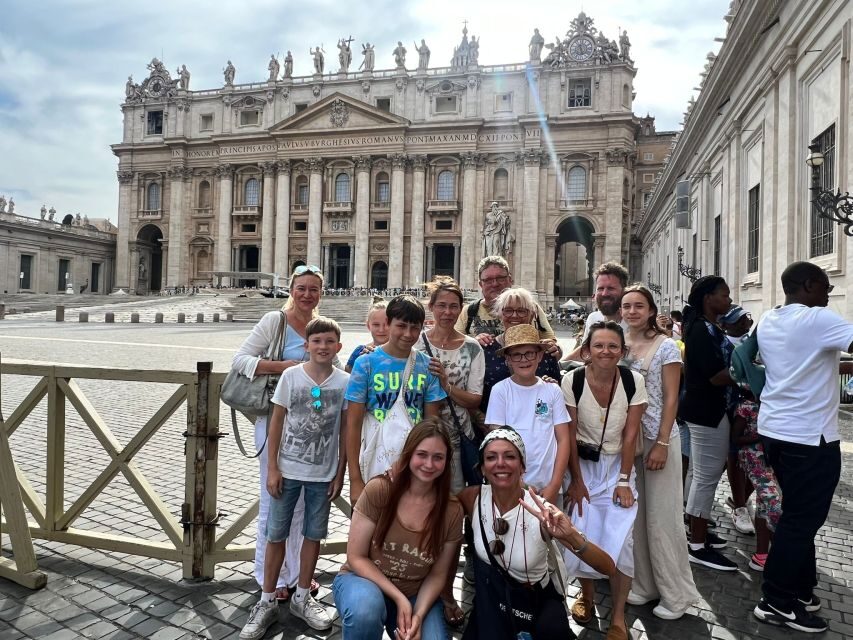
Two hours at St. Peter’s can either feel rushed or feel perfect. This tour aims for the second option by choosing the moments that give you the whole picture: art, architecture, and the ceremonial side of the Vatican. With a German guide leading the route, the experience stays coherent instead of turning into wandering and guessing.
The best part is that the guide doesn’t just show you what’s there. You learn why those choices matter—how the design guides your eye, why certain pieces are staged the way they are, and what people have argued about when it comes to the church’s message over time.
And yes, the scale tricks help. When you’re inside a place this huge, your brain struggles. A good guide helps you measure the immensity in a way that actually sticks.
You can also read our reviews of more tours and experiences in Rome.



St. Peter’s Square Meeting Point and Getting Oriented Fast
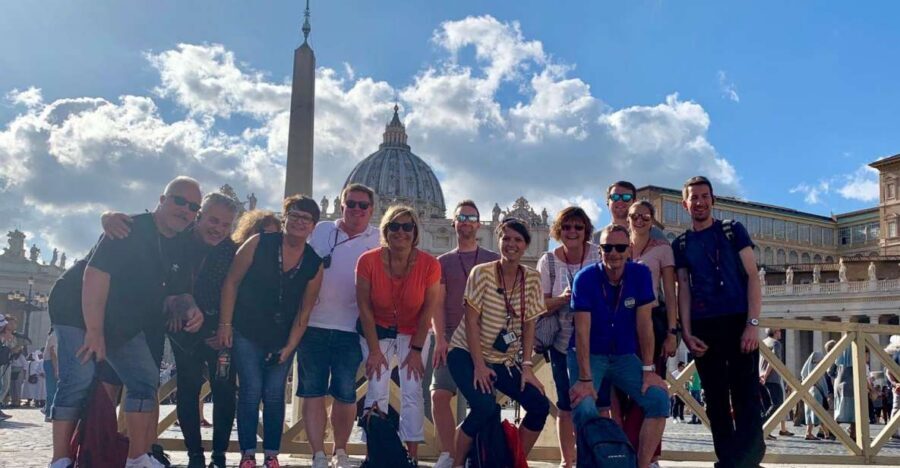
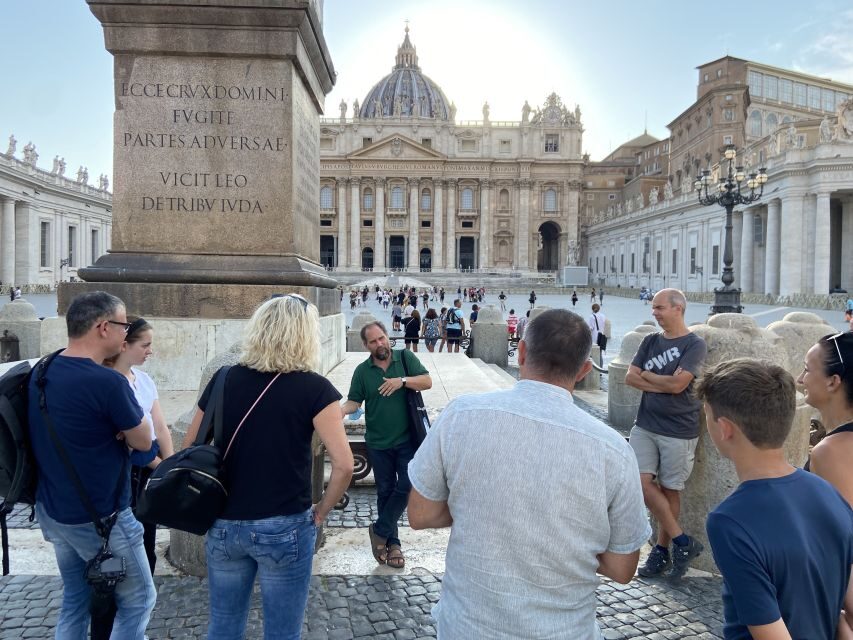
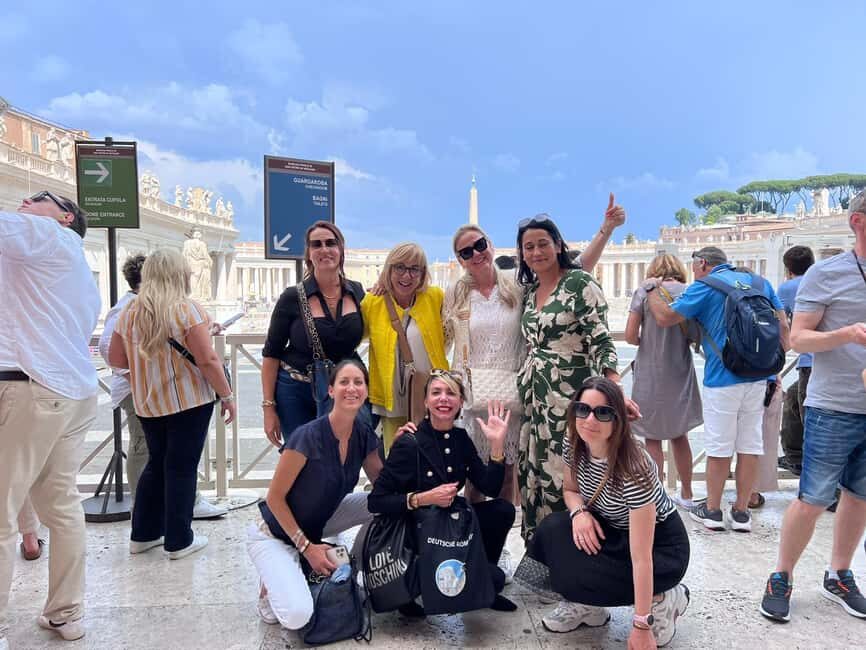
You meet in the middle of St. Peter’s Square, in front of the barriers. The sign to look for says Deutsche Römerin, and you should not enter the square before you’re supposed to—this keeps you aligned with the group and the security flow.
Even before you step into the basilica, St. Peter’s Square is doing a lot of work for the visit. It sets the tone: ceremonial, grand, and instantly Vatican. The guide starts building your mental map early, so that once you go inside, you’re not starting from zero.
Practical tip: wear comfortable shoes. The day can move faster than you expect, and the basilica area has its own rhythm.
Security Checks: What to Expect Before You Go In
St. Peter’s Basilica requires security screening, like many major sites in Rome. All visitors pass through checks, and weapons or sharp objects are not allowed.
For a smoother visit, I’d treat security as part of the experience, not a delay. Show up with your ID or passport ready, and dress code correctly so you’re not stuck at the last second.
Also, remember the restrictions: no shorts, no short skirts, no sleeveless shirts, and avoid glass objects. It’s not meant to be annoying; it’s meant to keep the basilica respectful and safe.
Inside the Basilica: The Architectural Styles That Feel Like Different Centuries
The heart of this tour is how it helps you understand the building as a living project. St. Peter’s Basilica didn’t come together in one shot; it evolved, and that evolution shows in the different architectural styles you’ll notice while moving through the space.
This matters because if you only look at the basilica as one “big masterpiece,” you miss the real story. The design choices you see—how things relate in scale, how certain features dominate the viewpoint—make more sense when you know multiple artistic hands shaped it over time.
Your guide will connect those styles to real names you can anchor in your memory, including Michelangelo and Bernini, plus other famous architects referenced in the stories. It’s a practical way to understand a complex building without turning it into a lecture.
Michelangelo’s Pieta: The Moment That Changes Your Pace
If you want one stop that makes you slow down, it’s Michelangelo’s Pieta. This tour frames it as more than a famous sculpture—your guide explains how to look at it and what makes it emotionally powerful.
I like the way a good guide handles Pieta because it’s easy to see it quickly and move on. Instead, the tour builds a little pause into your route, so you don’t end up in the habit of “seen it, next.”
And because you’re inside a massive space, Pieta can feel small until you get your bearings. The guide’s job is to help you see proportion and detail, so that even if you’re not an art expert, you still leave with something that feels personal.



Bernini’s Bronze Baldachin Under the Dome
After Pieta, the tour leans into scale and theater with Bernini’s bronze baldachin. This is one of those objects that looks impressive in photos, but gets even more dramatic when you’re there in person.
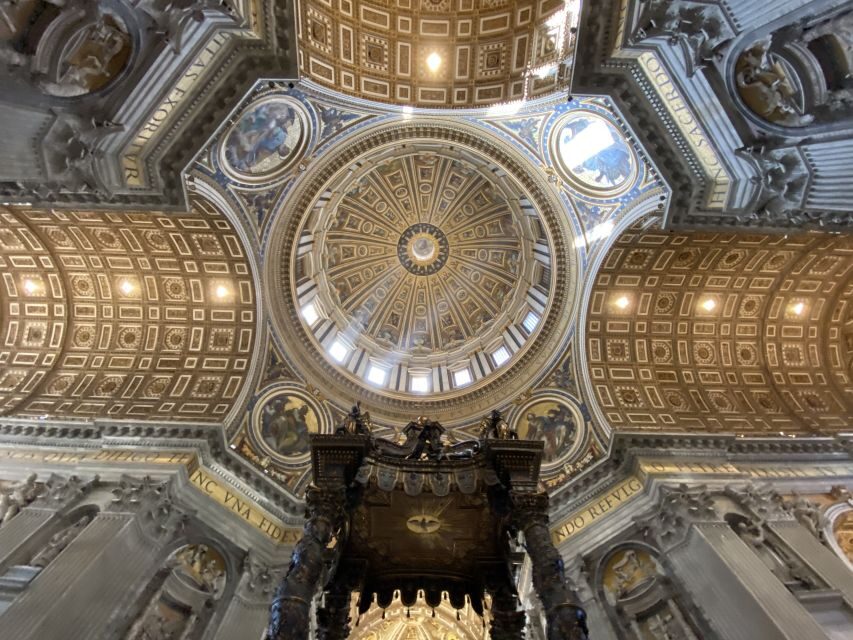
The baldachin is as big as a ten-story house, and the guide uses that kind of comparison to make the size believable. You’ll see how it sits under the dome and how it shapes what you notice next—your eyes get guided toward the center of the action.
This is also where the tour’s storytelling pays off. The guide connects the work to the larger architectural choices, so you start to feel the basilica as a designed journey rather than a pile of masterpieces.
The Dome, Scale, and the Cupola Entrance You Don’t Have
One of the big “wow” elements is the dome itself. The basilica’s ceiling is part of the experience, and you’ll get time to admire it in context, not just glance upward and keep moving.
The tour also includes a memorable scale moment—learning how the space compares to something you already understand, like football fields. It’s an easy mental trick that helps you process the size of the building without needing exact measurements.
Now for the key limitation: entrance to the cupola is not included. That means you won’t climb up for panoramic views from inside the dome area as part of this tour.
So I’d think of this tour as your “art and architecture highlights” plan. If you want the climb too, combine it with a separate cupola visit on another day or another time slot.
The Fumata Spot: Election-Era Details You’ll Remember
A tour that includes the fumata reference is doing something smart. Most basilica visits focus on art only. This one adds a ceremonial layer, explaining where the smoke that signals a new pope comes out.
You don’t need to be Catholic to find this fascinating. It’s the kind of detail that turns a building from “old and impressive” into “still living with rituals and real-world moments.”
And it adds variety to the visit. Instead of repeating the pattern of look, read, move on, you get a different kind of understanding: how the space functions during major events.
A Building That’s Meant for More Than One Opinion
St. Peter’s Basilica has divided the Christian church, and this tour doesn’t ignore that. Your guide will explain why the building itself has stirred disagreement over time, tied to the way it was built, the messages it projects, and the role it plays in the Christian world.
I appreciate when a tour handles this balance. It’s easy to treat the Vatican like a museum only. But the basilica is also a symbol, and symbols invite strong feelings.
You’ll get context that helps you interpret what you see: how architecture can communicate power, unity, and also tension. Even if you don’t walk away with a single “answer,” you’ll leave with better questions and a clearer sense of why people care so much.
Price and Value: Is $61 Worth It?
At about $61 per person for a 2-hour visit, you’re paying for three things that are hard to replicate on your own quickly: a structured route, interpretation in German, and the audio support via headsets.
Here’s how I’d judge value:
- If you want the highlights (Pieta, Bernini, dome, fumata reference) with context, the guide saves time and turns “I saw it” into “I understood it.”
- If you mainly want to wander and read plaques, you could skip a paid guide. But you’ll likely miss how the stories connect the architecture and art.
- If you want the cupola climb, this tour won’t do that for you. You’d add it separately, which can change your total spend.
Also, the fact that the tour is wheelchair accessible is a genuine practical plus if you need it. St. Peter’s is big, and your experience can improve a lot when you’re not forcing a route that doesn’t fit your mobility needs.
Who This German-Language Tour Suits Best
This tour fits best if you want a focused introduction to St. Peter’s Basilica without spending the whole day there. It’s ideal for:
- People who like art and architecture but don’t want to build a full research project first
- German speakers who prefer explanation in their own language
- Visitors who want a clear path through a huge complex in about 2 hours
The tour is also a good match if you care about memorable details, not just famous names—like learning where the fumata smoke connects to the election process.
What the Tour Feels Like Day-of (Based on Real Guide Styles)
Guides for this tour vary by date, and you can feel the difference in energy and storytelling. You might meet a guide like Inga, who was described as highly competent, or Julia, who made the time pass quickly with interesting information. You may also get a guide like Paula, whose humor helped facts land, or Gian-Carlo, who delivered detailed history and stories in an engaging way.
For you, that variety is actually a benefit. It means you’re not getting dry facts. You’re getting an interpretation, with the best guides using small storytelling touches to make you remember what you saw.
Should You Book This St. Peter’s Basilica Tour?
I’d book it if you want the best of St. Peter’s Basilica with a guided approach in German, and you don’t need the cupola climb included. For $61 and 2 hours, it’s a solid value if your goal is understanding the building’s big artistic moments and the key ceremonial detail of the fumata.
I would skip or rethink it if you’re mostly chasing dome views from the top. Since cupola entrance isn’t part of this tour, you might end up feeling like you came all this way and only got the interior experience.
If you’re on the fence, ask yourself one question: do you want help interpreting St. Peter’s, or do you just want time inside it? This tour is built for the first answer.
FAQ
Is this tour in German?
Yes. The tour guide speaks German, and you also receive audio guidance in German.
How long is the tour?
The duration is 2 hours.
Is entrance to the cupola included?
No. Entrance to the cupola is not included.
Where exactly do we meet?
You meet in the middle of St. Peter’s Square in front of the barriers. Look for the sign with the inscription Deutsche Römerin.
Can I enter St. Peter’s Square before the tour starts?
No. Please do not enter St. Peter’s Square beforehand.
What should I bring?
Bring comfortable shoes and a passport or ID card (a copy is accepted).
Is the tour wheelchair accessible?
Yes, it is wheelchair accessible.
What clothing is not allowed?
Shorts, short skirts, and sleeveless shirts are not allowed.
What else is not allowed?
Weapons or sharp objects are not allowed, and glass objects are also not allowed.
FAQ
Is the tour offered year-round with the same time slots?
The tour runs with starting times based on availability.
Is there security screening?
Yes. All visitors must pass through a security check.
Can I cancel and get a refund?
Yes. You can cancel up to 24 hours in advance for a full refund.
Is there an option to pay later?
Yes. You can reserve now and pay later to keep your plans flexible.
How should I recognize the tour group?
Look for the sign with the inscription Deutsche Römerin at the meeting point.
Can I bring an ID copy instead of my original documents?
Yes. A copy is accepted.
Is the tour worth it if I know a lot already?
If you already know some of the famous names, you may still enjoy the connections between architecture, major works, and the fumata detail, since the tour focuses on how the pieces fit together.
Does this tour focus on the dome?
You’ll admire the dome, but cupola entrance is not included.
Is the meeting point indoors or outdoors?
It’s outdoors in St. Peter’s Square.