REVIEW · PRIVATE
Rome: Private Tour of the Jewish Quarter
Book on GetYourGuide →Operated by Roman Vacations · Bookable on GetYourGuide
Rome’s Jewish Quarter tells stories fast. This private, premium walk through the Jewish Ghetto pairs big landmarks with small street details, so the past feels close at hand. I especially like how the route connects the ancient city fabric to the neighborhood you’re visiting, so you don’t just see buildings—you understand why they sit where they do.
Second, I really like the food moment built in. You’ll stop for authentic Kosher gelato or coffee, then you keep walking with that tasty “permission slip” to explore more on your own later. One drawback to consider: it’s a 2-hour route, so if you want a slower, deeper museum-style visit, you’ll probably want to add extra time after the tour.
In This Review
- Key points to know before you go
- Entering the Jewish Quarter where old Rome still matters
- Where you meet and how the tour stays easy to follow
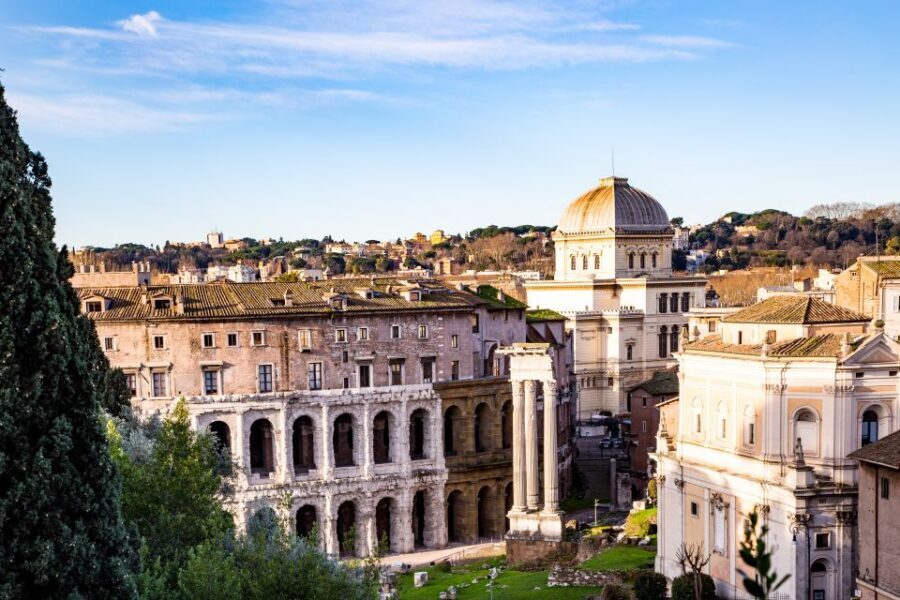
- The Roman stage-set: Theatre of Marcellus and Portico d’Ottavia
- Theatre of Marcellus (about 20 minutes)
- Portico d’Ottavia (about 15 minutes)
- Fontana delle Tartarughe: the Turtle Fountain and its odd origin
- Walking the Jewish Ghetto: cobblestones, memory, and real landmarks
- What you’ll notice (and why your guide matters)
- Great Synagogue of Rome area visit
- Cross to Tiber Island: Asclepius and a change of perspective
- Kosher gelato (or coffee) and how to turn it into your own day plan
- Price and timing: is $88 per person good value?
- Who this Rome Jewish Quarter tour fits best
- Should you book this private Jewish Quarter tour?
- FAQ
- How long is the private Rome Jewish Quarter tour?
- Where do I meet the guide?
- Is the tour private?
- What food is included?
- What language is the tour guide?
- Is it accessible and does it run in bad weather?
Key points to know before you go
- Private, English-language guide: you can ask direct questions and adjust your pace
- Kosher gelato or coffee included: a real flavor stop, not just a photo break
- Stops that explain the neighborhood: from Theatre of Marcellus to Portico d’Ottavia
- Fontana delle Tartarughe story: the Turtle Fountain gets its own mini-history lesson
- Great Synagogue area visit: you’ll learn what you’re looking at and why it matters
- Tiber Island and Asclepius: myth and Roman life overlap on this short crossing
Entering the Jewish Quarter where old Rome still matters
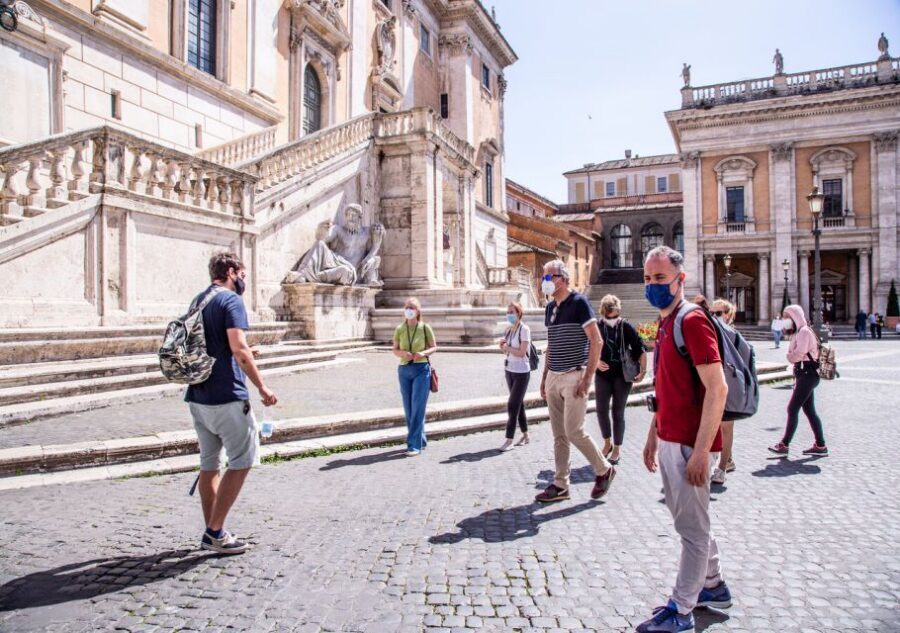
The Jewish Quarter works because it isn’t a theme park of history. You’re walking through streets that still function as part of Rome. That simple fact changes how you see everything. When you’re in a neighborhood like this, the buildings feel less like “sights” and more like a lived-in map of centuries.
This tour is designed to help you read that map. You start near Trajan’s Column and move through a set of landmarks that frame what came next. Then you shift into the Jewish Ghetto area, where your guide ties the street layout to the community’s long timeline.
I like that the experience is private. A small, focused group means you can ask the burning questions that come up as you walk—especially when you’re looking at sites like the Great Synagogue of Rome and the Portico d’Ottavia.
You can also read our reviews of more private tours in Rome



Where you meet and how the tour stays easy to follow
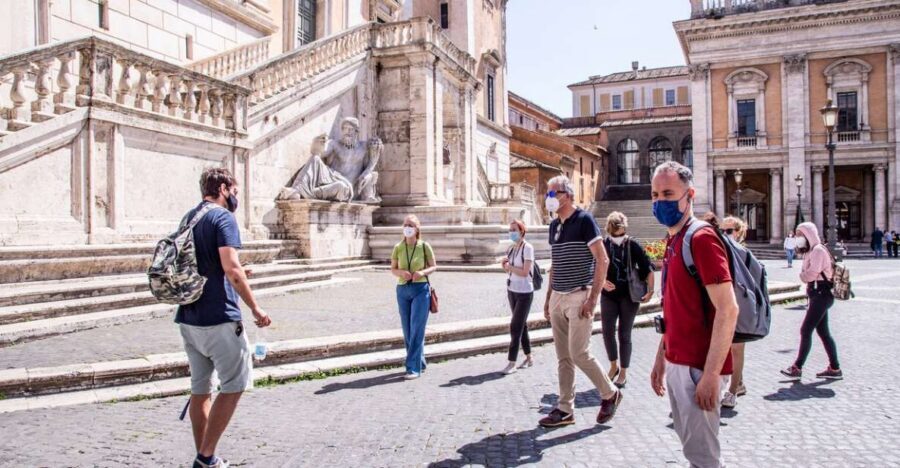
Your meeting point is at Trajan’s Column, along the fence on the northwest side of the column. The starting location is listed as Foro Traiano, 84, so it’s worth orienting yourself around that Trajan’s Square area before you arrive.
Look for a Roman Vacations representative holding an orange sign with the lion’s head logo. Check in 10 minutes early, because late arrivals can miss part of the route. Once you’re in, the flow is straightforward: short guided stops, then walking time, then another stop.
It runs in all weather, so bring what you need. Comfortable shoes are the big one. I’d also bring water and an umbrella. You’ll be out enough to feel it in your feet, and enough to need shade or rain protection depending on the day.
Also, the tour is wheelchair accessible and runs as a private group, so it’s built for people who want a more controlled pace than big group tours.
The Roman stage-set: Theatre of Marcellus and Portico d’Ottavia
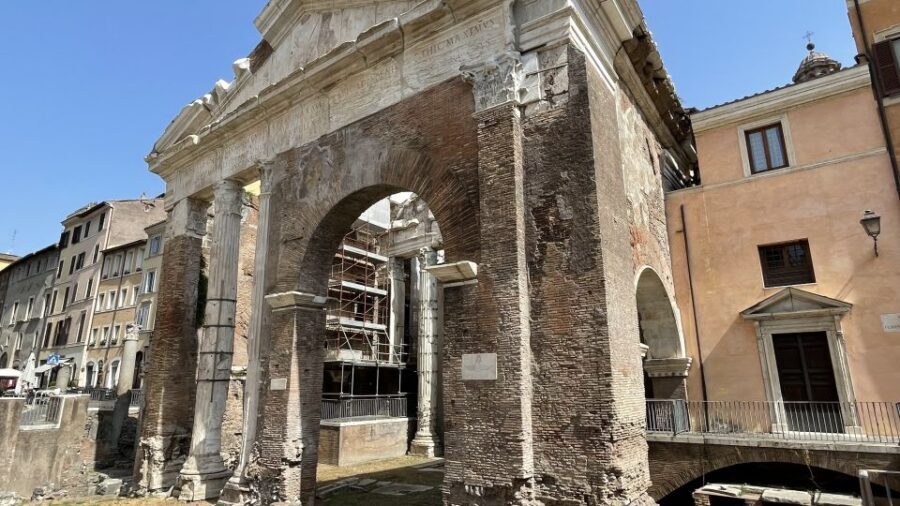
Before you reach the Ghetto, you’re not thrown into history without context. You start with two “anchor” stops that help you understand how Rome’s older structures set the scene.
Theatre of Marcellus (about 20 minutes)
The Theatre of Marcellus is one of those places where you can see Rome thinking in layers. Even if you’ve never studied ancient theaters, your guide will point out what still makes the site feel Roman: scale, location, and the way the city kept reusing what it built. This stop is short enough to stay focused, but long enough to explain why it matters before you head into the Jewish Quarter.
A practical upside here: it’s a good early moment for photos and orientation. By the time you reach the Ghetto area, your brain has stopped treating everything as “random streets.”
Portico d’Ottavia (about 15 minutes)
Next you’ll visit the Portico d’Ottavia, a structure that helps you see Rome’s past as public space, not just ruins. Porticoes were meant for movement, meeting, and daily life, and the guide’s interpretation helps you notice the mix of stonework and everyday use.
This stop is also a useful bridge between “ancient Rome” and “neighborhood Rome.” You’ll feel how the city’s older geometry shapes later streets and movement patterns.
One consideration: because it’s private and timed, your guide may keep each explanation tight. If you love long architectural lectures, you might want to ask a few follow-ups at the end of the stop rather than letting the pace move on.






Fontana delle Tartarughe: the Turtle Fountain and its odd origin
Piazza Mattei is where the tour takes a lighter turn without losing substance. The star is Fontana delle Tartarughe, also called the Turtle Fountain.
Your guided time here is about 20 minutes, and the point isn’t just that it’s cute. Your guide shares the famous story tied to the fountain’s one-day construction. That detail changes how you look at it. You stop thinking of it as a permanent ornament and start thinking of it as a commissioned moment—an event designed to land, then become part of the landscape.
I also like this stop because it gives you a mental break. After ancient structures and a neighborhood with real depth, a fountain story feels human. It’s Rome doing Rome things: quick, dramatic, and built to last.
Walking the Jewish Ghetto: cobblestones, memory, and real landmarks
This is the heart of the experience. You’ll spend about 20 minutes in the Jewish Ghetto area, walking cobbled streets and learning how the neighborhood evolved over time.
Your guide emphasizes that you’re not just sightseeing. You’re reading a neighborhood where 2000 years of history has left marks in both physical space and community memory. As you walk, you’ll pass key sights and learn what they represent, including major reference points like the Great Synagogue of Rome.
What you’ll notice (and why your guide matters)
The streets are charming, but they can also be confusing if you treat them like any old walking route. The value of the private guide is the sequencing. They help you connect:
- where you are in the neighborhood
- what the buildings were meant for
- how the community’s presence changed the meaning of the space
You’ll also learn about the neighborhood’s blend of ancient construction and modernism. That mix is important. Rome doesn’t present itself as one era at a time, and the Jewish Quarter is a good place to see that truth in practice.
Great Synagogue of Rome area visit
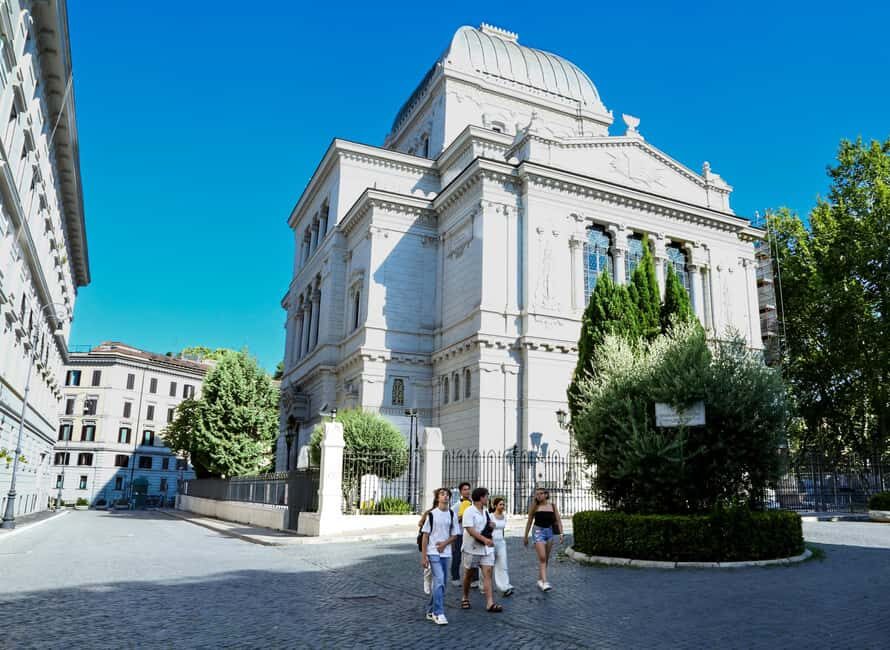
When you reach the Great Synagogue area, you’ll learn the significance of the structure that celebrates Jewish life in Rome. Even if you’re not a deep-history person, the guide’s framing helps you understand why this isn’t a random landmark stop.
A helpful tip here: this is the moment to ask the questions you’ve been holding. If you’re curious about how a community survives through shifting eras, this is the part of the walk where your guide can connect the dots clearly.
Cross to Tiber Island: Asclepius and a change of perspective
After the Ghetto walk, you cross via the oldest bridge in Rome to reach Tiber Island. This segment takes about 20 minutes guided.
What makes it work is the contrast. The Jewish Quarter is dense with neighborhood identity. Tiber Island shifts the feel toward legend and broader Roman mythology, especially the story of the Greek god Asclepius—who came to Rome and landed on the island.
Your guide will use that myth to give you a sense of why this island has been a meaningful spot for centuries. You’re still in Rome’s physical reality, but you’re also stepping into Rome’s habit of mixing belief, story, and city planning.
Practical upside: the tour ends with a “big view” feeling even though you’re still walking. It helps you leave with mental pictures you can recall later when you’re hunting for lunch or a gelato stop.
Kosher gelato (or coffee) and how to turn it into your own day plan

One of the best parts of this tour is that the food isn’t an afterthought. You’ll enjoy authentic Kosher gelato or coffee as part of the experience. The gelato stop is described as a traditional, Kosher gelato served at an artisanal gelateria, and your guide includes it as a treat.
Here’s what I’d do with it if you’re planning your day: treat this stop like a reset. After you’ve walked the Ghetto and heard all the stories, the gelato gives you a simple “pause” before you head out on your own.
You’ll also pass restaurants, bakeries, and shops along the central street lined with places to eat. The tour gives you the groundwork, then you get to choose. That’s a better setup than a tour that shoves you into one pre-selected meal.
If you’re hoping to eat Kosher Italian food later, the guide’s guidance at the end is meant to help you find options that fit your preferences and keep your afternoon flowing without stress.
Price and timing: is $88 per person good value?
At $88 per person for a 2-hour private tour, you’re paying for three things: a certified guide, private pacing, and a structured route with multiple key stops.
Is that expensive? Compared to group tours, yes. But you’re not just buying entry to a couple landmarks. You’re buying:
- a guided walk through the Jewish Quarter area with context
- time at major reference points like Theatre of Marcellus and Portico d’Ottavia
- a guided stop at Fontana delle Tartarughe with a specific story hook
- a guided crossing to Tiber Island with Asclepius context
- Kosher gelato or coffee included
In practical terms, it can be good value if you want explanations you can’t easily “self-narrate” from a map. The Jewish Quarter is exactly the kind of place where a local guide helps you read the neighborhood instead of just drifting through it.
If you’re a solo traveler or a small group that prefers direct answers, private tours often pay off. If you’re happy with guide-free walking and you don’t care about a structured story route, you might not use the cost advantage fully.
Who this Rome Jewish Quarter tour fits best
This tour makes the most sense if you want a focused introduction without feeling rushed.
It’s ideal for:
- couples and friends who want a private walk and chance to ask questions
- history-minded travelers who like context tied to street-level landmarks
- people who want both ancient Rome reference points and neighborhood-specific meaning
- anyone who likes food moments built into the itinerary (the Kosher gelato stop is a real win)
It’s less ideal if:
- you want a long, deep museum-style experience
- you dislike walking (this is still a walking route, with multiple stops)
- you plan to arrive late and don’t like strict timing, since the tour can’t be delayed for late arrivals
Should you book this private Jewish Quarter tour?
I’d book it if you want a smooth, well-timed introduction to Rome’s Jewish neighborhood with a guide who can connect the dots between ancient Rome, the Ghetto, and the islands across the river.
The biggest selling points for me are simple: private guidance that keeps you oriented, and Kosher gelato or coffee included that turns the day into something you’ll remember beyond photos. If you choose only one short specialized walk in Rome, this is a strong candidate—especially for your first visit to the area.
If you already know you want a longer, deeper program, consider adding extra time after the tour for your own return visits to the places that caught your attention most.
FAQ
How long is the private Rome Jewish Quarter tour?
It lasts 2 hours.
Where do I meet the guide?
You meet at Trajan’s Column, along the fence on the northwest side of the column (Foro Traiano, 84). Look for a Roman Vacations representative holding an orange sign with a lion’s head logo.
Is the tour private?
Yes, it’s a private group experience.
What food is included?
You’ll get authentic Kosher gelato or coffee as part of the tour. Additional food and drink aren’t included.
What language is the tour guide?
The live guide speaks English.
Is it accessible and does it run in bad weather?
The tour is listed as wheelchair accessible, and it operates in all weather conditions.