REVIEW · PRIVATE
Rome: Private Tour of Hadrian’s Villa with Archaeologist
Book on GetYourGuide →Operated by Rome in tours · Bookable on GetYourGuide
Hadrian’s Villa is history you can walk into. You’ll tour UNESCO-listed Hadrian’s Villa with an archaeologist guide, moving from pavilion to pavilion while the site’s layout starts making sense.
I especially like how Ferdinando (your archaeologist guide) turns a confusing complex of ruins into a clear story, using an expert’s eye to point out how the architecture worked.
A small drawback to plan for: this is a walking-focused visit and it’s not suitable for wheelchair users, so wear real shoes and expect a steady pace.
The best part is the way the tour helps you picture what’s missing. With 3D reconstructions, you can connect today’s stone shapes to how each pavilion likely looked in the 2nd century.
And I like that you’re not just looking at monuments; you’re seeing how Hadrian designed spaces for bathing, dining, and receiving people.
In This Review
- Key highlights you’ll feel right away
- Why Hadrian’s Villa feels different from other Roman sites
- The real star: Ferdinando and an archaeologist’s eye
- The 4-hour rhythm: what happens after pickup
- Pecile and Hadrian’s porch: the view that sets the tone
- Hadrian’s bath: architecture and the mechanics behind the beauty
- Canopus and Serapaeum: dining with an artificial lake
- Hall of Philosophers: where people waited to be announced
- Maritime Theater: a ring-like domus surrounded by water
- The annular corridor and Tablinum: meeting space with big meaning
- Using 3D reconstructions to read the 2nd century
- What to pack and how to pace your comfort
- Value check: how this $1,084.06-per-group price makes sense
- Who should book this private Hadrian’s Villa tour
- Should you book this private archaeologist tour?
- FAQ
- What’s the duration of the tour?
- Where does the tour pickup?
- How much time do you spend at Hadrian’s Villa?
- What’s included in the price?
- Are food and drinks included?
- What languages is the guide available in?
- Is the tour private?
- Is this tour suitable for wheelchair users?
- FAQ
- What reconstructions do you see during the tour?
- What are the main places you’ll visit at Hadrian’s Villa?
Key highlights you’ll feel right away
- Archaeologist guide with a clear wayfinding style, including “how it works” explanations, not just facts
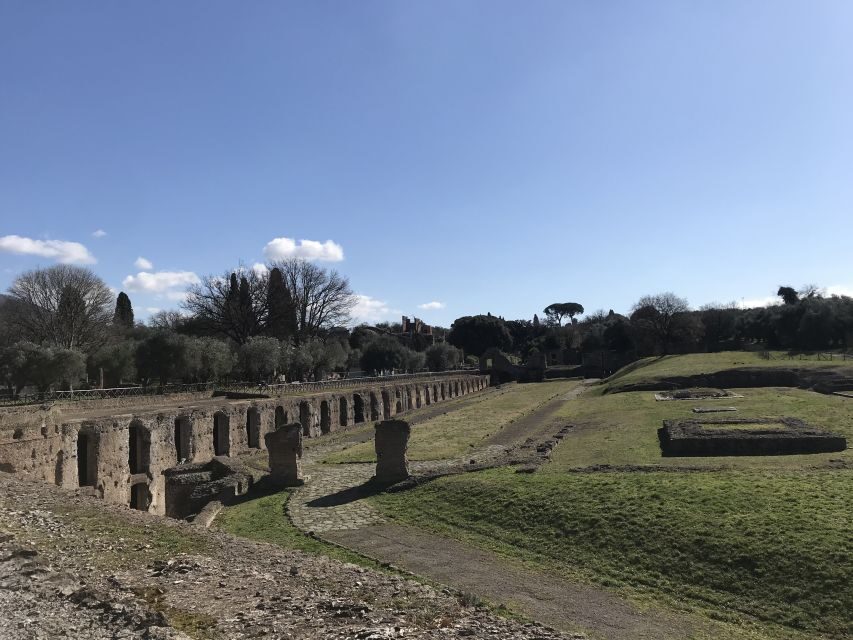
- Pavilion-by-pavilion walk through Hadrian’s bath, Canopus, Hall of Philosophers, Maritime Theater, and more
- 3D reconstructions that make the 2nd-century layout easier to understand
- Water engineering themes: channels tied to a nearby aqueduct show up repeatedly
- A private-emperor vibe, from Hadrian’s porch view to the meeting-space feel near the Tablinum
Why Hadrian’s Villa feels different from other Roman sites
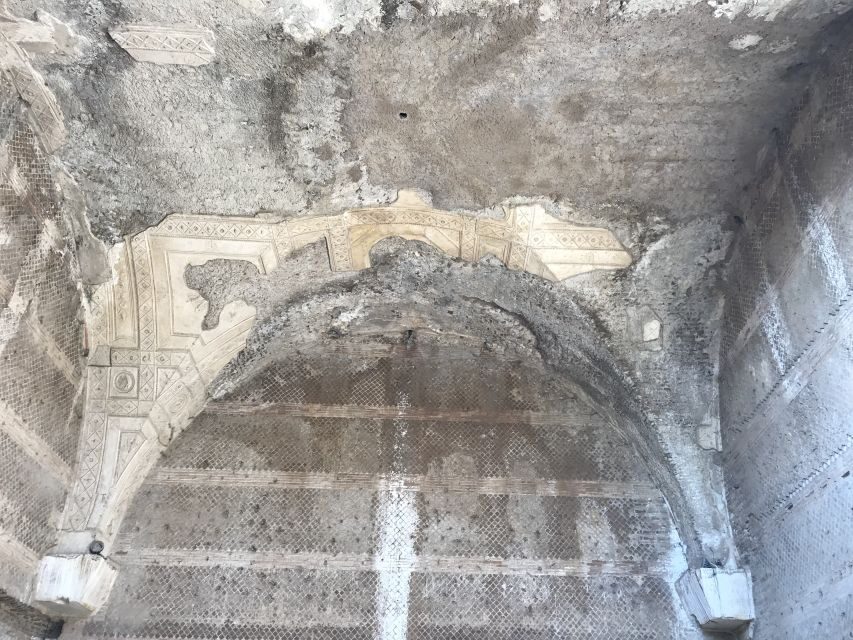
Hadrian’s Villa isn’t a single forum or one big temple. It’s a whole world built around one emperor’s tastes, travels, and preferences. That’s why it can feel less like sightseeing and more like walking through a long, curated thought process from the 2nd century.
You’ll also get a sense of why this place mattered beyond its walls. The villa’s design takes advantage of panoramic views over the Roman countryside, so the landscape and the buildings work together. Even when ruins look fragmentary, the “why here?” questions become easier once you follow the route the way the spaces were meant to connect.
And yes, it’s UNESCO-listed, but the real value here is not the label. It’s how the tour format helps you read the site as an integrated plan, not a pile of attractions.
You can also read our reviews of more private tours in Rome



The real star: Ferdinando and an archaeologist’s eye
This is one of those tours where the guide changes your entire experience. Ferdinando’s strength is turning complex layout into understandable steps. When you’re standing in front of multiple pavilions that look similar at first glance, having someone who can explain differences in purpose makes a huge difference.
The explanations also go beyond “this is important.” You’ll hear how spaces were used and even how certain mechanics mattered, especially around the bath areas and the water-fed features. That matters because Roman architecture often looks elegant but was powered by practical systems—channels, water supply, and careful design choices.
If you like history that feels physical and logical, you’ll click with this. If you want purely visual wandering with zero interpretation, you might find it more structured than you expected. But for most people, the point is exactly that: interpretation that makes the ruins readable.
The 4-hour rhythm: what happens after pickup
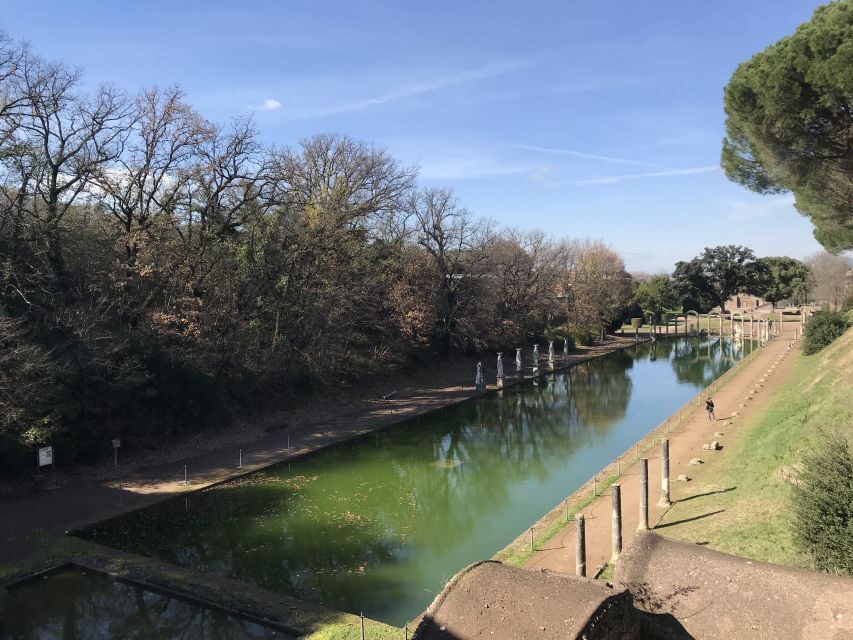
Expect a compact schedule designed for efficiency. Your day starts at Piazza della Repubblica, 12, then you’ll ride in a van toward the villa. Time on the site is around 2.5 hours, with about 45 minutes each way for the drive.
That timing is a big deal. Too many villa tours squeeze the on-site part, and you end up rushing from stop to stop. Here, you get enough time to actually pause in the right places—especially important at Hadrian’s Villa, where orientation helps you understand what you’re seeing.
It’s also a private group experience. That means you can ask questions, linger at a point that catches your attention, and keep the pacing comfortable without the pressure of a large group marching ahead.
Pecile and Hadrian’s porch: the view that sets the tone
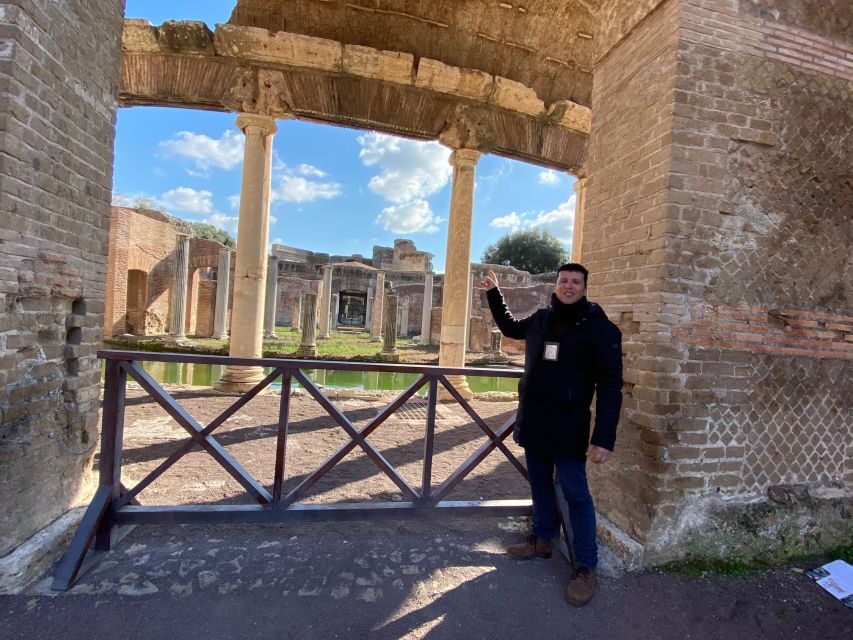
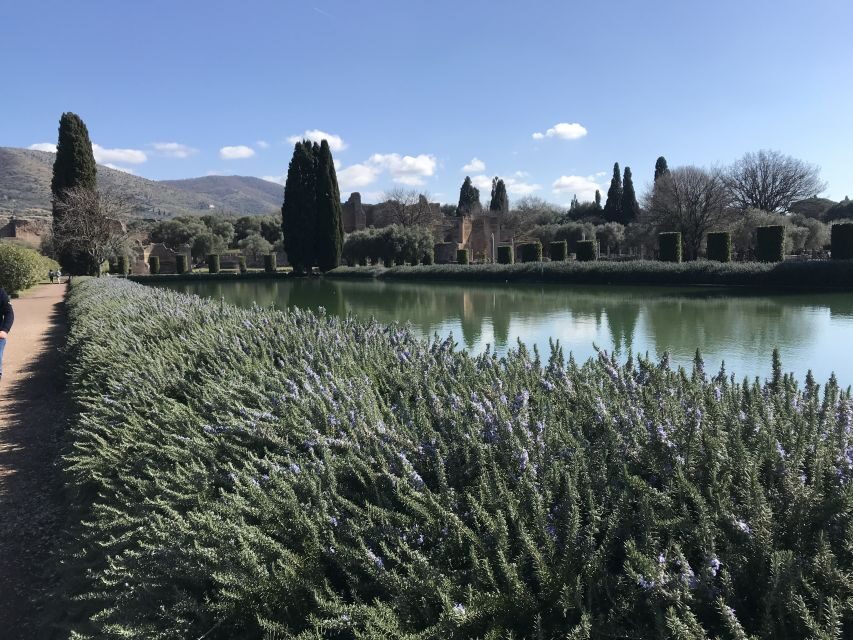
Your first stop helps you get oriented fast: the Pecile and Hadrian’s porch area. This is where you’ll look out toward the private garden and pool, then absorb panoramic views of the Roman countryside.
Why this matters: Hadrian didn’t build just to be impressive from a distance. He built to create daily experiences—views, privacy, and controlled movement through the property. Starting here gives your brain a “map” before you start naming pavilions.
If you’re the type who gets lost when ruins don’t come with a signposted story, you’ll appreciate the approach. It’s basically a shortcut to understanding the villa’s logic: view, placement, and purpose.
Hadrian’s bath: architecture and the mechanics behind the beauty
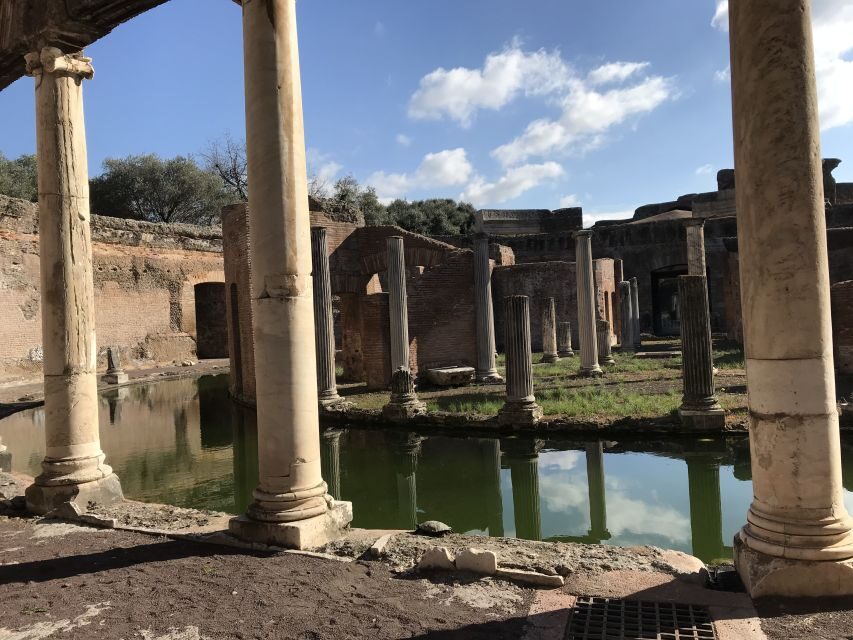
Next comes the bath pavilion. This stop is where you shift from scenery to systems. You’ll admire the ancient architecture and have your guide explain the mechanics—how these spaces were designed to function.
Bath complexes in the Roman world often look like pure grandeur, but they’re also about flow and temperature, water management, and layout that keeps activities moving. Seeing the pavilion after you’ve already gotten your bearings from the Pecile makes it easier to connect the dots: the villa is not random; it’s a planned sequence of life.
One practical note: baths and water-focused areas can feel like they “matter more” once you understand that the villa’s water wasn’t just decoration. You’ll keep noticing that theme as the tour continues.






Canopus and Serapaeum: dining with an artificial lake
After the bath pavilion, you’ll head to Canopus and Serapaeum. This is described as a dining room with an artificial lake, finishing with a semi-dome.
This stop is a great reminder that Roman luxury could be engineered. A controlled water feature inside a pavilion changes the entire mood of a dining space. It creates reflections, temperature comfort in certain conditions, and a theatrical sense of place.
You’ll also see ancient channels tied to water supply from a nearby aqueduct. That detail is more than trivia. It shows you that the villa’s “dream atmosphere” relied on real infrastructure and planning—Hadrian’s ability to match imagination with engineering.
If you love architecture that has a reason behind every curve and wall, this is one of the strongest moments on the route.
Hall of Philosophers: where people waited to be announced
Then you’ll step into the Hall of the Philosophers. The idea here is simple but powerful: it was a room where people waited to be announced to the Emperor.
That’s the kind of detail that turns ruins into social history. You start imagining the atmosphere—who entered, who waited, how long it took, and how the setting shaped expectations. Even with stones remaining and no living actors, the purpose of the room gives you a mental script.
I like this stop because it reminds you Hadrian’s Villa wasn’t just for private pleasure. It also worked as a stage for public-facing power—how an emperor controlled access and created an experience around meeting him.
Maritime Theater: a ring-like domus surrounded by water
Next is the Maritime Theater. You’ll hear it described as an isolated ring-like domus surrounded by water.
This is where the villa starts feeling especially inventive. A ring-like structure isn’t just a design choice; it suggests movement, atmosphere, and a controlled “world within the world.” When it’s paired with water around it, you get a sense that this was meant to be seen and experienced in a specific way, not simply admired.
Again, the tour doesn’t treat this as a standalone monument. It connects this pavilion to earlier stops so you understand the villa’s pattern: entertainment, controlled privacy, and carefully engineered sensory effects.
The annular corridor and Tablinum: meeting space with big meaning
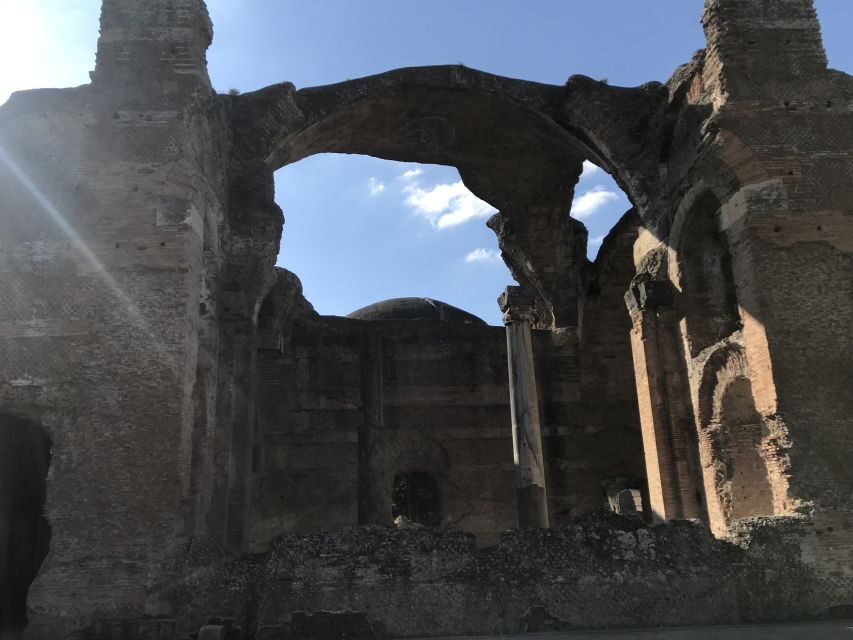
Your last stop takes you to an annular corridor overlooking the Tablinum. This is the meeting room used by the Emperor.
If you want a closing moment that feels intentional, this is it. Standing in a corridor that looks toward the Tablinum helps you visualize how movement through the villa could build anticipation. You’re not only walking around; you’re moving toward the spaces that mattered most for authority and decision-making.
Hadrian’s Villa can feel huge, and the final meeting-oriented viewpoint gives you a clean landing. It ties your earlier stops to one overarching idea: the villa was designed to shape both daily life and the way people interacted with the ruler.
Using 3D reconstructions to read the 2nd century
One reason this tour works so well is the use of 3D reconstructions for each pavilion you visit. Ruins can be frustrating because they hide the original shape, scale, and proportions.
With the reconstructions, you get a mental overlay: what might have been standing there, what the layout likely looked like, and how the pavilion connected to its surroundings in the 2nd century. It’s not about turning history into a video game. It’s about giving your eyes the missing reference points.
You’ll likely find that after the first couple reconstructions, your understanding accelerates. The rest of the walk becomes easier because you’re no longer starting from zero every time you reach a new building.
What to pack and how to pace your comfort
This tour focuses on walking, so your comfort will affect how much you enjoy it. I recommend you bring:
- Comfortable shoes (you’ll want traction and support)
- Water
- Comfortable clothes
- Food if you need it, since food and drink aren’t included
Also remember the tour’s rhythm: you have some transit time, then a solid block on-site. If you arrive hungry or without water, it’s harder to keep your attention when you’re trying to follow the guide’s explanations.
Finally, because it’s not suitable for wheelchair users, plan around mobility needs. If you or someone in your group has limited walking ability, you may want to look for a different format or ask if there’s any flexibility before booking.
Value check: how this $1,084.06-per-group price makes sense
The price here is $1,084.06 per group (listed for up to 1). That’s not cheap at first glance. But this isn’t a basic entry-ticket situation.
What you’re paying for includes:
- Hotel pickup and drop-off
- Entrance tickets
- An archaeologist guide (the big value driver)
- A professional driver and an optional car or van at your disposal
So the real question is whether you want expert interpretation and transport bundled into a private format. If you’re going on your own, you’d still need to figure out how to get out to the villa, then you’d likely end up paying separately for a guide or spending time trying to decode the site yourself.
Where this tour tends to be worth it is for people who want the “aha” moments: how water systems shaped spaces, how the villa’s social rooms worked, and how the reconstructions help you understand what you’re seeing. If that kind of guided comprehension matters to you, the price starts to look more rational.
If you’re happy reading on-site signage and going at your own pace with minimal structure, you might not need this level of guidance. But if you want your visit to feel clear and satisfying, the archaeologist-led approach is the heart of the deal.
Who should book this private Hadrian’s Villa tour
This tour is a strong match if:
- You want a private experience with time to ask questions
- You like archaeology explanations that focus on how the site functioned
- You’d rather spend your energy learning what you’re seeing than figuring out logistics
- You enjoy architecture and engineering details like water channels and bath-related mechanics
It’s also a good choice if you’re the kind of person who gets energized by “place logic.” Hadrian’s Villa rewards that mindset. Each stop builds on the previous one, and a guide helps you connect them quickly.
Should you book this private archaeologist tour?
I’d book it if you want a guided, high-clarity visit where Ferdinando’s expertise helps you understand the villa as a designed world, not just scattered buildings. The combination of on-site walking, 3D reconstructions, and water/architecture explanations is exactly the kind of mix that turns a confusing site into a memorable story.
I’d skip it or at least rethink if you’re strongly limited in walking ability, or if you’d rather do everything independently with minimal guiding. Otherwise, this is one of those experiences where paying more for interpretation can actually feel like a bargain.
FAQ
What’s the duration of the tour?
The tour lasts about 4 hours.
Where does the tour pickup?
Pickup is at Piazza della Repubblica, 12.
How much time do you spend at Hadrian’s Villa?
You’ll have around 2.5 hours to visit Hadrian’s Villa with a guided walk.
What’s included in the price?
It includes hotel pickup and drop-off, entrance tickets, a professional driver, and an archaeologist guide. An optional car or van is also available.
Are food and drinks included?
No. Food and drink are not included.
What languages is the guide available in?
The live tour guide is available in English and Italian.
Is the tour private?
Yes. It’s a private group.
Is this tour suitable for wheelchair users?
No, it’s not suitable for wheelchair users.
FAQ
What reconstructions do you see during the tour?
The tour includes 3D reconstructions showing how each pavilion looked in the 2nd century.
What are the main places you’ll visit at Hadrian’s Villa?
You’ll see highlights including Hadrian’s porch area (with garden and pool views), Hadrian’s bath, Canopus and Serapaeum, the Hall of Philosophers, the Maritime Theater, and the annular corridor overlooking the Tablinum.