REVIEW · PRIVATE
Rome: Private Golf Cart Tour
Book on Viator →Operated by Rome Grand Tour · Bookable on Viator
Rome can feel like a whirlwind. This golf cart tour is a calm, comfy way in. You cover big landmarks fast, then your driver-guide steers the day so the route fits your pace and interests.
I love the wraparound, airy ride. You get wide views without sweating through Rome’s most crowded streets, and you’re not stuck waiting for trains or taxis. I also like that it’s private, so you’re not trapped in a one-size-fits-all group rhythm.
One thing to think about: this is an exterior-and-photo style tour. If you want long, ticket-heavy time inside places like the Colosseum or Pantheon, you’ll need extra time on your own.
In This Review
- Key Highlights to Know Before You Go
- Private Golf Cart Touring: Comfort, Control, and Central Pickup
- How the 2.5 Hours Work: Short Stops, Big Landmarks
- Colosseum Views From the Cart (External Stop)
- St. Peter’s Square: Bernini’s Geometry, Up Close
- Castel Sant’Angelo: Hadrian’s Tomb to Angel-Top Fortress
- Trevi Fountain: The Coin Myth Meets Real Size
- Piazza Navona: Fountains, Sidewalk Energy, and Easy Watching
- Pantheon Exterior: The Dome Math That Changes How You Look
- Spanish Steps and Piazza di Spagna: A Classic Stroll Point
- Circus Maximus: Roman Chariot Racing Without the Sweat
- The Real Benefit: Fewer Fatigue Minutes, More Rome Time
- Price and Value: What $119.48 Gets You in Rome
- Who Should Book This (and Who Might Not)
- Quick Booking Notes That Actually Matter
- Should You Book This Rome Golf Cart Tour?
- FAQ
- How long is the Rome private golf cart tour?
- Is pickup and drop-off included?
- Is the tour private or shared?
- What language is the tour guide?
- Which major sights are included?
- Are admission tickets included for these stops?
- What is the cancellation window for a full refund?
Key Highlights to Know Before You Go
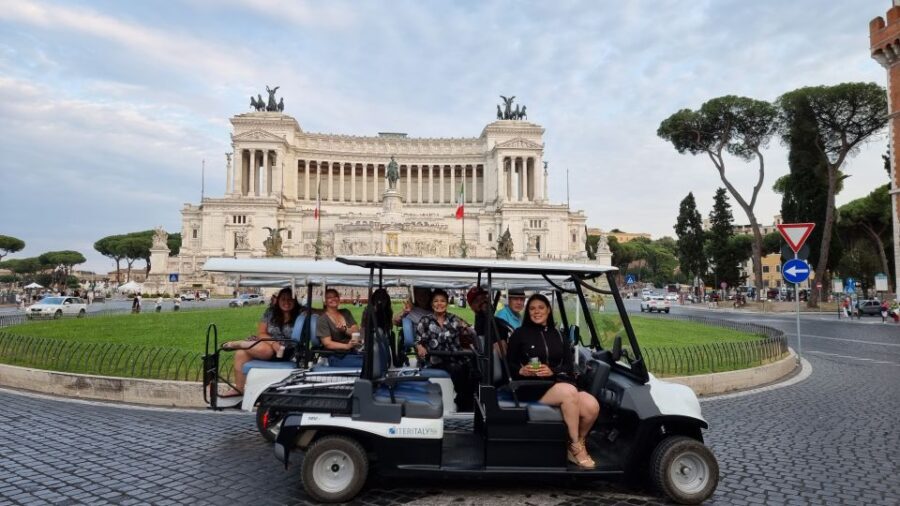
- Private cart touring with the ability to adjust the route to what you care about most
- Central pickup and drop-off, so you can skip the metro scramble
- Photo-friendly timing at each stop, with short windows to hop out and take it in
- A driver-guide who reads the streets, plus stop-by-stop context on what you’re seeing
- Classic Rome hits in one loop, from the Colosseum to Trevi, Pantheon, and Spanish Steps
- A comfortable start for day-one travelers, especially if you’re jet-lagged or traveling with kids
Private Golf Cart Touring: Comfort, Control, and Central Pickup
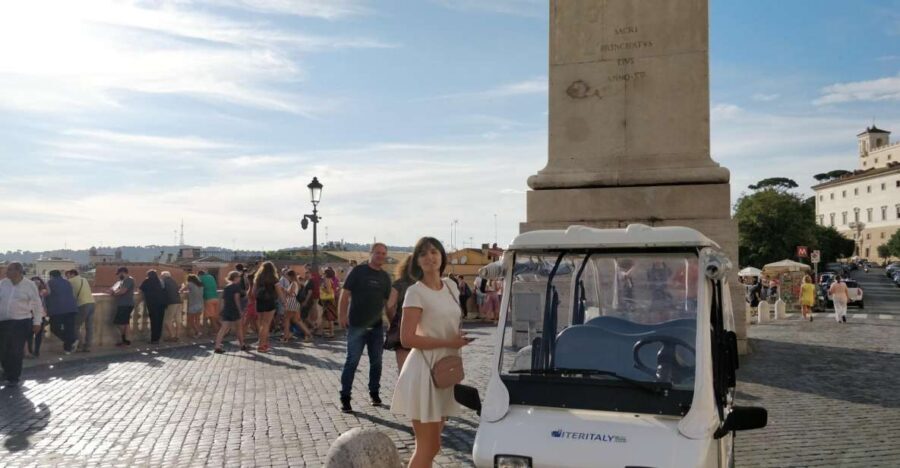
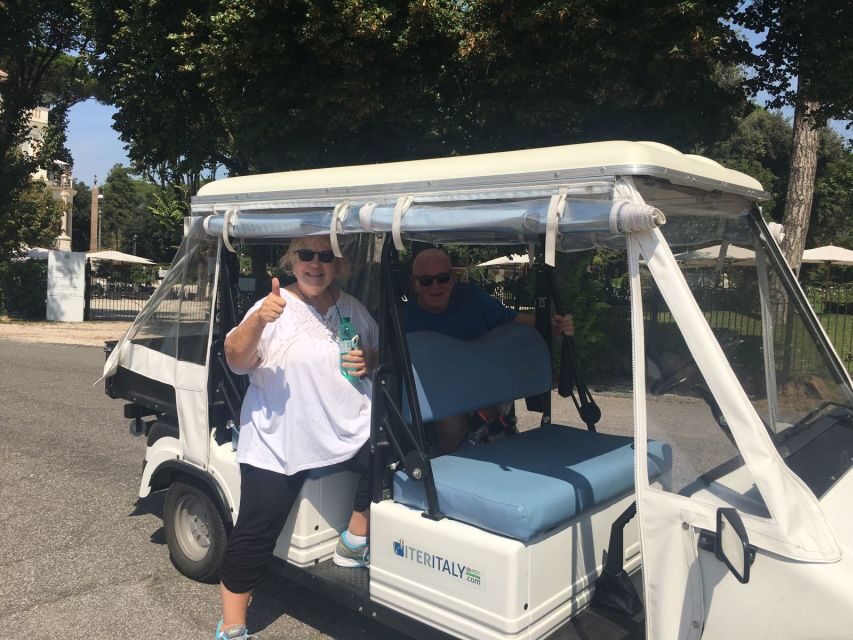
This tour works because it’s built for real-life Rome. Roads are tight. Walking can stack up quickly. And the best views often sit just out of reach if you only rely on public transit. The golf cart format solves a lot of that with comfort and speed.
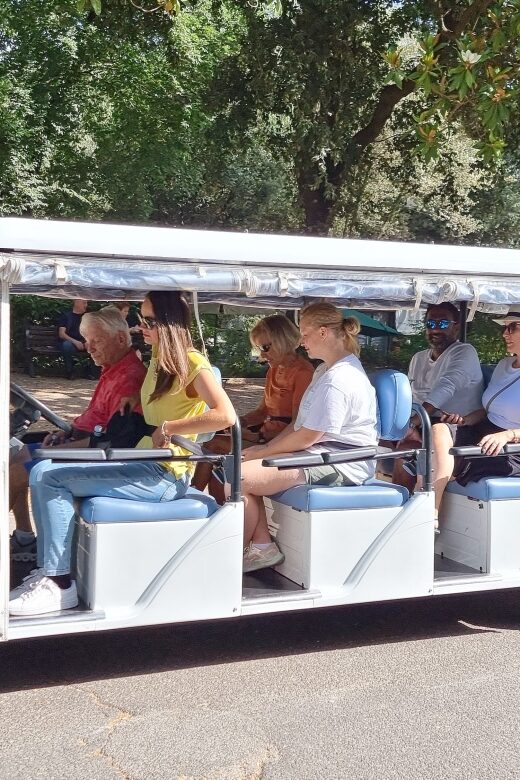
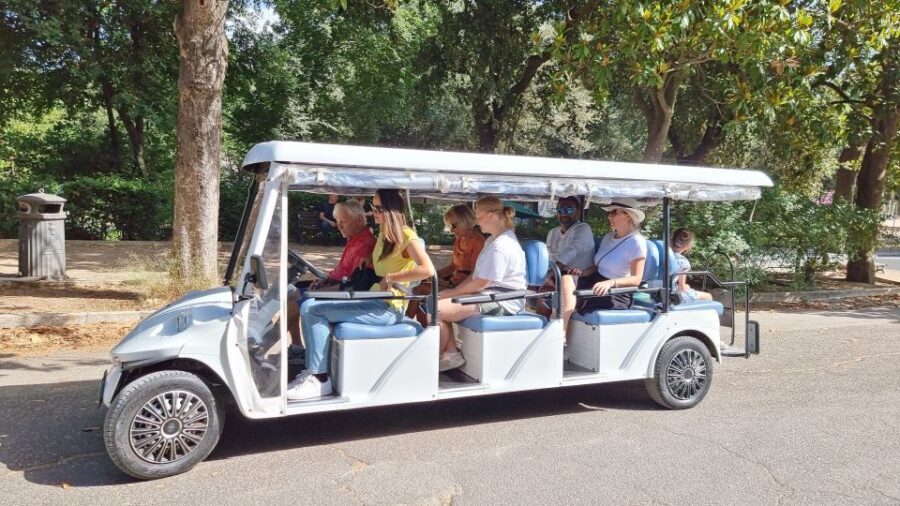
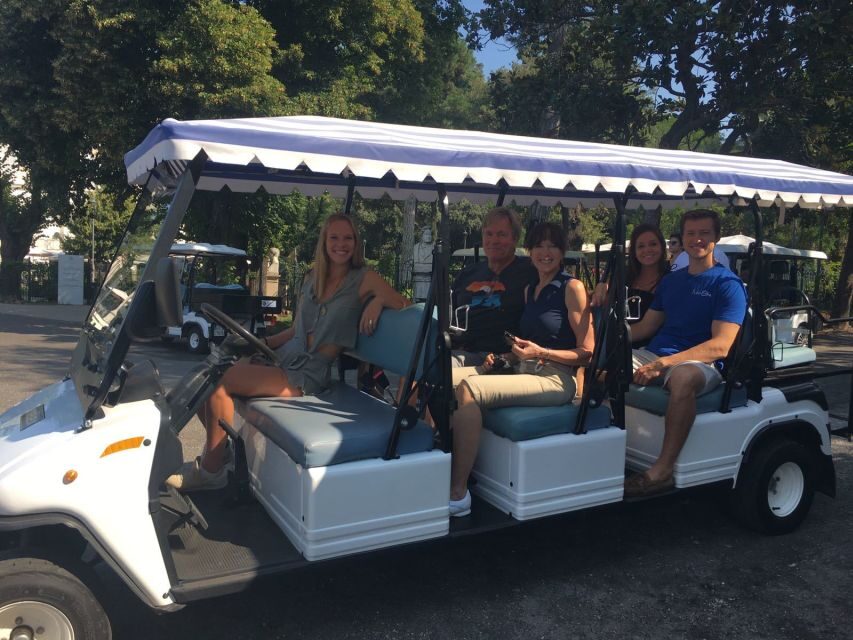
You’ll ride in an airy cart with wraparound views, which matters more than people expect. It’s easier to spot landmarks as you approach, and you spend less time turning your body to see what’s behind you. Plus, your driver-guide can point out details as you pass, rather than waiting until you reach a stop.
Because it’s private, you can tailor the day. The day’s core plan stays anchored on major sights, but you’re not locked into a rigid schedule that ignores what’s working for your group. That flexibility shows up in how guides can add quieter viewpoints or swap the emphasis based on what you’re into.
You can also read our reviews of more private tours in Rome


How the 2.5 Hours Work: Short Stops, Big Landmarks
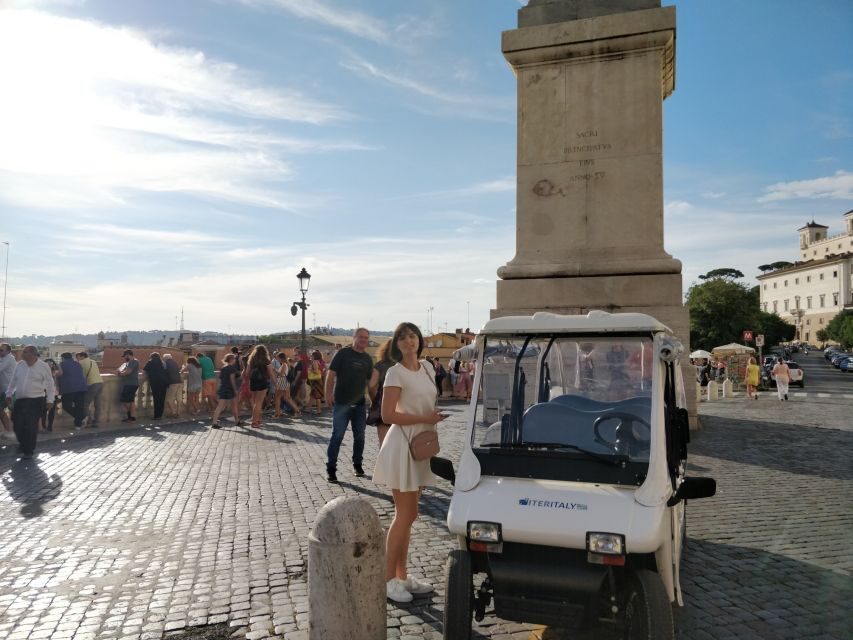
The tour is about 2 hours 30 minutes total, and the stop timing is intentionally tight (roughly 15 minutes per main stop). That means you’re not sightseeing at a slow museum pace. Instead, you’re doing a smart overview: see the monument, understand what you’re looking at, grab your photos, then roll to the next one.
This style is ideal for an early-day or first-time Rome mission. In one morning or afternoon, you get your bearings. Later, you can come back for deeper time at the places that really grab you.
The trade-off is also clear: these windows are for viewing and photos, not for long tours inside major sites. If you love lingering, you’ll want to plan follow-up visits.
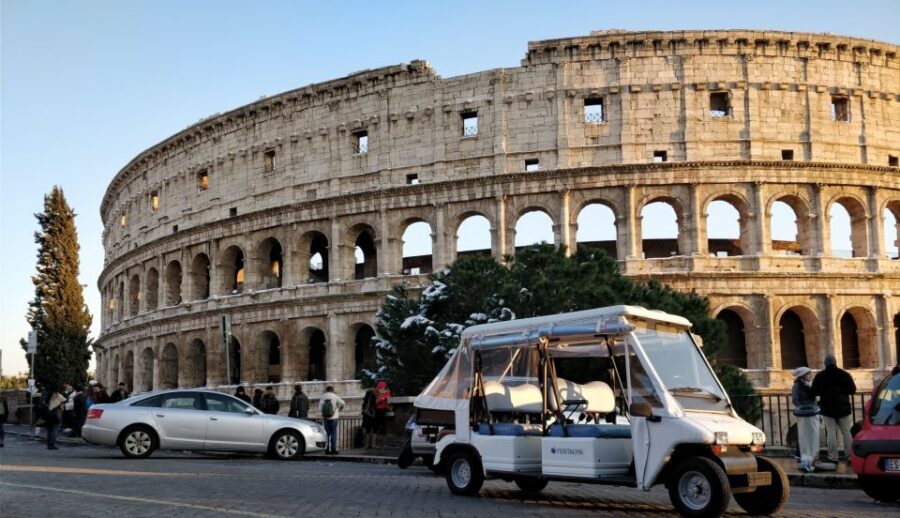
Colosseum Views From the Cart (External Stop)
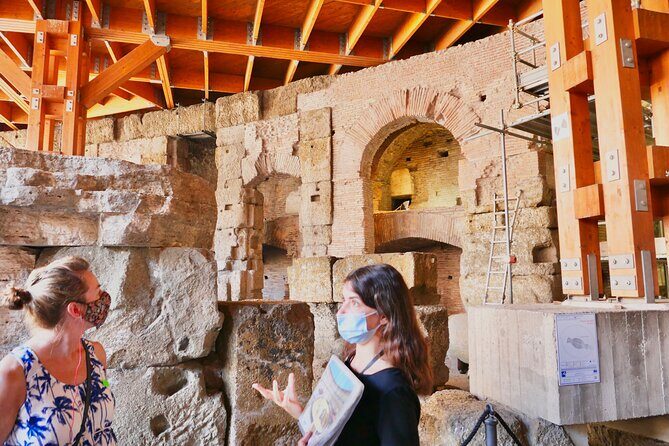
The Colosseum is the kind of landmark that makes you sit up the moment you see it. Even from outside, it hits hard. You’ll stop for an external look at the Roman Colosseum, also known as the Flavian Amphitheatre.
A few numbers help you see it in context: it’s tied to almost 2,000 years of history, and it’s one of Rome’s true mega-attractions—over 6 million visitors a year. During the Roman Empire, the arena offered huge spectacles for crowds of more than 50,000 people, under the motto Bread and Circuses.
In practice, the short stop works because you’ll arrive already oriented. You won’t spend your whole time trying to figure out where things are. Your driver-guide can also frame what you’re seeing so the Colosseum isn’t just a big wall you walk around.
St. Peter’s Square: Bernini’s Geometry, Up Close
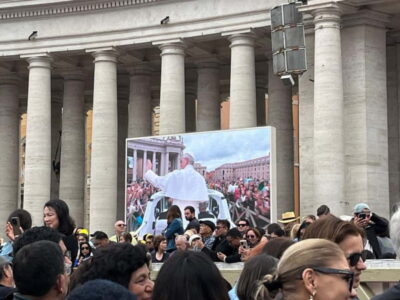
Next comes St. Peter’s Square, Piazza San Pietro, which is famous for a reason: it feels built for scale. Your stop here is brief, but the structure gives you instant payoff.
This square was designed by Bernini in the 17th century and can hold over 300,000 people. Look for the 284 columns and 88 pilasters that form a grand colonnade in four rows. Above them, there are 140 statues of saints made in 1670 by Bernini’s disciples.
Then there’s the center piece: the obelisk and two fountains. The obelisk is 25 meters high, brought from Egypt in 1586. Even if you don’t have time to soak it all in, you’ll leave with a clear mental picture of why this space is such a visual magnet.
A quick note: because your time is limited, treat this stop like a photo-and-orientation moment. If you want the full sacred-complex experience, you’ll still want separate time on your own.
Castel Sant’Angelo: Hadrian’s Tomb to Angel-Top Fortress
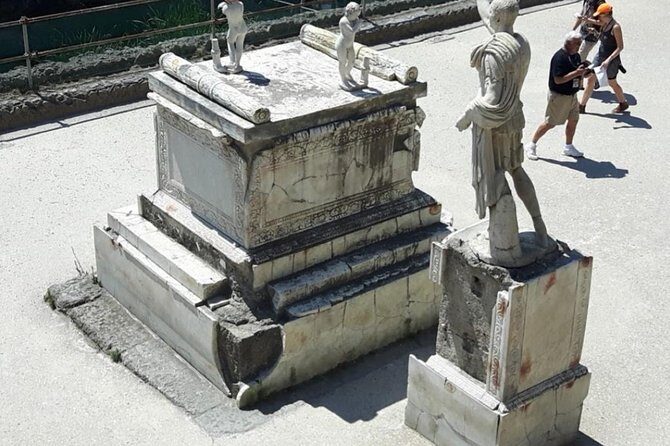
Your cart rolls next to Castel Sant’Angelo, known historically as Hadrian’s Tomb. It sits on the right bank of the Tiber, not far from Vatican City, and it’s a perfect “Roman power” monument: part mausoleum, part fortress, part symbol.
Here’s the timeline that makes the building click:
- Construction began in 135 under Emperor Hadrian
- It was finished in 139
- Later, it became a military structure and was integrated into the Aurelian Walls in 403
Then add the famous story from 590, during a plague. Pope Gregory I had a vision of Saint Michael the Archangel on top of the castle, signaling an end to the epidemic. The building is topped with an angel statue tied to that moment.
For you, the value of the short stop is that it connects the dots between ancient Rome and the later papal era. It’s one thing to see a castle. It’s another to understand why it looks the way it does.






Trevi Fountain: The Coin Myth Meets Real Size
Trevi Fountain is a must, and the tour treats it accordingly with a short, focused stop. You’ll learn about the Fontana di Trevi tradition—the myth behind throwing a coin into the fountain—and the key history tied to why this fountain is so culturally sticky.
Trevi is also huge in physical terms. It measures about 20 meters wide and 26 meters high, and it’s the largest fountain in the city. The name comes from Tre Vie, meaning three ways, since it sits where three streets met.
In daylight or at night, it’s never just a quick photo. The best part of doing it by cart is how you reach it with context. You don’t arrive as a blank slate. You already understand what you’re looking for, so the fountain feels more like a story than a landmark.
Piazza Navona: Fountains, Sidewalk Energy, and Easy Watching
Next up is Piazza Navona, one of Rome’s most lively squares. The headline here is the fountains, designed during the papacy of Gregory XIII.
The square works because it gives you multiple layers in one view: architecture around the edges, lively corners, and enough room to pause and watch street performers. You can also step into the rhythm of restaurants and outdoor terraces without committing to a long sit-down.
Your stop is short, so don’t over-plan. Pick one fountain you want your main photo of, then let the square fill in the rest. If you want a slower pace, this is the place to come back after the tour ends.
Pantheon Exterior: The Dome Math That Changes How You Look
The Pantheon stop is an external visit, and it’s perfect for a golf cart loop. Even without walking deep inside for a long time, the building’s design gives you immediate “how did they do that” moments.
The Pantheon is one of the best-preserved ancient Rome structures. It was built as the Pantheon of Agrippa, and its geometry is the star:
- The circular building has the same measurement for diameter and height: 43.5 meters
- The dome is larger than the dome of St. Peter’s Basilica
- At the top, there’s a 9-meter-diameter opening that brings in natural light
This stop also has a human touch: the interior includes tombs of Italian kings, and Raphael is buried here.
For you, the value is that you’ll walk away with a clear mental image. You won’t just remember that you saw a dome. You’ll remember the measurements and the way light works in the space, so a later revisit (if you choose) feels more intentional.
Spanish Steps and Piazza di Spagna: A Classic Stroll Point
Then you roll to the Spanish Steps, Piazza di Spagna. This square is one of Rome’s best-known meeting points, and it’s easy to see why: you get drama in the stairs, plus prime neighborhood access nearby.
The name Piazza di Spagna comes from the Palazzo di Spagna, which served as the Spanish Embassy seat for the Vatican since the 17th century. The area also sits near big shopping streets like Via dei Condotti and Via Frattina, plus Via del Babuino.
Your time is short, so treat this like a “set your future plans” stop. After you see the stairs, you’ll know exactly where to return if you want shopping, quiet side streets, or a longer wander.
Circus Maximus: Roman Chariot Racing Without the Sweat
The final big named stop is Circus Maximus, the ancient chariot-racing stadium and mass entertainment venue. This one feels different from the others because it’s now a public park, not a closed-off ruin behind thick barriers.
The scale is the story:
- It sat in the valley between the Aventine and Palatine hills
- It measured 621 meters long and 118 meters wide
- In its developed form, it could hold over 150,000 spectators
- It became a model for circuses throughout the Roman Empire
Again, the short stop works because you’re not trying to do a full research project. You’re getting the big picture of where power and crowds once lived.
The Real Benefit: Fewer Fatigue Minutes, More Rome Time
One of the most consistent reasons people love this kind of tour is simple: it’s less tiring. You’re still sightseeing, but you’re not spending all day walking between far-flung monuments.
This is especially helpful if:
- you arrive from a redeye and need a gentle start
- you’re traveling with kids who get cranky fast
- someone in your group has mobility limits and can’t handle long walking stretches
Even in rain, the cart experience can still be workable. Some setups include rain shields, and guides can drive close to key points so you spend less time hustling.
You’ll also benefit from the way guides handle timing. The pacing usually gives enough room for quick photo stops and short out-and-about minutes without forcing you into a nonstop sprint.
Price and Value: What $119.48 Gets You in Rome
At $119.48 per person for about 2.5 hours, this isn’t a bargain bargain. But it’s also not trying to be.
The value is in three places:
- Private touring: you’re paying to avoid the chaos of group coordination
- Pickup and drop-off in central Rome: you’re paying to reduce transit friction
- Local interpretation: the driver-guide adds context while you’re moving, so you get more out of fewer minutes
Compare it to the alternative. If you’re using taxis back and forth between sites, costs can climb quickly, especially when traffic slows you down. If you’re piecing it together with transit, you spend prime sightseeing time commuting and waiting.
The sweet spot is when you use this as a first-day orientation tool. You’ll often get more value because later you’ll spend time where you actually want it, not where you guessed it looked interesting.
Who Should Book This (and Who Might Not)
This tour is a great fit if you want:
- a smooth first introduction to Rome
- classic landmarks in a tight schedule
- comfort and short walking requirements
- a plan that can flex to your group’s interests
You might not love it if you’re the type who wants:
- deep time at a single site
- long interior visits without rushing
- lots of wandering on foot as the main event
In that case, use the golf cart tour as your launching point. Then save your long-form hours for the places you felt most drawn to.
Quick Booking Notes That Actually Matter
You’ll get a mobile ticket, and the tour runs in English. It’s also designed for most travelers to participate, and it’s listed as private, meaning only your group rides.
Pickup can be arranged in central Rome. If your lodging area needs coordination, you can agree on a pick-up point in the city center.
Should You Book This Rome Golf Cart Tour?
Yes, if you want an easy, high-payoff Rome opener. This is the kind of tour that helps you understand what you’re looking at, not just collect photos.
It’s especially worth it when:
- you have only a short stay
- you’re jet-lagged
- you want to reduce walking while still seeing the big names
- you want a private guide’s perspective with minimal hassle
If your priority is spending long stretches inside the biggest sites, plan to pair this with other time on your own. Think of the cart tour as your map and your context, then build your deeper day(s) from there.
FAQ
How long is the Rome private golf cart tour?
It runs for about 2 hours 30 minutes.
Is pickup and drop-off included?
Yes. Pickup and drop-off are offered in central Rome, and you can agree on a pick-up point in the city center if needed.
Is the tour private or shared?
It’s private. Only your group participates.
What language is the tour guide?
The tour is offered in English.
Which major sights are included?
The route includes the Colosseum, St. Peter’s Square, Castel Sant’Angelo, Trevi Fountain, Piazza Navona, the Pantheon, the Spanish Steps, and Circus Maximus.
Are admission tickets included for these stops?
The itinerary lists admission ticket free for the listed stops.
What is the cancellation window for a full refund?
You can cancel up to 24 hours in advance for a full refund. Cancellation less than 24 hours before the start time is not refunded.