REVIEW · PRIVATE
Rome Private Double Decker Open Bus Panoramic GuidedTour | Exclusive Sightseeing
Book on Viator →Operated by Tour In Rome by Tour in the City · Bookable on Viator
Rome feels different when you sit upstairs.
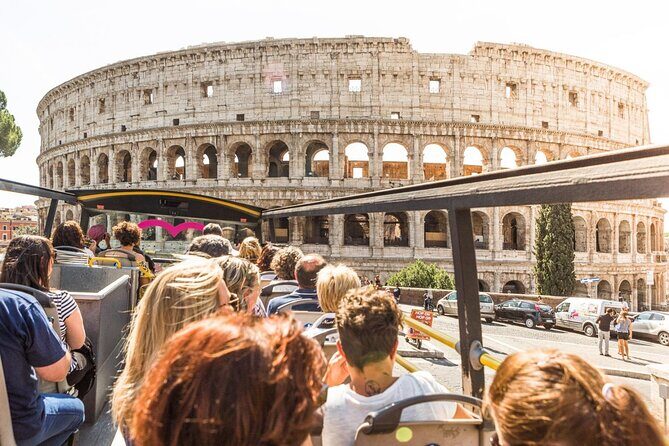
This private double-decker open bus gives you a guided, panoramic sweep of Rome’s top sights in about 75 to 90 minutes, so you’re not crisscrossing the city all day. I especially like having an official tour guide on board, talking through what you’re seeing as you go (Castel Sant’Angelo to St. Peter’s Square and beyond). One thing to consider: an open bus means wind and sun, and at this price level you’ll want to make sure the timing and weather match what you’re hoping to see.
What I like next is the way the route mixes “big-name” Rome with spots that usually take extra effort on foot. You get outside views and stops that point you to the right ancient landmarks, from Teatro di Marcello to the imperial-palace area on the Palatine Hill. The trade-off is simple: you’re not spending long hours inside museums or churches during this kind of ride-and-stop format, so think of it as getting your bearings fast and leaving you ready to return.
In This Review
- Key highlights you should know before you ride
- From Largo di Villa Peretti to a private Rome from two levels
- Castel Sant’Angelo on the Tiber and St. Peter’s Square without the maze
- Teatro di Marcello, the Porticus ruins, and the “not just Colosseum” lesson
- Tiber Island: the healing island stop most tours skip
- Piazza Venezia, the Capitoline Hill, and Palatine as Rome’s executive seat
- Aventine to Circus Maximus: the wide sky over ancient entertainment
- Forum Boarium and the idea of Rome as a trading port
- Piazza Barberini, Via Veneto, and the dolce vita angle
- Villa Borghese, Piazza della Repubblica, and Santa Maria Maggiore
- Price and value: what you’re really paying for
- Who this tour is best for
- Should you book it
- FAQ
- How long is the Rome private double-decker panoramic tour?
- Is this tour private or shared with other groups?
- What’s included in the price?
- Where do I meet for the tour?
- What time should I arrive at the meeting point?
- Is the tour suitable for children?
Key highlights you should know before you ride
- A private double-decker for only your group, with a panoramic perspective from two levels
- A guide on board so the sights make sense as you pass them
- St. Peter’s Square plus the Tiber corridor, including Castel Sant’Angelo
- Ancient Rome power centers covered from the outside: Capitoline and Palatine areas
- Rome beyond the Colosseum: Aventine, Circus Maximus, Forum Boarium, and more
- Quick stops that reduce planning stress, especially helpful with kids or mixed-age groups
From Largo di Villa Peretti to a private Rome from two levels
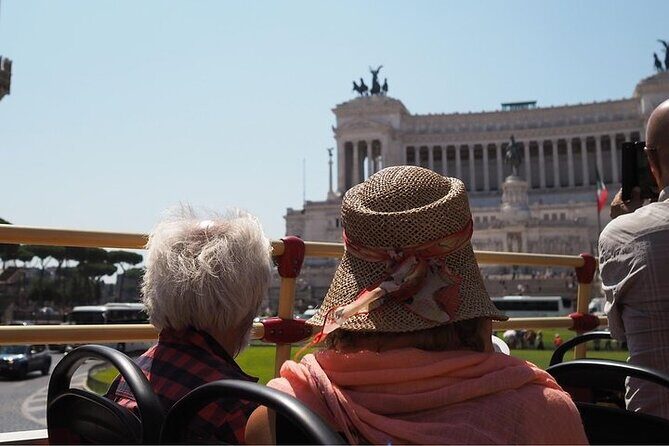
Your tour starts at Largo di Villa Peretti (00185 Roma RM), and it ends right back at the meeting point. The schedule is flexible in the sense that this is offered in different time windows (morning, afternoon, evening, or night), but the experience itself is built around that tight 75 to 90 minute arc.
Since it’s private, you’ll feel less like you’re herded. Instead, the bus becomes your moving platform for the day’s “greatest hits,” with the guide steering the conversation. If you’re traveling with kids, or you just don’t want to spend your precious first day in Rome doing line-ups and detours, this is a very practical way to get the lay of the land.
You can also read our reviews of more private tours in Rome

Castel Sant’Angelo on the Tiber and St. Peter’s Square without the maze
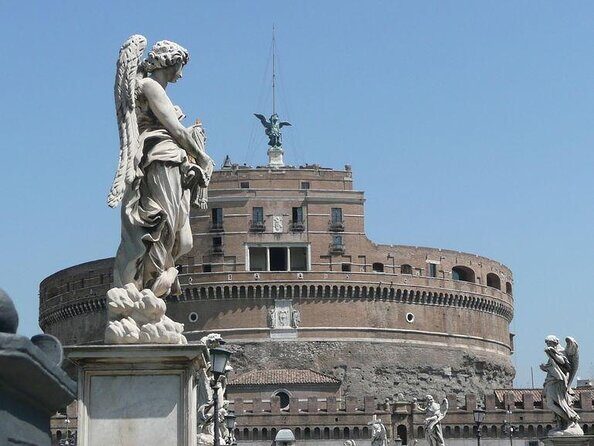
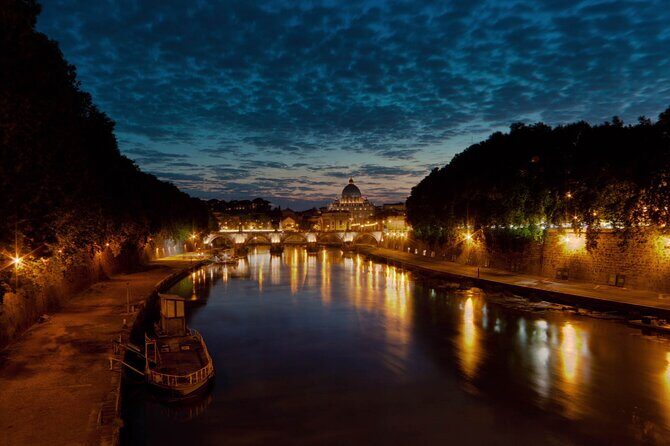
The itinerary begins with a stop along the Tiber River bank, pairing the river with one of Rome’s most recognizable silhouettes: Castel Sant’Angelo. Even if you only see it from outside, it’s the kind of monument that practically explains itself. Built as Hadrian’s tomb, it later became a fortress for the popes, so the building carries layers of story at a glance.
Then you move to St. Peter’s Square, the giant plaza in front of St. Peter’s Basilica in Vatican City. The square’s centerpiece is an ancient Egyptian obelisk, and the layout is famous for Bernini’s design work, including the Doric colonnades that create those dramatic arms-like curves around visitors. The basilica and square being named after Saint Peter helps frame why the Vatican area feels so different from the rest of Rome.
Here’s what I’d plan for: the Vatican area can feel crowded in practice, and your tour timing doesn’t magically remove every pinch point around there. Still, a guided stop helps you focus on the right details instead of wandering and hoping you’re looking at the key things.
Teatro di Marcello, the Porticus ruins, and the “not just Colosseum” lesson
After the Vatican stop, the route turns toward ancient Rome’s stage machinery with a focus on the Teatro di Marcello. This open-air theatre dates to the late Roman Republic, and it’s one of those sights where, even from the outside, you can understand how Roman entertainment worked at scale. It’s still used as a tourist stop today, and it’s surrounded by modern life in a way that makes the ancient structure feel close.
The tour also references adjacent ancient context connected to the area—built and rebuilt over centuries, shaped by fires and earthquakes, and later reused for different purposes. That “layers of use” is part of Rome’s charm: the same stones serving different roles as the city changed.
If you’re thinking of doing more archaeology later, this stop is useful because it trains your eye. You start recognizing how ancient Rome used massed stone, repetition, and symmetry to create impact, long before “Roman ruins” became a modern tourism category.
Tiber Island: the healing island stop most tours skip
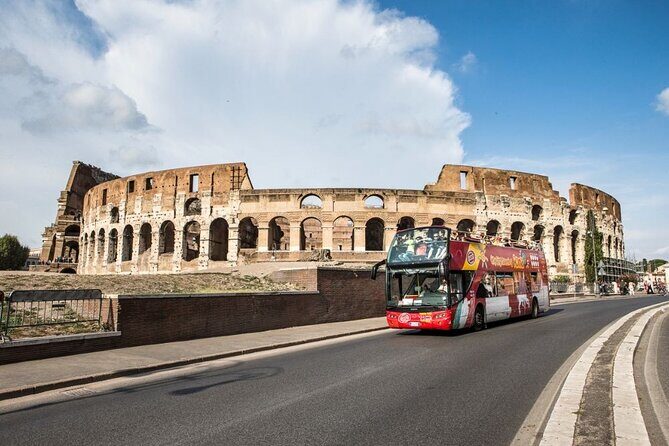
One of the calmer, more interesting stops on this tour is Isola Tiberina (Tiber Island), the only river island in the stretch of the Tiber that runs through Rome. It’s boat-shaped, connected by bridges since antiquity, and tied to medicine and healing in a way that feels very “Rome,” meaning the stories are attached to place rather than to a museum label.
This island was associated with an early temple of Asclepius, and later with hospitals—like the Fatebenefratelli Hospital founded in the 16th century and San Bartolomeo all’Isola from the 10th century. That mix of ancient myth and practical care is exactly the sort of detail that makes a guided experience pay off, because a quick bus photo won’t explain it on its own.
It also gives you a mental break from the nonstop grandeur. You get a small pause that helps the “Roman scale” sink in, then you roll onward.
Piazza Venezia, the Capitoline Hill, and Palatine as Rome’s executive seat
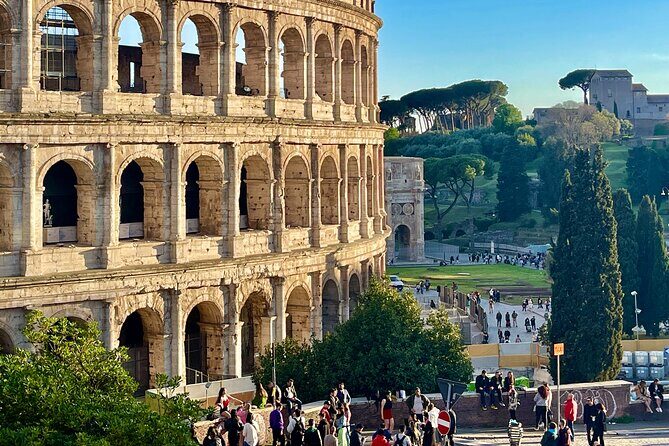
When you reach Piazza Venezia, you’re standing in a hub where major streets intersect. It takes its name from Palazzo Venezia, built by Cardinal Pietro Barbo (later Pope Paul II) alongside the church of Saint Mark. Even from the outside, it’s a useful location because it connects you visually to how Rome’s modern city planning sits on top of older routes.
From there, the tour moves to Capitolium / Capitoline Hill, one of Rome’s Seven Hills. It’s associated with the temple of Jupiter Optimus Maximus and became a symbol tied to the idea of Roman permanence. Even the way the word history links to Rome’s identity gives you a sense of why the Capitoline matters beyond being a view point.
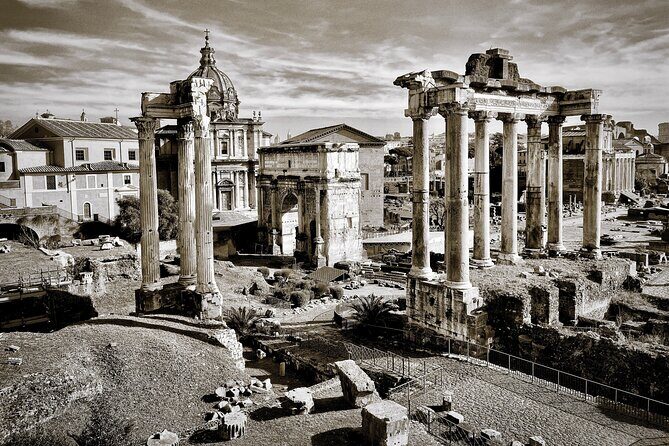
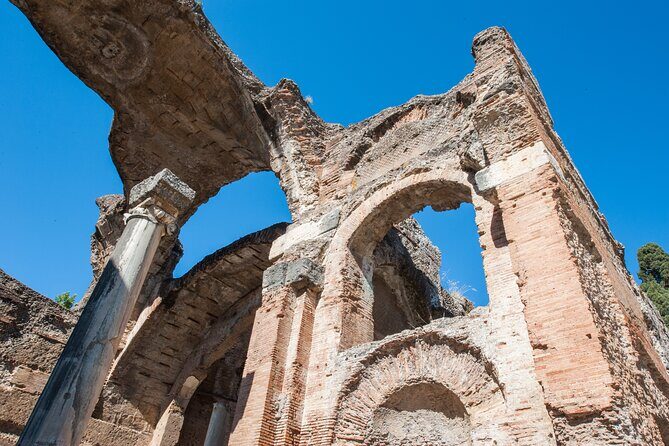
Then comes the stop that most powerfully ties together “imperial Rome lived here.” The route includes the Palatine Hill, described as the centremost of the seven hills and an area considered the first nucleus of the Roman Empire. Imperial palaces were built here starting with Augustus, and the hill is now mainly an open-air museum area. If your tour includes an external look at the ruins of those imperial residences, this is the place where it makes sense.
Practical note: on a double-decker open bus, you’ll likely see these key hills as a mix of views and short stop moments. You won’t get the full museum-depth experience in this time window, but you’ll understand what to aim for if you come back.






Aventine to Circus Maximus: the wide sky over ancient entertainment
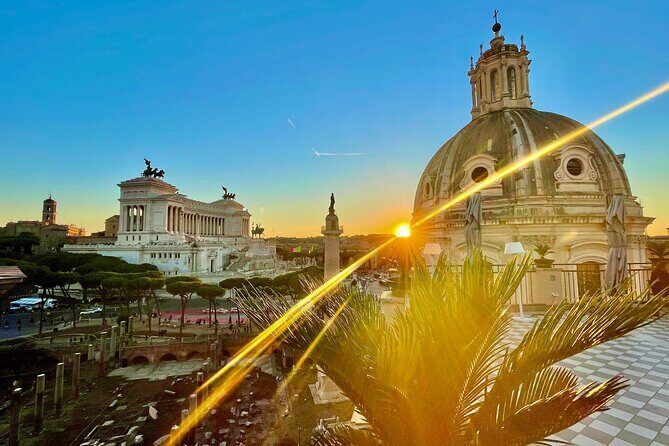
Next, your route heads toward Aventine Hill, Rome’s southernmost of the seven hills. It has two distinct heights and an ancient roadway between them, and it’s a great change of pace from the tighter “central Rome canyon” feel. Even without stepping deep into the hilltop spaces, the perspective from the bus and the general shape of the area can help you picture how Romans distributed neighborhoods and boundaries.
From Aventine, the tour highlights Circo Massimo (Circus Maximus), the ancient chariot-racing stadium that once held massive numbers of spectators. Today it’s a public park, which means you get a rare thing in Rome: a famous ancient venue you can understand through open space. You’re not just told it was big; you can feel the “valley stadium” geometry from where you’re standing.
A stop like this works especially well at the right time of day. If you book a late afternoon or evening option, the light can make the scale easier to grasp, and it’s usually more comfortable for sitting on an open bus.
Forum Boarium and the idea of Rome as a trading port
Another valuable stop is Forum Boarium, located near the Tiber between the Capitoline, Palatine, and Aventine hills. This wasn’t just a religious spot or a spectacle arena. It was tied to commerce and the movement of goods, associated with the earliest docks of Rome.
This area also connects with another Rome lesson: early gladiatorial contests weren’t only for emperors—they started as part of aristocratic funerary rituals. The site is also linked with major temples and the Great Altar of Hercules (with that ancient religious layer that still shapes the ground-plan in your mind).
If you want a Rome that feels more than monuments-only, this is where it happens. It’s Roman history that includes work, trade, and public ceremony in the same breath.
Piazza Barberini, Via Veneto, and the dolce vita angle
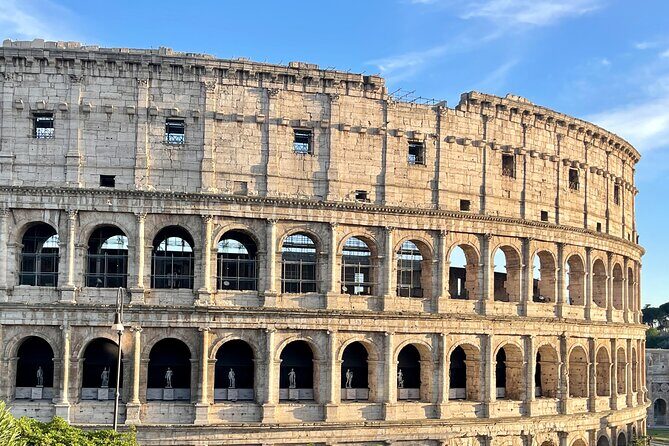
As the tour continues toward central city squares, you’ll reach Piazza Barberini, created in the 16th century and later associated with the Fontana del Tritone by Bernini (1642). It’s a quick stop that helps you shift from “ancient Rome” to “Rome as a stage for art and city life,” which is honestly a big part of what makes the city fun to revisit.
From there, the route includes Via Veneto, famously tied to the theme of la dolce vita—the sweet life—and the international celebrity glow of the mid-20th century. You’re walking past a street that became a symbol of lifestyle, with famous cafés and major hotels along the way. The historical detail matters here: it’s not just a name, it’s a street with a specific cultural story that films helped spread.
Even if you’re not hunting photos for social media, this portion is a good reminder that Rome isn’t only about ancient ruins. It’s also about the eras layered on top.
Villa Borghese, Piazza della Repubblica, and Santa Maria Maggiore
The tour takes you through Villa Borghese, one of Rome’s biggest public parks, with gardens and buildings connected to the Borghese estate and art collection. This stop is helpful if your legs need a breather. You’re still in the Rome story, but in a way that feels more human scale than the grand ancient stages.
Then you reach Piazza della Repubblica, a circular piazza near Termini station. It’s shaped by the exedra of the Baths of Diocletian, and that shape still influences what the square feels like today. From there, Via Nazionale begins, giving you a practical sense of how to connect to other areas after your tour.
Finally, you end with Basilica di Santa Maria Maggiore, one of the Seven Pilgrim Churches of Rome. It houses the venerated image Salus Populi Romani, tied to the idea of Mary as the health and protectress of the Roman people. The basilica’s placement also matters in the modern map sense: even though the Holy See owns it, it sits within Italian territory rather than Vatican City State under the later arrangements described for the site.
This ending choice is strong because it finishes your tour with a major church that feels real and place-based, not just another photo-stop. You get a sense of Rome’s spiritual geography right before you return to where you started.
Price and value: what you’re really paying for
At $1,029.57 per person, this is not a “budget bus” kind of experience. So the value isn’t about squeezing in as many stops as possible. It’s about buying time, comfort, and guided understanding in a compact window.
Here’s the math I’d do before booking. If your group can split the cost and you’re trying to cover a large slice of Rome without exhaustion, private transportation and an on-board official guide can start to make sense fast. Also, you’re not stuck in the slow part of planning: you’re getting a structured route that hits the major corridors and viewpoints, like the Tiber area, the Vatican area, and the ancient hill zones.
Where to be honest with yourself: this tour won’t replace a full day at the Colosseum, Vatican Museums, or an in-depth museum day. It’s a smart first act. It helps you decide what to do next, and it saves you from spending your first hours in Rome figuring out where everything is.
Who this tour is best for
This tour fits best when you want Rome’s headline sights with less hassle. It’s especially suitable for children, small families, and small or larger groups, since being on a bus reduces walking time and keeps everyone together.
It’s also a good match if you like learning on the move. The guide on board changes the experience from sight-seeing to actually understanding what you’re looking at—Castel Sant’Angelo’s tomb-to-fortress evolution, or why the Palatine is tied to the idea of imperial living.
And if you’re the type who gets overwhelmed by too many logistics, a private panoramic route is a relief. Rome is complicated enough. You don’t need your trip to be.
Should you book it
Book it if you want a fast, guided “Rome foundation” with the freedom of a private open double-decker and the key highlights spread across the city in about an hour and a half. It’s a strong choice for first-time visits or for trips where you have limited time and still want to feel you covered the essentials.
Skip or think twice if your goal is deep museum time or long indoor stops. This is built for seeing and understanding from the outside and at short moments—perfect for getting oriented, less perfect if you’re trying to do Rome at full depth in one go.
FAQ
How long is the Rome private double-decker panoramic tour?
The tour is about 1 hour 15 minutes to 1 hour 30 minutes, and the private sightseeing portion is listed as around 75/90 minutes.
Is this tour private or shared with other groups?
It’s a private tour/activity. Only your group participates.
What’s included in the price?
Included are private transportation, taxes, fuel, parking fees, permits to enter the city centre, and an official tour guide on board. Food and drinks are not included.
Where do I meet for the tour?
You meet at Largo di Villa Peretti, 00185 Roma RM, Italy. The tour ends back at the same meeting point.
What time should I arrive at the meeting point?
You should arrive 15 minutes prior to the departure time. If you arrive at the departure time or later, you will not be able to attend and won’t receive a refund.
Is the tour suitable for children?
Yes. The tour information says it’s suitable for children, with the note that children must be accompanied by an adult.