REVIEW · VATICAN TOURS
Rome: Paths of the Vatican Guided Tour
Book on GetYourGuide →Operated by Unlimited Explorations · Bookable on GetYourGuide
Vatican power starts with a fortress. I like how this walk connects Castel Sant’Angelo to Vatican life through the Passetto di Borgo story, and I also like that you get a real guide for St. Peter’s Square plus St. Peter’s Basilica time. The one catch: it’s not a sit-and-watch experience, so it may be tough if you have back issues, mobility limits, or motion sickness.
You’ll walk a classic Rome-to-Vatican route, learning the “why” behind what you see. The guide may be Italian, English, or bilingual depending on the group, so check your comfort with the language when you book.
In This Review
- Key Things That Make This Tour Worth Your Time
- What You Really Get From a 2-Hour Vatican Walk
- Starting at Castel Sant’Angelo: Fortress, Mausoleum, and Vatican Neighbor
- Passetto di Borgo and Borgo Pio: The Secret Passage Story
- Via della Conciliazione Toward St. Peter’s Square
- St. Peter’s Basilica Time: Art, Architecture, and Over a Thousand Years
- Seeing Arch of Constantine on the Rome-to-Vatican Theme
- Price and Logistics: Is $44.41 Good Value?
- When This Tour Works Best for You
- Who Should Skip It (or Adjust the Plan)
- Should You Book the Rome Paths of the Vatican Tour?
- FAQ
- How long is the Rome: Paths of the Vatican Guided Tour?
- Where do I meet the guide?
- What are the main stops on the tour?
- Are entrance tickets included for Castel Sant’Angelo or St. Peter’s Basilica?
- What language is the guide?
- How much does the tour cost?
- Is it suitable for people with mobility issues or back problems?
- Is free cancellation available?
Key Things That Make This Tour Worth Your Time

- Castel Sant’Angelo to papal Rome: how an ancient imperial mausoleum became a Vatican-linked fortress
- Passetto di Borgo explained clearly: why this elevated passage mattered in emergencies
- Via della Conciliazione approach: a straight shot that frames St. Peter’s Square for you
- St. Peter’s Square guide time: context for the space before you look around
- St. Peter’s Basilica focus: art and architecture guided for your visit rhythm
- A realistic 2-hour pace: enough to connect landmarks without turning the day into a marathon
What You Really Get From a 2-Hour Vatican Walk
This is a tight, guided route through Vatican-adjacent history, paced as a walking tour (about 2 hours total). You’ll start at Castel Sant’Angelo, then move toward Vatican City, stopping for guided look-and-learn time at the key spots.
At $44.41 per person, the value depends on one big thing: entrance tickets. The tour includes an expert guide, but entrance to Castel Sant’Angelo, the Passetto di Borgo, and St. Peter’s Basilica is not included. That doesn’t make the tour less useful—it often makes it more useful. With a guide, you can read what you’re seeing instead of guessing what matters, and you can decide on the spot whether you want paid entry.
This format is best when you want structure and context, not a free-for-all. You also get a practical rhythm: fortress first, secret passage next, then the big civic theater at St. Peter’s Square and the architectural “why” of St. Peter’s Basilica.
You can also read our reviews of more guided tours in Rome



Starting at Castel Sant’Angelo: Fortress, Mausoleum, and Vatican Neighbor
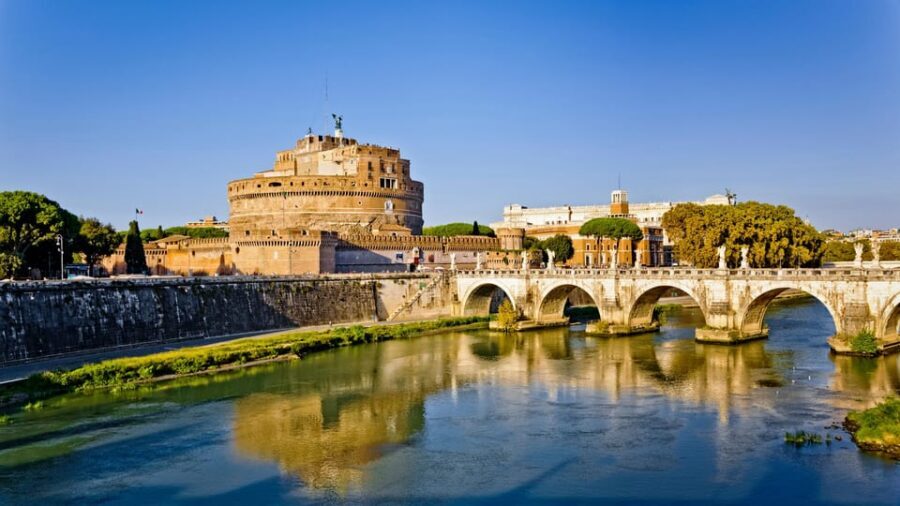
Your tour begins at Castel Sant’Angelo, right in front of the main entrance. The start matters here. Castel Sant’Angelo is one of those places where you can look at the same walls and still miss the point unless someone helps you connect the dots.
You’ll spend guided time here before moving on. The key story is the transformation: the building began as the mausoleum of Emperor Hadrian. Later, it became a formidable papal fortress—an important shift, because it reframed what the site meant politically and strategically.
Here’s the practical takeaway for your visit: don’t treat it like just another photo stop. Even from the outside, Castel Sant’Angelo’s position and design are linked to how the Vatican protected itself and how power moved through Rome’s waterways and streets. Once you understand that, the rest of the walk makes more sense—especially the part about the secret passage.
Passetto di Borgo and Borgo Pio: The Secret Passage Story
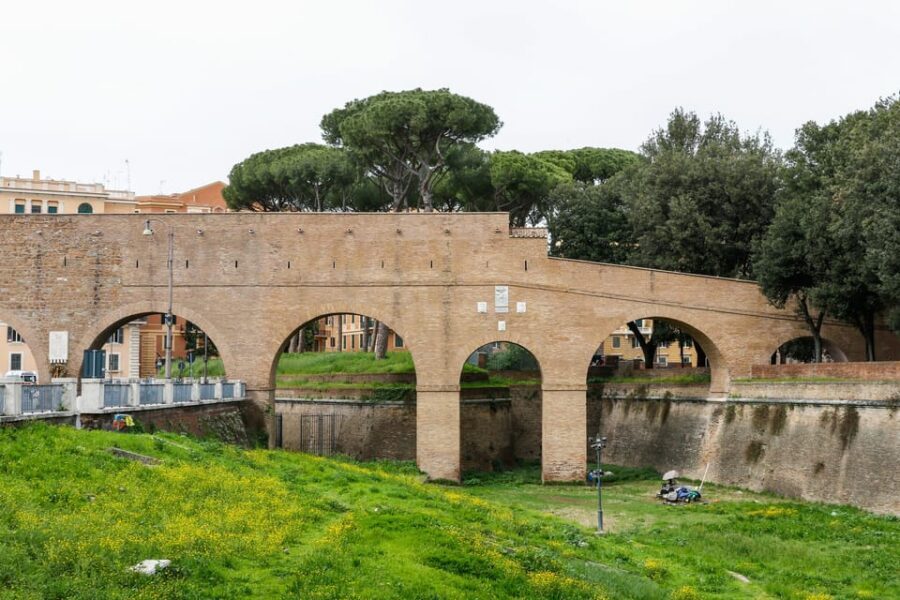
After Castel Sant’Angelo, you’ll shift to the Passetto di Borgo, the elevated passageway connected to the Vatican. The tour gives you the reason this mattered: it was a safer route used in times of need.
That single idea changes how you view the surroundings. Without it, Passetto di Borgo can sound like a fun rumor. With it, you see it as emergency infrastructure—built thinking about movement, protection, and control.
You’ll also pass through Borgo Pio (with guided time while you’re there). This area sits in the “in-between” zone between Rome’s everyday streets and the ceremonial energy of Vatican City. It’s a good stage for learning because the architecture and street layout help you understand how people moved from one world to another.
A small consideration: because the tour focuses on walking segments between stops (and because entrance to certain areas isn’t included), the experience is more about observation and explanation than about long interior tours at every stop. If you’re hoping for a lot of paid entry time, plan for that separately.
Via della Conciliazione Toward St. Peter’s Square
As you continue, you’ll walk along Via della Conciliazione, one of Rome’s iconic straight approaches into Vatican territory. This street is famous for its perspective, and that perspective is the point.
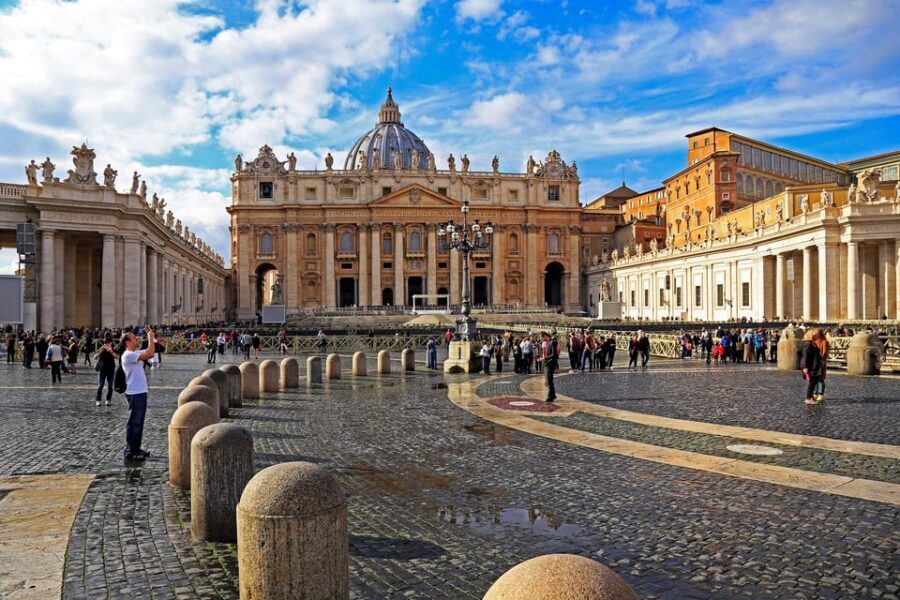
The guide will help you understand what St. Peter’s Square is doing for you visually and historically. When you arrive without context, the space can feel like a monument you simply stand in front of. With context, it becomes a designed stage—built to handle processions, crowds, and the public face of the Vatican.
Spend your guided time in St. Peter’s Square, then use that explanation to look better. You’ll notice more than you would on your own: not just the size, but the layout and how the square’s character supports major events and symbolism. This is where a guide earns their fee—because the details are there, but they need a translation.
St. Peter’s Basilica Time: Art, Architecture, and Over a Thousand Years
Next comes St. Peter’s Basilica, with guided time and a focused look at its architecture and art. The tour description emphasizes St. Peter’s Basilica’s long timeline—over a thousand years of history shaping what you see today.
This is also where you should adjust your expectations for “entrance.” Entrance to St. Peter’s Basilica is not included. That means you’ll want to be ready for either:
- paying separately if you want to go inside, or
- treating the experience as guided viewing/approach if entry isn’t part of your plan.
Either way, the guide’s role is still valuable. St. Peter’s Basilica can be overwhelming in a quiet way: you see scale first, then only later do you notice the structure and the stories. A guide helps you catch what matters during your time there, so your visit feels intentional rather than rushed.
Practical tip for your comfort: because you’ll be walking and standing for guided portions, wear shoes that handle museum-level foot time. You’ll get the best experience when your body isn’t negotiating with your pace.



Seeing Arch of Constantine on the Rome-to-Vatican Theme
One extra element to watch for is the Arch of Constantine. The tour description calls it out as a spot you shouldn’t miss—a bold ancient marker that celebrates imperial victories.
Why it belongs here: this tour isn’t only about Vatican City in a bubble. It’s about how ancient Rome and papal Rome sit in the same visual language. Seeing the arch as part of your route helps you connect eras. It reminds you that the Vatican didn’t appear in isolation; it grew in a city full of older symbols and older power structures.
Even if you only get a brief look, the guide’s framing makes the arch more than a Roman relic. It becomes a signpost for how Rome kept reusing and reinterpreting its own authority.
Price and Logistics: Is $44.41 Good Value?
The headline price is $44.41 per person, and you’re paying mainly for guided interpretation—an expert guide plus a route that links multiple major sites in a sensible order.
Here’s how I think about value on tours like this:
- If you want a guided “story thread” from Castel Sant’Angelo to St. Peter’s Square, the guide time can save you from hours of figuring out what to look for.
- If you plan to buy entrance tickets anyway, then the tour becomes a strong one-stop way to put those entries in context.
- If you were hoping the tour price covers every entrance, note that it doesn’t. Entrance to Castel Sant’Angelo, Passetto di Borgo, and St. Peter’s Basilica is not included.
Also, the tour runs about 2 hours. That’s short enough to fit into a busy Roman schedule, but long enough to feel like you actually learned something—especially at the square and Basilica.
If you’re on a tight itinerary, this is a reasonable way to get a guided overview without consuming half a day.
When This Tour Works Best for You
This tour is a good match if you:
- want expert guidance for St. Peter’s Square and St. Peter’s Basilica rather than figuring it out alone
- like history that connects buildings to real-world purpose (fortress, passage, public space)
- prefer a structured walk with multiple stops instead of a single-site deep dive
Language note: the guide is live and can be Italian or English. Depending on the group, the guide could be bilingual or monolingual. If language flexibility matters to you, double-check what you booked and how comfortable you are with the likely language.
Timing note: starting times depend on availability. When you choose your slot, consider how crowded you expect the area to be on your chosen day. A guided route can help you manage attention and flow even when lines are a factor.
Who Should Skip It (or Adjust the Plan)
This is not suitable for everyone. The tour is specifically marked as not suitable for:
- people with back problems
- people with mobility impairments
- people with motion sickness
That’s not just legal fine print. Walking from Castel Sant’Angelo toward the Vatican includes time on foot and standing for guided portions, so your body needs to handle that comfortably.
If you have any of those concerns, it may be better to choose a different format, like a slower stop-and-sit experience, or ask operators about an adjusted route before booking.
Should You Book the Rome Paths of the Vatican Tour?
If you want a guided walk that connects major Vatican-adjacent landmarks—Castel Sant’Angelo, the Passetto di Borgo story, St. Peter’s Square, and St. Peter’s Basilica—this is an efficient way to get the meaning behind the scenery. The strongest praise is clearly about the guide: people appreciate how prepared and effective the guide is, and that quality matters most at places like St. Peter’s Square and Basilica, where context turns “wow” into “I get it.”
Book it if you’re ready for walking, you’re okay buying any needed entrance tickets separately, and you want a structured, learn-it-in-2-hours route.
Skip or rethink it if you need accessibility accommodations, you have back issues, or motion sickness is a problem—this route isn’t designed for that.
FAQ
How long is the Rome: Paths of the Vatican Guided Tour?
The tour lasts about 2 hours.
Where do I meet the guide?
Meet your guide at Castel Sant’Angelo, right in front of the main entrance.
What are the main stops on the tour?
You’ll cover Castel Sant’Angelo, the Passetto di Borgo, Borgo Pio, St. Peter’s Square, and St. Peter’s Basilica.
Are entrance tickets included for Castel Sant’Angelo or St. Peter’s Basilica?
No. Entrance to Castel Sant’Angelo, Passetto di Borgo, and St. Peter’s Basilica is not included.
What language is the guide?
The live tour guide speaks Italian and English. The guide could be bilingual or monolingual depending on the group.
How much does the tour cost?
It costs $44.41 per person.
Is it suitable for people with mobility issues or back problems?
No. The tour is not suitable for people with back problems, mobility impairments, or motion sickness.
Is free cancellation available?
Yes. You can cancel up to 24 hours in advance for a full refund.