REVIEW · PRIVATE
Rome Key Sights Golf Cart Tour | Private & Groups
Book on Viator →Operated by Golf Cart Italy · Bookable on Viator
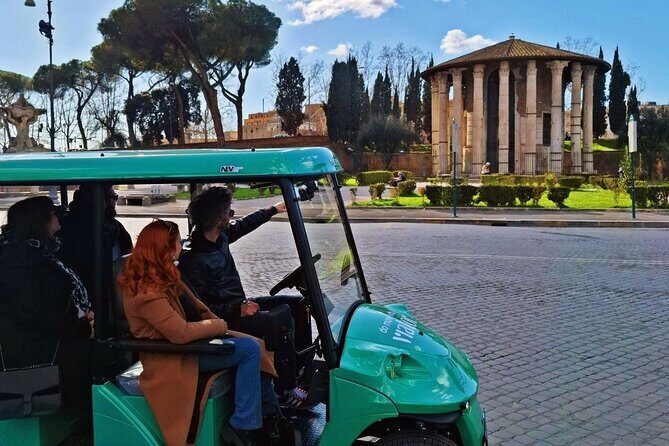
Rome moves fast. This tour helps you keep up. In a comfortable electric golf cart, you bounce between Rome’s biggest landmarks without turning your day into a painful walking contest. You’ll get short, well-timed stops at famous places, plus the kind of street-level context that makes the city feel less like a postcard.
I especially like two things: the small-group format (often just seven people, max 12) keeps the ride personal, and the route is built for time-saving. One thing to think about is that the tour is weather-dependent and the Pantheon entry isn’t included, so plan for that add-on if you want to go inside.
In This Review
- Key points you’ll care about
- A golf cart route that turns “Rome distances” into a non-issue
- Price, group size, and why the schedule feels efficient
- Piazza di Spagna, fashion street views, and Trevi in one smooth sweep
- Pantheon and Piazza Navona: big icons, short walking distances
- Via Giulia, Jewish Rome, and Tiber Island side quests
- Keyhole views at Malta, orange garden overlooks, and Circus Maximus
- Finish at the Colosseum with an optional pasta tasting payoff
- Should you book this Rome golf cart tour?
- FAQ
- How long is the Rome Key Sights Golf Cart Tour?
- Is this tour private or offered in groups?
- What language is the tour offered in?
- Where do we meet and where does the tour end?
- Are tickets included for the sights?
- Is there an upgrade for food?
- Do I need to bring a paper ticket?
- What if the weather is bad?
- Ready to pick?
Key points you’ll care about
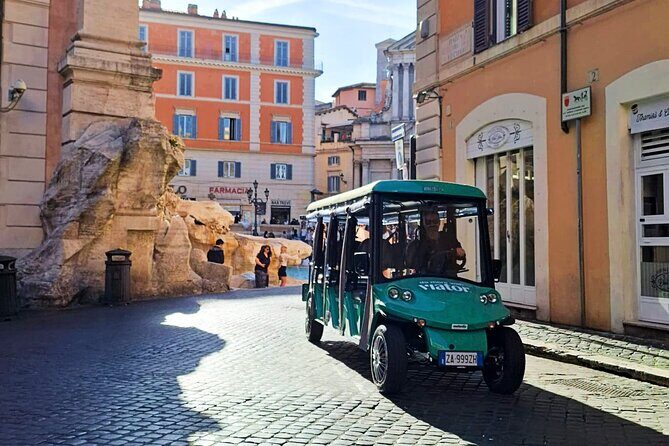
- Electric golf cart touring saves your legs for the moments you actually want to linger
- Small groups (seven people in many departures, up to 12 max) make it easier to get answers
- Most stops are free; only the Pantheon has a separate admission situation
- Short, focused photo stops at Spanish Steps and Trevi help you get the shots without stress
- Optional pasta tasting upgrade adds a very Roman food payoff at the end
A golf cart route that turns “Rome distances” into a non-issue
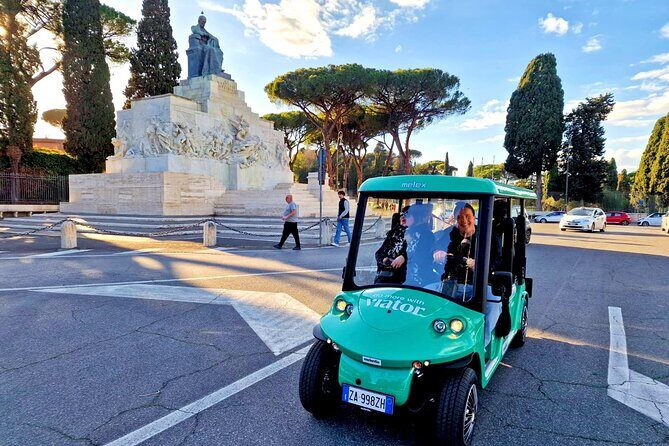
Rome’s center looks compact on a map. In real life, it’s hills, tight streets, and sudden detours that chew up time. This is designed to solve that problem. You’re not just cruising; you’re traveling efficiently between clusters of sights, then getting a quick window to explore on foot.
You also have a big advantage if you like photos. Several stops are timed so you can park, step out, and capture the classic views without having to reposition multiple times. Even in a messy situation like a city protest or strike, guides have proven they can steer you through blocked streets and still hit the key landmarks.
If you’re traveling with mixed mobility, the cart matters. You still get Rome on foot where it counts, but you’re not spending the whole day in slow-motion survival mode.
You can also read our reviews of more private tours in Rome

Price, group size, and why the schedule feels efficient
At $449.49 per person for about 2.5 to 3 hours, this is not a budget activity. The value is in what you avoid: long transit between monuments, wasted time waiting to find a meeting point close to where you want to be, and decision fatigue when you’re trying to stitch together Rome’s top sights yourself.
The group size is a real part of the deal. Many departures run with small groups of seven, and the overall maximum is 12 travelers. That keeps the ride from turning into a classroom with 30 headsets. It also helps the guide manage the tiny parking moments that make or break a golf cart route.
You can also book private. If your timing is tight or you want more pacing around your interests, a private option is usually the cleanest way to do it.
One practical note: the tour uses a mobile ticket, and you’ll receive confirmation at booking. It’s the kind of setup that works well when you’re trying to coordinate multiple plans in Rome.
Piazza di Spagna, fashion street views, and Trevi in one smooth sweep
The first big hit is Piazza di Spagna and the Spanish Steps area. This stop is all about positioning. You’ll get a chance to take that iconic photo with the Spanish Steps as your background, and then move on quickly so you don’t get stuck in crowds while the rest of your route slips away.
This area is famous for the way it links major sights. The steps connect architecturally to the Fountain of the Barcaccia on the street level and the church at the top of the slope. You’ll also hear why the layout is unusual and why it became such a signature symbol of the dolce vita vibe.
After that, you’ll pass through Rome’s fashion street zone. It’s not just for window-shopping. It’s also strategically placed, connecting the steps area to the central shopping corridor. Even if you don’t buy anything, it helps you feel the city’s rhythm instead of only seeing monuments.
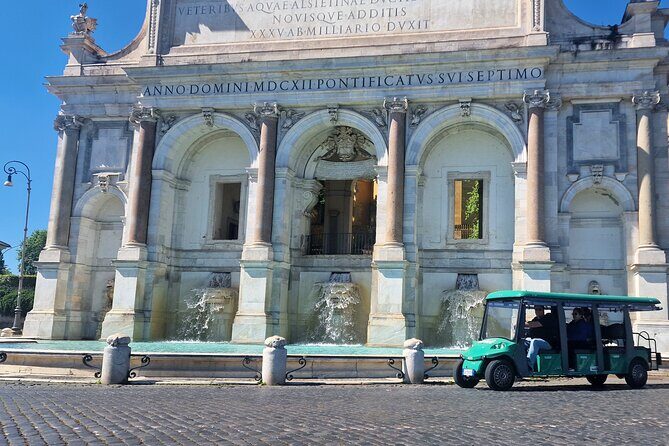
Then it’s Trevi Fountain. The value of the golf cart here is simple: you get in, park, capture your shot, and move on. The history lesson is short but clear—Trevi’s construction began in 1732 after a papal competition during the Baroque era. Nicola Salvi is tied to the final work even though he didn’t win the contest.
Trevi is the kind of place that can eat your schedule if you try to DIY it. Here, you get the highlight without turning your day into a slow shuffle.
Pantheon and Piazza Navona: big icons, short walking distances
Next up is the Pantheon, one of the most important buildings in Rome that still works as a church. You’ll step out from the cart to admire the architecture up close, especially the oculus roof that brings in sunlight and even rain into the interior space.
The practical part: the Pantheon’s admission isn’t included. So if being inside the church matters to you, budget a bit more time and money for the entry decision. The good news is you’re not adding hours of travel to make it happen—you’re arriving as part of a tight route.
The Pantheon stop also gives you a strong anchor for the rest of central Rome. It’s walking distance to places like Navona and Trevi, so you’re building a logical sightseeing loop instead of hopping around the city.
Then you head to Piazza Navona, one of Rome’s most beautiful squares. This is where the Baroque look starts to hit you in the face—in a good way. You’ll hear how the square kept its shape from earlier times, when it was used as an athletics stadium in the era of Emperor Titus, before becoming a market area in the 1500s. Today, the baroque masterpieces and Bernini-related works give it that unforgettable “Rome stage-set” feeling.
Again, the cart matters. You can enjoy the square without spending energy on long transfers between major stops.
Via Giulia, Jewish Rome, and Tiber Island side quests
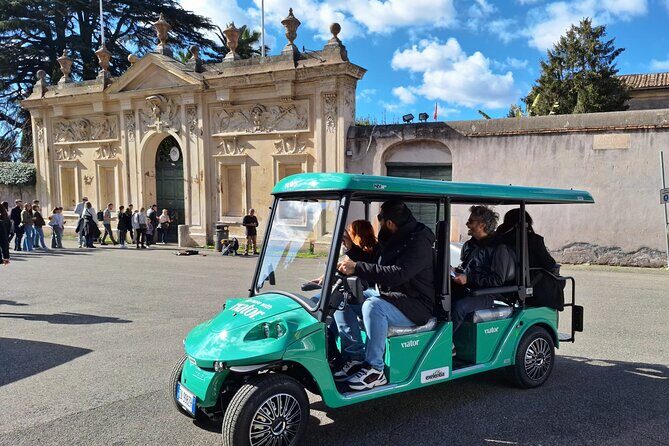
This tour doesn’t treat Trastevere and the Tiber as an afterthought. It threads you through areas that help you understand Rome beyond the ultra-famous checklist.
On Via Giulia, you get a look at an early example of urban renewal. The street was designed around 1508 and dedicated to Pope Julius II, with an urban layout linked to Donato Bramante’s work on the Basilica of Saint Peter project across the river. Even if you only catch a short stretch, it gives your brain something to connect: street design as power.
Then comes Tempio Maggiore di Roma, tied to the Jewish district in the city center. It’s a short stop, but it matters because it breaks the usual Rome tour pattern that focuses only on imperial ruins and Renaissance facades.
From there, you move toward the Tiber Island area. You’ll get a reason to care about what’s usually just a line on a map: the island is reached through two Roman bridges and is home to a church that’s about a thousand years old. In warmer months, the area can be lively with restaurants and festivals, so it’s worth paying attention even on a shorter visit.
The tour also frames the Trastevere side as a place where locals socialize in the evenings, while connecting it to older layers of Rome, including the area’s link to the early Jewish synagogue and later Jewish history.
And yes, there’s room for one of Rome’s oddest legends: the Mouth of Truth. This ancient-looking artifact has competing theories about what it originally was for—everything from a drain cover to something connected to animal sacrifice rituals. Today, the famous myth is that a liar who puts their hand in the open mouth loses it forever. You’ll also hear where the origin is associated in the city (inside the covered entrance of Santa Maria in Cosmedin).
These stops aren’t as flashy as Trevi, but they’re memorable because they add character. You’ll walk away feeling like you saw Rome as a living city, not only a museum.






Keyhole views at Malta, orange garden overlooks, and Circus Maximus
A standout stop is Piazza dei Cavalieri di Malta. This square is small, and the details are part of why it’s worth stopping: cypresses, a Neo-Romanesque campanile, and the Villa del Priorato di Malta. The highlight people talk about here is the little keyhole view, where you can line up a view toward Saint Peter’s Basilica at the end of a garden allée.
Then you’ll reach Giardino degli Aranci (the Orange Trees Garden) on the Aventine Hill. This is your belvedere moment. You’ll get a view over Rome that’s more relaxed than the main viewpoint chaos, and the garden itself is about public access to scenery, designed in 1932 as a new kind of lookout.
After the views, the route shifts into ancient arena mode at Circo Massimo. You get the elliptical sweep of the former Circus Maximus site and the sense of scale—this is where more than 100,000 Romans gathered for public games. It’s short, but it lands. You can stand there and imagine the noise without needing to spend half a day reading signage.
These are stops that work well by golf cart because they’re mostly about perspective. You don’t need long lines. You need the right moment, and you get it.
Finish at the Colosseum with an optional pasta tasting payoff
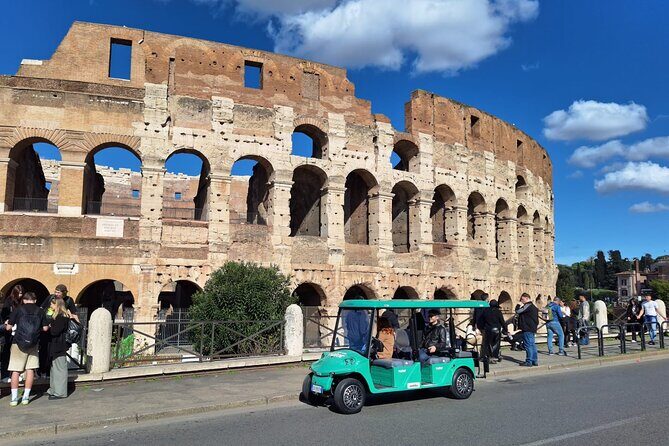
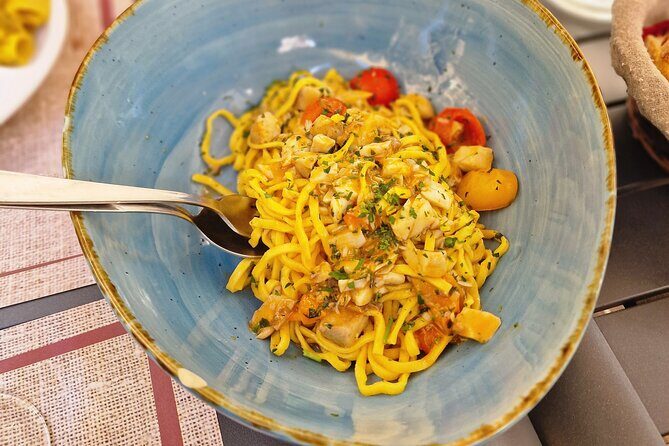
The tour ends at the Colosseum area, back at Piazza del Colosseo, 3. You get to wrap your sightseeing loop with the most famous target in Rome. Even if you’ve seen Colosseum photos for years, being there at the end tends to hit differently because you’ve built context with Pantheon, piazzas, streets, and the Tiber crossings.
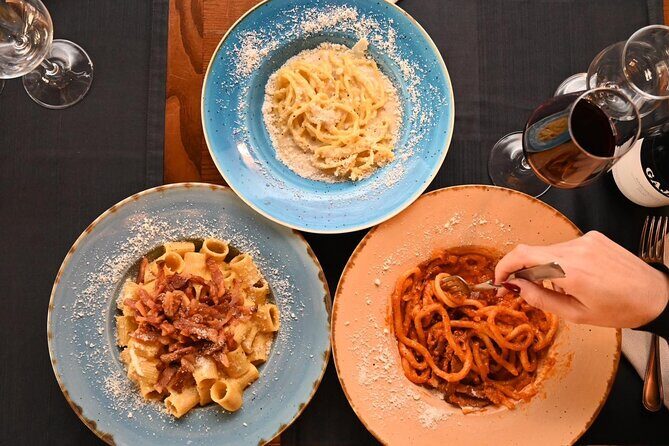
If you choose the upgrade, you can add a pasta tasting of three traditional Roman dishes. That’s the kind of food stop that feels like a reward for doing the route right: you’re not hunting for dinner at the end of a long day. You’ll also get time to continue your evening easily, since the meeting point is set up for metro and walking connections.
One last practical note: dress for time outdoors. One departure has included chilly riding advice, so if you’re going earlier or later in the day, bring something light but warm enough for time in open air.
Should you book this Rome golf cart tour?
I think this is a strong choice if you want Rome’s top sights in a short window and you don’t want to spend your energy navigating streets. The structure is built around getting you to the right places—Spanish Steps, Trevi, Pantheon, Piazza Navona, the Tiber side—and still having time to look around.
Book it if:
- You’re on a tight schedule and want a clean route
- You prefer guided context with minimal walking between major stops
- You like photos but want them without a full-day crowd fight
Skip it if:
- You’re a slow explorer who wants long entry time inside multiple monuments
- You’re mainly interested in deep, ticketed sites that require longer stays than this 2.5 to 3 hour format
If you do book, do one smart thing: come with comfortable shoes and be ready to make quick decisions at each stop. This tour shines when you treat it like a fast, curated highlights circuit, not a leisurely stroll.
FAQ
How long is the Rome Key Sights Golf Cart Tour?
It runs for about 2 hours 30 minutes to 3 hours (approx.).
Is this tour private or offered in groups?
It’s offered in small groups, and you can also choose a private tour option. Small groups are listed as seven travelers, with a maximum of 12.
What language is the tour offered in?
The tour is offered in English.
Where do we meet and where does the tour end?
The tour starts and ends at Piazza del Colosseo, 3, 00184 Roma RM, Italy.
Are tickets included for the sights?
Most stops list free admission. The Pantheon stop notes that admission is not included.
Is there an upgrade for food?
Yes. You can upgrade for a pasta tasting featuring three traditional Roman dishes.
Do I need to bring a paper ticket?
You’ll use a mobile ticket. Confirmation is received at the time of booking.
What if the weather is bad?
This experience requires good weather. If it’s canceled due to poor weather, you’ll be offered a different date or a full refund.
Ready to pick?
If your goal is a smart, time-efficient hits-of-Rome day with less walking stress, this golf cart tour is a good fit. If you’d rather spend extra time inside monuments, pair it with one or two standalone ticketed stops after you finish at the Colosseum.